REVIEW · ATHENS
Athens, Acropolis and The New Acropolis Museum on a bus tour
Book on Viator →Operated by MTM TOURISM GREECE OE · Bookable on Viator
The best thing about this 4.5-hour Athens tour is the pairing of two essential sights: the Acropolis itself and the New Acropolis Museum. You get the grand hilltop monuments first, then see the surviving sculptures and objects in a modern setting that helps explain what you have just seen.
I like the efficient mix of a short city tour and serious time at both major sites. I also like that Acropolis and museum admission are included, which makes the $139.63 price easier to judge. The main concern is group size, with as many as 40 people, and past departures have had trouble keeping everyone close to the guide.
In This Review
- Key points to know before booking
- A compact introduction to Athens before the Acropolis
- The Panathenaic Stadium and Athens from the road
- Walking into the Acropolis
- One hour inside the New Acropolis Museum
- What the $139.63 price really buys you
- Guides, group size, and keeping the morning on track
- Who will get the most from this Athens tour
- Cancellation and meeting details worth noting
- Should you book this Acropolis and museum tour?
- FAQ
- Where does the tour begin?
- What time does the tour start?
- How long does the experience last?
- Does the tour include pickup?
- Where does the tour end?
- Are Acropolis admission fees included?
- Is admission to the New Acropolis Museum included?
- How much time is spent at the Acropolis?
- How much time is spent at the New Acropolis Museum?
Key points to know before booking
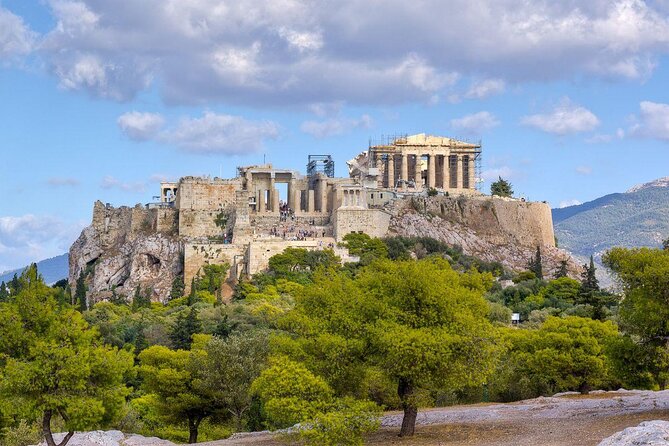
- The Acropolis visit lasts about 90 minutes, covering the Propylaea, Temple of Athena Nike, Erechtheion, and Parthenon.
- The New Acropolis Museum gets one full hour, enough for a useful first visit but not a slow, detailed study.
- The Panathenaic Stadium is a 20-minute photo stop, while several central Athens sights are viewed from the bus.
- The price includes both major admission fees, plus an air-conditioned vehicle and pickup service.
- Groups can reach 40 people, so stay near the guide and keep an eye out for the guide’s marker.
- Staff names associated with the operation include Cassandra, George, and driver Nicholas, though the exact team can vary by departure.
A compact introduction to Athens before the Acropolis
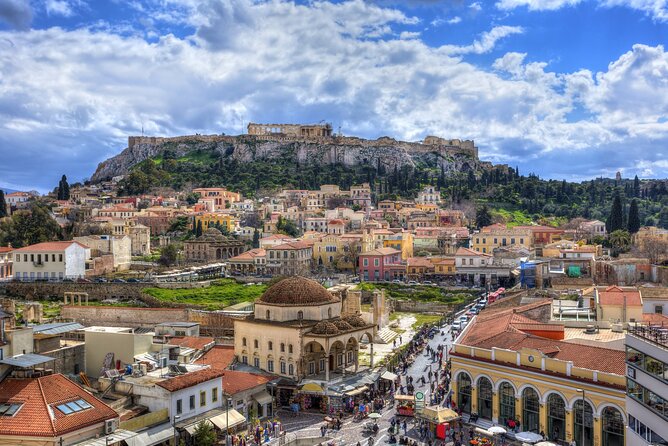
This tour works best if you want a first look at Athens without spending a full day on a bus. The opening drive links the modern city, its Olympic past, central government buildings, and ancient monuments before you get out for the main visit.
You meet at 8:30 am at Eurobank, Leoforos Vasilisis Amalias 20, close to Syntagma. Pickup is offered, but the stated meeting point is the reliable place to plan around. The activity returns there at the end, so you can arrange your afternoon without guessing where the bus will leave you.
The air-conditioned vehicle matters in Athens, especially when you are fitting a hilltop archaeological site into a short morning. Still, think of the bus portion as a moving introduction rather than a full guided visit to every landmark. Several places are viewed from the coach, and only the Panathenaic Stadium receives a dedicated stop before the Acropolis.
You can also read our reviews of more museum experiences in Athens



The Panathenaic Stadium and Athens from the road
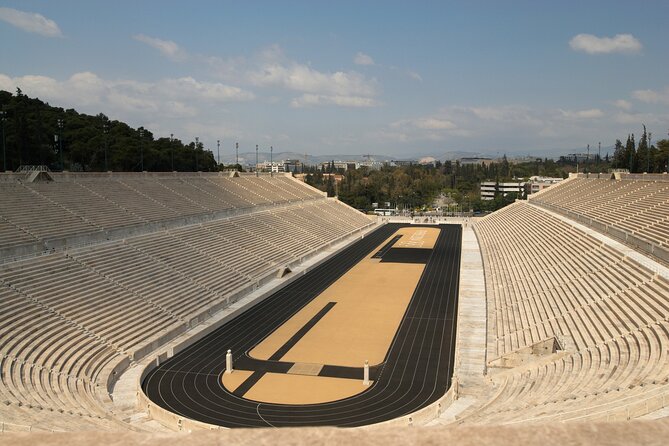
The first proper stop is the Panathenaic Stadium, where the first modern Olympic Games took place in 1896. You have about 20 minutes for photographs and a quick look at the bright marble structure.
That short pause gives the tour a useful sense of place. Athens is not only ancient temples and broken columns. This stadium connects the city to the revival of the Olympic Games and to a more recent chapter of Greek public life.
You should keep your expectations in check. This is a photo stop, not a full stadium tour, and admission is listed as free. If you want to inspect the seating, track, and interior areas at length, you will need separate time on another visit.
Back on the bus, you pass the Temple of Olympian Zeus, also called the Olympeion. It was once the largest archaic temple in the area, but here you see it from the coach. That means your guide can point out its scale and setting, but you will not walk among its columns on this outing.
The drive also takes in Hadrian’s Arch, Parliament, the Monument of the Unknown Soldier, the Academy, the University, the National Library, and Constitution Square, known as Syntagma. These sights help you understand the city’s civic center and its blend of ancient remains, neoclassical buildings, and modern government.
The wording of the itinerary groups the Academy, University, and National Library together as a classical Greek Doric building complex. In practical terms, you should treat this part as a panoramic city circuit. Have your camera ready, but do not expect to get off at each building.
Walking into the Acropolis
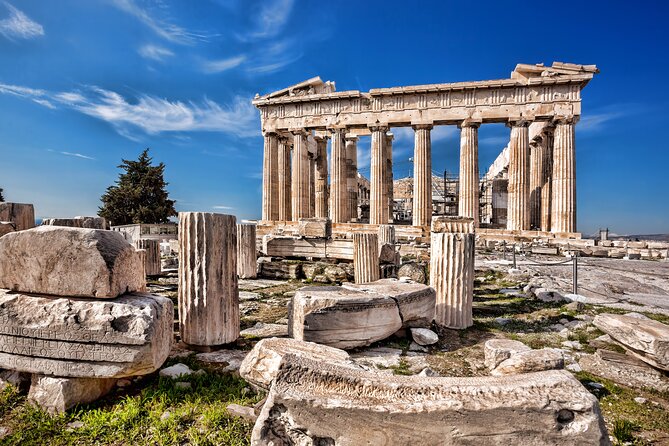
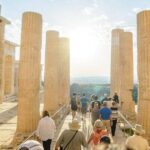
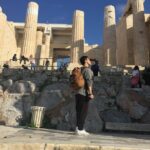
The core of the experience is the Acropolis, with about 1 hour and 30 minutes inside the archaeological site. Admission is included, which is important because the ticket saves you both money and the need to arrange a separate entry.
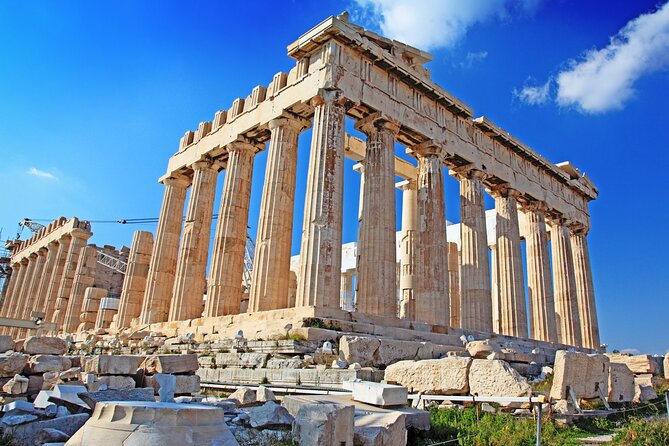
Your route includes the Propylaea, the Temple of Athena Nike, the Erechtheion, and the Parthenon. These are not minor stops. Together, they form the main architectural story of the Acropolis during Athens’ Golden Age.
The Propylaea is the monumental gateway. It sets up the arrival, and its grand approach helps you understand that the Acropolis was designed as a carefully ordered ceremonial space, not simply a hill covered with unrelated ruins.
The Temple of Athena Nike is smaller than the Parthenon, but its position near the entrance makes it an important part of the approach. Your guide can connect it to Athena’s role as a protector of the city and explain how the structure fits into the larger plan.
The Erechtheion is known for its unusual design and the famous sculpted female figures called Caryatids. The tour description specifically includes the temple, so you should expect an explanation of its architectural importance rather than a quick glance at only the Parthenon.
Then comes the Parthenon, the monument most people picture when they think of Athens. Its size, damaged condition, and setting are part of the experience. You are not seeing a complete ancient building, but you can still read the order and balance that made it one of the world’s most influential monuments.
The time limit is both helpful and restrictive. Ninety minutes keeps the visit focused, but it does not leave much room for lingering, independent photography, or a slow look at every detail. If the guide is explaining the site while the group moves, stay close and ask questions when there is a natural pause.
Group control is a real practical issue here. With up to 40 people, it is possible to lose visual contact in a crowded archaeological setting. Some past departures have also had difficulty keeping the whole group together, and one guide’s black umbrella was not always held high enough to remain easy to spot. I would stay near the front, confirm the guide’s meeting instructions, and never assume the group will stop automatically for anyone who falls behind.
The Acropolis is also the part of the tour that demands the most attention to footing and pace. The supplied information says most people can participate, but it does not promise a private or slow-paced visit. If you need extra time, frequent breaks, or a very deliberate walking speed, a smaller tour could suit you better.
One hour inside the New Acropolis Museum
After the hilltop monuments, you visit the New Acropolis Museum for about one hour. This is a strong choice because the museum gives context to the stonework you have just seen outdoors.
The museum was built to house objects found on the Acropolis and its surrounding slopes. Its collection reaches from the Greek Bronze Age through Roman and Byzantine Greece, so it offers a wider time frame than the Acropolis visit alone.
The building also sits over remains from Roman and early Byzantine Athens. That detail adds another layer to the visit. You are not simply entering a display hall after seeing an ancient sanctuary. The museum itself connects archaeology, architecture, and the changing life of the city.
One hour is enough to see the main displays and make sense of the major connection between the museum and the hill. It is not enough for a careful examination of every object. If you enjoy archaeology and want to read every label, plan to return independently.
I like the sequence here. On some tours, a museum feels detached from the outdoor site. Here, the museum follows the Acropolis, so you can place artifacts and sculpture within the setting you have just visited. The order also helps if you are new to classical Greek art and want an introduction without committing a whole day.
The museum admission is included. That improves the value of the package, since you are paying for two of Athens’ principal ticketed sights rather than only transport and a guide.
What the $139.63 price really buys you
At $139.63 per person, this is not a bargain bus loop. The price makes the most sense if you value structure, transportation, a guide, and bundled entry to both the Acropolis and New Acropolis Museum.
Included are:
- An air-conditioned vehicle
- Acropolis admission
- New Acropolis Museum admission
- Pickup service
Food, drinks, and tips are not included. The tour lasts approximately four and a half hours, so you are also paying for a tightly arranged morning rather than a full-day outing.
For a first visit, the value is fairly strong if you want the major highlights handled in one booking. You see the Panathenaic Stadium, pass central Athens sights, enter the Acropolis, and visit the museum. You also avoid spending time arranging separate admission for the two principal attractions.
The value falls if you already know Athens well or prefer to set your own pace. The bus gives only passing views of several landmarks, and the 90-minute Acropolis visit plus one-hour museum visit leaves limited time for independent exploration. A self-guided day may offer more freedom, though it would require more planning and separate transport arrangements.
The operation has an average booking lead time of 46 days. That suggests you should not leave this particular departure until the last minute if your Athens dates are fixed, although availability can change.
- All Day Cruise -3 Islands to Agistri,Moni, Aegina with lunch and drinks included
★ 5.0 · 4,958 reviews





Guides, group size, and keeping the morning on track

The strongest staff feedback centers on friendly, proud Greek guides who add personality as well as information. Cassandra is singled out for warm hospitality, while George is praised for clear explanations. Nicholas is identified as a pleasant driver.
Those details matter because the guide shapes the experience more than the bus does. A good escort can turn a quick drive past Syntagma or Hadrian’s Arch into a useful orientation to Athens. The staff quality may vary by date, but the operation has shown it can provide personable service.
The weaker side is consistency in group management. Two separate departures had trouble maintaining contact with everyone, and one guide did not always keep the pace slow enough for the whole group. That does not erase the value of the route, but it changes how you should approach it.
Keep the guide in sight. Ask what marker to follow before you leave the bus. If you need a slower pace, say so early rather than waiting until the group has already moved ahead.
The maximum group size is 40. That is a sizable group for an archaeological site, especially when the guide is speaking beside major monuments and other visitors are nearby. You will get a more personal experience if the actual departure is smaller, but the published limit means you should be prepared for a crowd.
Who will get the most from this Athens tour
I would recommend this tour to a first-time visitor who wants the city’s essential ancient sights explained in a single morning. It suits you especially well if you want transport, a fixed schedule, and admission arranged in advance.
It is also a good match if you have limited time in Athens. The route gives you a taste of the Panathenaic Stadium and central Athens, then spends most of the morning on the two places that deserve priority: the Acropolis and its museum.
You may want another option if you are a serious museum visitor, a slow walker, or someone who prefers small groups. The museum time is limited, and a group of up to 40 can make it harder to hear every explanation or stay close to the guide.
Families and mixed-interest groups may find the format useful because the bus reduces the amount of city navigation. Still, the tour does not include food or drinks, so plan those around the four-and-a-half-hour schedule.
Service animals are allowed, and the tour is near public transportation. Most people can participate, according to the operating information, but the published details do not provide a more specific accessibility breakdown.
Cancellation and meeting details worth noting
You can cancel for a full refund up to 24 hours before the 8:30 am start time. Changes made within that 24-hour window are not accepted, and payment is not refunded for a late cancellation.
The activity depends on suitable weather and a minimum number of participants. If poor weather or insufficient enrollment causes cancellation, you are offered another date or experience, or a full refund.
The stated meeting point is Eurobank, Leoforos Vasilisis Amalias 20, Athens 105 57. The tour ends back at the meeting point. Pickup is offered, but you should confirm the exact arrangement when booking instead of assuming the bus will collect you from your hotel.
Should you book this Acropolis and museum tour?
Book it if you want a well-packed introduction to Athens with the two essential Acropolis admissions included. The combination of a short city circuit, a focused Acropolis visit, and an hour in the museum gives you a useful framework for exploring more on your own later.
I would book it with two cautions: expect a large group, and stay close to the guide. Cassandra and George are associated with warm, well-informed guiding, but the operation has not been equally strong at keeping every participant connected.
At $139.63, the tour is best for convenience and orientation, not maximum independence. If that tradeoff suits you, this is a practical way to get the central Athens highlights in one morning.
FAQ
Where does the tour begin?
The stated meeting point is Eurobank, Leoforos Vasilisis Amalias 20, Athens 105 57, Greece.
What time does the tour start?
The tour starts at 8:30 am.
How long does the experience last?
The tour lasts approximately 4 hours and 30 minutes.
Does the tour include pickup?
Yes, pickup is offered. The exact pickup arrangement should be confirmed when booking.
Where does the tour end?
The activity ends back at the meeting point.
Are Acropolis admission fees included?
Yes. Entrance to the Acropolis is included.
Is admission to the New Acropolis Museum included?
Yes. The New Acropolis Museum entrance fee is included.
How much time is spent at the Acropolis?
The planned Acropolis visit lasts about 1 hour and 30 minutes.
How much time is spent at the New Acropolis Museum?
The planned museum visit lasts about 1 hour.