REVIEW · GREECE
From Ioannina sunset tour to Meteora rocks & Monasteries
Book on GetYourGuide →Operated by Epirus Traveller · Bookable on GetYourGuide
Meteora is the kind of place that makes a long day feel worthwhile. Huge sandstone and conglomerate pillars rise from the plain, topped by monasteries that seem to balance above the clouds. This tour gives you two monastery visits, a sunset stop, and several chances to see the rocks from different angles.
I like the small group of no more than 12, and I like having transport from Ioannina handled for you. Guide and driver Giannis, also referred to as Ioannis, is described as friendly, fluent in English, helpful with photographs, and strong on the history and geography of Meteora. The drawback is the day length: eight hours includes roughly three and a half hours on the road, so you need good shoes, stamina, and a taste for a fast-moving schedule.
In This Review
- Key points to know before booking
- Why Meteora is worth the long ride from Ioannina
- Leaving Mavili Square for Kalabaka
- Saint Nicholas of Anapafsas, the first monastery on the route
- Saint Stephen, the easier monastery visit
- Observation Deck and the Meteora sunset
- Dinner and a short pause in Kalabaka
- What the $153 price really covers
- Dress, walking, and who should skip this trip
- How the guiding affects the day
- The weather can change the mood, not just the view
- Should you book the Meteora sunset tour from Ioannina?
- FAQ
- Where does the tour begin?
- How long does the tour last?
- How long is the drive from Ioannina to Meteora?
- Which monasteries are included?
- Is Saint Stephen Monastery open every day?
- Is food included in the price?
- Are monastery tickets included?
- Is the tour available in English?
- What clothing should I bring?
Key points to know before booking
- Meteora from Ioannina in one day: You spend about 105 minutes each way in the van, making this a practical option if you are based in Ioannina.
- Two monastery visits: The route includes Saint Nicholas of Anapafsas and Saint Stephen, with time to walk, look around, and take photographs.
- Saint Stephen is easier to reach: It requires far fewer stairs than many other Meteora monasteries, though the tour is not suitable for wheelchair users or people with major mobility limits.
- Sunset at Observation Deck: The one-hour stop combines free time, photography, and wide views over the rocks, mountains, city, and surrounding area.
- Dress rules matter: Bring suitable clothing for monastery visits. Women should have a skirt or dress available, and sleeveless shirts, short skirts, ripped clothing, and see-through clothing are not allowed.
- $153 buys convenience, not every expense: Transport, guiding, water, taxes, and photo or video material are included, but monastery admission, meals, drinks, and a certified monastery guide cost extra.
Why Meteora is worth the long ride from Ioannina
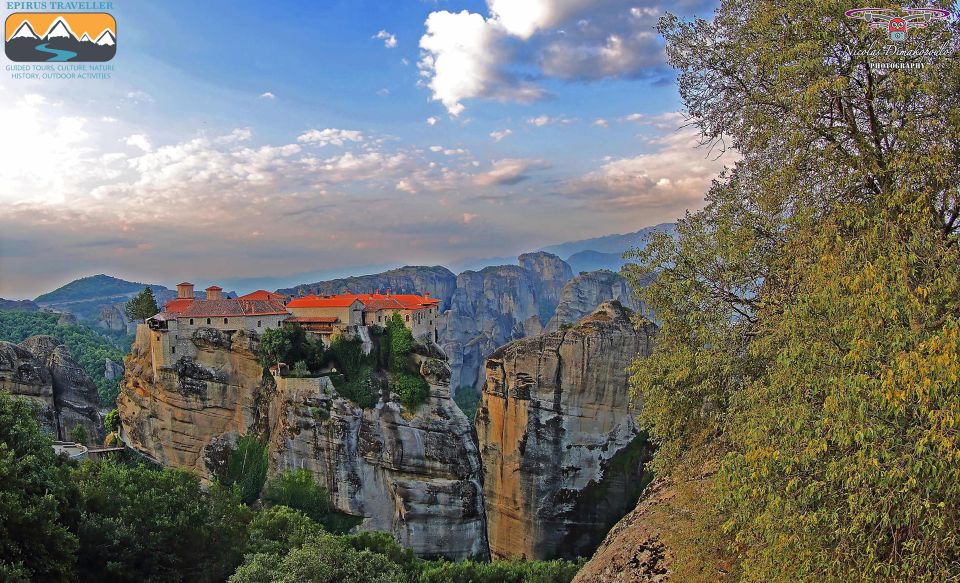
Meteora is not simply a collection of old religious buildings. It is a meeting of rock, silence, and human stubbornness. The cliffs rise sharply from the ground in tall formations made from sandstone and conglomerate, rather than the volcanic rock found in many other dramatic mountain areas. Their exact geological form is not easy to explain, which adds to the sense that you are looking at something unusual.
The first ascetics came here in the 11th century. Monastic life grew strongly during the 13th and 14th centuries, when people from nearby areas took up the religious life. Today, Meteora is Greece’s second most important monastic center and is protected on the UNESCO Heritage list.
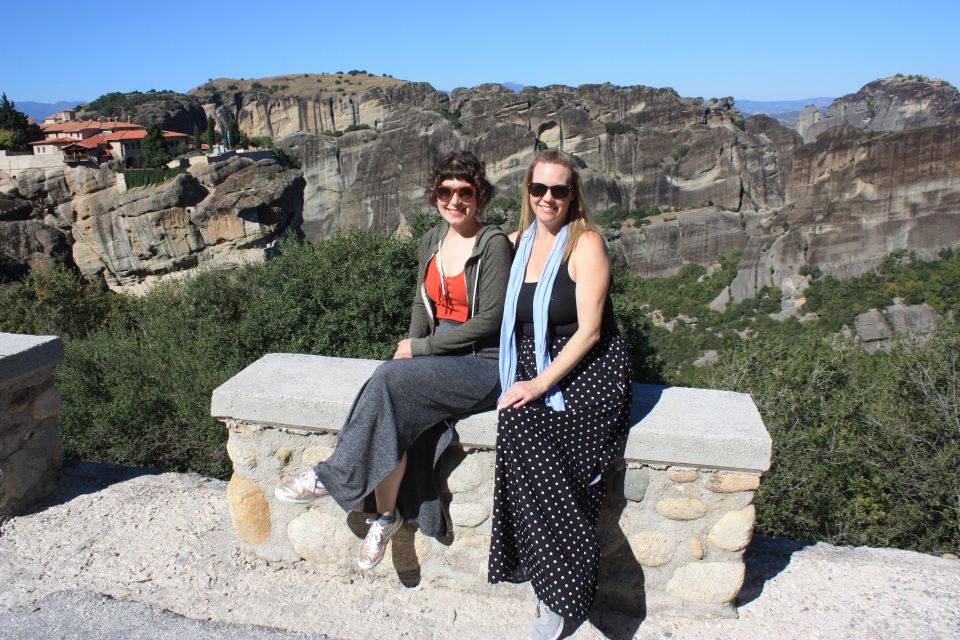
I find the setting most impressive when seen from several points rather than one quick stop. The monasteries look different from the road, from their entrances, and from the observation deck. A cloudy day can soften the rocks and create mist around the cliffs, while clear weather gives you the full sweep of the plain and mountains.
You can also read our reviews of more evening experiences in Greece
Leaving Mavili Square for Kalabaka
The tour begins at Mavili Square in Ioannina. From there, you travel by private van toward Meteora, with about 105 minutes on the road before the first main visit. The private transport is useful because the route is too far for a casual side trip, and you avoid arranging a separate car or dealing with the day’s driving yourself.
A small group capped at 12 people gives the trip a more personal feel than a large coach excursion. It also matters at viewpoints, where a smaller group can usually move through photo stops more easily. Still, this is not a slow, unhurried outing. You have several scheduled stops, two monastery visits, sunset timing, and a dinner break in Kalabaka before returning to Ioannina.
The included bottled water is a practical touch. You should still bring comfortable sports shoes, since the day involves walking and monastery access points can be uneven or stair-heavy. The tour also includes guiding, but it does not include a certified guide inside the monasteries. That distinction is worth noting if you want detailed religious or architectural commentary at each site.
Saint Nicholas of Anapafsas, the first monastery on the route
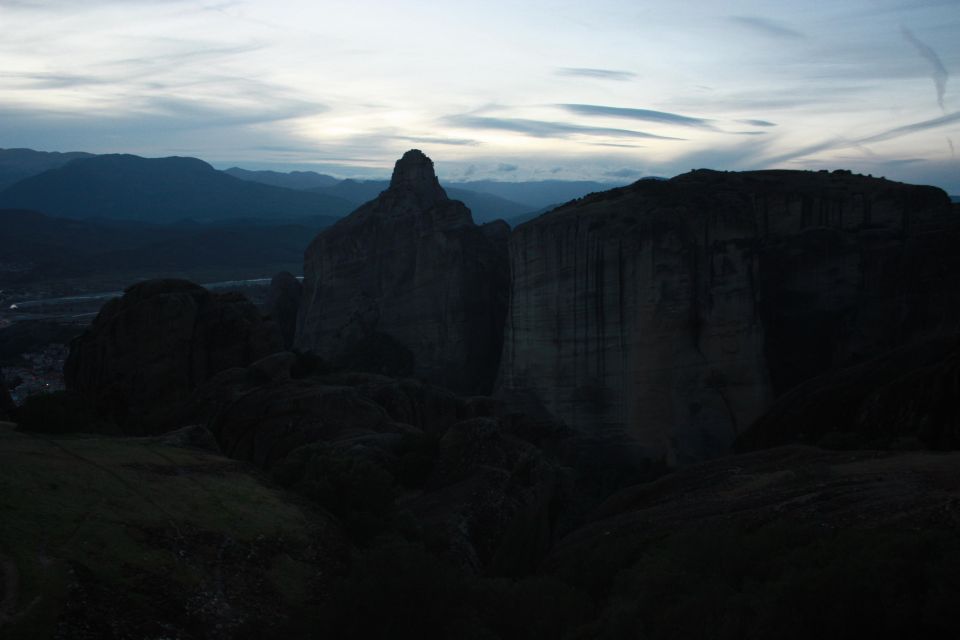
The Holy Monastery of Saint Nicholas of Anapafsas is near Kastraki village and is the first active monastery encountered on the approach to Meteora. The name is linked by tradition to a founder from the 14th century, and Anapafsas translates to spiritual rest.
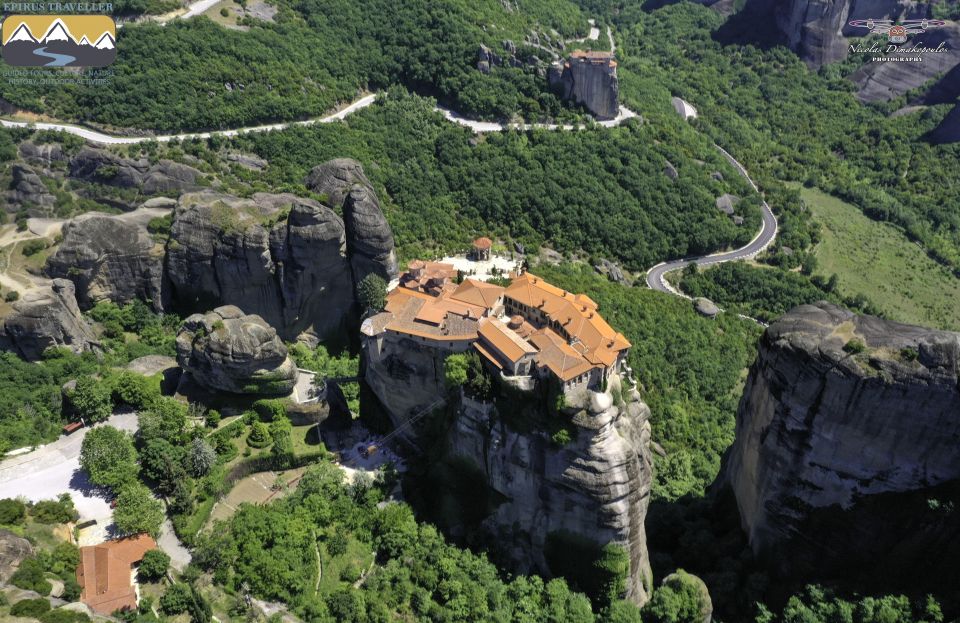
The monastery occupies a narrow rock formation, so its compact shape is part of the appeal. It does not spread across a wide plateau. Instead, the buildings and spaces are fitted into a small summit, making the visit feel closely tied to the rock itself.
The monastery was reconstructed by the archaeological service in the 1960s. That gives you a place shaped by both religious tradition and modern preservation work. Meteora is protected as a UNESCO site, so conservation is not an abstract idea here. The buildings, access routes, and surrounding rock formations all form part of a protected cultural setting.
You have about 45 minutes here for a visit, walking, sightseeing, and photographs. That is enough for a focused look, but not for lingering over every detail. The route also includes scenic views on the way, so your first real impression of Meteora begins before you reach the entrance.
Saint Stephen, the easier monastery visit
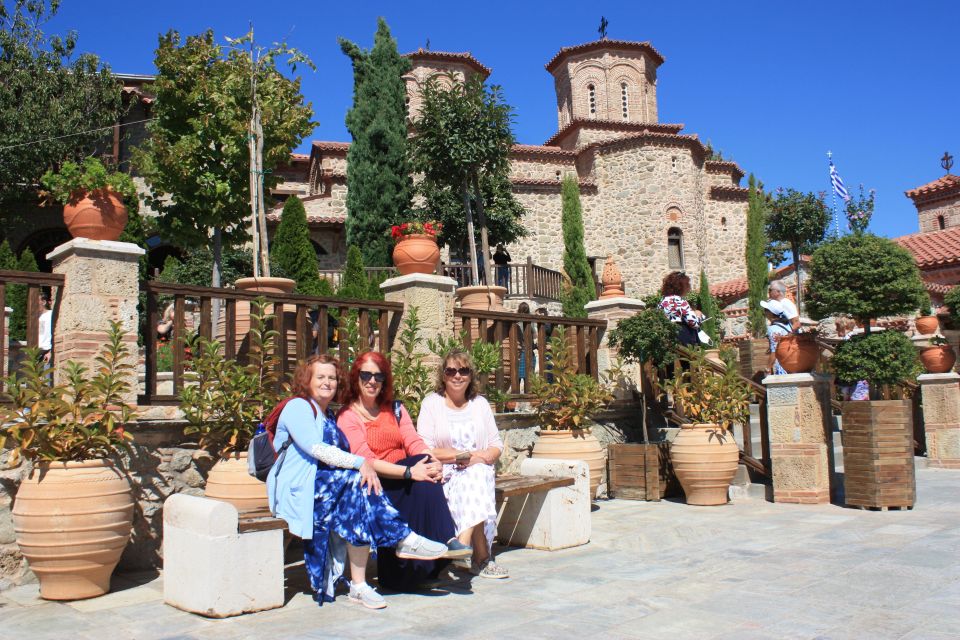
The second monastery is the Holy Monastery of Saint Stephen, one of the more accessible monasteries in the Meteora group. You do not have to cope with innumerable stairs to reach it, which makes it a sensible choice for a tour that already includes walking and viewpoint stops.
The small single-nave church of Saint Stephen was built in the middle of the 16th century and decorated in 1545 or shortly afterward. A second church, the katholikon dedicated to Saint Charalambos, was built in the Athonite style in 1798. The old refectory now serves as a museum.
Saint Stephen operates as a nunnery, giving the visit a different character from a monastery run by monks. You should plan around its weekly closure: it is closed every Monday. If your tour falls on Monday, confirm how the schedule will be adjusted before you book, since this stop is part of the planned monastery visits.
You get another 45 minutes here. That is enough time to see the principal areas available to the public and take in the setting, but again, do not expect a lengthy study session. The lack of a certified monastery guide means your tour leader may explain the broader history and geography, while the site itself supplies the more direct encounter with the buildings and religious setting.
Observation Deck and the Meteora sunset
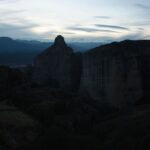
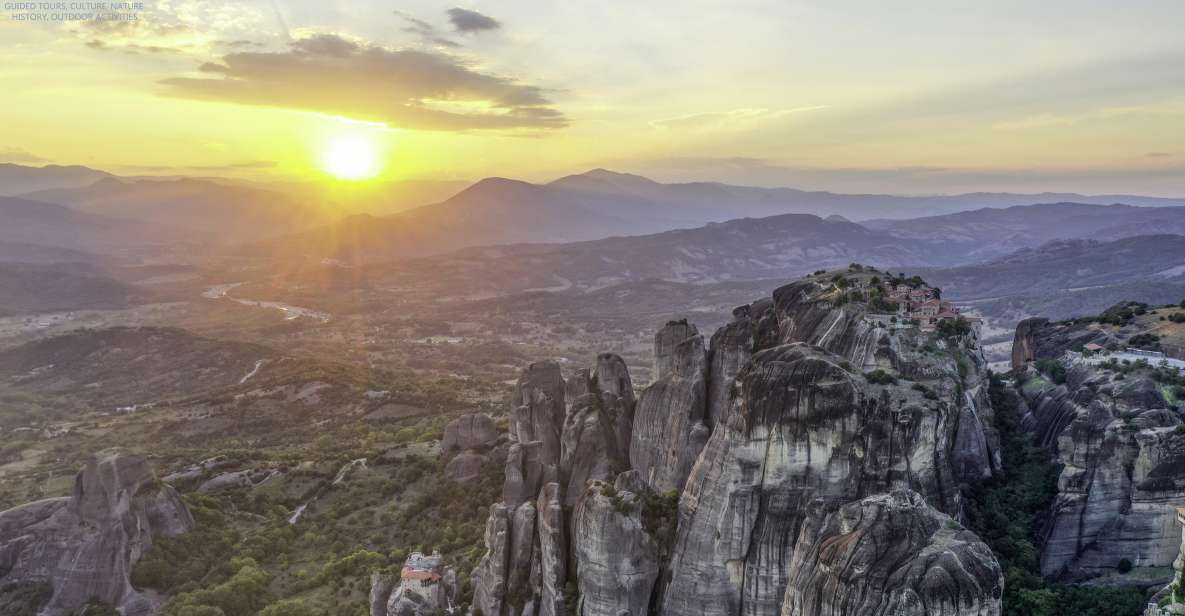
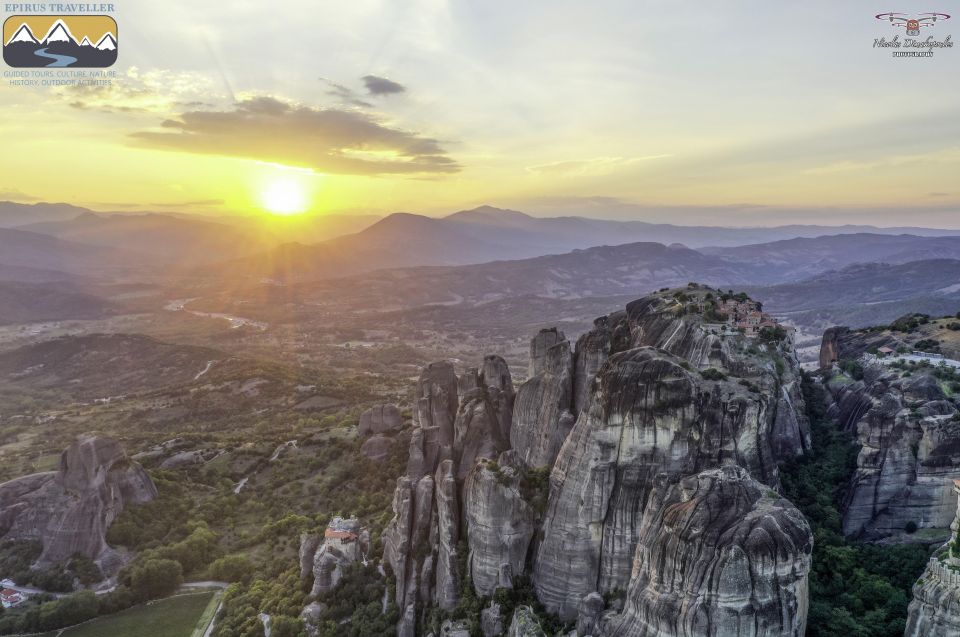
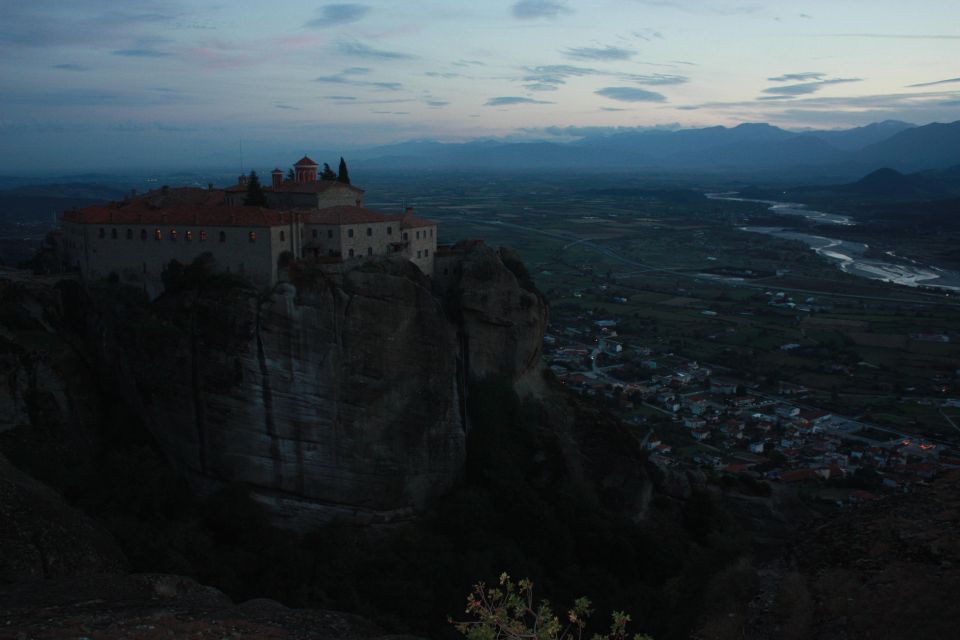
The Meteora Observation Deck is the visual high point of the day. It is also known as Sunrise Rock, but this excursion uses it for sunset. The stop lasts about one hour, giving you time for photographs, free time, walking, and views across the rocks, city, mountains, and surrounding area.
This is where the separate parts of the tour come together. You have already seen the monasteries close up. From the observation point, you can understand how extraordinary their position is. The rocks rise in groups, and the monasteries become small shapes against the stone and sky.
The viewpoint is especially useful if you enjoy photography or video. Giannis is described as helping with photos and even sending images afterward, so you may get more than hurried snapshots taken at arm’s length. Still, sunset depends on the weather. Rain and mist can hide distant views, but they can also give the rocks a striking, otherworldly mood. A rainy December outing produced fog around the cliffs and a memorable atmosphere, while a clear day can offer broader views.
You should bring a camera, but do not assume photography is allowed everywhere. Photography inside the monasteries is not permitted. The observation deck is the place to make the most of your camera, while the monastery interiors call for quiet attention rather than constant picture taking.



Dinner and a short pause in Kalabaka
After the sunset stop, the tour continues to Kalabaka for about an hour of break time and dinner. Meals and drinks are not included in the $153 price, so budget for this separately.
This pause is welcome after the monastery visits and viewpoint walking. It also breaks up the return journey to Ioannina. The stop is described as dinner time rather than a specific restaurant or included meal, so you should treat it as free time to eat, not as a fixed dining experience with a set menu.
After Kalabaka, you return to Mavili Square. The full outing lasts eight hours. That makes this a solid day trip, but not a relaxed overnight-style visit. If you want time at all six Meteora monasteries, this tour is not designed for that. It focuses on two monastery visits, the sunset, and a selection of viewpoints.
What the $153 price really covers
At $153 per person, this tour is priced around convenience and private transport rather than low-cost independent travel. You are paying for transportation from Ioannina and the surrounding area, a live English-speaking guide, bottled water, state taxes, VAT, and photographic or video material.
The private van is the main value. Meteora is far enough from Ioannina that arranging the trip independently would require a car, fuel, parking, and careful timing. You also avoid navigating the mountain roads at sunset. For a small group, the price can make sense when you place a value on a planned route and a driver who knows where to stop.
The important extras are monastery tickets, meals, drinks, and a certified guide for the monastery interiors. The tour description does not provide the admission prices, so you should allow additional money beyond the advertised fare. If you want the lowest possible price, an independent visit may be cheaper. If you want a full day with transport, a guide, and a planned sunset stop, the package is easier to justify.
Free cancellation up to 24 hours ahead and reserve-now, pay-later terms add useful flexibility. Starting times vary, so check the available departure time carefully, especially if sunset is your main reason for booking.
Dress, walking, and who should skip this trip
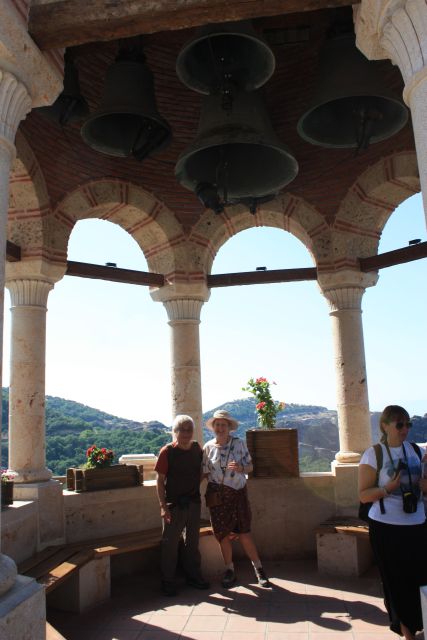
Monastery dress rules are strict enough to plan for. Do not wear short skirts, sleeveless shirts, ripped clothing, or see-through clothing. Women should bring a skirt or dress, even though long pants are also listed among the recommended items. The safest approach is to carry a modest skirt or wrap that can be used over trousers when required.
Comfortable shoes are essential. The tour includes walking at both monasteries and at the observation deck. Saint Stephen is easier to reach than many Meteora monasteries, but the experience is still not suitable for wheelchair users or people with serious mobility impairments.
The activity is also listed as unsuitable for people with heart problems, epilepsy, recent surgery, or a weight over 243 pounds, or 110 kilograms. Age restrictions are given for people over 75 and over 80, so the information is not perfectly consistent. If you are older or have a medical concern, ask the provider to clarify suitability before paying.
This outing suits you best if you want the major Meteora sights in one day and are comfortable with a long van ride. It is less suitable if you need a slow pace, extensive interior visits, step-free access, or a full tour of every monastery.
How the guiding affects the day
The guide can make a large difference on a route like this. The strongest praise is directed toward Giannis, who is described as friendly, fluent in English, good with history and geography, and especially helpful with photographs. That combination matters because Meteora has two kinds of appeal: the facts behind the monastic center and the visual drama of the cliffs.
You should expect live guiding in English, but not a certified guide inside the monasteries. The experience is therefore best understood as a guided sightseeing trip with monastery visits, not a formal religious or architectural lecture at every stop.
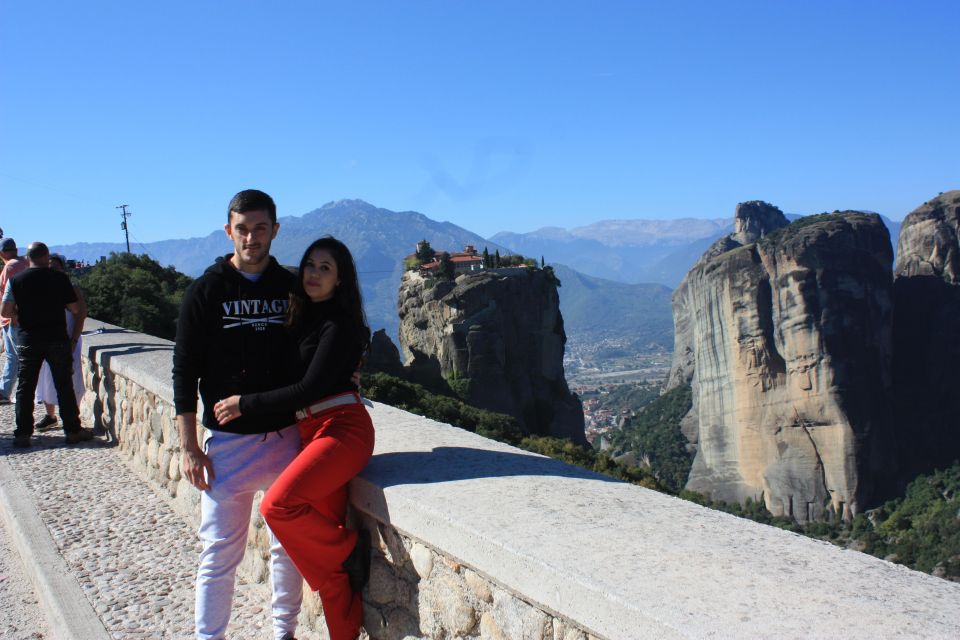
A personal guide also helps with timing. Sunset tours need the route to run fairly close to schedule, and photo stops can easily stretch when every rock formation looks like a postcard. Giannis is specifically praised for positioning people against the mountains, monasteries, and peaks, which is a small service but a valuable one if you want better photographs of the day.
The weather can change the mood, not just the view
Clear skies are not the only good weather for Meteora. Rain and fog can cover the upper rocks and create a quieter, more mysterious scene. You may lose distant views, but the cliffs can feel even more dramatic when they appear and disappear in mist.
The tradeoff is that poor weather can reduce visibility and make walking less pleasant. Good shoes become even more important, and you should not book this tour expecting perfect sunset colors. The observation deck is still worthwhile, but nature controls the final show.
Summer brings a different concern. The tour takes place outdoors at viewpoints and involves walking between transport and the monasteries, so carry water and use sensible footwear. Bottled water is included, but the tour does not list meals or other drinks.
Should you book the Meteora sunset tour from Ioannina?
Book it if you are staying in Ioannina and want a practical first encounter with Meteora without arranging a long self-drive. You get two monasteries, a dramatic sunset viewpoint, scenic road sections, an English-speaking guide, and a small group. The photo help and personal service from Giannis are useful extras.
Think twice if you want to visit all six monasteries, spend long periods inside each one, or avoid stairs and walking. The eight-hour schedule is efficient rather than leisurely, and extra costs remain for monastery tickets and dinner.
For most able-bodied visitors who value transport and strong scenery, this is a good use of a day. I would choose it for the combination of Saint Nicholas of Anapafsas, easier-access Saint Stephen, and sunset at Observation Deck. Just pack proper clothing, wear serious walking shoes, and leave room in the budget for the costs not covered by the tour price.
FAQ
Where does the tour begin?
The tour begins at Mavili Square in Ioannina.
How long does the tour last?
The full experience lasts eight hours, including travel, monastery visits, the sunset stop, dinner time in Kalabaka, and the return to Ioannina.
How long is the drive from Ioannina to Meteora?
The van journey to the Meteora area takes about 105 minutes. The return trip is also part of the day’s travel.
Which monasteries are included?
The planned visits are the Monastery of Saint Nicholas Anapafsas and the Holy Monastery of Saint Stephen.
Is Saint Stephen Monastery open every day?
No. Saint Stephen is closed every Monday.
Is food included in the price?
No. Dinner in Kalabaka is scheduled as a break, but meals and drinks are not included.
Are monastery tickets included?
No. Tickets to the monasteries are paid separately.
Is the tour available in English?
Yes. The tour includes a live English-speaking guide.
What clothing should I bring?
Bring long pants and appropriate monastery clothing. Women should have a skirt or dress available. Short skirts, sleeveless shirts, ripped clothing, and see-through clothing are not allowed, and photography inside the monasteries is prohibited.