REVIEW · GREECE
Crete: Cooking classes. Based on Cretan cuisine
Book on GetYourGuide →Operated by CRETE: Luxurious Private Tours and Taxi Transfers · Bookable on GetYourGuide
This cooking class gives you more than a recipe lesson. Near Rethymno, Chrysoula brings you into the everyday food culture of Crete, where olive oil, garden vegetables, wild greens, fresh dairy, herbs, and time do most of the work. You cook the meal together, then eat it at the same table.
I like the outdoor kitchen and olive-wood-fired oven, details that make the class feel connected to the island rather than staged for tourists. I also like the warm, family-style welcome, with raki or Greek coffee, homemade cheese, and direct instruction in dishes such as moussaka and dolmadakia.
The main drawback is practical: transportation is not included, and the meeting point is given as a road location. You need to arrange your own way there or ask the provider for a transfer price before booking.
In This Review
- Key points to know before booking
- A 3.5-hour introduction to Cretan home cooking
- Meeting Chrysoula near Rethymno
- Raki, Greek coffee, and the first taste of Crete
- Making pies with wild greens, cheese, and honey
- Preparing tzatziki and a Cretan-style Greek salad
- Folding dolmadakia and zucchini flowers
- Moussaka and rooster with orzo from the wood oven
- The shared feast is the real finish
- Is $153 a fair price?
- Who will enjoy this class most?
- Booking details that affect your day
- Should you book this Cretan cooking class?
- FAQ
- How long does the Cretan cooking class last?
- Where does the cooking class take place?
- Is transportation included?
- Which languages are available?
- What food and drinks are included?
- Can I cancel the booking?
Key points to know before booking
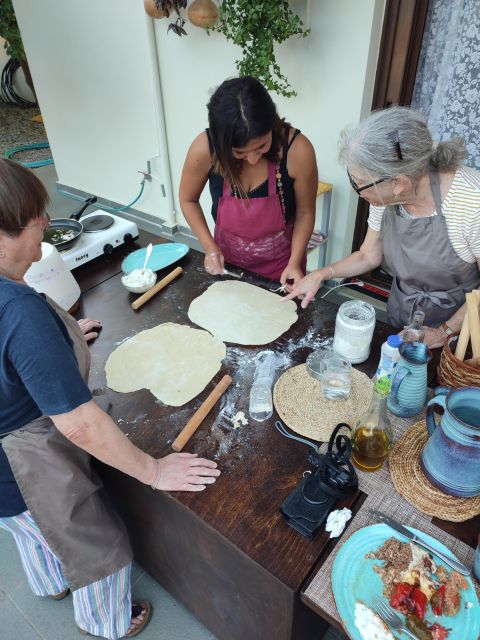
- Chrysoula leads a personal, family-style class in English or Greek, with a welcoming approach that suits first-time cooks.
- The meal is the main event: you prepare many dishes and eat them together at the end.
- Expect traditional Cretan ingredients, including wild greens, fresh milk, herbs, garden produce, and plenty of olive oil.
- An olive-wood-fired oven adds local character to dishes such as rooster with orzo.
- The class lasts 3.5 hours and takes place near Rethymno, with no transportation included.
- The $153 price buys a full meal and drinks, but it makes the most sense if you value hands-on cooking and local contact, not simply lunch.
A 3.5-hour introduction to Cretan home cooking
The class is built around a simple idea: Cretan food is not about piling on spices or hiding ingredients under sauces. It depends on good produce, careful cooking, and the imagination to turn humble food into a generous meal.
That makes this a useful experience for you if you want to understand what people eat at home, not just order another Greek salad in a restaurant. The focus is on traditional daily dishes and ingredients tied to the island: seasonal greens, wild herbs, fruit, fresh milk, fresh meat, and Cretan olive oil.
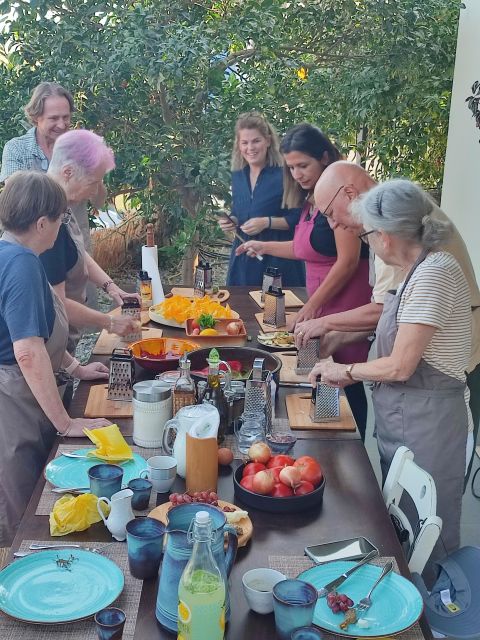
You do not simply watch someone cook. You prepare the dishes together, receive explanations about the Cretan diet, and then share the results. The rhythm is closer to visiting someone’s kitchen than attending a formal culinary school.
That distinction matters. If you want exact culinary technique, professional equipment, or a polished chef demonstration, this may feel informal. If you want conversation, practical guidance, and food with a strong sense of place, the relaxed format is the attraction.
You can also read our reviews of more cooking classes in Greece

Meeting Chrysoula near Rethymno
The cooking class takes place near Rethymno, at the meeting location listed as 9H27+M8. The activity description says the site is on the road, where the hostess will meet you and direct you to the cooking area.
You should pay attention to this detail when planning your day. This is not presented as a central Rethymno meeting point with easy hotel pickup. Transportation is not included, so you will need to arrange your own arrival or contact the provider about transfer services and pricing.
Once you arrive, Chrysoula is the key to the experience. Her style is warm and personal. The class is conducted in English or Greek, and the available feedback describes her as making the cooking feel like a visit with a beloved aunt. That is a useful clue about the mood: expect conversation, encouragement, and a home kitchen feel rather than a strict lesson with a stopwatch.
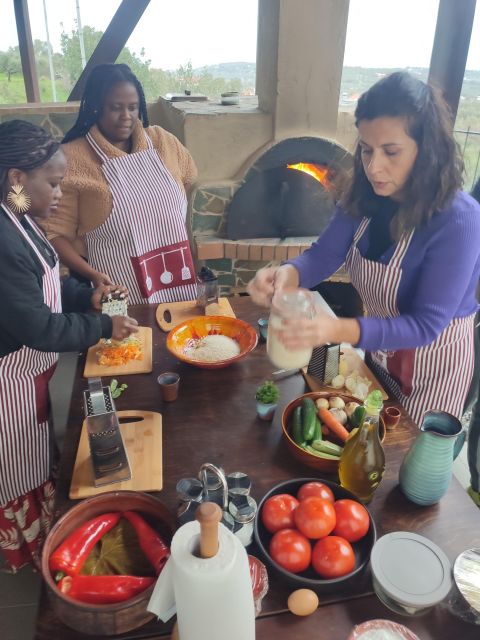
The setting adds much of the charm. You can expect an outdoor kitchen, olive orchards below, and vegetables from the garden. These details give the ingredients a clear connection to the place. You are not only told that Cretan food uses local produce. You can see the garden and the olive trees that help explain why the food tastes the way it does.
Raki, Greek coffee, and the first taste of Crete
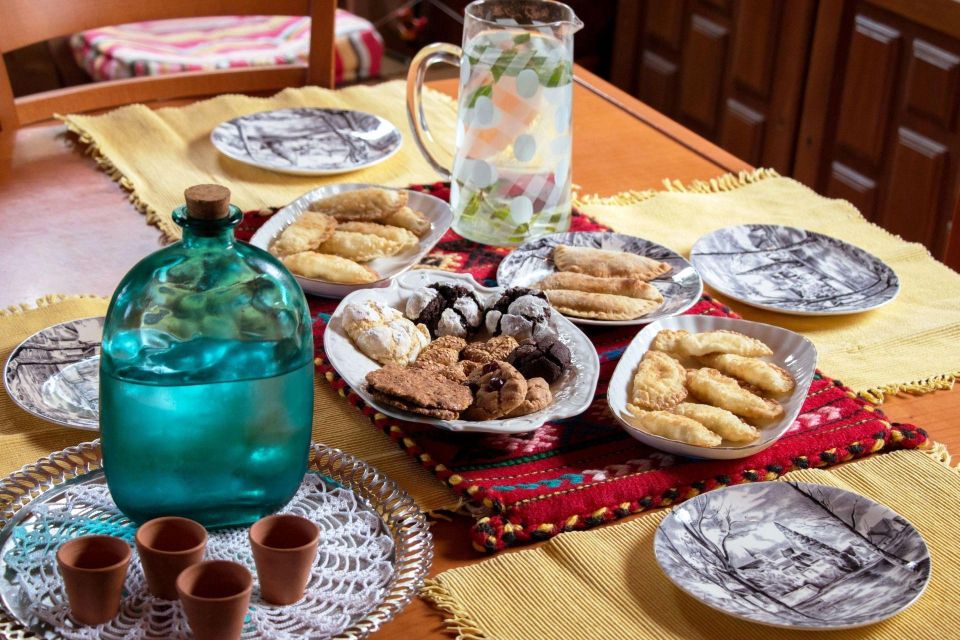
The class begins with a Cretan welcome. You receive an aperitif, either raki or Greek coffee, along with homemade cheese.
Raki is a well-known local spirit and a traditional way to welcome people in Crete. Greek coffee offers a non-alcoholic option, though the activity information does not specify whether you may choose between the two in every case. If you prefer one, it is sensible to ask Chrysoula when you arrive.
The homemade cheese is made with fresh sheep’s and goat’s milk. That is a small but important introduction to the island’s cooking. Dairy here is not just a packaged side dish. It is part of the food system that supports pies, desserts, and everyday meals.
This opening also gives you time to settle in before the cooking begins. The class is not designed as a quick sequence of recipes. It has a social pace, and the welcome helps set that tone.
Making pies with wild greens, cheese, and honey
One of the most distinctive parts of the menu is the pair of small pies. You prepare cheese pies served with honey, along with chortopites made with several kinds of wild greens.
The chortopites are especially useful for understanding Cretan cooking. Wild greens appear often in island cuisine, and combining several types creates flavor without relying on heavy seasoning. The dish also shows how traditional cooks make good use of what grows around them.
The small cheese pies with honey move in a different direction, balancing salty cheese with sweetness. It is the kind of pairing that works well as a first taste, especially with the welcoming drink.
The class is not only about copying a recipe. You also receive information about the Cretan diet and the role of ingredients. That context helps you recognize the logic behind the food: fresh produce, simple seasoning, olive oil, and combinations that make a few basic ingredients satisfying.
Preparing tzatziki and a Cretan-style Greek salad
The cold dishes are familiar, but the ingredients give them a local frame. You prepare tzatziki with strained yogurt, cucumber, garlic, and olive oil.
That list is short, and that is the point. A good tzatziki depends on thick yogurt, fresh cucumber, enough garlic, and a generous hand with olive oil. The class gives you a chance to see how a basic dish becomes part of a larger meal rather than a standard restaurant dip.
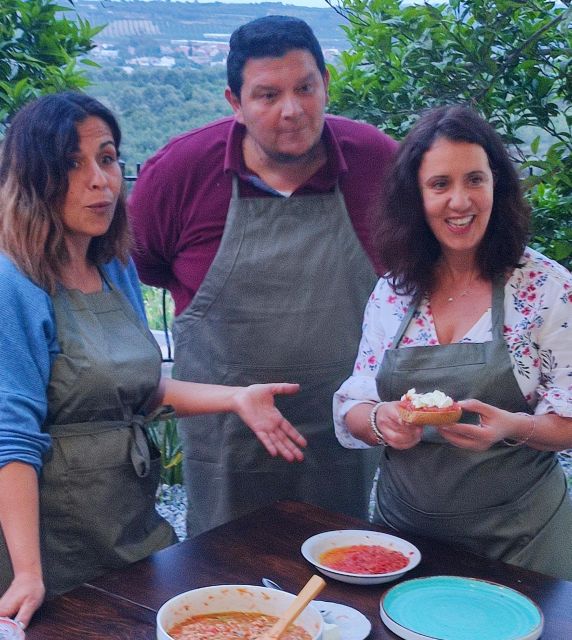
The Greek salad includes tomatoes, cucumber, green pepper, onion, capers, olives, and homemade barley rusk. The rusk is an important Cretan touch. It adds crunch and substance, turning the salad into something more filling than a bowl of chopped vegetables.
You also use plenty of olive oil. This is not a token garnish. Olive oil is one of the foundations of Cretan cooking, and the class treats it that way.
I like this part of the menu because it shows how much work a traditional meal can get from vegetables, grains, dairy, and oil before the main dishes even arrive. You also have a chance to compare the fresh, direct flavors of the salad with the slower, more involved dishes later in the class.
A few more Greece tours and experiences worth a look





Folding dolmadakia and zucchini flowers
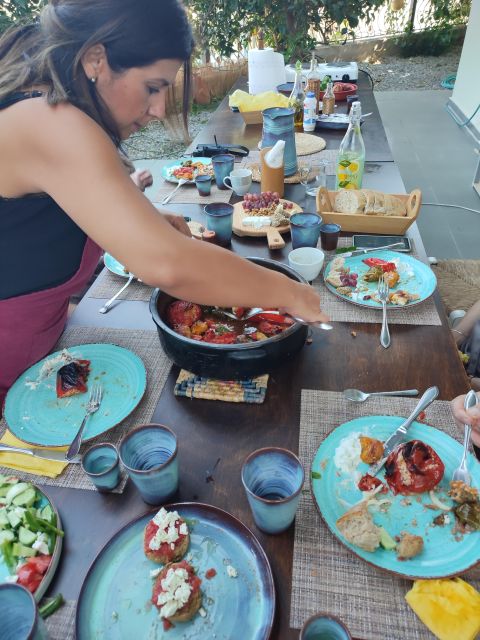
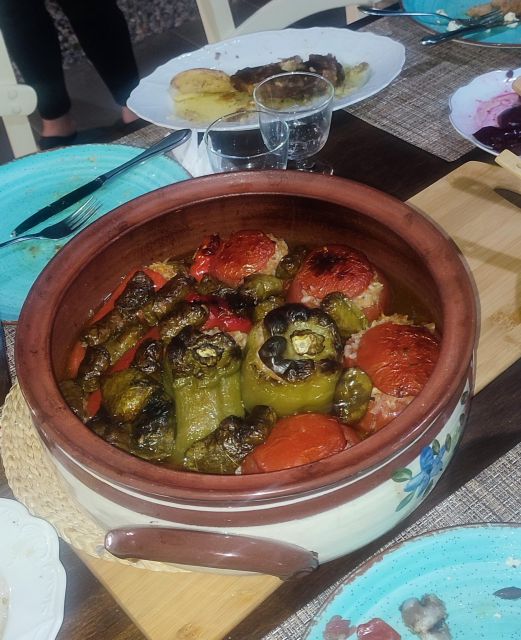
The class includes dolmadakia, stuffed vine leaves, as well as zucchini flowers filled with rice, vegetables, herbs, and olive oil.
These are hands-on dishes. You need to handle the leaves and flowers with care, add the filling, and fold them into compact parcels. The task is simple enough for beginners, but it gives the cooking class a real practical element. You are making something that takes patience rather than merely stirring a bowl.
The filling keeps the focus on vegetables, herbs, rice, and olive oil. There is no need for strong spice blends to make the dish interesting. The flavor comes from the ingredients and the way they are cooked together.
This is also one of the better parts of the class for families or groups who want to work side by side. Different people can help with preparing the filling, shaping the parcels, and arranging them for cooking. The available information does not give a group size, so you should not assume a private class or a small party, but the format is clearly intended to be shared.
Moussaka and rooster with orzo from the wood oven
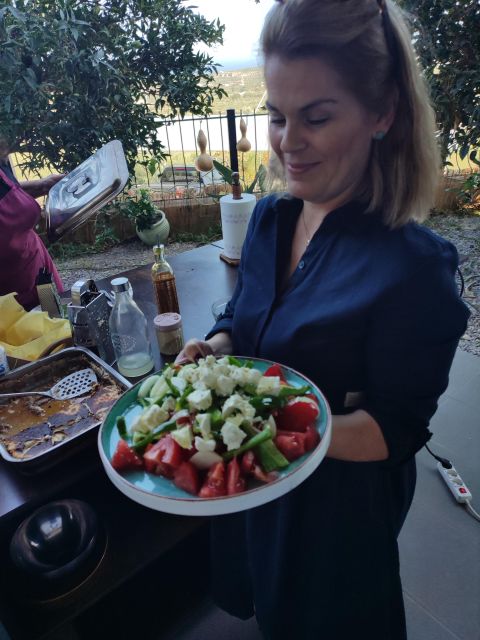
The main dishes give the meal more weight. You prepare moussaka with potatoes, zucchini, aubergines, minced meat in tomato sauce, and béchamel.
Moussaka is familiar to many people who have visited Greece, but making it helps you understand the work behind the finished dish. There are several layers and components, and the béchamel gives the top its creamy finish. You also see how vegetables, meat, and sauce are brought together in one substantial dish.
The second main dish is giouvetsi, made with rooster and orzo in the wood oven. The use of an olive-wood-fired oven is one of the most appealing details of the experience. It connects the cooking to older rural methods and gives the class a stronger sense of place than a lesson held in a standard indoor kitchen.
Rooster with orzo is also different from the usual quick holiday meal. It is a slow, hearty dish built around meat, pasta, and oven cooking. The activity information does not provide exact cooking times or a recipe format, so you should think of this as a guided meal-making experience rather than a technical masterclass with a printed curriculum.
Still, there is plenty here for you to take home. The dishes are recognizable, useful, and realistic to cook again, especially if you can find good vegetables, yogurt, herbs, and olive oil.
The shared feast is the real finish
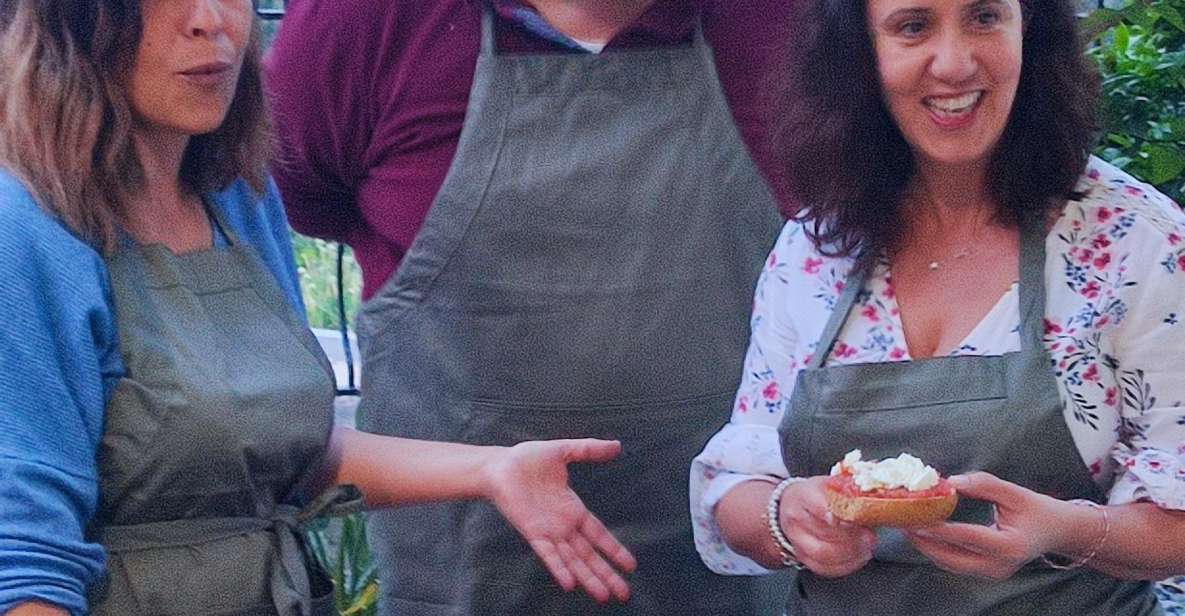
At the end of the lesson, you sit down and eat what you have prepared. This is not an extra tasting tacked onto the schedule. It is the payoff for the whole class.
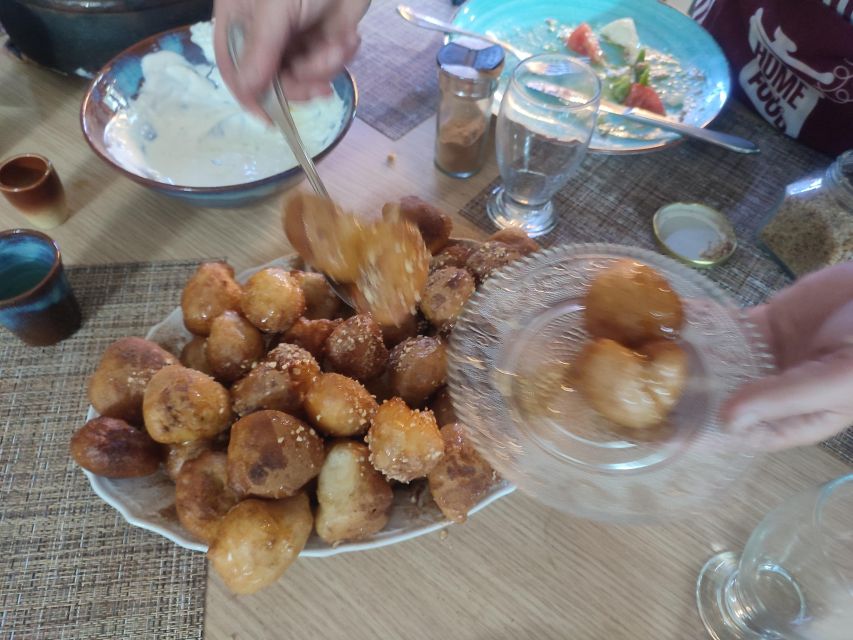
The menu is large: cheese pies, wild-green pies, homemade cheese, tzatziki, Greek salad, dolmadakia, zucchini flowers, moussaka, rooster with orzo, and a yogurt-based dessert or homemade ice cream with homemade fruit sweet.
Red or white wine is included with the meal. Raki or Greek coffee is part of the welcome, so the drink selection covers both the beginning and the shared feast.
I like the structure because it gives you time to appreciate the food as a meal, not just as separate samples. You can see how Cretan cooking moves from small pies and salads to stuffed vegetables and oven dishes, then ends with yogurt or ice cream and fruit.
The social side also matters. The class is designed around cooking and eating together. If you enjoy talking over food and meeting the person who prepared the meal with you, this will likely feel more rewarding than a short market tasting.
If you have dietary restrictions, the supplied information does not say how substitutions are handled. Ask before booking rather than assuming the menu can be changed.
Is $153 a fair price?
At $153 per person, this is not a cheap lunch. You are paying for a 3.5-hour experience, hands-on instruction, a long menu, drinks, and a personal setting near Rethymno.
The value depends on what you want. If you only want to eat traditional Cretan dishes, you may find a restaurant meal less expensive. If you want to learn how several dishes are made, spend time with a local host, and enjoy the full meal afterward, the price is easier to justify.
The menu is notably broad. You are not making one main dish and receiving a small sample. The class includes pies, cheese, cold dishes, stuffed vegetables, two main courses, dessert, and wine. The use of homemade products and garden ingredients also adds value, though exact portion sizes are not specified.
Transportation is the main extra cost to consider. Since it is not included, add the price of reaching the meeting point to your budget. The provider offers transfer services, but you need to contact them for a price.
Who will enjoy this class most?
I would choose this class if you want a personal connection to Cretan food and enjoy a meal that unfolds slowly. It suits couples, families, and small groups who like to cook together rather than sit back and watch.
It is also a good choice for beginners. The dishes are traditional but familiar enough to follow, and the host’s friendly approach should make the lesson less intimidating than a professional kitchen class.
Food lovers will appreciate the range of ingredients. You get to work with wild greens, sheep’s and goat’s milk cheese, barley rusk, vine leaves, zucchini flowers, olive oil, and an olive-wood oven. That is a useful cross-section of Cretan cooking in one afternoon.
You may want to skip it if you dislike group cooking, do not want a long shared meal, or need a highly structured lesson with exact timing and technical instruction. You should also think twice if getting to a road-side meeting point is difficult and you do not want to arrange a transfer.
The activity is listed as wheelchair accessible, which is helpful, though you should confirm the exact access details with the provider before booking because the meeting point and outdoor setting may matter for your needs.
Booking details that affect your day
The cooking class lasts 3.5 hours, with starting times based on availability. Plan enough time around it so you are not rushing to another appointment.
The instructor language is English and Greek. Transportation is not included, and the hostess waits at the stated meeting location to direct you to the activity area.
You can cancel up to 24 hours in advance for a full refund. The reserve-now, pay-later option lets you hold a place without paying on the day of booking, which is useful if your Crete plans are still changing.
Bring a camera if you want to record the setting, the food preparation, or the finished spread. Also arrive ready to eat: this is a cooking lesson, but it ends with a substantial gastronomic feast.
Should you book this Cretan cooking class?
Book it if you want more than a recipe demonstration. The combination of Chrysoula’s family-style welcome, the outdoor kitchen, garden produce, olive orchards, and wood-fired cooking gives the class a clear local character.
The strongest reason to go is the chance to prepare a full Cretan meal and then share it at the same table. The strongest reason to hesitate is the $153 price, especially once you add transportation.
For an authentic food-focused afternoon near Rethymno, I think it is a good choice. Confirm your transfer, ask about any dietary needs, and leave room in your schedule for a long meal. If that sounds like your kind of day, this class offers a pleasant and practical way to meet Crete through its kitchen.
FAQ
How long does the Cretan cooking class last?
The cooking class lasts 3.5 hours, including the preparation, cooking, and shared meal.
Where does the cooking class take place?
The activity takes place near Rethymno at the meeting location listed as 9H27+M8. The meeting point is on the road, and the hostess will meet you there and direct you.
Is transportation included?
No. Transportation is not included. You can contact the provider for information and pricing for transfer services.
Which languages are available?
The instructor languages are English and Greek.
What food and drinks are included?
The menu includes cheese pies with honey, wild-green pies, homemade cheese, tzatziki, Greek salad, dolmadakia, stuffed zucchini flowers, moussaka, rooster with orzo, and Greek yogurt or homemade ice cream with homemade fruit sweet. Drinks include raki or Greek coffee at the welcome and red or white wine with the meal.
Can I cancel the booking?
Yes. You can cancel up to 24 hours in advance for a full refund. A reserve-now, pay-later option is also available.