REVIEW · ATHENS
Greek Mythology for Kids: Private Tour
Book on GetYourGuide →Operated by Be a Greek · Bookable on GetYourGuide
Greek mythology becomes much easier to remember when your child is solving a riddle as Hercules, tracking a monster through a maze, or learning why Icarus flew too close to the sun. This private Athens walk turns familiar monuments into part of a story, with games and role-play aimed at children rather than a standard adult history lecture.
I like the private format, since the guide can work at your children’s pace, and I like the way the tour links mythology to real places, including Hadrian’s Arch, the Panathenaic Stadium, and the National Garden. The main consideration is the four-hour walking route. It covers a lot of ground, and the tour is not suitable for people with mobility impairments.
- Mythology becomes a treasure hunt: Children solve riddles and complete challenges while learning about gods, heroes, monsters, and ancient Athens.
- A private guide keeps the pace flexible: Guides such as Niki, Antonia, Effie, Bianca, and Martina have led children through the activities in English.
- The route connects seven Athens locations: You walk from the Acropolis area through central Athens and finish at Syntagma Square.
- Children keep the souvenirs: Activity materials, a mythology booklet, a board game, and a medal go home with each child.
- The tour balances stories with movement: Role-play and games help keep energetic children involved during the long walk.
- Bring proper shoes: Comfortable clothing and sports shoes are strongly advised for the four-hour route.
In This Review
- Why This Athens Mythology Tour Works for Children
- Starting Outside the Acropolis Metro Station
- The Choragic Monument of Lysicrates and the First Mythic Clues
- Hadrian’s Arch and the Meeting of Two Eras
- Zappeion, Where Stories Meet Athens Today
- The Panathenaic Stadium and Heroic Competition
- The National Garden and the Labyrinth of Activities
- Returning to Syntagma Square
- What the $170 Price Means for a Family
- How Long Four Hours Feels With Children
- Who Should Book This Experience
- Booking Details Worth Noting
- Should You Book the Greek Mythology for Kids Tour?
- FAQ
- Where does the tour begin?
- Where does the tour end?
- How long does the tour last?
- Is the tour private?
- What language is the tour conducted in?
- Are entrance fees included?
- What is included in the price?
- What should children wear?
- Can I cancel the booking?
Why This Athens Mythology Tour Works for Children

A conventional city tour can lose a seven-year-old within minutes. This experience takes a different route. Instead of asking children to listen quietly while an adult explains a monument, it gives them tasks to complete and characters to understand.
The stories cover the Olympian gods, epic battles, heroic quests, natural phenomena, and the rivalries of the twelve gods on Mount Olympus. Children meet Hercules, Athena, Icarus, Pandora, and the bull-headed monster connected with the labyrinth. Those names are familiar to many children, but the games give them a reason to remember who did what.
I especially like the mix of fantasy and real Athens. The tour is not only a mythology lesson. At each stop, your guide also explains something about the location itself. That makes the walk useful for parents who want their children to see the city, not simply play a themed game indoors.
The format is private, so you are not tied to the pace of a large group. That matters when children need a short pause, become absorbed in a clue, or need the guide to explain a story in simpler terms.
Starting Outside the Acropolis Metro Station

The meeting point is outside the Acropolis Metro Station on Makrigianni Street. This is a practical place to begin because it puts you close to the Acropolis area without requiring an extra transfer across Athens.
The tour is conducted in English, and the group is private. Guides named in family feedback include Niki, Antonia, Effie, Bianca, and Martina. The exact guide depends on your booking, but the experience is designed around direct contact between one guide and your family.
At the start, children enter the world of Greek myth through stories and activities. Expect the guide to introduce gods and goddesses, heroes and heroines, and the basic idea of Mount Olympus as the home of the immortal gods.
The activities are not simply handed out as entertainment. They are tied to the stories. A riddle can introduce a character, a role-play can explain a heroic quest, and a challenge can help children recall a myth later in the walk.
You can also read our reviews of more private tours in Athens

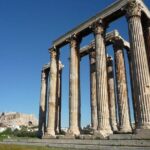

The Choragic Monument of Lysicrates and the First Mythic Clues

The first listed stop after the Acropolis area is the Choragic Monument of Lysicrates. You have about 45 minutes allocated for walking between points, so the route is more than a series of quick photo stops.
This monument gives the guide a useful setting for connecting ancient Athens with drama, competition, and public life. The mythology activities can begin to feel grounded here, rather than floating somewhere in a storybook past.
For children, the value is less about memorizing architectural terms and more about learning that ancient Athens was a real city where people gathered, competed, performed, and honored their gods. The guide can use the location to show how myth and daily life were linked.
Parents should keep an eye on the clock. A child who becomes fascinated by every detail may want to linger, but the route has several more stops. The private format helps, although the four-hour schedule still requires a reasonable pace.
Hadrian’s Arch and the Meeting of Two Eras
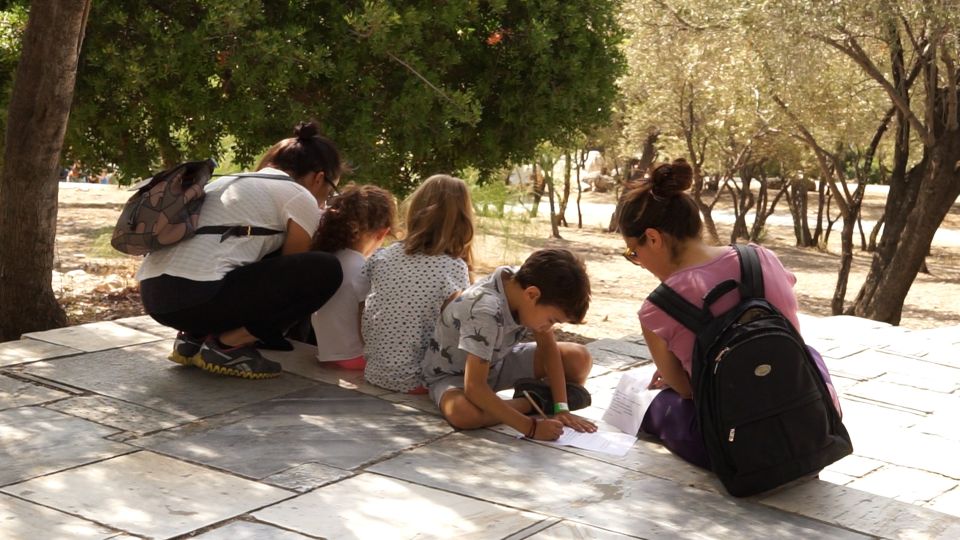
The walk continues to Hadrian’s Arch, one of the clearest visual markers between ancient Athens and the Roman period. It is a strong teaching stop because a single monument can lead into a conversation about how Athens changed over time.
The mythology theme remains central, but the location adds historical contrast. Children can begin to see that Athens was not built in one period and that its famous stories belong to a much longer history.
This is also a good point for families who want photographs without turning the whole tour into a photo session. The arch is easy to recognize, and the guide can keep the children involved with a question or activity rather than leaving them waiting while adults take pictures.
You should not expect entrance visits at the stops. Entrance fees are not included, and the activity is structured mainly as an outdoor walking tour. That keeps the route moving, but it also means the experience is about stories, challenges, and city sights rather than extended time inside monuments.
Zappeion, Where Stories Meet Athens Today
Zappeion brings the walk into a grand civic setting surrounded by open space. It offers a change from the tighter streets near the Acropolis and gives energetic children room to keep moving.
The guide uses the route to connect Greek stories with natural phenomena, cities, power, and the gods’ influence over the world. Children hear about the twelve Olympians and the intrigue surrounding their brilliant palace on Mount Olympus.
This section is valuable because it lets your child see mythology as more than a list of monsters. Greek myths explain storms, conflict, ambition, courage, family arguments, and the behavior of gods who are powerful but far from perfect.
The outdoor route can be pleasant, but comfort matters. Four hours on foot is a long stretch for young children, especially in warm weather. Bring water and dress practically, although the provided information specifically highlights comfortable clothing and sports shoes.
The Panathenaic Stadium and Heroic Competition
The Panathenaic Stadium is one of the most memorable stops on this route. Its white marble seating and long running track make the idea of ancient competition easy for children to picture.
Here, the guide can give the mythology stories a physical setting. Ancient Greek tales are full of contests, feats of strength, heroic trials, and battles against impossible odds. Hercules fits naturally into that theme, as do the challenges used during the tour.
The stadium also helps children understand that ancient Greek culture included public events and athletic competition, not only temples and gods. The connection between sport, honor, and heroism can make the stories feel less remote.
There is an important practical detail: entrance fees are not included. The tour may explain and show the stadium from the route, but you should check the booking details if you want to enter. Do not assume admission is part of the $170 price.


The National Garden and the Labyrinth of Activities
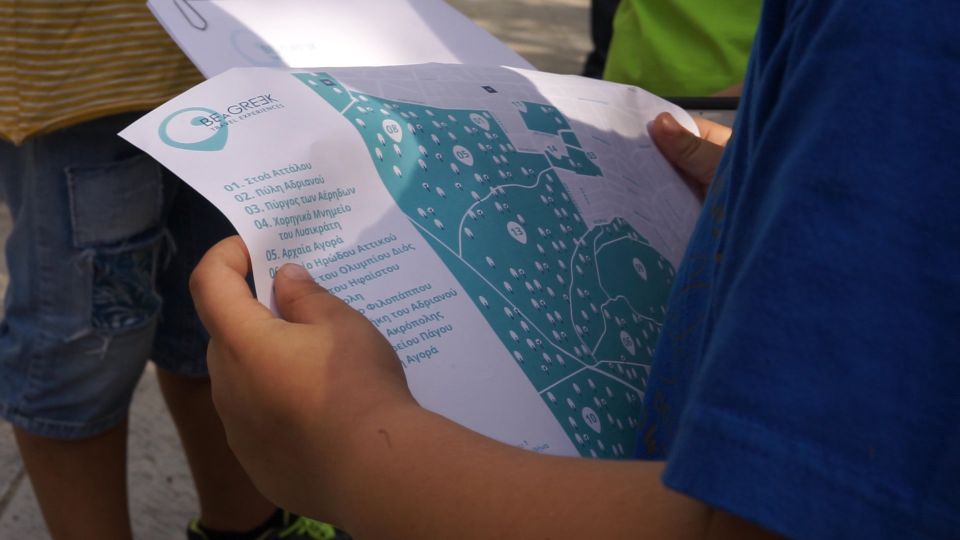
The National Garden is a welcome change of pace after several major monuments. Green open space gives the guide room to run games, follow clues, and use the activity materials without the children standing in a crowded traffic area.
This is where the treasure-hunt side of the experience can work especially well. One family described completing challenges and solving riddles, while another praised a guide for using maps, stories, and games to keep energetic boys involved.
The activities are built for participation. Your children may take on roles, answer questions, follow a map, or work through clues linked to Greek mythology. The exact sequence can vary with the guide and the group, but the aim is clear: children should do something with the story instead of only hearing it.
The Minotaur and his labyrinth are natural material for this part of the tour. Icarus also gives the guide a way to talk about ambition and caution, while Pandora’s Box introduces the story of Hope and the courage people need in difficult moments.
The National Garden does not turn the tour into a playground visit. It remains part of a guided cultural activity, so children need to stay with the group and follow instructions.
Returning to Syntagma Square
The route finishes at Syntagma Square after passing through central Athens. This ending is convenient if you plan to continue sightseeing, eat nearby, or return to your hotel by public transport.
The final mythology theme is Pandora’s Box and Hope. It is a thoughtful way to close a tour full of gods, monsters, battles, and heroic quests. Children leave with a story that is not only about winning. It gives the guide a chance to explain why hope matters and how it can give people courage.
By the end, each child can keep the materials produced during the activities. The included mythology booklet and board game extend the experience beyond the four hours, while the medal gives children a small physical reminder of the adventure.
A coffee or another traditional refreshment is included for each person. That is a modest extra, but it helps break up the walk and gives the family a short pause before the final section.
What the $170 Price Means for a Family
At $170 per person, this is not a low-cost way to see Athens. A family of four would pay $680 before any entrance fees or personal expenses. You are paying for a private four-hour guide, prepared activities, family-focused storytelling, and a route that combines several important central sights.
The value depends heavily on your children. If your family would struggle through a standard walking tour, the games may prevent the usual complaints and keep the day useful for everyone. The private format is also more valuable for families with different ages, since a guide can adjust questions and explanations more easily than a large group tour can.
The price is harder to justify if your children already enjoy ordinary history walks or if you mainly want quick visits to monuments. In that case, you may prefer to explore at your own pace and spend money on entrance tickets or another activity.
Remember that entrance fees are extra. The included items are activity materials, the mythology booklet, board game, medal, and a coffee or traditional refreshment. Personal expenses are also separate.
How Long Four Hours Feels With Children
The advertised duration is four hours, with roughly 45 minutes of walking listed between each point. That is a substantial outing. Some families have stayed engaged for three and a half hours or longer, but your children still need to be ready for a walking-heavy day.
The private arrangement helps. You can ask the guide to clarify a story, allow a child more time with a challenge, or adjust the rhythm when possible. Still, this is not a short introductory activity.
Plan around the time of day and your family’s energy. Comfortable shoes are essential. Sports shoes are preferred, and comfortable clothing is recommended for both children and adults.
The tour is not suitable for people with mobility impairments. Even families without mobility concerns should consider how well their children manage extended walking in an urban setting.
Who Should Book This Experience
I would choose this tour for families with children who enjoy stories, puzzles, role-play, and active challenges. It is particularly well suited to children who become restless during conventional sightseeing but still want to understand the places they see.
The activities have worked well for a range of ages. One family kept 10 and 13-year-old boys involved for more than three and a half hours, while another family used the tour with children aged 7 and 9. That suggests the guide can make the material work for both younger children and early teenagers, though the exact fit will depend on your child’s interests.
It is also useful for parents who want a calm, organized way to introduce Athens. Guides including Effie, Bianca, Antonia, Niki, and Martina have been singled out for keeping children involved, explaining mythology clearly, and using games at the right moments.
I would skip it if your children dislike role-play, puzzles, or walking. I would also think twice if you want a full archaeological tour with long indoor visits, since the main strength here is the combination of outdoor sights and guided activities.
Booking Details Worth Noting
You meet outside Acropolis Metro Station and finish at Syntagma Square. The guide speaks English, and the group is private.
You can cancel up to 24 hours ahead for a full refund, and the reserve-now, pay-later option lets you hold a place without paying at the time of booking. Starting times depend on availability.
Bring comfortable shoes and practical clothing. The children can keep the activity materials, which makes the tour feel more lasting than a one-time walk.
Should You Book the Greek Mythology for Kids Tour?
Book it if you want your children to connect Athens with memorable characters and active games rather than a long adult lecture. The strongest parts are the private guide, the treasure-hunt structure, the range of central sights, and the way the final story of Pandora and Hope gives the day a clear ending.
Be realistic about the cost and the walking. At $170 per person, with entrance fees excluded, it is a major family expense. But for a family that needs a child-focused way to see central Athens, it can be a sensible use of half a day, especially if your children enjoy solving riddles and acting out stories.
FAQ
Where does the tour begin?
It begins outside Acropolis Metro Station on Makrigianni Street.
Where does the tour end?
The tour finishes at Syntagma Square.
How long does the tour last?
The activity lasts four hours.
Is the tour private?
Yes. It is operated as a private group.
What language is the tour conducted in?
The live tour guide conducts the experience in English.
Are entrance fees included?
No. Entrance fees to points of interest are not included.
What is included in the price?
Activity materials, a mythology booklet, a board game, a medal, and a coffee or other traditional refreshment for each person are included.
What should children wear?
Children and companions should wear comfortable clothing and preferably sports shoes. Comfortable shoes are important because the tour involves extensive walking.
Can I cancel the booking?
You can cancel up to 24 hours in advance for a full refund. You can also reserve now and pay later.