REVIEW · CRETE
Heraklion Crete: Cretan and Greek Dance Lesson at Arolithos
Book on GetYourGuide →Operated by AROLITHOS TRADITIONAL CRETAN VILLAGE · Bookable on GetYourGuide
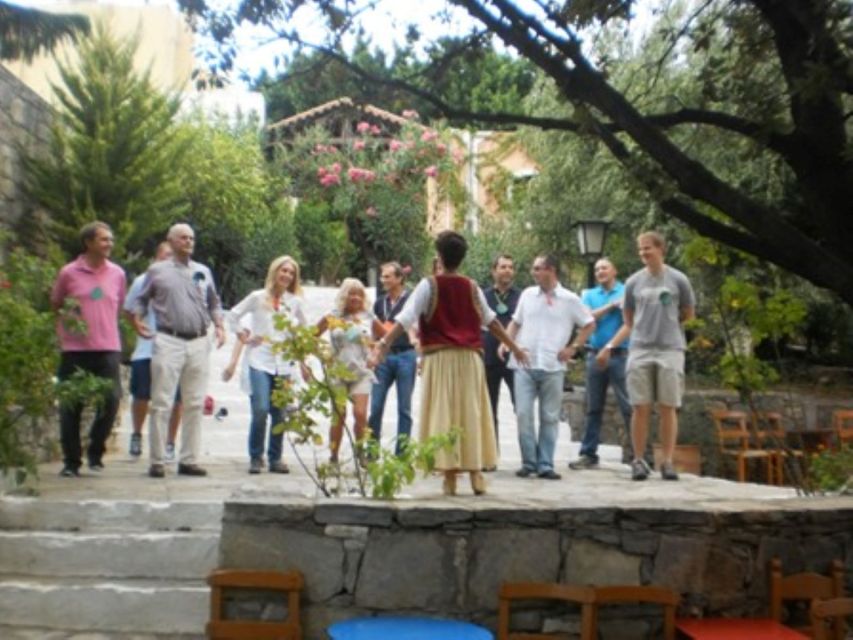
The best part of this experience is that you do not just watch Cretan culture from the sidelines. Maria or Evi gets you moving, teaching simple steps first and building toward dances such as Sousta and Zorba the Greek. The lesson takes place at Arolithos Traditional Cretan Village, where old houses, a folk museum, and wide views give the activity a useful sense of place.
I like two things here: the patient personal instruction and the small cultural tour that comes before or around the dancing. Families can take part, and the teachers have adjusted lessons for mixed ages and skill levels. The main drawback is value. At $106 per person, this is not a cheap two-hour activity, especially if you are mainly looking for a short dance class.
In This Review
- Key points
- Dancing at Arolithos Traditional Cretan Village
- Meeting Maria or Evi
- What You Learn in the Two-Hour Lesson
- The Museum and Old Houses
- Terrace Drinks and Mountain Views
- The CD and Dancing Certificate
- Is $106 Per Person Good Value?
- Who Will Enjoy This Activity Most?
- Practical Tips for a Smoother Visit
- Should You Book the Arolithos Dance Lesson?
- FAQ
- How long does the Cretan dance experience last?
- Where does the activity take place?
- Who teaches the dance lesson?
- Which dances will I learn?
- Is the lesson suitable for beginners?
- Is transportation from my hotel included?
- What should I bring and wear?
- Can I cancel or pay later?
Key points
- Learn several dances in one session: The lesson can include Sousta, Zorba the Greek, and other Cretan and Greek dances, with steps suited to beginners.
- Meet professional local teachers: Maria leads the Arolithos dance group, while Evi often assists and has taught highly enjoyable private lessons.
- Tour Arolithos beyond the dance floor: The visit includes the Rural History and Folk Craft Museum, old houses, and a short look around the village.
- Enjoy a welcome drink and views: The experience includes time on the terrace, with raki and juice or a similar welcome drink served in the open air.
- Take home two souvenirs: You receive a CD of Cretan and Greek music and a dancing certificate.
- Plan your own transport: Hotel pickup and drop-off are not included, and reaching the village can require careful navigation.
Dancing at Arolithos Traditional Cretan Village
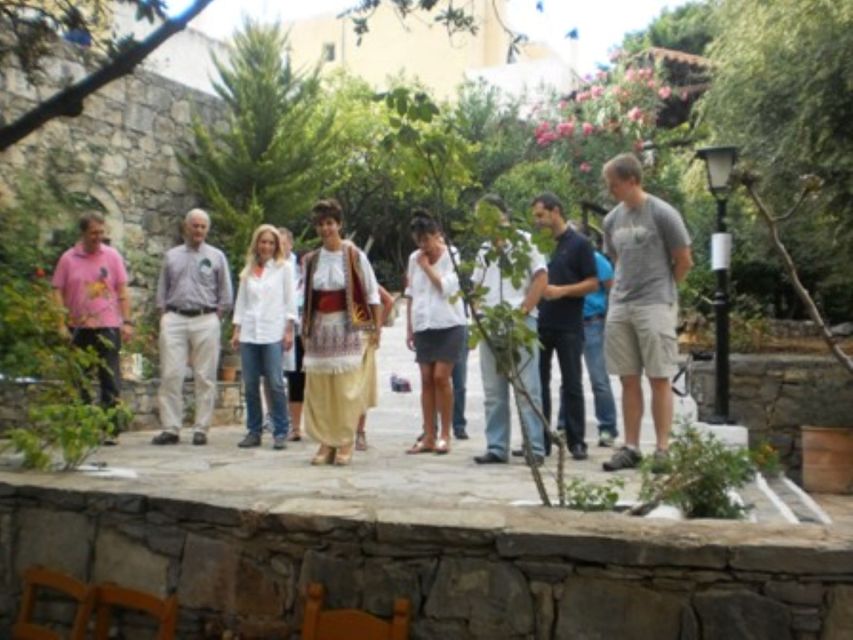
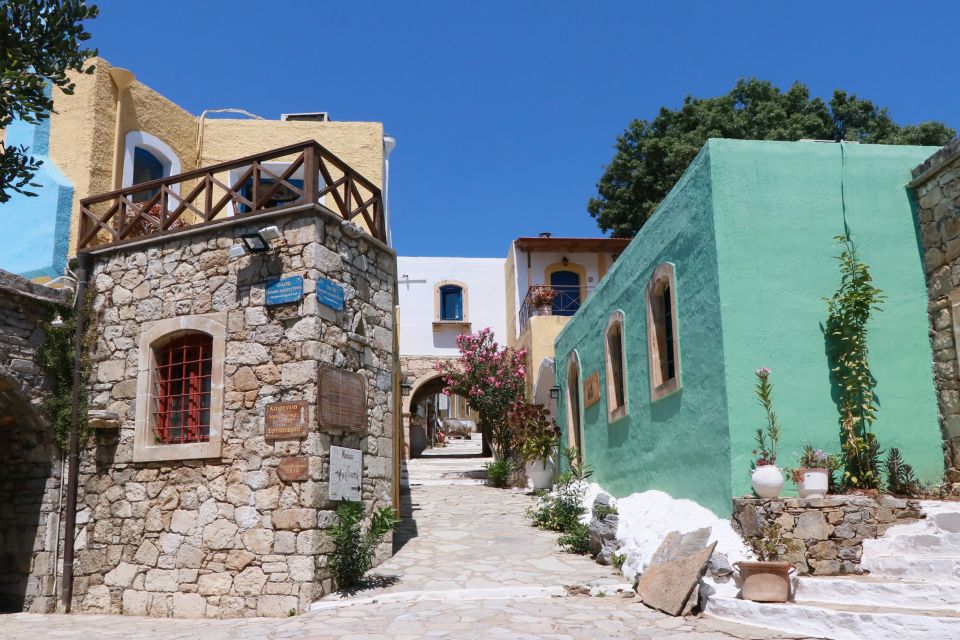
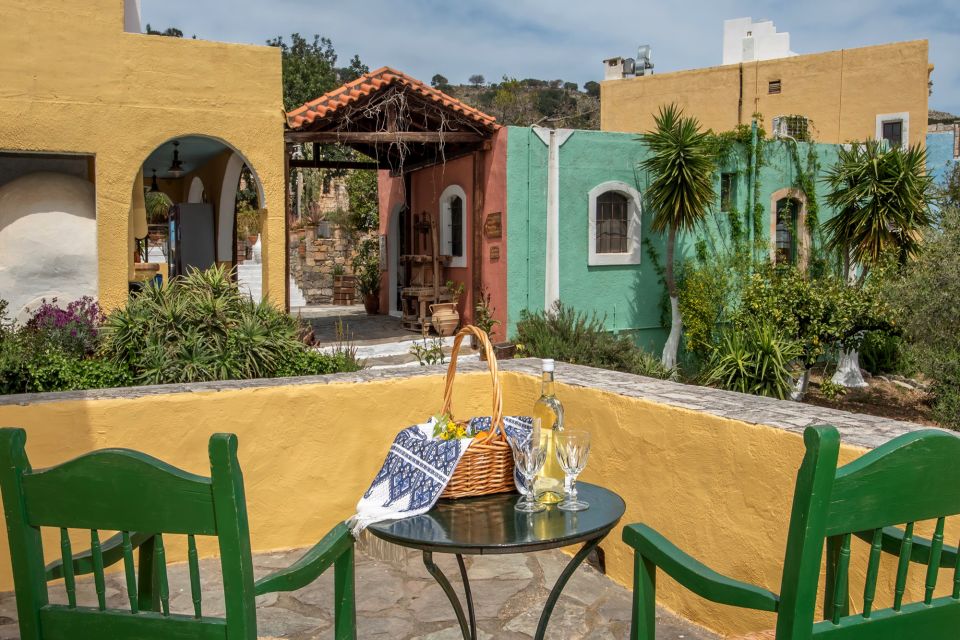
Arolithos is designed as a traditional Cretan village, with old-style houses, a museum, and a taverna. It is also a hotel complex, so do not expect an untouched rural settlement. That said, its buildings and displays give you more context than a dance lesson held in a plain studio.
The setting matters. Cretan dance is tied to village life, weddings, celebrations, and local identity. Learning a few steps among traditional buildings helps you understand the dances as social customs, not just stage performances.
The experience lasts two hours. The time includes the village and museum visit as well as the dance instruction. One session included roughly an hour of dancing and four different dances, so the exact balance may change depending on the group and teacher.
You meet at Arolithos Traditional Cretan Village on the old Heraklion to Rethymnon road, about 11 kilometers from Heraklion. There is no hotel transportation, so you need to arrange your own way there. Allow extra time for finding the entrance. One visitor had trouble with GPS directions and was initially sent toward the top of a mountain before locating the hotel and village.
A few more Crete tours and experiences worth a look


Meeting Maria or Evi
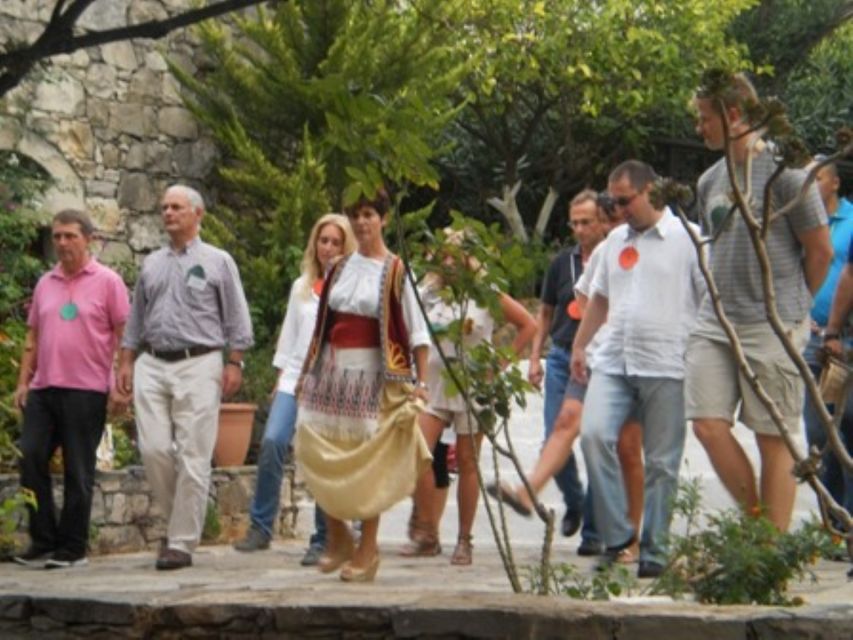
Maria is a professional Cretan and Greek dancer, the leader of Arolithos Village’s dance group, and a teacher for children and adults through a local cultural association. Her background makes her a natural guide for an introduction to Cretan dance.
Evi sometimes leads the class instead. She is also an experienced Cretan dancer from the Tylissos area. The teaching style matters more here than polished stage presentation, since you need someone who can slow down, correct your feet, and keep the class relaxed.
That is where this experience earns its strongest praise. Evi has been especially good at putting beginners at ease, explaining steps clearly, and adjusting to different abilities. Maria has also been described as patient and easy to follow.
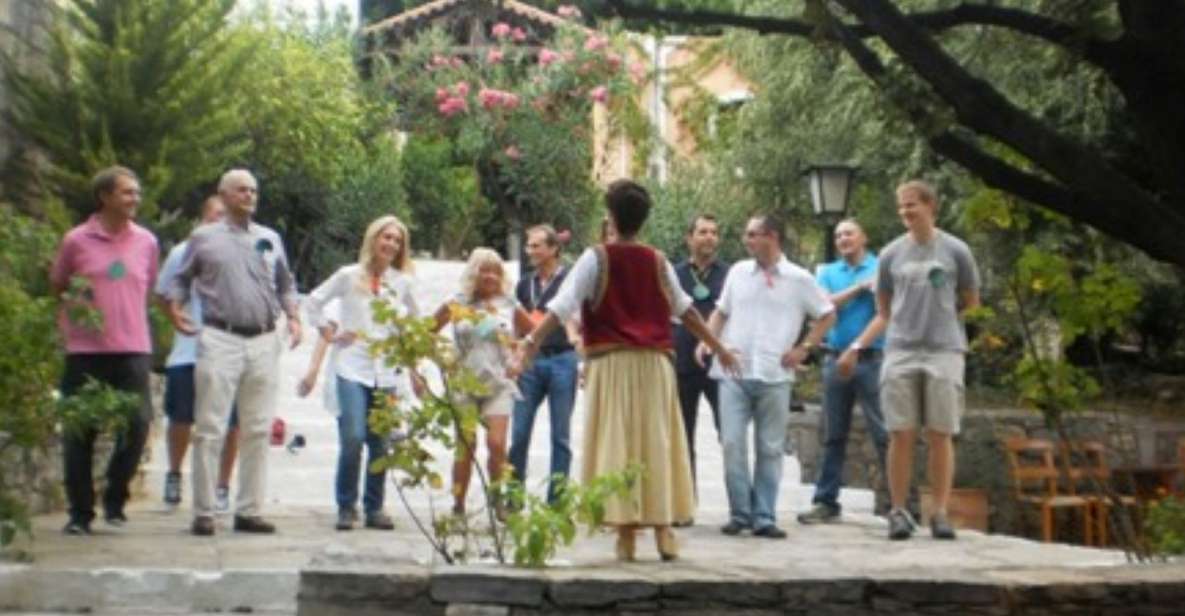
You do not need dance experience. The class begins with basic footwork, then adds more movement and rhythm. If you have two left feet, you are in good company. The goal is not to perform perfectly, but to learn enough to recognize the pattern and join a Greek dance line with confidence.
What You Learn in the Two-Hour Lesson
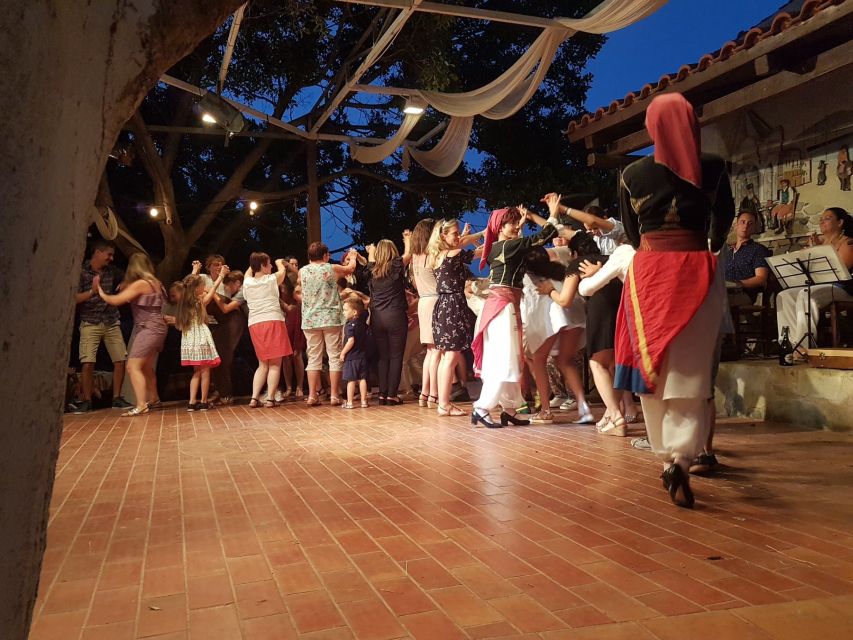
The lesson can include Sousta, a traditional Cretan dance, along with Zorba the Greek and other popular dances from Crete and Greece. The precise selection is not fixed in the information provided, so you should expect a selection rather than a guaranteed list beyond the named examples.
The teacher demonstrates the first steps, then has you repeat them. Expect the class to build from easier movements to more demanding ones. One couple learned four dances, ranging from simple to more challenging, while another session covered at least three dances.
This variety is useful. You get a taste of how Greek dances differ rather than spending the full lesson repeating one routine. It also gives the teacher room to adjust. A family with a 70-year-old parent and children aged five and eight found the class suitable for their mixed group, while adult beginners also had enough time to learn several dances.
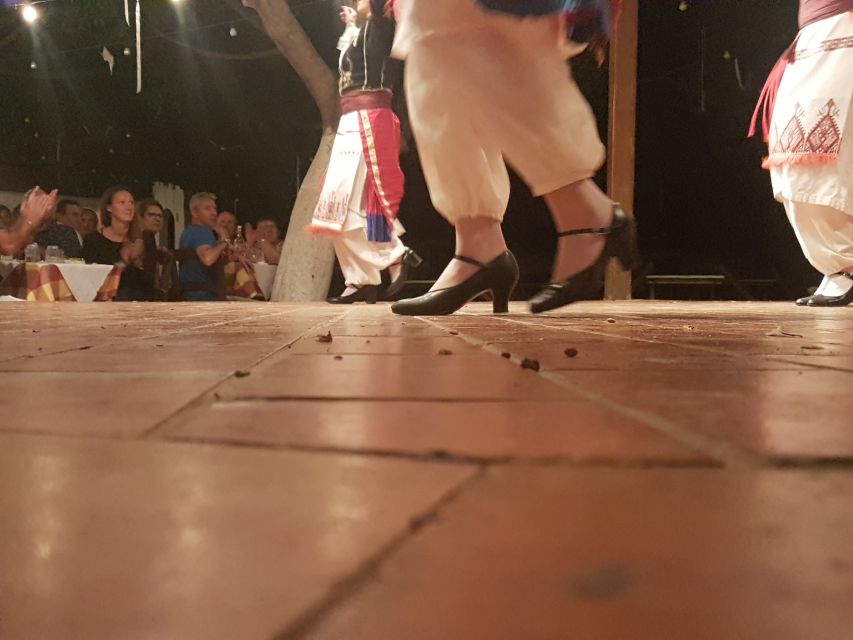
The activity is not designed as athletic training. Still, dancing requires standing and repeated footwork. You should wear comfortable shoes and avoid the class if you are pregnant or have back problems. It is not wheelchair accessible.
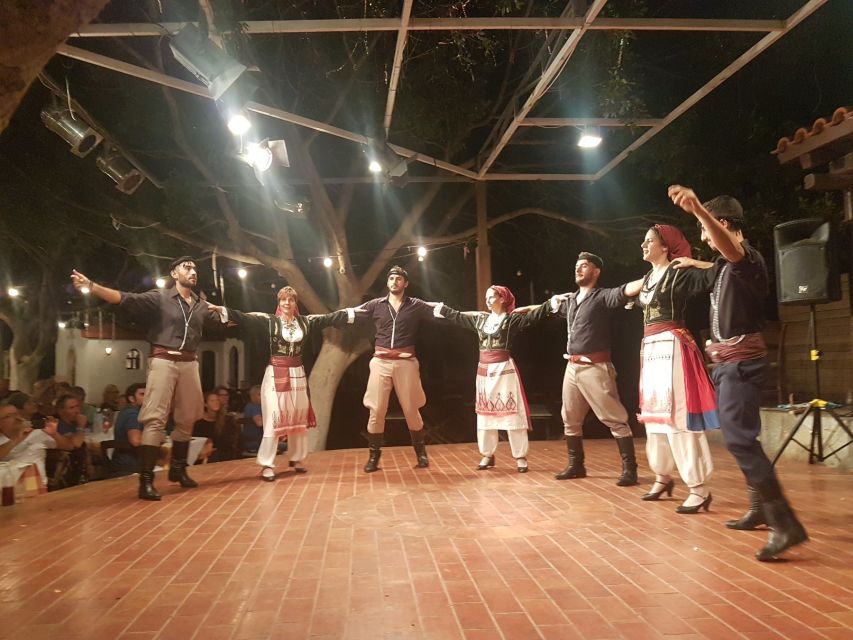
A smart-casual dress code applies. Comfortable clothing will help you move, but you do not need to arrive in a costume. Maria teaches in traditional dress, which adds a visual link to the culture without requiring you to dress up.
The Museum and Old Houses
The Rural History and Folk Craft Museum is a small part of the visit, but it adds real value. You get a short tour of the collection and the old houses of Arolithos, including homes representing different levels of village life.
This is not a large museum that requires half a day. It is a compact introduction that helps you see how people lived and worked in rural Crete. You can ask questions during the tour, and the guide can explain what you are looking at instead of leaving you to read labels alone.
The old houses are one of the more interesting details. They show the difference between homes of wealthier and poorer families, giving the village a social angle as well as an architectural one. Arolithos has also served as a film location, another small detail that may interest visitors who enjoy seeing how places are used on screen.
I would not book this solely as a museum visit. The collection is described as small, and the main reason to come is the combination of dancing, village setting, and local culture. Think of the museum as a useful introduction rather than the central attraction.
Terrace Drinks and Mountain Views
The experience includes a welcome drink on the terrace. Depending on the arrangement, this may be fresh orange juice, raki, or both. One typical welcome included orange juice and the traditional Cretan drink with nuts.
Raki is strong, so take the juice if you do not drink alcohol. The point is the hospitality, not the amount in your glass. Sitting outside after the lesson gives you a pleasant pause and a chance to look across the surrounding countryside.
The view is one of the quieter pleasures of the visit. Arolithos is not a lively town square, and one person found the village very quiet. That calm can be a benefit if you want a break from Heraklion’s traffic and crowds, but it may feel subdued if you expect a busy cultural show.
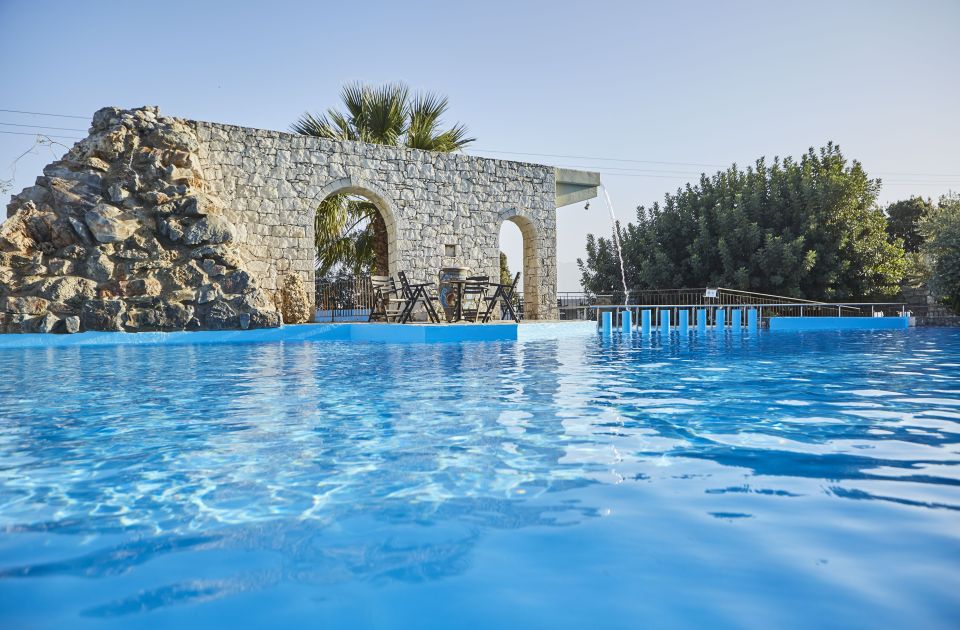
You may also have lunch and relax at the taverna or use the swimming pool in your own free time after the activity. These extras are not part of the two-hour lesson itself, and any meal or pool use should be treated as separate from the included elements.




The CD and Dancing Certificate
At the end, you receive a copy of a CD featuring Cretan and Greek music. It is a modest souvenir, but it makes sense for this particular activity. You can use the music to remember the rhythms you learned, even if your footwork needs more practice.
You also receive a dancing certificate. It is not a formal professional qualification, of course. It is a cheerful keepsake for families, couples, and anyone who enjoys collecting a physical reminder of a holiday activity.
These small extras help the experience feel complete. You arrive for a lesson, but you leave with music, a certificate, and a better idea of how the dances fit into Cretan culture.
Is $106 Per Person Good Value?
The price is $106 per person for two hours. That is a substantial cost for a short activity, and you should compare it with your priorities before booking.
The price includes entrance fees, a professional guide, the dance lesson, the museum and village visit, a CD, and a certificate. It also gives you a private-group format rather than placing you in a large public class. For a family or couple that wants a personal cultural activity, those inclusions make the price easier to justify.
The value is weaker if you mainly want to learn a few dance steps. One person felt the cost was high for the time involved, even though the class was enjoyable. That is a fair concern. The advertised two hours include more than dancing, and the actual lesson may take about one hour in some arrangements.
I would see this as a cultural outing with a dance lesson, not as a standard dance workshop. The museum, old houses, terrace drink, views, and take-home music all form part of the package. If you are happy paying for a personal introduction to Cretan culture, the price may work. If you want a long, intensive class, it probably will not.
Who Will Enjoy This Activity Most?
This is a good choice for beginners, couples, families, and visitors who want an activity that involves local culture rather than another sightseeing stop. It is also well suited to mixed-age groups, since the teaching can be adjusted to the participants.
Families should note the useful age range shown by one session with children aged five and eight and a 70-year-old parent. That does not guarantee that every class will feel the same, but it suggests that you do not need a young, athletic group to enjoy it.
It also suits people who prefer a private setting. The booking information describes a private group, and small attendance can make it easier to ask questions and receive corrections. If you are shy about dancing in public, this is less intimidating than joining a large performance class.
You may want to skip it if you have back problems, are pregnant, use a wheelchair, or dislike physical activities that require standing. You should also think twice if $106 feels too high for a two-hour cultural stop, or if your schedule leaves little time for getting to Arolithos and back.
Practical Tips for a Smoother Visit
Wear shoes that let you move comfortably. Sandals that slip, stiff dress shoes, or anything with poor support will make the lesson less pleasant.
Bring a passport or identity card. The activity information asks participants to carry identification, so keep it with you.
Plan your route carefully. The meeting point is Arolithos Traditional Cretan Village, 11 kilometers along the old road from Heraklion toward Rethymnon. Hotel pickup and drop-off are not included, and GPS directions may not be perfect.
Arrive ready for both indoor and outdoor time. You may tour the museum and houses, dance, and sit on the terrace. Smart-casual clothing fits the setting and gives you enough freedom of movement.
Leave room in your day if you want lunch or time at the pool afterward. Those options are available in your own free time, but they are not the central two-hour program.
The activity is offered in English and Greek. Maria or Evi serves as the live guide, so you can ask questions as the lesson and village tour unfold.
Should You Book the Arolithos Dance Lesson?
Book this if you want a personal, hands-on introduction to Cretan culture and like the idea of learning several dances in a traditional village setting. The strongest reasons are the friendly teaching from Maria or Evi, the small museum tour, and the way the activity works for beginners and mixed-age families.
Skip it if you want a longer dance course, a low-cost activity, or a major museum. The lesson is short, the price is high for the duration, and reaching Arolithos takes planning.
For the right visitor, this is a memorable way to spend two hours near Heraklion. You will not become a Cretan dance expert in one session, but you can leave knowing the basic steps, the music, and a little more about the village traditions behind them.
FAQ
How long does the Cretan dance experience last?
The activity lasts two hours. This time includes the dance lesson, a tour of Arolithos Village, and a visit to the Rural History and Folk Craft Museum.
Where does the activity take place?
It takes place at Arolithos Traditional Cretan Village, located at the 11th kilometer on the old road from Heraklion to Rethymnon.
Who teaches the dance lesson?
Maria is the main professional dance teacher and leads the Arolithos dance group. Evi, another experienced Cretan dancer from the Tylissos area, may also teach or assist with the lesson.
Which dances will I learn?
The lesson includes popular Cretan and Greek dances, such as Sousta and Zorba the Greek. Other dances may be included, and the exact selection can vary.
Is the lesson suitable for beginners?
Yes. The teacher demonstrates the first steps and adjusts the instruction to the group’s level. Sessions have included beginners, young children, older adults, couples, and mixed-age families.
Is transportation from my hotel included?
No. Hotel pickup and drop-off are not included. You must make your own way to Arolithos Traditional Cretan Village.
What should I bring and wear?
Bring a passport or identity card and wear comfortable shoes. Smart-casual clothing is requested, and comfortable footwear is especially important for the dance lesson.
Can I cancel or pay later?
You can cancel up to 24 hours in advance for a full refund. The activity also offers a reserve-now, pay-later option, so you do not have to pay at the time of booking.