REVIEW · ATHENS
Greek Mythology Storytelling Walk
Book on GetYourGuide →Operated by Alternative Athens · Bookable on GetYourGuide
Greek mythology comes alive on this two-hour walk through Athens, with Zeus, Dionysus, and Athena providing the script as you move from Plaka to the foot of the Acropolis and up to Pnyx. The setting does much of the work: ancient theaters, old lanes, and the Propylaea give each story a clear sense of place.
I like the professional live storytelling, which turns familiar myths into a performance rather than a dry lecture. I also like the route itself, especially the final view from Pnyx toward the Acropolis gateway. The main consideration is that this is a walking tour for people who can manage uneven streets and uphill sections, not a good fit for anyone with mobility limits.
In This Review
- Key points to know before you book
- Why mythology works so well in this part of Athens
- Starting in Plaka with Zeus
- Walking around the Acropolis with Dionysus
- Pnyx and the contest for Athens
- How the storytelling shapes the experience
- Is $53 a fair price?
- Who will enjoy this mythology walk?
- Practical advice for a smoother walk
- My verdict: book it for stories, not site admission
- FAQ
- How long is the Greek Mythology Storytelling Walk?
- Where does the tour begin?
- How will I find the guide?
- Where does the tour finish?
- Which language is the tour conducted in?
- What places does the walk visit?
- Which Greek gods are covered?
- Is food or drink included?
- Can children join the tour?
- Is the walk suitable for people with mobility impairments?
Key points to know before you book
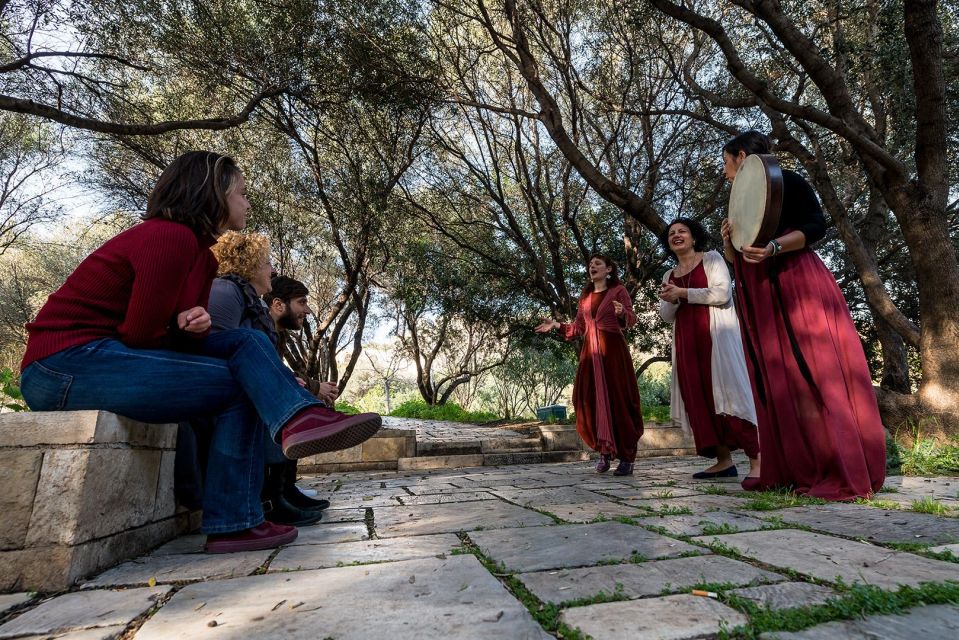
- The stories are tied to real Athens locations: Zeus is discussed in Plaka, Dionysus near the ancient theaters, and Athena at Pnyx.
- The route takes two hours: You walk from Nikis and Kidathineon to Pnyx, with stops along the way.
- The performance is in English: A professional storyteller leads the experience, supported by a professional tour leader.
- The final stop has a strong Acropolis view: Pnyx offers a close look toward the Propylaea, the gateway to the Sacred Rock.
- The walk suits families with older children: The storytelling is designed for all ages, but children under three cannot join.
- The group may be very small: One morning departure had only one booking, making it a private experience.
Why mythology works so well in this part of Athens
Athens can be hard to read at first. You see souvenir shops, busy streets, ruins, modern apartments, and the Acropolis rising above everything. A mythology walk gives those places a connecting thread.
Instead of treating Greek gods as names to memorize, the storyteller places them in the city. Zeus is linked with Plaka. Dionysus appears beside the road leading around the Acropolis, close to theaters built for drama and religious festivals. Athena takes center stage at Pnyx, where the view toward the Acropolis helps explain her special place in the city.
I find that approach useful if you already know a few myths but want to understand why they mattered to ancient Athens. It also works well if you are starting from scratch. The tour covers foundational stories, including family struggles among the gods, contests for power, love affairs, and the myths behind the names of places and cities.
This is not an archaeological tour of the Acropolis. You do not enter the Parthenon, and food, drinks, and admission to another attraction are not part of the experience. You are paying for the live performance and the route through important parts of central Athens.
You can also read our reviews of more walking tours in Athens



Starting in Plaka with Zeus
Meet the guide at the corner of Nikis and Kidathineon streets in Plaka. Look for the Alternative Athens sign. This is a convenient central meeting point, but give yourself enough time to find it, since Plaka has a maze of narrow lanes and busy pedestrian streets.
The first section lasts about 40 minutes on foot and focuses on Zeus. The subject fits the setting. Plaka is often described as the oldest part of modern Athens, but today it is also one of the city’s main visitor areas. Souvenir shops line many streets, and it can be easy to see only the commercial side of the neighborhood.
The walk tries to shift your attention. A little away from the main shopping paths, you hear about Zeus’s birth, his struggle against his father, and his rise to rule the gods. The story also includes his affair with Europa, whose name became attached to an entire continent.
That mixture of myth and place is one of the tour’s strengths. The story of Zeus is full of strange family behavior, violence, romance, and power struggles. A good performer can make those details memorable without pretending the gods are polite or sensible. The live format gives the storyteller room to use timing, expression, and surprise.
The Plaka section is also the least secluded part of the route. You are in a popular area of Athens, so shop displays, pedestrians, and city noise may compete with the performance. If you want a quiet archaeological setting, this first part may feel too urban. If you enjoy watching modern Athens while listening to old stories, it is a useful contrast.
Walking around the Acropolis with Dionysus
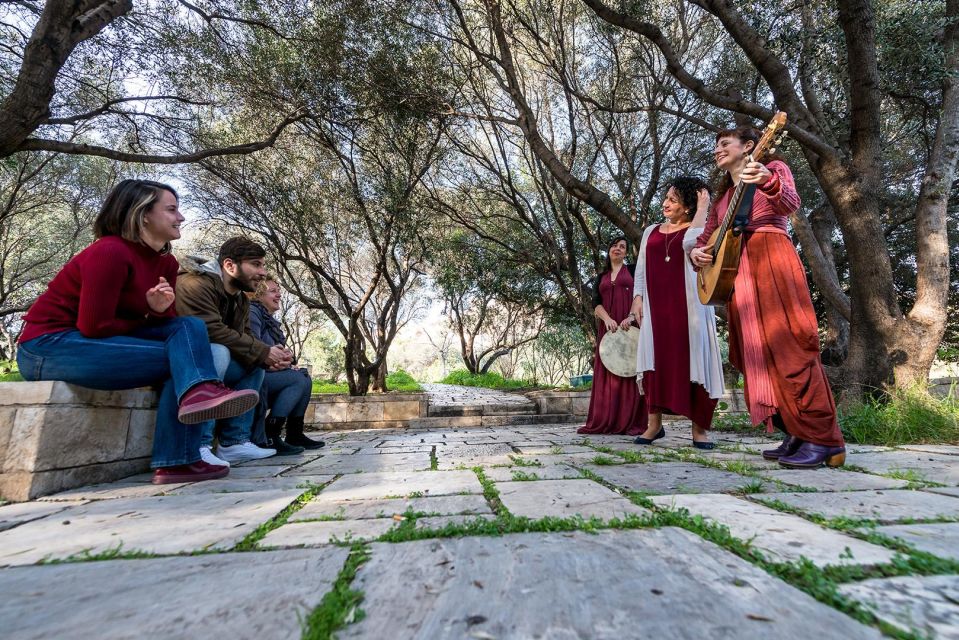
From Plaka, the route continues toward Dionysiou Areopagitou, the pedestrian street that curves around the Acropolis. This is one of the most pleasant walking areas in central Athens, and the change in atmosphere is clear. The street opens up, the Acropolis becomes more prominent, and the ancient theaters give the mythology a stronger physical setting.
The next story concerns Dionysus, god of wine and theatrical arts. The stop is connected with the Odeon of Herodes Atticus and the nearby ancient theater area. You do not need to be an expert in classical drama to follow the point: Dionysus was not simply a party god. His worship was tied to performance, ritual, and the emotional force of theater.
The storyteller also places Dionysus in a wider Greek and Roman context. He was popular in Greece and early Rome, but Roman attitudes later turned against the excesses associated with his rites. That detail helps explain why Dionysus can seem like such a different figure from orderly, civic-minded Athena.
I like this middle section because the surroundings reinforce the subject. You are walking beside places built for performance while hearing about a god linked to performance. The connection feels direct rather than forced.
The route is described as an easy walk by one participant, but you should still wear comfortable shoes. Two hours on Athens pavement is not the same as two hours on a smooth path. The walk includes city streets and the approach to Pnyx, and the tour is specifically not suitable for people with mobility impairments.
Pnyx and the contest for Athens
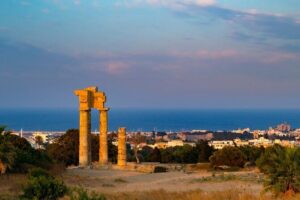
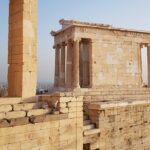
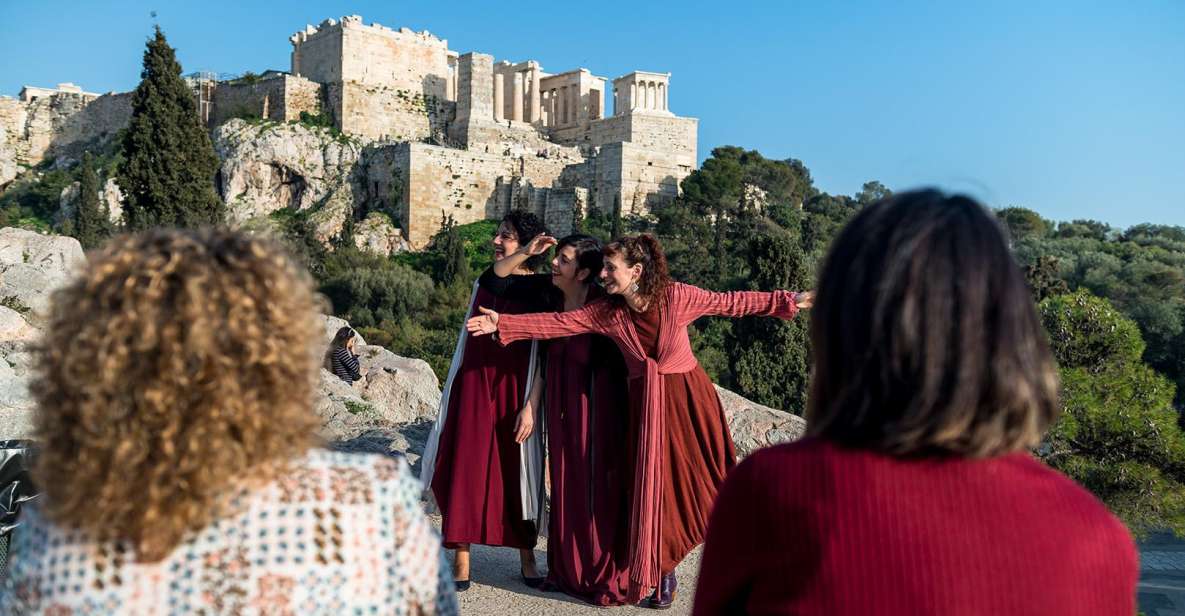
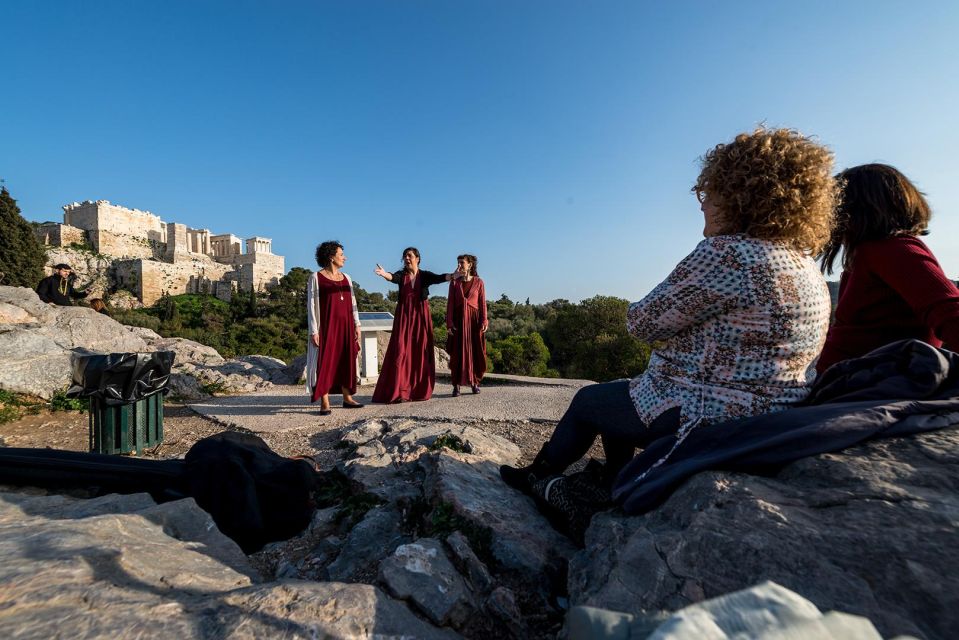
The final stop is Pnyx, where the focus turns to Athena. This is the most dramatic setting on the route. From here, you get a close view toward the Propylaea, the monumental gateway to the Acropolis.
Athena’s story begins with her unusual birth and moves to her contest with Poseidon for the patronage of the city. Her victory gave Athens its name. The story is familiar, but the location adds weight. You are looking toward the Acropolis while hearing how Athena became the city’s defining goddess.
The supplied information spells the god’s name as Poiseidon, but Poseidon is the familiar English spelling you will usually see elsewhere in Athens and in mythology guides.
Pnyx also changes the pace of the experience. Plaka is commercial and crowded. Dionysiou Areopagitou is open and scenic. Pnyx feels like a place to stop, listen, and look. The tour ends here rather than returning to the starting point, so plan your next activity from Pnyx.
The final location is especially useful for first-time visitors who want a quick sense of how Athens’s major ancient sites relate to one another. You are not receiving a full site tour, but you are seeing the Acropolis from a meaningful angle and hearing the myth that gives Athens its identity.
How the storytelling shapes the experience
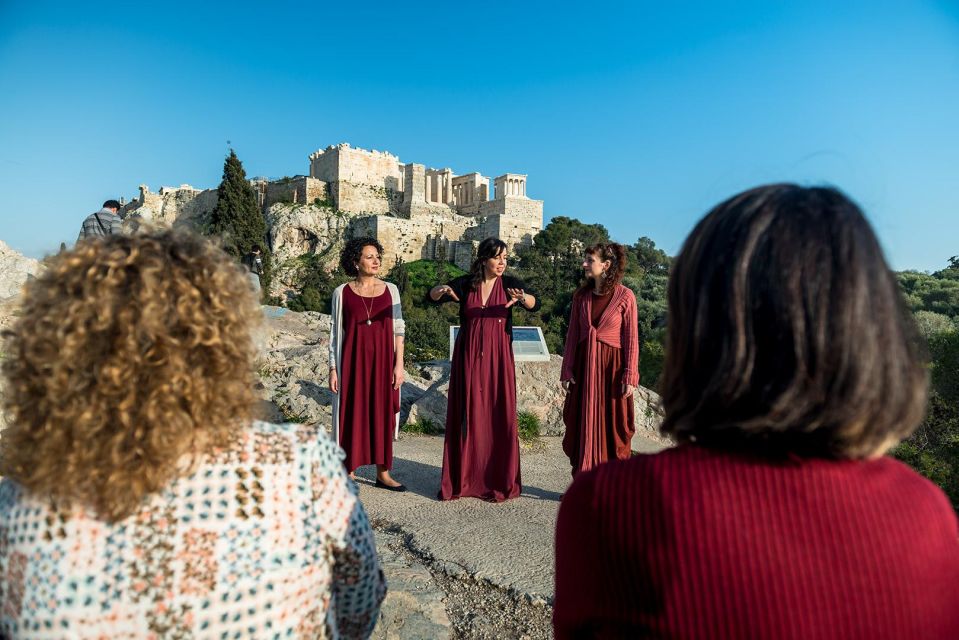
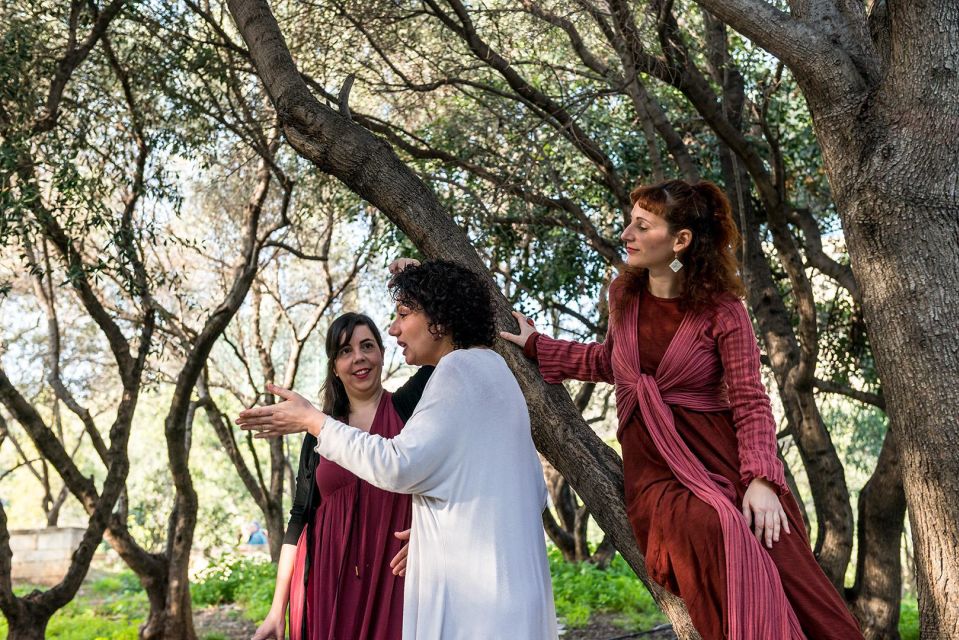
This is a live performance, not an audio guide. That distinction matters. A professional storyteller can change pace, explain a confusing family connection, and respond to the mood of the group. Mythology often involves several gods with overlapping names and complicated relationships, so a human guide can make it easier to keep track.
The experience is conducted in English. The storytelling is intended to be engaging, and one booking became a private tour because only one person had signed up for that departure. That does not guarantee a private walk, but it shows that some time slots may have very small groups.
A small group can make the experience feel more personal. You may have more room to ask questions or pause without holding up a crowd. A larger group may have more energy, but you should expect less individual attention. The exact group size is not specified, so do not book on the assumption that you will receive a private guide.
The style is likely to appeal to you if you enjoy stories, theater, and memorable characters. It may be less satisfying if you want dates, excavation details, architectural measurements, or a formal lecture on ancient religion. The mythology is the main event.


Is $53 a fair price?
At $53 per person, this is not the cheapest way to walk through central Athens. You can pass through Plaka and walk around the Acropolis area without paying for a guide. The value here comes from the performance, the structure of the route, and the way the myths are matched with locations.
I would consider the price reasonable if you want an entertaining introduction to Greek mythology and prefer a guide who tells stories rather than recites facts. The tour gives you two hours of live guiding in three significant parts of Athens, with a particularly good finish at Pnyx.
The value is weaker if you mainly want access to ancient monuments. This tour does not include entry to the Acropolis or other paid sites. It also does not include refreshments, so carry water, especially in warm weather.
For families, the price may be worthwhile because the stories give children a reason to pay attention to the streets and ruins around them. One family booking specifically found the storyteller engaging and recommended the experience with children. Keep in mind that the tour is not suitable for children under three.
Who will enjoy this mythology walk?
I would recommend it most strongly to:
- First-time visitors who want a clear introduction to Greek gods and heroes.
- Families with children old enough to follow a two-hour walking performance.
- People who enjoy theater, folklore, and dramatic storytelling.
- Visitors who want to connect the Acropolis area with the myths behind Athens.
- Anyone looking for a lighter activity before or after a more technical archaeological tour.
You should think twice if you have difficulty walking, since the experience is not suitable for people with mobility impairments. It is also not suitable for people with hearing impairments, and the only listed language is English.
This is a good choice for a first or second day in Athens because it helps you recognize the city’s mythological names and themes. It can also work later in a trip, after you have visited the Acropolis and want a different way to think about the area.
Practical advice for a smoother walk
Wear shoes that you can comfortably use for two hours. Choose clothes that allow easy walking, and bring water since drinks are not included.
Arrive at the corner of Nikis and Kidathineon streets in Plaka and look for the Alternative Athens sign. The tour starts in the neighborhood and ends at Pnyx, so do not expect to finish where you began.
Check the available start times before booking. The tour lasts two hours, but the departure schedule is not fixed in the information provided. If you want a quieter, more personal experience, a less popular time may produce a smaller group, though group size cannot be guaranteed.
The tour offers free cancellation up to 24 hours before departure, and you can reserve now and pay later. That flexibility is useful when your Athens plans are still changing.
My verdict: book it for stories, not site admission
Book this walk if you want Greek mythology delivered as live theater while moving through Plaka, the Acropolis pedestrian route, and Pnyx. The strongest parts are the professional storytelling, the clear connection between each god and the setting, and the final Acropolis view.
Skip it if your main goal is entering ancient monuments, studying architecture, or avoiding walking. At $53, the tour earns its price through the guide’s performance, not through admission tickets or included extras.
For most mythology fans, families with older children, and curious first-time visitors, I would make room for it. Bring good shoes, keep your expectations focused on stories, and let Pnyx provide the final scene.
FAQ
How long is the Greek Mythology Storytelling Walk?
The experience lasts two hours.
Where does the tour begin?
It begins at the corner of Nikis and Kidathineon streets in Plaka, Athens.
How will I find the guide?
The guide will be holding an Alternative Athens sign at the meeting point.
Where does the tour finish?
The tour finishes at Pnyx.
Which language is the tour conducted in?
The live tour is conducted in English.
What places does the walk visit?
The route includes Plaka, the area around the Odeon of Herodes Atticus and Dionysiou Areopagitou, and Pnyx.
Which Greek gods are covered?
The main stories focus on Zeus, Dionysus, and Athena. The experience also covers famous gods and heroes more broadly.
Is food or drink included?
No. Food and drinks are not included.
Can children join the tour?
The tour is for all ages, but children under three are not permitted to join.
Is the walk suitable for people with mobility impairments?
No. The experience is not suitable for people with mobility impairments. It is also not suitable for people with hearing impairments.