REVIEW · OLYMPIA
Olympia shore Excursion – 4 hour tour (Olympia, Olive press, Beach)
Book on Viator →Operated by Stathopoulos Theocharis · Bookable on Viator
Ancient Olympia is the heart of this four-hour shore trip, but the day gives you more than ruins. You walk the old stadium and Zeus’ Temple, see Hermes of Praxiteles in the museum, then trade stones and statues for olive oil and a swim at Saint Andrew’s Beach.
I like the private format for a cruise stop. Your group of up to four rides together, and guides such as Charis, Andrew, Nicko, and John have been praised for being prompt, friendly, flexible, and full of useful local detail. I also like the mix of Olympia, olive oil, and seaside time.
The catch is that entrance fees and a licensed guide inside Olympia are extra. You explore the site with an English guidebook unless you arrange a guide in advance, so this suits independent sightseers more than anyone seeking a full lecture at every column.
In This Review
- Key Points Before You Book
- From Katakolon Port to Ancient Olympia
- Walking Through the Archaeological Museum
- Seeing Where the Olympic Games Began
- Learning the Olive Oil Process at Magna
- Swimming at Saint Andrew’s Beach
- What the Four-Hour Schedule Really Means
- Price and Value for a Small Group
- Who Will Like This Olympia Shore Excursion
- Should You Book It?
- FAQ
- Where does the tour start and finish?
- How long does the excursion last?
- How many people can join the private tour?
- Is transportation from Katakolon Port included?
- Are Olympia admission tickets included?
- Is a licensed guide included inside Olympia?
- What happens at the olive press?
- Can I swim during the tour?
Key Points Before You Book
- Olympia comes first: The drive from Katakolon Port takes about 30 minutes, leaving roughly two hours for the museum and archaeological site.
- A private vehicle keeps the day flexible: Only your group of up to four participates, with pickup and return at the port.
- The museum has Hermes of Praxiteles: Admission is not included, so budget for the museum and archaeological site separately.
- The olive press adds a local taste: You see how olive oil is made and can sample the finished product, with the Magna olive press mentioned as a strong stop.
- Saint Andrew’s Beach is a short finale: Plan on about an hour for swimming, coffee, or a light lunch.
- A licensed Olympia guide costs extra: The included English guidebook helps, but advance planning matters if you want expert commentary inside the ruins.
From Katakolon Port to Ancient Olympia
Your day begins at Katakolon Port, where the driver meets you for a private ride inland. The trip to Olympia takes about half an hour, a useful transfer because you avoid organizing a taxi or trying to fit a public transport connection into a ship day.
The provider, Katakolon Taxi Tours, is a family-run company that has operated in the area for more than 30 years. Drivers may include Charis, Andrew, Nicko, or John. The most practical difference between this and a large coach excursion is simple: you are not tied to a busload of people, and the driver can focus on your small party.
The vehicle is described as a luxury vehicle, with bottled water and live commentary on board. That does not turn the ride into a formal history lecture, but it gives you a chance to hear local context before arriving. Andrew, also called Andreas, has been praised for meeting his group promptly with a sign, while Charis has been especially flexible with early starts.
That early start can matter. Olympia is a major cruise stop, and the archaeological site can feel far more manageable before the largest coach groups arrive. Ask about the departure time when you book, especially if your ship is in port for a limited period.
A few more Olympia tours and experiences worth a look
Walking Through the Archaeological Museum
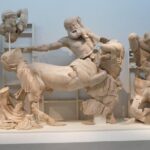
The Archaeological Museum of Olympia is scheduled for about an hour. This is not a minor add-on. The museum gives shape to the scattered stones outside, and it houses the famous Hermes of Praxiteles, one of the best-known surviving works connected with ancient Greek sculpture.
You will also find ancient artifacts from Olympia and its surrounding site. An hour is enough for a focused visit, but not for a slow study of every object. I would use this stop to see the major pieces first, then return to anything that catches your eye if time allows.
Admission is not included in the tour price. The same is true for the archaeological site, so confirm the current combined or separate ticket cost before departure. The description says the tour can skip long lines, but it does not spell out exactly how ticket handling works. Ask your driver whether you will buy tickets together or at the entrance.
A licensed guide inside the museum and site is not included. The English Olympia guidebook is included, which gives you basic help as you walk, but it is not the same as having a specialist explain what you are seeing. If ancient history is your main reason for coming, request a licensed guide before booking and confirm the added fee.
If you prefer to set your own pace, the guidebook is a reasonable arrangement. You can pause for photographs, read the information, and spend more time on the pieces that interest you. If you want the story of each statue and building delivered as you go, pay for the guide.
Seeing Where the Olympic Games Began
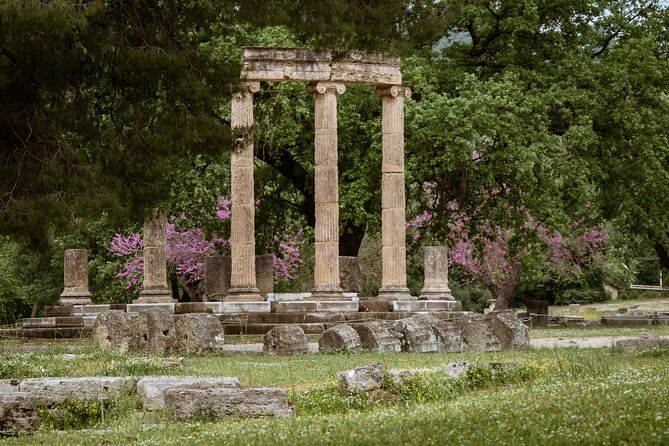
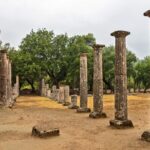
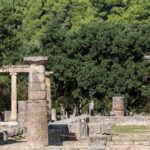
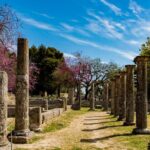
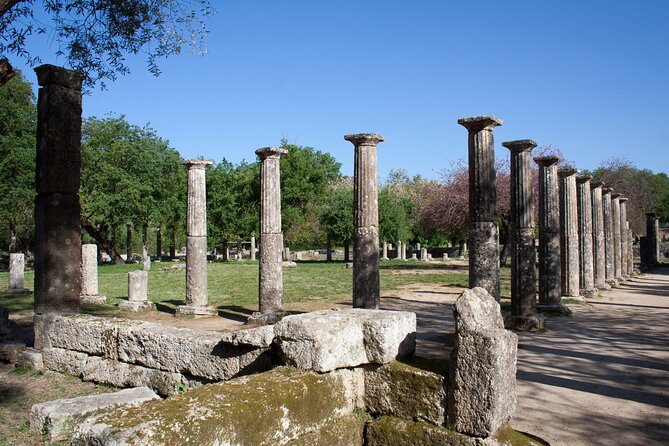
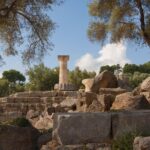
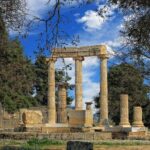
The archaeological site receives about an hour. This is where the meaning of Olympia comes into focus: you walk through the place associated with the original Olympic Games and see the remains of Zeus’ Temple and the ancient stadium.
The site is open air, so expect a walking visit rather than a polished museum route. The ruins require some imagination. The experience comes from standing among the foundations, columns, and open spaces and picturing the athletic contests and religious ceremonies that once took place here.
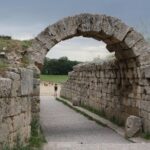
The stadium is the emotional high point for many people. Its long, simple track makes the scale of the ancient contests easier to understand than a display case can. Give yourself time to stand quietly and take in the setting instead of treating it as a quick photo stop.
One hour is useful but brisk. You will see the main areas, yet you may not have much time to linger at every building. The tour description says exploration is on your own with the English guidebook. That gives you freedom, but it also means the quality of the explanation depends on how much preparation you bring or whether you add the licensed guide.
I would not skip the site in favor of the museum, or the museum in favor of the site. The two work together. The museum shows the objects and sculpture; the ruins let you walk through the original setting.
Learning the Olive Oil Process at Magna
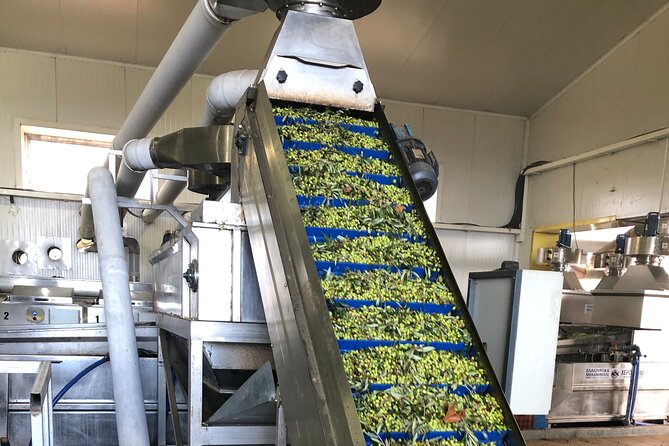
After Olympia, the tour shifts from ancient stones to a working agricultural tradition. At the olive press, you tour the facilities and receive an explanation of how olive oil is made, along with details about the products.
The stop lasts about an hour. That is enough time to make the process feel like part of the trip rather than a quick sales stop, though the exact format can vary. One of the named facilities is Magna, and olive oil tasting is part of the appeal there.
This is a good contrast to Olympia. Greece is not only temples and athletic history. Olive growing remains part of daily life and local business, and the press gives you a direct connection to that tradition. You can ask questions about the production process and compare the taste of the oil with what you normally buy at home.
The cost of admission to the olive press is listed separately from the included services, so check the amount before you go. Food and drinks are also not included. You may want to treat the tasting as the main food-related stop and save room for the beach café or seaside lunch afterward.
I like this stop most for small groups. In a party of two or four, you can ask questions without feeling like you are holding up a large bus. It also gives the day a stronger local character than a route made only of famous monuments.
Swimming at Saint Andrew’s Beach
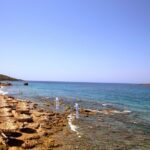
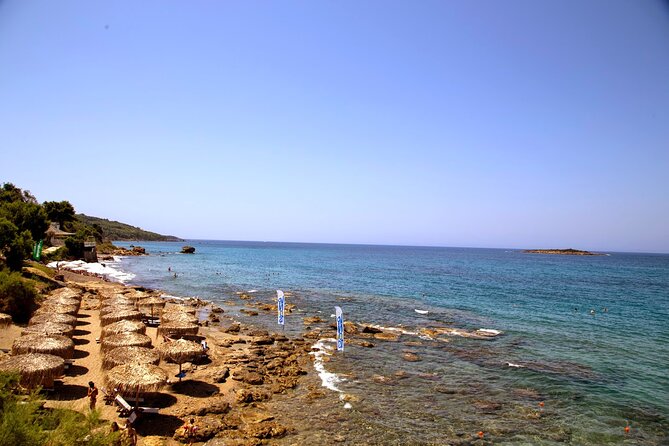
The last stop is Agios Ilias Beach, also called Saint Andrew’s Beach. You get about an hour to swim, sit in the sun, have coffee, or order a light lunch at a seaside restaurant.
The beach is described as small, with clear water. That means you should think of it as a pleasant final break, not a full beach day. Bring swimwear if you want to enter the water, and keep an eye on the clock because the ship will not wait for a late return.
This stop works well after the museum and ruins. Olympia can be hot and exposed, and an hour by the water gives you a chance to cool down before returning to Katakolon. The seaside meal is optional and not included, so check how much time you want to spend eating versus swimming.
The beach itself is not the main reason to book this trip. If you want a long stretch of sand, extensive facilities, or several hours in the water, this excursion will feel too short. If you like ending a history visit with a quick swim and a coffee, it is a smart use of the final hour.


What the Four-Hour Schedule Really Means
The advertised duration is approximately four to four and a half hours, while the individual stops add up to more than that when you include the 30-minute drive each way. In practice, the route is a compact shore excursion, and timing may need to be adjusted.
The planned outline gives about one hour at the museum, one hour at the archaeological site, one hour at the olive press, and one hour at the beach. Add the outbound drive, the return drive, ticket purchases, and transitions, and you can see why the day may feel tight.
Your driver can help keep the route moving. Charis has been praised for starting early to avoid crowds, and other guides have been described as accommodating and attentive to ship timing. Still, confirm the exact pickup and return schedule for your sailing. The excursion ends back at Katakolon Port, which is the key point for cruise passengers.
I would treat the beach as the flexible part of the day. If the museum or ruins take longer than expected, you may have less time by the water. If swimming matters most to you, tell the driver at the start rather than assuming the full hour is guaranteed.
The private format also helps if someone in your group wants to spend more time in the museum while others prefer the site. It cannot create extra hours, but it removes the delays that come with moving a large group.
Price and Value for a Small Group
The cost is $334.19 per group of up to four people. For one person, that is expensive. For four, the price works out to about $83.55 each before entrance fees, meals, and any licensed guide fee.
That calculation makes the tour more appealing for a family or a group of friends sharing one vehicle. You get private transportation from the port, a driver-guide, bottled water, live commentary, an English guidebook, and several distinct stops without arranging separate taxis.
The value is less clear for a couple if you mainly want a guided visit to Olympia. Once you add site and museum admission, and perhaps a licensed guide, the final cost rises. A large ship excursion may cost less per person, though it will not provide the same private setting or flexibility.
You are paying for convenience as much as sightseeing. Katakolon Port is not Olympia, and getting to the ruins on your own takes planning. This option places the transport, return to the ship, olive press, and beach into one half-day plan.
The private vehicle also provides some peace of mind. One past outing involved a child misplacing a phone shortly before ship departure, and the guide helped with the stressful situation. That kind of personal attention is difficult to measure in a price comparison, but it matters during a short port call.
Who Will Like This Olympia Shore Excursion
I would recommend this tour to a small group that wants the major Olympia sights without spending the entire port day on ruins. Families get a private vehicle and a gentler pace than a big bus, while couples can combine culture with swimming and lunch.
It also suits independent visitors who are comfortable using a guidebook. You can walk the site at your own speed and decide how much background you want. The museum and ruins are the central experience, so you do not need a formal lecture to appreciate the setting.
History-focused visitors should arrange the licensed guide. Without one, the driver can provide commentary on the journey, but the site itself is not presented as a guided walk. That distinction is important.
This is less suitable if you want a slow, detailed archaeological tour, a long beach visit, or a full meal with no time pressure. It is also less attractive for solo passengers unless the convenience of private transport matters more than the per-person cost.
The tour requires good weather. If poor weather forces cancellation, you are offered another date or a full refund. Free cancellation is available until 24 hours before the start time, but changes or cancellations inside that window are not accepted.
Should You Book It?
Book this excursion if you want three very different experiences in one port call: ancient Olympia, a working olive press, and a quick swim at Saint Andrew’s Beach. The strongest reasons are the private vehicle, the small-group limit, and the chance to request an early start with a guide such as Charis.
Before paying, confirm the entrance costs, the olive press fee, and the price of a licensed guide. If the history matters greatly to you, add that guide. If you are happy to explore with an English guidebook, the basic arrangement keeps the day more flexible.
For four people sharing the cost, the tour offers solid convenience and variety. For two people, compare the total price with a group excursion. Choose this one when a private ride and a personal schedule are worth paying for, not simply because it is the fastest way to see Olympia.
FAQ
Where does the tour start and finish?
The tour starts at Katakolon Port and ends back at the same meeting point.
How long does the excursion last?
The experience lasts approximately four to four and a half hours.
How many people can join the private tour?
Up to four people can participate, and only your group takes part in the activity.
Is transportation from Katakolon Port included?
Yes. Pickup is offered at Katakolon Port, and the tour uses a private luxury vehicle.
Are Olympia admission tickets included?
No. Entrance fees for the Archaeological Museum of Olympia and the Archaeological Site of Olympia are not included.
Is a licensed guide included inside Olympia?
No. The tour includes an English Olympia guidebook, but a licensed guide inside the archaeological site and museum is available only on request for an additional fee.
What happens at the olive press?
You tour the facilities, learn how olive oil is made, and receive information about the oil products. Admission to the olive press is not included.
Can I swim during the tour?
Yes. The tour includes about one hour at Agios Ilias Beach, also called Saint Andrew’s Beach, for swimming, coffee, or a light lunch. Food and drinks are not included.