REVIEW · OLYMPIA
Private local tour of the archaeological site and museum of Olympia
Book on Viator →Operated by Niki Olympic Tours · Bookable on Viator
Olympia makes sense with a guide. This is a private 2.5-hour tour built around two high-payoff stops: the ancient site (from gymnasium ruins to the workshop area tied to Phidias) and the museum where you’ll see top-class sculpture and everyday finds. What I love most is how a licensed guide turns scattered stones into a story you can actually follow. One drawback: admission tickets for the site and museum cost extra (€20 per person), and the tour does not include transport.
You’re paying about $216.02 per person for a tight, focused itinerary (usually booked ~58 days out), and you get an English-speaking guide just for your group. If you like history but hate feeling lost in timelines, this format is a good fit.
In This Review
- Key things that make this Olympia tour work
- Olympia with a guide: why it’s worth paying for
- Stop 1: Archaeological Site of Olympia (about 1 hour 30 minutes)
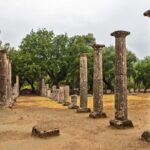
- The gymnasium and palaestra
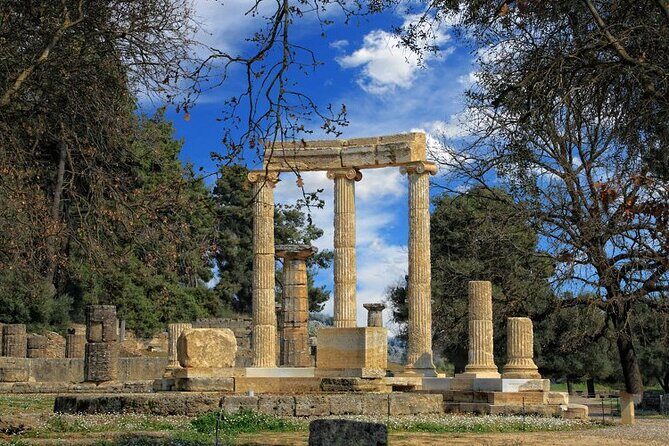
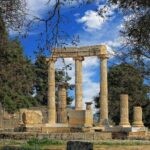
- The round Philipeion
- The workshop of Phidias and the Zeus connection
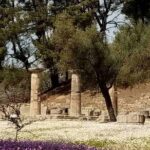
- Temples of Zeus and Hera
- The altar where the torch is lit today
- The ancient Olympic stadium
- Stop 2: Olympia Archaeological Museum (about 1 hour)
- Bronze and clay offerings
- Armor, vases, and tools
- Phidias workshop finds: tools and the cup
- Master sculptures: Hermes and Nike
- Temple of Zeus pediment statues (and why they impress)
- How the licensed guide changes the whole experience
- Price and value: what you’re really paying for
- Timing, walking, and logistics that matter on the ground
- Who should book this private Olympia tour
- Should you book? My quick decision guide
- FAQ
- What’s the duration of the private Olympia tour?
- How much does the tour cost per person?
- Is the entrance ticket included for the archaeological site and museum?
- Is this tour private or shared?
- What language is the tour offered in?
- What’s included in the tour price?
- Where does the tour start and end?
- Is the tour suitable for people with moderate physical fitness needs?
- Can I get a full refund if I cancel?
Key things that make this Olympia tour work
- Gymnasium + palaestra first: You start in the athletic zone so the Olympic story isn’t just names on a wall.
- Phidias’ workshop area: You get context for the famous gold-and-ivory Zeus story and see the related tools/cup in the museum.
- Philipeion and temples on the same walk: Round Philipeion and the temples of Zeus and Hera help you connect religion, politics, and sport.
- Torch-altar link to today: You’ll stop at the altar where the Olympic torch is lit in modern times, not just ancient ritual.
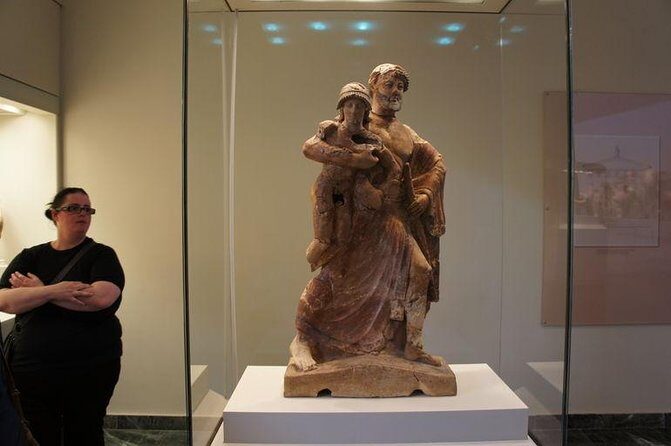
- Museum highlights with real scale: Hermes by Praxiteles, Nike by Paeonios, and pediment statues come with the why behind them.
- Guide pacing that fits the group: The operator’s guides are known for keeping momentum and adjusting to different needs.
Olympia with a guide: why it’s worth paying for
The archaeological site of Olympia is one of those places where you can absolutely “visit” it on your own… and still miss most of what it means. Stones are cool, sure. But the real payoff comes when someone connects the dots between what you’re standing in—an athletic complex, workshops, temples—and the big ideas behind the Olympic Games.
This tour is set up to do that, with a licensed guide leading you through both the site and the museum. I like that the time is balanced: about 1 hour 30 minutes for the outdoors and about 1 hour indoors. You’re not stuck in one place too long, and you don’t have the classic problem where the museum turns into a quick glance after a rushed walk.
Also, it’s private. That matters here because Olympia is visually busy. With a private group, you can ask questions as they come up instead of waiting your turn. And if your group includes kids or someone who needs things explained at a slower pace, a good guide can pace the storytelling to match.
The other practical win: this tour ends at the museum. That can make your day easier to plan than backtracking across the site.
You can also read our reviews of more private tours in Olympia
Stop 1: Archaeological Site of Olympia (about 1 hour 30 minutes)
You start at the archaeological site with a focused route through the places that shape the Olympic story. Instead of wandering randomly, you’ll walk through key remnants and connect them to specific functions.
Here’s what you’ll be looking at, and why it’s meaningful:
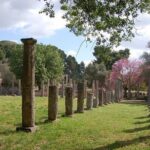
The gymnasium and palaestra
These are the athletic heart of Olympia. You’ll see the remains of the gymnasium and the palaestra, which lets you understand how training culture wasn’t an afterthought. It was part of the whole system.
If you’ve ever wondered why the ancient Olympics weren’t just a day of competition, this is where the answer starts. The space itself tells you sport was organized, routine, and respected.
The round Philipeion
You’ll also visit the round Philipeion. Even if the structure looks “ruined” at first glance, a guide can explain how its shape and purpose fit into the site’s broader political and religious meaning.
This is the kind of stop that can feel like nothing on a self-guided visit. With a guide, you learn what to look for and what the structure signaled.
The workshop of Phidias and the Zeus connection
Next comes an area tied to Phidias’s workshop—famous for the gold and ivory statue of Zeus (the idea, the workshop context, the artistry behind it). This is important even if you can’t see the statue itself, because Olympia’s value is partly about what was made here and why it mattered.
A good guide will help you picture the process behind a masterpiece, not just the final legend.
You can also read our reviews of more museum experiences in Olympia
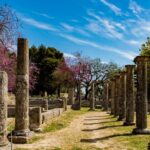
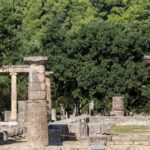
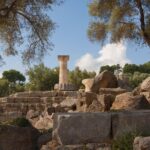
Temples of Zeus and Hera
Then you’ll move through the temples of Zeus and Hera. Temples aren’t just “big buildings” in archaeology—they’re statements about who was honored, how power was displayed, and how religious life fed into public events.
Seeing these ruins in sequence makes the religious side of the Olympics click. It stops being abstract.
The altar where the torch is lit today
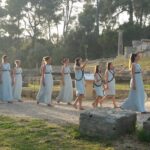
One of my favorite touches at Olympia is that modern tradition is anchored in the ancient setting. You’ll visit the altar where the Olympic torch is being lit in modern days.
That contrast is worth slowing down for. It’s not just symbolism—it’s a reminder that people still come to Olympia for the same kind of meaning: sport tied to ritual and community.
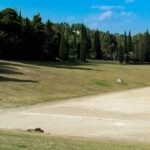
The ancient Olympic stadium
Finally, you’ll reach the ancient Olympic stadium. Even in ruins, you can often get a feel for how athletes moved through the space and where spectators would have focused.
Outdoors, you’ll get the best value if you bring comfortable shoes. The ground can be uneven, and the tour includes walking across real archaeological terrain.
Important practical note: the site admission is not included in your tour price. You’ll need your own entrance ticket for the archaeological site (and later the museum), which is listed as €20 per person.
Stop 2: Olympia Archaeological Museum (about 1 hour)
After the outdoor walk, the museum makes everything snap into place. If the site is about “where” and “how the space worked,” the museum is about “what was found” and “what it looked like.”
You’ll spend about 1 hour inside, and that’s usually the sweet spot: long enough to see major works and lots of context, short enough that you stay energized.
Bronze and clay offerings
You’ll see bronze and clay offerings, including tripods and figurines. These are the kinds of objects people think of last when they picture Olympia. But they matter because they show what worship looked like at a human level.
A guide helps you connect these with the rituals happening around the temples—so the objects don’t feel random.
Armor, vases, and tools
You’ll also see armor, vases, and everyday tools tied to the life around Olympia. This part is great if you want the Olympics story to be more than “winners and statues.”
What I like about Olympia’s museum finds is that it covers both the ceremonial and the practical, which makes the setting feel real.
Phidias workshop finds: tools and the cup
One of the highlights here is tools and the cup from Phidias’s workshop. Since you visited the workshop-related area on the site, these objects give you a satisfying link between legend and material evidence.
This is the moment when the tour’s structure shows its value: you learn the context outside, then you see connected artifacts inside.
Master sculptures: Hermes and Nike
You’ll see Hermes by Praxiteles and Nike by Paeonios. These are the big-name sculptures that make people stop walking.
A guide’s job is to keep you from just saying, “Cool statue.” You’ll get the context for why these works are prized and how they fit into what Olympia represented.
Temple of Zeus pediment statues (and why they impress)
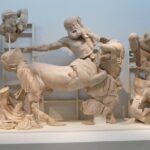
The museum also includes classical statues from the pediments of the temple of Zeus, described as very impressive and very well preserved.
Even if you know nothing about Greek sculpture, pediment figures are easier to understand when someone explains what their placement is meant to communicate. You’ll notice more details and feel less like you’re reading a label.
How the licensed guide changes the whole experience
This is the part you should treat as non-negotiable when you’re paying for a private tour. Olympia can look like a pile of ruins at first. The best guides make you see patterns: where athletic life ended and sacred life began, how workshops supported the temple world, and why the stadium mattered.
In particular, the tour is led by professional guides under the Niki Olympic Tours umbrella. Names you might hear associated with excellent experiences include Zoe, Niki, Georgia, and S. The repeated theme is strong storytelling, good English, and pacing that keeps everyone engaged—whether you’re on a date-day, traveling with kids, or managing different needs in the group.
Practical tip: come with one or two questions you care about—like why the Olympics were religious, or what “Phidias” actually means in this place. With a guide, those answers land faster.
And yes, humor helps. A little lightness makes the ruins feel less like homework and more like a place where people lived, trained, and worked.
Price and value: what you’re really paying for
At $216.02 per person for about 2 hours 30 minutes, this isn’t a budget activity. But it isn’t overpriced in the way many “private history” tours can be—because you’re getting two meaningful components:
- A licensed guide for the full experience
- A private format, meaning your time doesn’t get eaten by large-group logistics
- Two zones in one outing: outdoors at the archaeological site and indoors at the museum
Then add the entrance fees. The tour price does not include the site and museum tickets, listed at €20 per person. So your total cost will be tour fee plus that entrance expense.
If you compare options, the value sweet spot is when:
- you don’t want to spend your energy figuring out what’s important,
- you’d rather pay to save time and mental effort,
- and you want the story tied to what you’re physically standing next to.
Also, there’s a mobile ticket option and group discounts. Those small benefits matter if you’re traveling with multiple people.
Timing, walking, and logistics that matter on the ground
This tour is about 2 hours 30 minutes and has a moderate physical fitness level. That’s a fair heads-up: the site involves walking across archaeological terrain. It’s not described as extreme, but it’s not a wheelchair-flat museum either.
A few practical notes that can save you stress:
- Transportation is not included. You’ll need to arrange getting to the start point on your own and plan how you’ll reach the museum area afterward (the tour ends at the Archaeological Museum of Olympia).
- Service animals are allowed.
- The meeting point is listed on an unnamed road at Archea Olimpia 270 65, and the end is at the Archaeological Museum of Olympia (also at Archea Olimpia 270 65). Having the exact map link before you go is smart.
If you’re planning your day, consider pairing this with a light meal afterward and leaving some extra time for photos. Olympia rewards a slower pace, especially after the museum brings things into focus.
Who should book this private Olympia tour
I’d book this if you match at least two of these:
- You want the Olympics story explained in plain language, with a real sense of how the spaces functioned.
- You like museum time, but only when it connects to what you saw outside.
- You prefer private pacing over group rush.
- You’re traveling with kids or someone who benefits from adjusted pacing and clear explanations.
- You want the best “context per minute” without reading a wall of text yourself.
If you’re the kind of traveler who loves wandering without structure and you already know the key players (Zeus, Hera, Phidias, Praxiteles, Paeonios), you might feel fine going on your own. But if your goal is to leave with understanding—and not just photos—this private setup helps a lot.
Should you book? My quick decision guide
Book this tour if you want Olympia to feel like a connected story, not a scattered ruin field. The combination of the gymnasium and palaestra, the workshop context tied to Phidias, the temples and torch altar, and then the museum’s Hermes, Nike, and pediment statues is a smart sequence.
Skip it (or downgrade expectations) if:
- you’re trying to minimize total cost after adding entrance fees,
- you don’t want extra walking on uneven ground,
- or you already plan to spend extra time reading and self-guiding at both site and museum.
If you want help making the time count, this is one of the better ways to experience Olympia without feeling lost.
FAQ
What’s the duration of the private Olympia tour?
It lasts about 2 hours 30 minutes.
How much does the tour cost per person?
The price is listed as $216.02 per person.
Is the entrance ticket included for the archaeological site and museum?
No. Entrance fees are not included. The entrance ticket for the archaeological site and museum is €20.00 per person.
Is this tour private or shared?
It’s a private tour/activity, so only your group participates.
What language is the tour offered in?
The tour is offered in English.
What’s included in the tour price?
The licensed tour guide services are included.
Where does the tour start and end?
It starts at an unnamed road at Archea Olimpia 270 65, Greece, and ends at the Archaeological Museum of Olympia at Archaia Olympia 270 65, Greece.
Is the tour suitable for people with moderate physical fitness needs?
The information provided says travelers should have a moderate physical fitness level.
Can I get a full refund if I cancel?
Yes. You can cancel up to 24 hours in advance for a full refund. Cancel less than 24 hours before the start time and it won’t be refunded.