REVIEW · OLYMPIA
Private local tour of the Olympic Games site
Book on Viator →Operated by Niki Olympic Tours · Bookable on Viator
One place can shrink 1,000 years of Greek ambition into a single walk. This private Olympia tour is interesting because you get a licensed guide who ties the stones to the real Olympic world, not a script. You’ll see the gymnasium and palaestra training areas, then move through the temples and stadium in a way that helps the layout make sense fast. The main catch: the archaeological site admission fee is not included, so you’ll need to budget an extra €20 per person.
This is a good fit if you want questions answered on the spot and a tour pace that feels human. I like that it’s explicitly set up as a private group, so you’re not squeezed into a crowd rhythm. The one drawback to consider is that it runs about 1 hour 30 minutes at the site, so if you want long museum-style wandering time, you may feel slightly rushed.
In This Review
- Key highlights to know before you go
- Olympia’s ruins make more sense with a real guide
- What you’ll see at the Archaeological Site of Olympia
- Gymnasium and palaestra: where athletes trained
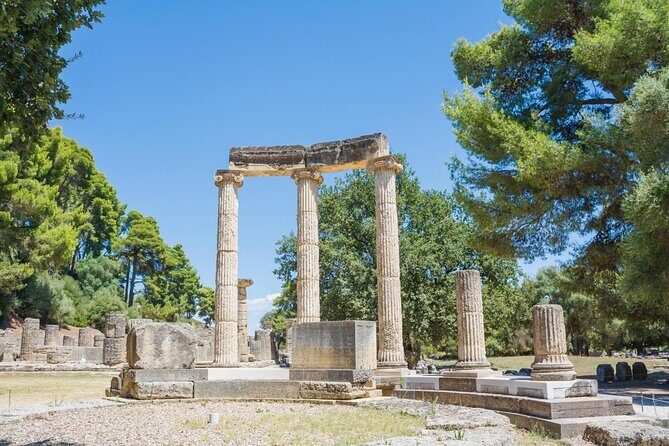
- The Philippeion and the round memorial feel
- Phidias workshop: the Zeus statue story comes alive
- Temples of Zeus and Hera: belief and big-stage symbolism
- Olympic torch altar and the ancient stadium
- The torch altar: linking past and present
- The stadium: the stage for competition
- Guide quality is the main reason this tour works
- Price and tickets: what you’re really paying for
- Timing, mobility, and meeting point reality
- Who should book this private Olympia tour
- Should you book this private Olympia tour?
- FAQ
- Is the archaeological site entrance fee included?
- How long is the Olympia tour?
- Is transportation included?
- Is this a private tour?
- What language is the tour offered in?
- What should I do about tickets?
Key highlights to know before you go
- Private group format for tailored attention and easier question time
- Licensed English-speaking guide (with mobile ticket for smoother entry)
- Olympia’s training zones: gymnasium and palaestra remains you can actually visualize
- Phidias workshop + Zeus story: how the legendary statue was built
- Olympic stadium and torch altar tied to both ancient and modern Olympic traditions
Olympia’s ruins make more sense with a real guide
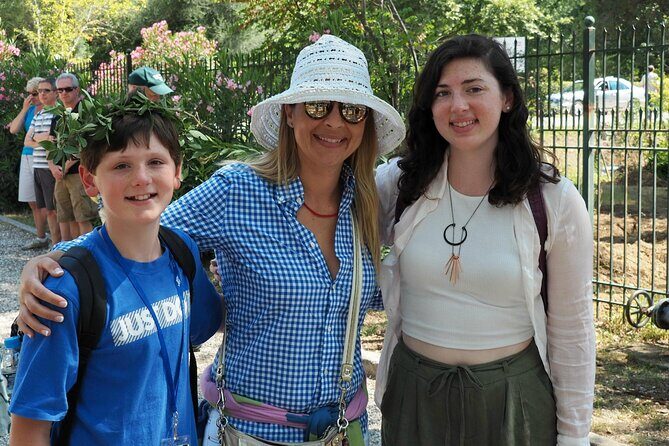
Olympia is one of those archaeological sites where the big names are easy, but the connections are what you’ll miss without help. With this tour, you get a guide to connect the dots between where athletes trained, where ceremonies happened, and where power and belief were staged. That matters because the remains can look like scattered walls unless someone explains what you’re looking at.
I also like that the guides are comfortable turning the site into something you can follow. In reviews, guides such as Niki, Sotiria, and Zoé are praised for staying friendly, answering lots of questions without stress, and using extra tools like pictures to keep the story moving. If you’re the kind of person who hates reading labels after a long day, you’ll like this format.
One practical note: the tour includes the licensed guide services, but the entrance fee for the archaeological site is extra (€20 per person). So the total cost isn’t just the listed price. Still, for many people, paying for a guide during your limited time at Olympia is the better trade than trying to solve the site alone.
You can also read our reviews of more private tours in Olympia
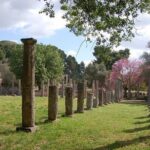
What you’ll see at the Archaeological Site of Olympia
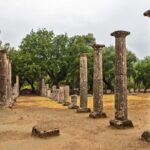
The entire experience centers on the Archaeological Site of Olympia, the heart of the sanctuary where the ancient Olympic Games took place. The layout is basically a tour through roles: athletes trained in one area, worship happened in another, and the stadium capped it all with the final stage for competition.
Your guide will walk you through the most recognizable pieces of the complex and explain how they worked together. This is the value of a live guide: you’re not just collecting facts, you’re building a mental map.
Gymnasium and palaestra: where athletes trained
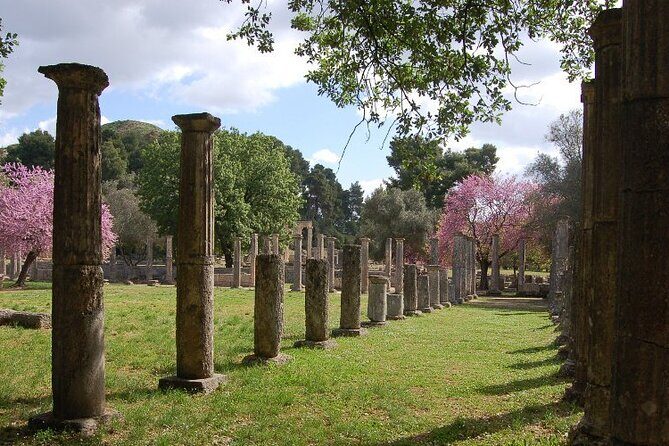
One of the best parts of Olympia is that you’re not limited to temples and monuments. You also get to understand the training setting—specifically the remains of the gymnasium and the palaestra.
These spaces help you picture daily routines around the Games. The gymnasium was tied to training and physical preparation, and the palaestra is connected to wrestling and exercise culture. Even when you’re seeing ruins, the guide’s explanations make it easier to understand why athletes were shaped by routine, discipline, and community, not only by race day.
A live guide also helps because people often look at the stones and ask the obvious question: what was happening here, exactly? Expect that kind of back-and-forth, especially if your group includes teens or kids. Reviews highlight that guides like Zoé did well keeping younger visitors engaged, adapting the pace and attention so nobody got lost.
The Philippeion and the round memorial feel
The round Philippeion is one of those features that immediately pulls your attention because it doesn’t look like a simple temple block. Seeing it with explanation helps you move beyond the shape and into what it signaled in the sanctuary.
This is also where a guide’s storytelling can be surprisingly practical. You’ll understand how different structures within Olympia related to status, commemoration, and the overall identity of the Games. Without that context, the round building can turn into just another stop on a checklist.
Phidias workshop: the Zeus statue story comes alive
In Olympia, one of the biggest “how did they do that” stories is the workshop of Phidias, linked to the creation of the gold and ivory statue of Zeus. That detail matters, because it turns the site from purely athletic into something closer to art, craftsmanship, and prestige.
When a guide connects the workshop remains to the Zeus statue legend, the site stops feeling like background scenery. You start to understand that Olympia was a place where visitors came for competition, yes, but also for spectacle, reputation, and religious meaning. In the same way, the story of the statue helps explain why certain areas held more importance.
This is a strong reason to choose a guided visit instead of relying only on printed signage. The ruins are physical, but the significance is interpretive.


Temples of Zeus and Hera: belief and big-stage symbolism
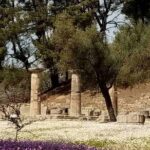
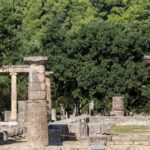
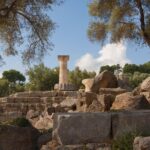
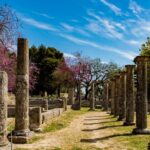
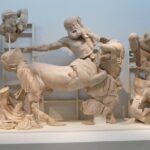
You’ll also visit the temples of Zeus and Hera. These are central because they represent the sanctuary side of Olympia: the Games weren’t just sporting events. They were connected to worship, ceremony, and the cultural weight of the gods.
A guide will help you read the space: what you’re looking at, why it mattered, and how the ceremonies would have played out in that setting. That’s where live guidance earns its keep. You can stand in front of temple remains and see columns or foundations, but you usually need a translator for the symbolism.
Olympic torch altar and the ancient stadium
Olympia is famous for the Olympics, and this tour leans into that connection with two stops people often love: the modern Olympic torch altar area and the ancient Olympic stadium.
The torch altar: linking past and present
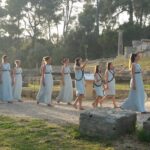
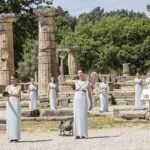
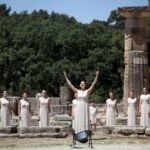
The sanctuary contains an altar connected with the Olympic torch in modern days. Seeing that element in Olympia gives you an instant bridge between ancient tradition and the current Olympic spectacle.
It’s not just a photo moment. A guide can explain the relationship between modern ritual and older sanctuary meaning, which helps you understand why the Olympics return to this place again and again. If you’re traveling with a fan of the Games, this is the kind of moment that makes the tour feel more personal.
The stadium: the stage for competition
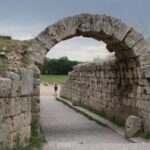
Then you reach the ancient Olympic stadium. This is the part that often clicks for first-time visitors. Even with only partial remains, the stadium gives you the sense of scale: where crowds would have been, how the track and seating lines relate, and why the Games felt like a major event rather than local sport.
A good guide helps you visualize the scene. Reviews also mention that some guides were especially good at connecting what you see outside to what you might understand inside a museum, so the stadium may feel like the culmination of the story rather than just another landmark.
Guide quality is the main reason this tour works
With something like Olympia, the site is fixed. The real difference is the guide. This service is built around licensed guide time, and reviews repeatedly praise how guides handle pacing, explanations, and questions.
Three themes show up clearly:
- Friendly, welcoming guides who keep things comfortable
- Strong explanations that connect one area to the next
- Good handling of mixed groups, including families and younger visitors
In reviews, Niki is praised for being well informed and pleasant, including using pictures to make the site feel more real. Sotiria is highlighted for taking time, explaining in detail, and connecting museum context to the physical ruins, which is a smart way to help you understand what you’re seeing on the outside first. Zoé is praised for adjusting to the presence of children and keeping attention when the group needs a bit more structure.
If you want a tour where your questions matter and your time at Olympia feels well used, this is the kind of setup that helps.
Price and tickets: what you’re really paying for
The tour price is $153.86 per person for about 1 hour 30 minutes. That includes licensed guide services, but it does not include the archaeological site entrance fee.
So your budgeting looks like this:
- Tour price: $153.86 per person
- Archaeological site admission: €20 per person (not included)
Whether this is good value depends on your style. If you’re comfortable using apps and signs, you may feel you could do Olympia without a guide. But if your time is limited, or you’re trying to understand what each ruin was for, the guided time is where you save effort and confusion.
Also, the listing notes group discounts, and it uses a mobile ticket. Those details don’t sound glamorous, but they can reduce friction when you’re managing logistics in Greece.
One more planning reality: this tour is often booked about 37 days in advance on average. That’s not a reason to panic, but it is a hint that good guide time can be in demand during busy seasons.
Timing, mobility, and meeting point reality
The tour runs for about 1 hour 30 minutes and ends back at the meeting point. You’re based at a specific start location: Unnamed Road, Archea Olimpia 270 65, Greece.
It’s also noted as being near public transportation, which helps if you’re using regional buses or connecting from elsewhere in the area.
On mobility, it’s listed for people with moderate physical fitness. That tells you the walk involves enough uneven ground or walking time that you should plan accordingly. Bring the same common sense you’d use at any archaeological site: slow down when needed, and don’t expect this to be fully flat and effortless.
The good news for many groups: this is a private tour/activity, meaning only your group participates. That usually makes timing feel smoother because you can move at a pace that fits your group instead of waiting on other people.
Who should book this private Olympia tour
This tour makes the most sense if you match one or more of these profiles:
- You want a guided story at the Archaeological Site of Olympia, not just a walk around ruins
- You’re traveling with kids or teens and want a guide who can keep attention
- You have a short itinerary and want the main parts of Olympia explained in a tight time window
- You prefer a private group so questions and pacing work for you
It may be less ideal if you’re trying to spend hours wandering with no structure, because the time is about 1 hour 30 minutes at the site. In that case, you might want additional free time before or after to read and linger.
Should you book this private Olympia tour?
I think you should book it if you want your Olympia experience to feel like a coherent story. Olympia is famous, but it can also feel confusing without someone translating what the ruins meant. With a licensed guide and a private group setup, you get a fast, focused visit that helps you understand the sanctuary’s athletic and religious sides together.
If you’re on a tight budget, do the math first. The guide is the cost you’re paying for, and the site admission fee is extra at €20 per person. But if you value getting the meaning out of what you see, this is often the better use of money than trying to piece everything together alone.
FAQ
Is the archaeological site entrance fee included?
No. The tour includes the licensed guide services, but the entrance fee for the archaeological site is not included. The admission fee listed is €20.00 per person.
How long is the Olympia tour?
It runs about 1 hour 30 minutes.
Is transportation included?
No. Private transportation is not included in this experience.
Is this a private tour?
Yes. It’s a private tour/activity, and only your group will participate.
What language is the tour offered in?
The tour is offered in English.
What should I do about tickets?
The tour provides a mobile ticket, and confirmation is received at the time of booking. The archaeological site admission fee is still separate.