REVIEW · CEPHALONIA
Organic Wine Tasting in Kefalonia
Book on Viator →Operated by Curioseety SRLS · Bookable on Viator
Kefalonia’s wine country offers a welcome change from another morning on the beach. At this family-run cellar, you’ll walk among the vines, hear how island grapes are grown, and sit on a terrace overlooking the vineyard while tasting local wines with simple snacks. Robola and Mavrodafni are among the varieties discussed.
I especially like the small group limit of 10 people, which should leave room for questions and conversation. I also like the plain, local food pairing: cheese, bread, olives, and fresh tomatoes let you focus on the wine without turning the tasting into a formal meal.
The main caution is practical: the meeting-point directions may not lead you directly to the winery, and one account identifies the site as Sclavos Wines. The description also varies between about four wines and six included alcoholic beverages, so confirm the final tasting lineup before you go.
In This Review
- Key points to know before booking
- Why a Kefalonia wine tasting is worth an hour
- Arriving at the family winery near Agios Dimitrios
- Walking through the vines before the tasting
- Getting to know Robola, Mavrodafni, and other local grapes
- Sitting on the terrace with a view of the vines
- What you actually taste during the hour
- Why the small group matters
- Fitting the tasting into a Kefalonia day
- Who will enjoy this most
- Booking, cancellation, and seasonal details
- Should you book the Kefalonia wine tasting?
- FAQ
- Where does the wine tasting start?
- Where does the activity end?
- How long does the tasting last?
- How much does the experience cost?
- How many wines are included?
- What food is served with the wine?
- Which grape varieties are discussed?
- Is there a vineyard walk?
- How large is the group?
- Can I cancel for a full refund?
Key points to know before booking
- A family cellar near Agios Dimitrios: The experience takes place in a wine-growing area connected with Kefalonia’s long winemaking tradition.
- Four main grape varieties and more: Expect discussion of Robola, Mavrodafni, Muscat, Vostilidi, and Moschatela.
- A vineyard walk comes first: You’ll see how the grapes are cultivated before sitting down to taste.
- Local snacks keep it relaxed: Cheese, tomatoes, olives, and bread accompany the wines.
- About one hour, with a group of no more than 10: This works well between sightseeing stops or a beach visit.
- Check the directions carefully: The stated meeting point is 6CHJ+PHM in Agios Dimitrios, but the winery may be identified locally as Sclavos Wines.
Why a Kefalonia wine tasting is worth an hour

Kefalonia is easy to experience as a parade of beaches, mountain roads, and seaside villages. Wine gives you another way to understand the island. Grapes here are not just a product on a shop shelf. They are part of local farming, family work, and a tradition that the winemaker is trying to carry forward.
That makes this tasting more useful than simply ordering a flight at a restaurant. You get an explanation of where the grapes grow, how they are handled, and why certain varieties matter. I like experiences that connect a drink to the place where it was made, and this one does that in a compact format.
The price is $35. For about an hour, that includes the tasting, snacks, the vineyard setting, and direct time with the winemaker. I consider that fair value if you already plan to be near Agios Dimitrios or Lixouri. It is less compelling if you need a long, expensive transfer just for the tasting, since the activity itself is short.
You can also read our reviews of more food & drink experiences in Cephalonia


Arriving at the family winery near Agios Dimitrios
The stated starting point is 6CHJ+PHM Agios Dimitrios, Greece, and the activity ends at the same meeting point. A map code can be helpful, but it is not always as clear as a winery name or a visible road sign. I would save the location before leaving and check the route carefully.
There is an extra reason to take this seriously. The location information can lead you slightly astray, while the actual winery has been identified as Sclavos Wines. That does not ruin the experience, but it can cost time and create needless frustration, especially if you are arriving for a fixed appointment.
Once you reach the property, expect an unpretentious, welcoming setting rather than a grand commercial wine estate. The appeal is the family atmosphere and the chance to speak directly with the person producing the wine. A host named Yannis is associated with the tasting, although the spelling is uncertain, and a female proprietor has also led explanations in English.
The setting is part of the experience. You are not being ushered through a polished showroom with a long bus group. You are visiting a working wine property in an area known for viticulture. That keeps the focus on the land, the grapes, and the people doing the work.
Walking through the vines before the tasting

The vineyard stroll gives you a useful starting point. Instead of hearing only abstract terms about grapes and production, you can see the vines in their growing environment. The walk is not presented as a long hike, but you should still expect some time on your feet and uneven ground.
The activity asks for a moderate level of physical fitness. That wording matters less because the tour is strenuous and more because a vineyard is not a flat indoor attraction. Wear shoes that are comfortable on dirt or packed ground, particularly if you are combining the tasting with a full day of sightseeing.
The winemaker explains cultivation methods, including biodynamic growing. This is one of the more distinctive parts of the visit. You’ll hear about the effort to maintain local winemaking practices and about the way the vines are cared for rather than receiving only generic information about red and white wine.
The material refers to a limestone-related vine type and points to the particular qualities of the island’s grapes. The phrase is not explained in detail in the available information, so I would treat the stroll as an introduction rather than a technical viticulture lesson. The value is in seeing the setting and asking questions while you are standing among the vines.
Getting to know Robola, Mavrodafni, and other local grapes
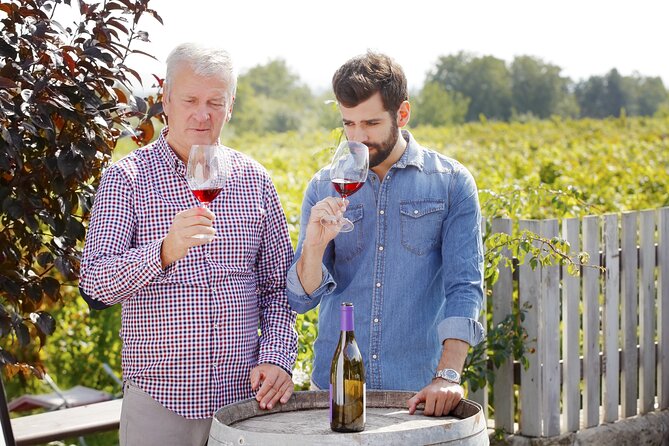
Kefalonia’s wine identity comes through its grape varieties. The tasting covers Robola, Mavrodafni, Muscat, Vostilidi, and Moschatela, giving you a wider picture than a single-house white or red.
Robola is likely to receive particular attention because it is strongly associated with Kefalonia. Mavrodafni gives the discussion a red-wine angle, while Muscat will be familiar to many people as a fragrant grape. Vostilidi and Moschatela are less familiar names for many visitors, which is precisely why a local tasting is useful.
I would not arrive expecting a formal wine-school lecture. The experience is short, and the emphasis is on the island’s varieties, natural vinification, and biodynamic cultivation. The winemaker’s explanations help you understand the choices behind each bottle, but you are not signing up for a full production tour or an advanced certification class.
The strongest part is the opportunity to ask simple questions. If you usually feel unsure about wine vocabulary, this is a comfortable setting to ask what makes Robola different, how a natural process affects the wine, or why one grape grows well in Kefalonia. The small group size should help keep the conversation personal.
Sitting on the terrace with a view of the vines
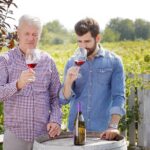
After the vineyard visit and introduction, you’ll settle in for the tasting. The terrace looks over the vineyards, so you are still connected to the place being discussed. This is a better backdrop than a dark tasting room, especially in good weather.
The mood is relaxed and informal. The setting has been described as quiet and friendly, and that fits the basic shape of the activity: a family property, a small group, and a host who explains the wines without excessive ceremony.
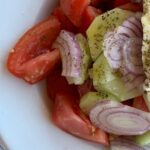
The food is intentionally simple. You’ll receive cheese, tomatoes, olives, and bread. These are practical pairings for wine, but they also feel appropriate to an island tasting. The snacks give you something to eat between pours and help soften the alcohol, while the fresh tomatoes and olives keep the plate tied to local produce.
Do not confuse the snacks with a full lunch. If you are booking this around midday, eat beforehand or plan a later meal. The food is enough to accompany the tasting, not enough to replace a proper meal.
You can also read our reviews of more wine tours in Cephalonia


What you actually taste during the hour
The experience is described as a tasting of around four wines. The included section also refers to six alcoholic beverages, so the exact number is not perfectly consistent. I would plan on roughly four wines and confirm whether the current format includes additional pours.
That small uncertainty is worth sorting out before booking, but it does not change the central appeal. You are tasting several local wines while learning how the varieties relate to Kefalonia. The host discusses natural vinification and biodynamic cultivation as you go, so each glass has a story attached to it.
The format should suit beginners particularly well. You do not need to know how to swirl, sniff, or describe wine before arriving. If this is your first tasting, you can focus on what you like and ask the host to explain unfamiliar terms.
It also works for experienced wine drinkers who want local context. Kefalonia has varieties you may not often find outside Greece, and the tasting gives you a chance to compare them in the place where they are produced. Just keep your expectations in proportion: the activity is about an hour, not a full cellar inspection with an extensive food menu.
Because alcohol is served, pacing matters. Eat the accompanying food, drink water when available, and avoid treating the tasting as a race. The short length makes it easy to fit into a day, but it also means each pour should be enjoyed rather than rushed.
Why the small group matters
The maximum group size is 10 people. That is large enough to create a little shared energy, but small enough for the host to speak with people directly. I prefer this format to a large tasting where everyone receives the same speech and questions get lost.
A small group also helps preserve the family character of the property. You can hear the explanations, look closely at the vineyard, and ask about the winemaking tradition without needing to fight for space.
The experience is available with a mobile ticket, which makes it easy to keep the booking on your phone. Confirmation is received at booking time. Still, I would save the meeting point and winery name separately because the map location may be less straightforward than expected.
The tour returns to the starting point. That is convenient if you are driving or arranging your day around the tasting, but no transport is listed as part of the experience. You should therefore plan your own way to Agios Dimitrios and avoid assuming a hotel pickup.
Fitting the tasting into a Kefalonia day
The one-hour length is one of the best features. You can place it between beach time and a meal, or use it as a change of pace during a day exploring the island.
I would avoid squeezing it into a schedule with no spare minutes. The tasting itself is short, but driving to the property, finding the correct entrance, and getting settled can take longer than the stated duration. The directions issue makes a little extra time especially sensible.
The experience may fit well with plans around Lixouri, since one account describes the winery as being among the vineyards of Lixouri. The exact road connection is not provided, so check your own route before committing to a tight itinerary.
This is also a good choice for people who want a quiet stop. You are not being asked to spend an entire day on a winery circuit. You get a glimpse of cultivation, a conversation about local grapes, and a seated tasting before returning to your other plans.
Who will enjoy this most
I would recommend the tasting to:
- First-time wine tasters who want a friendly introduction.
- Couples looking for a calm break from beach sightseeing.
- Small groups who prefer direct contact with a local producer.
- Visitors interested in Greek grape varieties beyond the usual restaurant list.
- Anyone who enjoys local food served in a simple, informal setting.
I would be more cautious if you want a long winery tour, a substantial meal, or detailed access to the production rooms. The winery visit is excluded during the harvest, so the exact access may also depend on the season.
The experience is not designed around luxury. If you want polished architecture, a large cellar, or an elaborate menu, this may feel modest. If you value a quiet terrace, island grapes, and a personal explanation from the winemaker, the modest setting is part of the charm.
Booking, cancellation, and seasonal details
The cost is $35, with free cancellation available up to 24 hours before the start time. Canceling less than 24 hours before the activity does not qualify for a refund, and changes inside that period are not accepted.
The winery visit is excluded during harvest. That wording suggests the tasting can operate with reduced access or a different format at that time, so ask what you will see if your date falls during the harvest season.
The provider is Curioseety SRLS. Confirmation is sent when you book, and the group is limited to 10 people. Since the meeting point can be confusing, I would use the confirmation details together with the Sclavos Wines name and allow extra time for arrival.
Should you book the Kefalonia wine tasting?
Book it if you want a short, personal introduction to Kefalonia’s wine culture rather than a full-day winery outing. The combination of a vineyard walk, local grape varieties, a family winemaker, and a terrace tasting makes good use of an hour.
The best value comes when you are already near Agios Dimitrios or Lixouri. At $35, the experience is reasonably priced for four wines, snacks, and a small-group setting. I would confirm the four-wine versus six-beverage detail and double-check the exact directions before paying.
Skip it if your priority is a full meal, a long cellar tour, or guaranteed access to the winery during harvest. For everyone else, this is an easy way to add local flavor to a beach-heavy Kefalonia itinerary without giving up half a day.
FAQ
Where does the wine tasting start?
The stated meeting point is 6CHJ+PHM in Agios Dimitrios, Greece.
Where does the activity end?
The experience ends back at the meeting point.
How long does the tasting last?
The activity lasts approximately one hour.
How much does the experience cost?
The listed price is $35.
How many wines are included?
The main description states that the tasting includes about four wines. The included-items section refers to six alcoholic beverages, so you should confirm the exact number before booking.
What food is served with the wine?
The tasting includes cheese, tomatoes, olives, and bread.
Which grape varieties are discussed?
The experience covers Robola, Mavrodafni, Muscat, Vostilidi, and Moschatela.
Is there a vineyard walk?
Yes. You’ll stroll through the vineyard and learn about grape cultivation before the guided tasting.
How large is the group?
The activity allows a maximum of 10 people.
Can I cancel for a full refund?
Yes, if you cancel at least 24 hours before the experience start time. Cancellations made less than 24 hours in advance are not refunded.