REVIEW · NYDRI
Phyllo Pie Baking Class @ Lefkada Micro Farm
Book on GetYourGuide →Operated by Lefkada Micro Farm Experiences · Bookable on GetYourGuide
The best part of this four-hour class is the dough. You learn to knead, roll, and stretch rustic Greek phyllo by hand, then bake it in a traditional wood-burning oven with greens from the farm garden. This is cooking as a practical country skill, not a quick demonstration followed by a polite taste.
I like the small group of up to 10 and the way the class connects the garden to the table. I also like that the recipes are meant to work in your own kitchen, using straightforward methods and extra virgin olive oil made by the farm.
The main consideration is time. Four hours is a sizable part of your day, and the class is built around a shared meal rather than a fast lesson. If you want a quiet activity with food and conversation, that pace should suit you. If you only want to sample a pie, it may feel too long.
In This Review
- Key points
- Four hours of Greek cooking at a working micro farm
- Starting in the organic garden
- Learning the old family phyllo method
- Four fillings, from savory greens to baklava
- Baking in the traditional wood-burning oven
- The Farmer’s Table and the slow-food idea
- Is $123 per person a fair price?
- Who should book this class?
- Booking details that matter
- Should you book the Lefkada Micro Farm class?
- FAQ
- How long does the phyllo pie baking class last?
- How much does the class cost?
- Is the class taught in English?
- How many people can join the class?
- Is the activity wheelchair accessible?
- What food will I prepare?
- Are cooking tools provided?
- Can I cancel for a full refund?
- Can I reserve now and pay later?
Key points
- Handmade phyllo from scratch: Knead, roll, and stretch the thick, rustic dough yourself.
- Seasonal garden harvest: Walk through the organic garden and gather greens and herbs for the pies.
- Wood-fired baking: Cook your creations in a traditional wood-burning oven with the farm’s own extra virgin olive oil.
- Several family recipes: Options include wild greens with feta, goat cheese with sun-dried tomatoes and olives, pumpkin with walnuts, and baklava.
- Farmer’s Table meal: Eat the baked pies together as part of a slow, shared farm meal.
- Practical small-group format: English instruction, cooking utensils, and an apron are provided for up to 10 participants.
Four hours of Greek cooking at a working micro farm
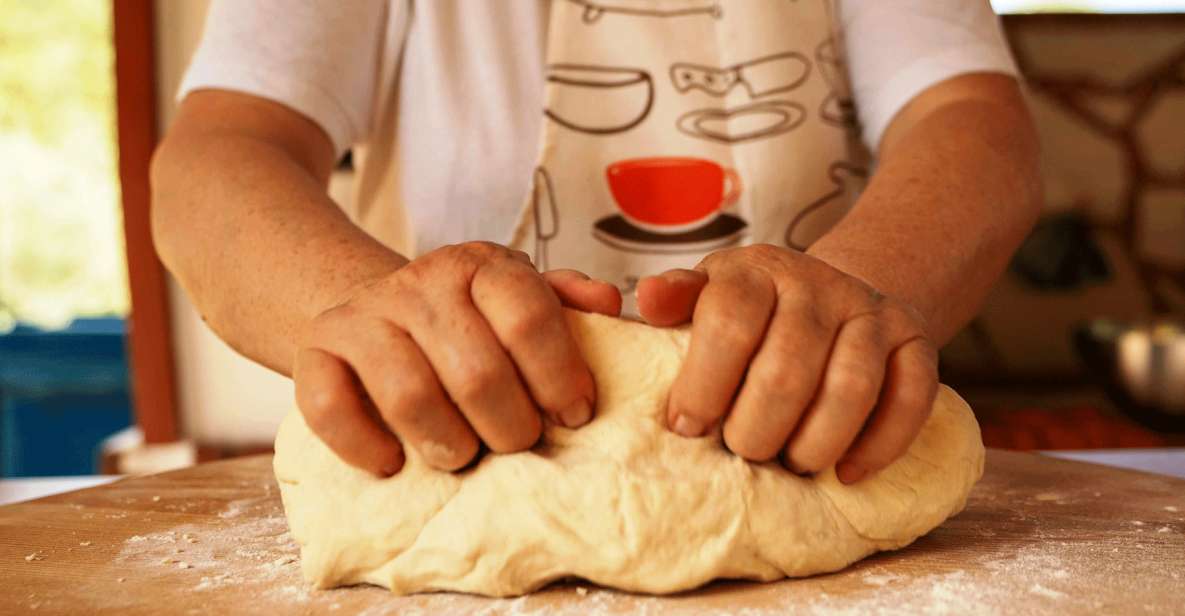
Lefkada Micro Farm Experiences keeps this class focused on one useful skill: making Greek phyllo pie. You are not racing through a long menu or watching a chef do everything for you. The session gives you time to handle the dough, work with farm ingredients, and understand how the pie comes together.
That focus matters. Phyllo can seem delicate and fussy when you buy it in a packet, but the countryside style taught here is thicker, more rustic, and forgiving. You knead and stretch the dough into a substantial crust with a satisfying crunch after baking.
The class is taught in English, and the small group limit helps keep the work practical. With no more than 10 people, you should have room to follow the steps and ask for help. The provided apron and cooking utensils also mean you do not need to bring special equipment.
The setting adds much of the charm. This is a farm class, not a city cooking studio. The point is to connect the ingredients, the method, the oven, and the meal in one place.
You can also read our reviews of more cooking classes in Nydri
Starting in the organic garden
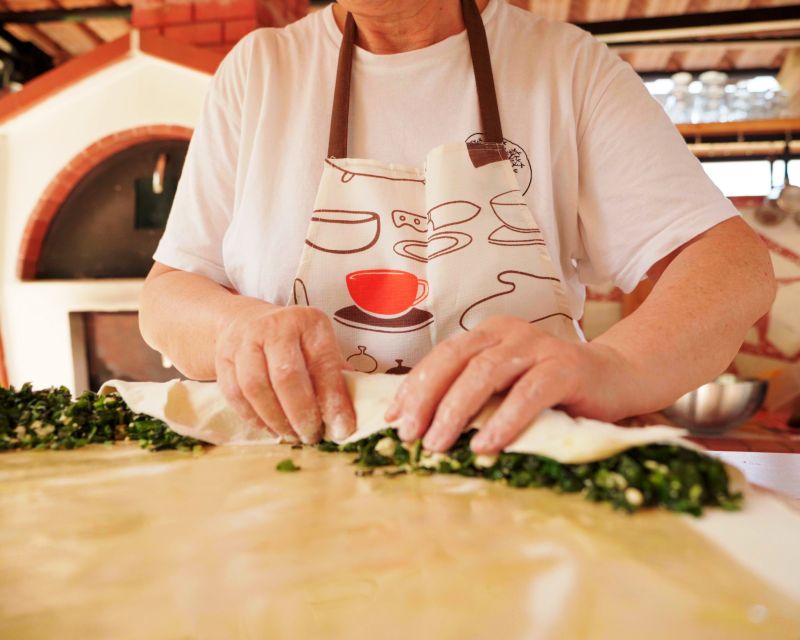
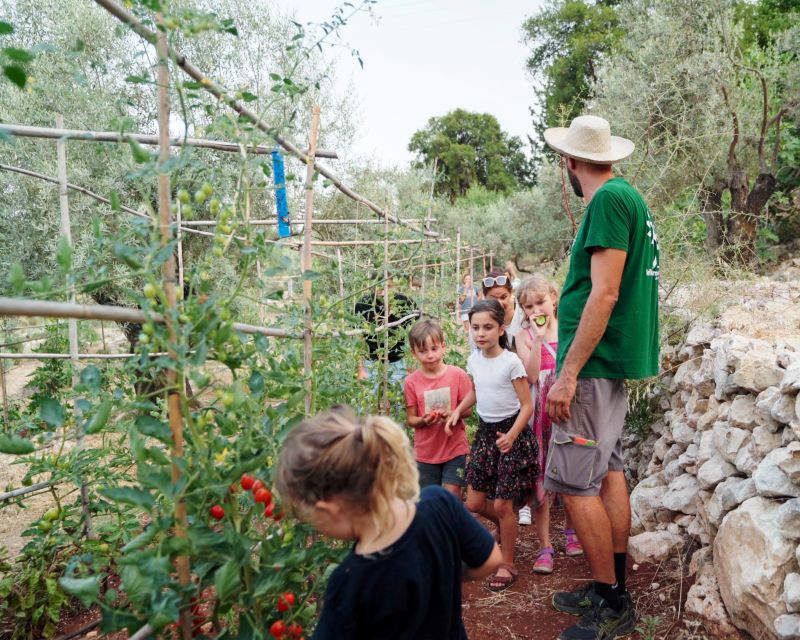
The class begins with a walk through the farm’s organic garden. You harvest seasonal greens and herbs, which gives you a direct sense of what will go into the pie. The exact harvest depends on the season, so the ingredients may vary rather than following a fixed supermarket-style list.
I like this part because it makes the recipe easier to remember. You are not only told that Greek pies use greens. You see the plants, gather them, and carry them back to the open-air kitchen.
The garden walk also sets the pace. This experience is designed to help you disconnect from the noise of modern life, and the quiet farm setting is one of its most praised qualities. One verified booking from the United Kingdom, dated September 4, 2025, singled out the peace of the farm and the cooking class as reasons to recommend it.
Do not expect a formal botanical tour. The garden visit is there to support the cooking, so the emphasis remains on harvesting ingredients and preparing food.
Learning the old family phyllo method
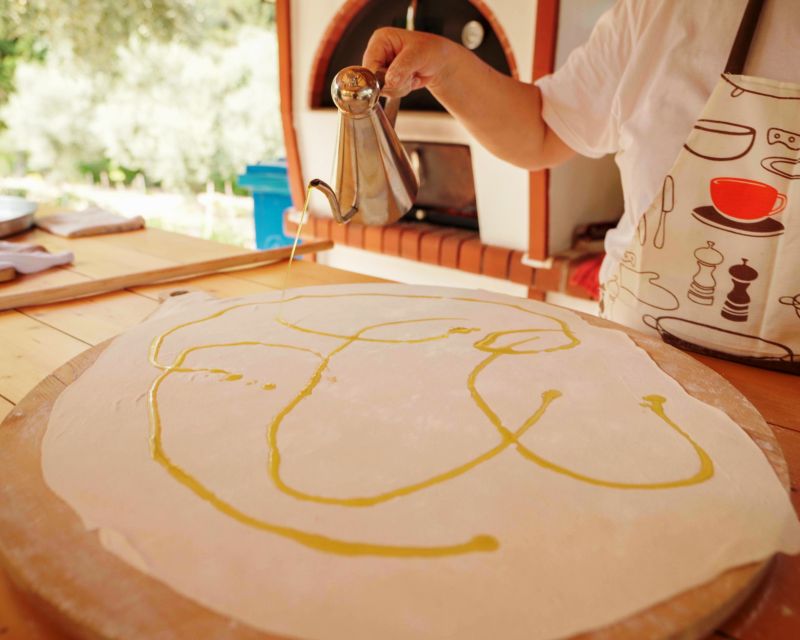
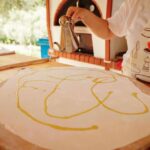
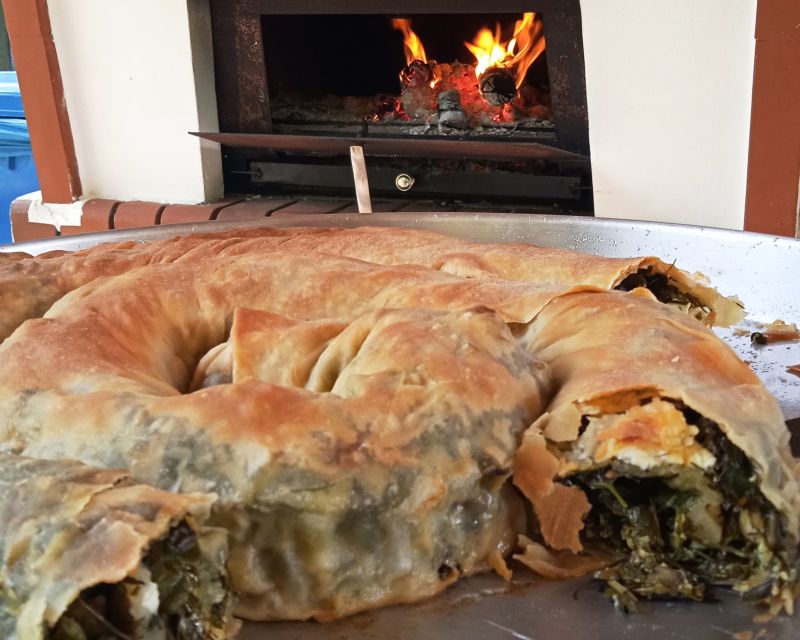
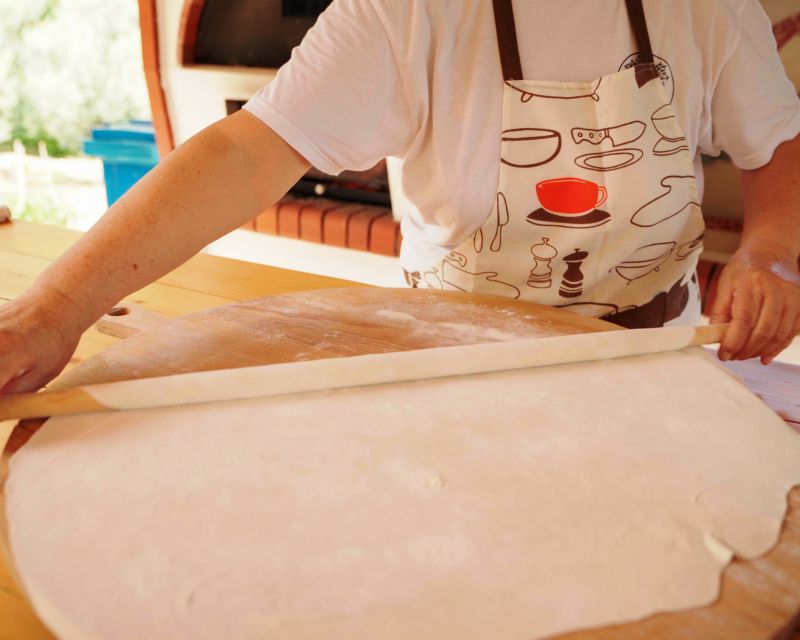
Back in the open-air kitchen, you work with a family recipe tradition said to reach back 100 years. The method produces the thick, golden crust associated with country-style Greek pies rather than the very thin layers found in some commercial versions.
You learn the basic rhythm: knead the dough, roll it, stretch it, and prepare it for filling. The description emphasizes that the technique is easy to take home, which is important for a class costing $123 per person. You are paying for a skill you can repeat, not only for lunch at the farm.
The farm uses its own selection extra virgin olive oil in the preparation. Olive oil is central to the texture and flavor of Greek pies, so this is more than a decorative farm detail. It helps you understand how a few basic ingredients can produce a satisfying crust.
Still, home results will depend on your oven and your practice. The wood-burning oven provides heat and character that a standard kitchen oven may not match. The useful takeaway is the dough method and filling ideas, not a promise that every pie will taste identical at home.
Four fillings, from savory greens to baklava
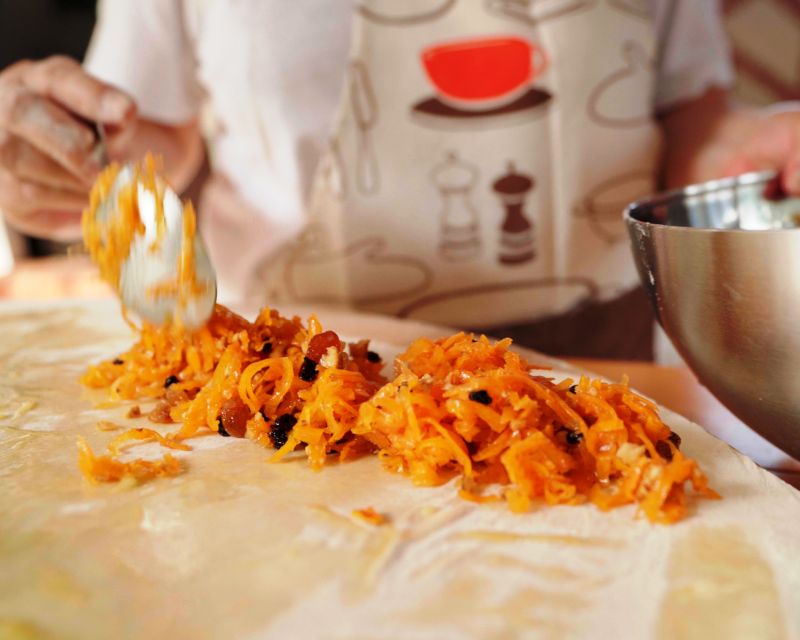
The class includes a set of recipes that covers both savory and sweet Greek baking. The listed choices are:
- Wild greens and feta
- Goat cheese, sun-dried tomatoes, olives, and oregano
- Pumpkin with walnuts, cinnamon, and raisins
- Baklava with honey, cinnamon, and walnuts
The wild greens and feta pie is the clearest expression of the farm setting. You gather seasonal greens, combine them with feta, and wrap them in your handmade crust. The result should appeal to you if you like vegetable-based dishes with a salty cheese filling.
The goat cheese option has a stronger Mediterranean profile. Sun-dried tomatoes, olives, and oregano bring more intense flavors, while the goat cheese gives the filling a distinct character. If you prefer savory food with a sharper edge, this may be the most interesting choice.
Pumpkin with walnuts, cinnamon, and raisins shifts the class toward sweet baking. It has the warm spice and dried-fruit notes associated with Greek home cooking. Baklava goes further, using honey, cinnamon, and walnuts in a familiar dessert format.
The selection also makes the class useful for different tastes. You are not limited to one plain vegetable pie, and the sweet recipes show how the same general pastry skills can lead to a dessert.
Baking in the traditional wood-burning oven
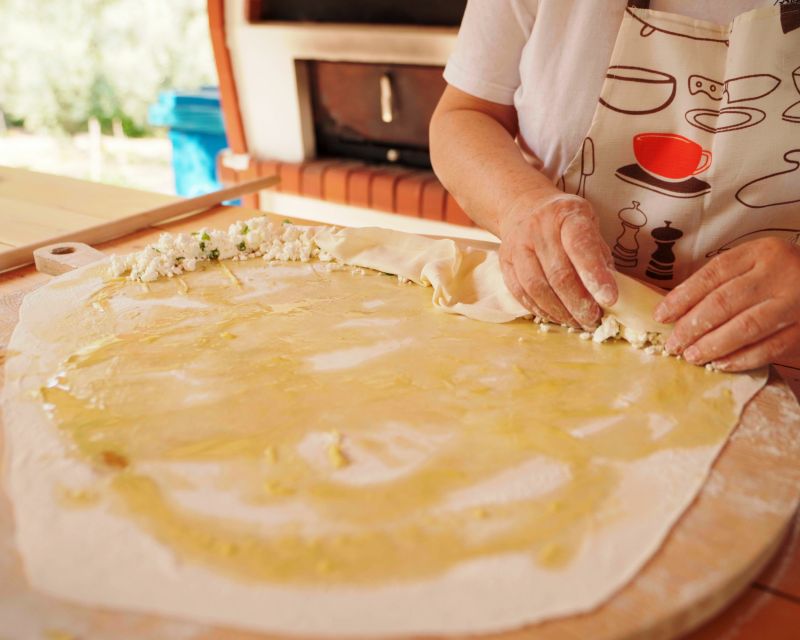
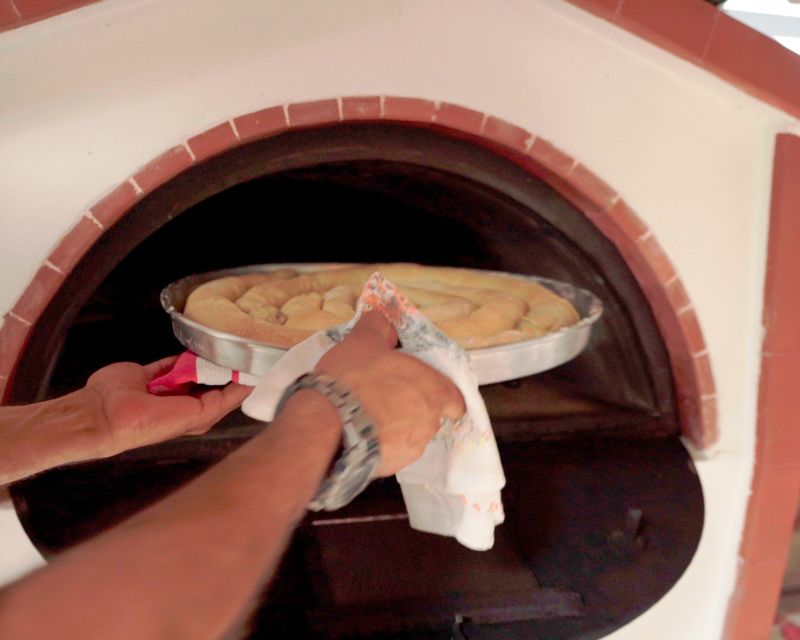
Once the pies are prepared, they go into the farm’s wood-burning oven. This is a central part of the experience, not simply a way to cook the finished food. The oven gives the class a strong link to older village kitchens and to the family recipes being taught.
You can expect the baking stage to be part of the relaxed flow of the afternoon. While the pies cook, the group gathers at the Farmer’s Table. The meal is shared after the work is done, giving the class a natural ending rather than a rushed final tasting.
There is a simple pleasure in eating food you have helped make, especially after handling every stage from garden harvest to oven. I also like that the meal is framed as a reward for the work. You see the ingredients, learn the method, and then sit down with the finished pies.
The wood oven may be less predictable than a modern appliance, and the class does not promise a laboratory-style baking lesson with exact temperature charts. That is part of the rustic character, but it may matter to you if you want highly technical pastry instruction.





The Farmer’s Table and the slow-food idea
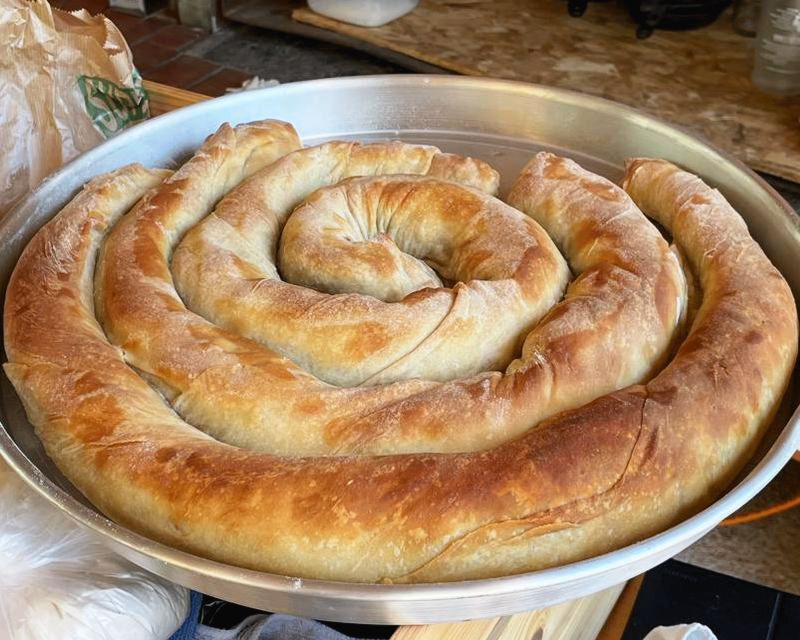
The shared meal is not an add-on. It is the social center of the class. You gather around a large Farmer’s Table as the baked pies are served, turning a cooking lesson into a communal farm experience.
For me, this is where the class earns its slow-food label. The food has a clear beginning, from seasonal produce in the garden, through hands-on preparation, to baking and eating. You are encouraged to pay attention to the work and the setting instead of rushing through the meal.
The social side is also worth considering. A small group of up to 10 people makes conversation possible, but it means this is not a private class unless separately arranged. You will be sharing the kitchen and table with other participants.
The quiet atmosphere is a strong reason to choose this experience. It suits you if you want a slower day in western Greece, especially if you enjoy food classes that include time to sit and eat. It is less suitable if you prefer a tightly timed lesson with little group interaction.
Is $123 per person a fair price?
At $123 per person, this is not a budget lunch. The value depends on how you measure the experience.
You receive four hours of instruction, access to cooking utensils, an apron, garden ingredients, the use of the farm’s own extra virgin olive oil, baking in a wood-burning oven, and a shared meal. You also leave with recipes and techniques that are intended for home use.
That makes the price easier to justify than a simple restaurant meal. You are paying for time, teaching, ingredients, a farm setting, and the chance to make the food yourself. The small group limit adds value because you should get more direct attention than in a large demonstration.
The price is harder to justify if your priority is quantity or speed. A person who only wants to eat Greek pie could spend less elsewhere. I would book this for the combination of cooking, garden time, and a quiet meal, not for the amount of food alone.
Who should book this class?
I would recommend it to you if you enjoy learning food traditions through your hands. It is also a good fit for couples, families, and small groups who want a shared activity with a clear edible reward.
The class should suit different cooking levels because the method is presented as simple and practical. You do not need to arrive as an experienced baker. The thick, rustic dough is less intimidating than paper-thin pastry, though you should still expect to knead and stretch it yourself.
It is especially appealing if you want to take a recipe home. The farm does not keep the method mysterious. The goal is for you to recreate the flavors in your own kitchen.
You should think twice if you have serious food restrictions and have not contacted the provider in advance. The class asks you to report allergies or dietary restrictions, so do that before booking.
The experience is wheelchair accessible, which makes it a useful option for visitors seeking an accessible cooking activity. The available information does not provide further details about specific kitchen surfaces, garden paths, or restroom facilities, so you should ask the provider about those points if they affect your plans.
Booking details that matter
The class lasts four hours, and starting times depend on availability. Check the schedule carefully before placing it in a day packed with other activities.
Instruction is in English. Cooking utensils and an apron are included, while the listed price is $123 per person.
You can cancel up to 24 hours before the activity for a full refund. The reserve-now, pay-later option lets you hold a place without paying immediately, which helps if your western Greece plans are still changing.
The group is limited to 10 participants. That is small enough for a personal working atmosphere, but you should still expect a shared experience rather than one-on-one tuition.
Should you book the Lefkada Micro Farm class?
Book it if you want more than a meal. The strongest reasons are the peaceful farm setting, the hands-on phyllo work, the garden harvest, and the chance to eat food baked in a traditional wood-burning oven.
At $123, it is best seen as a half-day cultural and cooking experience rather than a cheap food stop. You gain recipes, a practical pastry method, and time at the Farmer’s Table, but you give up four hours and accept a relaxed group format.
I would choose this class for a slower day in western Greece, particularly if you enjoy rural food traditions and want a skill to bring home. I would skip it only if your schedule is tight, your interest in cooking is low, or you want a quick tasting instead of a hands-on lesson.
FAQ
How long does the phyllo pie baking class last?
The class lasts four hours.
How much does the class cost?
The price is $123 per person.
Is the class taught in English?
Yes. The instructor language is English.
How many people can join the class?
The experience is limited to 10 participants.
Is the activity wheelchair accessible?
Yes, the activity is listed as wheelchair accessible.
What food will I prepare?
The recipes include wild greens with feta, goat cheese with sun-dried tomatoes, olives, and oregano, pumpkin with walnuts, cinnamon, and raisins, and baklava with honey, cinnamon, and walnuts.
Are cooking tools provided?
Yes. Cooking utensils and a cooking apron are included.
Can I cancel for a full refund?
Yes. You can cancel up to 24 hours in advance for a full refund.
Can I reserve now and pay later?
Yes. The reserve-now, pay-later option allows you to book without paying at the time of reservation.