REVIEW · NYDRI
Traditional Greek Cooking Class @ Lefkada Micro Farm
Book on GetYourGuide →Operated by Lefkada Micro Farm Experiences · Bookable on GetYourGuide
Food tastes better when you grow it. This 4-hour cooking class at Lefkada Micro Farm turns that idea into real work and real flavor: you harvest ingredients, cook in an open-air setup, then share the meal family-style.
I especially love the farm-to-plate approach—regenerative organic produce isn’t just a marketing line, it shapes what you cook and how you talk about food. And the olive oil is the star of the table: you’ll use award-winning, high-polyphenol olive oil, and it shows in how simple Greek dishes taste when the ingredients are fresh.
One thing to consider: the class is about traditional, straightforward cooking more than advanced techniques, so if you’re expecting a longer, deeper professional-style workshop, the price can feel a bit high for the 4-hour format.
In This Review
- Key takeaways before you go
- Entering A Real Farm Kitchen in Western Greece
- From Regenerative Practices to Harvesting the Menu
- Open-Air Cooking Lessons With a Traditional Wood-Burning Oven
- What You’ll Cook: Bread, Briami, Tzatziki, and Greek Salad
- The Farmer’s Table Meal and the Slow Food Spirit
- The Olive Oil Factor: High-Polyphenol Flavor You Can Actually Taste
- Your Guide and the Small-Group Advantage
- Price and Value for a 4-Hour Farm Cooking Class
- Who Should Book This Cooking Class (and Who Might Skip It)
- Should You Book Lefkada Micro Farm’s Traditional Greek Cooking Class?
- FAQ
- How long is the Traditional Greek Cooking Class?
- Is the cooking class taught in English?
- How large is the group?
- What’s included in the experience?
- Is it wheelchair accessible?
- What should I do if I have dietary restrictions?
Key takeaways before you go
- Harvest-first format: you start in the soil and only then move to the kitchen.
- Wood-burning oven cooking: you’ll cook Greek staples at a slower, more traditional rhythm.
- Seasonal menu energy: recipes are built from what’s grown on-site, not pre-planned produce from a market.
- Olive oil on purpose: high-polyphenol oil is used during cooking, not just mentioned.
- Family-style Farmer’s Table: you eat together and turn the class into a conversation.
- Small-group feel: limited to 10 participants, so questions don’t get lost.
Entering A Real Farm Kitchen in Western Greece
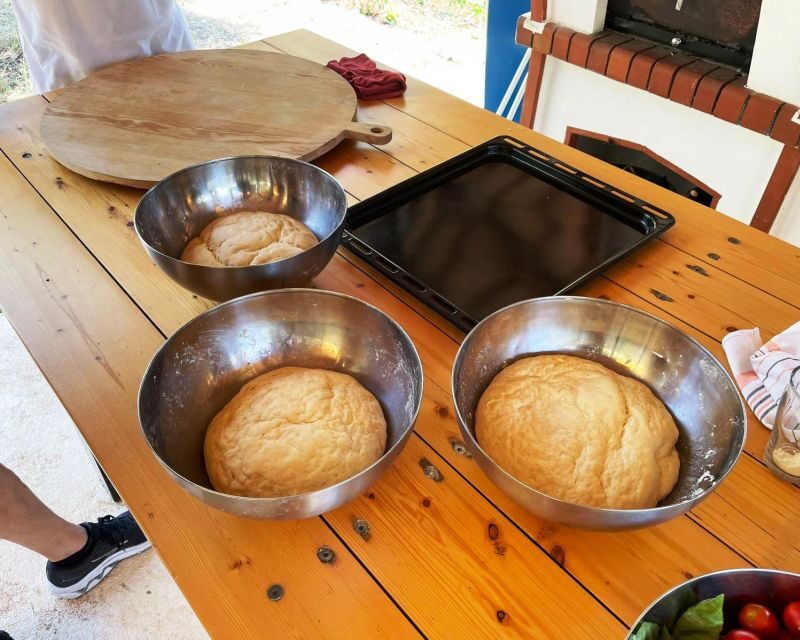
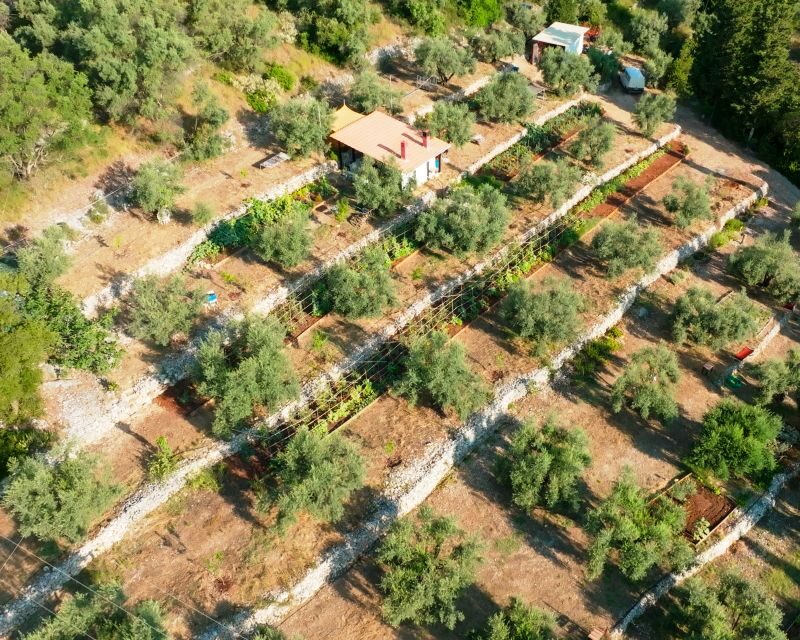
This experience starts with a simple premise: Greek food makes sense when you see it start in the dirt. You step onto the farm and learn how their regenerative practices support the ecosystem, then you move into harvesting seasonal organic ingredients for your meal.
The vibe is hands-on and unhurried. Instead of getting stuck watching screens or following a rushed demo, you get guided through the logic of cooking—freshness, seasonality, and simplicity—while everything happens in an open-air cooking space that feels connected to the surrounding land.
You can also read our reviews of more cooking classes in Nydri
From Regenerative Practices to Harvesting the Menu
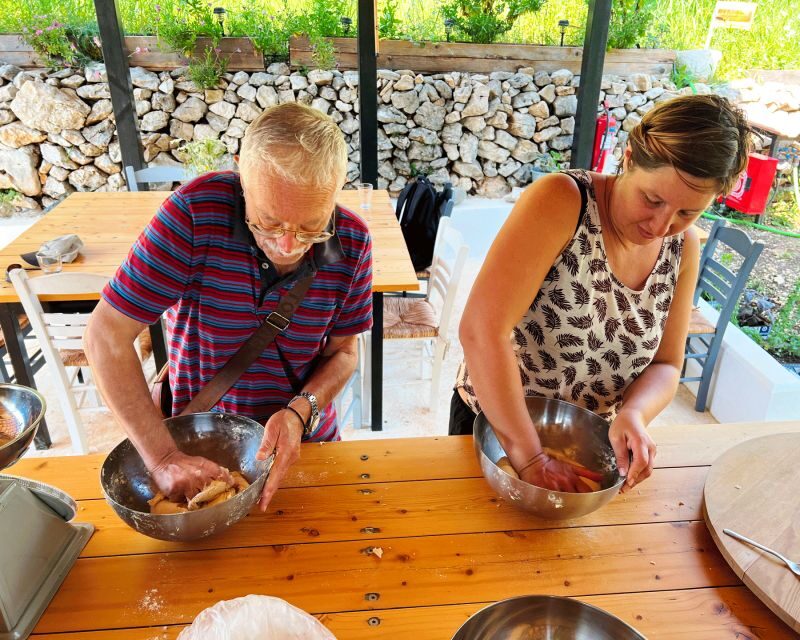
You don’t just learn what to cook. You learn why the farm grows the way it does. The class begins with the soil and regenerative approach, so you understand how that work influences the flavor and quality of what ends up on your plate.
Then comes the practical part: harvesting. You’ll pick seasonal ingredients from the farm for the recipes you’ll cook next. That short chain—soil to hands to oven—creates a different kind of understanding than buying everything and cooking at home later.
One small charm: the farm atmosphere can include friendly distractions, like cats roaming around while you work. It’s not the main event, but it does add to the relaxed, lived-in feel.
Open-Air Cooking Lessons With a Traditional Wood-Burning Oven
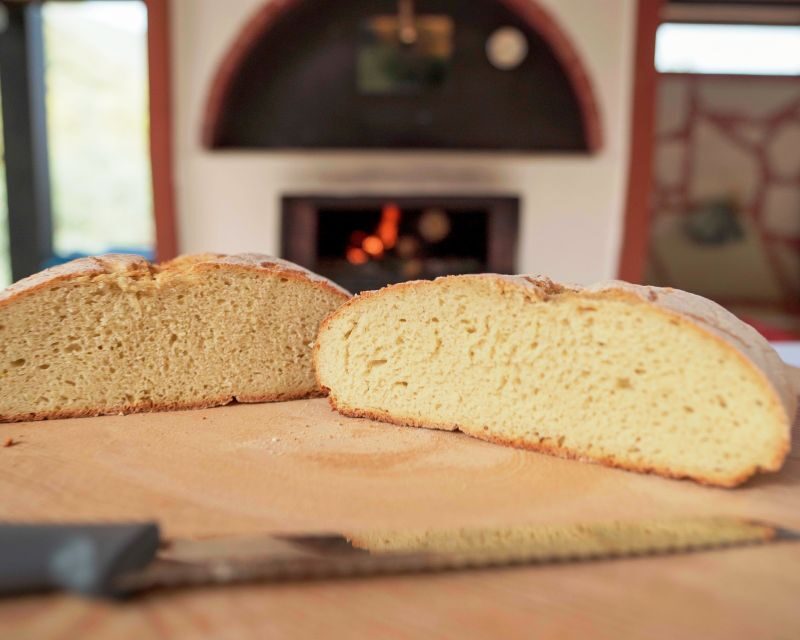
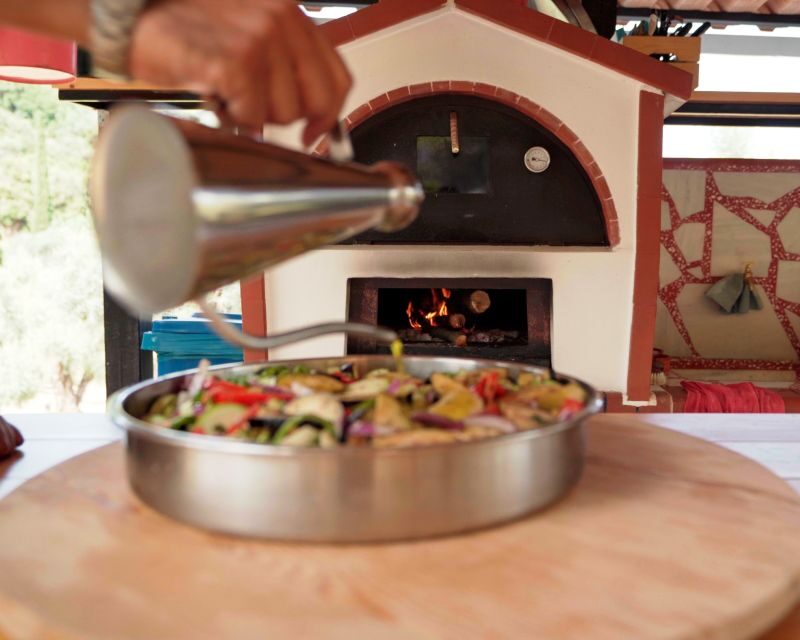
Once you’re ready to cook, the class shifts to the open-air kitchen. You’ll use the farm’s traditional wood-burning oven, and that changes the tone of cooking. It’s slower, more tactile, and you can feel the heat and timing as part of the process, not just a countdown.
You’ll be given what you need—cooking utensils and an apron—so you can focus on learning rather than preparing gear. And the group stays small (up to 10), which matters because traditional cooking benefits from asking quick questions while your hands are moving.
The teaching style stays grounded. You won’t be thrown into advanced chef tricks; instead, you learn how to build iconic Greek flavors with straightforward methods and ingredients that actually match the season.
What You’ll Cook: Bread, Briami, Tzatziki, and Greek Salad
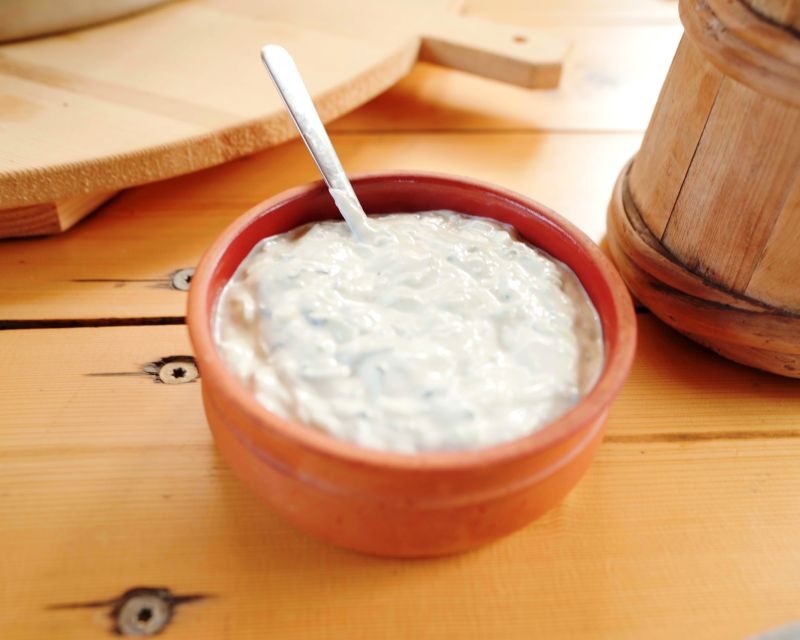
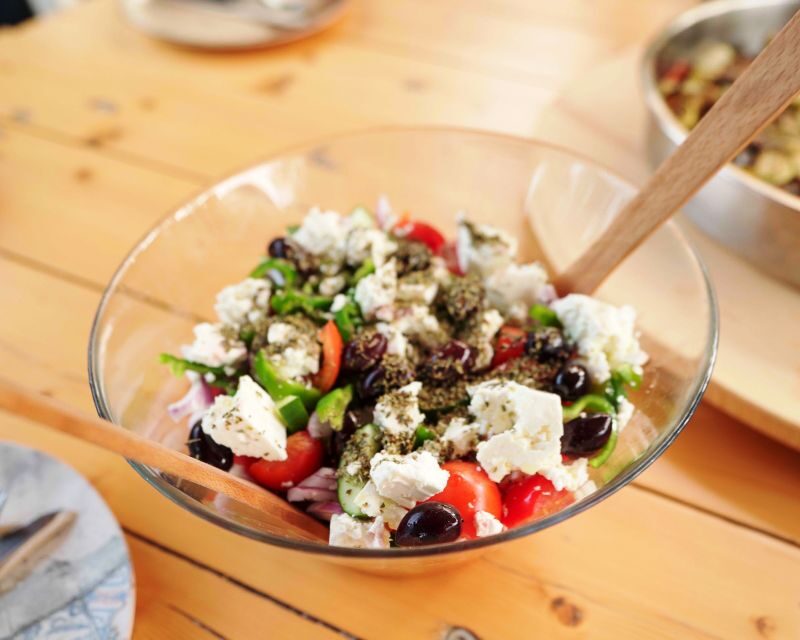
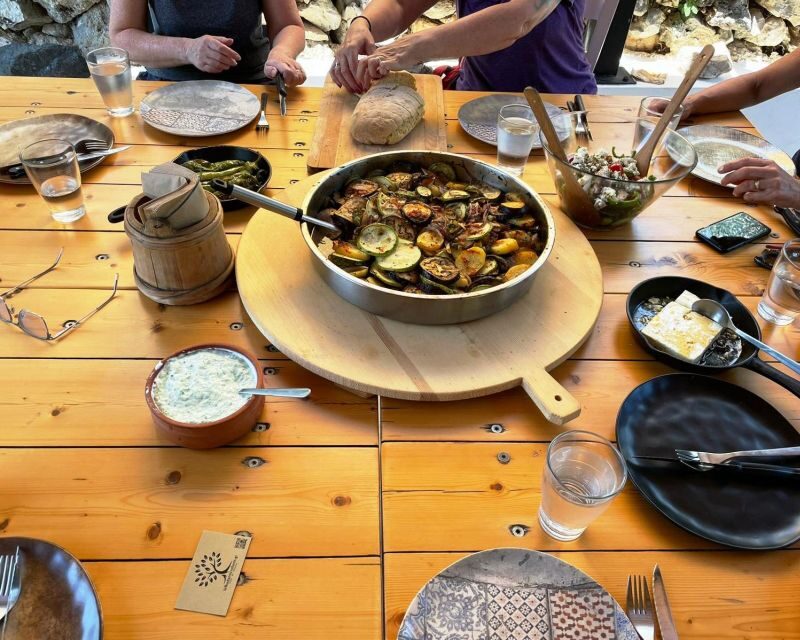
The menu centers on iconic Greek recipes, and you should expect dishes along the lines of bread, briami, tzatziki, and Greek salad. These are the kinds of meals that teach you the basics while still feeling like a full, satisfying dinner.
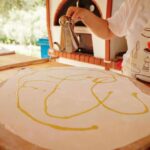
Bread is more than a side dish here—it’s part of the group process. When you’re working on it yourself, you start to notice how yeast timing, dough handling, and oven conditions connect. That’s the kind of skill you can reuse at home, even if you never find the exact same olive oil.
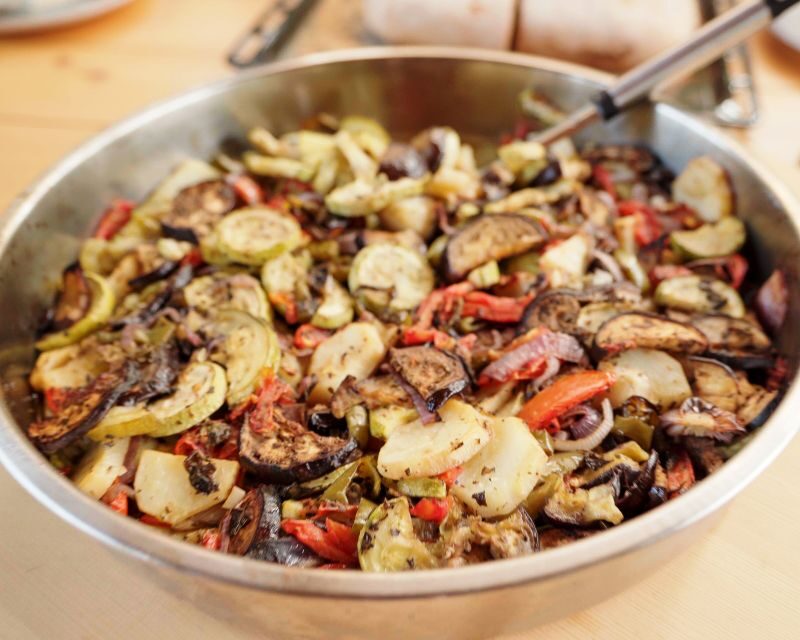
Briami (often a baked vegetable dish) gives you a chance to practice seasonal thinking: it’s not fussy, but it depends on good olive oil and fresh produce. Tzatziki is where herbs and freshness matter. And Greek salad reminds you that Greek cooking isn’t only about cooking heat—it’s also about raw ingredients treated with respect.
If you’re coming in hoping for a heavy “techniques only” class, you might want to recalibrate your expectations. The value here is learning classic recipes in the context that created them.
The Farmer’s Table Meal and the Slow Food Spirit
After the cooking, you all gather for the Farmer’s Table. This is the part that makes the class feel bigger than a lesson. You sit together and share what you made, and the conversation becomes part of the experience—like a family meal on a working farm.
This is also where the Slow Food movement feeling comes through. It’s not just that the ingredients are local. It’s that you slow down enough to appreciate them, and you connect with other people long enough to talk about food beyond the recipe.
Because the class is designed around reconnecting you to nature’s rhythms, the meal lands with more meaning. You’re not only eating dinner—you’re tasting the farm choices you helped make earlier.






The Olive Oil Factor: High-Polyphenol Flavor You Can Actually Taste
Greek cooking often talks about olive oil like it’s a supporting actor. Here, it’s treated like a lead character. The class uses the farm’s award-winning, high-polyphenol olive oil, which you’ll cook with and serve as part of the meal.
That matters because polyphenols are part of the oil’s character—often linked with a peppery, robust profile. You may find that when the oil is strong and fresh, even simple dishes taste more complete. Olive oil isn’t only for drizzling; it helps build the flavor foundation of Greek cooking.
You’ll also likely hear plenty about how the farm views olive oil, since they’re serious about the quality they grow. The point isn’t to turn you into an oil judge—it’s to show how one ingredient can shape an entire meal.
Your Guide and the Small-Group Advantage
Your guide leads the English-language experience, and the small group (limited to 10) helps the class feel personal. You can ask questions while you’re cooking, and you’re not stuck waiting for a big group moment.
Andreas is one name that pops up in past sessions. In particular, people describe him as friendly, fun, and genuinely passionate about organic produce and farming life. If your guide brings that same energy, you’ll likely get food lessons that feel more like a conversation than a classroom.
This matters for practical reasons. When you’re cooking in an open-air setup with a wood-burning oven, small timing and ingredient details can change outcomes. A guide who explains clearly helps you learn what to do—and why.
Price and Value for a 4-Hour Farm Cooking Class
At $123 per person, this isn’t a budget activity. But it’s also not just a generic cooking workshop. You’re paying for a complete farm-to-table flow: regenerative farming education, on-site harvesting, cooking in a wood-burning oven, and eating what you made.
In terms of value, the strongest argument is that the ingredients aren’t “added” later—they’re the foundation of the menu. Also, you get a small group size, which often means more time with your guide and less standing around.
That said, one clear consideration from earlier experiences is that price-to-value can feel off for some people. If you expect a longer class, a bigger variety of dishes, or a more advanced skill focus, you might feel the 4-hour structure is tight.
My practical take: if you value learning the farm context and cooking a classic meal from harvest ingredients, the cost can make sense. If you mainly want an inexpensive way to cook Greek food, you might compare other classes and choose based on your priorities.
Who Should Book This Cooking Class (and Who Might Skip It)
You’ll probably love this if you want:
- a hands-on, farm-to-table experience
- classic Greek recipes with a real ingredient story
- a relaxed pace that includes sitting down to eat together
- English instruction in a small group
This also fits well if you enjoy food education that’s practical. The focus is on understanding why ingredients matter—soil to harvest to table—rather than memorizing fancy cooking jargon.
You might not love it as much if:
- you’re only looking for advanced cooking techniques
- you’re expecting a very long tasting or multi-course format
- you’re on a strict budget and want the lowest possible price
Should You Book Lefkada Micro Farm’s Traditional Greek Cooking Class?
I’d book it if your idea of a great day in Greece is simple: work with ingredients, cook traditional recipes, then eat what you made in a friendly shared setting. The combination of regenerative farm learning, on-site harvesting, and wood-oven cooking is the kind of experience that stays with you after the dinner plate is cleared.
I wouldn’t book it if you want a high-end culinary masterclass or a long, menu-heavy evening. This is about the slow method, the classics, and the connection between land and plate—so go in for that, and you’ll likely feel satisfied.
FAQ
How long is the Traditional Greek Cooking Class?
The class lasts 4 hours.
Is the cooking class taught in English?
Yes, the instructor teaches in English.
How large is the group?
It’s a small group limited to 10 participants.
What’s included in the experience?
You’ll have cooking utensils and an apron included.
Is it wheelchair accessible?
Yes, the experience is listed as wheelchair accessible.
What should I do if I have dietary restrictions?
Let them know about any food allergies or dietary restrictions ahead of time.