REVIEW · ATHENS
Athens Highlights, Delphi & Meteora, 3-Days Private Tour
Book on Viator →Operated by CATTAXI · Bookable on Viator
The great appeal here is the sheer range packed into three private days: Athens monuments, a sunset-worthy sea temple, Delphi’s mountain sanctuary, Leonidas’ battlefield at Thermopylae, and Meteora’s cliff-top monasteries. You get a strong first look at mainland Greece without changing hotels every night.
I like the freedom of a private car, especially since departure can usually be set between 6:00 and 9:00 in the morning. I also like the built-in guides at Delphi and two Meteora monasteries, where a good explanation adds much more than a quick photo stop.
The main drawback is the pace. This is a long road journey with early starts, uneven ground, and several major sights in quick succession. At $1,995.51 per person, you should also confirm exactly how the private-vehicle pricing applies to your party before booking.
In This Review
- Key points to know before you book
- Why this route covers so much of Greece
- Athens begins with the Acropolis
- Roman Athens, royal guards, and the first Olympics
- Cape Sounion and the Temple of Poseidon
- Delphi, where myth meets mountain scenery
- Arachova offers a short mountain pause
- Thermopylae puts a famous battle in context
- Kalambaka makes Meteora possible
- Meteora brings the tour to its high point
- What the private format changes
- Is $1,995.51 per person good value?
- Who should choose this three-day tour?
- Practical details to settle before departure
- Should you book Athens, Delphi, and Meteora?
- FAQ
- How long is the tour?
- Is the tour private?
- Where can pickup and drop-off take place?
- What type of vehicle is used?
- Is a professional guide included?
- Are entrance fees included?
- Are meals included?
- What time does the tour depart?
- How many monasteries will I visit at Meteora?
- Is the tour suitable for someone with limited mobility?
Key points to know before you book
- Cape Sounion adds a memorable coastal finish to Day 1: The Temple of Poseidon sits above the Aegean at the tip of Attica.
- Terry is the named contact and driver: The company’s communication and personal care received especially warm praise, including help arranging an airport transfer.
- Delphi and Meteora receive the strongest guiding support: A professional guide covers Delphi and two monasteries at Meteora.
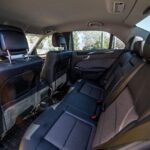
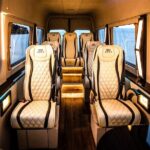
- The vehicle is private to your party: A sedan is used for one to three passengers, with a Mercedes-Benz minivan generally available for four to six.
- You sleep in Kalambaka, the base for Meteora: This avoids trying to visit the monasteries and return to Athens in one exhausting day.
- Admission fees and meals are extra: Budget for archaeological sites, museums, drinks, snacks, lunch, dinner, and gratuities.
Why this route covers so much of Greece
This is not a relaxed countryside break. It is a concentrated mainland tour for you if your time in Greece is short but your list is long.
Day 1 gives you the essential Athens sights, then sends you south along the Athenian Riviera to Cape Sounion. Day 2 heads north through the mountains to Delphi, Arachova, Thermopylae, and Kalambaka. Day 3 is devoted to Meteora before the long return to Athens.
That route works because the private vehicle keeps the day flexible. You can request an early or later start, stop along the way, and ask the driver for practical tips. The car has air conditioning and Wi-Fi, and fuel and tolls are included.
Still, the distances are real. You will spend many hours on the road, especially on the second and third days. The payoff is access to places that are difficult to combine by public transport in only three days.
CATTAXI prices the experience as a private vehicle arrangement, with the listed price shown per person. The supplied information gives $1,995.51 per person, but also says one sedan serves one to three passengers and a minivan serves four to six. I would ask for a written total for your exact party before paying, since private-tour prices can look quite different depending on group size.
You can also read our reviews of more private tours in Athens

Athens begins with the Acropolis
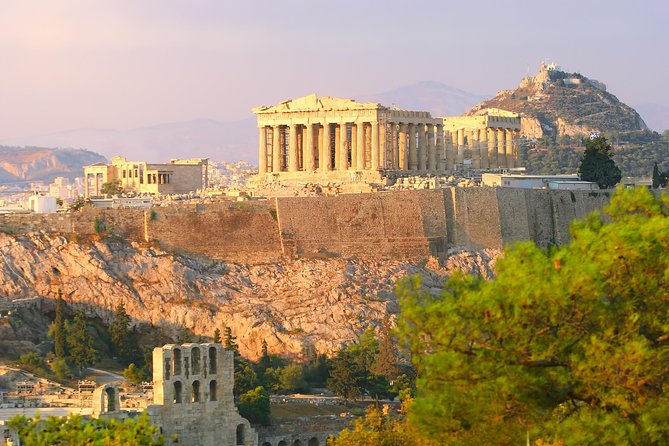
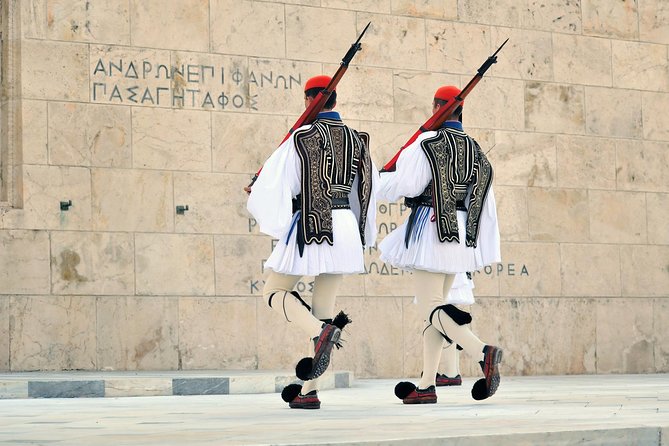
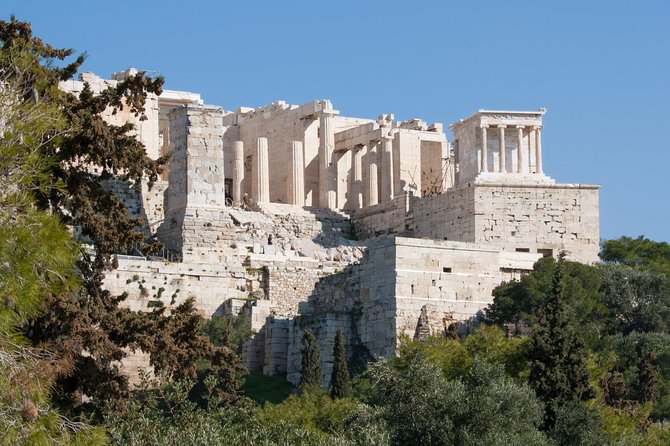
The Acropolis is the natural centerpiece of the first morning. You have about 90 minutes at the site, with the Parthenon as the main prize.
The Parthenon was dedicated to Athena, the goddess who gave Athens its name. Its position above the city makes it easy to understand why the Acropolis remains the city’s defining sight. You can see the hill from much of central Athens, and the old quarters around it make the approach part of the experience.
Admission to the Acropolis is not included. The same applies to several of the paid archaeological sites later in the tour, so keep some room in your budget for tickets.
The schedule allows enough time to see the principal monument, but not enough for a slow, detailed study of every corner. If you want long museum visits or extensive time on the Acropolis, this tour may feel brisk.
Roman Athens, royal guards, and the first Olympics
Hadrian’s Arch is a short stop, about 20 minutes, and admission is free. This Roman monument was dedicated to Theseus and Hadrian, presented as founders of Athens. It is a useful reminder that the city’s story did not end with classical Greece.
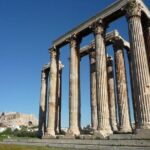
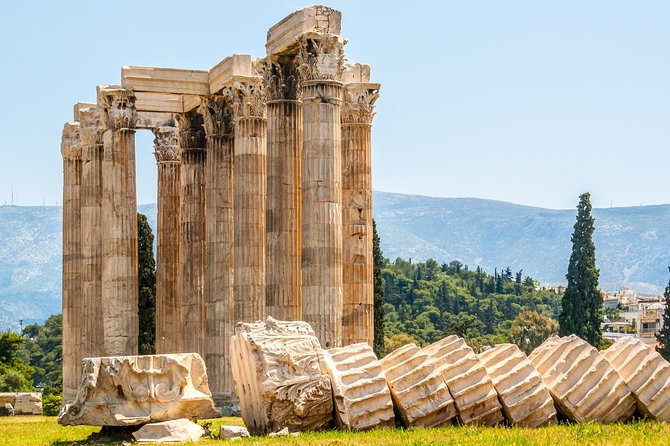
Next comes the Temple of Olympian Zeus, where only some of the original 104 columns remain. You have roughly 30 minutes here, and an admission fee applies. The surviving columns are huge, so even a short visit gives you a clear sense of the scale of the ancient project.
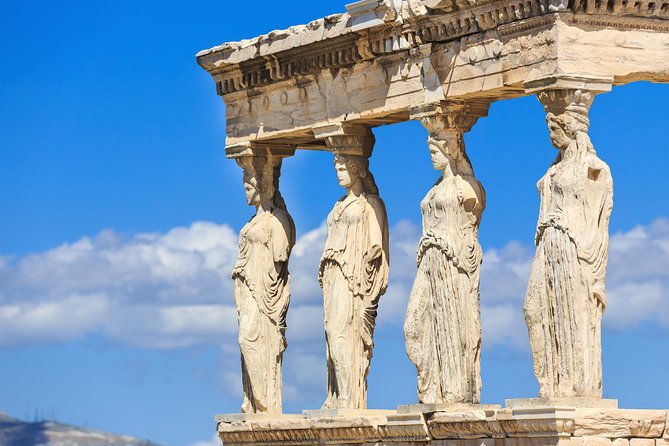
At Syntagma Square, you watch the Changing of the Guard at the Tomb of the Unknown Soldier in front of Parliament. The Evzones wear a uniform inspired by the traditional clothing of mountain fighters and resistance figures. The ceremony gives the morning a modern Greek setting after the ancient stones of the Acropolis and Olympian Zeus.
The Panathenaic Stadium follows, with about 30 minutes to see the venue of the first modern Olympic Games in 1896. Admission is not included. Even with limited time, the white marble stadium makes a good counterpoint to the older ruins.
These stops are short, but they create a useful overview. You see Athens as a city shaped by classical Greece, Roman rule, royal government, and the modern revival of the Olympic Games.
Cape Sounion and the Temple of Poseidon
The drive along the coast to Cape Sounion changes the mood completely. After the city streets and crowded monuments, you get open sea views and a temple set high on a cliff above the Aegean.
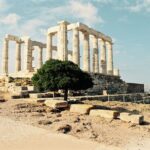
The Temple of Poseidon is the main stop, with about two hours allowed. Admission is extra. Its setting is the attraction as much as the remaining columns. On a clear day, the temple’s position helps explain the ancient network of sacred sites around the Aegean.
Cape Sounion is also tied to the story of Aegeus, the legendary king who fell from the cliffs after mistakenly believing his son had died. The name Aegean is linked to that story.
You may find this the most visually dramatic part of the first day, but timing matters. The supplied schedule does not promise a sunset visit, so do not book this tour solely for sunset photographs. The departure time is adjustable, though, and you can discuss the day’s timing with CATTAXI in advance.
The drive is also longer than the stop descriptions might suggest. After a full morning in Athens, the coastal run can make Day 1 feel substantial. That is the tradeoff for adding Sounion without giving it a separate day.
Delphi, where myth meets mountain scenery
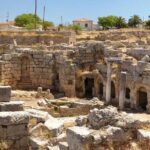
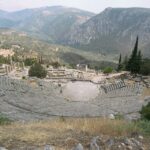
Day 2 moves north toward Delphi, the ancient sanctuary associated with Apollo and the Oracle of Delphi. The ruins sit on the slopes of Mount Parnassus, overlooking a broad mountain setting.
A professional guide accompanies you at the Delphi archaeological area and museum. This is one of the tour’s strongest practical features. Delphi includes temples, treasuries, and layers of meaning that are easy to miss if you only walk among the stones without context.
The Temple of Apollo was the center of the sanctuary. People came from across the Greek world to ask the oracle for advice, and the answers attributed to Pythia influenced important decisions. The site is recognized by UNESCO as a World Heritage Site.
You have about two hours for the Delphi museum and archaeological area. Admission is not included. Plan on walking over uneven or unpaved ground, and wear shoes suited to slopes and rough surfaces.
The time is enough for a serious first visit, especially with a guide, but it is not an exhaustive archaeological study. If Delphi is your main reason for visiting Greece, you may want a slower dedicated stay. On this route, though, two hours gives you a useful balance between the site and the long drive ahead.
- All Day Cruise -3 Islands to Agistri,Moni, Aegina with lunch and drinks included
★ 5.0 · 4,958 reviews





Arachova offers a short mountain pause
Arachova is a mountain resort known for stone houses, cafés, views, and winter skiing. The stop lasts about an hour and admission is free.
I see this as a breathing space rather than a major sightseeing appointment. After Delphi, you can sit with a coffee, walk a little, and enjoy the village atmosphere before returning to the road.
The one-hour limit keeps the tour moving. You will not have time to explore every lane or settle into a long meal. Still, the stop breaks up the drive and gives you a glimpse of a mountain town beyond Greece’s famous ancient sites.
Thermopylae puts a famous battle in context
Thermopylae, known in English as the Hot Gates, is the next major stop. The site is associated with King Leonidas and the 300 Spartans who held a narrow pass against the Persian army of Xerxes.
The tour includes about an hour at the Thermopylae Museum and site, but admission is extra. The location helps you understand the battle’s basic geography: a narrow route between cliffs and the sea allowed a much smaller force to delay the Persian army.
This stop is most valuable if you enjoy connecting famous stories with actual places. The 300 Spartans did not win the battle, but their resistance gave other Greek city-states time to mobilize before the later Greek victory at Salamis.
The stop is shorter and less monumental than Delphi or Meteora. If ancient military history does not interest you, it may feel like a brief pause on a long transfer day. If it does, the museum and setting give the story a firmer footing.
Kalambaka makes Meteora possible

By evening, you reach Kalambaka, the town below Meteora. The plan includes an overnight hotel stay and breakfast, with dinner at your own expense.
This overnight is essential to the tour’s design. It keeps you near the monasteries for the next morning instead of forcing a rushed day trip from Athens. You can also see the rock formations and monasteries around town, depending on arrival time and daylight.
The accommodation is included, but the specific hotel is not named in the supplied details. Breakfast is provided for both mornings. Lunch, dinner, drinks, snacks, and coffee are not included.
Day 2 is likely the hardest physically and logistically. You have Delphi, Arachova, Thermopylae, and the road to Kalambaka in one day. I would choose this tour for efficient coverage, not for unhurried meals or long village walks.
Meteora brings the tour to its high point
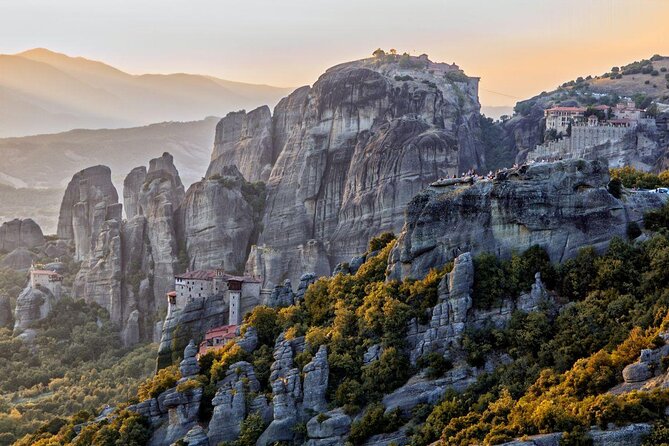
Meteora is famous for monasteries built on towering rock pillars. The combination of stone, height, and active religious life gives the final morning a character that is unlike the Acropolis or Delphi.
The schedule allows about five hours in the Meteora area, with visits to at least two monasteries and possibly more if time permits. Two monasteries receive professional guiding. The listed options are Great Meteoron, Varlaam, Holy Trinity, and Rousanou.
Great Meteoron is the largest monastery in the group and is also called the Monastery of the Transfiguration of the Saviour. Varlaam is another major choice. Holy Trinity, or Agia Triada, is especially dramatic in its high setting, while Rousanou is also known as the Monastery of Saint Barbara.
Admission fees for the monasteries are not included. You should also expect stairs, uneven surfaces, and walking on unpaved ground. The tour notes that you need to be able to manage this kind of terrain, though the driver will try to help you see as much as possible if mobility is limited.
The guide matters here. A monastery is not only a viewpoint. It is a functioning religious place, and an explanation can help you understand the buildings, traditions, and setting. Since only two monasteries are guaranteed to be guided, ask in advance which ones are planned for your date.
The schedule allows for a meal before the return to Athens, but meals are at your own cost. You then begin the long drive back and arrive late in the afternoon.
What the private format changes
With a private party only, you avoid the fixed rhythm of a large coach. You can usually choose an early departure, and the driver can share information and tips during the road sections without trying to manage a busload of people.
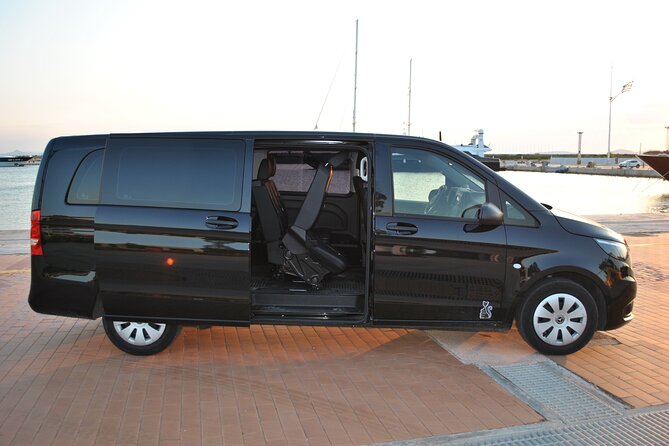
The vehicle setup is clear: one to three passengers generally travel by sedan, while four to six use a minivan, usually a Mercedes-Benz. Groups of up to eight may be possible on request.
The driver does not enter the archaeological sites. A professional guide handles Delphi and two Meteora monasteries, while the English-speaking driver provides information on the road and helps with practical decisions.
That division is worth understanding. You are not receiving a private guide at every stop as part of the base price. Extra professional guiding at other sites may be arranged for a small additional charge.
The named contact in the supplied information is Terry. The strongest praise centers on communication, careful planning, and his effort to adjust arrangements around airport transfers and personal schedules. One especially useful point is that he contacted a party during its airport transfer to check that everything was going smoothly.
Is $1,995.51 per person good value?
The price is high, so value depends heavily on your group size and priorities. You are paying for a private vehicle, fuel, tolls, hotel accommodation, two breakfasts, pickup and drop-off from a central Athens or Piraeus hotel, port, or Athens International Airport, plus guiding at Delphi and two Meteora monasteries.
You are not paying for archaeological admission, museum tickets, meals beyond breakfast, drinks, snacks, or gratuities. Add those costs before comparing this with a group coach tour or independent travel.
For a small party that values door-to-door service and flexible timing, the private format may justify the cost. It also removes the need to arrange separate transport, hotels, and site visits across three complicated days.
For one or two people watching the budget, the price may feel difficult to defend. Ask CATTAXI to confirm the exact total, vehicle category, hotel details, and included guiding before you book. The listing describes a vehicle-based price structure, but the displayed amount is per person, so clarity matters.
Who should choose this three-day tour?
I would recommend it to you if you:
- Have only a few days in Athens and want to see major mainland sites.
- Prefer private transport to a large organized group.
- Want Delphi and Meteora in the same trip.
- Like having a driver who can offer local tips during long road sections.
- Are comfortable with early starts, long drives, stairs, and uneven ground.
- Value a guide at the most complex sites.
I would hesitate if you want slow museum visits, long meals, or several free afternoons. I would also be cautious if you have difficulty walking on rough surfaces or climbing stairs at Meteora.
The tour suits adults and older children, but anyone under 18 must travel with an adult. Children aged 12 and above are charged at the adult rate. Service animals are allowed, and the operator says most people can participate.
The overall rating supplied is five out of five from four ratings. The repeated strengths are personal attention, clear communication, and drivers who take pride in showing Greece. Those qualities matter most on a route this busy, where small timing choices can affect the whole day.
Practical details to settle before departure
Pickup is available from a central Athens or Piraeus hotel, the ports, and Athens International Airport. The usual departure window is 6:00 to 9:00 in the morning, based on your preference.
The operating period shown is February 3 through November 30, 2025, Monday through Sunday. Confirmation is received at booking.
You can cancel for a full refund up to three full days before the local start time. Changes made inside that period are not accepted, and late cancellations are not refunded. The experience requires good weather, and the operator may offer another date or a full refund if weather makes the trip unsafe. Site closures or health issues can also lead to cancellation with a full refund.
Should you book Athens, Delphi, and Meteora?
Book this tour if your main goal is to cover Greece’s biggest mainland sights efficiently and you value your own vehicle, adjustable departure times, and personal help from the CATTAXI team.
Do not book it expecting a leisurely retreat. The route is ambitious, the drives are long, and many entrance fees and meals sit outside the advertised price. Before committing, confirm the total for your group and ask which two Meteora monasteries will receive guided visits.
For the right party, this is a powerful three-day overview. You move from the Parthenon to Poseidon’s sea cliff, from Delphi’s oracle to Thermopylae’s battlefield, then finish among Meteora’s monasteries above the rocks. That range is the reason to choose it.
FAQ
How long is the tour?
The experience lasts three days and two nights.
Is the tour private?
Yes. Only your group participates in the activity.
Where can pickup and drop-off take place?
Transportation is provided to and from a central hotel in Athens or Piraeus, the ports, and Athens International Airport.
What type of vehicle is used?
One to three passengers generally use a sedan. Four to six passengers use a minivan, usually a Mercedes-Benz. Vehicles for up to eight passengers may be available on request.
Is a professional guide included?
A professional guide is included at the Delphi archaeological site and at two monasteries in Meteora. Additional guiding at other sites may be arranged for a small extra charge.
Are entrance fees included?
No. Admission fees for archaeological sites, museums, and monasteries are not included.
Are meals included?
Two breakfasts are included with the hotel stay. Lunch, dinner, coffee, drinks, and snacks are not included.
What time does the tour depart?
Departure is usually between 6:00 and 9:00 in the morning, based on your preference.
How many monasteries will I visit at Meteora?
You will visit at least two monasteries, with the possibility of seeing more if time allows. The listed options include Great Meteoron, Varlaam, Holy Trinity, and Rousanou.
Is the tour suitable for someone with limited mobility?
You need to be able to walk on unpaved or uneven ground. The driver will do their best to help you see most of the sites if mobility is limited, but the tour does include walking and monastery access challenges.