REVIEW · ATHENS
Private Complete Athens Through the Eyes of an Ancient Traveler
Book on Viator →Operated by Boreas Art & Nature Travel Services · Bookable on Viator
The clever idea here is to see Athens in the order an ancient visitor might have: through the Dipylon Gate, across the Agora, along the Panathenaic Avenue, and finally up to the Acropolis. That route gives the monuments a sense of place instead of treating them as isolated photo stops.
I like the private format, which lets your group set the pace and ask questions without competing with a large crowd. I also like the strong guide credentials: the tour uses a licensed guide with a university degree in history or archaeology, and guides named in the feedback include Evangelos and Dr. Anastasios Thanopoulos. The main caution is cost. At $832.91 for up to 15 people, it can be good value for a full group, but admission fees and lunch are extra.
I also like that the tour ends at the Acropolis Museum, across from Plaka, rather than returning you to the starting point. You finish near one of Athens’ most useful central areas, with the museum still fresh in your mind. The tradeoff is physical: eight hours of archaeological sites, uphill walking, stone surfaces, and the Acropolis climb call for moderate fitness.
In This Review
- Key points to know before booking
- Why this route makes Athens easier to understand
- Kerameikos: begin at the city gate and public cemetery
- The Ancient Agora: Athens at work
- Climbing the Acropolis: Athens reaches its high point
- The Acropolis Museum: finish with the original art
- What the private format is really worth
- Timing, fitness, and practical planning
- Who should book this Athens walk?
- Should you book Private Complete Athens Through the Eyes of an Ancient Traveler?
- FAQ
- Where does the tour begin?
- Where does the tour end?
- How long does the experience last?
- What sites are included in the route?
- Are entrance fees included?
- Is lunch included?
- How large can the private group be?
- Is a guide included?
- Can I cancel for a full refund?
Key points to know before booking
- Ancient route from west to summit: Begin at Kerameikos, enter the old city through the Dipylon area, cross the Agora, and climb to the Acropolis.
- Four major archaeological stops: The tour covers Kerameikos, the Ancient Agora, the Acropolis, and the Acropolis Museum in one day.
- Private group of up to 15: Your party takes part on its own, with room for questions and adjustments within the schedule.
- History or archaeology guide: A licensed university-trained guide leads the walk, with Evangelos and Dr. Anastasios Thanopoulos named among the guides connected with the experience.
- Headphones supplied: You can listen directly to the guide, a useful feature at open-air sites and busy monuments.
- Admission is separate: Entrance fees are not included, so you need to budget for the four sites and arrange the required tickets as instructed when booking.
Why this route makes Athens easier to understand
Many Athens sightseeing days jump straight to the Acropolis. That gets you to the famous hill quickly, but it can leave the monument floating without context. This tour takes the longer road, beginning outside the ancient city walls and following the path toward its political and religious center.
That order matters. At Kerameikos, you begin with the city’s edge, cemetery, and defensive wall. In the Ancient Agora, you see where public life unfolded. At the Acropolis, the route reaches its monumental high point. The museum then provides the close-up look at sculptures and architectural pieces that you cannot get from the hill itself.
I find this structure especially helpful if you are seeing Athens for the first time and want a connected story rather than a list of famous names. You will spend most of the day on foot, but the walk has a clear purpose. Each stop prepares you for the next one.
The supplied headphones are a small but important practical detail. Open archaeological areas can be noisy, and the group may spread out while looking at walls, temples, and sculptures. Direct audio helps you keep listening without standing shoulder to shoulder with the guide.
You can also read our reviews of more private tours in Athens


Kerameikos: begin at the city gate and public cemetery
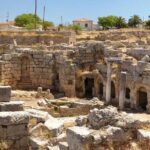
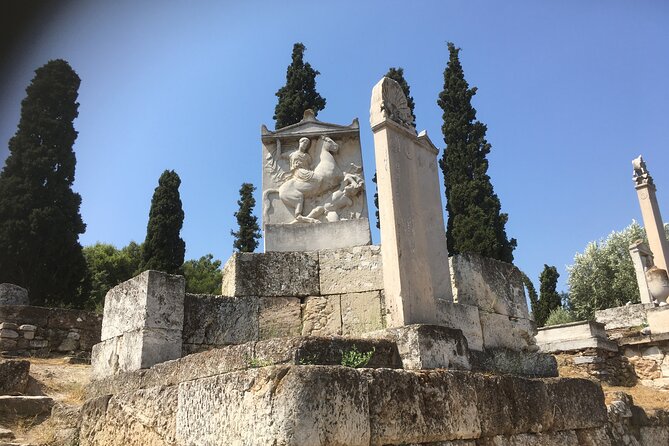
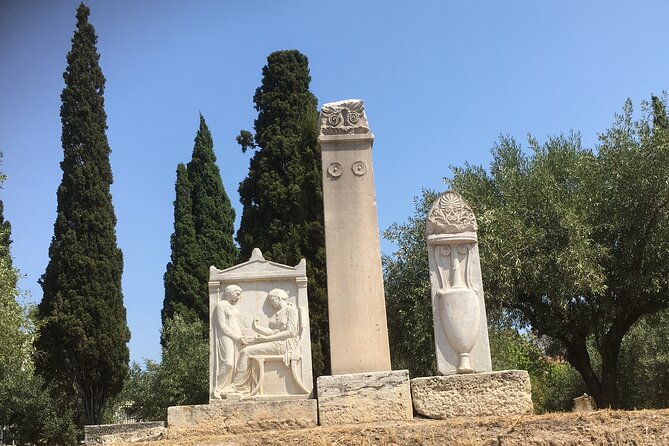
The tour starts at the Kerameikos Archaeological Site on Ermou Street. This area once sat near the edge of Athens and contains both a major cemetery and the remains of the city’s defenses.
The Demosion Sema, or Public Grave, gives the first stop a serious tone. This was the public burial area before the city walls, and it helps explain how Athens honored its citizens and remembered its dead. You are not simply looking at scattered stones. You are seeing the zone where the city marked its boundaries and commemorated public figures.
The Themistoclean city wall is another key feature. It was built by the Athenian general Themistocles after the Persian invasion. That detail gives the remains political and military meaning. The wall was not just construction. It was a response to a direct threat and part of Athens’ effort to protect its rebuilt city.
The Dipylon, the monumental gate, is the visual and symbolic start of the ancient route. From here, the tour follows the direction of the Panathenaic Avenue toward the Agora and Acropolis. The concept is simple and effective: you enter Athens as an ancient visitor might have entered it, passing through a major gateway before reaching the public center.
You also visit the Kerameikos Museum during this roughly 90-minute stop. The museum adds objects and details that are difficult to read from outdoor ruins alone. Because the entrance fee is not included, check the arrangements before arrival and allow for that extra cost.
Kerameikos is a strong opening for anyone interested in urban planning, funerary customs, warfare, or the physical boundaries of ancient Athens. If your main goal is only the Parthenon, the cemetery may feel like a slow start. Give it time, though, and the rest of the route makes more sense.
The Ancient Agora: Athens at work
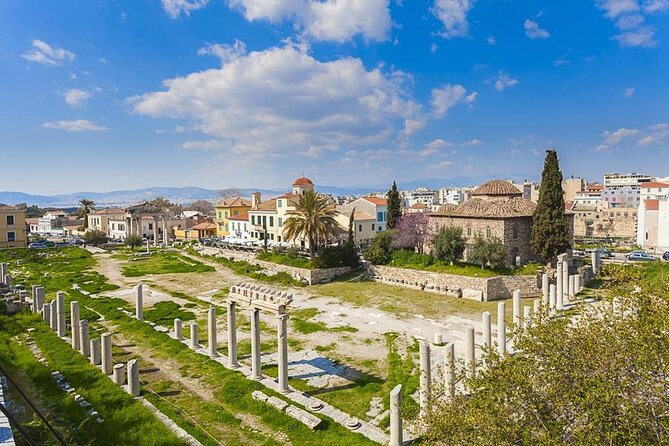
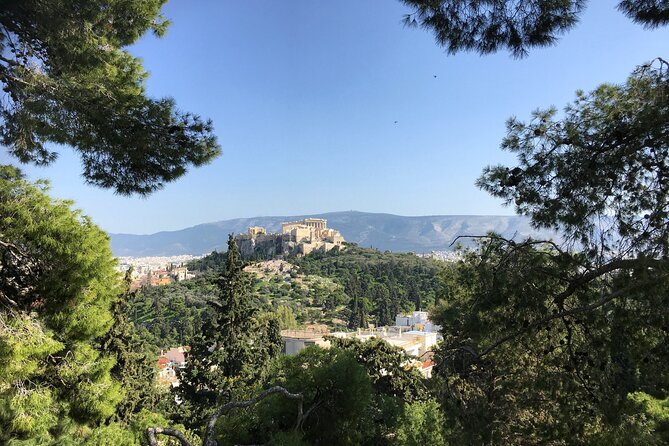
From Kerameikos, you continue to the Ancient Agora, the principal public area of the old city. This is where the tour shifts from the city’s border and burial ground to daily civic life.
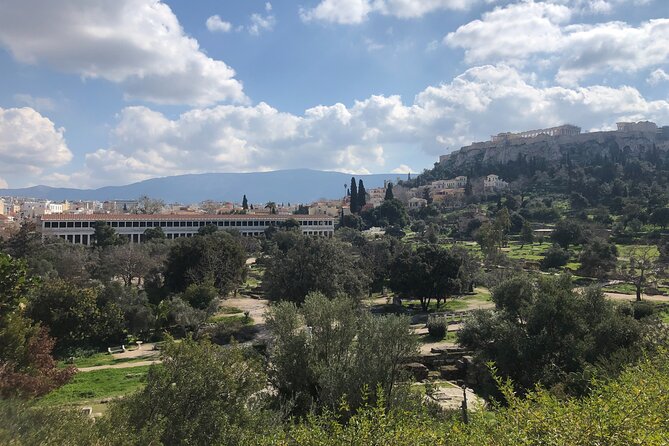
The Agora included public galleries, administrative buildings, religious spaces, and routes used by people moving through Athens. The Panathenaic Avenue led toward the Acropolis, so walking through this area connects the street beneath your feet with the hill ahead.
The Stoai, or public galleries, help you picture how people used the Agora. These covered spaces sheltered conversations, business, official activity, and public encounters. Their remains may not look as immediately grand as the Parthenon, but they tell you more about the routines that made the city function.
The Temple of Hephaestus is one of the major rewards here. It is preserved in excellent condition compared with many ancient buildings, making it easier to understand the basic form of a Greek temple. A guide can help you look past the familiar columns and notice how the temple fits within the wider public space.
The administrative buildings show another side of Athens. Democracy was not just speeches on a hill. It required offices, officials, procedures, and places where decisions were handled. This part of the Agora helps connect grand political ideas with the ordinary work of government.
The stop also includes the area identified as the prison of Socrates. The association is part of the popular historical story of the Agora, and it gives the site a personal connection to the city’s intellectual and political life. Your guide can place that location within the broader setting rather than leaving it as a single famous name.
The Agora Museum is housed in the restored Stoa of Attalus. This is one of the most useful museum visits on the route because the building itself demonstrates how a stoa worked. Inside, exhibits help explain the public activity that took place around the Agora.
Like Kerameikos, the Agora is allotted about 90 minutes and requires a separate admission fee. That is enough time for a focused visit with a guide, but not an unhurried examination of every object. I would listen closely during the outdoor walk, then use the museum to reinforce the main points rather than trying to study every display.
Climbing the Acropolis: Athens reaches its high point
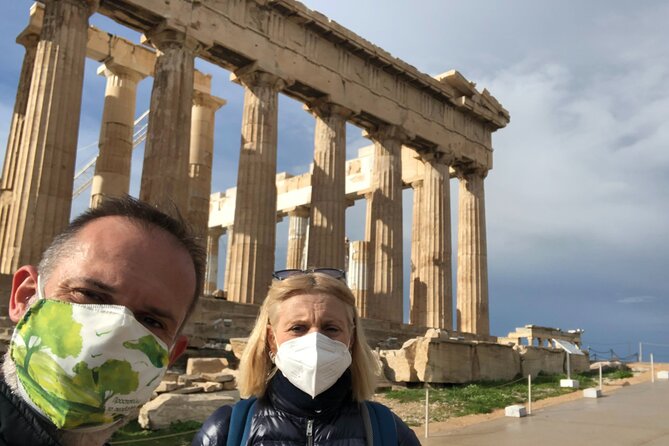
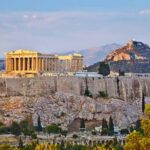
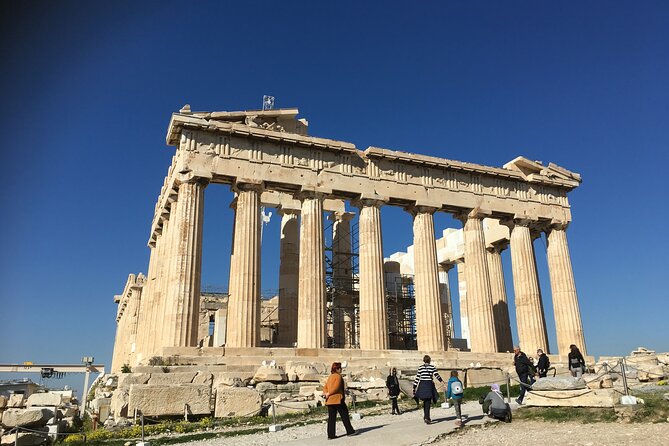
The Acropolis portion lasts about two hours. This is the most famous part of the day, but it is not a quick photo stop. You will walk uphill and across ancient stone surfaces, so comfortable shoes and a moderate level of fitness matter.
The approach begins at the Propylaea, the monumental gateway to the Acropolis. Its role is easy to underestimate when your attention is fixed on the Parthenon, but the entrance set the tone for the entire sacred precinct. You pass through a carefully designed threshold before reaching the monuments on top.
Next comes the Erechtheion, known for the Porch of the Caryatids. The female figures used as architectural supports are among the most recognizable sculptures in Athens. They also show why the Acropolis is best viewed slowly. From a distance, the porch is a striking silhouette. Up close, it raises questions about design, symbolism, and the difference between architectural structure and sculptural decoration.
The Parthenon is the centerpiece. A guide is particularly useful here because the building has been altered, damaged, studied, and reconstructed over centuries. The tour can help you distinguish the temple’s surviving structure from the pieces now displayed in the museum.
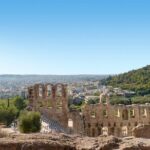
You also see the Odeon of Herod Atticus from the Acropolis area. This ancient theater remains a powerful reminder that the hill was connected to performance and public spectacle, not only temples and religious ceremony.
The Acropolis is the one stop where crowds and weather can most affect your experience. The provided headphones help you follow the explanation, but they do not remove the need to walk carefully or wait at busy viewpoints. The schedule allows two hours, which is sensible for a guided overview, though you should not expect unlimited time at every monument.
Because the tour requires separate admission fees, confirm how Acropolis entry is handled before the day begins. The tour price covers the guiding service, not the tickets themselves.
The Acropolis Museum: finish with the original art
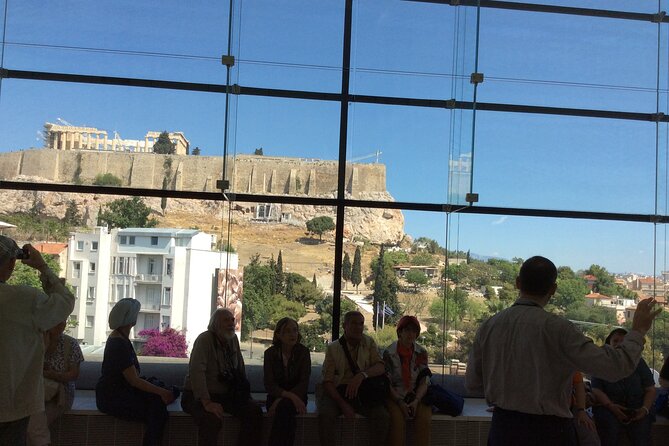
The final stop is the modern Acropolis Museum on Dionysiou Areopagitou Street. It opened in 2009 and was designed by architect Bernard Tschumi. Ending here is one of the tour’s best choices because you can look at the sculptures after seeing the buildings and spaces they once decorated.
The museum includes the pediments from archaic monuments, votive sculptures, the Caryatids, and sculptures from the Parthenon associated with Pheidias. At the Acropolis, you see the temple forms at a distance and deal with weather, height, and crowds. In the museum, you can study the surviving art more closely.
The Caryatids are especially valuable to see inside the museum. Their position in a controlled display makes it easier to notice their carving and details, while the Acropolis porch gives you the architectural setting. The two views work together.
The Parthenon sculptures also benefit from this final stop. Their placement in the museum helps you understand how sculptural decoration related to the temple’s architecture. If you rush through the museum, you will miss the payoff of the entire route, so protect the full 90 minutes allotted here.
The day ends at the museum, directly across from Plaka. That is convenient if you want to continue exploring central Athens afterward, but the guide service itself does not include lunch or onward transportation. The end point is practical, not a hotel drop-off.


What the private format is really worth
The price is $832.91 per group, with up to 15 people allowed. That figure looks high if you are booking alone or with only one companion. It becomes more reasonable when divided among a larger family or group, especially since the day includes about eight hours with a licensed specialist and four major locations.
For example, a group of 10 would pay roughly $83 per person before entrance fees. A full group of 15 would bring the tour cost to about $56 per person before admission. Those figures are only a way to assess value, not the final total, because tickets and lunch are separate.
The private setup gives you more than exclusivity. It means the guide can keep your group together, answer questions in detail, and adjust the explanation to your interests. That is particularly useful at the Agora, where the remains require more interpretation than the instantly recognizable Acropolis.
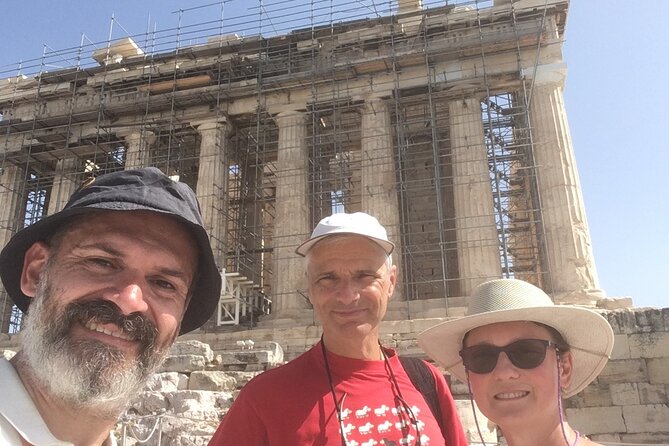
The guide quality matters most here. The description requires a licensed guide with a university degree in history or archaeology. The named guides connected with the experience include Evangelos and Dr. Anastasios Thanopoulos. Feedback about Evangelos specifically highlights his passion and detailed storytelling, while Dr. Thanopoulos is noted for professional, attentive guiding in Italian.
I would book this for a family group, a reunion, or several friends sharing the cost. For a couple, the price requires a strong interest in ancient Athens and a preference for a private specialist rather than a cheaper group tour.
Timing, fitness, and practical planning
Plan on a full day. The four scheduled stops total about six and a half hours, leaving the rest of the eight-hour window for walking between sites, pauses, and the natural pace of an archaeological visit.
You need moderate physical fitness. Kerameikos and the Agora involve outdoor walking, while the Acropolis includes an uphill approach and uneven stone surfaces. The tour is not presented as suitable only for athletes, but it is not a low-effort city tour either.
Wear practical shoes and keep your schedule flexible after the museum. Those are general choices supported by the amount of walking and the final location, not promises about specific facilities. Service animals are allowed, and the starting point is near public transportation.
The experience uses a mobile ticket, and confirmation is received at booking. Entrance fees are not included, so do not assume the quoted group price covers access to Kerameikos, the Agora, the Acropolis, or the museum.
Weather also matters. The experience requires good weather, and if poor conditions force cancellation, you are offered another date or a full refund. You can cancel for a full refund up to 24 hours before the start time. Changes or cancellations inside that window are not accepted and are not refunded.
Who should book this Athens walk?
I would choose this tour if you want ancient Athens explained as one connected city. It suits you best if you enjoy archaeology, architecture, political history, and walking at a steady pace.
It is also a smart choice if your group includes different levels of interest. A private guide can explain the major monuments clearly while answering more detailed questions from the history enthusiast in your party. The headphones make the format easier to follow outdoors.
You may want a different plan if you have limited time, poor mobility, or no interest in the cemetery and Agora. The tour gives those places real attention, so you should not book it expecting a two-hour Acropolis highlight visit.
The Italian-language guiding noted in the feedback may also matter to Italian-speaking groups. Guide assignment is not stated as guaranteed, so confirm the language and guide details before booking.
Should you book Private Complete Athens Through the Eyes of an Ancient Traveler?
Book it if you want the story of Athens to unfold in sequence, from cemetery and city wall to public square, sacred hill, and museum. The route is thoughtful, the private format has real value for larger groups, and the university-trained guide is central to making the less obvious ruins meaningful.
Skip it if you want the lowest-cost way to see the Acropolis, or if eight hours of walking sounds tiring. Remember to add entrance fees and lunch to the $832.91 group price. For a group that can share the cost and wants serious context rather than quick snapshots, this is a well-planned day in Athens.
FAQ
Where does the tour begin?
It begins at the Kerameikos Archaeological Site, at Ermou 148, Athina 105 53, Greece.
Where does the tour end?
It ends at the Acropolis Museum, at Dionysiou Areopagitou 15, Athina 117 42, Greece, directly across from the Plaka quarter.
How long does the experience last?
The tour lasts approximately eight hours.
What sites are included in the route?
The route includes the Kerameikos Archaeological Site, the Ancient Agora of Athens, the Acropolis, and the Acropolis Museum.
Are entrance fees included?
No. Entrance fees for the sites are not included in the tour price.
Is lunch included?
No. Food and beverages are not included.
How large can the private group be?
The private tour is available for a group of up to 15 people. Only your group participates.
Is a guide included?
Yes. A licensed tourist guide with a university degree in history or archaeology is included. Headphones for listening to the guide are also provided.
Can I cancel for a full refund?
Yes. You can cancel at least 24 hours before the experience start time for a full refund. Cancellations or changes made less than 24 hours before the start time are not accepted or refunded.