REVIEW · ATHENS
From Athens: Mycenae and Epidaurus private tour
Book on Viator →Operated by Open Top Bus hellas M.E.P.E. · Bookable on Viator
The best part of this day is the sweep of it: in about eight hours, you move from the Corinth Canal to the Bronze Age citadel of Mycenae, then on to the superb theater at Epidaurus. You get a private car, door-to-door pickup, and room to set the pace instead of following a large bus through the Peloponnese.
I like the easy transport and the human touch. Drivers such as Fotis, Costas, Pavlos, Akis, and Dafne have been praised for clear directions, good stories, lunch advice, and a calm approach with children. The main drawback is the long road day, and the $443.67 price covers up to four people but not monument tickets, food, or drinks.
In This Review
- Key points to know before booking
- Why this Peloponnese day trip works
- Corinth Canal: a quick, worthwhile first look
- Mycenae: Homer, stone walls, and a Bronze Age citadel
- Epidaurus: the theater that makes you whisper
- The optional Nafplio or lunch stop
- What the private format changes
- Price, inclusions, and the real value
- Timing, comfort, and small practical details
- Who should book this day?
- Should you book the Mycenae and Epidaurus tour?
- FAQ
- How long is the private tour?
- Where does the tour start and finish?
- What sites are included?
- Is the Corinth Canal stop included in the price?
- Are entrance fees included for Mycenae and Epidaurus?
- Is lunch included?
- How many people can join the private tour?
- What is the cancellation policy?
Key points to know before booking
- Three major stops in one day: See the Corinth Canal, Mycenae, and Epidaurus without arranging public transport.
- Private vehicle for up to four: The price is per group, so the value improves sharply when shared by a small party.
- Mycenae needs sturdy shoes: The ruins sit on uneven ground, with walls, gates, tombs, and open paths to explore.
- Epidaurus is the scenic high point: Its fourth-century BC theater is famous for remarkable acoustics and seats about 14,000.
- Nafplio may be added: A village or town stop for a snack or quick lunch can fit into the day, depending on timing.
- Entrance fees are extra: Tolls, fuel, taxes, vehicle, and English-speaking driver are included, but site admission is not.
Why this Peloponnese day trip works
Athens is packed with ancient sights, but its best-known monuments can make it easy to forget that mainland Greece extends far beyond the Acropolis. This private outing gives you a useful taste of the Peloponnese, the large peninsula south and west of the capital, without asking you to understand Greek bus schedules or change vehicles.
You leave Athens with a driver and an air-conditioned car or van reserved for your group. Pickup is offered, and the return can be to the original meeting point or another central point in Athens or Piraeus. That flexibility matters if you are staying near the port or want to finish closer to your hotel.
The tour is also a good fit for a family or group of friends. The advertised price is $443.67 for up to four people, not per person. Split four ways, the transport and private service come to roughly $111 per person before admission and meals. For two people, it becomes a much less modest purchase, so group size is central to the value.
Your driver is English-speaking and shares information and practical advice along the way. The exact person is not guaranteed, but names connected with strong experiences include Fotis, Costas, Pavlos, Akis, and Dafne. Their roles appear to range from driver to guide, so confirm before booking if a full licensed guide is important to you.
You can also read our reviews of more private tours in Athens



Corinth Canal: a quick, worthwhile first look
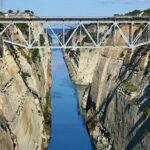
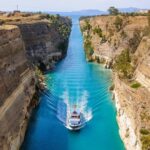
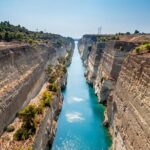
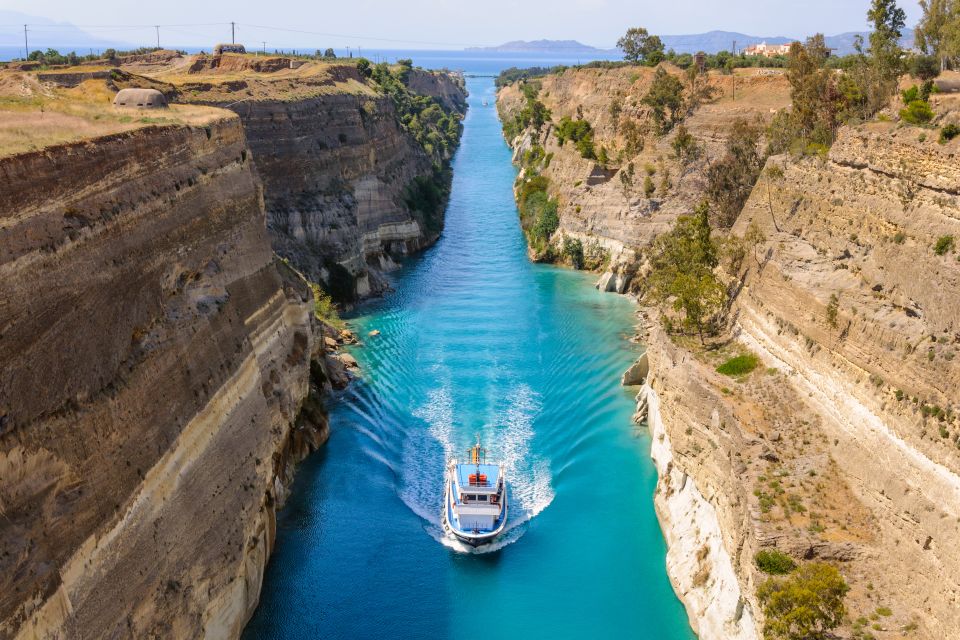
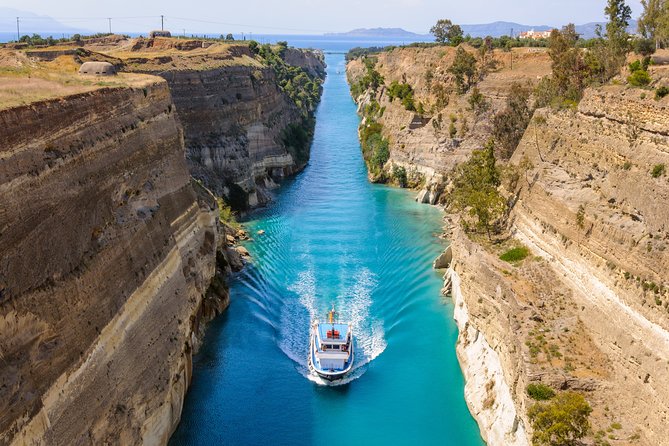
About an hour after leaving Athens, you stop at the Corinth Canal for around 20 minutes. This is not a full sightseeing visit, and that is fine. The stop is designed for photographs and a brief look at one of Greece’s most striking engineering projects.
The canal cuts through the narrow Isthmus of Corinth and links the Aegean and Ionian seas. From above, its steep sides make the waterway look almost too narrow for modern ships. You will have enough time to admire the view and take pictures, but not enough for a relaxed walk or a long meal.
I see this as a smart opening stop. It breaks up the drive and gives you a clear sense that you have left Athens behind. Keep expectations in check: the canal is a photo pause, not the main event, and admission is free.
Mycenae: Homer, stone walls, and a Bronze Age citadel
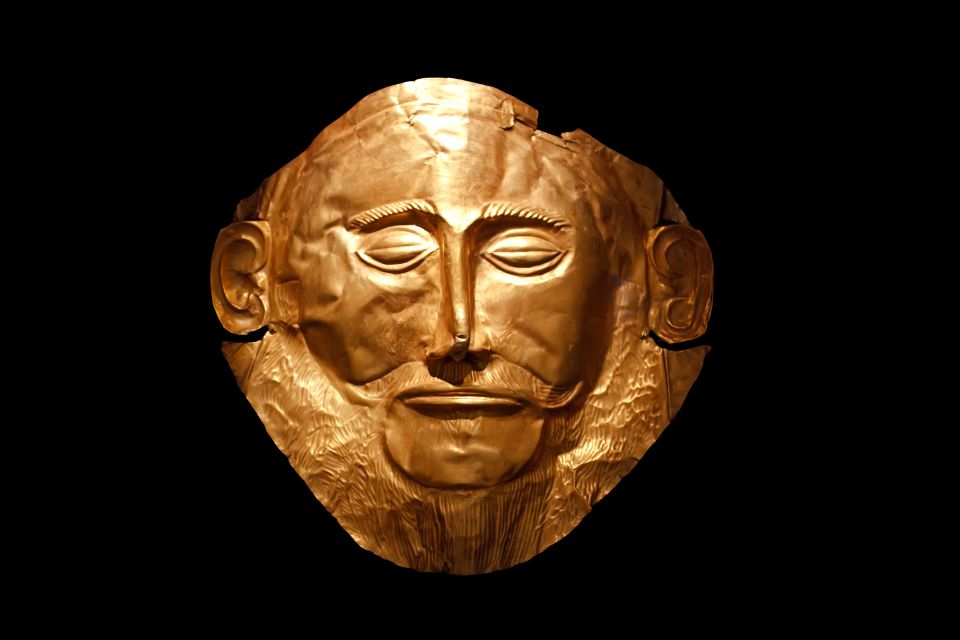
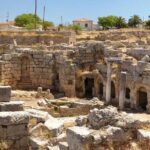
Mycenae is the day’s most important archaeological stop. The site was a major center of Greek civilization during the second millennium BC, roughly from 1600 to 1100 BC. The period itself takes its name from Mycenae, which tells you how important the city became to the study of early Greek culture.
You spend about 90 minutes at the archaeological area, although the schedule also lists an additional 30-minute Mycenae stop. In practice, ask your driver how the time will be divided. The key is to protect enough time for the acropolis, the famous tomb, the walls, and the museum.
The first thing you notice is the scale of the Cyclopean walls. Ancient builders used huge blocks of stone, so large that later Greeks believed only the Cyclopes could have placed them. You can walk beside these defenses and picture Mycenae as a fortified center rather than an isolated pile of ruins.
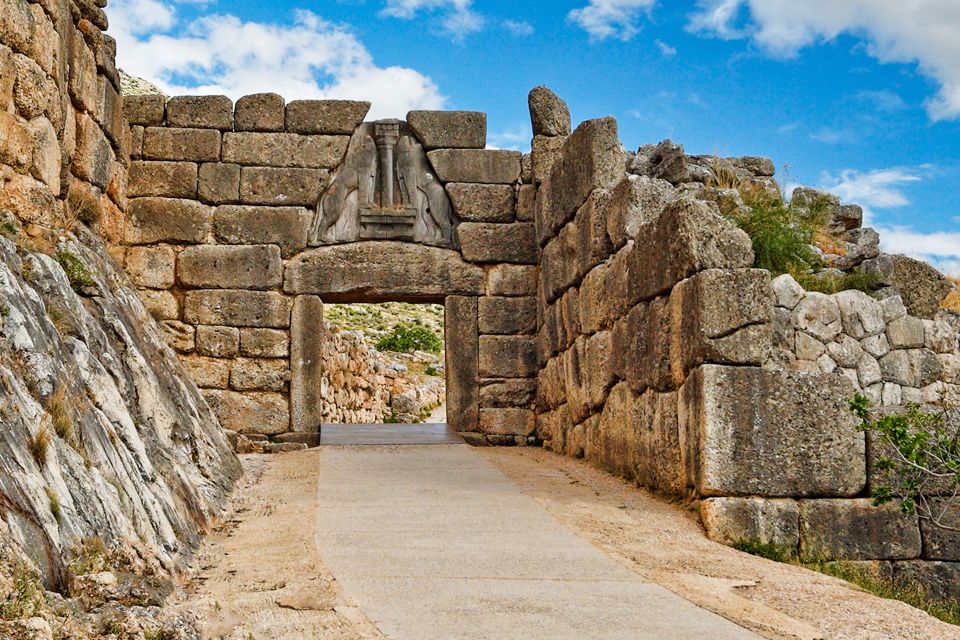
The Lion Gate is one of the site’s most memorable features. It marks the entrance to the citadel and carries the carved relief that has become a symbol of Mycenae. Beyond it, paths lead through the remains of the settlement and up toward the higher parts of the acropolis.
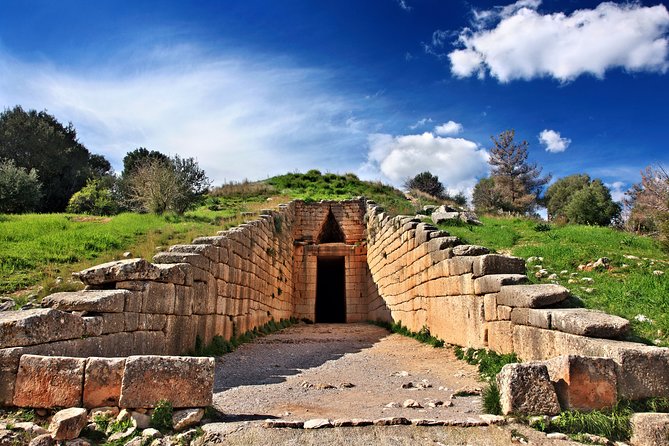
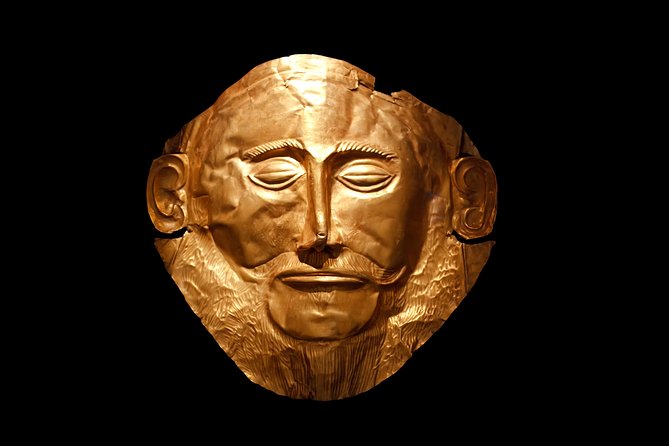
The Tomb of Agamemnon, also called the Treasury of Atreus, adds a different mood. This beehive-shaped tholos tomb is entered through a long stone passage. The site connects power, burial, and the legends of the House of Atreus, the royal family associated with Agamemnon in Homer’s stories.
Be careful with the mythology. Homer’s account says Mycenae was founded by Perseus, son of Danae and Zeus, while Agamemnon later ruled as the most powerful of the Achaeans. These stories give the ruins a memorable cast of characters, but they are legends, not simple historical records. A good driver can help you separate the poetry from the archaeology.
The small archaeological museum helps put the stones in context. It contains finds from the site and gives you a closer look at objects connected with Mycenaean life and burial customs. If you enjoy artifacts, do not spend every minute outside. If you prefer ruins and views, a shorter museum visit leaves more time for the acropolis.
This is not a flat, polished attraction. You walk over uneven surfaces, and the open site can feel exposed. Wear shoes with a firm sole, bring water, and do not expect shade everywhere. The driver can give you directions and information, but the supplied details do not promise a formal archaeologist guide, so ask questions if you want a more detailed interpretation.
Epidaurus: the theater that makes you whisper
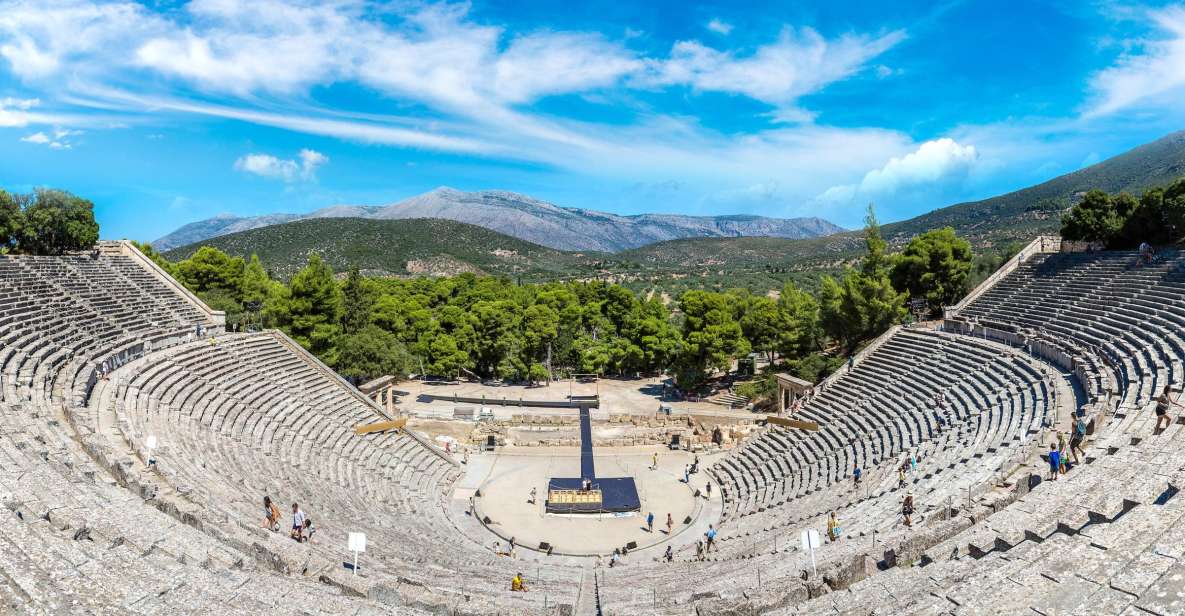
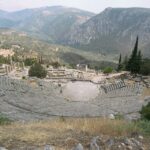
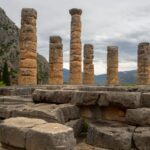
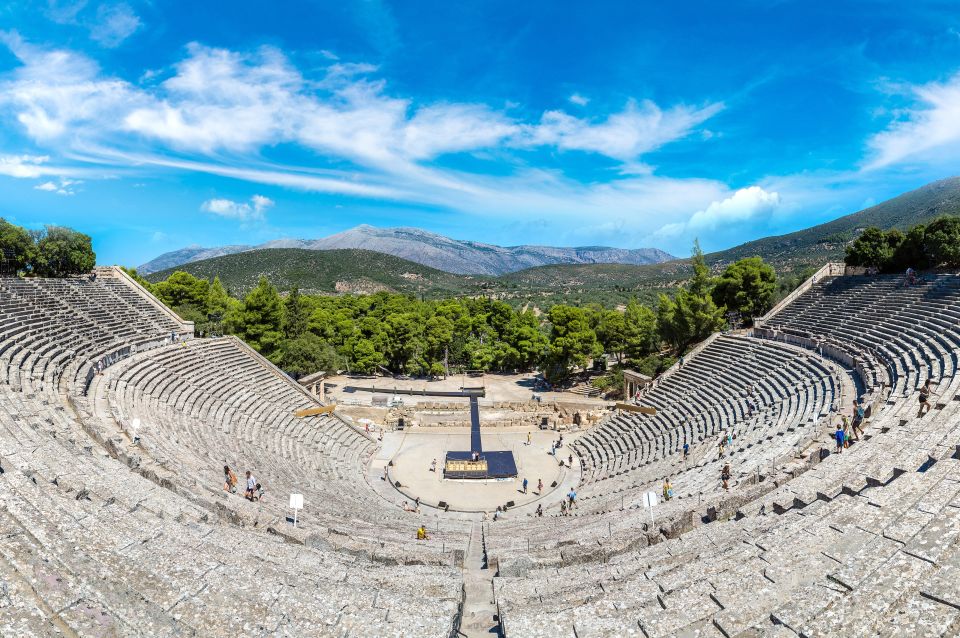
The Ancient Theatre of Epidaurus is the final major stop, with about an hour scheduled at the site. Built in the fourth century BC from limestone, it is one of the best-preserved Classical Greek structures in existence.
The theater’s shape is the star. Rows of pale stone seats curve around the circular orchestra, creating a sense of order and balance that still feels powerful today. It could hold up to 14,000 people, a remarkable capacity for an ancient performance space.
Try the famous sound test if conditions allow. A coin dropped at the center is said to be audible from the highest seats. The supplied tour details specifically highlight the acoustics, so this is the place to speak softly, listen carefully, and let the architecture do the work.
The entrance has restored Corinthian pilasters, while the remains of the ancient stage sit beyond the orchestra. The theater is not merely a preserved shell. It is still used for performances of ancient Greek drama during the annual Hellenic Festival, which helps explain why the space feels more like a living theater than a silent ruin.
The wider sanctuary of Epidaurus contains more than the theater, but this tour gives you about one hour at the Ancient Theatre. That is enough for the main view, photographs, and a quiet look around. It may not satisfy you if you want to study every part of the sanctuary at length.
Of the two archaeological sites, Epidaurus is generally easier to appreciate quickly. Mycenae asks you to imagine a vanished Bronze Age power center. Epidaurus gives you an immediate visual shape and a simple physical experience: stand in the orchestra, listen from the seats, and look across the stone rows.
The optional Nafplio or lunch stop
The day includes the option of stopping in a nearby village or town for snacks or a quick lunch, either before or after Mycenae and Epidaurus. Some itineraries have included extra time in Nafplio, a particularly useful option if the schedule allows it.
Do not treat this as guaranteed sightseeing time. The core route already includes a drive from Athens, a canal stop, Mycenae, and Epidaurus. An extended meal or town visit could reduce time at the archaeological sites, especially if traffic slows the return.
I would decide your priority before leaving Athens. If you care most about ancient sites, keep lunch short. If you have already seen plenty of ruins and want a more relaxed day, ask about Nafplio or a local town. Your driver can suggest where to stop, and strong feedback about lunch and dinner tips makes that local advice one of the more useful parts of the private format.
Bring your own expectations as well as your appetite. Food and drinks are not included, so budget separately. The tour provides the ride and the driver, not a meal package.
- All Day Cruise -3 Islands to Agistri,Moni, Aegina with lunch and drinks included
★ 5.0 · 4,958 reviews






What the private format changes
A private tour is not automatically better than a group tour, but here it solves several real problems. You do not wait for strangers at multiple hotel pickups, and you can ask for directions or clarification whenever you need it. A family with children can also benefit from a vehicle reserved for its own group.
One particularly useful detail is the flexible return. You can be dropped at the pickup point or at a central point in Athens or Piraeus. That can save a separate taxi ride, though you should agree on the destination in advance.
The drivers connected with this experience are repeatedly praised for three practical traits: safe, friendly driving; clear instructions at each stop; and enough free time to explore without being hurried. Pavlos, for example, is associated with a comfortable pace and useful site information, while Costas is described as experienced and caring. Dafne is noted for cheerful storytelling. These are individual examples, not a promise about who will drive you.
The distinction between driver and guide matters. The experience guarantees an English-speaking driver who shares tips and information. It does not clearly promise a licensed guide inside each monument. If you want detailed archaeological commentary, ask the operator what level of guiding is included.
Price, inclusions, and the real value
At $443.67 per group of up to four, the price is easiest to justify with three or four people. You are paying for a full private vehicle, fuel, tolls, taxes, air conditioning, and door-to-door transport over a substantial distance. You also avoid the time and uncertainty of arranging the same route yourself.
Admission to Mycenae and Epidaurus is extra, and the information also lists the Corinth Canal stop as free. Food and drinks are not included. Add those costs before comparing this option with a shared coach tour.
The private setup costs more than the cheapest group outing, but the gap may be smaller than you expect, especially for a group of four. You are also buying flexibility, not just seats in a vehicle. That is valuable if you have children, need a particular drop-off point, or want to adjust lunch timing.
The main value question is time. This is an eight-hour day with considerable driving. If you want a slow, detailed archaeological study, you may find the site visits too short. If you want to see two major Peloponnese monuments in one day from Athens, the schedule is efficient.
Timing, comfort, and small practical details
Be ready at the meeting point 15 minutes before departure. Pickup is offered, but the exact meeting arrangement should be confirmed when you book. The tour is listed as suitable for most participants, and service animals are allowed.
An air-conditioned car or van makes a real difference on a long Greek summer road day. Still, comfort in the vehicle cannot remove the walking at Mycenae or the outdoor nature of both sites. Carry water, sun protection, and shoes that can handle stone paths.
The schedule may feel tight if you want long photo stops. Corinth Canal is limited to 20 minutes, Mycenae is around 90 minutes, and Epidaurus is around one hour. Ask how the duplicate Mycenae timing is handled, and confirm whether any Nafplio stop will replace or shorten time elsewhere.
Free cancellation is available up to 24 hours before the start time for a full refund. Within 24 hours, the amount paid is not refunded, and late changes are not accepted. One bad experience involved a cancellation about 10 hours before departure, so I would keep the operator’s contact details handy and confirm the pickup close to the day of travel.
Who should book this day?
I would recommend it to a small group that wants maximum sightseeing without a rental car. It is especially practical for families, couples traveling with friends, and people staying in Athens or near Piraeus who want a private road day.
It suits you if you value personal service more than a slow pace, and if Mycenae and Epidaurus are both on your wish list. It also works well if you want an English-speaking driver who can offer lunch suggestions and explain the broad story as you go.
I would hesitate if you dislike long drives, need extensive time at each archaeological site, or expect a specialist guide to lead every minute. I would also compare prices carefully for only one or two people, since the per-person value is strongest when the vehicle is shared.
Should you book the Mycenae and Epidaurus tour?
Book it if you want a straightforward private route from Athens to three memorable stops, with the freedom to travel only with your own group. The Corinth Canal is brief, Mycenae is rugged and atmospheric, and Epidaurus offers one of Greece’s most satisfying ancient structures in a single glance.
Before paying, confirm the pickup point, the exact guide or driver arrangement, monument fees, and how much time will be available for Nafplio or lunch. With those details clear, this is a well-paced choice for a full day in the Peloponnese, particularly for four people sharing the cost.
FAQ
How long is the private tour?
The tour lasts approximately eight hours.
Where does the tour start and finish?
Pickup is offered in Athens. Drop-off can be at the original pickup point or another central point in Athens or Piraeus.
What sites are included?
The route includes the Corinth Canal, Ancient Mycenae, the Archaeological Museum of Mycenae, and the Ancient Theatre of Epidaurus.
Is the Corinth Canal stop included in the price?
The stop is included in the route, and no admission ticket is required for the canal stop.
Are entrance fees included for Mycenae and Epidaurus?
No. Entrance fees at the monuments are paid separately.
Is lunch included?
No. Food and drinks are not included. You may have the option to stop in a nearby village or town for snacks or a quick lunch.
How many people can join the private tour?
The listed price covers one private group of up to four people.
What is the cancellation policy?
You can cancel at least 24 hours before the start time for a full refund. Cancellations or changes made less than 24 hours before the start time are not accepted for a refund.