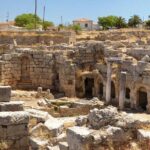
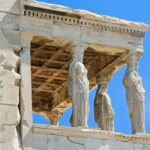
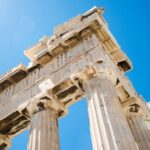
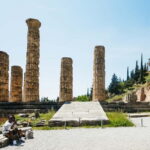
Mycenae gives this day its dramatic opening: you walk beneath the Lions Gate into the stone citadel of Agamemnon, then enter the great Treasury of Atreus, a Bronze Age tomb built around 1250 BC. Later, Nemea shifts the mood from heroic legends to vineyards, wine tasting, and an ancient stadium.
I like the fully private vehicle, which lets you set the pace and request a small change, as one group did when Yannis added a stop connected with the old canal works. I also like the mix of major ruins and ordinary pleasures: a village-style lunch overlooking Ancient Corinth and a tasting at organic Palivou Winery.
The catch is the schedule. Eight hours is a lot of road and sightseeing, and the Mycenae, Nemea, and Corinth stops can feel brief if you want a detailed archaeological visit. Entrance fees, the €20 wine tasting, and a licensed guide inside the sites cost extra.
In This Review
- Key points to know before booking
- Why this private Peloponnese day trip works
- Crossing the Corinth Canal into the Peloponnese
- Mycenae, the Lions Gate, and the Bronze Age citadel
- The Mycenae Museum and the Treasury of Atreus
- Nemea, where ancient sport meets Agiorgitiko wine
- Walking through the ancient Nemea stadium
- Palivou Winery and the wines of Nemea
- Lunch above Ancient Corinth
- Comfort, timing, and the private format
- Is $312.76 per person a fair price?
- Who should book this day trip?
- Final call: a strong full-day choice for variety
- FAQ
- How long does the private Mycenae and Nemea tour last?
- Where does pickup take place?
- Is port pickup available?
- Is airport pickup included?
- Is the tour private?
- Is the tour offered in English?
- Is a licensed guide included?
- How much is the Mycenae entrance fee?
- Is wine tasting included in the price?
- Can I cancel for a full refund?
Key points to know before booking
- Mycenae is the day’s main archaeological stop: Allow your best energy for the Lions Gate, palace remains, royal graves, and Treasury of Atreus.
- Nemea adds a strong change of pace: Ancient temples and athletic ruins share the day with the vineyards that produce Agiorgitiko wine.
- Your driver shapes the experience: Yannis, George, Manos, Tas, and Terry are among the drivers praised for timing, stories, and flexibility.
- The vehicle keeps the day comfortable: Hotel, Airbnb, or apartment pickup, bottled water, Wi-Fi, and return transport are included.
- Lunch comes with a view: The meal at Ancient Corinth is served on a terrace above the archaeological site and Temple of Apollo.
- Budget for extras: The listed price is $312.76 per person, with Mycenae admission at €20 and wine tasting at €20 per person.
Why this private Peloponnese day trip works
The Peloponnese is close enough to Athens for a day trip, but its major sights are spread across the countryside. Doing Mycenae, Nemea, the Corinth Canal, and Ancient Corinth by rental car requires route planning, parking, navigation, and a very early start if you want to fit everything in.
Here, your driver handles the road while you watch the scenery and hear the story of each place before arrival. The private format matters most for families and small groups. You can pause for photos, spend longer at a favorite ruin, or make a small adjustment without waiting for a coach full of people.
The trip is offered in English and lasts about eight hours. Pickup and drop-off are arranged at your Athens hotel, Airbnb, or apartment. A driver meets you in the lobby, or contacts you when arriving at an apartment building. Port pickup is available, while airport pickup and drop-off cost extra.
The experience is not the same as having a licensed archaeologist beside you at every monument. A professional driver with strong knowledge of Greek history is included, but a licensed tour guide accompanying you into the museum and archaeological sites is an extra service. If precise archaeological detail is your main goal, ask about adding one.
You can also read our reviews of more private tours in Athens



Crossing the Corinth Canal into the Peloponnese
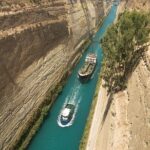
The Corinth Canal is the first major stop after leaving Athens. Cut through the narrow Isthmus of Corinth, it forms the gateway to the Peloponnese and reflects a major 19th-century engineering project linked with Mediterranean trade.
You get about 30 minutes here, enough to see the canal and visit the information center. The Mythical Peloponnese presentation gives useful orientation before the ruins, especially if you want the route to make geographic sense.
This is a short stop rather than a full canal visit. If you have already seen the canal on another outing, tell your driver. One private group received a detour to the location of the only remaining pulley road for boats, showing the value of having a flexible itinerary.
Mycenae, the Lions Gate, and the Bronze Age citadel
Mycenae is the emotional center of the day. Homer placed Agamemnon’s kingdom here, and the site’s enormous walls make the old stories feel less distant. You enter through the Lions Gate, the monumental entrance built in the 13th century BC.
The gate is memorable before you know the details. Two large lions, or lion-like animals, face a central column above the entrance. Around it, the citadel is built from huge limestone blocks. Ancient writers later credited these walls to Cyclopes because ordinary people could not imagine moving such stones.
Inside, you see the remains of the royal palace, domestic rooms, the throne room suite, grand stairs, and areas linked with palace officials. Much of the site is open and exposed, so comfortable shoes, water, and protection from the sun are sensible choices.
The Grave Circles are another important part of the visit. These royal cemeteries lie near the citadel and held burial goods that help explain the power of the Mycenaean rulers. The tour also includes the Tomb of Klytemnestra, the wife of Agamemnon, a large beehive-shaped tholos tomb.
The main site visit is listed at about one hour. That is enough to see the central features, but not enough for a slow archaeological study of every section. I would ask your driver to explain the route before you begin, then focus on the Lions Gate, Grave Circles, palace area, Cyclopean walls, and Klytemnestra’s tomb.
The Mycenae Museum and the Treasury of Atreus
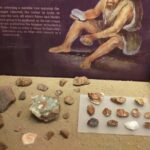
The Archaeological Museum of Ancient Mycenae brings the site’s stones to life. Its displays include gold objects, grave goods, burial masks, jewelry, bronze weapons, worship figures, and fragments of frescoes from the late Bronze Age.
You have about 30 minutes in the museum. That is a quick look, so concentrate on the pieces that help you understand the royal graves and the scale of Mycenaean wealth. Admission is not included.
The Treasury of Atreus gets its own 20-minute stop. Despite its traditional name, this is a tholos tomb, not a treasury in the usual sense. Its long entrance passage leads to a tall circular chamber with a beehive-like roof, built from carefully laid stone.
The structure is remarkable because it survives as a powerful architectural space rather than just a pile of foundations. The short visit works well here. You enter, look upward, take in the acoustics and proportions, and understand why the tomb is often called the Tomb of Agamemnon.
Nemea, where ancient sport meets Agiorgitiko wine
After Mycenae, Nemea changes the rhythm. The area is known for low hills, vineyards, and Agiorgitiko, one of Greece’s best-known red wine grapes. The tour links this wine country with the ancient sanctuary where Hercules was said to have killed the Nemean lion.
The Temple of Zeus is the main ancient sight. Dating to around the 4th century BC, it once formed the center of the sanctuary. Three columns have remained standing since antiquity, giving the ruins a clean, powerful outline against the open valley.
You also see the ancient baths, where athletes prepared and washed. The setting helps connect the religious sanctuary with the athletic contests once held here. This part of the route is less crowded in feel than the headline sites near Athens, though the visit remains brief.
Nemea is a good choice if you do not want a day made up only of ruins. You get mythology, architecture, sport, and wine in one compact area. The tradeoff is that each piece receives only a short introduction. You will get a useful overview, not a full guided study of Nemean archaeology.
You can also read our reviews of more wine tours in Athens






Walking through the ancient Nemea stadium
The Ancient Nemea stadium dates to around 330 BC and has a 178-meter track. Its stone water channel borders the running area, and the original seating could hold about 40,000 people.
The most memorable feature is the entrance tunnel, or crypt, more than 36 meters long. Athletes used the passage to enter the stadium, and names and dedications to Nike, the goddess of victory, can be seen on the walls.
You can examine the apodyterium, where athletes undressed, oiled their skin, and prepared for competition. On the track, look for the stone starting line and the toe grooves cut into the blocks. These small details make the stadium feel more immediate than a wide view of seating banks alone.
The stadium stop lasts about 20 minutes. That is enough to walk through the tunnel and see the track, but you may want to ask for a little extra time if you care about ancient athletics. The private vehicle makes that request possible, subject to the rest of the day’s timing.
Palivou Winery and the wines of Nemea
Palivou Winery gives you a welcome break after the ruins. It is a certified organic, family-run winery with a multigenerational connection to winemaking. The tasting focuses on award-winning wines, including the local Agiorgitiko associated with Nemea.
The visit lasts about an hour and 15 minutes. You can walk through the vineyard, see the area where the wine ages, and then taste the wines. The winery is described as a boutique operation covering about 25 acres of grapes, which gives the stop a more personal scale than a large commercial production site.
The tasting costs €20 per person and is paid locally. That charge is easy to overlook when comparing prices, so include it in your budget. If you do not drink wine, ask what alternatives are available before booking, since the supplied details do not specify them.
I like the placement of this stop. It is not tacked onto the end of the day when everyone is tired. Instead, it breaks up the archaeological visits and shows how Nemea still earns its living from the same soil that shaped the ancient sanctuary.
Lunch above Ancient Corinth
The route includes lunch at Ancient Corinth, on a terrace overlooking the archaeological site and the Temple of Apollo. It is described as an authentic village-style meal and is provided as a complimentary bonus by the operator.
The view gives this meal real value. You are not simply stopping beside a highway for food. You are sitting above one of the Peloponnese’s major ancient sites, with the Temple of Apollo in sight.
The scheduled lunch stop is about one hour and 20 minutes. That makes it the longest pause after Mycenae, and it gives you time to eat without treating lunch as a rushed necessity. The details do not specify the menu, so anyone with dietary needs should ask ahead.
Ancient Corinth itself is not presented as a full archaeological visit on this schedule. Think of it as a scenic meal stop, not a replacement for a dedicated tour of the site. If Corinth is a top priority, ask how much time can be set aside for the ruins.
Comfort, timing, and the private format
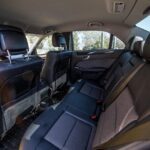
The tour uses a private first-class vehicle with Wi-Fi and bottled water. Those details matter on a long road day. You can stay connected, cool down between stops, and avoid the cramped feel that comes with a large bus.
The day includes roughly 10 minutes for Athens pickup, 30 minutes at the canal, 30 minutes in the Mycenae museum, one hour at the citadel, 20 minutes at the Treasury of Atreus, 20 minutes at Ancient Nemea, one hour and 15 minutes at Palivou Winery, and one hour and 20 minutes for lunch. The listed return drive to Athens takes about one hour and 10 minutes.
That is a full program. You should expect a steady day rather than a relaxed countryside outing. The private arrangement helps because you are not constantly herded back to a meeting point, but the route still covers a lot of ground.
Driver personality can make a real difference. Yannis is praised for personalizing the route, George for adapting to the group’s preferred pace, Manos for setting up each site with stories before arrival, Tas for helping a family connect with Greek culture, and Terry for combining humor, history, and flexibility. These names reflect the drivers associated with past departures, but you should not assume a particular person will be assigned to your booking.
Is $312.76 per person a fair price?
At $312.76 per person, this is not a budget bus excursion. The price makes more sense for a small group that values privacy, door-to-door transport, and a driver who can adapt the day.
You are paying for a private vehicle, hotel or port pickup and return, bottled water, Wi-Fi, and professional driving. You also get a route that combines four very different experiences: an engineering landmark, a Bronze Age citadel, an ancient athletic sanctuary, and a winery.
Add the stated €20 Mycenae entrance fee and €20 wine tasting fee per person. Other site admission fees are not included where marked, and a licensed guide is an extra option. Tips are also separate, as is airport pickup and drop-off.
For two people, the per-person cost may feel high. For a family or small group, compare the total against several individual tickets, a rental car, fuel, parking, and the value of not driving after a wine tasting. The price is strongest when you want comfort and flexibility more than the lowest possible fare.
Who should book this day trip?
I would choose this tour if you want to see Mycenae but also want more than one famous ruin. The combination of Nemea’s stadium, the Temple of Zeus, a winery, and lunch overlooking Corinth gives the day variety.
It suits first-time visitors who want an introduction to the Peloponnese without changing hotels. Families can benefit from the private pacing, and small groups can share the vehicle cost. Wine lovers will appreciate the Palivou stop, while history fans should enjoy the Bronze Age tombs and athletic remains.
It is less suitable if you want a slow, specialist archaeological tour. The schedule covers many places, and the museum and stadium visits are short. It may also disappoint anyone who expects entrance tickets or a licensed guide to be included in the advertised price.
Cancellation is free up to 24 hours before the start time. Changes or cancellations inside that window are not accepted for a refund. Most people can participate, and service animals and pets are allowed according to the supplied booking details.
Final call: a strong full-day choice for variety
Book this private Mycenae, Ancient Nemea, and winery experience if you want one efficient day beyond Athens, with comfort and room for small personal choices. The best parts are the Lions Gate, Treasury of Atreus, Nemea stadium tunnel, Palivou tasting, and the terrace lunch above Ancient Corinth.
Before paying, confirm the pickup point, the extra admission costs, the €20 tasting fee, and whether you want a licensed guide. If you accept the brisk pace and budget for those additions, this is a well-rounded way to connect Greek myth, Bronze Age power, ancient sport, local wine, and modern village life.
FAQ
How long does the private Mycenae and Nemea tour last?
The experience lasts about eight hours, including pickup and return to Athens.
Where does pickup take place?
Pickup is offered from your Athens hotel, Airbnb, or apartment. The driver meets hotel guests in the lobby and contacts apartment guests upon arrival at the building entrance.
Is port pickup available?
Yes. Port pickup and drop-off are included in the available pickup service.
Is airport pickup included?
No. Airport pickup and drop-off are available at an additional cost.
Is the tour private?
Yes. Only your group participates in the activity.
Is the tour offered in English?
Yes. The experience is offered in English.
Is a licensed guide included?
No. A professional tour driver is included. A licensed guide to accompany you into the archaeological sites and museum can be arranged for an additional charge.
How much is the Mycenae entrance fee?
The stated Mycenae entrance fee is €20 per person and is not included in the tour price.
Is wine tasting included in the price?
No. The wine tasting at Palivou Winery costs €20 per person and is paid locally.
Can I cancel for a full refund?
Yes, if you cancel at least 24 hours before the local start time. Cancellations or changes made less than 24 hours before the start time are not refunded or accepted.