REVIEW · ATHENS
Private Walking Tour: The Acropolis & Athens City Tour
Book on Viator →Operated by Athens Walking Tours · Bookable on Viator
A walk up to the Acropolis is worth it. This private route adds smart stops along the way, then puts the Parthenon in context. You start in the city center, watch the changing of the guards, and end with the views from Athens’ ancient citadel.
Two things I especially like: a true Acropolis specialist who explains what you’re seeing as you move, and skip-the-ticket line service so you spend less time waiting. The guide-led flow also helps you understand why each monument exists, not just that it is old.
One consideration: the Acropolis entrance fee is not included (about 28 euros, cash on the day), and the tour involves real walking up and around uneven ancient ground.
In This Review
- Key highlights worth your time
- From Syntagma Square to the first artifacts: the day’s best warm-up
- Greek Parliament, the National Gardens, and Zappeion Hall’s classical connections
- Plaka’s monuments and church remnants: learning the city between landmarks
- Dionyssiou Areopagitou to the Acropolis gates: the climb that turns into a lesson
- Inside the Acropolis: Athena Nike, Propylaea, and your time with the Parthenon
- Walking, timing, and what to pack for 3.5 hours of Athens stone
- Value check: does $324.40 per person make sense?
- Who this tour fits best (and who should adjust expectations)
- Should you book the Private Acropolis & Athens City Tour?
- FAQ
- Where does the tour start?
- Where does the tour end?
- How long is the walking tour?
- What is the price per person?
- Are entrance fees included?
- Is this tour private?
- Can I get a full refund if plans change?
- Is hotel pickup included?
Key highlights worth your time

- Syntagma Square prelude with an archaeological stop that includes household pottery, mosaics, and a 2,000-year-old beehive
- Evzones and Parliament photos plus quick time to see the guards up close
- Zappeion Hall and nearby classical remnants tied to the Temple of Zeus and Hadrian’s Arch columns
- Plaka Old Town and the Lysicrates Trophy story that links a monument to 4th-century BC athletic competition
- The UNESCO-listed Acropolis approach via Dionyssiou Areopagitou with big-name viewpoints along the climb
- In-Acropolis focus on Athena Nike, Propylaea, and the Parthenon with time to take in the skyline views
From Syntagma Square to the first artifacts: the day’s best warm-up
The tour starts at Syntagma Square, in Athens’ central hub. Before you even get to the “wow” stones, you get a short look at a local archaeological exhibition. It’s not long, but it’s a helpful setup: you’ll see everyday objects like household pottery and mosaics, plus a famous 2,000-year-old beehive tied to classical-era excavations in the area.
This matters because the Acropolis isn’t just one temple. It’s part of a living city that grew, changed, and reused space over centuries. That quick object lesson gives you a mental framework right away—so when the guide starts pointing out architectural details later, you’re not just collecting snapshots.
You’ll also get your first “Athens energy” moment fast. The Greek Parliament building sits at one end of the square, and the changing of the guard (evzones in bright uniforms) gives you something very Greek and very photogenic in about twenty minutes.
Practical tip: if you’re planning to take photos, aim to stand where you can see the guards without turning your whole body every time someone walks in front. It’s a tight spot, and good positioning saves you time later.
You can also read our reviews of more walking tours in Athens



Greek Parliament, the National Gardens, and Zappeion Hall’s classical connections

After the square, you cross the National Gardens. This is a nice breather in a tour that otherwise moves through dense sightseeing. You’re heading toward the Zappeion Conference & Exhibition Center, where the neoclassical façade sits next to older classical threads.
At Zappeion, you’ll spend time with the building’s front columns and the nearby remnants connected to the Temple of Zeus and Hadrian’s Arch. Even if you’ve seen temple ruins before, this stop adds a key point: Athens’ “ancient” sites often live side-by-side with later layers of design. The guide can help you spot what’s genuinely ancient, what’s restored, and what’s simply nearby but historically linked.
Then you transition toward the old heart of the city. The tour moves into Plaka, Athens’ famous Old Town, where you’ll get a feel for street life—tavernas, bars, and the tight pattern of lanes that makes this neighborhood fun to wander on your own after the official walk ends.
Plaka’s monuments and church remnants: learning the city between landmarks
Plaka is where the tour slows slightly into storytelling mode. You’ll pass the Lysicrates Monument, and the guide explains how this stone pedestal functioned as a display space for a competition trophy in the 4th century BC. That’s a small detail, but it’s exactly the kind of thing that makes a monument click in your head.
Next comes another layer: you’ll inspect remnants of an early Christian church. It’s a reminder that Athens never froze in the ancient period. Over time, new communities repurposed space and built on top of older contexts. On this tour, you’re not only learning Greek classics—you’re watching the city’s long continuity.
From a pacing standpoint, this section is useful because it breaks up the day before the Acropolis climb. You’re still walking, but you’re not jumping straight from Parliament to steep stone stairs.
If heat is an issue for you, this is a good moment to take a slow breath, check your water, and adjust your clothing. The later climb up the citadel is the part that can feel like a workout.
Dionyssiou Areopagitou to the Acropolis gates: the climb that turns into a lesson
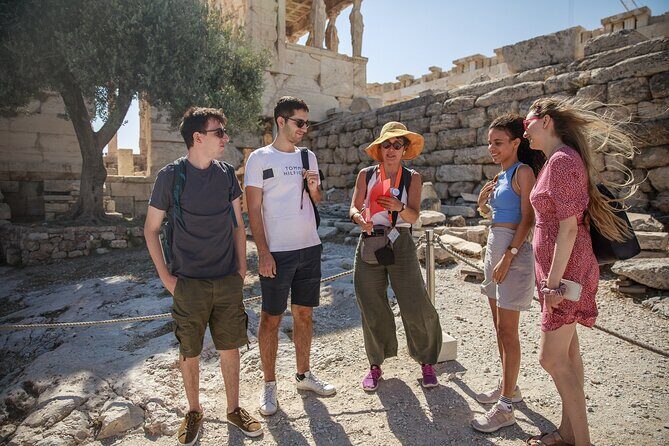
The route then heads along Dionyssiou Areopagitou, the walkway toward the Acropolis. It’s a UNESCO-listed approach, and it works because you’re moving through viewpoints instead of just marching to a single entrance.
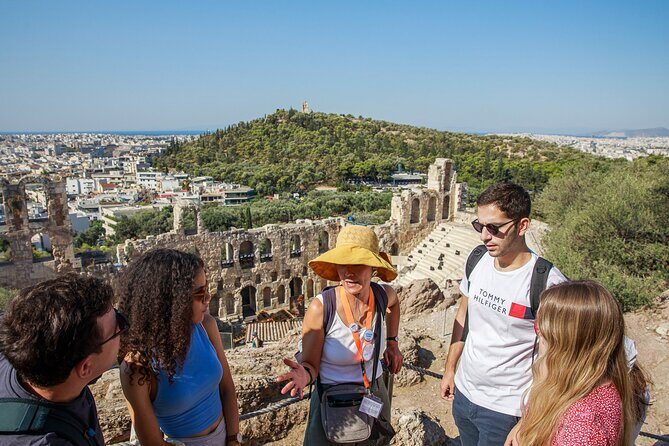
As you go up, you’ll pause for major reference points: the Dionysious Sanctuary, Mars Hill, the Philopappos Hill monument, and the Odeon of Herodes. These names might sound like a textbook list, but the value here is that they act like signposts. The guide connects them so you understand what each spot did in relation to the Acropolis complex.
This is where you’ll start to feel why the private format is worth it. If you ask a question about why a certain structure sits where it does—or why certain areas look different from each other—the guide can tailor the explanation in real time. Guides mentioned in feedback include Marta, Giota, and Aristotle, and the consistent theme is that they explain the connections, not just the facts.
Timing note: you also have stops that add context along the way, including time around the Theatre of Dionysus, described as the first theater of the Western world, and time near the Herod Atticus Odeon. Even if you’ve seen photos of these places, hearing what their layout and purpose were helps you visualize the space better than pictures alone.
Inside the Acropolis: Athena Nike, Propylaea, and your time with the Parthenon
Once you reach the Acropolis, you’ll pay the entrance fee (about 28 euros in cash on the day). The tour includes skip-the-ticket line service, so the process is usually smoother than arriving cold and waiting.
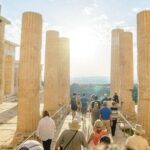
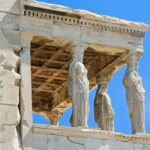
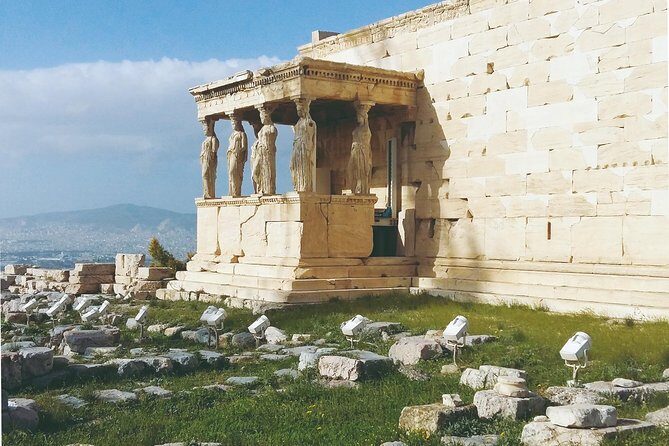
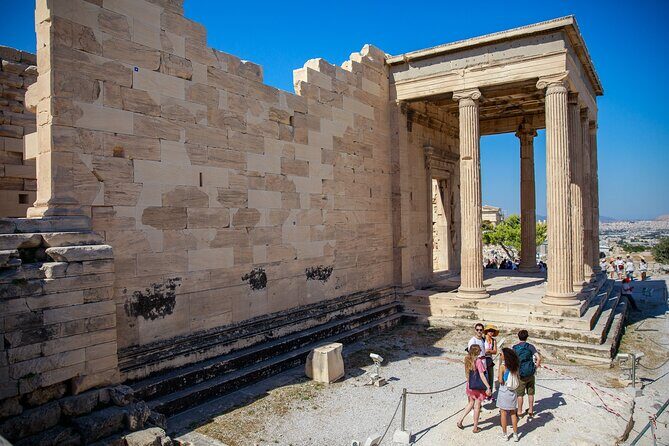
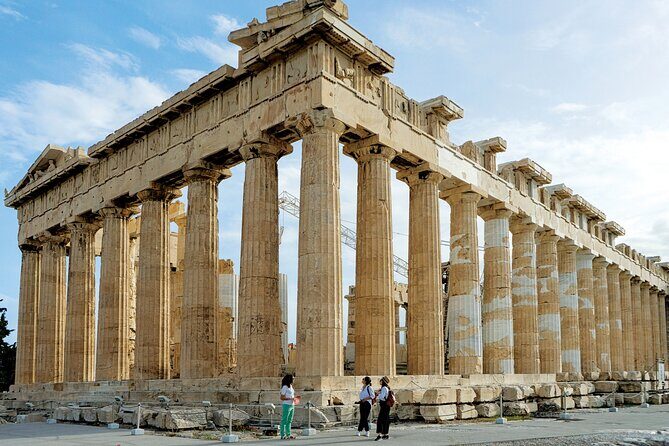
Inside, the guide leads you through major highlights. You’ll focus on the Temple of Athena Nike, the Propylaea gateway, and then the star of the show: the Parthenon. The Parthenon gets time not just as a famous building, but as a carefully designed monument with a story tied to Athens’ identity and power.
The best part of this stage is the way the guide builds meaning as you walk:
- You see structural details and then learn why they were used.
- You get guidance on where to look from certain angles.
- You’re given pauses to take in the skyline views over Athens.
These view breaks are more than a photo moment. They help your brain map what you’re looking at—how the Acropolis sits above the city, and why certain lines of sight mattered in the ancient layout.
Stop reminders you’ll likely notice as you go:
- The route includes time around the legendary gates of the Acropolis.
- You’ll see what’s described as the most beautiful columns—again, not only as a visual, but framed by what the guide says about construction and purpose.
- The tour ends when your guide departs, leaving you to keep exploring with less pressure.
You can also read our reviews of more city tours in Athens





Walking, timing, and what to pack for 3.5 hours of Athens stone
This is a 3 hours 30 minutes walk, and it’s not a slow stroll. Between the city streets, garden crossing, and the Acropolis slopes, plan for steady walking and stairs.
Here’s what you should think about before you go:
- Shoes matter. Wear something with solid grip. The terrain is ancient and uneven.
- Sun and heat are real. You can request an earlier start, which is a smart idea when temperatures climb later in the day.
- Water helps. The tour doesn’t list drinks as included, so come prepared.
- Money for the Acropolis fee. Since admission is an own-expense cash payment, don’t assume everything is prepaid.
The upside of the length is that you get a full arc: city center moments, old neighborhood charm, then the big monuments, all in one run. The drawback is that if you want a very laid-back sightseeing day, you might find the pace demanding.
Value check: does $324.40 per person make sense?
At $324.40 per person for a private walking tour, this isn’t a budget add-on. But value here comes from three things you can actually feel during the experience.
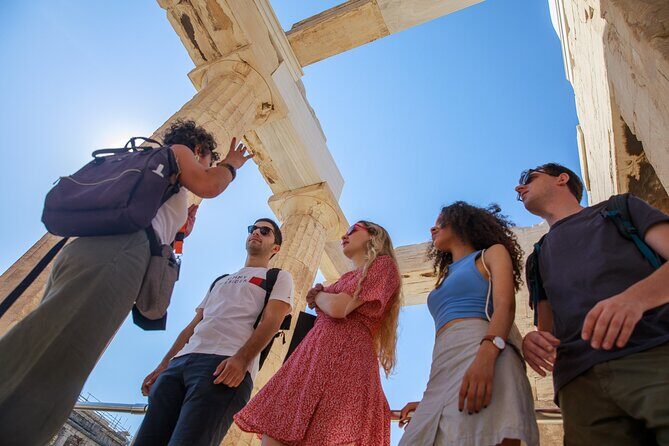
First is the private format. You’re not herded through the Acropolis while the loudest voice wins. You can ask questions, slow down, and get answers that match your interests—especially useful if you care about construction details, historical context, or how different sites relate.
Second is the skip-the-ticket line service. You still pay the Acropolis entrance fee separately, but this helps reduce friction at the moments where time can disappear.
Third is the guide caliber. Multiple guide names show up across feedback, including Nicholas, Nicos, Despina, Marianna, Vicki, and Artemis—and the praise pattern is consistent: strong English, patient pacing, and storytelling with humor. That mix is what turns the Acropolis from a set of landmarks into a coherent experience.
So ask yourself one question: do you want the Acropolis explained as you stand in front of it? If yes, the private price can feel reasonable. If you’re mainly after a photo sprint, you can likely do the sites cheaper on your own.
Who this tour fits best (and who should adjust expectations)
This tour is a strong match for:
- First-time visitors who want to get oriented quickly and understand what they’re looking at
- People who like explanations tied to specific places, not generic overviews
- Families and mixed-age groups when you want a guide who can adapt pacing and explanations (some feedback specifically called out tailoring for kids)
It may be less ideal for:
- Anyone wanting a fully low-walking day
- Travelers who don’t want to pay the separate Acropolis entrance fee
- People who prefer to wander freely without scheduled structure
If you’re the type who enjoys asking questions—about how temples were built, what certain theaters were for, or why Plaka has these layers—this tour will likely feel worth every minute.
Should you book the Private Acropolis & Athens City Tour?
If you want the Acropolis to make sense, book it. The biggest reason is the way the day is designed as a storyline: artifacts near Syntagma Square, iconic city moments like the evzones, Plaka monuments with specific trophy history, then the climb up with named viewpoints, ending with the Parthenon explained in context.
I’d especially recommend it if:
- you’re visiting Athens for a limited number of days
- you’re excited by architecture and historical connections
- you prefer a guide who can slow down and answer questions rather than rushing past details
Just go in knowing the two practical realities: bring cash for the Acropolis entrance, and wear shoes for a proper uphill walking day.
FAQ
Where does the tour start?
The tour starts at Syntagma Square (Pl. Sintagmatos, Athina 105 63, Greece).
Where does the tour end?
It ends at the Acropoli area (Athens 117 42, Greece).
How long is the walking tour?
The duration is about 3 hours 30 minutes.
What is the price per person?
The price is $324.40 per person.
Are entrance fees included?
No. Entrance fees are not included and are payable in cash directly on the day of the tour (approx. 28 euros).
Is this tour private?
Yes. It’s a private tour, so only your group participates.
Can I get a full refund if plans change?
Yes. You can cancel up to 24 hours in advance for a full refund.
Is hotel pickup included?
No. Hotel pickup and drop-off are not included.