REVIEW · SANTORINI
Santorini Windsurfing lessons
Book on Viator →Operated by nemely windsurf-sup center · Bookable on Viator
Windsurfing lessons in Santorini are the fastest way to feel like you belong on the water. This 2-hour session is built for beginners, with step-by-step teaching, plenty of time outside, and a small group size that keeps you from floating around wondering what to do next.
I especially like the focus on fast progress right from your first lesson. I also like that you get gear support (windsurfing equipment plus a helmet) and instruction from a VDWS-certified instructor.
One consideration: this activity depends on good weather. If conditions aren’t right, you may be offered a different date or a full refund.
In This Review
- Key things to know before you go
- Windsurfing in Santorini: why this spot works for beginners
- Nemely Windsurf & SUP Center: gear, instructors, and the small-group vibe
- The 2-hour flow: what you’ll actually do from start to finish
- Learning fast: the techniques that make windsurfing click
- Stop at Nemely Windsurf & SUP Center: what’s special about the setting
- Price and value: is $144.18 per person worth it?
- Timing and meeting point: how to keep the day stress-free
- Weather matters here: how to plan around windsurfing conditions
- Who this lesson suits best
- Should you book the Santorini windsurfing lesson?
- FAQ
- How long is the Santorini windsurfing lesson?
- Is the lesson good for beginners?
- What’s included in the price?
- How many people are in each group?
- Where does the lesson start and end?
- What happens if the weather is poor?
- Can I cancel for a full refund?
Key things to know before you go
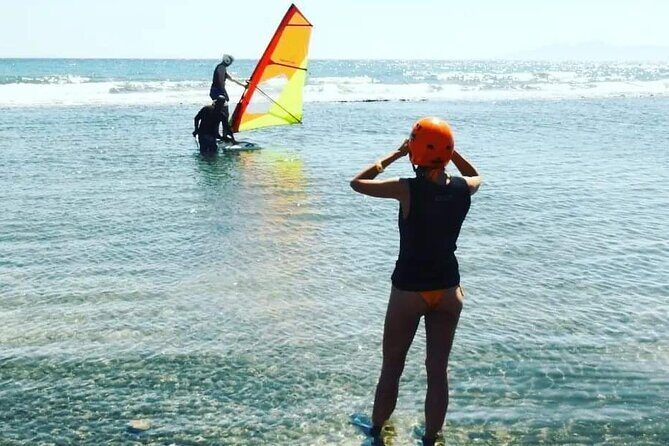
- Small group, up to 4 people: more attention, fewer waiting turns, and quicker corrections.
- VDWS-certified instructor: professional coaching that stays practical, not just theoretical.
- Equipment and helmet included: you’re not scrambling to source basics before you hit the water.
- On-water communication helps: radio helmets/headsets are used for coordination, especially as you go farther.
- Expect to get wet and learn fast: falling is part of the process, and that’s how you build the skill quickly.
- Family can watch comfortably: there are seats for people who want to hang back and observe.
Windsurfing in Santorini: why this spot works for beginners
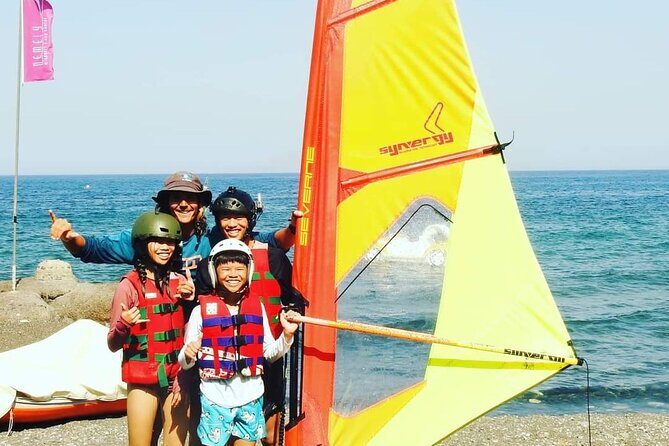
Santorini’s water gives you a clear, open space to practice. You’re not buried in a crowd or stuck in a “look but don’t touch” situation. Instead, the lesson is set up so you build confidence while you’re actually on the board.
The other big reason this works here: you’ll get coaching that’s tuned to what the wind and the board are doing in real time. Windsurfing isn’t like a museum skill. If you learn to connect your stance, sail control, and steering all together, the sport starts clicking quickly.
And yes, you’ll probably take at least one classic fall early. That first tumble is often the moment things stop being abstract and start becoming physical. After that, the lesson becomes much more about feel—how your body responds, how the sail catches wind, and how you steer without overthinking every micro-move.
A few more Santorini tours and experiences worth a look



Nemely Windsurf & SUP Center: gear, instructors, and the small-group vibe
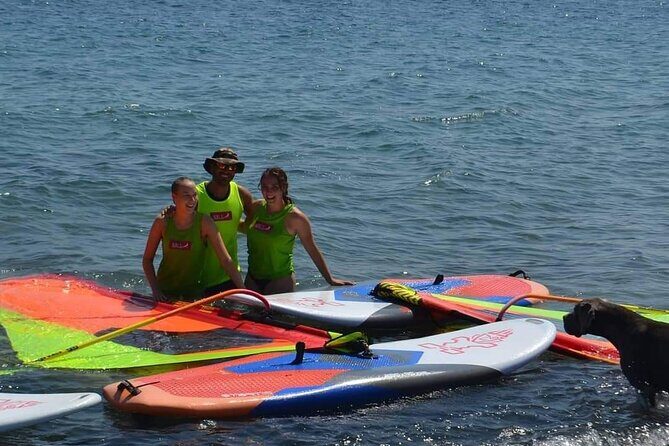
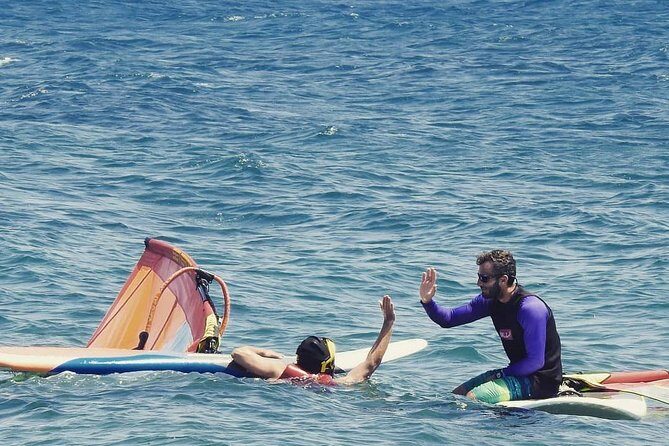
Your lesson runs through Nemely windsurf-sup center. You’re guided by a VDWS certificated instructor, and that matters because windsurfing is one of those sports where the teaching quality changes everything. A good instructor can fix a small posture issue fast, which saves you from repeating the same mistake for an hour.
The group size is capped at 4 people. For you, that means you’re less likely to be stuck waiting while someone else gets the instructor’s attention. It also means corrections can be specific—like adjusting where your weight sits so the board behaves the way you expect.
In the class setup, you’ll get windsurfing equipment and you’ll use a helmet. From a practical point of view, that reduces decision fatigue. You show up, get fitted, and go.
One really useful detail from what’s been described: the instructor can use radio helmets/headsets for coordination over longer distances. That’s a big deal when you’re learning. You’re moving, the wind is loud, and you can’t rely on shouting across the water. With comms, you get tip-by-tip guidance instead of trying to remember theory while you’re already sailing.
Also, if you’ve got non-surfing companions, there are seats so they can watch without hovering. It’s a nice touch, especially if you’re traveling with family or friends who don’t want to be in the water.
The 2-hour flow: what you’ll actually do from start to finish
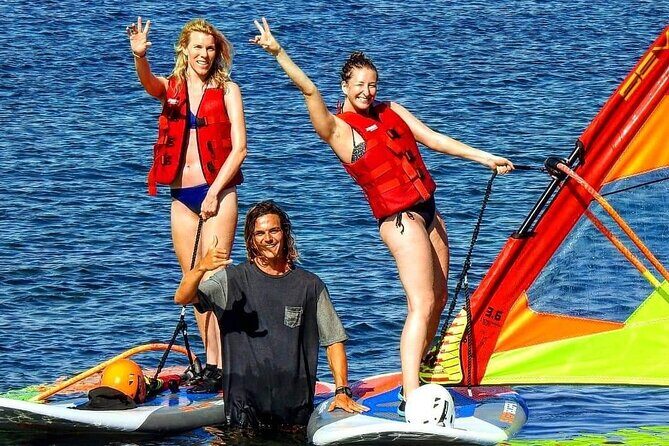
This experience is listed as about 2 hours, and it finishes back at the meeting point. In that time, you should expect a structured sequence: gear check, basic theory, then focused practice on the water.
Here’s the kind of rhythm you can anticipate:
1) Meet at Avis Street and check in
You start at Avis Street, Santorini 847 00, Greece. Plan to arrive a bit early so you’re not rushing through equipment fitting.
2) Get fitted with windsurf equipment and helmet
You’ll use the provided windsurf gear and wear a helmet. This is more than convenience. Getting the right setup affects balance and how the sail responds, so it directly impacts whether you feel in control sooner.
3) Quick coaching on technique
Before you’re fully out there, you’ll be walked through the fundamentals. The teaching style described for this lesson is practical: theory, then demonstration, then coaching while you practice.
4) Practice on the water
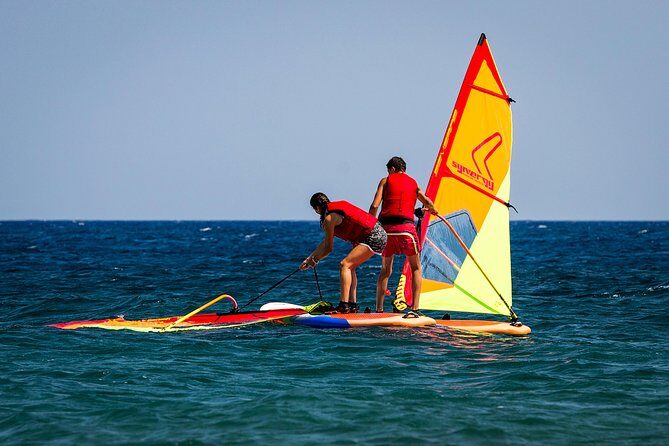
You’ll spend a good chunk of time actually windsurfing, not just standing on the beach. The goal is to build confidence and help you connect the pieces—stance, sail handling, and steering.
5) Adjust and improve as you go
As you progress, instruction typically shifts from “start here” to “fine-tune this.” In at least some sessions, comms (radio helmets/headsets) help an instructor give real-time tips.
6) Wrap up back at the meeting point
Once the lesson ends, you return to the starting point. You’re not left figuring out transport or finding your way back on your own.
A key expectation: you’ll have moments that feel frustrating—then suddenly you’ll understand what the instructor was getting at. That’s the learning pattern in windsurfing. The lesson structure is designed to keep you moving through that cycle quickly.
Learning fast: the techniques that make windsurfing click
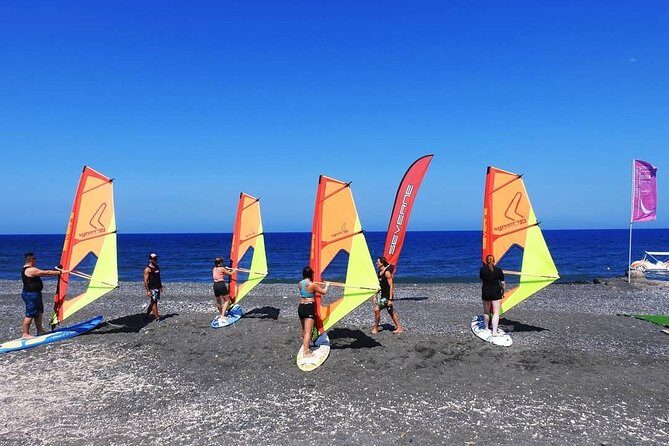
The best windsurf lessons don’t just tell you what to do. They help you feel what “doing it right” means.
In this lesson, the emphasis is on step-by-step technique and confidence-building. You’re guided through essentials and then given time to ride waves and practice the basics on your own—at a pace that fits beginners.
From the way coaching is described, you’ll likely see this progression:
- Start with body basics: where your stance goes and how you hold and manage your sail.
- Learn sail control early: not just steering, but how the sail interacts with wind direction.
- Practice turning and controlling the board: so you don’t feel like you’re just getting pushed around.
- Connect everything after early wipeouts: the first fall is often part of the learning curve, because it forces you to stop fighting the process and start syncing movement and sail behavior.
One really encouraging detail: instructors are described as patient, clear, and good at explaining details while also showing what it looks like in action. For first-timers, that combination is huge. You don’t need a windsurfing degree. You need someone who can translate the sport into simple cues you can apply immediately.
Also, in one example, a participant went from having the instructor accompany them closely (with headset/radio helmet communication) to being able to control the board pretty well by the end of the second day in that broader learning experience. While your time here is about 2 hours, the takeaway still matters: the teaching style is designed for momentum, not long, slow babysitting.
Stop at Nemely Windsurf & SUP Center: what’s special about the setting
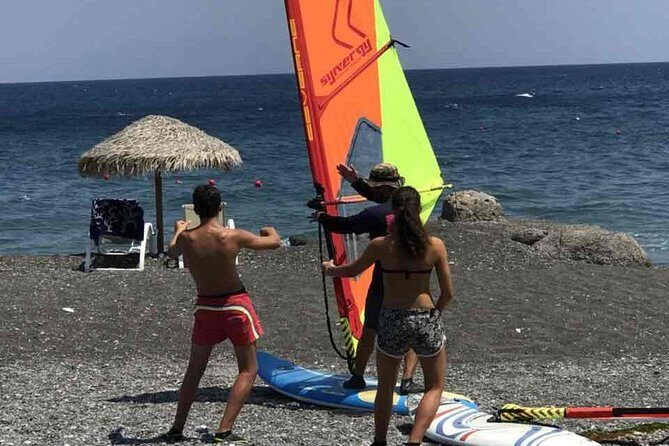
The lesson centers around Nemely Windsurf & SUP Center. That location is doing more than hosting gear. It’s where the equipment is organized, the instructors guide you, and the learning environment is set up for a clean start.
Because it’s a windsurf-sup center, you’re likely in a place built specifically for water sports practice, not a random spot where everyone just shows up and improvises.
There are also practical comfort touches. The presence of seats for spectators means you can bring someone who wants to watch from shore without standing in the sun for two hours.
If you’re worried about feeling nervous at the start: that’s normal. One account described not being reassured at first, but learning rudiments through patience and gradual coaching. That matches how these lessons work best. You’ll feel less uncertain once you’re on the board and the instructor is giving clear feedback.



Price and value: is $144.18 per person worth it?
At $144.18 per person for about 2 hours, you’re paying for three things that matter in a technical sport:
- A VDWS-certified instructor doing hands-on coaching (not just supervision).
- Equipment and helmet provided, so you’re not paying extra rentals or figuring out gear on your own.
- A small group (max 4), which improves your chance of getting corrections instead of waiting in line.
If you’ve ever tried to learn a sport without an instructor, you know how quickly time disappears. You can spend 2 hours flailing and still not know what to fix. Here, the structure aims to reduce wasted motion. And the instructor approach is described as detailed and practical, which is exactly what makes “time on the water” count.
Food and drinks aren’t included. Alcoholic drinks aren’t included either, though alcohol is available to purchase. If you’re planning to make this part of a longer day, budget for that separately.
Bottom line: it’s not a bargain-basement activity. But when you factor in instructor certification, equipment, helmet, and small-group attention, it reads as a fair price for serious learning time.
Timing and meeting point: how to keep the day stress-free
You’ll meet at Avis Street, Santorini 847 00, Greece, and the activity ends back at the meeting point.
The operating window shown is 04/05/2026 to 10/15/2026, with hours listed as Monday through Sunday, 10:00 AM to 5:00 PM. If your trip dates land outside that period, you’ll need to plan another activity or shift dates.
Also, the experience uses a mobile ticket, and you should receive confirmation at the time of booking. That’s useful because it reduces the risk of last-minute paperwork issues.
Practical tip: treat this like an appointment. Arrive with time to spare. Equipment fitting and safety briefings are part of the flow, and rushing makes learning harder.
Weather matters here: how to plan around windsurfing conditions
This experience requires good weather. If it’s canceled due to poor weather, you’ll be offered a different date or a full refund.
That’s not a deal-breaker—it’s the reality of wind sports. The upside is that you’re less likely to show up and get a watered-down “dry run.” When conditions are right, the lesson format makes sense: lots of time on the water, lots of feedback, and fast skill development.
If you’re booking during a period when the forecast is unpredictable, it’s smart to keep some flexibility in your schedule so you can take the alternative date if needed.
Who this lesson suits best
This is a strong fit if you:
- want to try a new water sport while you’re in Santorini
- prefer a small-group setting with more attention
- are okay with the learning curve (including getting wet)
- want instruction in English
It may also work well if you have some sailing experience. One example described a person with sailing background who was able to transfer skills quickly to windsurfing with the instructor’s guidance.
If you’re the type who hates uncertainty, windsurfing may feel intimidating at first. That’s normal. The lesson is designed to build confidence with patience and step-by-step instruction. Still, you’ll get the most value if you show up ready to learn rather than trying to “nail it” instantly.
Should you book the Santorini windsurfing lesson?
I’d book it if your goal is simple: learn windsurfing basics efficiently, with professional coaching and equipment handled for you. The small-group cap (up to 4) is a real quality booster. Add VDWS-certified instruction and the use of radio helmets/headsets for coordination, and you’ve got a lesson style built for progress, not just exposure.
I wouldn’t book it if your schedule can’t flex for weather, or if you strongly dislike situations where you might fall and get wet while learning a technical sport. Windsurfing has a learning curve. The upside is that the coaching here is built to get you through it quickly.
FAQ
How long is the Santorini windsurfing lesson?
It’s approximately 2 hours.
Is the lesson good for beginners?
Yes. The lesson is described as suitable for beginners, and most people can participate.
What’s included in the price?
You get a VDWS certificated instructor, use of windsurf equipment, and use of a helmet.
How many people are in each group?
The group has a maximum of 4 travelers.
Where does the lesson start and end?
The meeting point is Avis Street, Santorini 847 00, Greece, and the activity ends back at the meeting point.
What happens if the weather is poor?
This experience requires good weather. If it’s canceled due to poor weather, you’ll be offered a different date or a full refund.
Can I cancel for a full refund?
Yes. You can cancel up to 24 hours in advance for a full refund. If you cancel less than 24 hours before the start time, the amount paid isn’t refunded.