REVIEW · CORFU
Small Group Tour; 7 Balkan Countries- Corfu to Dubrovnik or Split
Book on Viator →Operated by Choose Balkans · Bookable on Viator
The big draw here is seven countries in 14 days, with Meteora, Ohrid, Prizren, Kotor, Mostar, and Sarajevo packed into one overland route. You get a broad look at the Balkans without arranging ferries, border crossings, hotels, and drivers yourself.
I like the small maximum group of 10, which should make long drives and walking tours easier to manage. I also like the strong local flavor: byrek at a neighborhood market, Albanian coffee, qofte, raki, village produce, old bazaars, and family-run food stops. The main caution is pace. This is a moving tour, not a slow holiday, and the advertised Valbona Valley and Koman Lake experience does not appear in the day-by-day schedule provided, so confirm the final route before paying.
In This Review
- Key points to know before you book
- What this 14-day Balkan route really offers
- Corfu ferry and a sunset at Meteora
- Ioannina and the old Ottoman frontier
- Gjirokaster and Berat, Albania’s stone towns
- Lake Ohrid, Drilon, and Saint Naum
- Tirana through food, markets, and BUNK’ART 2
- Kruja and the crossing into Kosovo
- Gjakova, Decan, and the wines of Rahovec
- Northern Albania, Shkoder, and a taste of farm life
- Montenegro: Sveti Stefan, Budva, and Kotor
- Mostar and Blagaj’s spring
- Sarajevo and the road to Croatia
- What the small group and transport setup mean
- The Valbona question you should settle first
- Should you book this Balkan tour?
- FAQ
- How long is the tour?
- Where does the tour begin?
- What time does the tour start?
- Where does the tour end?
- How many people can join the tour?
- What accommodation is included?
- Is transportation included?
- Are meals included?
- Is the tour refundable if I cancel?
Key points to know before you book
- Seven-country route: Greece, Albania, North Macedonia, Kosovo, Montenegro, Bosnia and Herzegovina, and Croatia.
- Small-group travel: The maximum is 10 people, with private transportation and a professional tour leader.
- Strong historic range: Meteora monasteries, Ottoman bazaars, Orthodox churches, communist-era museums, Islamic monuments, and Sarajevo war sites.
- Food is part of the route: Expect byrek, qofte, gjize, Albanian coffee, raki, home-style meals, and farm products.
- Fast travel days: You change places often, cross several borders, and spend substantial time on the road.
- Important itinerary check: Valbona Valley and Koman Lake are highlighted in the overview and comments, but are not listed in the supplied 14-day schedule.
What this 14-day Balkan route really offers
At $4,877.92 per person, this is a major purchase. The cost includes 13 nights in three-star hotels, breakfast each morning, private transport, ferry tickets from Corfu, road charges, fuel, tourist taxes, international car insurance, entry fees for listed sites, and transfers at the end.
That package can be useful in the Balkans, where borders, changing road conditions, and different transport systems can make independent planning slow. You are paying for the route design and for having someone else handle the driving and much of the paperwork.
Still, the price does not cover lunch, dinner, drinks, snacks, souvenirs, or personal spending. The accommodation is priced around double, twin, triple, or quadruple occupancy, so solo visitors should confirm the single-room supplement, if any, before booking. At this rate, I would also ask for the exact hotel list and a clear explanation of the Valbona and Koman references.
The pace is the other cost. You see a lot, but most stops are short. Several days give you one or two hours in a town, enough for a guided introduction and a little wandering, but not enough for a full museum program or a leisurely café afternoon.
You can also read our reviews of more tours and experiences in Corfu.
Corfu ferry and a sunset at Meteora
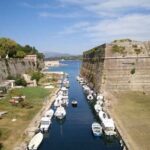
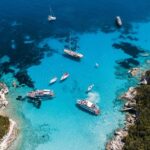
You begin at Corfu Port Authority Company at 9:00 a.m. The ferry to Igoumenitsa is included, and a local driver then takes you to Meteora, where you meet the tour leader and the rest of the group.
Meteora is a superb opening act. Monasteries built between the 14th and 15th centuries sit atop tall rock pillars, and the late-day light gives the stone a warm glow. The planned visit lasts about two hours and focuses on the views and sunset rather than a long monastery-by-monastery visit.
This first day also shows the basic rhythm of the tour: a ferry, a road transfer, a major sight, and a new overnight base. Pack your ferry essentials in a day bag, since the morning begins at the port and the day ends away from Corfu.
Ioannina and the old Ottoman frontier
Day two brings you to Ioannina, a city shaped by Byzantine and Ottoman rule. You walk through the old town, visit Ioannina Castle, and have time for cafés and local food.
The castle is not just a single monument. It contains narrow lanes, old buildings, and a compact historic quarter. One hour is enough to get oriented, but you will need to keep moving if you want to see much beyond the planned route.
Ioannina works well as a bridge between Greece and Albania. The city gives you an early taste of the borderland culture that defines this trip, with Greek, Ottoman, Orthodox, and Muslim influences close together.
Gjirokaster and Berat, Albania’s stone towns
Gjirokaster arrives on day three. Known as the Stone City, it climbs the slopes of Mali i Gjere, with houses built like small fortresses. The medieval bazaar leads toward the castle, and its narrow stone streets are lined with local crafts.
The stop is divided between the town and the bazaar, about an hour each. That gives you time for a good first look and perhaps a purchase from an artisan, but not a relaxed shopping session.
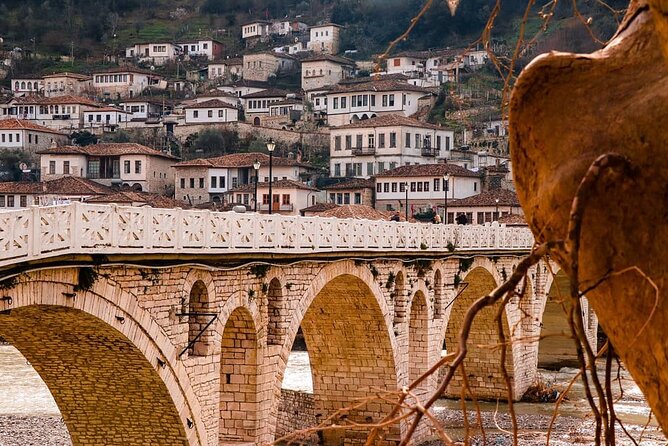
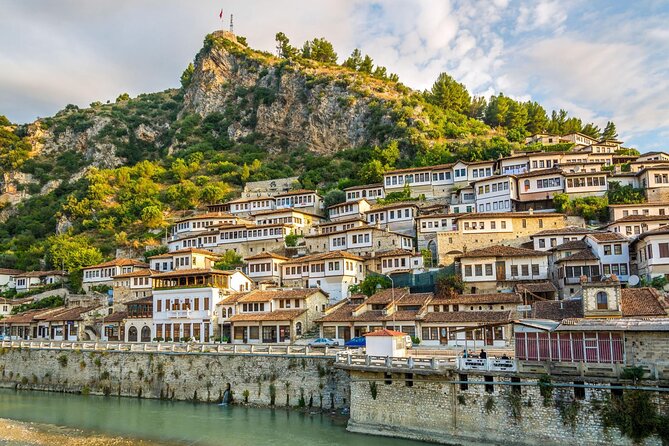
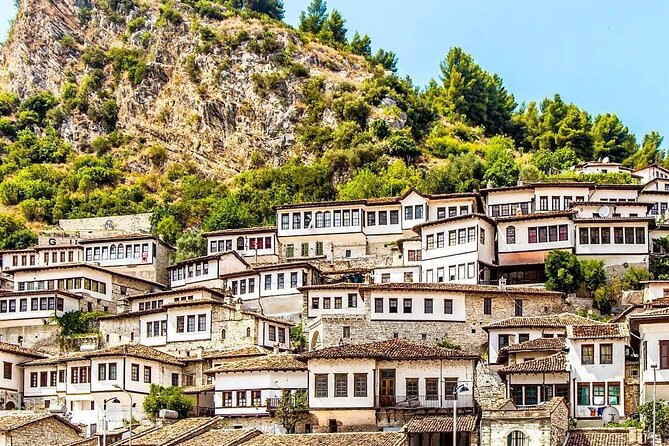
On day four, Berat earns three hours, which is more generous. Its hillside houses, often described as the town of 1,001 windows, rise beneath the castle. Residents still live inside the castle walls, a detail that makes the old quarter feel like a neighborhood rather than a museum set.
Berat also brings together churches, mosques, old bridges, museums, and reminders of Albania’s communist period. I would use the extra time here for a steady walk rather than trying to cover every corner. The stone streets and steep slopes call for comfortable shoes.
Lake Ohrid, Drilon, and Saint Naum
The route continues toward North Macedonia with stops at Drilon National Park and Tushemisht. Drilon is a small, calm place of springs, willows, and clear water. It is a welcome pause after several historic towns and road transfers.
Tushemisht receives only 30 minutes, so treat it as a brief village stop, not a full visit. Saint Naum then adds a monastery, mountain views, and the source of the Crni Drim River, which flows through Lake Ohrid.
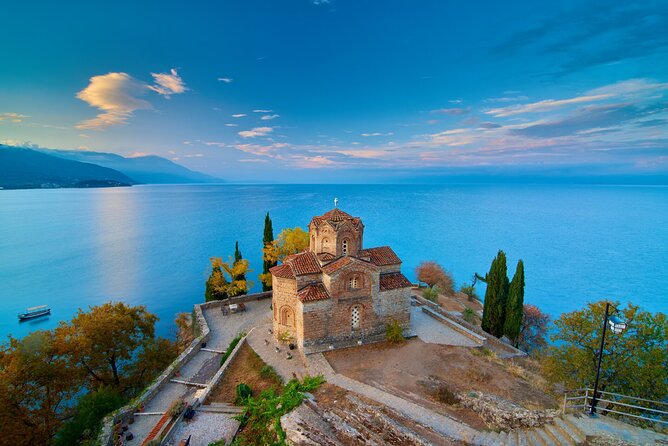
Day six is devoted to Ohrid, one of the most important cultural and religious centers in North Macedonia. The city and lake have UNESCO status, and the route includes viewpoints and churches such as Saint John and Saint Nicolas, along with the Halveti Hayati Tekke mosque.
Ohrid is one of the places where a short stop may leave you wanting more. Its churches, lakeside setting, and long religious history deserve time, but the itinerary gives about an hour for the city visit. If you can, use any free moments to simply look across the lake rather than chasing every listed sight.
Tirana through food, markets, and BUNK’ART 2
Tirana gets a different treatment. Instead of only seeing major squares and monuments, you explore local food and market areas with a local companion.
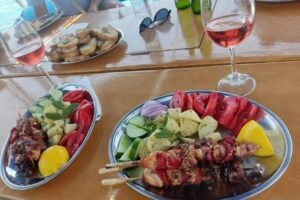
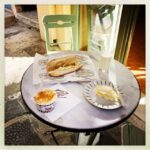
The day begins at Tregu Çam with byrek, a flaky pastry filled with choices such as cheese, meat, or spinach. You then move through the Çam bazaar, where sellers offer clothing, household goods, and other everyday items.
Food continues at Pazari i Ri. Qofte, or grilled meatballs, come with fresh bread, while vegetarians can have bread with Albanian gjize, a cottage cheese. Raki is included in the tasting, so pace yourself. It is a small pour, but the day already includes several culinary stops.
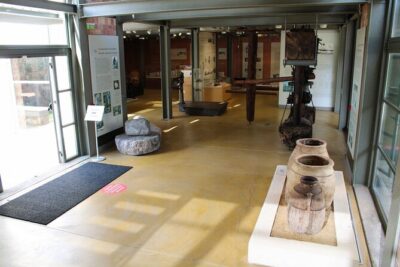
BUNK’ART 2 gives the day more weight. The museum occupies a former nuclear bunker built for Enver Hoxha and senior communist officials. Its exhibits cover the communist army and daily life under the regime. This is a useful counterpoint to the castles and religious buildings elsewhere on the route, and the one-hour visit should be enough for a focused introduction.
The supplied schedule has unusually short one-minute entries for parts of Tirana. Those appear to mark the start of walking segments rather than actual visit times, but I would still ask how much free time you get in the city.
Kruja and the crossing into Kosovo
Kruja sits high on rocky ground and is closely tied to Albania’s resistance against Ottoman expansion. Its old bazaar is one of the best places on the route for handmade souvenirs, including carpets and jewelry.
The castle visit includes local paths once used to leave the fortress without being seen. That detail gives the site a human scale. You are not only looking at walls; you are hearing how people moved through them during danger.
The border crossing into Kosovo brings you to Prizren, a city built around a river, old bridges, religious buildings, and Ottoman-era streets. The Sinan Pasha Mosque is the key interior visit, while Kalaja Fortress provides a wide view over the town.
Prizren is one of the more rewarding places for a free afternoon. Its filigree metalwork is a local specialty, and the old center is easy to explore on foot. The schedule gives only about an hour to the formal visit, so use the unplanned time carefully.
Gjakova, Decan, and the wines of Rahovec
Day nine covers three very different parts of Kosovo. Gjakova has a long bazaar rebuilt after repeated destruction during wars in the region. Its shops focus on traditional crafts and local goods, with time for a meal or a browse.
The Decan Monastery brings you into a still-active Orthodox religious site. Its 14th-century frescoes are the main reason for its UNESCO status, and the monastery is also known for organic products made by the monks, including cheese.
Rahovec changes the mood again. Grapes have been grown in the valley since Illyrian times, and the vineyards sit on gentle hills between 350 and 520 meters above sea level. A wine festival takes place each September, though the schedule does not state that festival entry or tasting is included.
This day is a good example of the tour’s strength: you see how trade, religion, farming, and conflict have shaped nearby towns. The drawback is another full day of movement, with little space for an unplanned stop.
Northern Albania, Shkoder, and a taste of farm life
Mrizi i Zanave is an agro-tourism farm and slow-food stop in northern Albania. You tour the property, hear how the family business created jobs in the area, and see how old communist buildings were adapted for storing local products.
You have free time for a traditional lunch or for buying farm goods, but lunch itself is not included. Budget for it, since this is exactly the kind of stop where the food is likely to be a major part of the appeal.
Later, Shkoder provides one of the route’s best viewpoints from Rozafa Castle. From the hill, you look toward the lake and the rivers flowing toward the Adriatic. The city also has strong Venetian influence, including handmade masks connected with its carnival tradition.
The castle visit lasts about two hours, though admission is listed as free in the schedule despite the general promise of included entry tickets. That small inconsistency is another reason to confirm what is covered.
Montenegro: Sveti Stefan, Budva, and Kotor
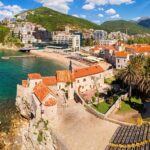
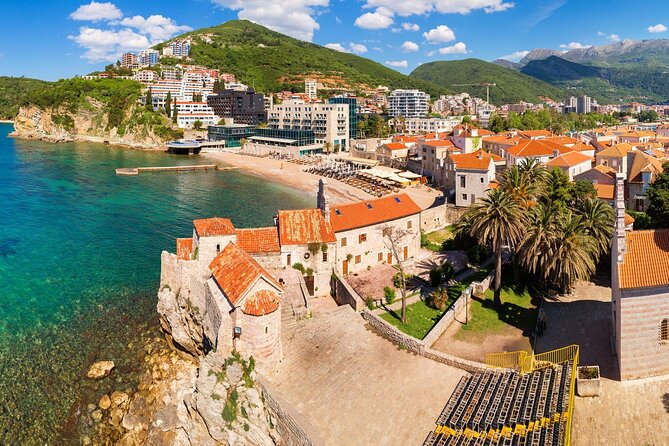
A viewpoint near Sveti Stefan gives you the classic coastal photograph. The former fishing village now operates as an exclusive resort, and the island cannot currently be visited. You should treat this as a scenic stop, not an island tour.
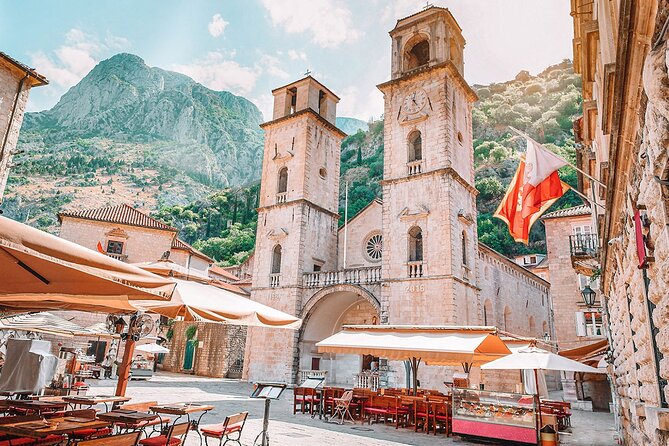
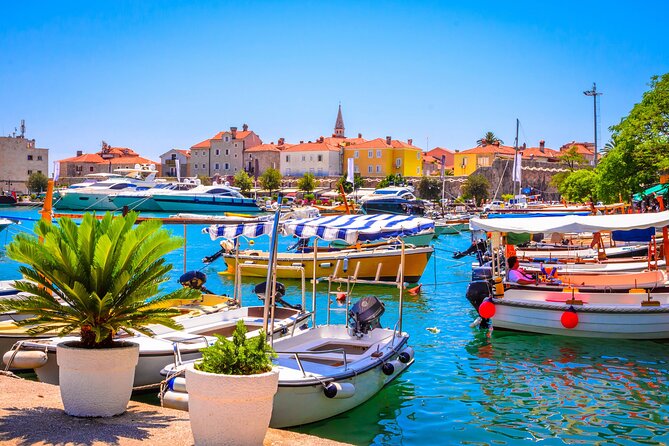
Budva follows with its old town, churches, stone lanes, and modern resort area. One hour gives you a useful orientation, but the newer part is mainly a backdrop of shops, offices, restaurants, and bars rather than a major sightseeing focus.
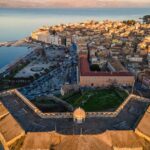
Kotor deserves the longest stop of the day, about two hours. Its old town is a maze of cobbled lanes, churches, and old buildings marked with plaques describing their dates and former uses. Saint Luke’s Church is included in the walk.
Kotor is a place where your own wandering matters. Stay alert to the clock, but leave room to look up at the stonework and follow a lane that catches your eye.
Mostar and Blagaj’s spring
Crossing into Bosnia and Herzegovina, you reach Mostar and its famous Old Bridge, Stari Most. The 16th-century bridge is the visual center of the city, but the nearby bazaar is just as important for understanding the place.
The old streets combine Islamic architecture, Turkish-style shops, mosques, and newer reminders of conflict. Stones marked with the words Don’t Forget appear around town, a direct reminder that Mostar’s beauty and wartime wounds remain side by side.
Blagaj adds a quieter stop outside the city. The tekija sits below a cliff beside the blue-green spring of the Buna River. The visit lasts about an hour and provides a change from the crowds and stone lanes of Mostar.
You then have another hour of free time in Mostar. That is enough for a meal and a walk, but not for a detailed museum visit.
Sarajevo and the road to Croatia
The final full sightseeing day takes you to Sarajevo. The walking tour covers the Ottoman and Austro-Hungarian quarters, religious buildings, markets, and the city’s reputation as a European meeting point of faiths.
You also see bullet holes, cannon marks, and other reminders of the Yugoslav War. The route includes uneven ground, so good walking shoes matter. At Latin Bridge, you learn how the assassination of Archduke Franz Ferdinand helped trigger the First World War.
Sarajevo is a powerful ending because it gathers so many themes from the trip: empires, religion, trade, war, food, and daily life in a city that has repeatedly adapted to change. The stop is only about two hours in total, so do not expect a full city tour.
On day 14, your tour leader takes you to the Croatian border. A local driver then transfers you to your hotel in either Dubrovnik or Split. Confirm which ending applies to your booking, since the final transfer differs.
What the small group and transport setup mean
A maximum of 10 people is a real advantage on a route with many border crossings and narrow old-town streets. A compact group can load faster, keep walking tours together, and make shared meals less awkward.
Private transportation also makes this route possible in a way that public buses would not. You move from Corfu to Meteora, through Albania and Kosovo, then across North Macedonia, Montenegro, Bosnia, and Croatia without having to piece together separate tickets.
The tradeoff is limited independence. You are on a fixed schedule, and the long road days can feel tiring. The two strongest qualities reported about this style of trip are the scenery on mountain roads and the friendly, well-organized staff. Those matter here because the tour depends heavily on its leader and driver keeping the group moving while still making room for local food and short stops.
The Valbona question you should settle first
The overview refers to the Albanian Alps, Valbona Valley, Koman Lake, and a traditional guesthouse. The supplied day-by-day plan instead runs through southern and central Albania, Tirana, Kruja, Kosovo, Shkoder, and the Adriatic coast, with no listed Valbona hike, Koman ferry, or homestay night.
That is not a minor wording issue. A mountain hike and a simple guesthouse stay would create a very different trip from the mostly town-and-city route described above. Before booking, ask for the final 14-day schedule and confirm if Valbona, Koman Lake, a hike, and home-cooked guesthouse meals are included.
Should you book this Balkan tour?
Book it if you want a highly organized sampler of the western Balkans and value private transport, a small group, included breakfasts, and a tour leader. It suits an active sightseer who prefers castles, old towns, religious sites, food markets, and historic context over long stays in one place.
Think twice if you want relaxed mornings, substantial hiking, or several nights in each destination. The price is high, and the value depends on how much you care about having the complicated transport handled for you.
My biggest advice is simple: confirm the itinerary mismatch before paying. If the final route truly includes the Albanian Alps and Valbona, this becomes a more varied trip with mountain time. If not, you are choosing a fast, culture-heavy road journey from Corfu to Croatia. Both can be worthwhile, but they are not the same holiday.
FAQ
How long is the tour?
The tour lasts approximately 14 days.
Where does the tour begin?
It begins at Corfu Port Authority Company, Eth. Antistaseos 24, Kerkira 491 00, Greece.
What time does the tour start?
The stated start time is 9:00 a.m.
Where does the tour end?
The tour ends in Croatia, with a transfer to your hotel in either Dubrovnik or Split, depending on the booking.
How many people can join the tour?
The maximum group size is 10 travelers.
What accommodation is included?
The price includes three-star hotel accommodation with breakfast. Room pricing is based on double, twin, triple, or quadruple occupancy.
Is transportation included?
Yes. Private transportation, the Corfu ferry port pickup, ferry tickets from Corfu to Igoumenitsa, road taxes, fuel, tourist taxes, and international car insurance are included.
Are meals included?
Thirteen breakfasts are included. Lunches, dinners, drinks, snacks, and personal purchases are not included.
Is the tour refundable if I cancel?
No. The experience is non-refundable and cannot be changed for any reason. If the operator cancels because of poor weather or because the minimum number of participants is not met, you are offered a different date or experience, or a full refund.