REVIEW · ATHENS
Sparta, Mystras & Limeni Traditional Village Private Day Tour
Book on Viator →Operated by CRISPY LOCAL MONOPROSOΡΙ Ι.Κ.Ε. · Bookable on Viator
Mystras is the star here: a Byzantine city climbing the lower slopes of Mount Taygetos, with churches, palaces, homes, monasteries, and a citadel spread through the ruins. I like that this private trip links it with ancient Sparta and the coastal stone village of Limeni, giving you three very different views of the Peloponnese in one long day.
I also like the short Corinth Canal stop and the visit to the Olive and Greek Olive Oil Museum. You get a private vehicle, hotel, Airbnb, or port pickup, bottled water, and a welcome culinary gift. The main drawback is the pace: 12 hours on the road leaves limited time at each major site, and the driver cannot act as your licensed guide inside archaeological areas.
In This Review
- Key points to know before booking
- Why this long Peloponnese day is worth considering
- From Athens to the Corinth Canal
- Walking into Byzantine Mystras
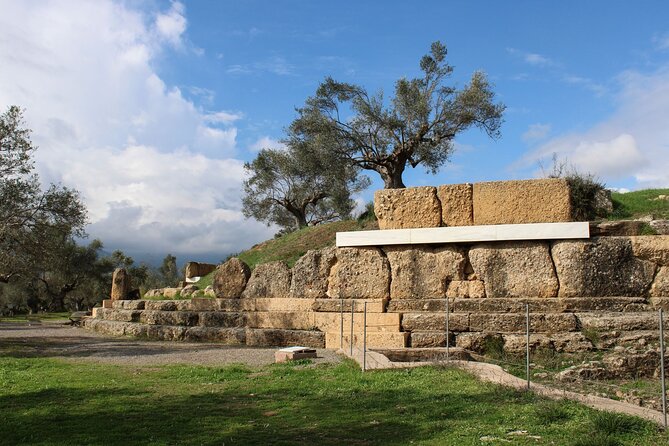
- Sparta, Leonidas, and a short look at the ancient city
- Olive oil culture at the museum
- Areopoli and the stone-built Mani
- Limeni’s towers and turquoise water
- What the private format changes
- Price, extra costs, and practical value
- Weather, timing, and who should book
- FAQ
- How long does the Sparta, Mystras, and Limeni tour last?
- Where does pickup take place?
- Is the tour private?
- Are entrance fees included?
- Is lunch included?
- Can the tour be canceled because of weather?
- Should you book this Peloponnese day tour?
Key points to know before booking
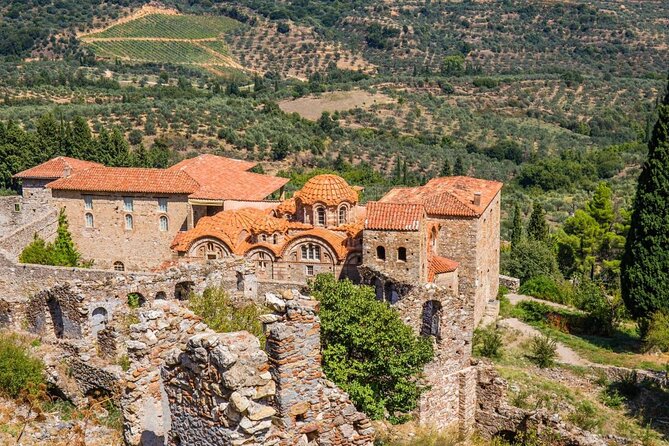
- Mystras is the main event: Expect steep paths, Byzantine churches, royal courtyards, and broad views from the citadel.
- Sparta is a brief historical stop: You see the ancient acropolis and theater area, then the Leonidas Monument near the stadium.
- Limeni brings a change of mood: Turquoise water, stone tower houses, small lanes, and Maniot character replace the inland ruins.
- This is a private experience: Your group travels alone, with pickup and drop-off at your accommodation or port.
- Budget for extras: Mystras and the Olive and Greek Olive Oil Museum charge entrance fees, and lunch is not included.
- Allow for a demanding day: The return drive to Athens takes about three hours, after a full circuit through the Peloponnese.
Why this long Peloponnese day is worth considering
This is not a quick Athens side trip. You leave the city for the Corinth Canal, cross much of the Peloponnese, visit the Byzantine capital of Mystras, stop in Sparta, and continue south toward Mani. The route covers a lot of ground, but it also gives you a useful sense of how varied southern Greece can be.
I would choose this tour if you want historical depth without staying overnight outside Athens. You get medieval Byzantium, classical Sparta, modern Greek independence history, olive oil culture, and a coastal village in one private outing. That range is the strongest reason to book it.
The tradeoff is simple. You gain variety, but you give up time. Mystras deserves several hours on its own, while this schedule assigns roughly an hour when the two Mystras entries are combined. Sparta is also treated as a short stop rather than a full archaeological visit.
You can also read our reviews of more private tours in Athens



From Athens to the Corinth Canal
Pickup begins at your hotel, Airbnb, port, or other accommodation. The first drive takes about an hour, heading west along the coast toward the Corinth Canal.
The route includes views of Greek seaside villages and the island of Salamis, linked with the famous naval battle between Athens and Persia. This portion is mainly a transfer, but it starts the day with a useful change from urban Athens to the Saronic Gulf and the Peloponnese.
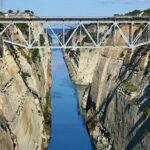
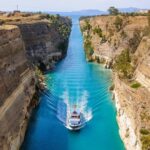
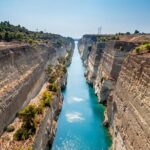
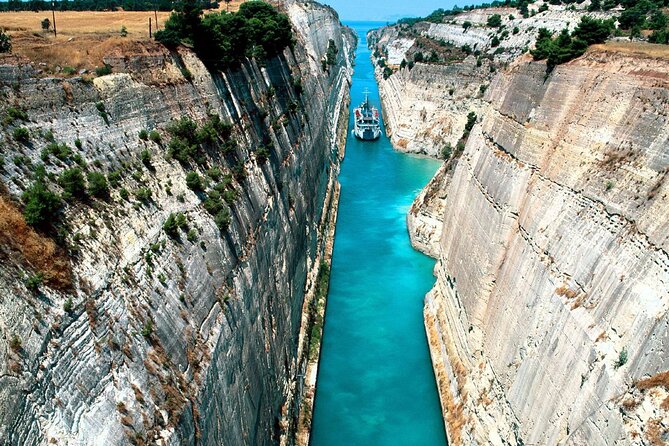
At the canal, you have about ten minutes to walk across a pedestrian bridge and take photographs. The Corinth Canal opened in 1892 and cuts through the narrow Isthmus of Corinth, separating the Peloponnese from mainland Greece while connecting the Saronic Gulf with the Corinthian Gulf.
Ten minutes is enough for a quick look, not for a leisurely visit. Treat it as a leg-stretching photo stop. If you enjoy engineering works and dramatic cuts through rock, you will appreciate it. If you prefer archaeological sites, save your anticipation for Mystras.
Walking into Byzantine Mystras
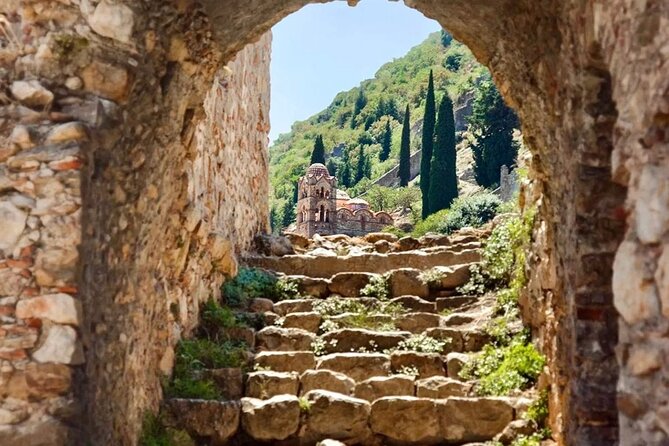
Mystras is the reason I would consider this particular route. Built into a steep mountainside, it was once a major Byzantine center and is now a remarkably complete medieval ruin. You do not see only a few isolated monuments. You encounter churches, ordinary homes, mansions, palaces, monasteries, and fortifications spread across the slope.
That arrangement makes Mystras feel different from a compact ancient sanctuary. The city rises toward a citadel, so the visit involves walking uphill and downhill on uneven ground. The site is not a flat stroll. Wear shoes suited to stone paths, and think carefully about your comfort with slopes before booking.
The upper section leads toward the citadel, where you can look across the surrounding countryside. The views are one of the rewards for making the climb. As you go downhill, the palaces and royal courtyards provide a clearer sense of how the city functioned as a seat of power.
The churches give Mystras much of its special character. Byzantine decoration and surviving religious buildings share space with Frankish architectural elements, reflecting the complicated political story of medieval Morea. Several monasteries remain in use, so this is not simply an abandoned archaeological park. Monks may show you around their small religious community, though the experience can vary with the conditions of the day.
Near the exit, the Chapel of St. Demetrios contains one of the site’s most memorable details. A floor plaque shows the two-headed eagle, the symbol of Byzantium. Constantine Palaiologos, later the final Byzantine emperor, knelt on that plaque before his coronation.
The stop is described in two parts of about 30 minutes each. That is enough to see important highlights, but not enough for a slow examination of every church, palace, and path. Your driver can explain the background while traveling, yet drivers are not licensed to accompany you inside the archaeological sites. If you want detailed interpretation at Mystras, you must arrange and pay for a licensed guide separately.
The entrance fee to Mystras is also extra. This matters when comparing the advertised price with the final cost of the day.
Sparta, Leonidas, and a short look at the ancient city
Sparta follows Mystras, making an interesting historical contrast. Mystras represents Byzantine court life, medieval religion, and fortified power. Sparta recalls a much older society built around military discipline and the authority of two kings.
The stop at the acropolis and ancient theater area lasts about 30 minutes. You can consider it an orientation visit rather than a full archaeological exploration. Sparta’s remains are less visually complete than Mystras, so the driver’s historical explanations can help you picture the ancient city.
Sparta is tied to Helen of Troy and Menelaus in the Mycenaean period, then became famous for its military system in the classical age. Leonidas and his 300 Spartans marched from here toward Thermopylae in 480 BCE, where they faced the Persian army.
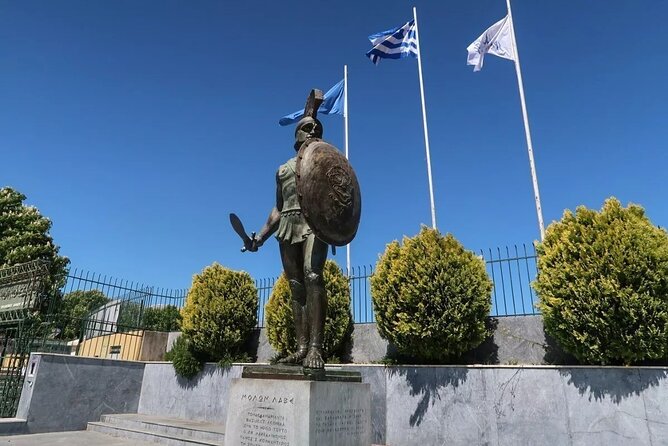
The next stop is the Leonidas Monument, near the stadium. It takes about ten minutes. The statue marks the finish of the Spartathlon, a 245.3-kilometer race from Athens to Sparta. That detail links ancient legend with a modern endurance event, and it gives the brief stop a clear purpose.
Do not book this outing expecting a deep study of Sparta’s ruins. You see the key locations and hear the setting’s larger story, but the time is short. If Sparta is your main interest, an overnight stay or a dedicated archaeological visit would serve you better.
Olive oil culture at the museum
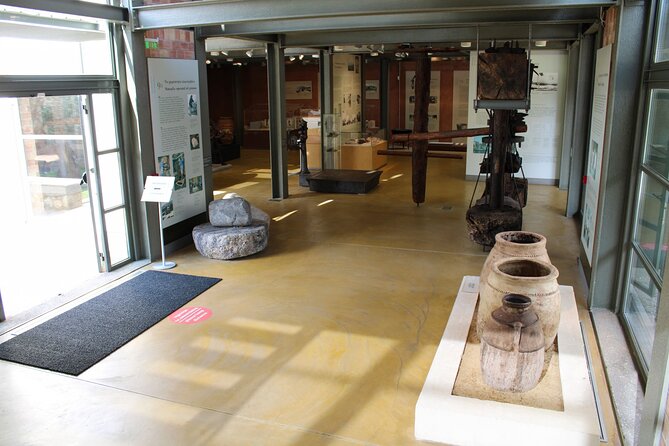
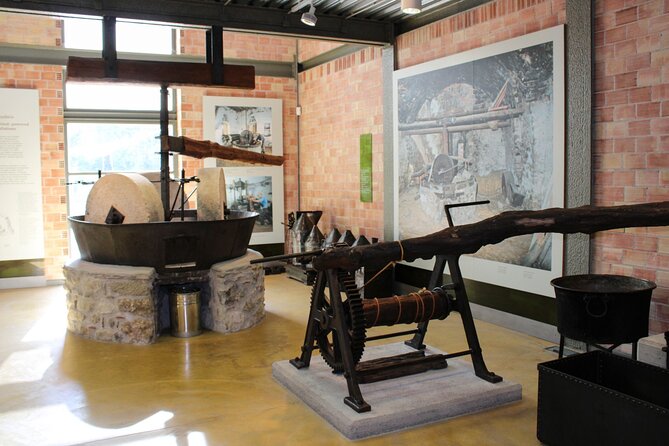
The Museum of the Olive and Greek Olive Oil offers a change from stones and military history. Greece’s olive tradition is central to its food, farming, and daily life, and this museum explains how olive oil is made and why it matters.
The visit lasts about 20 minutes. That is a compact introduction rather than a long museum session. You can learn about olive growing, oil production, and the place of olives in Greek culture before moving on toward Mani.
Entrance is not included. Lunch is not included either, so plan your expectations around a full day of driving and sightseeing rather than a food tour. The welcome culinary gift adds a small local touch, but it does not replace a meal.
- All Day Cruise -3 Islands to Agistri,Moni, Aegina with lunch and drinks included
★ 5.0 · 4,958 reviews






Areopoli and the stone-built Mani
Areopoli gives you the first strong taste of Mani’s architecture and political past. Its name means city of Ares, the ancient Greek god of war, and it became the town’s official name in 1912.
The town is also linked with the beginning of the Greek War of Independence. On March 17, 1821, Petros Pierrakos, known as Petros Mavromichalis and the last bey of Mani, began the uprising at Areopoli.
You have about 30 minutes here. Look for the tower houses built with fieldstone. Their heavy, defensive appearance differs from the familiar blue-and-white style seen in many Greek villages. The architecture reflects Mani’s distinct local traditions and gives the town a strong sense of place even during a short stop.
Areopoli has grown into a working town, not a preserved film set. That is part of its appeal. You get a glimpse of a region shaped by family strongholds, local power, and the struggle for independence.
Limeni’s towers and turquoise water
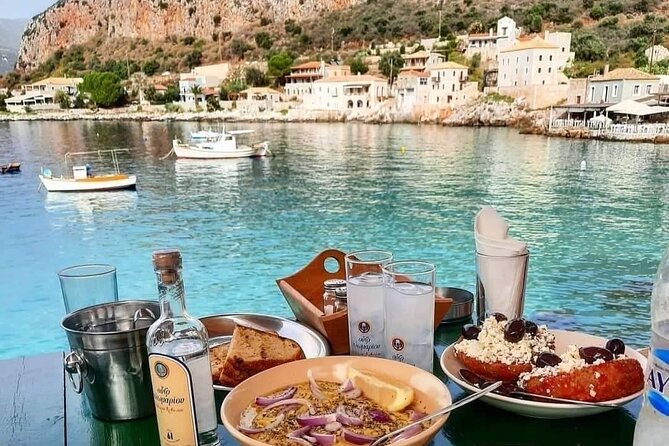
Limeni is the day’s most relaxing stop. After the steep ruins and historical explanations, you reach a small Mani village arranged around the coast.
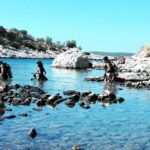
The first things you notice are the turquoise water and stone tower houses rising around the shoreline. Small lanes lead through the village, where the simple buildings and compact scale create a more intimate atmosphere than the archaeological sites.
You have about an hour in Limeni, the longest single stop after the drive itself. Use it to walk, take photographs, and enjoy the contrast between the bare stone architecture and the sea. The village still retains its original character, according to the tour description, and it feels like a fitting final stop before the long return to Athens.
The word secret is often overused in travel writing, but Limeni’s appeal here is genuinely tied to its less commercial feel and distinct Mani setting. Still, remember that this is a short visit, not a full coastal holiday. The schedule does not promise a boat trip, swimming time, or a specific restaurant meal.
What the private format changes
A private vehicle makes this route more practical than a large group excursion. Your party travels alone, and pickup and drop-off are arranged at your accommodation or port. That saves you from reaching a central meeting point and gives the day a more personal feel.
The drivers are described as professional and well informed about local history. They can explain the places between stops and help connect the different periods, from ancient Sparta to Byzantium and modern Mani.
The important limit is that they are not licensed to accompany you inside archaeological sites. You should not expect a formal guided tour among the ruins. If you want detailed explanations beside individual monuments, arrange a licensed guide and account for that added cost.
Private travel also does not erase the distance. The return from Limeni to Athens takes about three hours, and the full outing lasts roughly 12 hours. A private car makes a long day more comfortable, but it cannot make southern Peloponnese close to Athens.
Price, extra costs, and practical value
The listed price is $290.89 per person. For a private 12-hour excursion with transportation, pickup and drop-off, bottled water, and a culinary gift, that can be reasonable if your group values convenience and wants to cover several far-flung places in one day.
The value drops if you are mainly interested in one site. Mystras, in particular, deserves more time than this route allows. You are paying for transport and route planning as much as for the stops themselves.
Add the entrance fees for the Archaeological Site of Mystras and the Museum of the Olive and Greek Olive Oil. Lunch is also extra. Group discounts are offered, but the specific discount is not given, so confirm the final amount for your party before paying.
Booking around 41 days ahead is the average pattern for this experience. That suggests you should not leave it until the last minute if your Athens stay is short, especially since the tour requires good weather.
Weather, timing, and who should book
The tour can be canceled because of poor weather, with a different date or a full refund offered. You can also cancel for a full refund up to 24 hours before the start time. Changes or cancellations inside that 24-hour window are not accepted, based on local time.
Weather matters here more than it would on a museum-only outing. Mystras requires outdoor walking on a steep site, and Limeni is best appreciated from its waterfront lanes. Rain can make the day less pleasant and may affect the order or quality of the stops.
I think this tour suits you if:
- You want a private day outside Athens without changing hotels.
- You enjoy a mix of ancient, Byzantine, modern, and rural Greek history.
- You are comfortable with a long drive and short visits.
- You want door-to-door transport from a hotel, Airbnb, or port.
- You are willing to pay extra for site entrance fees and lunch.
- You can manage uphill and downhill walking at Mystras.
It is less suitable if you want a relaxed pace, a full meal included, extensive time at Sparta, or a licensed guide beside you at every monument.
FAQ
How long does the Sparta, Mystras, and Limeni tour last?
The experience lasts approximately 12 hours, including the drives from Athens and back.
Where does pickup take place?
Pickup and drop-off are offered at your hotel, Airbnb, port, or other accommodation.
Is the tour private?
Yes. Only your own group participates in the private activity.
Are entrance fees included?
No. Entrance to the Archaeological Site of Mystras and the Museum of the Olive and Greek Olive Oil is not included.
Is lunch included?
No. Lunch is not included in the tour price.
Can the tour be canceled because of weather?
Yes. The experience requires good weather. If the provider cancels because of poor weather, you can choose another date or receive a full refund.
Should you book this Peloponnese day tour?
Book it if you want maximum variety in one private day and accept the long hours in the car. Mystras supplies the strongest sightseeing, Limeni provides the prettiest change of scene, and Sparta adds an important link to ancient Greek history. The Corinth Canal, Areopoli, and olive oil museum round out the picture.
Skip it if you want to linger. Mystras needs more than the allotted time, Sparta is a quick introduction, and the final drive back to Athens is substantial. For the right person, this is an efficient and memorable route through southern Greece. For a slower experience, choose fewer stops and spend a night in the Peloponnese.