REVIEW · THESSALONIKI
Thessaloniki Hop-on Hop-off Sightseeing Bus Tour
Book on GetYourGuide →Operated by THESSALONIKI SIGHTSEEING · Bookable on GetYourGuide
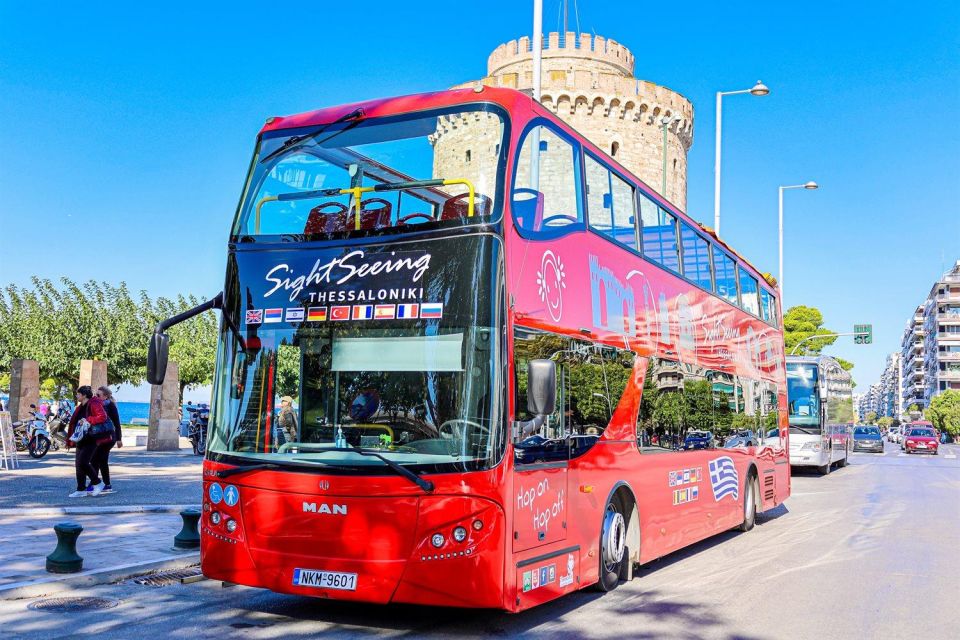
Thessaloniki is spread from the waterfront up toward the old city walls, and this open-top bus tour gives you a quick handle on that shape. From the upper deck, you can link the White Tower, museums, churches, Roman ruins, Aristotelous Square, and the Byzantine Castles without piecing together several city rides.
I like the all-day ticket, which lets you stay aboard for the full loop or hop off when a sight catches your eye. I also like the price, $18.07, for a simple way to reach the hilltop castle area. The main drawback is timing: city traffic can slow the bus, and winter service drops to every 60 to 80 minutes.
In This Review
- Key points at a glance
- Why this bus helps you understand Thessaloniki
- Starting beside the White Tower
- Archaeological Museum and the eastern waterfront
- Eptapyrgio and the Byzantine Castles
- St. Demetrios and the old religious center
- The Arch of Galerius and Kamara
- Aristotelous Square and the central city
- The port and the final waterfront view
- What the audio guide is really like
- Is $18.07 good value?
- Timing, comfort, and practical cautions
- Who should book this Thessaloniki bus tour?
- Should you book it?
- FAQ
- Where does the Thessaloniki hop-on hop-off bus tour start?
- Where does the tour end?
- How long is the ticket valid?
- How often do the buses run?
- How many stops are on the route?
- Which sights can I reach on the route?
- Is an audio guide included?
- Are attraction entrance fees included?
Key points at a glance
- Start at the White Tower: Find the red kiosk beside Thessaloniki’s best-known waterfront landmark.
- Reach the upper city easily: The bus takes you toward Eptapyrgio and the Byzantine Castles, where narrow streets and steep slopes can make walking tiring.
- Choose from seven operating stops: Visit the Archaeological Museum, St. Demetrios, Arch of Galerius, Aristotelous Square, the port, and other key areas.
- Use the full-day freedom: Ride the entire loop first, then decide where you want more time.
- Listen in your preferred language: Audio options include English, French, German, Greek, Hebrew, Italian, Romanian, Russian, Serbian, Spanish, Turkish, Polish, and Bulgarian, although the information also describes the service as available in eight languages.
- Plan around traffic and weather: The upper deck offers the best views, while the lower level may feel hot if the air conditioning is not working well.
Why this bus helps you understand Thessaloniki

Thessaloniki is easy to explore on foot in the central waterfront area, but the city rises sharply beyond it. The old walls, Eptapyrgio, and the Byzantine Castles sit above the modern center. Getting there can mean a long uphill walk, especially in summer heat.
That is the strongest reason to book this ride. You are not paying for a guided walking tour with entry to monuments. You are paying for a moving overview and a practical connection between separated sights. The bus lets you see how the Roman center, modern shopping streets, waterfront, port, and upper city fit together.
The tour is valid for one day. You can remain on board for the full circuit, then use the same ticket to get off and back on at the places you want to explore. Buses are scheduled about every 30 minutes in the regular season, though traffic can affect the actual wait.
The route has seven main stops, with the White Tower serving as both the starting point and the return point. One stop near the Church of St. Sofia is listed as out of order, so check the current map and timetable before planning your day around it.
You can also read our reviews of more tours and experiences in Thessaloniki.



Starting beside the White Tower
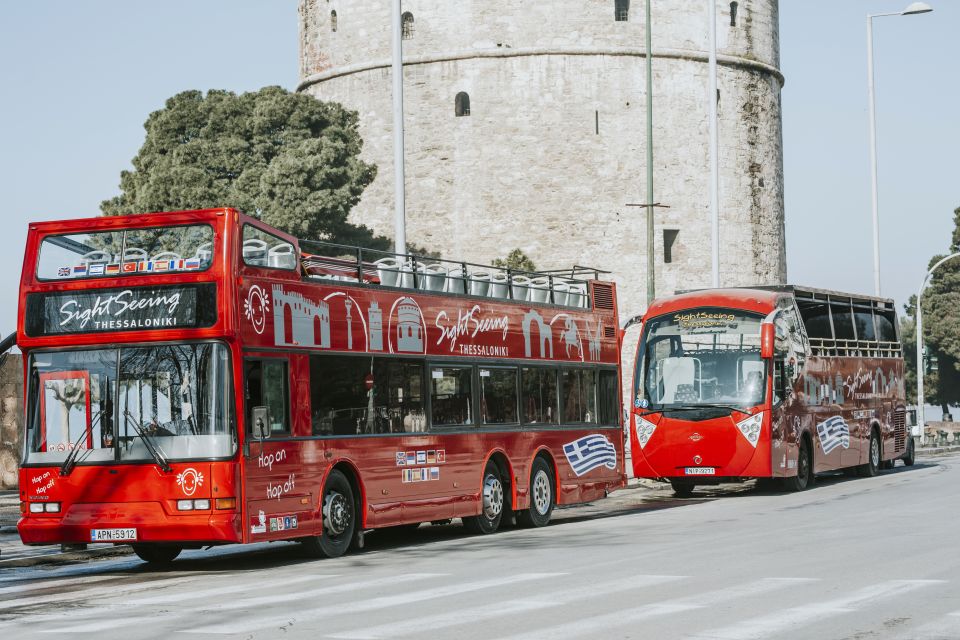
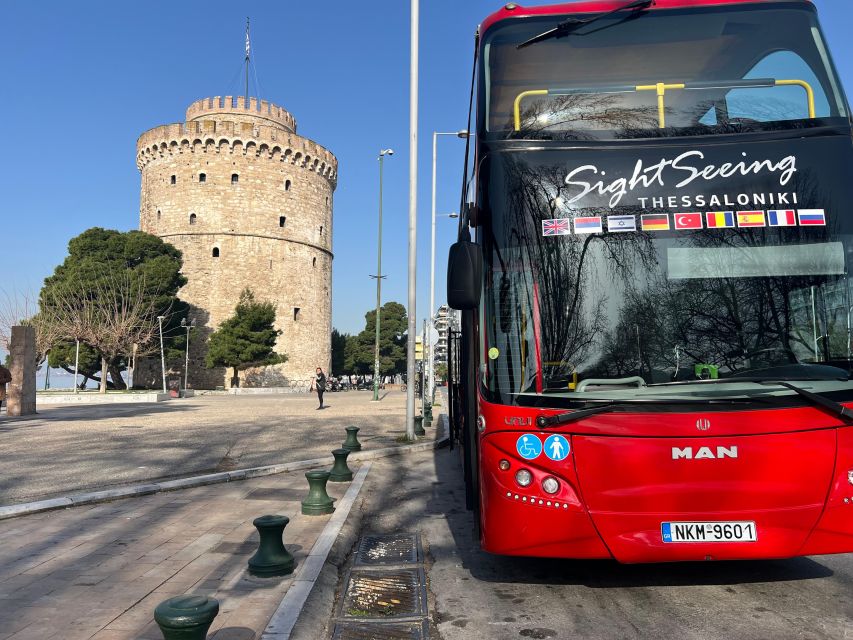
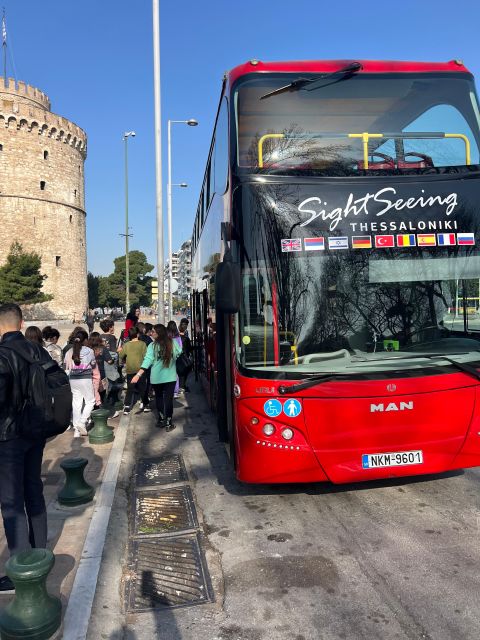
The red kiosk at the White Tower is the meeting point. This is a useful place to begin because you are already beside the waterfront, where you can orient yourself before boarding.
The White Tower is the symbol of Thessaloniki, but the bus does not include admission to it or any other attraction. Your ticket covers the ride, commentary, disposable headphones, and a route map with timetable. You will need separate tickets for sights you choose to enter.
If you have just arrived in the city, take the complete loop first. This gives you a broad look at the route and helps you decide where to return. If you already know you want the Archaeological Museum or the upper city walls, get off early and use the next bus for another section.
The upper deck is the place for wide views and fresh air. Bring comfortable shoes, since the most rewarding stops require walking after you get off. The bus is wheelchair accessible, but you should still consider the uneven streets and slopes around the upper-city stops.
Archaeological Museum and the eastern waterfront
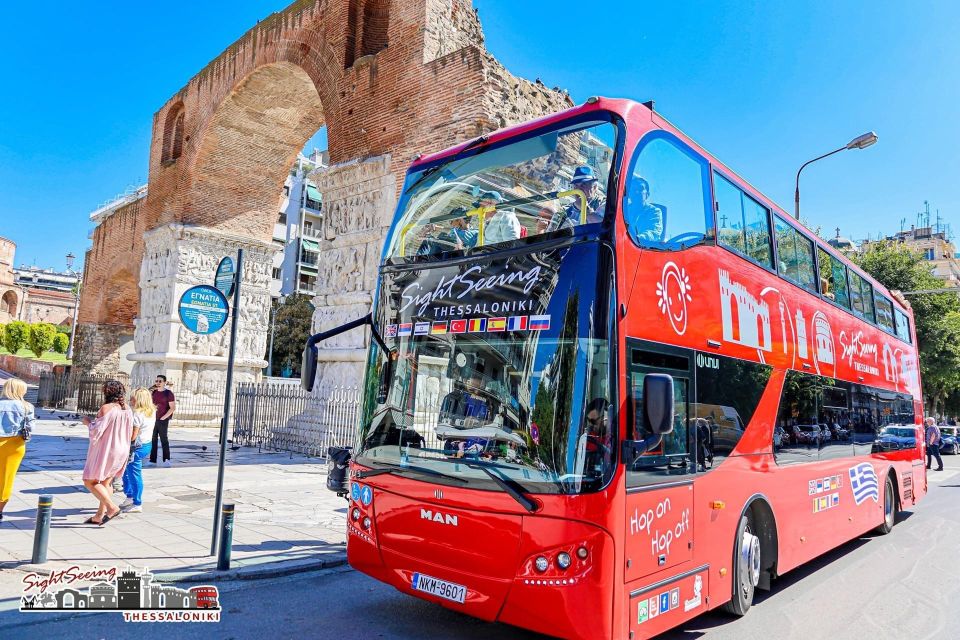
The Archaeological Museum is the first major cultural stop after the White Tower. You can get off here for a proper visit or stay aboard while the bus passes by.
This stop suits you if you want ancient Macedonian material and a museum-based look at the region. It is also a sensible first stop for anyone who prefers indoor sightseeing during the hottest part of the day. Admission is not part of the bus fare, and opening conditions can change. One practical warning: the museum has been closed at times, so check before making it the fixed centerpiece of your day.
From the bus, the museum stop also helps you see how close Thessaloniki’s cultural institutions are to the seafront. You can combine the ride with a waterfront walk, then board again when you are ready.
The audio commentary adds context as you pass the city’s main sights. It is useful for a first orientation, though the sound may be hard to follow in heavy traffic. Keep the volume at a comfortable level, and do not expect every line of narration to match the exact building you are looking at at that second.
Eptapyrgio and the Byzantine Castles

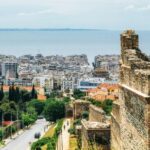
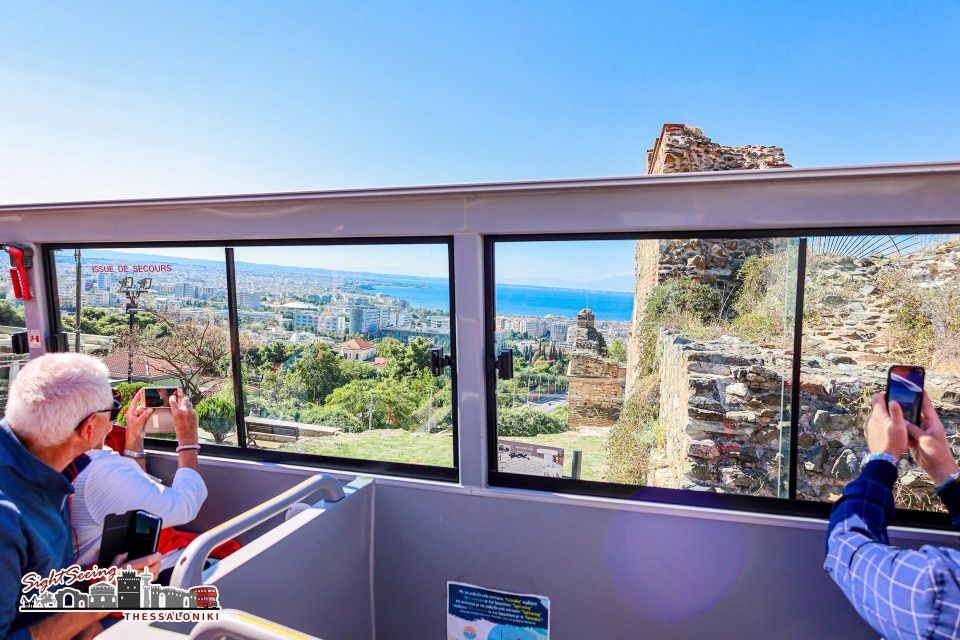
The hilltop stop at Eptapyrgio, also described as the Byzantine Castles, is the main reason many people use this bus instead of walking everywhere. The route takes you toward the upper city, where the roads become narrow and the incline more demanding.
You can get off to visit the castle area and walk near the old walls. This is a different side of Thessaloniki from the waterfront and central squares. The setting gives you a sense of the city’s higher defenses and its spread below.
Allow extra time here. The streets at the top are extremely narrow, and buses can spend time waiting in traffic. That is not a fault unique to the operator, but it does affect the schedule. If you get off at Eptapyrgio, remember exactly where you left the bus and confirm where the return stop is. Stop locations can change, and the route map is worth keeping in your pocket.
This is also the stop where comfortable shoes matter most. The bus saves your legs on the climb, but it cannot remove the need to walk once you reach the upper city.
St. Demetrios and the old religious center
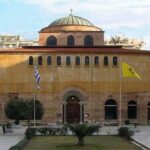
The Church of St. Demetrios is one of the central stops and a good place to break the ride with a substantial historic sight. You can visit the church or simply pass by while listening to the audio guide.
The stop works well for an independent afternoon. Get off, see the church, and continue on foot through the surrounding central streets before returning to the route. Entrance fees are not included, so plan to pay separately if you go inside.
The audio commentary gives you a useful outline of the city’s past, but it is not a substitute for a specialist walking guide. Some passengers have found that the narration is out of sync with the buildings, while others have found it informative enough for a general tour. I would treat it as background information, not a carefully timed lecture.
The supplied language information is a little inconsistent. The tour is described in one place as having eight audio languages, while the language list includes English, French, German, Greek, Hebrew, Italian, Romanian, Russian, Serbian, Spanish, Turkish, Polish, and Bulgarian. Check the available language choice when booking or boarding if a particular language matters to you.



The Arch of Galerius and Kamara
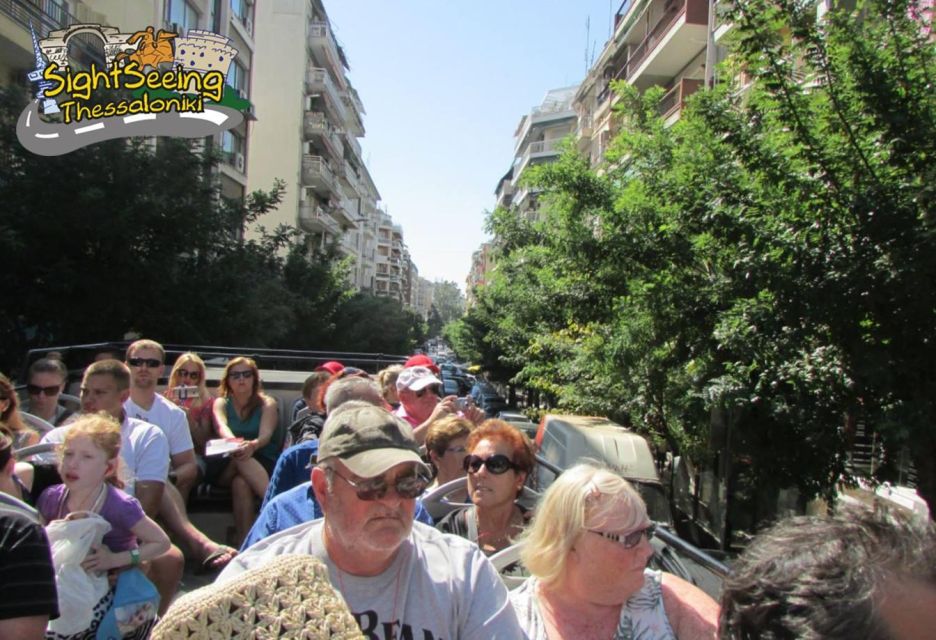
The Kamara stop brings you to the Arch of Galerius, often called Rotonda or Rotonta in the route information. This is one of the most useful stops for connecting Thessaloniki’s Roman past with its modern center.
You can get off to see the arch and continue toward the Rotunda area on foot. The stop is close to central streets and makes a natural link with other city sights. If you are short on time, it is one of the stops I would prioritize after the White Tower and the Byzantine Castles.
The bus commentary can help you notice details you might otherwise miss from the road. Still, traffic noise and music can interfere with the narration, especially on the lower deck. If you want the best chance of hearing the guide clearly, sit where the speaker works well and keep your disposable headphones connected.
The route description has not always matched the places visible at each moment. Use the map as your firm guide and the commentary as an extra layer, rather than relying on every announcement to direct your walking route.
Aristotelous Square and the central city
Aristotelous Square is the city’s grand central gathering place, opening toward the waterfront. It is a good stop for a break, a coffee, or a short walk among Thessaloniki’s shops and central streets.
This stop is less about entering a single monument and more about feeling the city’s modern rhythm. You can leave the bus here, walk toward the sea, and return to the route when you have had enough of the pavement and traffic.
For first-time visitors, Aristotelous Square is also a useful reference point. The White Tower is farther along the waterfront, while the port lies in the opposite direction. That makes the square a practical place to split your sightseeing into two shorter sections.
You may find the route slower here during busy periods. Thessaloniki traffic is part of the experience, but it can make the advertised 30-minute service less exact. Keep some flexibility if you are connecting this ride with a timed museum visit or a meal reservation.
The port and the final waterfront view
The Port of Thessaloniki is the last listed stop before the bus returns to the White Tower. The port adds a different view of the city, with open waterfront space and a working harbor setting.
Get off here if you want to walk near the water or visit an attraction in the port area. Food and drinks are not included, and drinks are not allowed on the vehicle, so plan any refreshments for your time off the bus.
If you stay aboard, the port gives you a final wide view before the route turns back toward the White Tower. This is a good section for the upper deck, particularly if you want photographs of the waterfront rather than close views of individual monuments.
The complete circuit is useful even if you do not plan to hop off. You get a quick city survey, and the return to the starting point keeps the day simple. Just remember that road congestion can stretch the ride.
What the audio guide is really like
The included audio guide is a helpful bonus, not the main reason to choose this tour. It gives you historical notes and explanations of the sights along the route, which is enough to make a simple bus ride more meaningful.
You receive disposable headphones, and the tour also provides a route map and timetable brochure. Those small items matter because stop locations may not always feel obvious, especially around the upper city. Keep the map after you get off.
Sound quality is not perfect in every situation. Traffic can make the narration hard to hear, and there may be more music than information at certain points. The commentary can also arrive slightly before or after the sight in question.
I would use the guide to identify what you are seeing, then spend your energy looking out at the city. If you want detailed architectural interpretation or a personal conversation with a local expert, this is not that kind of tour. The listed live guide language is English, while the recorded audio offers the broader language selection.
Is $18.07 good value?
At $18.07 per person, the ticket is reasonably priced if you use it as transport as well as sightseeing. A single ride around the whole circuit gives you an overview, while two or three well-timed hop-offs can make the pass more useful than paying for separate short rides.
The value is strongest for three types of visitor:
- You are visiting Thessaloniki for one day and want a fast orientation.
- You want to reach the upper city without walking the full climb.
- You prefer independent sightseeing but still want basic historical commentary.
The value is weaker if you plan to spend the whole day inside museums or exploring central Thessaloniki on foot. The route does not include entry fees, meals, or personal expenses. You are buying access to the bus and its route, not a package of attractions.
The free cancellation option, available up to 24 hours before the tour, also helps if your plans are uncertain. You can reserve and pay later, which is useful when weather or ferry schedules may change your day.
Timing, comfort, and practical cautions
In the regular operating pattern, buses depart about every 30 minutes from stops around the city. Winter service is much less frequent, running every 60 to 80 minutes between 10:00 a.m. and 2:00 p.m. That can turn a quick hop-off into a long wait, so check the operating season before booking.
Summer heat is another factor. The upper deck gives you the best views, but it offers little shelter from the sun. The lower level may be more comfortable in strong heat, though one bus had a very hot lower deck when the air conditioning was not working.
Bring water for your walking time, but do not bring it onto the vehicle if the operator is enforcing the stated no-drinks rule. Alcohol and drugs are not allowed. Wear shoes you can manage on slopes and uneven streets.
The electronic voucher can be shown on your phone. If you have trouble finding it, staff can usually confirm your booking when payment is clear, but opening the voucher before you reach the kiosk saves time.
Who should book this Thessaloniki bus tour?
I would choose this tour for a first visit, a short stay, or a hot day when you want to see more without walking every hill. It is also a sensible choice for families, older visitors, and anyone who wants a simple route to the Byzantine Castles.
I would be more cautious if you need exact departure times, quiet narration, or detailed guiding at every monument. Traffic, changing stop points, imperfect audio timing, and the out-of-order St. Sofia stop mean you should keep your plans flexible.
Should you book it?
Book it if you want a low-cost overview with the freedom to choose your own stops. Ride the complete loop first if you have time, then use the pass for the Byzantine Castles, St. Demetrios, or the Arch of Galerius.
Skip it if your main goal is a detailed guided history tour or if your schedule cannot absorb traffic delays. For most first-time visitors, the combination of the White Tower, upper-city access, port views, and all-day use makes $18.07 a fair buy, as long as you treat the audio guide and timetable as useful aids rather than perfect promises.
FAQ
Where does the Thessaloniki hop-on hop-off bus tour start?
The tour starts at the White Tower of Thessaloniki, beside the red kiosk.
Where does the tour end?
The activity ends back at the White Tower meeting point.
How long is the ticket valid?
The ticket is valid for one day.
How often do the buses run?
Buses generally depart about every 30 minutes. During winter, service runs every 60 to 80 minutes between 10:00 a.m. and 2:00 p.m.
How many stops are on the route?
The route has seven main operating stops, with the White Tower used as the starting and returning point. The Church of St. Sofia stop is currently listed as out of order.
Which sights can I reach on the route?
Stops include the Archaeological Museum, Eptapyrgio and the Byzantine Castles, the Church of St. Demetrios, the Arch of Galerius, Aristotelous Square, the Port of Thessaloniki, and the White Tower.
Is an audio guide included?
Yes. Audio commentary and disposable headphones are included. The listed audio language options include English, French, German, Greek, Hebrew, Italian, Romanian, Russian, Serbian, Spanish, Turkish, Polish, and Bulgarian.
Are attraction entrance fees included?
No. Food, drinks, attraction entrance fees, and personal expenses are not included.