REVIEW · EPIRUS
Vikos Gorge crossing hiking from Monodentri to Vikos village
Book on Viator →Operated by Alpine Zone · Bookable on Viator
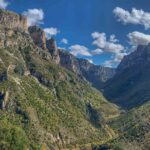
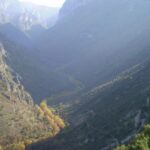
Vikos Gorge is the star here: a huge cleft in the Zagori mountains, officially recognized in 1997 by Guinness World Records as the deepest canyon in the world in relation to its width. The crossing takes you from Monodendri down to the riverbed, then through a mix of rocky trail, trees, open views, and clear springs before the final climb to Vikos.
I like the small maximum group of 10, which gives your guide room to adjust the pace and explain the plants, rock formations, local culture, and history. I also like the simple local lunch, especially the homemade spinach or cheese pie, fruit, sweets, and sesame bars described by the guide as suitable trail food.
The main consideration is the effort. This is not a casual village walk. The route usually takes 6 to 8 hours, includes slippery stones and rough sections, and finishes with a steep uphill stretch of about 30 minutes. You need proper hiking shoes, weather-appropriate clothing, and a moderate level of fitness.
In This Review
- Key points to know before you book
- Starting at Monodendri and entering the gorge
- What the gorge crossing feels like
- Resting beside the Voidomatis Springs
- The final climb to Vikos
- How the guide affects the day
- Is $180.23 good value?
- Who should book this hike?
- Weather, clothing, and practical planning
- My call: book it if you want the full Vikos experience
- FAQ
- Where does the Vikos Gorge hike start?
- How long does the hike take?
- Where does the hike finish?
- How large is the group?
- Is the tour offered in English?
- What food and drink are included?
- Do I need hiking shoes and special clothing?
- What happens if the weather is poor?
Key points to know before you book

- A full gorge crossing: You descend from Monodendri and finish at Vikos or possibly Mikro Papigo, rather than simply walking to a viewpoint and turning back.
- An English-speaking guide: Alexis is the guide most often named in the available information, with Vassilios also helping on one larger outing.
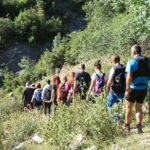
- A small-group format: The maximum is 10 people, useful for setting a manageable pace and getting more direct attention.
- Voidomatis Springs: The route includes a rest near the clear springs of the Voidomatis River, one of the cleanest rivers in Europe.
- A demanding finish: The final uphill section can be the hardest part, especially after several hours on rocky ground.
- Minibus return: After reaching the end point, transport brings you back rather than leaving you to arrange your own way back.
Starting at Monodendri and entering the gorge
Your day begins at 8:00 a.m. at Rizareiou Scholis in Monodendri, near the Agia Paraskevi Monastery. This is a sensible starting point because Monodendri sits above the gorge and gives you a clear sense of the descent ahead.
The first major effort is heading down toward the riverbed. That change in height matters. You are not strolling along a flat valley floor from the start, and the early descent puts some strain on your knees. Take it steadily and use the pace set by the guide.
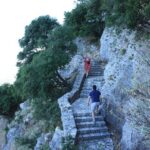
The route is described as fairly easy for most of its length, but that should not be confused with easy for everyone. Some parts are rough, and the ground can include loose or slippery stones. Hiking shoes are not supplied, so footwear is your responsibility. Trainers with poor grip are a weak choice for this outing.
A guide adds real value during this opening section. Alexis is repeatedly singled out for explaining the rock formations, plants, regional culture, and history. That turns the walk from a long transfer through pretty scenery into a more informed look at how the gorge was formed and how people have lived around it.
You can also read our reviews of more hiking tours in Epirus

What the gorge crossing feels like

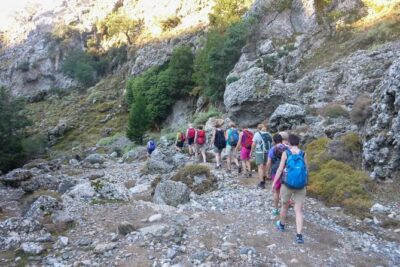
Once you are inside the gorge, the route changes often. Some sections are broad and allow you to look across the great walls. Other stretches narrow, with trees and rock close around the path. The variety is part of the appeal. You do not spend six or seven hours staring at the same view.
The surroundings can also feel surprisingly shaded. One account describes much of the route as covered by trees, while other sections open out to reveal larger views of the canyon walls. Have your camera ready, but do not expect every photograph to show the scale. The gorge is often more impressive in person than on a small screen.
The route is also a good fit for people who want a serious day outdoors without committing to a multi-day trek. The total crossing usually runs about 6 to 8 hours, including stops for photographs, rest, and lunch. That makes it a substantial day, but still manageable within a single visit to Zagori.
Your guide can help control the rhythm. On a small outing, you may be able to walk at a relaxed pace rather than being pushed along by a large group. Alexis has also allowed a solo hiker to lead the pace, which shows how useful a small group can be when fitness levels differ.
Still, do not count on the trail feeling smooth. Reports include climbing and slippery stones, and one account describes the hike as tough for an inexperienced person with an untrained body. If you rarely hike, the distance and uneven footing may be more important than the headline claim about the gorge.
Resting beside the Voidomatis Springs

One of the most memorable stops comes near the springs of the Voidomatis River. The water is described as exceptionally clear and blue, and reaching the source area gives the day a satisfying midpoint or late-route reward.
This is a good place to slow down. The hike is not only about covering ground, and the springs provide a natural pause for photographs, lunch, and a look at the water that runs through the gorge. The river is also noted as one of the cleanest in Europe, which adds context to why this stop feels special.
The food is modest but well chosen for a mountain walk. Bottled water and a light lunch are included, with homemade vegetable pie, fruit, and sweets. Specific accounts also mention local spinach and cheese pies and sesame bars. You should not expect a restaurant meal, but you can expect food that is easy to carry and tied to the region.
The cold water is part of the story too. One hiker described bathing in meltwater at about 4 degrees Celsius before tackling the last climb. That sounds bracing rather than comfortable, and it is not presented as a required part of the tour. If you are tempted to enter the water, remember that the supplied information does not promise a swimming stop, so treat it as an optional personal choice rather than a planned feature.
The final climb to Vikos

The last section is where the route earns its moderate fitness rating. After hours of walking, you climb steeply for roughly half an hour toward Vikos. For some people, this will be the toughest part of the day.
The reward is the view back toward the Voidomatis Springs and the gorge below. The climb may feel demanding, but it gives the crossing a proper finish. You have gone from the high village of Monodendri down into the gorge and then back up toward another village, rather than simply walking along the bottom.
Pace is important here. Use the small group to take short pauses if needed, drink water, and avoid treating the last climb as a race. The guide’s role is especially useful at this point, since you may be tired and less sure of your footing.
The listed finish is Vikos village, although the details also allow for an end point at Mikro Papigo, a little farther on. A minibus picks you up in the late afternoon. That return arrangement is valuable because the route is a one-way crossing. Without transport, you would need to solve the problem of getting back to your starting point after a long hike.
How the guide affects the day

The strongest personal touch is the guiding. Alexis is described as friendly, energetic, and able to speak excellent English. His explanations cover the natural features as well as the wider culture and history of the area.
That matters in Vikos because the scenery can be easy to admire without understanding. A guide can point out why the rock looks the way it does, identify plants, explain the setting, and help you notice details you might otherwise pass. The value is not simply navigation.
Vassilios is also named as a second guide on one larger group outing. Since the standard format is limited to 10 people, you are more likely to have a direct exchange with the guide than on a bus-sized excursion.
The guiding style appears flexible. The pace can be adapted, and the wider Alpine Zone team has adjusted activities according to weather and how tired people were during multi-day programs. That does not remove the physical demands of Vikos Gorge, but it is reassuring if you want a guide who pays attention to the group rather than blindly following a timetable.

Is $180.23 good value?

At $180.23 per person, this is not the cheapest way to enter Vikos Gorge. You are paying for an English-speaking guide, a full one-way crossing, bottled water, a light lunch, and minibus transport at the end.
The price makes more sense if you do not have a car or do not want to work out the return journey. One solo participant specifically valued hotel pickup and drop-off, though the standard meeting information gives the start at Rizareiou Scholis in Monodendri. Confirm your exact pickup arrangement before booking, especially if you are staying outside Monodendri.
For two people or a small private-feeling group, the cost also buys flexibility. You are not just paying for a marked route. You get route knowledge, local explanations, food, and help with the practical problem of returning after a one-way hike.
The value is weaker if you are already an experienced hiker, have your own transport, and prefer to walk independently. In that case, the guide’s interpretation and the minibus are less essential. For a first visit to the area, a solo hiker, or anyone uneasy about remote mountain walking, the package is easier to justify.
Group discounts are available, but the amount is not specified. Ask for the current group price rather than assuming a particular saving.
Who should book this hike?

I would choose this outing if you want one major day in Zagori and prefer a complete route over a short viewpoint visit. It suits people with moderate fitness who are comfortable walking for most of a day on uneven ground.
It is also a strong choice for solo visitors. A guide gives you company, local context, and support, while a small group avoids the feel of a large organized march. The solo price may be higher if no group is available, so check the cost for your date.
You should think twice if you dislike steep climbs, loose stones, or long days outside. The final uphill section is not a small detail, and the route can be tough for an inexperienced hiker. Service animals are allowed, but the physical condition of the trail still needs careful thought for any animal accompanying you.
The tour is offered in English, and the confirmation is issued at booking. It is near public transportation, though the information does not give a detailed public transport plan. You should arrive ready to start at 8:00 a.m. rather than treating this as a flexible late-morning activity.
Weather, clothing, and practical planning

The operator requires good weather. If conditions force cancellation, you are offered another date or a full refund. That is sensible for a route involving rough stones, a river environment, and a steep finish.
Wear clothing suited to the forecast and bring proper hiking shoes. The operator does not provide shoes or personal clothing, so you need to arrive equipped. Bottled water is included, but you should still plan carefully for a long day and follow your guide’s advice about drinking.
Free cancellation is available up to 24 hours before the start time for a full refund. Cancellations or changes made inside that window are not refunded or accepted, and all times use local time.
Because the route can end at Vikos or Mikro Papigo, clarify the exact finishing point and return plan when you book. The supplied details describe the activity as ending back at the meeting point, while the route description says the minibus collects you later from the finishing village. The practical takeaway is simple: confirm where the vehicle will meet you and where you will be returned.
My call: book it if you want the full Vikos experience
Book this hike if the idea of crossing one of Europe’s great gorges appeals to you more than simply photographing it from above. The combination of a one-way route, small group, English guide, homemade pie, Voidomatis Springs, and minibus return gives the day a clear shape.
I would not book it expecting a gentle nature walk. The 6 to 8 hours, uneven stones, and final steep climb demand preparation. But if you bring sound shoes, dress for the weather, and accept a little effort, this is a practical way to experience Vikos Gorge with far less transport worry and more local context than going alone.
FAQ
Where does the Vikos Gorge hike start?
The hike starts at 8:00 a.m. at Rizareiou Scholis in Monodendri, near the Agia Paraskevi Monastery in Greece.
How long does the hike take?
The crossing takes approximately 6 to 8 hours, including rest, lunch, and stops for photographs.
Where does the hike finish?
The route finishes at Vikos village, or possibly at Mikro Papigo. A minibus collects you in the late afternoon and returns you after the crossing.
How large is the group?
The activity has a maximum of 10 participants. Group discounts are available, though the discount amount is not specified.
Is the tour offered in English?
Yes. The activity is offered in English, and Alexis is identified as an English-speaking guide.
What food and drink are included?
Bottled water and a light lunch are included. The lunch may include homemade vegetable, spinach, or cheese pie, along with fruit and sweets. Sesame bars are also mentioned.
Do I need hiking shoes and special clothing?
Yes. Hiking shoes and personal clothing suited to the weather are not supplied. You need to bring your own appropriate equipment.
What happens if the weather is poor?
The activity requires good weather. If it is canceled because of poor conditions, you are offered a different date or a full refund.