REVIEW · ATHENS
3-Day Best of Classical Greece: Corinth-Mycenae-Nafplio-Epidaurus-Olympia-Delphi
Book on Viator →Operated by EUDAIMONIA Private Tours · Bookable on Viator
The best thing about this three-day tour is its reach. In one compact trip from Athens, you visit the Corinth Canal, Mycenae, Nafplio, Epidaurus, Olympia, Delphi and Hosios Loukas. You also cross the Rion-Antirion Bridge and stop in smaller towns that many first-time visitors would miss.
I like the private format, which gives your group more say over the pace and possible side trips. I also like that three lunches, two breakfasts, bottled water and accommodation are included, so the price covers more than transport. The main drawback is the speed: this is a lot of Greece in three days, with long road stretches and extra admission fees at most major sites.
In This Review
- Key points to know before booking
- A big Greek history trip in only three days
- Day one: Corinth Canal, Mycenae and Nafplio
- Nafplio and Epidaurus, two very different stops
- Day two: Olympia, the bridge and the road to Delphi
- Day three: Delphi, Arachova and Hosios Loukas
- What the $1,936.52 price really covers
- Comfort, walking and the pace of the route
- Who will get the most from this private Greek route
- Should you book it?
- FAQ
- Where does the tour start and finish?
- Is this a private tour?
- Which major archaeological sites are included?
- Are meals and accommodation included?
- Is a professional guide included?
- How physically demanding is the experience?
- What is the cancellation policy?
Key points to know before booking
- A full sweep of classical Greece: Corinth, Mycenae, Epidaurus, Olympia and Delphi all appear in one route.
- Private transport and flexible stops: Your driver and tour leader can adjust small parts of the day to suit your interests and timing.
- Overnight stays in Nafplio and Delphi: You get time for an evening in Nafplio and a morning visit to Delphi.
- Meals and accommodation are included: Three lunches, two breakfasts, drinks and selected hotels are part of the package.
- The route adds smaller places: Nafpaktos, Galaxidi, Arachova and Hosios Loukas bring variety beyond the major ruins.
- Plan for extra site tickets: Entry fees and a professional licensed guide are not included.
A big Greek history trip in only three days
This is not a slow village holiday. It is a concentrated tour for someone who wants to connect the major ancient sites without arranging several hotels, rental-car routes and meals alone.
The journey begins in Athens at 8:00 a.m. and heads west toward the Peloponnese. From there, the route moves south through Argolis to Olympia, crosses into central Greece, reaches Delphi, and returns to Athens on the third day. That geographic sweep is impressive, but it also means you should expect full days and plenty of time in the vehicle.
The private setup matters here. A fixed group tour may hurry everyone through a stop, while a private driver and tour leader can often make room for a photo stop, a local drink or a short detour when time allows. The company describes these as special moments based on your likes and dislikes. Treat them as possible additions, not guaranteed scheduled stops.
The experience is designed to feel personal. The tour leader is intended to act as your link with local communities, and the company presents the driver as part of its family. One family specifically arranged to travel with Nicos, while another praised Theo for being well informed and easy to like. Since the exact person may depend on availability, ask who will lead your departure if that matters to you.
A few more Athens tours and experiences worth a look


Day one: Corinth Canal, Mycenae and Nafplio
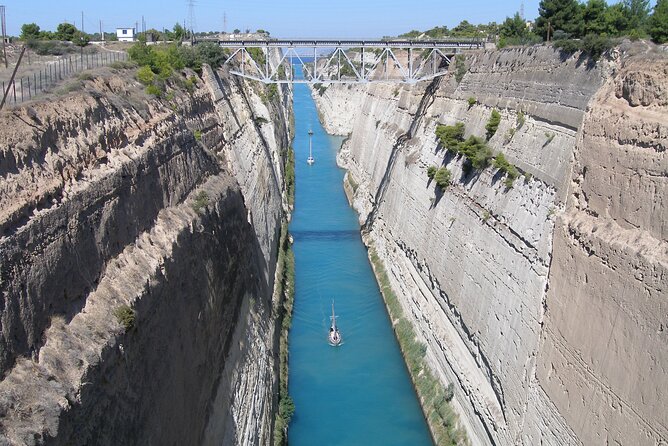
The first stop is the Corinth Canal, usually a quick 15-minute photo break. The canal cuts through the Isthmus of Corinth and links the Gulf of Corinth with the Saronic Gulf. It separates the Peloponnese from mainland Greece in a striking bit of modern engineering and geography.
Do not expect a full visit here. The stop is short, but it breaks up the drive and gives you a clear sense of why Corinth has always mattered as a meeting point between regions.
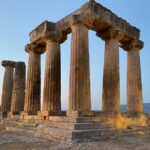
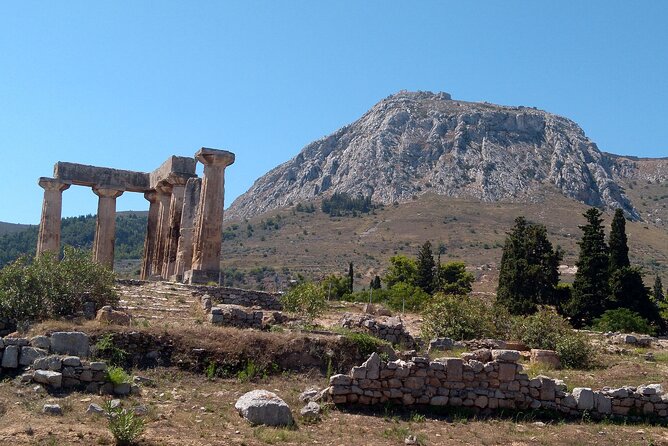
You can optionally visit Ancient Corinth for about an hour. The site was inhabited as early as the Neolithic period, but Corinth’s major growth began in the eighth century BC. Its position on the isthmus helped make it a powerful city-state between Athens and Sparta.
Admission is not included, and the stop is optional. If you care about ancient Greek cities, it is a worthwhile addition because it gives context to the canal and the surrounding region. If you are already feeling pressed for time, you may prefer to save your energy for Mycenae and Epidaurus.
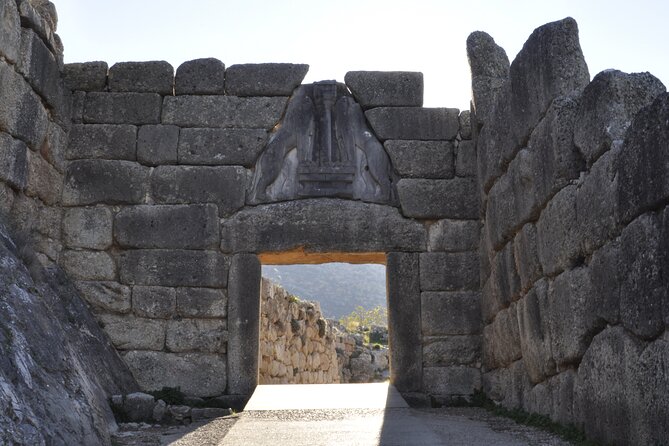
Mycenae receives about 90 minutes. This is one of the day’s major stops and one of the most recognizable archaeological sites in Greece. The site is tied to King Agamemnon and the Mycenaean civilization, with imposing ruins and an accompanying museum.
You will walk through an ancient citadel area rather than view a single monument. The setting and remains help explain the power of Mycenae, but the visit requires walking over uneven archaeological ground. Wear firm shoes and bring water, even though bottled water is supplied.
Admission is extra. The 90-minute visit is enough for a strong first look, though anyone with a special interest in Bronze Age Greece may want more time. A professional licensed guide is also optional, so ask in advance if you want detailed archaeological interpretation rather than the tour leader’s general explanation.
Nafplio and Epidaurus, two very different stops
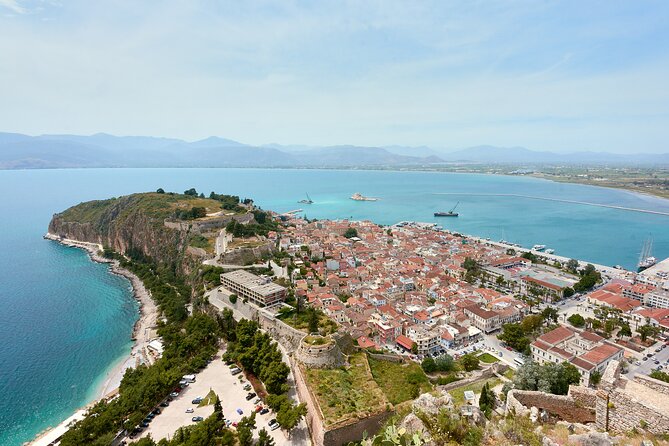
Nafplio gives the first day a welcome change of pace. You have about two hours to explore this former capital of Greece, known for historic buildings and its attractive waterfront setting. The town is often considered one of the prettiest places in the Argolis region, and this is where the tour feels less like a checklist of ruins.
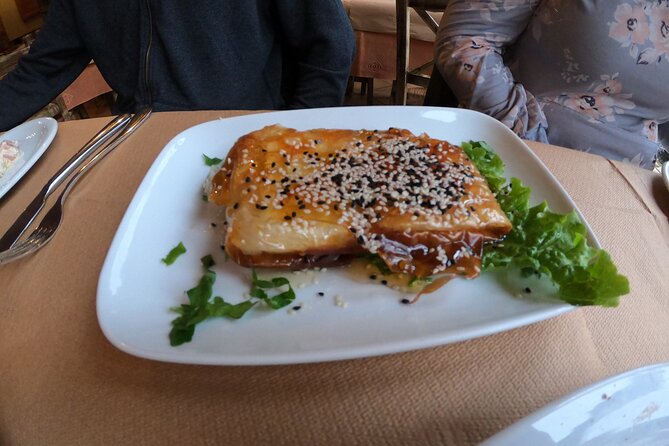
The free time matters. You can walk through the old town, pause at the port or find a place for a drink. The tour also offers a free evening ride between Nafplio and your hotel, allowing you to return to the port or old town for dinner without arranging a taxi yourself.
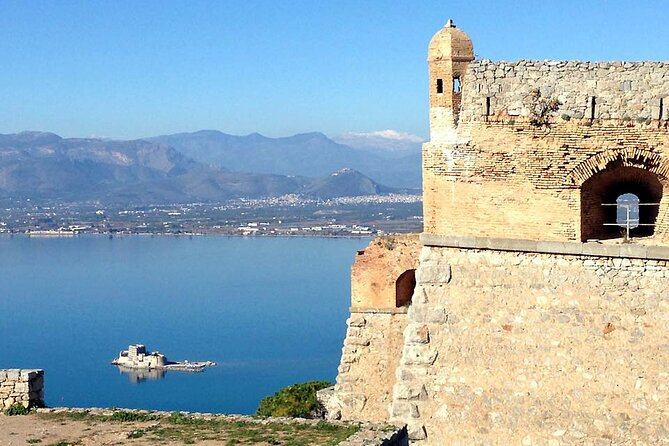
Palamidi Castle adds another 45 minutes. You can walk through the Venetian fortress and, optionally, descend the famous 999 steps into the old town. The views are a major reason to do it, but the steps are a serious physical addition after a long day. You do not need to descend them to enjoy the castle.
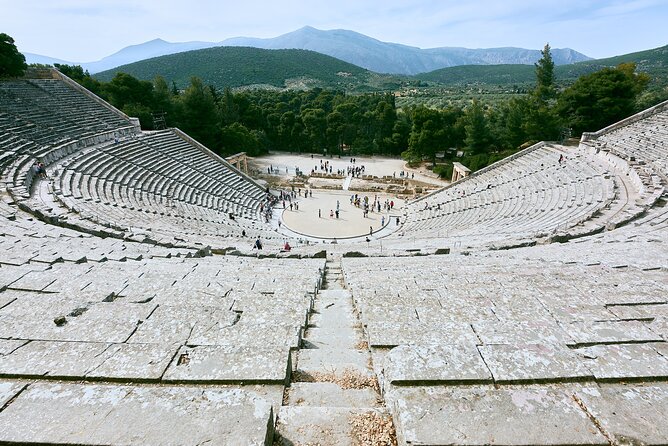
Epidaurus brings you back to ancient Greece, but with a different mood. Its ancient theater is exceptionally well preserved and famous for its acoustics. You have about an hour here, enough to inspect the theater and appreciate its shape and setting.
Entry is not included. The site is especially rewarding if you enjoy architecture, performance or engineering. It is also one of the easier ancient sites to understand without a long lecture because the theater’s form is so clear.
The first day covers many attractions, and the order can feel demanding. My advice is to resist trying to add every optional stop. Ancient Corinth, Palamidi’s steps and an evening in Nafplio are all appealing, but doing everything may leave you worn out before Olympia.
Day two: Olympia, the bridge and the road to Delphi
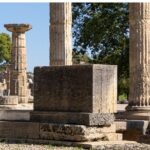
Olympia is the focus of the second day. The archaeological site was home to the original Olympic Games, which began in the eighth century BC. The ruins include athletic training areas, a stadium and temples dedicated to Hera and Zeus.
You have about 90 minutes at the site. That gives you time to see the main remains and walk through the old athletic center, but it is not a leisurely archaeological study. The site is broad, so listen carefully to the meeting instructions and keep an eye on the clock.
The Archaeological Museum of Olympia follows, with about 45 minutes. Its displays include sculpture from the Temple of Zeus and the famous Hermes attributed to Praxiteles. The museum adds meaning to the broken columns and foundations outside because you can see the artistic work that once belonged to the sanctuary.
Tickets for both Olympia stops are extra. Combining the site and museum is the right choice, since the two visits explain each other. If you skip the museum to save time, you lose some of the finest objects connected with the sanctuary.
The route then heads north to the Rion-Antirion Bridge. The bridge crosses the Gulf of Corinth and is presented as a short coffee stop near Nafpaktos. Nafpaktos is a small seaside town with a Venetian castle and a waterfront where you can stretch your legs.
This is one of the tour’s useful breaks. After major ruins and museum halls, a little time by the water can make the long drive to Delphi easier. You have about an hour for the bridge and Nafpaktos stop, with the exact balance depending on the day.
Galaxidi follows for about 30 minutes. It is a coastal town near Delphi and another chance to see a smaller Greek community rather than moving from one major archaeological site straight to the next.
You arrive in Delphi later that day and stay overnight in a location described as away from the area’s tourist traps. That placement is valuable because you are already near the next morning’s archaeological visit. It also gives you an evening in Delphi instead of seeing the sanctuary only as a quick stop on a long transfer.
Accommodation is included, and the company says it works to arrange quality, authentic hotels that may include five-star properties. The exact hotel is not specified, so ask for the planned property before booking if room style or location is important to you.
Day three: Delphi, Arachova and Hosios Loukas
Delphi receives about 90 minutes in the morning. Ancient Greeks regarded the sanctuary as the site of the omphalos, or navel of the world, and the oracle of Apollo made it one of the most important religious centers in Greece.
The site’s setting is a key part of the experience. The sanctuary lies against the slopes above the valley, so you are combining ancient monuments with broad views across central Greece. The walk includes uneven ground and some incline, making moderate physical fitness important.
The Archaeological Museum of Delphi gives you another 45 minutes. Its collection focuses on sculpture, architectural pieces and smaller objects from the sanctuary. The Charioteer of Delphi and the Sphinx of the Naxians are two major works to look for.
The museum is not included in the admission package, so budget for it. I would not skip it. The ruins can be difficult to picture in their original form, while the statues and carved pieces make the sanctuary’s former scale and artistic quality easier to understand.
The Tholos of Athena Pronaia is a separate stop of about 30 minutes. It is particularly useful because it is often left out of rushed Delphi visits, yet its round structure is one of the most recognizable images associated with the site.
Admission is extra. Check how the visit will be handled on your departure, since the tour description specifically calls attention to this stop but does not state whether the same ticket covers it.
Arachova provides a short mountain stop, about 15 minutes, for photographs and possibly lunch. The village is known as a ski destination and a place for mountain relaxation. Fifteen minutes is enough for a quick look, not a full village visit, so keep your expectations sensible.
Hosios Loukas is the final major cultural stop. This walled monastery near Distomo is an important example of Middle Byzantine architecture and art and is listed as a UNESCO World Heritage Site. You have about an hour there, with admission extra.
The monastery changes the tone of the tour. After classical sanctuaries and athletic sites, you see Greece’s Byzantine religious tradition. That broader view is one of the strongest parts of the route because it keeps the trip from becoming only a parade of famous ancient ruins.
The final drive returns you to Athens, with drop-off at your hotel in the Syntagma Square area. The listed timing allows about two hours for this return portion, though road conditions can affect the exact arrival time.






What the $1,936.52 price really covers
At $1,936.52 per person, this is a major purchase. The value depends heavily on your group size and how much you value private transport and planning help.
You are paying for a three-day private experience, accommodation, three lunches, two breakfasts, bottled water, an information booklet and local transportation. You also get a route that would take careful planning to arrange independently, including two overnight stays, the bridge crossing and the return to Athens.
The price does not include tickets to the archaeological sites or museums. It also does not include a professional licensed guide, though one can be added optionally, and gratuities are optional. You should set aside extra money for entry fees before you commit.
For a couple or family that wants a private vehicle, flexible pacing and one person handling the route, the package may offer solid convenience. For a solo visitor or budget-focused pair, the per-person price may feel high, especially once site tickets are added.
The included meals and drinks are useful, but they are not the main reason to book. The real value is the private logistics and the amount of Greece covered in three days. If you want a slow stay in each town, this is not the right format.
Comfort, walking and the pace of the route
You need moderate physical fitness. Expect walks through archaeological sites, uneven surfaces, museum visits, castle paths and possible stairs at Palamidi. The optional 999-step descent is the clearest physical challenge, but it is not required.
The days begin early, with an 8:00 a.m. pickup from Athens. That start helps fit in the long route, but it may not suit you if you prefer late mornings. The private vehicle gives your group more comfort than a large coach, though the tour still involves substantial driving.
The best approach is to pack light, wear supportive shoes and keep one small day bag accessible. You will want water, sun protection and a layer for changing conditions, especially around Delphi and the higher areas near Arachova.
The good-weather condition also matters. If poor weather forces cancellation, you are offered another date or a full refund. For a trip with so many outdoor ruins, that protection is reassuring, but you should avoid placing the tour on the final possible day of an Athens stay.
Who will get the most from this private Greek route
I would recommend this tour to a family, couple or small group that wants to see the major classical sites without driving in Greece or changing hotels every night. It also suits an active first visit when you want ancient history, coastal towns, mountain scenery and local meals in one package.
It is a strong fit for families with a clear wish list. One 13-year-old’s specific interests helped shape a family trip, and the private format is useful when children or teenagers need a different pace from a standard group.
You should think twice if you want long museum visits, unplanned afternoons or several nights in one place. The schedule is full, and the optional additions can turn a busy day into an exhausting one.
The experience also works best if you are comfortable with some uncertainty around the special stops. The company may add a local drink, a small detour or a meeting with local people, but those moments depend on time and your preferences.
Should you book it?
Book this tour if you want a private, high-coverage introduction to Greece and value having accommodation, meals and route planning handled for you. The strongest features are the range of sites, the overnight in Delphi, the evening option in Nafplio and the chance to include smaller places such as Nafpaktos and Galaxidi.
Before paying, confirm the exact hotels, who will lead your departure, the added cost of site tickets and whether you want a licensed guide. If you can accept early starts, long drives and a quick pace, this is an efficient way to connect the Peloponnese with central Greece. If you prefer depth over distance, stay longer in Nafplio or Delphi and make fewer stops instead.
FAQ
Where does the tour start and finish?
The tour starts in Athens at 8:00 a.m. Pickup is offered, and the return includes drop-off at your hotel near Syntagma Square.
Is this a private tour?
Yes. Only your group participates in the activity.
Which major archaeological sites are included?
The route includes Ancient Corinth as an optional stop, Mycenae, Epidaurus, Olympia, Delphi, the Tholos of Athena Pronaia and Hosios Loukas. Site admission tickets are not included.
Are meals and accommodation included?
Yes. The package includes three lunches, two breakfasts, bottled water and accommodation for the two overnight stays. The exact hotels are not specified.
Is a professional guide included?
No. A professional licensed guide is optional. Your driver and tour leader handles the tour connection and route.
How physically demanding is the experience?
A moderate fitness level is recommended. You will walk through archaeological sites and may encounter uneven ground, inclines and stairs. The 999 steps from Palamidi Castle to Nafplio are optional.
What is the cancellation policy?
You receive a full refund if you cancel at least six full days before the start time. Cancellation two to six full days ahead receives a 50 percent refund. Cancellations less than two full days ahead are nonrefundable. Poor-weather cancellations offer a different date or a full refund.