REVIEW · ATHENS
Acropolis and Acropolis Museum Private Tour with Licensed Expert
Book on Viator →Operated by WARMPENGUIN · Bookable on Viator
Marble gets easier to read with a real expert. This private tour pairs the Acropolis with the Acropolis Museum, so you don’t just look—you understand what you’re seeing, from temple rituals to the stories carved into stone. Guides such as Eva and Betty are often praised for turning dry facts into clear, human scale moments, and you get to ask questions as you go.
I like the licensed access element: you’re with an accredited expert who can explain what matters and point out the details that most people miss. I also like the split format—about 80 minutes up on the Acropolis and about 80 minutes inside the museum—because the museum helps you “decode” what you just saw outside. One thing to consider: entrance fees are not included (and you’re walking a lot), so your final cost depends on which sites you add.
In This Review
- Key highlights worth your focus
- Why a licensed guide changes everything on the Acropolis
- Meeting at Acropoli Metro: how to start without stress
- First half on the hill: Dionysus, Athena, gateways, and the Parthenon
- Theater of Dionysus: a stop that explains Greek drama
- Bronze Athena, Propylaia, and the walk that makes the views make sense
- Temple of Athena Nike: the detail stop
- Parthenon: the main event, with construction and mythology
- Erechtheion and Zeus/Athena myth notes
- Odeon of Herodes Atticus: the building that still performs
- Acropolis Museum: where the stories click into place
- What you’ll notice right away
- The payoff: seeing what the Acropolis hides
- Which option should you choose: Acropolis only, Agora add-on, or 5-hour city tour
- Acropolis only (about 90 minutes up there)
- Acropolis + Ancient Agora (3 hours, with a caution on walking)
- City tour luxury vehicle (5 hours, with return transfers)
- Price and value: what $188.65 covers (and what it doesn’t)
- Practical tips that make the day feel smoother
- Go early if you can
- Wear for the hill
- Ask questions during the stops that matter most
- Expect some sound challenges outdoors
- Should you book this Acropolis and Acropolis Museum private tour?
- FAQ
- How long is the Acropolis and Acropolis Museum private tour?
- Where do I meet the guide?
- Are entrance tickets included?
- Do you offer skip-the-line tickets?
- Is this really a private tour?
- What language is the tour offered in?
- Can I upgrade to other sights beyond the Acropolis and museum?
- Is the walking manageable for most people?
- What happens if I want the tour to end somewhere other than the meeting point?
Key highlights worth your focus
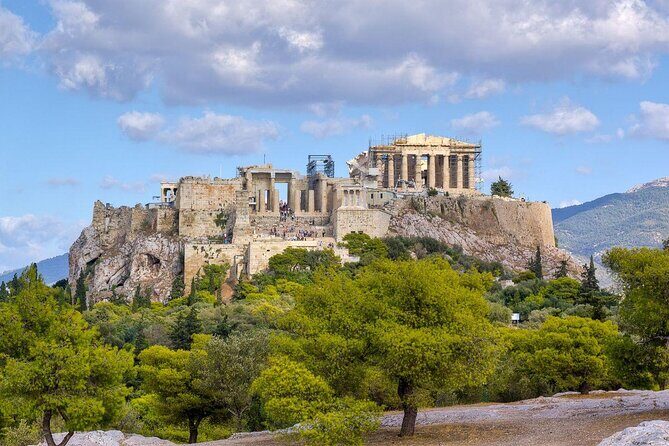
- Licensed expert guidance at both the Acropolis and the Acropolis Museum, tailored to your questions
- 80-minute Acropolis block + 80-minute museum block for a smoother learning arc
- Legend + architecture taught together, not as separate topics
- Theater of Dionysus stop, including why it mattered to Greek drama
- Flexible upgrades: Agora, or a full 5-hour city tour by vehicle
- Crowd and comfort awareness, especially if you’re going in hotter months
Why a licensed guide changes everything on the Acropolis
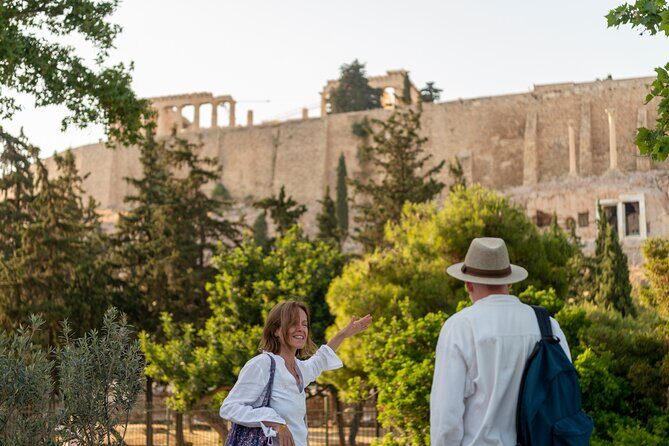
The Acropolis is big, steep, and crowded enough to make even motivated sightseeing feel like a blur. With a private format, you can slow down at the spots that grab you. And with a guide who’s licensed to lead you through the key areas, you’re not stuck with guesswork.
What I find most useful is how these tours explain the site as a whole, not as a checklist. You’ll hear the myth layer that connects to the buildings—who each temple was for, what ceremonies would have meant, and why the layout was designed the way it was. That matters because the Acropolis feels confusing if you only know it as a set of famous photos.
This is also where the guide’s style becomes real value. Names like Nicole, Lydia, Catherine, and Effy show up repeatedly in guides people talk about. The common thread: they don’t just point out ruins; they turn them into stories you can follow from stop to stop.
You can also read our reviews of more private tours in Athens



Meeting at Acropoli Metro: how to start without stress

Your guide meets you at the Acropoli Metro Station street level, near 7 Makrygianni Street, close to the Acropolis Museum. That’s a practical location because it’s easy to orient yourself, and it sets you up for the day’s rhythm: quick orientation outside, then up onto the monument itself.
Before you head to the main viewpoints, you’ll get an intro from the meeting area—including a way to see the earlier fortification wall (built by the earlier Mycenean civilization) and an overview of why the Acropolis mattered in daily life in ancient Greece. This “setup” time is small but helpful. When you start climbing, you know what you’re walking toward.
At the end, your tour finish point depends on your option. For the Acropolis + museum style tour, you’ll return to the meeting point or continue on your own with the guide’s suggestions. For Acropolis-only and Agora add-ons, you may end at the site itself so you can stay for views or keep exploring.
First half on the hill: Dionysus, Athena, gateways, and the Parthenon
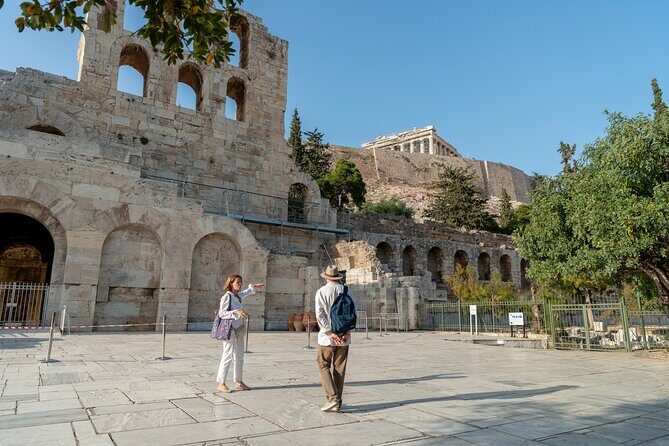
Plan for a steady walk and a fair amount of stair-and-slope time. This is one of those places where good shoes and a calm pace make everything better. The reward is that your guide can keep you oriented while you move between monuments that are close together but not easy to connect visually.
Theater of Dionysus: a stop that explains Greek drama
One of the first major stops is the Ancient Theater of Dionysus, built in the 4th and 5th century BC in a natural amphitheater on the slopes of the Acropolis. The guide frames it as a place where major Greek plays would have debuted. If you like theater history, this is the moment that turns the Acropolis from architecture into culture.
A practical tip: treat this as your “reset” stop. Sit if there’s space, look around, and let the guide connect the setting to the idea of performance in ancient Athens.
Bronze Athena, Propylaia, and the walk that makes the views make sense
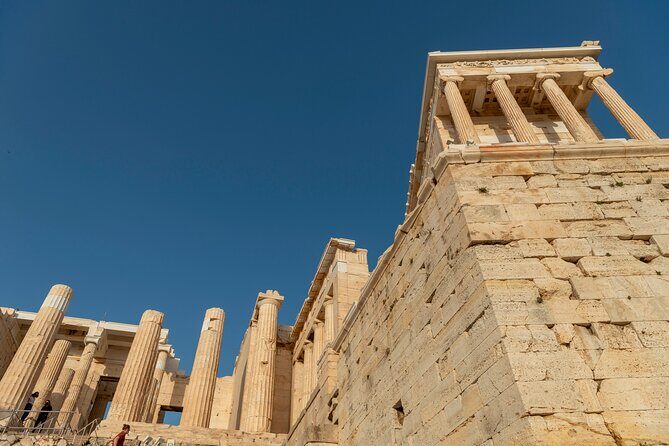
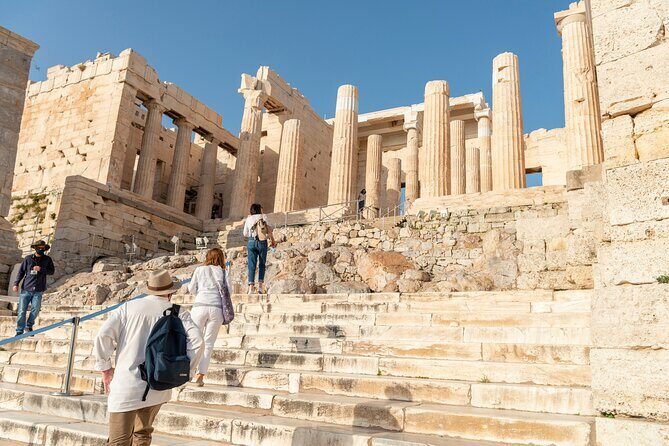
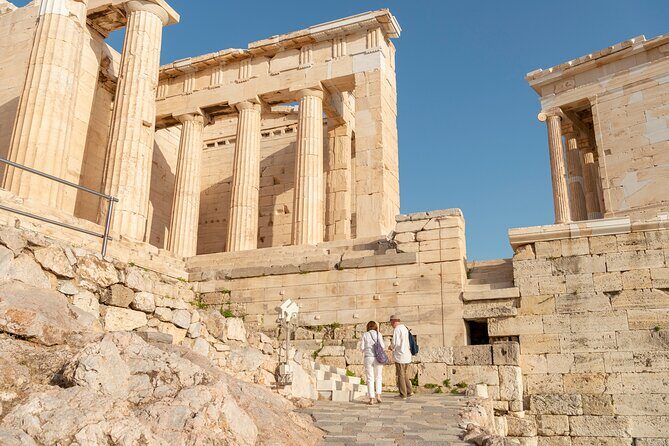
As you move toward the monumental gateway, Propylaia, you’ll hear the legendary image of a large decorated bronze statue of Athena, with the spear tip supposedly visible to incoming ships in sunlight. Even if you take the story as legend, it helps you understand how the Greeks thought about visibility, power, and meaning.
When you reach the gateway and the approach to the main temples, the Acropolis starts feeling staged—like a designed pathway rather than random ruins.
You can also read our reviews of more museum experiences in Athens

Temple of Athena Nike: the detail stop
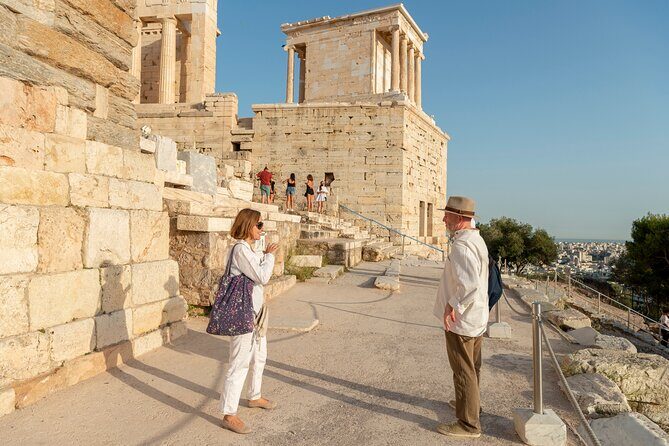
Next up is the Temple of Athena Nike, built around 420 BC and described as a Classical Ionic temple, largely restored, with a prominent position overlooking the city. This is where you learn to notice proportions and design choices instead of only searching for the Parthenon.
Parthenon: the main event, with construction and mythology
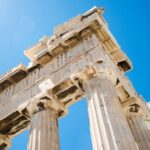
Then comes the big one: the Parthenon, treated here as the pinnacle of the Golden Age. Your guide will slow down and explain its construction, architecture, and historical importance, plus the mythology that connects to what people came here to worship.
If the Acropolis feels like it’s moving too fast, this is the place to ask questions. You’re already there. Use the guide’s pacing to get the explanations you actually want: how the design worked, what symbolism you should look for, and why people cared so much.
Erechtheion and Zeus/Athena myth notes
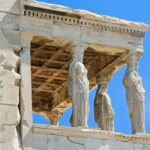
The Erechtheion is another key stop, dedicated to both Zeus and the Goddess Athens. It’s also tied to famous statues, which the guide connects to what you can later see in the museum. If you’ve ever wondered why certain pieces look familiar once you get indoors, this link is why.
Odeon of Herodes Atticus: the building that still performs
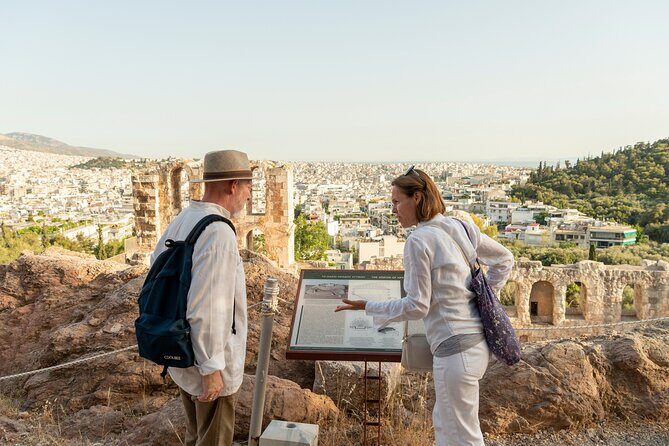
You’ll also see the Odeon of Herodes Atticus, a marble amphitheater built in AD 161 in memory of his wife. The useful part isn’t just that it’s pretty—it continues as a working theater to the present day. That continuity helps the whole site feel less like a museum of the past and more like Athens carrying forward layers.
Acropolis Museum: where the stories click into place
After the outdoor time, the Acropolis Museum is a smart pairing. You get about 80 minutes inside, where original masterpieces are displayed along with models, videos, and interactive installations.
Here’s why I think this part is so valuable: the Acropolis can be hard to interpret from one angle. The museum helps you compare what you saw outside with what survives in a safer, clearer setting. Your guide highlights the most significant objects and explains myth and story connections that would be difficult to grasp on the hillside.
What you’ll notice right away
Look for the way the museum organizes the narrative. It’s not just a room full of artifacts—it’s built to help you understand the evolution of ideas and the meaning behind the objects. If you felt like you were walking past a lot at the top, the museum can turn those impressions into real understanding.
The payoff: seeing what the Acropolis hides
A big reason the museum matters: you can better connect temple myth details to the surviving sculptures. For example, the statues tied to the Erechtheion become easier to interpret once you’re looking at them close-up inside.
Also, it’s where you typically get a much-needed break from sun and heat—especially helpful in summer.
Which option should you choose: Acropolis only, Agora add-on, or 5-hour city tour
This tour comes in several forms, and your best choice depends on how you like to spend time in Athens.
Acropolis only (about 90 minutes up there)
If you want a lighter day, the Acropolis-only option is shorter and ends inside the Acropolis so you can stay longer for photos and city views. The tradeoff is that you lose the museum decoding step, which is where a lot of the meaning lands.
This is also the option that can work well after lunch if you’re trying to catch that honey-colored feel of stone in softer light—plus it can help with crowd management if you choose your time well.
Acropolis + Ancient Agora (3 hours, with a caution on walking)
If you add the Ancient Agora, the story becomes more about daily civic life, not only worship and monumental design. It’s a great thematic expansion.
The practical caution: there is some walking distance between sites with rough cobbles, and it’s noted as not recommended for anyone with limited mobility. If that’s you, stick to the Acropolis and museum pairing, where the walking is still real but the flow is simpler.
City tour luxury vehicle (5 hours, with return transfers)
If you want Athens beyond these two anchor stops, the luxury vehicle option adds a longer day with return transfers from your hotel or cruise ship terminal. A licensed guide accompanies you at the Acropolis and museum, and you’ll also stop for major city landmarks.
The included sights are set: Temple of Zeus, Hadrian’s Arch, Olympic Stadium, Athens Trilogy, and Syntagma Square & Guards. This can be a smart move if it’s your first time in Athens and you want big-picture orientation without spending the day hopping between taxis.
Price and value: what $188.65 covers (and what it doesn’t)
The listed tour price is $188.65 per person for the private experience, roughly 3 hours for the Acropolis + museum option. That’s not cheap, but it’s also not just paying for entry. You’re paying for an accredited guide who can handle the complex flow of the site, manage pacing for your group, and explain the details you’d struggle to piece together alone.
Two important cost notes:
- Entrance tickets are not included. The Acropolis is listed at 30 Euro, and the Acropolis Museum at 20 Euro. That’s €50 per person for the main pairing.
- If you add the Agora, that entrance fee is listed at €20 per person.
So your real planning budget should include tour price plus entrance fees. The good news is the tour includes support for tickets timing: you’ll be contacted after booking to ask if you want help purchasing skip-the-line tickets so your guide has what’s needed ready.
Also look for group discounts if you’re traveling with more people. For groups of 6 or more, there’s a whisper communication system, which can help in a noisy outdoor setting.
Practical tips that make the day feel smoother
This site can be physically demanding, and the tour format is still a lot of walking. To make it feel enjoyable instead of tiring, here are the moves I’d recommend.
Go early if you can
One of the best practical takeaways from guide-style experiences is this: start early in hot months. At around 8:00am in late July, conditions can feel more manageable, and by the time you move into the museum later in the morning, it can still get hot on the hill earlier. If your schedule allows it, early beats late.
Wear for the hill
Plan around slope and stone. Bring comfortable walking shoes, a hat, and water. If you’re the type who likes photos, you’ll want patience too—temple angles take time, and your guide may stop to explain small features you won’t notice on your own.
Ask questions during the stops that matter most
The tour is built around key monuments. If you care about Greek drama, focus questions at the Theater of Dionysus. If you care about design and worship, bring your best questions to the Parthenon and the Temple of Athena Nike. This is how private time earns its price.
Expect some sound challenges outdoors
In a lively site full of other tourists, hearing can be tricky even with a good guide. If sound matters for your group, it helps to go in with the expectation that the museum portion is calmer and the Acropolis portion can be noisier.
Should you book this Acropolis and Acropolis Museum private tour?
If you want more than photos and you like your historical sites explained in plain language, I’d book it. The licensed guide and the Acropolis + museum pairing are the big reasons. You get myth and meaning on the hill, then you get the artifacts and context inside.
I’d especially choose this if:
- you’re short on time and want a clean, structured day
- you prefer asking questions instead of self-guiding
- you want the Acropolis understood through both architecture and objects
I’d hesitate if:
- you hate walking and rough terrain (particularly if you’re considering the Agora add-on)
- you’re on a strict budget and don’t want to add entrance fees on top of the tour price
- you’re expecting a fully hands-off experience with minimal talking—this tour is built around guide storytelling and interaction
If you’re ready to spend your time where it counts—Parthenon-level moments outside, then the deeper answers inside—the Acropolis Museum half is where this tour often justifies itself.
FAQ
How long is the Acropolis and Acropolis Museum private tour?
It runs about 3 hours total, split into roughly 80 minutes at the Acropolis and about 80 minutes at the Acropolis Museum.
Where do I meet the guide?
The guide meets you at the Acropoli Metro Station street level at 7 Makrygianni Street, near the Acropolis Museum.
Are entrance tickets included?
No. Entrance fees are not included. The Acropolis and Acropolis Museum have listed separate prices, and the Ancient Agora fee applies if you choose that option.
Do you offer skip-the-line tickets?
You’ll be contacted after booking to ask if you want the provider to help purchase skip-the-line tickets so the guide has them ready.
Is this really a private tour?
Yes. It’s private, and only your group participates.
What language is the tour offered in?
The tour is offered in English.
Can I upgrade to other sights beyond the Acropolis and museum?
Yes. You can add the Ancient Agora, or choose a 5-hour city tour by luxury vehicle with other major Athens landmarks.
Is the walking manageable for most people?
Most travelers can participate, but the option that includes the Ancient Agora involves some walking over rough cobbles and isn’t recommended for limited mobility.
What happens if I want the tour to end somewhere other than the meeting point?
That depends on your option. The Acropolis-only tour may end inside the Acropolis, the Acropolis + museum option may end at the museum, and the Agora option ends at the Agora.