REVIEW · ATHENS
Acropolis Monuments guided tour with German Speaking Guide
Book on Viator →Operated by Athens Walks Tour Company · Bookable on Viator
The best part of this tour is its clear route through the Acropolis monuments, from the Theater of Dionysus to the Parthenon. A German-speaking archaeologist guide, including Selina on some departures, explains how the site changed across five historical periods without turning the visit into a lecture.
I like the small-group format and the chance to ask questions in German. I also like that the guide covers more than the famous temple, including the healing sanctuary of Asclepius, the Odeon of Herodes Atticus, and the Caryatids of the Erechtheion. The main catch is important: the basic price does not include admission, so check which ticket option you booked.
In This Review
- Key points at a glance
- Why a German-speaking guide changes the Acropolis visit
- Meeting near the Acropolis metro station
- Beginning at the Theater of Dionysus
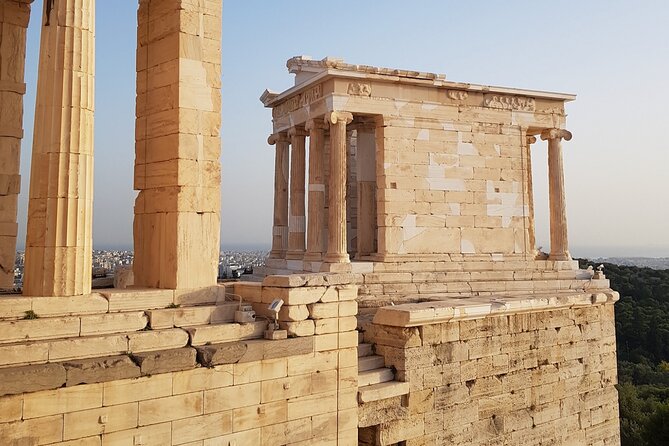
- Passing the Propylaea and Temple of Athena Nike
- The Erechtheion and its Caryatids
- The Parthenon gets the main focus
- The Odeon of Herodes Atticus and the Acropolis setting
- What the $46.26 price really covers
- Afternoon timing and practical comfort
- Who will get the most from this tour
- Should you book the German Acropolis walk?
- FAQ
- Is the entrance fee included?
- How long does the tour last?
- Where does the tour meet?
- Where does the tour end?
- Is the guide German-speaking?
- Which monuments are included?
- What should visitors under 25 bring?
- Can I cancel for a full refund?
Key points at a glance
- A German-speaking archaeologist leads the walk: The guide explains the monuments in clear, approachable language and can answer questions as you go.
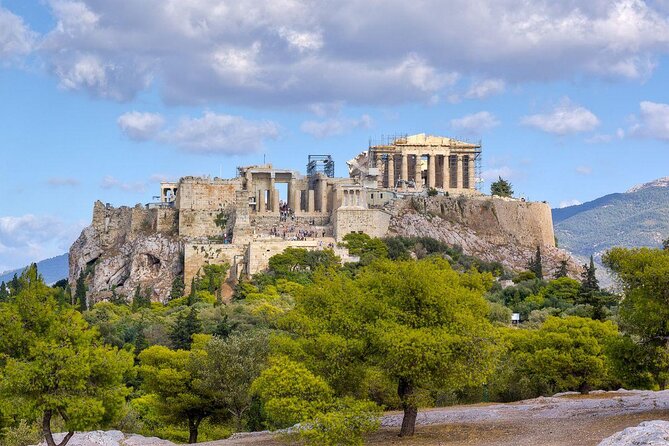
- The route covers the Acropolis highlights: You’ll see the Theater of Dionysus, Propylaea, Temple of Athena Nike, Erechtheion, Parthenon, and Odeon of Herodes Atticus.
- The Parthenon gets about 45 minutes: That gives you time to study the temple and hear why it remains the centerpiece of classical Athens.
- The experience lasts about two hours: It is long enough for a useful introduction, but not a full archaeological study.
- The starting point is near Acropolis metro station: The listed meeting details refer to Athens Walks offices on Athanasiou Diakou Street, with Porinou 5 also provided in the booking information.
- Admission may cost extra: The tour price is listed at $46.26 per person, but the entrance fee is included only with the ticketed option.
Why a German-speaking guide changes the Acropolis visit
The Acropolis is easy to admire and surprisingly easy to misunderstand. You see broken columns, marble figures, theaters, gates, and temples spread across a rocky hill, but without some direction, the site can feel like a collection of ruins rather than one connected story.
This tour gives you that connection in German. The guide is a licensed archaeologist, so the focus is not only on dates and names. You should expect explanations of what each structure was built for, how people used it, and how later eras affected the hill.
The strongest feature is the plain delivery. Selina, one of the guides associated with this departure, is described as explaining the five eras of the Acropolis in a refreshing and easy-to-follow way. That matters here. The site has enough academic detail to overwhelm you, especially if you are seeing it for the first time.
The approach is also not excessively technical. The guide reduces the subject to the essentials without making it dull. You can ask questions, and the format is designed to include the whole group rather than letting one person dominate the conversation.
You can also read our reviews of more guided tours in Athens


Meeting near the Acropolis metro station
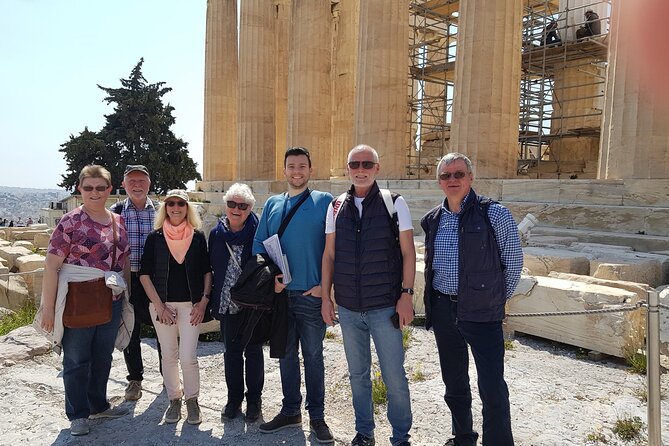
The tour meets at the Athens Walks offices, about five minutes from Acropolis metro station. The supplied meeting information gives Athanasiou Diakou Street 16 as the practical meeting point, while Porinou 5 is also listed. Since both addresses appear in the booking details, check your voucher carefully before setting out.
You can show a paper or electronic voucher. Confirmation is provided at booking, so keep the message easy to access on your phone.
There is no hotel pickup or drop-off. That is normal for an Acropolis walking tour and makes sense in central Athens, but you need to reach the meeting point yourself. The nearby metro station is useful if you are staying elsewhere in the city.
The meeting point is especially important because the Acropolis entrance area can be busy and confusing. Give yourself enough time to find the Athens Walks office rather than trying to arrive at the last second. The tour is scheduled for the afternoon, though the exact starting time should come from your booking confirmation.
Beginning at the Theater of Dionysus
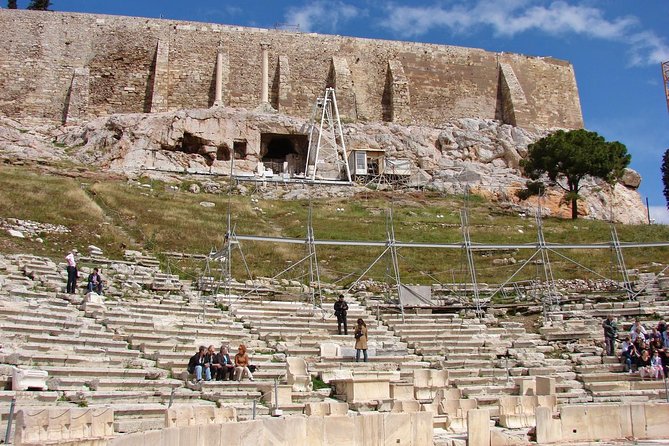
The Theater of Dionysus is one of the first major stops, with about 15 minutes assigned to it. This is where the tour widens your view of Athens. The Acropolis was not only a religious center crowned by the Parthenon. Its slopes also held spaces tied to drama, healing, music, and public life.
The theater is linked to the early development of Western drama. The guide can help you picture the site as a working performance space rather than a semicircle of old stone seats.
Fifteen minutes is enough for orientation and explanation, but not for every detail. You will likely hear the main points and move on. That short stop is useful because it keeps the tour moving uphill toward the monuments at the summit.
The route also includes the healing temple of Asclepius. Its remains help explain the wider religious life of the Acropolis. Ancient visitors came to sacred places for more than worship in the narrow sense. Healing, ritual, performance, and civic identity all met here.
Passing the Propylaea and Temple of Athena Nike
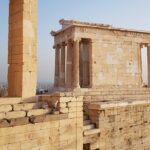
As you approach the summit, the Propylaea serves as the grand gateway to the Acropolis. It was designed to make arrival feel important, and even in its ruined state, it gives you a strong sense of procession.
The Temple of Athena Nike sits near this approach. Its name refers to Athena as wingless victory, a form that kept victory tied to Athens rather than allowing it to fly away. The temple is small compared with the Parthenon, but its position and purpose make it a key stop.
These are the kinds of monuments that can disappear into the background if you visit alone. A guide points out why a smaller building matters and how the entrance route shaped the ancient visitor’s experience.
The Acropolis is exposed and built on uneven ground, so you should expect a moderate amount of walking and standing. The tour requires a moderate fitness level. Comfortable shoes are sensible, even though the stated dress guidance also asks for formal or smart-casual clothing.
The Erechtheion and its Caryatids
The Erechtheion receives about 15 minutes on the route. It is one of the most visually unusual buildings on the hill, with an uneven plan shaped by the sacred traditions connected to the site.
The most famous feature is the Porch of the Caryatids. Instead of ordinary columns, sculpted female figures support the porch roof. Their calm posture makes the structure memorable, but the guide’s explanation adds useful context about why the porch is so important.
This is a good place to listen closely rather than simply take a quick photograph. The Erechtheion does not have the simple, instantly readable form of the Parthenon. Its meaning depends more on the stories and religious associations attached to the ground.
The stop is brief, so you may not have time for a long independent look. That is one tradeoff of a two-hour guided visit. You get a focused explanation of the major features, but you should not expect the slow pace of a private archaeological study.

The Parthenon gets the main focus
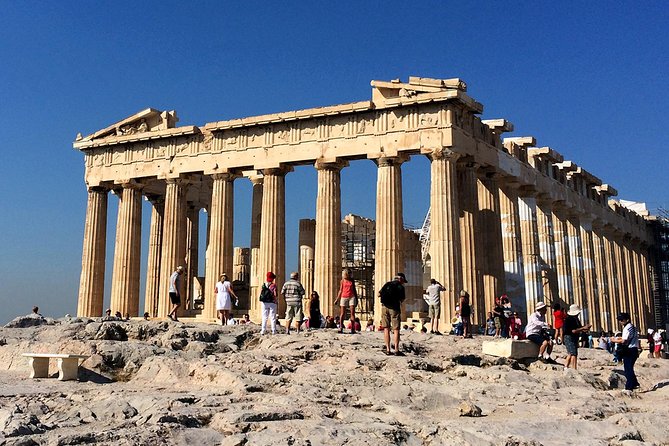
The Parthenon is the tour’s central stop, with about 45 minutes devoted to it. Built as a temple to Athena, it is the most recognizable monument in Greece and the main reason many people come to the Acropolis.
Your guide can help you read the building beyond its familiar outline. The columns, sculptural program, proportions, and position on the summit all formed part of a carefully planned statement about Athens.
The tour description also points to the astonishing collection of sculptures connected with the Acropolis. Some are seen in place, while others are represented through surviving remains and interpretation. The guide’s role is particularly useful here because you can understand what is missing as well as what remains.
The Parthenon stop should give you time to look, listen, and take in the view. From the summit, you can see across much of Athens. The panorama is not a side benefit. It helps explain why this rocky height became such a powerful symbol for the city.
Do not expect to enter the Parthenon itself. The visit is to the Acropolis monuments and their surrounding archaeological area. The admission fee is not included in the standard option, so confirm your selection when booking. If you choose the option with entrance tickets, entry to the Parthenon and site is included as stated in the tour details.
The Odeon of Herodes Atticus and the Acropolis setting
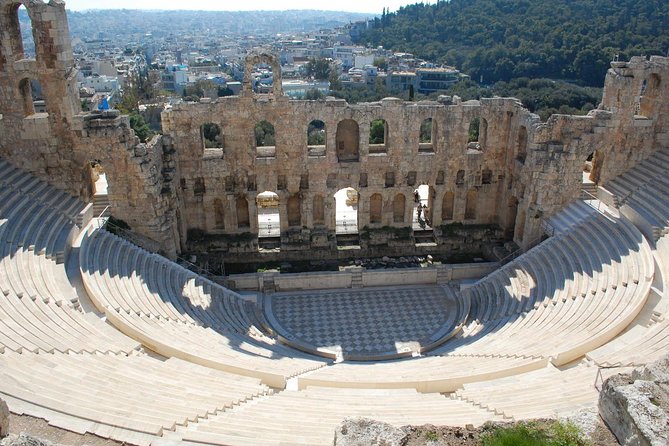
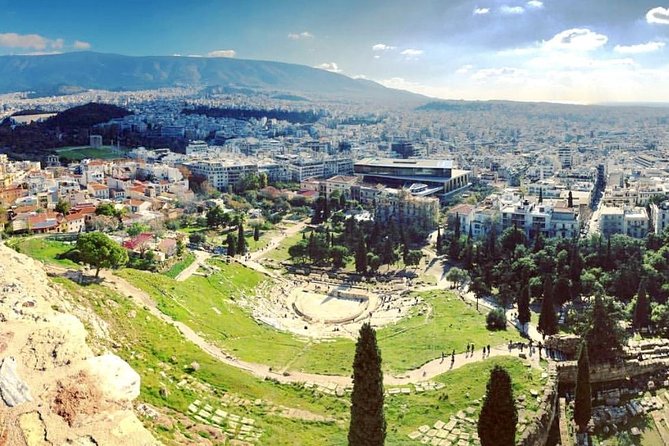
The Odeon of Herodes Atticus is another important monument included in the explanation of the Acropolis. Its large curved structure sits below the summit and remains one of the most striking features visible from the hill.
The guide places the Odeon alongside the older Theater of Dionysus, helping you see that the Acropolis was used and altered across different periods. You are not looking at one frozen moment in time. The hill carries more than 2,500 years of changing religious, cultural, and civic life.
The tour does not give every monument a long stop. Some are viewed as part of the walking route, while the Parthenon receives the largest block of time. That balance works well if this is your first Acropolis visit and you want the main story without spending half a day on one site.
The group size needs a little attention. The information lists a maximum of 25 people in one place and up to 50 in another. Ask Athens Walks to confirm the size of your specific departure. A smaller group usually makes it easier to hear the German commentary and ask questions.
What the $46.26 price really covers
At $46.26 per person, the price can be fair if you value a German-speaking licensed guide and want the major monuments explained in a compact visit. You are paying for structure, language access, and archaeological interpretation, not simply for someone to lead you up the hill.
The entrance fee is the key cost question. The standard tour does not include admission. You can book an option with entrance tickets, but you should compare the final total rather than judging the tour by the advertised base price alone.
The value is strongest for you if:
- You prefer German explanations.
- You want a guide who can answer questions.
- You have about two hours for the Acropolis.
- You would rather understand the site than simply photograph it.
- You are visiting Athens for the first time.
The value is weaker if you already know the monuments well or want a long, unhurried visit. In that case, the fixed route and short stops may feel limiting.
The tour is not a transportation package. Pickup and drop-off are not included, so factor in your own metro ride or walk to the meeting point.
Afternoon timing and practical comfort
The afternoon schedule can suit a day of sightseeing in central Athens. You can visit another nearby museum or neighborhood earlier, then meet the guide for the Acropolis walk.
The site is outdoors, and the walk includes uneven surfaces, stairs, and uphill sections. A moderate fitness level is required. Wear practical shoes, but follow the supplied smart-casual or formal dress guidance if that matters for your booking.
Bring identification if you are under 25. A current passport or ID is required on the day for travelers in that age group. Service animals are allowed.
You can use public transportation to reach the area. The activity ends back at the meeting point, so it is easy to continue your Athens sightseeing afterward.
Free cancellation is available up to 24 hours before the start time for a full refund. Changes or cancellations made inside that 24-hour window are not accepted for a refund, and the cut-off follows local Athens time.
Who will get the most from this tour
This is a good match for German-speaking visitors who want a human explanation of the Acropolis rather than an audio guide or a self-guided walk. The German language is not a minor detail here. Clear interpretation makes it easier to connect the buildings and remember what you saw.
It also suits first-time visitors with limited time. In roughly two hours, you cover the central monuments and get a useful historical framework.
Families with older children may find the short explanations easier to follow than a long academic lecture. The guide’s style, based on the available description of Selina’s approach, aims to include questions and keep the subject understandable.
You may want another option if you need step-free access, a private pace, or extensive time at every structure. The supplied details only establish a moderate fitness requirement and do not promise a private group or special accessibility arrangements.
Should you book the German Acropolis walk?
Book this tour if you want the Acropolis explained in German, prefer a licensed archaeologist, and want the essential monuments covered in a compact afternoon visit. The clearest strengths are the accessible teaching style, the broad route, and the chance to understand why the theater, temples, gateways, and Parthenon belong to one larger story.
Before paying, confirm two things: the exact meeting address and whether your chosen price includes admission. Also ask about the group size, since the published details give two different maximums.
If you want to wander alone for several hours, this will feel too structured. If you want the famous hill to make sense, rather than simply look impressive, the guided format is a sensible buy.
FAQ
Is the entrance fee included?
It is included only if you book the option with entrance tickets. The standard option lists entrance fees as not included.
How long does the tour last?
The tour lasts approximately two hours.
Where does the tour meet?
The meeting information identifies the Athens Walks offices near Acropolis metro station. Athanasiou Diakou Street 16 is listed as about a five-minute walk from the station, and Porinou 5 also appears in the meeting details. Check your voucher for the exact address.
Where does the tour end?
The activity ends back at the meeting point.
Is the guide German-speaking?
Yes. The tour is led by a German-speaking licensed guide and archaeologist.
Which monuments are included?
The route covers the Parthenon, Acropolis, Theater of Dionysus, Erechtheion, Odeon of Herodes Atticus, Propylaea, Temple of Athena Nike, and the healing temple of Asclepius.
What should visitors under 25 bring?
A current valid passport or ID is required on the day for visitors under 25.
Can I cancel for a full refund?
Yes, if you cancel at least 24 hours before the experience start time. Cancellations or changes made less than 24 hours before the start are not eligible for a refund.