REVIEW · ATHENS
Greek dance lessons
Book on GetYourGuide →Operated by GOGO ELECTRIC · Bookable on GetYourGuide
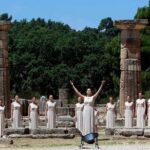
Greek dance is not just a string of steps. It is a way to celebrate, welcome the seasons, express feeling, and honor religious occasions. This 90-minute lesson in Plaka gives you a friendly introduction to that living tradition, with dances from mainland Greece and the Aegean and Ionian islands.
I like the walk through Plaka and the setting in a preserved 18th-century building with a flower-filled courtyard. I also like that the lesson adds costumes and jewelry, so you learn how regional clothing connects with the dances. The main drawback is that the instructor is not named in the information provided, and a short lesson can only offer a sample of Greece’s many dance traditions.
In This Review
- Key points to know
- Starting near the Acropolis Metro Station
- Learning dances from three Greek regions
- Why Greek dance carries more meaning
- Costumes, jewelry, and regional identity
- The setting in George Finlay’s old home
- What the 90 minutes feel like
- How the price compares with other Athens activities
- Who should book this lesson
- Booking and practical details
- Should you book Greek dance lessons?
- FAQ
- Where does the Greek dance lesson meet?
- Where does the dancing take place?
- How long does the activity last?
- How much does the activity cost?
- Which languages are available?
- Is the lesson suitable for beginners?
- What parts of Greece do the dances represent?
- Is the activity wheelchair accessible?
Key points to know
- Plaka meeting point: You meet near the Acropolis Metro Station, then walk about three minutes through the old town to the historic property.
- Beginner-friendly dancing: The lesson is designed to be easy and fun, even if rhythm is not your strong suit.
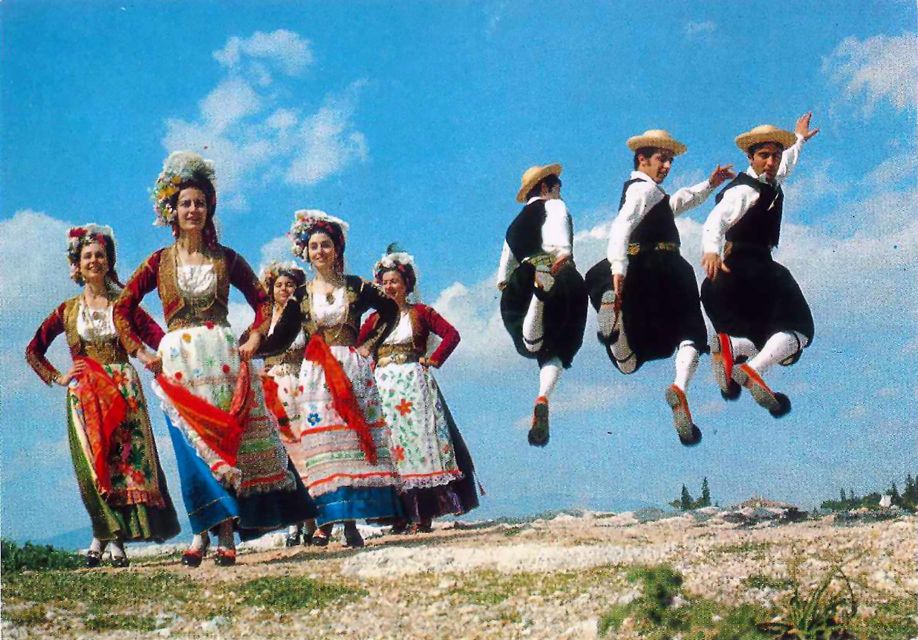
- Several Greek regions: You learn dances linked to the mainland, the Aegean islands, and the Ionian islands.
- Costumes and jewelry included: The lesson covers traditional clothing and the special ornaments worn with it.
- English and Spanish instruction: The dance teacher can lead the session in either language.
- Good value for a cultural activity: At $73 per person, the price makes most sense if you want active participation rather than a show you only watch.
Starting near the Acropolis Metro Station
Your meeting point is an office close to the Acropolis Metro Station. From there, the group walks through Plaka, Athens’ old town, using picturesque lanes to reach the lesson site.
That short walk matters. You do not simply arrive at a studio in an anonymous building. You begin in one of Athens’ most atmospheric neighborhoods, with the Acropolis area close at hand and the old streets setting the tone for the activity.
The destination is the former property of George Finlay, a British historian associated with the Greek Revolution. It is described as a well-preserved four-floor building with a flowery yard. The lesson takes place there, giving the activity a sense of place that a modern dance room would lack.
You should allow enough time to find the office and join the walk without rushing. The stated walking time from the Acropolis Metro area is about three minutes, but the meeting instructions still matter. If you arrive late, you may miss the introduction or the group’s walk to the building.
A few more Athens tours and experiences worth a look



Learning dances from three Greek regions
Once inside, an experienced dance teacher introduces you to Greek folk and traditional dances. The focus is not on one famous routine. Instead, you get a taste of dances from different parts of the country.
The lesson includes traditions from:
- Mainland Greece
- The Aegean islands
- The Ionian islands
That regional spread is one of the best reasons to book this activity. Greek culture is not one uniform set of customs, and dance helps show those differences in a direct, physical way. You learn that dances developed from people’s feelings, celebrations, seasonal customs, and religious events.
The class is presented as easy and fun. That makes it suitable for beginners who might feel nervous about joining a Greek dance lesson. One verified participant specifically found it ideal for beginners and noted that many dances were taught. Another described it as fun and informative.
You should not expect professional-level instruction in 90 minutes. The goal is to give you a usable introduction, not to turn you into a village festival expert. You will likely learn enough movement and rhythm to recognize the spirit of Greek social dancing, while also gaining context about where the dances come from.
If you have little rhythm, do not let that stop you. One five-star rating jokingly admitted that the participant discovered a lack of rhythm. That is a useful warning, but not a reason to skip the class. The format is meant for participation, not auditioning.
Why Greek dance carries more meaning
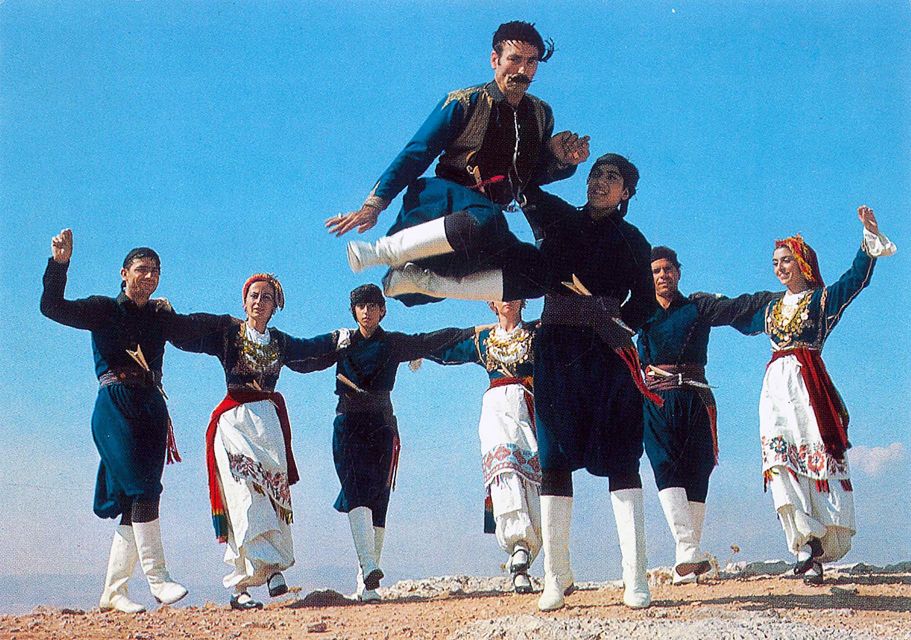
The cultural explanation gives the movement a purpose. Ancient Greeks believed dance came from the gods, and they connected it with religious and ritual events. In modern Greek life, dance still helps people express emotion, celebrate, welcome others, and mark changes in the year.
That background keeps the class from becoming a simple exercise session. You are not only copying footwork. You are learning why dancing matters in Greek communities.
This is also helpful if you have seen Greek dancing at a restaurant or festival and wondered what you were watching. The lesson gives you a basic frame for understanding group movement, celebration, and regional identity.
The experience does not present a full academic study, and no detailed list of dances is provided in advance. That uncertainty can be a small disadvantage if you want to master one specific dance. For most people, though, the wider introduction is more useful than a narrowly focused class.
Costumes, jewelry, and regional identity
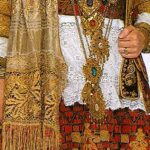
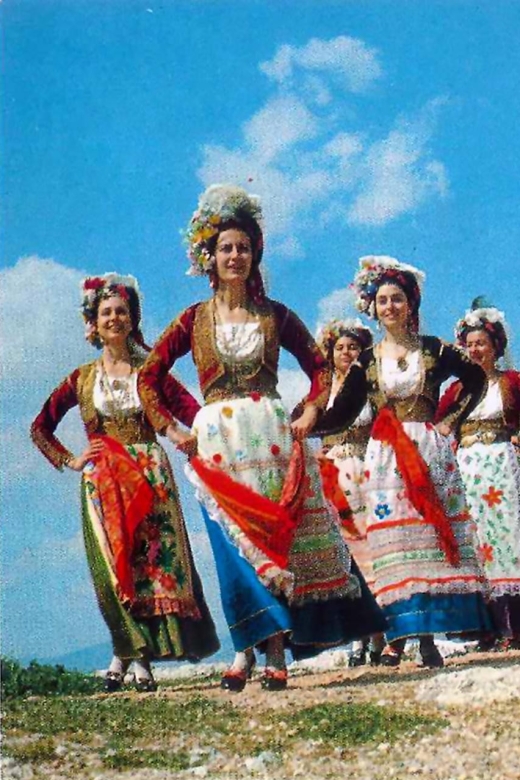
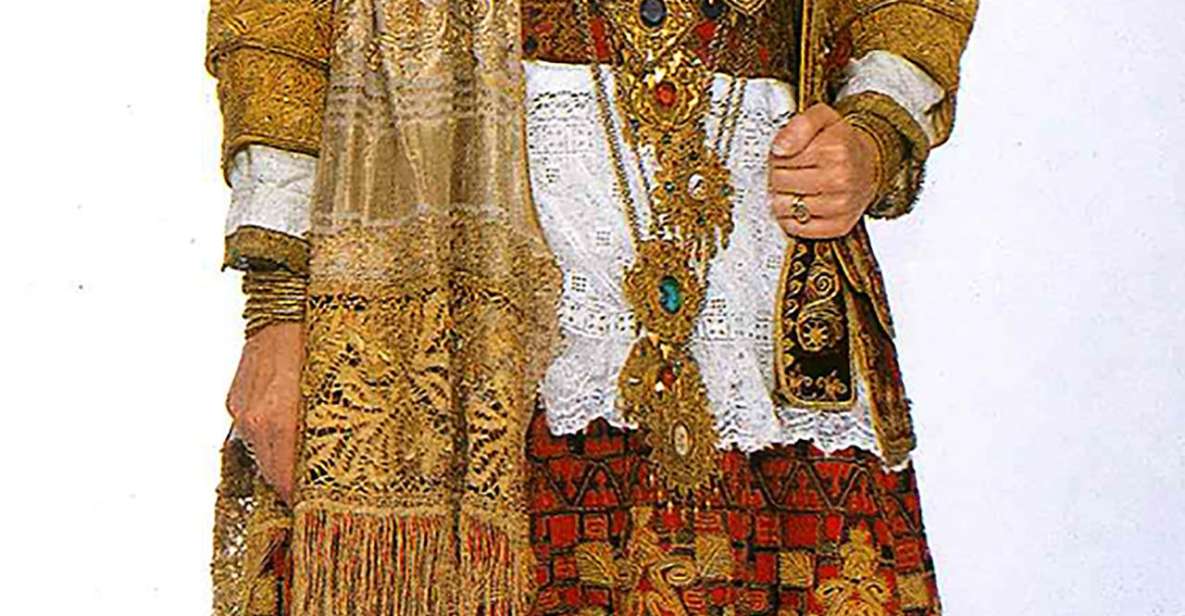
The lesson includes an introduction to Greek costumes and the special jewelry worn with them. You also receive general information about Greek clothing.
This part adds welcome variety. A 90-minute dance class can become tiring, especially for people who are not used to following repeated steps. The clothing section gives you time to look closely, listen, and connect the dances with the people and regions that developed them.
Traditional costumes are not just decoration. The information provided emphasizes the variety of Greek clothing, which helps explain why a dance from one region may look and feel different from one elsewhere. Jewelry also matters because it forms part of the complete dress, rather than being an unrelated accessory.
The exact costumes and jewelry displayed are not specified, so you should not book this expecting a particular outfit or museum-style collection. Think of this as a cultural introduction built into the dance lesson. The value comes from seeing clothing as part of regional tradition, not from a long exhibition visit.
The setting in George Finlay’s old home
The building is one of the activity’s strongest details. You reach a preserved four-floor property linked with George Finlay, a British historian of the Greek Revolution, and practice in its flower-filled courtyard.
A historic home changes the mood of the lesson. The courtyard offers a more distinctive setting than a hotel conference room, and the Plaka location makes it easy to pair the class with sightseeing around the Acropolis and old Athens.
The experience does not include transportation. You walk from the office to the building, then return on foot after the lesson. That keeps the format simple and avoids spending time loading into a vehicle for a very short transfer.
The activity is listed as wheelchair accessible, but the same information also says it is not suitable for wheelchair users. That is a clear point of confusion. If you use a wheelchair, contact the provider before paying and ask about the office, the Plaka route, the historic building, and the courtyard. Do not rely on the conflicting labels alone.




What the 90 minutes feel like
The class length is short enough to fit into a busy Athens day. It is long enough to include dancing, regional context, and the costume and jewelry presentation without turning into a half-day commitment.
You will likely spend the opening portion getting introduced to the activity and the cultural background. The main part centers on learning and practicing Greek folk dances. The clothing discussion forms another part of the session, giving you a change of pace from physical movement.
Because the instructor is described as experienced and the lesson as beginner-friendly, the atmosphere should suit people who are trying Greek dancing for the first time. Instruction is available in English and Spanish. No other languages are listed.
The group size is not provided. That is worth checking if you prefer either a private lesson or a small class. A smaller group usually allows more individual correction, while a larger group may feel more like a social dance gathering. The available information does not promise either format.
Wear something that allows you to move comfortably. The activity information does not list a dress code or special footwear requirement, so you should not assume that costumes are provided for participants. The costume portion is for learning about traditional clothing, not a stated dress-up session.
How the price compares with other Athens activities
The cost is $73 per person. That is not the cheapest way to spend 90 minutes in Athens, but it can be fair value if you want an active cultural lesson in a historic setting.
You are paying for more than dance instruction. The price includes the Plaka-based setting, an English- or Spanish-speaking teacher, an introduction to regional dances, and information about costumes and jewelry. There is also value in learning something you can recognize later at a Greek celebration or performance.
The price is less compelling if you only want to watch traditional dancing. A performance would give you more polished movement, while this activity asks you to take part, make mistakes, and learn by doing.
It also makes more sense for people who already plan to spend time around the Acropolis. The meeting point is close to the Acropolis Metro Station, and the walk through Plaka means you can place the lesson naturally within a day in central Athens.
The current score is 4.6 out of 5 from six ratings. The strongest themes are clear: the class is professional, fun, informative, and friendly to beginners. The small number of ratings means I would treat the score as encouraging rather than final proof of a consistent experience.
Who should book this lesson
I would recommend it to first-time visitors who want a cultural activity with participation built in. You get history and context, but you also move, laugh, and learn a few steps instead of sitting through a lecture.
It suits couples, families, and friends who enjoy trying something slightly outside the usual Athens sightseeing routine. It may also work well for solo visitors because the format creates a shared activity without requiring you to arrive with a dance partner.
Beginners are a particularly good match. The lesson is designed to be easy, and the strongest praise focuses on the number of dances taught and the clear introduction for people without prior experience.
You may want to skip it if you dislike group movement, have strict mobility needs that are not resolved with the provider, or want an advanced lesson in one specific regional dance. The class gives breadth and cultural context, not specialized training.
Booking and practical details
You can cancel up to 24 hours before the activity for a full refund. A reserve-now, pay-later option is also available, which helps if your Athens schedule is still changing.
Reservations are accepted 48 hours before the activity. Do not leave this until the last moment if you have a fixed itinerary.
The duration is 1.5 hours, and starting times depend on availability. Check the schedule before arranging a meal, museum visit, or Acropolis entry immediately afterward.
The experience provider is GOGO ELECTRIC. The instructor’s personal name is not provided, so you should focus your decision on the format and content rather than expecting a particular teacher.
Should you book Greek dance lessons?
Book this if you want to connect with Greece through movement, regional culture, clothing, and a historic Plaka setting. The beginner-friendly format, three broad regional sources, and costume presentation give the $73 price a reasonable cultural payoff.
Skip it if you want a formal performance, a private advanced lesson, or a clearly defined list of dances before booking. For most visitors, though, this is a cheerful and practical way to add something different to an Athens itinerary. You may leave with imperfect footwork, but you will understand more about why Greek dance belongs so firmly in everyday life.
FAQ
Where does the Greek dance lesson meet?
You meet at an office close to the Acropolis Metro Station. The office is about a three-minute walk from the station, followed by a walk through Plaka to the lesson location.
Where does the dancing take place?
The lesson takes place at the property of George Finlay, a well-preserved four-floor building with a flower-filled courtyard in Plaka.
How long does the activity last?
The Greek dance lesson lasts 1.5 hours.
How much does the activity cost?
The listed price is $73 per person.
Which languages are available?
The instructor can teach in English or Spanish.
Is the lesson suitable for beginners?
Yes. The lesson is presented as easy and fun, and it is suitable for people learning Greek folk dancing for the first time.
What parts of Greece do the dances represent?
The lesson includes well-known dances from mainland Greece, the Aegean islands, and the Ionian islands.
Is the activity wheelchair accessible?
The activity information gives conflicting details. It is listed as wheelchair accessible in one section but also says it is not suitable for wheelchair users. Contact GOGO ELECTRIC before booking to confirm access for your needs.