REVIEW · SARONIC GULF ISLANDS
Aegina’s island highlights
Book on Viator →Operated by AEGINA DREAM TRAVEL · Bookable on Viator
Aegina’s best surprise is how much island life fits into a short outing. In about four hours, you move from a hilltop Byzantine settlement and a major Orthodox monastery to an ancient temple, a sandy beach, and the island’s famous pistachio farms. It is a useful way to see far more than the port town.
I like the mix of sacred, ancient, and everyday Aegina, and I like having a local guide explain what you are seeing instead of piecing the island together from bus stops and signs. The included drink stop, air-conditioned vehicle, WiFi, and bottled water also make the day easy.
The main drawback is the price: $156.53 per person is a serious charge for four hours, especially if your group is small. The entrance fee for the Temple of Aphaia is extra, and the schedule leaves little time for a full beach visit, long walks, or a relaxed meal.
In This Review
- Key points at a glance
- Why this four-hour tour works for Aegina
- Paliachora, Aegina’s abandoned hilltop capital
- Agios Nektarios and the Holy Trinity Monastery
- The Temple of Aphaia, the tour’s main historical prize
- Agia Marina for a coastal pause
- Pistachios, the taste of Aegina
- How the guiding shapes the experience
- Is $156.53 a fair price?
- Practical details to sort out before you go
- Who should book this Aegina outing?
- FAQ
- How long does the Aegina island tour last?
- What time does the tour start?
- Where does the tour meet?
- Can I be picked up at the port?
- Is admission to the Temple of Aphaia included?
- What is included in the tour price?
- Is the beach stop long enough for swimming?
- How many people can join the tour?
- What is the cancellation policy?
Key points at a glance
- Five very different stops: Medieval Paliachora, Agios Nektarios Monastery, the Temple of Aphaia, Agia Marina beach, and a pistachio stop.
- A strong short-day option: You can see the island’s major sights without managing rural bus connections.
- Local guiding matters: Guides including Maria, Leon, Pandelic, and Vanessa have led the route, with history, food, and restaurant advice woven into the drive.
- The Temple of Aphaia is the high point: The hilltop sanctuary is well preserved and often feels calmer than Athens’ major ancient sites.
- Pickup can be arranged: Hotel, villa, and port pickup may be available, but confirm the exact meeting place in advance.
- Plan for the extra fee: Admission to Aphaia is not included, and there are no early restroom stops according to one family’s experience.
Why this four-hour tour works for Aegina
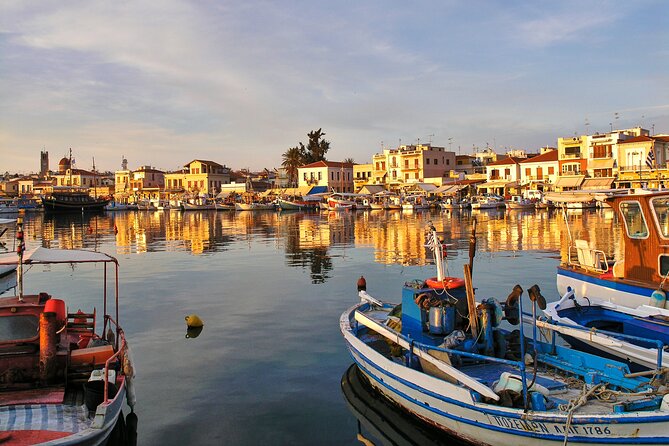
Aegina is close enough to Athens for a day trip, but its character is different from the capital. The island gives you old churches, pine-covered hills, fishing and beach villages, and the scent of pistachio orchards. The trouble is that its best sights are spread out.
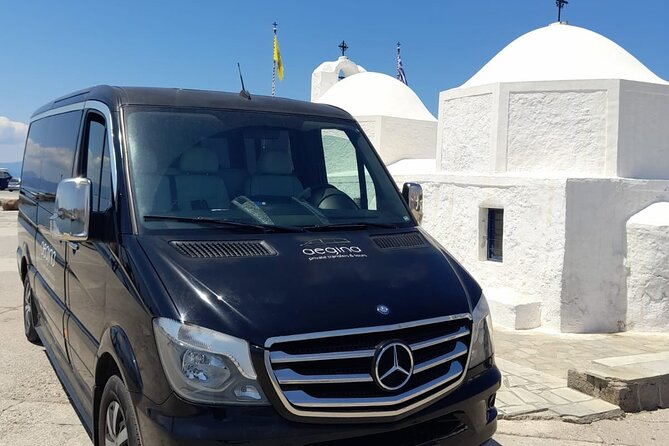
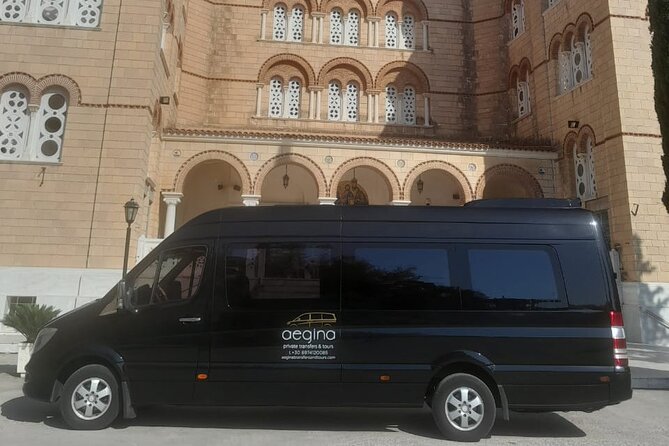
This outing solves that problem with an air-conditioned vehicle and a group capped at 15 people. You are not tied to a public bus timetable or forced to choose between the monastery and the temple. Pickup can be arranged from many hotels and villas, and the tour can also collect you at the port, which is especially useful if you are coming over by ferry.
The stated start time is 10:00 a.m., and the outing returns to its meeting point. If your ferry schedule is tight, ask about timing before booking. Pandelic has adjusted meeting times around ferry arrivals, but you should not assume every departure can be changed.
The route is best viewed as an island sampler. You will get a clear sense of Aegina, but not a slow, unhurried day at every stop. That tradeoff is fair for a four-hour tour, as long as you know what you are buying.
You can also read our reviews of more tours and experiences in Saronic Gulf Islands.


Paliachora, Aegina’s abandoned hilltop capital
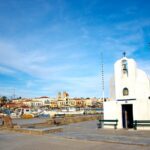
The first stop is Paliachora Aiginas, the medieval capital of Aegina. You have about 45 minutes here, with no admission fee.
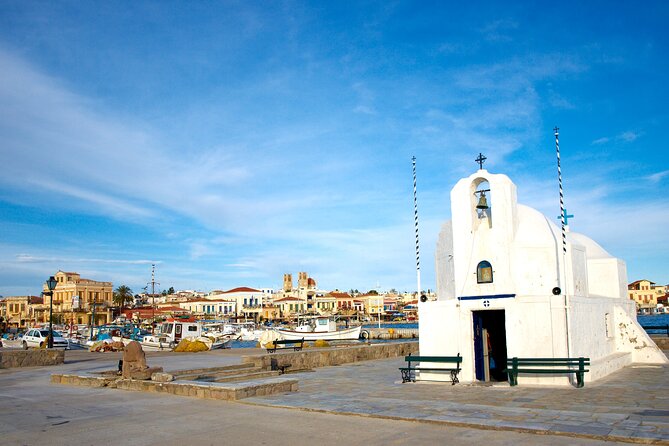
The appeal is not one grand monument. It is the collection of old churches spread across the hillside, many with wall paintings. The setting gives you a feel for an earlier Aegina, when communities sought safer ground inland and religious buildings served as the heart of daily life.
You should expect uneven ground and a short walk rather than a polished museum visit. The stop is best for people who enjoy quiet ruins, small chapels, and traces of local history. It may feel brief if you want time to examine every church or walk farther up the hill.
This is also one of the places where a local guide adds real value. Without context, a small stone church can look like just another ruin. With an explanation of Paliachora’s role as the island’s medieval capital, the scattered buildings make more sense.
One family took a trail to see several of the island’s 365 old small churches on the high ground. The supplied route gives you 45 minutes, so the exact walking distance may depend on the guide and conditions. Wear shoes suited to uneven paths, and do not count on this stop as a quick roadside photo break.
Agios Nektarios and the Holy Trinity Monastery
The next stop lasts about 30 minutes and brings you to the Holy Trinity Monastery, also called Agios Nektarios Monastery. Admission is free.
This is one of Greece’s largest Orthodox monasteries and an important pilgrimage site across the Balkans. Agios Nektarios is a modern saint of the Orthodox Church, and the monastery is tied closely to his life and work. He settled on Aegina 12 years before his death, and the monastery operating today began in 1904 as a place where he hoped to spend his final years.
Just below the monastery is the newer church of Saint Nektarios. Its enormous octagonal building was completed in 1999 and contains mosaics and marble carving. The scale can surprise you, especially after the small churches at Paliachora.
You do not need to be interested in religious tourism to appreciate the visit, but you should be ready for a genuinely religious setting. This is not simply an old church with a few photographs. People come to pray, worship, and seek healing, so quiet and respectful behavior is important.
Thirty minutes is enough for a focused visit, but it is not enough for a long inspection of every detail. If this is the stop that interests you most, ask your guide how the time will be used. The monastery and the large church are close enough to visit together, but the schedule remains tight.
The Temple of Aphaia, the tour’s main historical prize
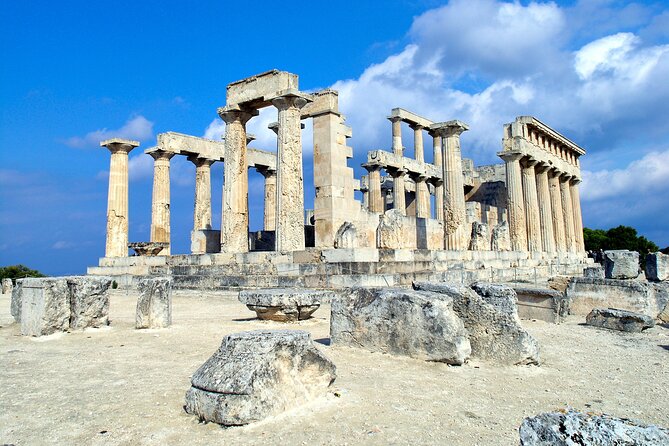
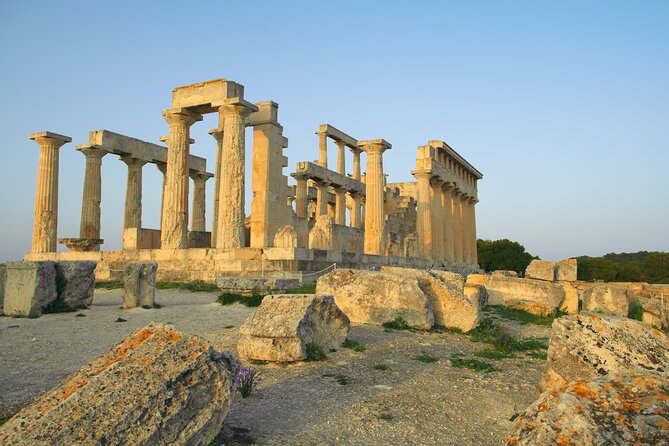
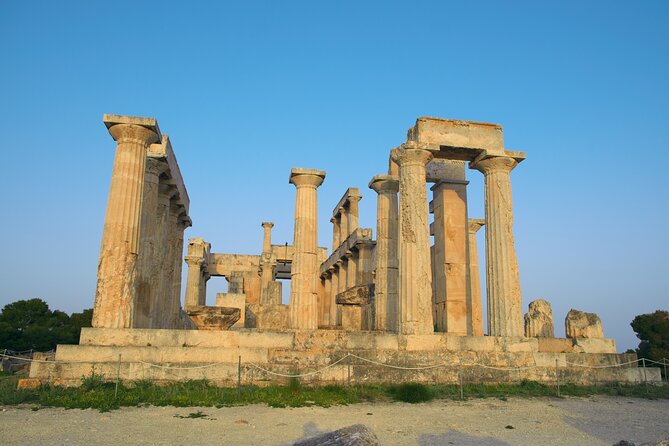
The Temple of Aphaia is the standout stop for anyone interested in ancient Greece. You have about 45 minutes, and admission is not included. One quoted admission price was €10, but confirm the current fee before visiting because ticket prices can change.
The temple sits on a pine-covered hill at about 160 meters. The approach is part of the pleasure. You get a broad island view, then reach a sanctuary that feels more remote than the Acropolis. The ancient site is often less crowded than Athens’ main hill, making it easier to study the columns and take photographs without a constant stream of people around you.
The sanctuary was used from prehistoric times, but it flourished during the Archaic period. Three temples were built in succession on the same spot. The surviving temple was built around 500 to 490 BC after an earlier structure was damaged by fire in 510 BC.
The Aegineans rebuilt it in a form that displayed the work of the Aeginean school of sculpture. Its pediments, once decorated with sculpture, were famous in antiquity. Along with the Parthenon and the Temple of Poseidon at Sounion, Aphaia forms the so-called sacred triangle of antiquity.
The temple’s setting helps you understand why ancient builders chose this hill. Pine trees frame the ruins, and the height gives the sanctuary a sense of separation from the coast below. You can appreciate the architecture here without needing a long lecture, though an archaeology-trained guide such as Vanessa can add useful detail about the site and its place in Greek history.
The 45-minute stop gives you time to look around, but the extra admission fee matters when judging the total cost. Wear practical shoes, bring water, and protect yourself from the sun. Bottled water is supplied, and the vehicle is air-conditioned, but the site itself is outdoors.
Agia Marina for a coastal pause
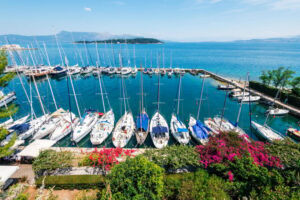
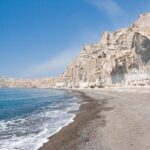
After the ancient site, the tour heads to Paralia Agias Marinas for about an hour. This is Aegina’s longest sandy beach, and it has Blue Flag status.
This part of the day is flexible in feel. You might sit by the water, take photographs, have lunch, or swim if the weather is good. There are also smaller bays and rocky places nearby for people who prefer a more rugged coast.
Do not expect a full beach holiday within this tour. The hour can pass quickly once you account for walking, choosing food, and getting back to the vehicle. A seaside lunch and coffee fit well, but a proper swim may feel rushed.
Still, the stop gives the day a welcome change of pace. After churches and ruins, you get open water, bright island colors, and time to sit down. Several guides have also offered restaurant suggestions, which is helpful if you want something more than a quick snack.
If swimming is important to you, confirm how much free time you will have. Weather may also change the plan. One family had spectacular conditions for swimming, while another had cooler weather and chose lunch and coffee instead.


Pistachios, the taste of Aegina
Aegina is famous for the quality of its pistachios, and the tour includes a short stop at a pistachio farm. You have about 15 minutes, with no admission charge.
This is a brief introduction rather than a full agricultural visit. Your guide explains how pistachios are grown, and you can usually sample or buy pistachio products. The food stop may include sweets, snacks, or ice cream, depending on the location and what is available.
I like this addition because it connects the tour to present-day Aegina. Ancient temples tell you about the past, but pistachios show how the island earns its place in Greek food culture now. You may want to leave room in your bag for purchases, though the schedule gives you little time for a leisurely shop.
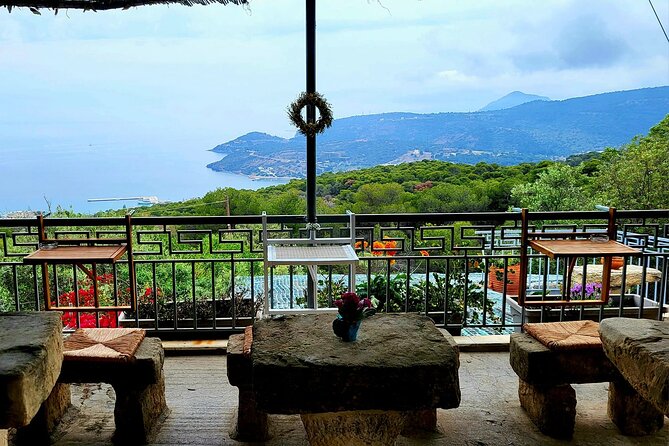
The included tasting also includes a traditional alcoholic drink, either tsipouro or ouzo, with a small snack. Homemade lemonade is offered as an alternative. The tasting takes place at a scenic spot with a view toward the Aegean and the Temple of Aphaia, so it is more than a quick counter stop.
If you do not drink alcohol, choose the lemonade. Families should note that the listed tasting is not presented as a full meal, so plan on lunch at Agia Marina or another stop arranged with the guide.
How the guiding shapes the experience
The vehicle gets you around Aegina, but the guide is what turns the drive into a tour. Maria has provided island history throughout the route, Leon has explained the island while driving along the shore road and through the interior, and Pandelic has offered local suggestions for food and shopping. Vanessa, an archaeology graduate, has added background about the ancient sites.
These names do not guarantee who will lead your departure. They do show the kind of guide you may receive: someone who can connect the monastery, ancient sanctuary, villages, beach, and pistachio farms into one story.
The best part of a local guide is the flexibility. If the group wants more time for photographs, lunch, or a particular church, the guide may be able to adjust the rhythm. That does not mean every stop can be extended. Four hours is still four hours, and ferry departures or other bookings may limit changes.
The group size can reach 15 people. That is small enough for a more personal feel than a large coach, but it may not feel private. One booking described a private tour, so ask directly if you need an exclusive vehicle rather than a small-group departure.
Is $156.53 a fair price?
At $156.53 per person, this is not the cheapest way to see Aegina. The price makes more sense if you value door-to-door pickup, a comfortable vehicle, local commentary, and the ability to combine sights that are scattered around the island.
You also receive bottled water, WiFi on board, air conditioning, and the traditional drink or lemonade tasting. Those extras are useful, but they do not erase the fact that the Temple of Aphaia costs extra and the entire experience lasts only about four hours.
For a solo visitor or couple, the cost may feel steep. For a family or small group splitting a vehicle, the convenience becomes easier to justify. Compare it with the time and effort of arranging taxis or public transport between Paliachora, Agios Nektarios, Aphaia, and Agia Marina.
The tour is also more valuable on a first visit. If you already know Aegina and want a long beach day or extended time in the port, you may get more from planning independently. If you are arriving by ferry for one day, this route gives you a practical overview with little transport stress.
Practical details to sort out before you go
The stated meeting point is at Leoforos N. Kazantzaki 66 in Egina, with the tour ending back there. Pickup from many hotels and villas can be arranged, and port pickup may be possible. Confirm the exact place and instructions, since one person found the pickup directions confusing before the agent clarified them.
The experience is offered in English. Confirmation is sent within 48 hours, subject to availability. Service animals are allowed, public transportation is nearby, and most people can participate.
Use the ferry restroom before the tour if possible. One family found there were no restroom stops early in the route, and Paliachora and the temple are not places where you should expect standard facilities.
Wear shoes for uneven paths and bring sun protection. The tour provides water, but a small personal snack may help if you plan to eat later at the beach. If you want to swim, bring what you need, while remembering that the schedule may favor lunch and sightseeing instead.
Free cancellation is available up to 24 hours before the start time for a full refund. Changes or cancellations made less than 24 hours before departure are not accepted for a refund.
Who should book this Aegina outing?
I would choose this tour if you are taking a day trip from Athens, arriving by ferry, or staying on Aegina without a rental car. It suits first-time visitors who want the island’s major sights explained in plain English and families who prefer a comfortable vehicle to a day of route planning.
It is also a good match for anyone who wants more than the port town. Paliachora and the monastery provide cultural depth, Aphaia supplies the major ancient site, Agia Marina gives you the coast, and the pistachio stop adds a local food note.
I would hesitate if you want a slow archaeological visit, several hours of swimming, or a low-cost bus tour. The schedule is compact, the temple ticket costs extra, and the price is high for a half-day.
Book it if your priority is seeing the shape of Aegina in one well-organized outing. Skip it if you have several days and enjoy arranging your own beaches, villages, and meals at a slower pace.
FAQ
How long does the Aegina island tour last?
The tour lasts approximately four hours and returns to the starting meeting point.
What time does the tour start?
The listed start time is 10:00 a.m.
Where does the tour meet?
The meeting point is Leoforos N. Kazantzaki 66, Egina 180 10, Greece. Pickup can also be arranged from many hotels and villas on the island.
Can I be picked up at the port?
Port pickup has been provided for some departures, including ferry day trips. Confirm the exact pickup details when booking.
Is admission to the Temple of Aphaia included?
No. Entrance to the Temple of Aphaia is not included in the tour price.
What is included in the tour price?
The tour includes an air-conditioned vehicle, WiFi on board, bottled water, and a tasting of tsipouro or ouzo with a small snack. Homemade lemonade is available as an alternative.
Is the beach stop long enough for swimming?
The stop at Agia Marina lasts about one hour. You may have time to swim if the weather and schedule allow, but the stop can also be used for lunch, coffee, or sightseeing.
How many people can join the tour?
The maximum group size is 15 people.
What is the cancellation policy?
You can cancel up to 24 hours before the experience starts for a full refund. Cancellations or changes made less than 24 hours before the start time are not accepted for a refund.