REVIEW · ATHENS
Athens: Acropolis, Parthenon and Acropolis Museum Guided Tour
Book on Viator →Operated by Athenian Tours · Bookable on Viator
Acropolis legends click faster with a guide. This Athens tour pairs the Acropolis walk with the Acropolis Museum, using an English licensed guide to connect the monuments above ground to the artifacts inside.
I love two things most: first, the way the guide turns stone buildings into living stories of theater, religion, and power. Second, you get to see originals like archaic statues and major Parthenon pieces in the museum, instead of only looking at copies up on the hill.
One note before you book: the museum visit is structured and time-limited, so if you love slow wandering and long reading, you may feel a bit rushed.
In This Review
- Key things I’d circle before you go
- Why a guided Acropolis-and-museum combo is worth it
- Getting to the Acropolis: your real first “stop” is timing
- Acropolis hill walk: Dionysus Theater to the Parthenon skyline
- What this part gets right (and what to watch)
- “Skip the line” is not one universal thing here
- The Acropolis Museum: where the artifacts explain the ruins
- Ground floor: daily life, not just big marble
- First floor: archaic statues and the entrance story
- Last floor: the Parthenon frieze and the view back
- Parthenon views, Temple of Athena Nike, and the Erechtheion puzzle
- Pace, breaks, and what you should bring
- Price and value: what you pay, what you might still owe
- Who should book this guided Acropolis and Museum tour
- Should you book the Acropolis, Parthenon, and Acropolis Museum guided tour?
- FAQ
- Is this tour offered in English?
- How long is the Acropolis and museum guided tour?
- Where do I meet the guide?
- Are Acropolis and Acropolis Museum tickets included?
- Can I skip the line to the Acropolis?
- Is the tour suitable for kids or people with mobility issues?
Key things I’d circle before you go

- Small group size (max 24) helps you keep your bearings and actually hear the guide.
- Central meetup at Mitseon 2, near the Acropolis Metro, makes starting less stressful.
- Ticket strategy matters: you can skip ticket offices when tickets are selected, but you cannot skip the Acropolis line.
- Original sculpture payoff: expect genuine Parthenon material and other select finds, not just good views.
- A hill you hike, with planned breaks (including a bathroom stop) instead of constant standing around.
- Tight timing due to strict Acropolis entry windows, so being on time is not optional.
Why a guided Acropolis-and-museum combo is worth it

The Acropolis is famous for a reason, but it’s also easy to feel like you’re just pointing at big ruins. A guide changes that quickly. You start hearing what you’re looking at—why it was built, who it served, and how the site kept changing over time.
This tour is especially good because it links two worlds: the hill with the big Doric shapes (hello, Parthenon) and the museum that explains what life looked like around those monuments. When you see the Parthenon frieze in the museum right after walking the viewpoints above it, the details feel way more real.
It’s also practical. You meet at Mitseon 2 in central Athens, then move through the main stops at a comfortable group pace. Multiple guides have led the experience—people mention guides like Angel, Natasha, Maria, Simon, Irene, Chrysa, Theodora, and Bernie—and the common thread is that they keep the pace moving while answering questions.
You can also read our reviews of more guided tours in Athens



Getting to the Acropolis: your real first “stop” is timing
This tour starts at the Athenian Tours office at Mitseon 2, Athens 11742. Plan to arrive at least 15 minutes early. The Acropolis has strict entry times, and latecomers can’t be accommodated. That rule isn’t meant to be annoying; it’s because the site controls entry windows tightly.
The meeting point is near public transportation, so you’re not stuck making a complicated route from the center of town. Also, you end at the Acropolis Museum area (Dionysiou Areopagitou 15), which makes it easy to keep going after the tour instead of backtracking.
For the day-of comfort checklist, pack water and plan for weather. On the hill there’s no proper café stop—there’s a water fountain—so you’ll want a bottle. If it’s cold or windy, Athens can still feel sharp up top, and in winter the “wind layer” can catch you off guard.
Acropolis hill walk: Dionysus Theater to the Parthenon skyline

The heart of the tour is a guided hike around the Acropolis monuments, starting on the slopes and climbing toward the main temples. You’ll hit the cultural anchors first, not just the postcard view.
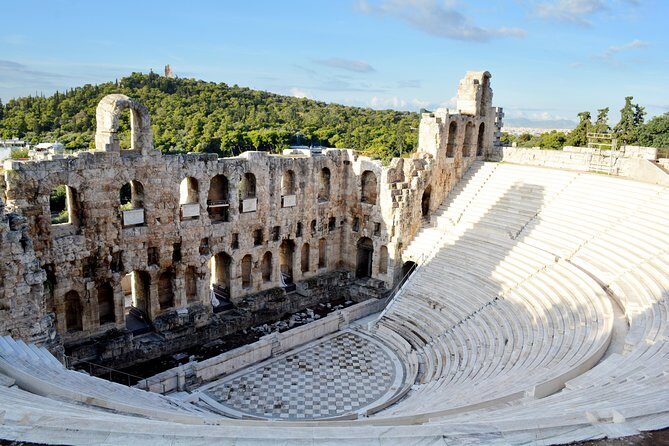
You begin near the Dionysus Theater, tied to the origins of famous ancient comedies and tragedies. That framing helps you see the site as more than architecture. This was a stage for ideas—myth, politics, religion—performed by real people, not just “ancient Greeks, somewhere over there.”
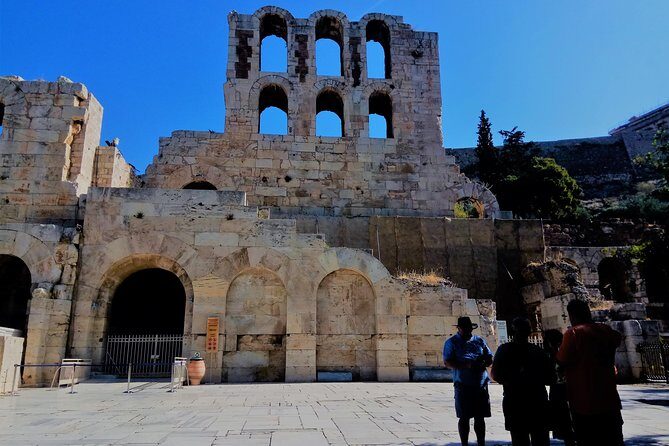
As you move along, you also pass through the area around the Odeon of Herodes Atticus and the sanctuary of Asclepius, the healing god. Even if you don’t know Greek mythology, the guide’s job here is to connect the dots so you don’t feel lost. You’ll also walk past the Roman-era layer of the story through the Roman Herodion theater, built in memory of Herodes Atticus’s wife.
Then come the main ceremonial landmarks near the top:
- Propylaea, the grand gateway to the Acropolis.
- Temple of Athena Nike, focused on victory and view-worthy angles for photos.
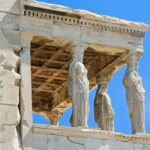
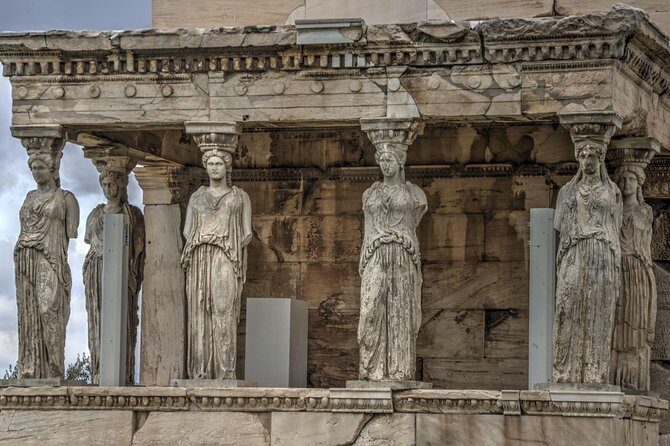
- Erechtheion, famous for its asymmetrical layout and the sculpted female figures used as supports (the famous caryatid concept).
- And finally, the Parthenon, built in the 5th century B.C as a symbol strongly linked to Athena and the height of Athens during Pericles’ era.
You’ll get a short break before continuing to the museum, and you can use the bathroom at that point. That matters because the Acropolis hill is steep and some paths can be slippery when wet.
What this part gets right (and what to watch)
What you’ll like: the order of sites makes the meanings click. Theater and healing show up early, then you move into the political and architectural centerpiece. The time spent on the Parthenon area isn’t just a photo stop—it’s tied to the Doric order and the site’s purpose.
What to watch: you are walking on uneven, steep ground. If it’s rainy or icy, go slow. Your shoes matter more than your Instagram plan.
“Skip the line” is not one universal thing here
Here’s the part that confuses people: the tour can include skip-the-line benefits, but not in the same way for every entrance.
The tour description allows line-skipping at the ticket offices (when tickets are selected). That helps you avoid the slow-moving purchase queues.
But it also clearly states you cannot skip the lines to the Acropolis itself. So even with a guided plan, you still deal with site entry rules. The good news: the guide handles the timing, and the group experience keeps you from wandering into dead ends.
For the Acropolis Museum, there’s a separate entrance option when you have the tickets selected. That’s a real convenience because it removes some of the “everyone funnel into one doorway” friction.
One other logistics point: elevator use to the Acropolis hill is not permitted on group tours. If mobility affects you, this is one detail that can strongly change how comfortable the climb feels.
You can also read our reviews of more museum experiences in Athens


The Acropolis Museum: where the artifacts explain the ruins
Right after the Acropolis portion, you walk a short distance to the Acropolis Museum. This is one of the best moments in Athens because it flips the experience. Up on the hill you see monumental architecture. In the museum you see the objects that made those buildings more than shapes.
The museum visit is guided and spread across floors, with the main idea being cause-and-effect. What you saw outside has context inside.
Ground floor: daily life, not just big marble
On the ground floor, you’ll move through artifacts that show everyday Athenian life. You learn about wedding customs, children’s toys, healing techniques, and religious practices.
That daily-life focus is a smart choice because it prevents the typical “just gods and temples” approach. You start understanding the Acropolis as a hub of real community rituals, not only a political monument.
First floor: archaic statues and the entrance story
On the first floor, the museum puts you in range of archaic statues from the 6th century B.C that once adorned the Acropolis. You also get close to the caryatids and huge pieces connected to the Acropolis entrance.
This part helps you “see” what’s been missing from the hill for centuries. Copies are fine, but originals carry more weight. The guide’s storytelling is key here because it tells you why these works mattered and how they were originally used as part of the sanctuary and civic identity.
Last floor: the Parthenon frieze and the view back
The final floor centers on the original, unique-in-concept Parthenon frieze, plus a view back toward the Acropolis. This is the payoff: you’re not just seeing the famous temple, you’re seeing a major artistic element that communicates ideals, ceremonies, and civic pride.
It’s also where you get that rare “circle complete” feeling. You stand in the museum, then you remember the exact spots you stood on outside. The stories become more specific.
Parthenon views, Temple of Athena Nike, and the Erechtheion puzzle
If you came to Athens for one reason, it’s probably the Parthenon. This tour doesn’t treat it like a single stop; it treats it like the centerpiece of a whole design language.
You get time to appreciate the Parthenon as a high point of Doric architecture from the 5th century B.C, dedicated to Athena and tied to the political ideas that made Athens famous during the Golden Age.
But the tour also gives you a reason to care about the surrounding temples, too. The Temple of Athena Nike gives you a strong view corridor and a sense of how Athena’s symbolism was anchored through victory. The Erechtheion is the puzzle piece: its asymmetrical layout is part of why it still fascinates people, and the sculpted female figures used as supports are part of the visual identity.
If you’re the kind of person who likes to compare details (angles, orders, symmetry vs. asymmetry), you’ll enjoy this section. The guide’s role is to make those design choices feel less abstract.
Pace, breaks, and what you should bring
The schedule is designed for a half-day plan that still gives structure. Expect about 3 to 4 hours total, with the museum visit taking roughly 2 hours. The pacing generally includes explanation time and walking time, plus planned breaks.
One practical break is built in with a short pause before you head to the museum, when you can use the bathroom. That’s worth paying attention to because the hill doesn’t hand you easy restroom access on the fly.
For comfort, bring:
- water
- a hat and sunglasses
- good walking shoes
- umbrella if rain is likely
A winter tip from the experience is real: it can get cold up top even if Athens has been warm earlier. Dress like you’ll be exposed on a windy ridge.
Also keep in mind this isn’t a stroller-friendly route. It’s listed as not suitable for people with mobility impairments, and it’s not suitable for children under 6.
Price and value: what you pay, what you might still owe

At about $41.12 per person, you’re paying for an English speaking licensed guide and a guided flow that helps you hit the main site efficiently.
Value comes from a few concrete things:
- You get help with timing and site navigation, which matters at the Acropolis because entry is controlled.
- When you select the option with tickets, the tour includes Acropolis and Acropolis Museum tickets, and the guide can provide tickets at the meeting point.
- You also can get skip-the-line benefits at ticket offices and entry through a separate museum entrance (depending on the selected ticket option).
If you choose the version without entrance tickets, you’ll need to plan for admission costs. Adult tickets listed here are €30 for the Acropolis and €20 for the Acropolis Museum. The tour can reserve tickets for a designated time slot if you let them know in advance; otherwise you’ll be buying on your own, with an instruction to do it at least 24 hours before the tour.
My take on value: if this is your first time seeing the Acropolis, the guided format plus the museum originals are the money-makers. If you already have tickets and love moving on your own, you might find the cost harder to justify. But if you want the meaning—myths, theater, why the museum matters—you’re paying for translation into human terms.
Who should book this guided Acropolis and Museum tour
This is a strong match if you:
- are seeing the Acropolis for the first time and want the stories attached to the stones
- want to pair the hill monuments with the museum’s original sculptures
- prefer a guided group pace (with time built in for breaks and questions)
- like architecture and myth, and you’d rather have it explained than Googled
It’s less ideal if you:
- want a long, independent museum roam with zero schedule pressure
- need elevator access on the hill (it’s not permitted on group tours)
- plan to bring a young child under 6
- struggle on steep, potentially slippery terrain
Should you book the Acropolis, Parthenon, and Acropolis Museum guided tour?
I’d book it if you want the Acropolis to feel like a story with a spine. The pairing with the museum is the main reason. Standing on the hill is great, but the museum is where the site becomes understandable—especially when you connect what you saw outside with originals like archaic statues and the Parthenon frieze inside.
If you book, do two things to make it work well: wear shoes for steep ground, and plan to arrive early so you don’t lose the start. And if you’re the slow-read, slow-look type, give yourself extra time after the tour so the museum doesn’t feel capped.
Bottom line: for most first-timers, the mix of guided hill highlights plus museum originals is a very efficient, high-satisfaction way to get your bearings in Athens.
FAQ
Is this tour offered in English?
Yes. The tour is offered in English with an English speaking licensed guide.
How long is the Acropolis and museum guided tour?
It runs about 3 to 4 hours.
Where do I meet the guide?
Meet at Mitseon 2, Athens 11742 (near the Acropolis Metro). The end point is the Acropolis Museum area at Dionysiou Areopagitou 15.
Are Acropolis and Acropolis Museum tickets included?
It depends on the option you select. If you chose tickets, your guide provides them at the meeting point. If you chose without tickets, you’ll need to buy admission for adults, with listed prices of €30 for the Acropolis and €20 for the museum (cash purchase is only noted if you notify in advance).
Can I skip the line to the Acropolis?
You cannot skip the lines to the Acropolis itself. The tour can include skip-the-line at ticket offices when tickets are selected, and it can include separate entrance to the Acropolis Museum.
Is the tour suitable for kids or people with mobility issues?
It is not suitable for children under 6, and it is not suitable for people with mobility impairments. Elevator use to the Acropolis hill is also not permitted on group tours.