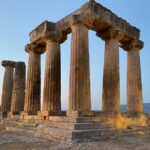
Athens reveals itself best on foot, and this tour gets you from Monastiraki Square to the Acropolis Museum in a useful two and a half hours. Along the way, you see ancient ruins, the Changing of the Guard, Athens Cathedral, Plaka lanes, small shops, cafes, and working city streets rather than only the headline monuments.
I like the private format, which lets your guide adjust the pace and answer your questions. I also like the local food pause, where Greek coffee and a pastry from a neighborhood bakery add flavor to the history. The main drawback is that the price is high at $200 per person, and admission to the Acropolis and Acropolis Museum is not included.
In This Review
- Key Points
- A smart first walk through central Athens
- Monastiraki Square and Athens Cathedral
- The Changing of the Guard at the Tomb of the Unknown Soldier
- Hadrian’s Library and the Roman Agora
- Plaka’s staircases, cafes, and terraces
- Finishing at the New Acropolis Museum
- What the private format adds
- Is $200 per person fair?
- Who should book this Athens walk?
- My take: book it for orientation, not admission
- FAQ
- How long does the Athens walking tour last?
- Is this a private tour?
- Where does the tour begin?
- Where does the tour end?
- Is Acropolis admission included?
- Is the Acropolis Museum ticket included?
- Are food and drinks included?
- What is the cancellation policy?
Key Points
- Private walking route: Your own English-speaking guide leads only your group from Monastiraki to the Acropolis Museum.
- Five useful stops: The route includes Monastiraki, the Tomb of the Unknown Soldier, the Roman Agora, Plaka, and the museum area.
- A local food break: Coffee and a traditional Greek pastry are available at your own expense, with cheese pies and Greek coffee among the memorable possibilities.
- Ancient Athens without a long museum visit: You see Hadrian’s Library, the Arch, the Roman Agora, and the Tower of the Winds area while staying outdoors.
- Practical neighborhood advice: Your guide can point you toward places to eat, drink, shop, and continue exploring.
- A strong arrival-day option: The route gives you a quick sense of central Athens before you visit major sites independently.
A smart first walk through central Athens
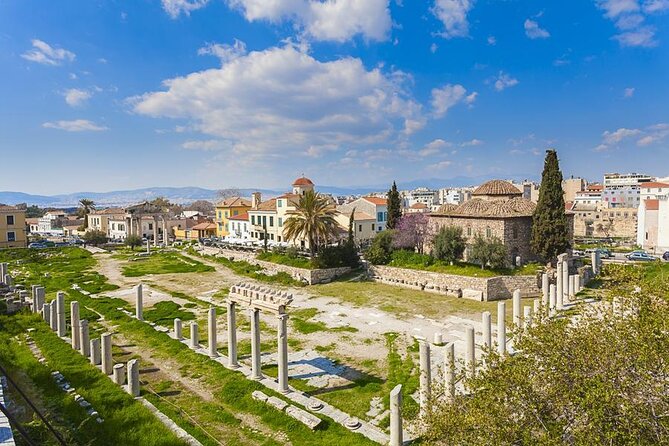
This tour works as an introduction rather than a full archaeological tour. You move through several central neighborhoods and see how ancient monuments sit beside cafes, shops, bakeries, churches, and modern traffic.
That contrast is one of Athens’ great pleasures. A Roman ruin may appear beside a busy street, while a few steps later you are in a quiet Plaka lane lined with white staircases and small terraces. A private guide helps connect those pieces, so you are not simply ticking off names and taking photographs.
The route covers ground at a steady pace, with roughly 30 minutes allocated to each stop. You should expect regular walking, standing, and time on uneven city surfaces. A moderate level of fitness is required, and comfortable shoes make good sense.
The starting point is Coffee Island at Leoforos Vasilisis Amalias 2. The tour finishes outside the New Acropolis Museum on Dionysiou Areopagitou Street. That end point is useful because you can continue into the museum on your own or walk along the Acropolis pedestrian area afterward.
You can also read our reviews of more walking tours in Athens



Monastiraki Square and Athens Cathedral
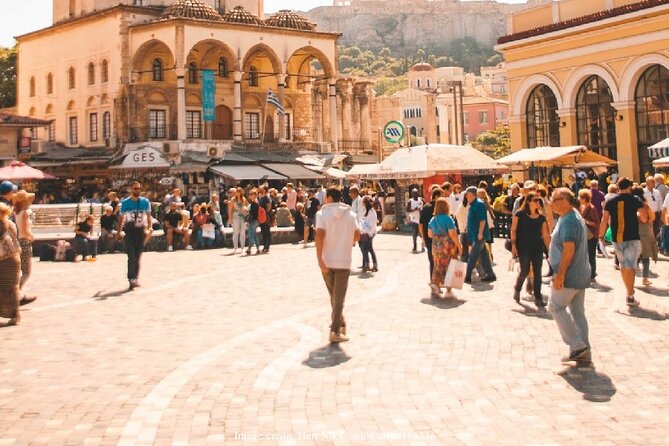
Monastiraki is a lively place to begin. It is one of the city’s best orientation points, with shops, bars, food stops, and easy access to some of Athens’ most important ancient remains.
Your guide uses this first section to explain the shape of the historic center and point out places worth returning to later. That is valuable because Monastiraki can feel busy and confusing on a first visit. You may see the main square one way during the day and return later for a very different evening atmosphere.
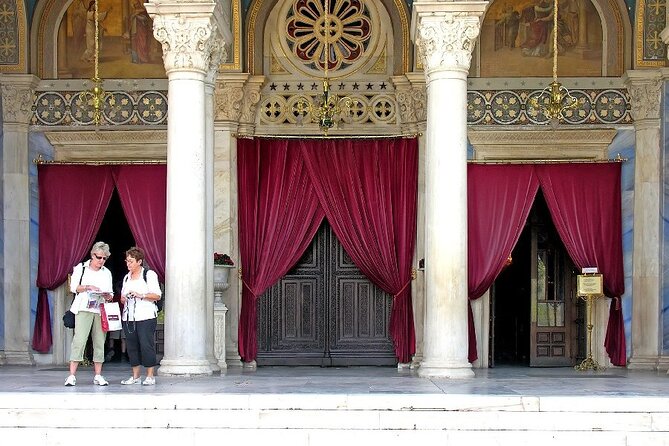
The walk also includes Athens Cathedral. This gives the opening section a useful change of pace. You move from a public square and shopping streets to an important religious building, then back into the everyday life of central Athens.
Do not expect a long interior visit or a detailed study of every building. The value here is orientation. You get a map in your head, along with early suggestions about where to eat, drink, and browse after the tour.
The Changing of the Guard at the Tomb of the Unknown Soldier
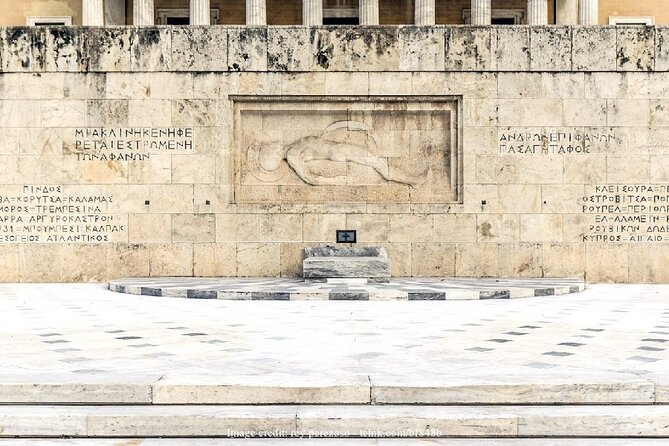
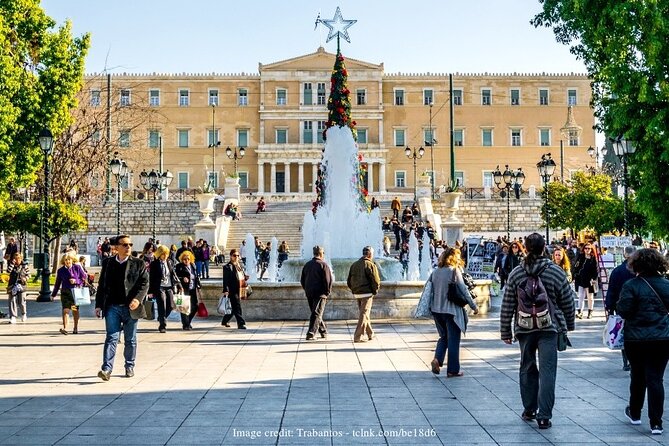
The second stop takes you to the Tomb of the Unknown Soldier in front of the Greek Parliament. The Changing of the Guard is one of the most recognizable public ceremonies in Athens, and seeing it with a guide gives the moment more context than watching it alone.
The ceremony is a visual highlight, but the tour does not treat it as the entire point of the stop. You also have time for a coffee and a traditional Greek pastry at a local bakery. This is an out-of-pocket purchase, but it adds a welcome break after the first stretch of walking.
A cheese pie and Greek coffee were especially memorable combinations on one version of this experience. You should not assume the exact pastry or bakery will always be the same, but the planned food stop gives you a chance to try something local instead of relying only on familiar cafe choices.
This pause also helps set the tour’s tone. You are not moving from monument to monument without stopping. You are given room to notice ordinary Athens, ask questions, and get advice for later meals. One particularly useful dining recommendation was Psaras Tavern, which was praised as a successful choice for dinner.
Hadrian’s Library and the Roman Agora
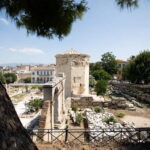
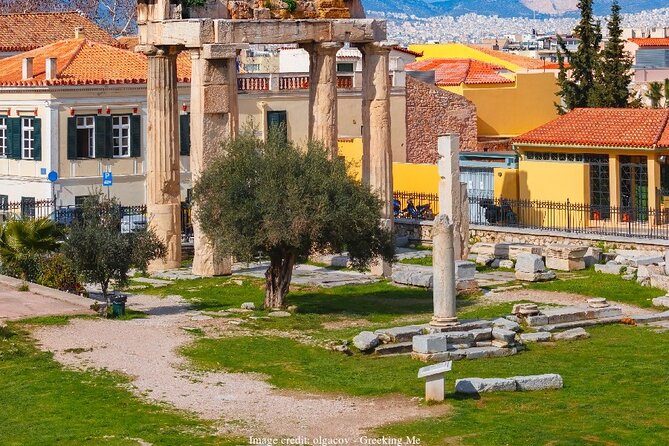
The ancient center receives its clearest attention in the third section. You see Hadrian’s Library, Hadrian’s Arch, and the Roman Agora, including the area around the Tower of the Winds.
These sites matter because they show different layers of Athens beyond the Acropolis itself. Hadrian’s Library reflects the Roman period and the city’s intellectual life. The Roman Agora was a center of public activity, while the Tower of the Winds is one of the most distinctive surviving structures in the area.
The tour is primarily a walking and viewing experience. Entrance to the Acropolis is not included, and the Acropolis Museum is also not included. The listed stops around the Roman Agora are described with free admission, so you should think of this section as an outdoor introduction rather than a ticketed archaeological visit with extended time inside every site.
That distinction matters if you want a detailed examination of the ruins. Thirty minutes passes quickly, especially when your guide is explaining several monuments and you are stopping for photographs. If your main goal is archaeology, plan separate visits to the sites you want to enter and study at length.
If your goal is to understand how the ancient center fits together, this short stop works well. Your guide can point out the major structures, explain what you are seeing, and help you decide where to spend more time later.
Plaka’s staircases, cafes, and terraces
Plaka is the most atmospheric part of the walk. Its narrow lanes, white staircases, cafes, terraces, and shops offer a softer contrast to Monastiraki’s open square and busy commercial streets.
This is a good place to slow down and look around. You might find a small shop that deserves a return visit, a terrace suitable for a drink, or a lane that you would have missed while walking directly toward the Acropolis.
Plaka is also a people-watching district. It is popular, and the cafes and restaurants can make it feel busy, particularly at peak times. That is not necessarily a fault, but you should not expect a silent old quarter. The charm comes from the mix of local routines, visitor activity, storefronts, and old streets.
Your guide’s tips are especially useful here. A private guide can tell you which areas are good for a later meal, where to browse, and how to keep exploring after the official walk ends. The tour does not include food or drink, so you can return to the places that suit your budget and appetite.
You can also read our reviews of more private tours in Athens




Finishing at the New Acropolis Museum
The tour ends outside the New Acropolis Museum rather than taking you through its galleries. This is both a limitation and a practical choice.
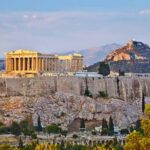
The museum is one of Athens’ major attractions, and you can continue there independently after saying goodbye to your guide. Since the museum ticket is not included, you retain control over whether to visit immediately, return another day, or simply continue along the Acropolis area.
Ending here also gives the route a clear sense of direction. You begin near Monastiraki and finish beside the Acropolis, so the walk feels like a line through central Athens rather than a series of disconnected stops.
I would not book this tour expecting a guided museum visit or Acropolis entry. I would book it to understand the city before tackling those major attractions on your own. The final handoff works best for visitors who appreciate a useful starting point and want to set their own schedule afterward.
What the private format adds
A private tour is a major part of the value. You do not have to fit your questions into a large group or wait for people who walk at a different pace. You can spend more time on a favorite monument, pause for photographs, or ask for restaurant advice suited to your plans.
The experience includes a friendly, professional English-speaking guide for your group and time for pictures. It does not include hotel pickup, hotel drop-off, or transportation during the tour, so you need to reach the meeting point yourself and plan your onward route from the museum.
One guide associated with this experience is Maria. If Maria leads your walk, you can expect a strong focus on Greek history, local pride, and practical food advice based on the praise she has received. Guide assignments can vary, so the experience will not necessarily be identical each time.
The private setup is most useful for couples, families, and small groups with shared interests. Group discounts are available, which may improve the per-person value for a larger private party. At the full listed price, the cost is harder to justify for one person or a budget-conscious couple unless personal attention matters a great deal.
Is $200 per person fair?
At $200 per person, this is not a cheap orientation walk. You are paying for a private guide, not for entry to the Acropolis, the museum, or a full meal.
The value depends on what you want from your first hours in Athens. If you want a quick route through the center, local food suggestions, help understanding ancient sites, and the ability to ask as many questions as you like, the price can make sense. The private format saves you from joining a large group and gives the walk a personal feel.
The price is less attractive if you mainly want photographs of the monuments or if you plan to visit the archaeological sites with another guide. You will also need to budget separately for coffee, pastries, food, transportation if needed, and admission to the Acropolis or museum.
For a group, ask about the available discount before booking. The experience becomes more reasonable when several people share the cost of one private guide. For a solo visitor, I would compare it carefully with a small-group walk or a self-guided route.
Who should book this Athens walk?
I would recommend it to first-time visitors who want a fast, organized introduction to central Athens. It suits you especially well if you enjoy history but also want restaurant advice, local food, shopping streets, and a clear route between neighborhoods.
It is also a good fit for couples who want a private experience and families who prefer not to follow a rigid large-group schedule. The short length makes it easier to fit around other plans, though the walking and standing still require moderate fitness.
You may want something else if your priority is a long archaeological lecture, extensive interior access, or a guided visit inside the Acropolis Museum. This tour provides context and direction, then leaves the major ticketed attractions for you to explore independently.
Weather also matters. The experience requires good weather, and poor conditions may lead to a new date or a full refund. You can cancel for a full refund up to 24 hours before the start time, but cancellations or changes inside that window are not refunded or accepted.
My take: book it for orientation, not admission
Book this tour if you want Athens to make sense quickly. In two and a half hours, you move from Monastiraki’s shops and bars to the Tomb of the Unknown Soldier, Roman monuments, Plaka, and the Acropolis Museum area. The coffee, pastry, and dining advice add a human touch that a monument-only walk often misses.
I would skip it if you mainly want included admissions or a low-cost way to see the Acropolis. The price is a serious consideration, and you will still pay separately for food, transportation, and major attraction tickets.
For a private group that values a personal guide, a steady pace, and useful local suggestions, this is a well-focused introduction to Athens. Arrive ready to walk, bring comfortable shoes, and leave enough time after the tour if you want to visit the museum.
FAQ
How long does the Athens walking tour last?
The tour lasts approximately 2 hours and 30 minutes.
Is this a private tour?
Yes. Only your own group participates, with a private English-speaking guide.
Where does the tour begin?
The meeting point is Coffee Island at Leoforos Vasilisis Amalias 2, Athens 105 57, Greece.
Where does the tour end?
The tour ends outside the New Acropolis Museum at Dionysiou Areopagitou 15, Athens 117 42, Greece.
Is Acropolis admission included?
No. Acropolis entrance is not included in the tour price.
Is the Acropolis Museum ticket included?
No. The tour ends outside the museum, where you can continue exploring independently. Admission is not included.
Are food and drinks included?
No. Food and drinks are at your own expense. The route includes time for coffee and a traditional Greek pastry, but you pay for them yourself.
What is the cancellation policy?
You can cancel up to 24 hours before the start time for a full refund. Cancellations or changes made less than 24 hours before the start time are not accepted or refunded. If poor weather causes the tour to be canceled, you will be offered another date or a full refund.