REVIEW · ATHENS
Athens Half-Day Tour: Acropolis, Parthenon & All Major Landmarks
Book on Viator →Operated by Greek Heritage: Private Tours & Transfers · Bookable on Viator
Five hours. One classic Athens sweep. This private half-day route uses an air-conditioned vehicle and an English-speaking driver to get you to the city’s biggest sights fast, with plenty of on-the-spot explanations. I like the hotel pickup/drop-off convenience and the cool, comfortable ride that helps when Athens heat hits. One drawback: entrance tickets are extra, and you’ll still need to budget time for lines at the Acropolis.
You’ll spend most of your time walking the sites yourself, while the driver handles navigation and history talk outside the monuments. That works well if you want flexibility, but it’s worth knowing you won’t have someone escorting you inside each building.
In This Review
- Key Things I’d Prioritize on This Route
- Private Pickup, a Real Plan, and Why the Van Matters
- Acropolis Hill: Ticket Reality Check and How to Spend 60 Minutes
- Parthenon Time: What You Can Actually See in Half an Hour
- Plaka and Alexander-The-Great Stops: Why the Side Streets Matter
- Hadrian’s Arch and the Roman Layer in Athens
- Panathenaic Stadium: White Marble, Olympics, and a Quick Walk
- Syntagma Square: Parliament, the Unknown Soldier, and the Evzones
- Temple of Olympian Zeus: Giant Scale with Only a Few Columns Left
- The Athenian Trilogy and the National Library: Pretty Facades, Real Institutions
- Lycabettus Hill and the Runner Sculptures: Athens Beyond the Usual Angles
- Optional Add-On: Acropolis Museum for 60 Minutes (If You Want Art with Answers)
- Optional Add-On: Ancient Agora for 60 Minutes (For the Athens That Worked)
- Price and Value: What You’re Paying For (and What You Still Need)
- Who This Tour Fits Best
- Should You Book This Athens Half-Day Highlights Tour?
- FAQ
- How long is the Athens half-day tour?
- Is hotel pickup and drop-off included?
- Are entrance fees included in the tour price?
- Does the tour include Acropolis Museum?
- Does the tour include Ancient Agora?
- What sites on the route are free?
- Is Panathenaic Stadium admission included?
- Is this a private tour?
- What language is provided?
- What’s included on the transportation side?
Key Things I’d Prioritize on This Route

- Private, air-conditioned van plus WiFi and bottled water, so the day stays comfortable even with a packed schedule.
- Driver-led context at every stop (you get the story fast, then you walk at your own pace).
- Acropolis + Parthenon time is built in, with extra views from the rest of the complex.
- Syntagma Square stops (Hellenic Parliament and the Tomb of the Unknown Soldier) help you see modern Athens alongside the ancient sites.
- Optional Acropolis Museum or Ancient Agora add-on options are ideal if you want deeper artifact time without changing tours.
- Tickets are not included, so pre-planning your entry saves money and frustration.
Private Pickup, a Real Plan, and Why the Van Matters
This tour is built around one thing: getting you from place to place efficiently while keeping you comfortable. You get pickup and drop-off from your location, and the driver arrives about 5 minutes early. There’s also WiFi on board, bottled water, and an air-conditioned vehicle—small perks that matter once you start climbing hills and standing in sun.
The biggest practical advantage is that you’re not stuck in a slow, big-group rhythm. It’s a private tour, so you can move on quickly when you’re ready—or slow down when you want one extra look at a view. The trade-off is simple: the driver isn’t licensed to accompany you inside sights. They’ll share context, but you’ll be doing the museum and temple walking yourself.
A few more Athens tours and experiences worth a look



Acropolis Hill: Ticket Reality Check and How to Spend 60 Minutes
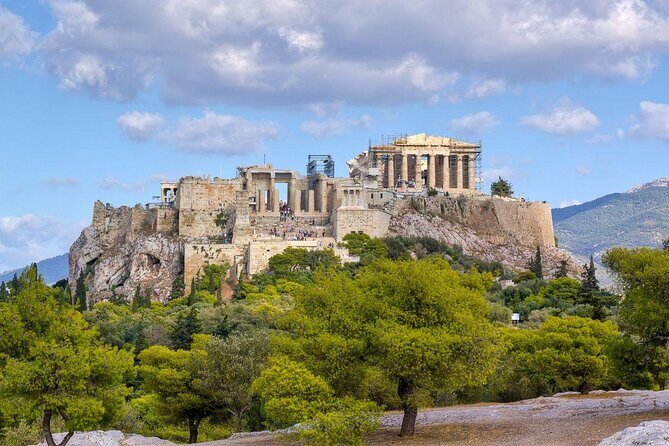
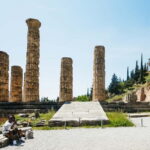
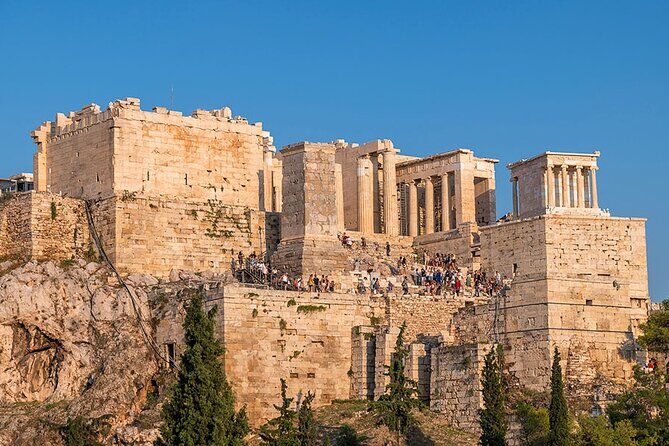
The Acropolis is the reason Athens sells out. It’s the high stone citadel that shaped how the world thinks about Greek architecture. Expect to see the Propylaea, the Erechtheion, and the Temple of Athena Nike as part of your walk. And yes, weathering, reconstruction, and centuries of conflict have left marks—but the scale and design still hit hard when you’re there in person.
You get about 30 minutes on the Acropolis, then another 30 minutes at the Parthenon. That sounds short, but it’s workable if you know what you’re trying to see. I’d focus on:
- Getting a feel for the layout first—where the main temples sit on the hilltop.
- Noticing the Doric column style and the symmetry that’s easier to understand once you’re standing on the stone.
- Taking a couple of photos from angles that show the city below.
Budget note that affects your total value: Acropolis entry is €30 per person, and it’s not included. So while the tour price gets you transport and guidance, your final spend depends heavily on the ticket extras.
Parthenon Time: What You Can Actually See in Half an Hour
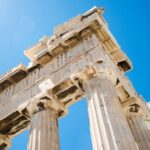
The Parthenon is the headline. Built between 447–432 BCE, it was dedicated to Athena and designed with strict classical proportions. It’s famous for its Doric columns—46 outer columns—and for its carved frieze scenes from Greek mythology. The building was originally topped with Pentelic marble work, and it once housed a massive statue of Athena Parthenos.
In 30 minutes, you won’t “solve” the Parthenon. But you can still get something meaningful: structure, views, and the sense that this is a masterpiece of design discipline, not just a big temple. The real trick is to keep your walk moving just enough that you don’t lose your place, then slow down at the best viewpoints for your photos and mental picture.
Also be ready for lines. You’ll likely hit peak moments when crowds gather near entry points and along the key photo angles. Going with a clear timeline makes the day smoother than trying to wing it.
Plaka and Alexander-The-Great Stops: Why the Side Streets Matter

After the hilltop, the tour shifts down into the city’s human scale. Plaka is the historic neighborhood under the Acropolis, known for narrow alleys, neoclassical buildings, and tavernas and cafés. It’s called the Neighborhood of the Gods for a reason: it sits under the myth-laced world you just walked above.
A quick stop in the Alexander the Great area also gives context for how Athens didn’t stay stuck in one era. Alexander was born in 356 BCE and became a major force in shaping the Hellenistic world after taking the throne at age 20. Even if you only get a brief look and a few explanations, it helps you connect ancient monuments to the larger story of the Mediterranean.
These middle-of-the-day city stops are valuable because they break the “stone-only” fatigue. They also help you plan where you might want lunch later.
Hadrian’s Arch and the Roman Layer in Athens
Not everything you see will be Greek-only. Hadrian’s Arch is a clear example of Rome leaving its signature on Athens. The arch was built in 131 AD and is about 18 meters tall, made from Pentelic marble. It marks the boundary between older Athens and the newer city associated with Hadrian.
Look for the inscriptions on both sides: one credits Theseus, and the other credits Hadrian. The arch’s proportions and Corinthian columns show how Greek and Roman design language overlapped here. It’s short—about 10 minutes—but it’s the kind of stop that makes Athens feel like a living city with layered time, not a single snapshot.
- All Day Cruise -3 Islands to Agistri,Moni, Aegina with lunch and drinks included
★ 5.0 · 4,958 reviews



Panathenaic Stadium: White Marble, Olympics, and a Quick Walk

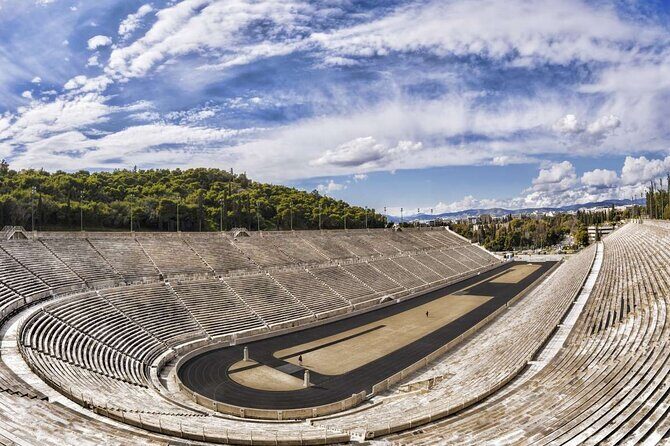
The Panathenaic Stadium (Kallimarmaro) is one of those places that surprises people. It’s horseshoe-shaped, built entirely of white marble, and originally dates to the 4th century BCE. It was later reconstructed in the 2nd century CE, which is why you see it in a form that feels both ancient and stage-ready.
The stadium hosted the Panathenaic Games, and it later played a role in reviving the modern Olympic idea. In 1896, it became the venue for the first modern Olympic Games. Expect 15 minutes here, and remember the admission fee isn’t included (so add it to your ticket budget if you plan to enter).
Even if you keep it to photos and a fast look around, the stadium gives a sense of athletic tradition that links Athens’ mythic past to modern sports culture.
Syntagma Square: Parliament, the Unknown Soldier, and the Evzones
The tour’s modern Athens segment centers on Syntagma Square. You’ll spend time at:
- The Hellenic Parliament, housed in a neoclassical building originally built as a royal palace in 1843. Parliament has been there since 1934.
- The Tomb of the Unknown Soldier, erected in 1932, guarded by Evzones in traditional attire.
The Tomb has a strong emotional punch: a marble structure with reliefs and an eternal flame. If you time it right, the changing of the guard ceremony can be a great break from hot walking. Even if you don’t catch the exact moment, the place is designed for remembrance and attention.
A practical tip: wear shoes you can stand in comfortably. The square is open, and you’ll likely pause for photos and ceremony watching.
Temple of Olympian Zeus: Giant Scale with Only a Few Columns Left
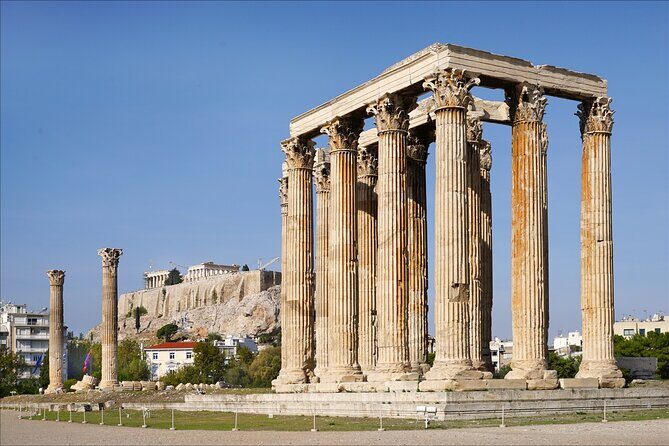
This is where Athens flexes size. The Temple of Olympian Zeus was commissioned in the 6th century BCE and took centuries to complete, finishing in the 2nd century CE. It once held a colossal chryselephantine statue of Zeus, though today only a portion of the structure remains.
What you’ll still notice is scale. Corinthian columns that reach about 17 meters are hard to process when you’re standing near them. It’s about 10 minutes here, and the site is free. That makes it a strong stop when your budget matters: you get big visual payoff without paying additional ticket fees.
The Athenian Trilogy and the National Library: Pretty Facades, Real Institutions
Next come three major landmarks often grouped as Athens’ intellectual triangle:
- The Academy of Athens (founded in 1926, inspired by Plato’s ancient Academy), with statues of Athena and Apollo.
- The National and Kapodistrian University of Athens (founded 1837), part of the Athenian “trilogy” with classic neoclassical architecture.
- The National Library of Greece (founded 1832), designed by Theophil Hansen.
All three are free stops on this route. You don’t get long stays here, but it’s a useful change of pace from temples and stadium stone. The exterior architecture is the hook, and the idea behind it is the bigger point: Athens isn’t only ancient ruins. It’s also research, teaching, and preservation—especially with the library’s role in holding manuscripts and rare books.
Lycabettus Hill and the Runner Sculptures: Athens Beyond the Usual Angles
Mount Lycabettus gives you a view that makes Athens feel big. The hill rises about 300 meters above the city and is topped by the Chapel of St. George. There’s even a legend that Athena dropped a rock here, forming Lycabettus. The ascent is via a winding path, and the tour gives around 10 minutes for the summit viewpoint.
Also on your modern-art side is Dromeas (The Runner), a sculpture by Costas Varotsos from 1994. It’s a 12-meter figure made of layered glass and iron, built to show motion and speed. Alongside it, the Marathon Run theme connects the ancient story of Pheidippides (490 BCE) to the modern marathon concept that entered the Olympics in 1896. It’s a quick stop, but it’s the kind of pairing that helps you see Athens as a place where old and new keep talking to each other.
Optional Add-On: Acropolis Museum for 60 Minutes (If You Want Art with Answers)
If your time allows, I strongly recommend adding the Acropolis Museum. It’s optional, but it turns the Acropolis from “big views” into “objects you can learn from.” The museum opened in 2009 and sits at the foot of the hill, with views out toward the Parthenon.
You get about 60 minutes, and the entry fee isn’t included. Highlights include:
- Over 4,000 artifacts across five floors (Archaic, Classical, Roman).
- The Parthenon Gallery, designed with glass walls that give a direct sightline to the Parthenon.
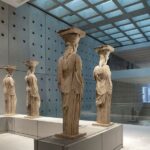
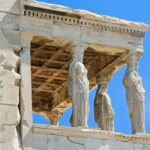
- The Caryatids, with the original statues from the Erechtheion.
The clever part is how the building and displays help you understand what you saw on the hill. Even a short visit gives you better context than walking through the Acropolis alone.
Optional Add-On: Ancient Agora for 60 Minutes (For the Athens That Worked)
The Ancient Agora of Athens is the other big “mind and city” stop that pairs well with the Acropolis. It’s not a temple-only experience. The Agora served as a hub for social, political, and commercial life from the 6th century BCE onward.
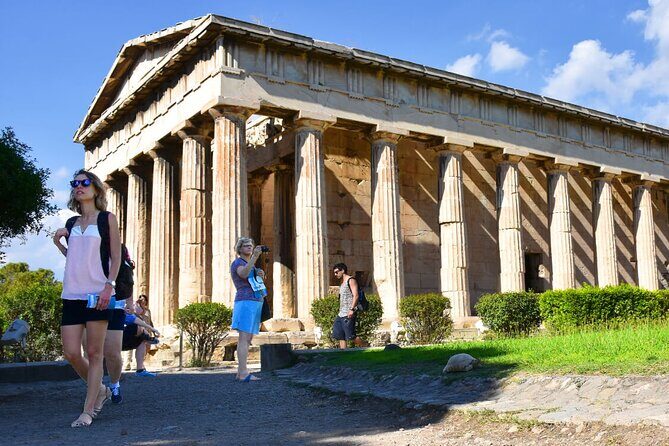
With the add-on, you get 60 minutes, and again entry isn’t included. Expect stops around the Stoa of Attalos (a covered colonnade), the Bouleuterion (where the city council met), and nearby religious and civic spaces like the Temple of Hephaestus and the Altar of the Twelve Gods. You also hear how philosophers like Socrates connected the place to ideas that shaped Western thought.
If you’re the type who wants Athens to feel like a real city—not just sacred stone—this add-on is the one that makes the whole day click.
Price and Value: What You’re Paying For (and What You Still Need)
The tour price is $145.12 per person, and it includes the big, expensive-to-arrange part for most visitors: pickup/drop-off and an air-conditioned private vehicle with WiFi and bottled water. You also get an English-speaking driver with deep historical context who helps you hit the right stops efficiently.
But you must add entrance fees separately. Confirm what you want to enter before you go:
- Acropolis Hill: €30 per person (not included)
- Acropolis Museum: €20 per person (optional; not included)
- Ancient Agora: €20 per person (optional; not included)
- Some major sites are free (like Hadrian’s Arch, the Hellenic Parliament area, the Tomb of the Unknown Soldier, Temple of Olympian Zeus, Academy/University/Library, and Lycabettus).
- Panathenaic Stadium is included as a stop, but its admission isn’t included.
Here’s how I’d judge value: if your top goal is comfort plus efficient landmark coverage on a tight schedule, the base price makes sense. If you plan to add the museum and Agora, your total spend rises, but you’ll also get much more “why it matters,” not just where it is.
One more value signal: the day is built for flexibility. Many people appreciate that you visit sites on your own time rather than being dragged through interiors at someone else’s pace.
Who This Tour Fits Best
This is a good match if:
- You have about half a day and want the greatest hits without sorting bus routes.
- You want an air-conditioned break in the middle of sightseeing.
- You like walking sites yourself, but still want your questions answered while you’re moving between stops.
- You’re a first-time Athens visitor who wants a quick orientation for later exploration.
This is less ideal if:
- You want someone licensed to accompany you inside every site and narrate continuously as you enter.
- You hate ticket math and long entry lines and would rather do fewer places with more controlled timing.
- You’re hoping this is a museum tour with long indoor stays (it’s mostly outdoors unless you pick the optional museum/Agora).
Should You Book This Athens Half-Day Highlights Tour?
Yes, if you want the most important Athens landmarks within a short window, with private comfort and a driver who helps you understand what you’re seeing. The structure works: Acropolis first, then Roman Athens, then the city’s modern center at Syntagma Square, and finally viewpoints and art that make the day feel complete.
Skip or reconsider if you’re planning to do lots of paid interiors and you expect a fully escorted guide inside each building. In that case, you might be happier with a tour designed around timed entry and deeper indoor narration.
If you book this, do one thing early: plan your Acropolis tickets. You can pre-order a few days before using hhticket.gr, and Acropolis-related tickets are ticket-controlled through the official channel. That small step turns your day from stressful to smooth.
FAQ
How long is the Athens half-day tour?
It runs about 5 hours (approx.). The schedule includes multiple stops with short time blocks at each location.
Is hotel pickup and drop-off included?
Yes. Pickup and drop-off are included from your location, and the driver arrives about 5 minutes before the start time you select.
Are entrance fees included in the tour price?
No. Entrance fees are not included. The tour lists additional costs such as €30 for Acropolis Hill, €20 for Acropolis Museum, and €20 for Ancient Agora.
Does the tour include Acropolis Museum?
An optional Acropolis Museum visit is available if you select the Athens+Acropolis Museum 5hours option. The museum time is about 60 minutes, and entry is not included.
Does the tour include Ancient Agora?
Yes, as an optional add-on. Choose the Athens+Ancient Agora 5hours option for about 60 minutes, and entry is not included.
What sites on the route are free?
Some stops listed as free include Arch of Hadrian, the Hellenic Parliament area, the Temple of Olympian Zeus, the Academy of Athens, National and Kapodistrian University of Athens, National Library of Greece, Monument to the Unknown Soldier, and Mount Lycabettus.
Is Panathenaic Stadium admission included?
No. The Panathenaic Stadium stop is included, but the entry ticket is marked as not included.
Is this a private tour?
Yes. It’s a private tour/activity with only your group participating.
What language is provided?
The tour is offered in English, and the driver is fluent in English.
What’s included on the transportation side?
You get an air-conditioned vehicle, private transportation, WiFi on board, bottled water, and pickup/drop-off. Service animals are allowed, and there’s an option for a child seat or booster.