REVIEW · ATHENS
Athens: Highlights and Acropolis Guided Tour
Book on GetYourGuide →Operated by ATHENS WALKING TOURS · Bookable on GetYourGuide
The Acropolis hits harder with context. This guided Athens walk lines up the big city stops from Syntagma to the Acropolis, and I like how the included earsets make the stories land clearly in crowded spots. You also get a small-group feel that keeps the pace human as you move from square to hill.
The main thing to plan is that entrance tickets are not included, and security plus strict Acropolis entry times mean you need to be on schedule.
Key points at a glance
- Earsets for clear listening even when crowds and wind get loud
- Syntagma start in central Athens, right at the metro and Parliament area
- Stoic-meets-street-level Athens: National Garden, Zappeion, Temple columns, then Plaka
- Acropolis access timed for the main monuments, including the Parthenon and Erechtheion area
- Skip-the-line depends on your ticket option, and security waits still happen
In This Review
- Meeting at Syntagma Metro: the easiest way to start strong
- Parliament, the Unknown Soldier, and the Changing of the Guards
- National Garden and Zappeion: the columns that bridge 2,000 years
- Plaka streets, Melina Merkouri, and the Athens vibe between ruins
- The walk up to the Acropolis: why the base matters
- Acropolis time: Parthenon, Erechtheion, and stories that connect the dots
- Tickets, security, and staying within strict entry times
- What you’ll actually do (and how long you’ll feel it)
- Who should book this Acropolis highlights tour (and who shouldn’t)
- Should you book it?
- FAQ
- Where does the tour meet?
- How long is the tour?
- Are Acropolis and Temple of Zeus entrance fees included?
- What if I book the tour without tickets?
- When does the Acropolis visit happen?
- Is there a skip-the-line service?
- What should I bring?
- Are baby strollers or large luggage allowed?
- Is the tour wheelchair accessible?
Meeting at Syntagma Metro: the easiest way to start strong
This tour starts where you actually want to begin: inside the Syntagma metro station, not out in the middle of nowhere. Meet inside next to the ticket validating machines, beneath the hanging clock, and look for the guide holding an orange Athens Walking Tours sign. Plan to arrive about 15 minutes early so you can get oriented and not stress the start.
Why this matters: Syntagma is the spine of central Athens. Within minutes, you’re in the orbit of Parliament and the big “front door” views of the city. The walking is not just about moving from Point A to Point B; it’s about getting your bearings fast—ancient Greece plus modern capital city life, all layered together.
Logistics are straightforward, but you should come ready to walk. Comfortable shoes are a must because you’re on foot for the whole experience, and the Acropolis portion includes a climb. Also note the tour isn’t set up for strollers or large bags, and it’s not suitable for wheelchairs or mobility impairments.
Parliament, the Unknown Soldier, and the Changing of the Guards
One of the most satisfying early moments is seeing Athens as a living capital, not a museum. After meeting at Syntagma, your guide walks you past key sights around the square and into the Parliament area. You’ll stop for the Monument to the Unknown Soldier, then get to see the pageantry of the changing of the guards.
Here’s what I like about including this at the beginning: it sets a rhythm. Before you head into ancient stone, you get a feel for how ceremonies and civic identity still shape Athens today. It also gives you a clear sense of direction for the rest of the walk. The route begins flat-ish and city-paced, so you’re warming up before the hillier parts later.
A small consideration: this section can be busy. If you’re the type who gets impatient with crowds, earsets help a lot, but you should still expect some standing and watching. The payoff is worth it if you enjoy details—symbols, timing, and the way modern Athens keeps showing its priorities.
You can also read our reviews of more guided tours in Athens



National Garden and Zappeion: the columns that bridge 2,000 years

After Parliament, you head toward a greener, calmer stretch: the National Garden of Athens and the Zappeion Hall. This is a smart pivot in the tour. You’re moving from formal civic spaces into a place that feels like a breather, which helps before the big climb.
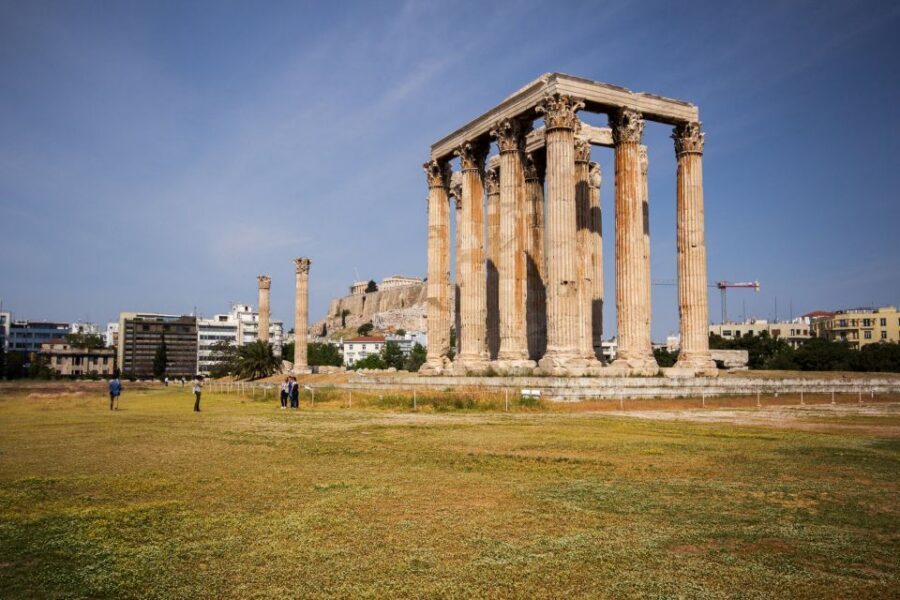
The Zappeion stop is also where the tour’s storytelling style becomes clear. In front of the hall, you see towering columns that once belonged to the Temple of Zeus and Hadrian’s Arch. And the guide ties it to a specific historical twist: the Temple of Zeus dedication goes back to the kings of the gods, but completion took nearly 600 years. That timeline detail makes the ruins feel less random and more like a long-running project with setbacks, politics, and changing rulers.
Drawback? This part is great for photos and explanations, but you may want to pause and look around on your own too. If your attention is easily pulled by scenery, you’ll do better if you take notes mentally—what you’re seeing here will come back later when you compare what’s preserved versus what’s lost.
Plaka streets, Melina Merkouri, and the Athens vibe between ruins
Next comes the Plaka district, one of the most classic areas to wander in Athens for good reason: it’s full of pedestrian-friendly streets, small storefront energy, and views that constantly remind you you’re in a real neighborhood. You’ll walk past a portrait of Melina Merkouri, a famous Greek actress and politician, and it’s a nice reminder that Athens isn’t just ancient calendar pages—it has modern figures tied to national pride.
This segment works because it gives you a buffer between major landmarks. After temples and ceremonial spaces, Plaka puts you in the mood for walking slower. It’s where you can glance up, spot architectural details, and let the day feel like Athens rather than a checklist.
Practical tip: plan to bring water and go at a comfortable pace with your guide. The tour can be hot on some days, and you’ll likely appreciate the shade breaks your guide manages as you go. Also, this is the part where you’ll notice how “walking tour length” turns into “you’re active for a while.” You’re not sprinting, but you are moving.
The walk up to the Acropolis: why the base matters

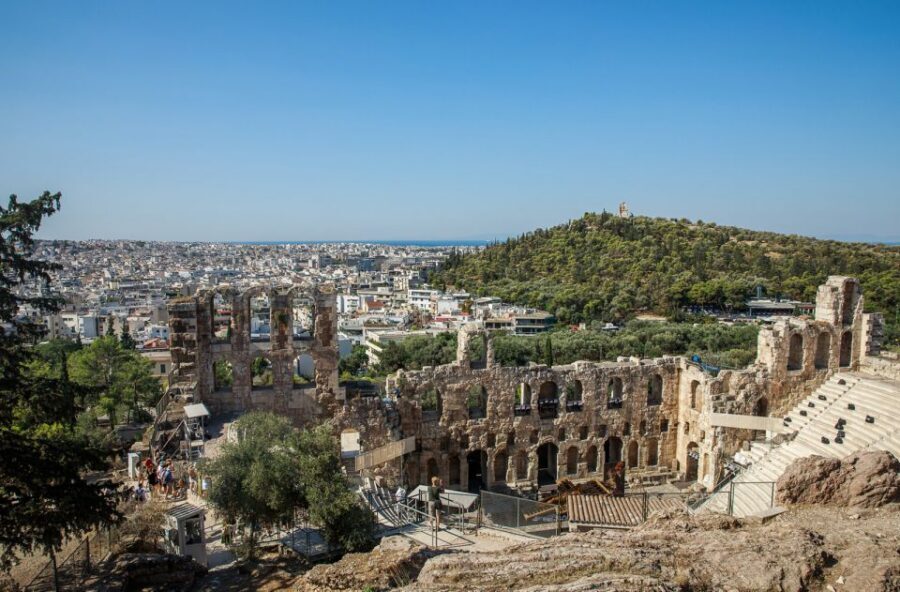
The ascent to the Acropolis is not just a climb to the top—it’s a guided transition where your guide points out monuments and shapes before you’re even fully inside the main zone. As you head uphill, you’ll take in views over the city below and get “context cues” for what you’ll see next.
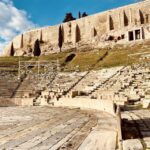
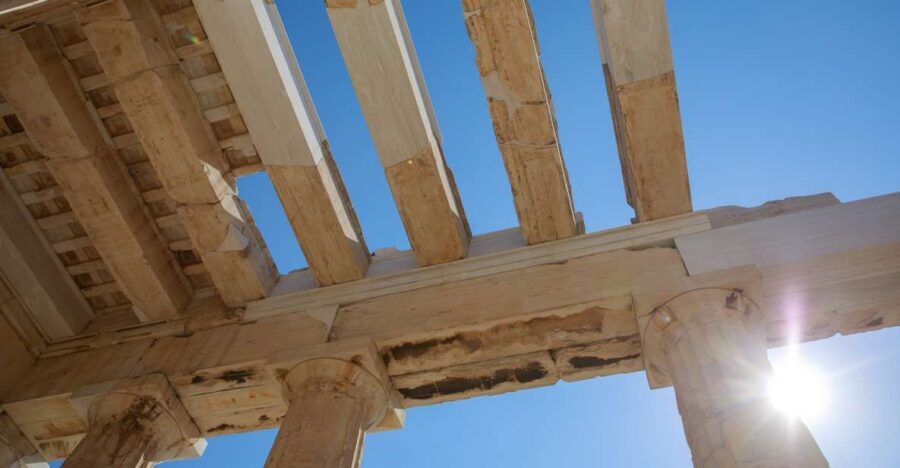
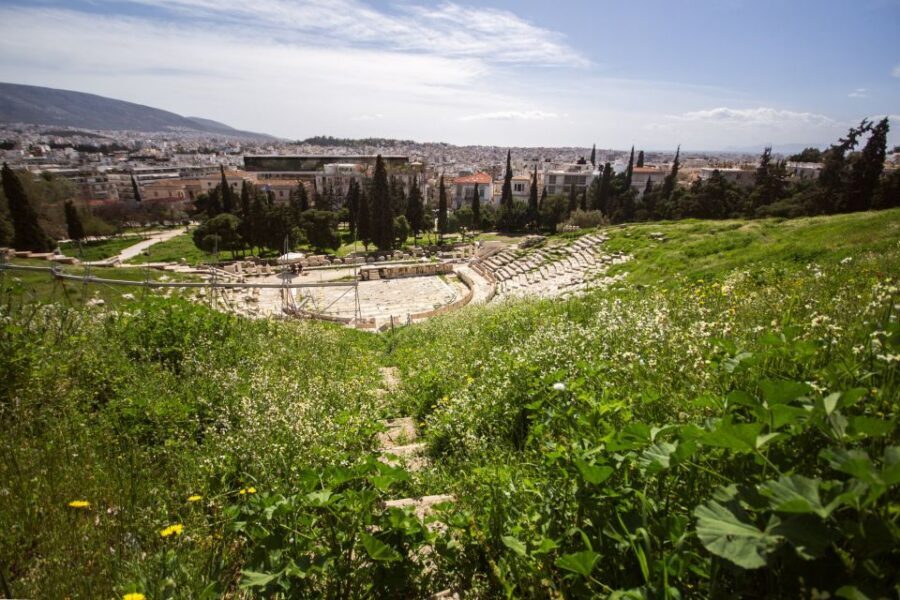
Your guide highlights major elements at the base and slopes, including the Parthenon, Erechtheion, Propylaia, the Temple of Nike, the Dionysus Sanctuary, and Philopappos Hill. I love this approach because it prevents the common problem: arriving at the Acropolis and only recognizing the Parthenon. You start seeing the Acropolis as an organized sacred landscape—multiple structures with different roles.
One consideration: during the climb, you may feel the length more than you expect. The tour is roughly 210 minutes, and the itinerary includes multiple stops. If you’re sensitive to heat or have short stamina, bring a steady mindset: take breaks when your guide does, and don’t race ahead for photos.
Acropolis time: Parthenon, Erechtheion, and stories that connect the dots
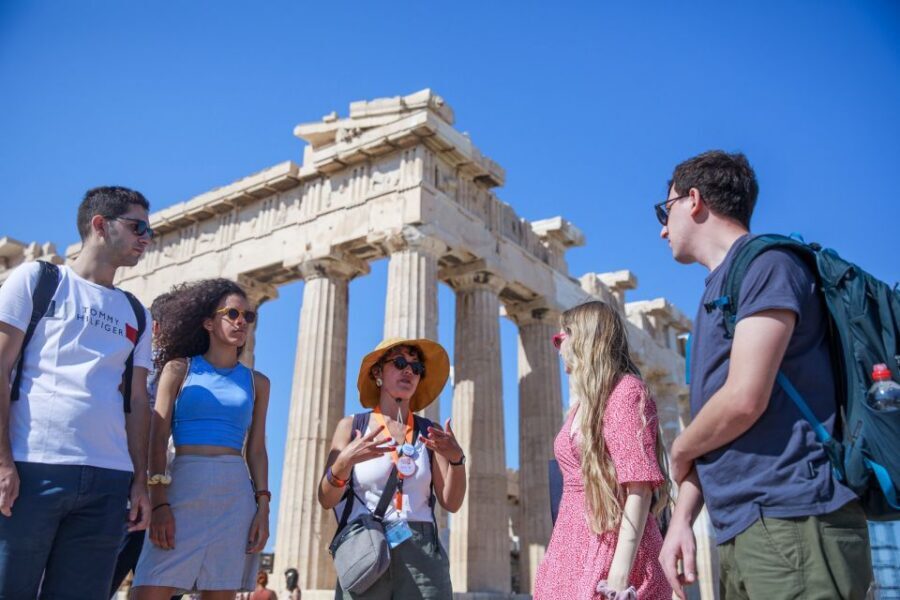
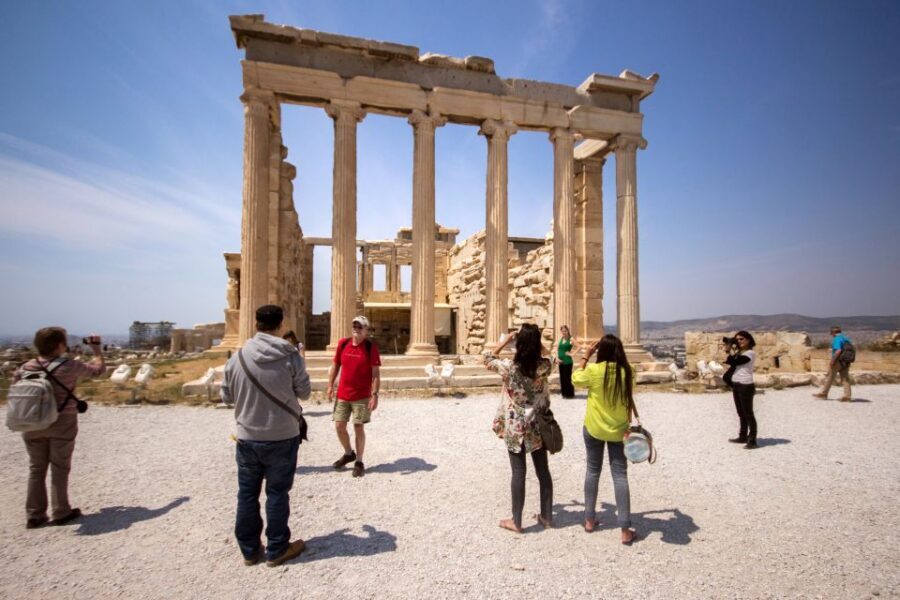
When you reach the Acropolis zone, the experience is about understanding what you’re looking at. The Parthenon is the headline, of course. But what makes a guided route worthwhile is the way your guide connects the Parthenon to the surrounding complex: where the entrances sit, how different structures relate, and why the site still feels powerful even in fragments.
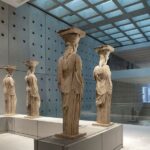
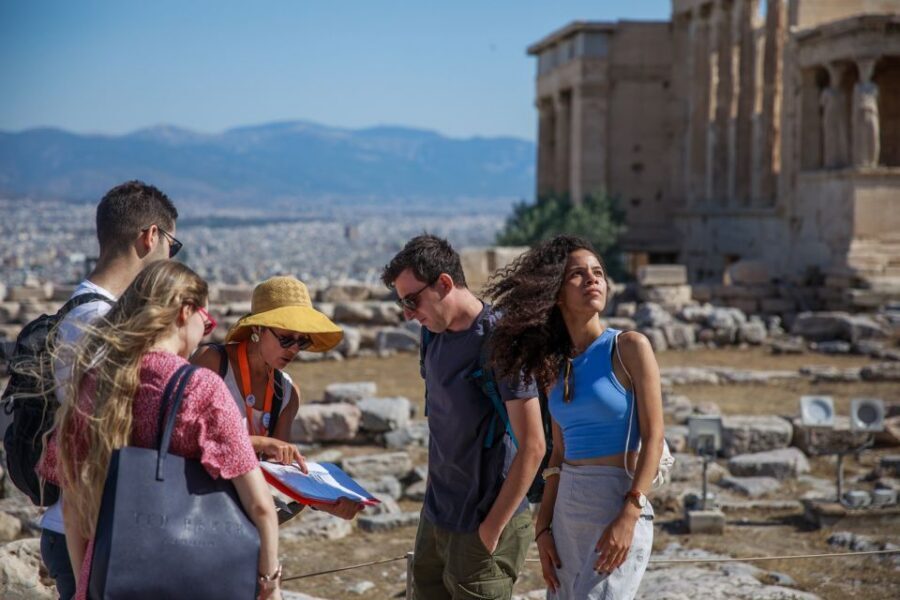
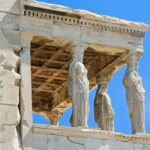
The tour also covers the Erechtheion area (including the distinctive form that people usually associate with it), the Propylaia entry zone, and nearby monuments your guide marks along the way. You get a guided sense of how worship, civic identity, and artistic ambition all overlapped here.
If you enjoy interpretation, this is where it shines. Different guides bring different flavors to the storytelling—names like Fotini, Despina, Kimon, and Kostas show up in past departures as examples of guides with a story-teller approach and strong pacing. Even when the group is mixed, the guiding style tends to keep people engaged without turning the walk into a lecture.
Reality check: the Acropolis is a big outdoor site with crowds and wind. That’s exactly why the earsets matter. You’ll hear better and understand better, which lets you spend your energy on the stones instead of guessing what the guide is saying over the noise.
- All Day Cruise -3 Islands to Agistri,Moni, Aegina with lunch and drinks included
★ 5.0 · 4,958 reviews

Tickets, security, and staying within strict entry times
This is the part you can’t freestyle. The tour includes skip-the-ticket-line service only if you booked the option that comes with tickets. If you choose the option without tickets, you’re responsible for buying your own admission from the official site, and you need to match the entry time to the tour’s schedule.
Access to the Acropolis happens about two hours after the tour starts, roughly around 11:40am. That timing matters because Acropolis entry times are strict. The tour can’t wait for late arrivals, and if you don’t have a valid entrance ticket at the beginning, you’re not admitted to join the tour.
Also plan for airport-style security checks at the Acropolis. On peak days, you can face waits up to 30+ minutes, even if your ticket line situation is handled. This is not a small detail—it changes the day.
Value math, because it’s a common confusion point: the tour price (listed as $55 per person) covers the licensed guide, small-group format, earsets, and the supporting materials. But entrance fees are extra. One past note suggests an added amount around €26 per person for Temple of Zeus and Acropolis access. If you budget for that up front, the tour can feel like a good deal for the guidance you get.
What you’ll actually do (and how long you’ll feel it)
The tour is set for about 210 minutes, with a walking-heavy structure. You’ll start at Syntagma, move through the Parliament and monument area, then hit the National Garden and Zappeion. From there, you continue into Plaka, and then you climb to the Acropolis for the main monuments.
Here’s the balanced view: it’s a lot of ground, but it’s also the right order. You build from city-center landmarks into historic sacred space. You get a city warm-up, then a slow transition into the hilltop zone. And because your guide has a route that covers major monuments, you come away understanding Athens as one connected story instead of a set of separate photos.
Keep in mind that this isn’t a sit-down experience. If your ideal day in Athens is slow and laid-back, you might prefer shorter, more focused tours. If you want a first solid introduction—like a guided orientation that still leaves you free to explore after—this fits well.
Who should book this Acropolis highlights tour (and who shouldn’t)
Book this if:
- You want a guided walk that hits Syntagma, Plaka, and the Acropolis in one go
- You care about context for the Parthenon and Erechtheion complex, not just the view
- You prefer small-group energy and clear audio thanks to earsets
- You like guides who pace the day so you don’t feel rushed at every stop
Skip it (or look for another option) if:
- You need wheelchair access or have significant mobility limitations, since it’s not suitable
- You’re not comfortable with security lines and strict entry times
- You hate walking uphill and don’t want a longer morning commitment
It’s also a smart pick if you want to leave Athens after getting your foundations. Some people time a visit this way on purpose, knowing the Acropolis is the anchor and everything else flows more easily once you understand the geography.
Should you book it?
Yes—if you plan your tickets carefully and you’re ready for a structured walking morning. This is one of those Athens tours where the guide changes the whole outcome. The mix of Syntagma-area history, the civic theater of the guard change, the Zappeion and Temple-of-Zeus columns connection, then the Plaka-to-Acropolis climb makes it easier to remember what you saw and why it mattered.
If you’re on a tight schedule, just remember the key rule: strict Acropolis entry times and security waits are real. Get your tickets timed right, arrive early for the start, and you’ll get a very rewarding introduction to Athens that goes beyond a quick photo run.
FAQ
Where does the tour meet?
Meet inside the Syntagma metro station, next to the ticket validating machines, beneath the hanging clock. The guide holds an orange Athens Walking Tours sign.
How long is the tour?
The duration is 210 minutes (about 3.5 hours).
Are Acropolis and Temple of Zeus entrance fees included?
No. Entrance fees are not included. You can book them separately as an optional add-on.
What if I book the tour without tickets?
If you choose the without ticket option, you must purchase your admission tickets yourself from the official site. You’ll need to select the correct date, time slot, and ticket category, and your entry time must match the tour schedule.
When does the Acropolis visit happen?
The tour accesses the Acropolis about two hours after the tour starts, roughly around 11:40am.
Is there a skip-the-line service?
There is a skip-the-ticket line service only if you booked the option that includes tickets.
What should I bring?
Bring a passport or ID card, comfortable shoes, and (if applicable) a student card.
Are baby strollers or large luggage allowed?
No baby strollers are allowed, and luggage or large bags are not allowed.
Is the tour wheelchair accessible?
No. It’s not suitable for wheelchair users or people with mobility impairments.