REVIEW · ATHENS
Athens: Meteora Monasteries Tour with Local Guide and Greek Lunch
Book on Viator →Operated by Meteora Trip · Bookable on Viator
Rock-top monasteries feel unreal. This Meteora day trip from Athens brings you up close to the UNESCO Meteora rockscape with a guided route, photo stops, and cave stories you won’t get on your own. I especially liked how the tour makes a far-out place feel organized, with transit handled so you can focus on the views and the history.
Two things I really loved: the guided commentary at Meteora (especially when guides like Maria bring the stories to life), and the fact you’re not just stopping at one spot—you’ll see multiple monasteries and have time at the ones that matter most.
One consideration: it’s a long day packed with walking and steps, plus you’ll need to plan for cash entrance fees and follow the monastery dress code.
In This Review
- Key takeaways before you go
- Athens to Meteora: why this day trip works (even when it’s long)
- The bus ride reality check: timing, AC, Wi‑Fi, and comfort
- Kalambaka stop: town time, lunch options, and what to do with it
- Entering Meteora: what the guided tour actually adds
- Monasteries on the rock: how the stops feel in practice
- Great Meteoron and Varlaam: the big-name monasteries with the most time
- Roussanou, Saint Nicholas of Anapafsas, and the “cliff access” difference
- Holy Trinity’s 145 steps and Agios Stefanos for easier access
- The hermit caves and St. George Mandilas: the story layer that sticks
- Price and entrance fees: what $84.66 turns into on the ground
- Dress code and cash-only rules: the small stuff that prevents stress
- Who this Meteora day trip is best for
- Should you book this Meteora tour from Athens?
- FAQ
- How long is the Athens to Meteora tour?
- Where do you depart from in Athens, and when do you return?
- How many monasteries are visited, and do you go inside?
- Are monastery entrance fees included in the tour price?
- Is Greek lunch included?
- Is there a dress code for the monasteries?
- Do I need anything for the audio guides?
Key takeaways before you go
- Full-day logistics from Athens: a private air-conditioned bus and a timed schedule that gets you to Meteora and back
- Stop and see vs. stop and enter: you visit all the monasteries viewpoints and step inside three (entrance fees apply)
- Kalambaka matters: optional Greek lunch plus real free time to walk the town in Meteora’s shadow
- Stair count is real: some monasteries are easy to reach, others are built for people with strong legs
- Caves + monastery stories: hermit caves and St. George Mandilas cave come up as part of the guided experience
- Bring cash and a scarf: entrance fees are cash-only, and the dress code is strict
Athens to Meteora: why this day trip works (even when it’s long)

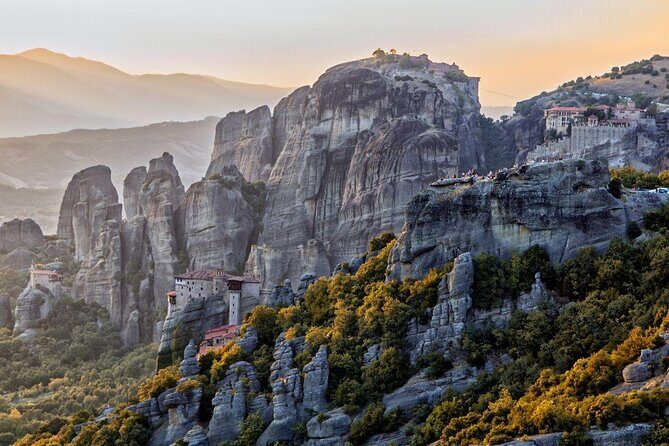
Meteora is the kind of place that looks like movie sets from a distance. Up close, the cliffs and monasteries feel even more startling—monasteries perched where the rock face looks nearly vertical. The big win of taking a guided day trip is time efficiency: you’re not figuring out bus transfers, parking, or which viewpoints are worth the extra climb.
This tour also gives you what I’d call structure-with-flexibility. Your local guide leads you through the main sights and storylines, then you get practical time to move at your own pace around the monasteries. In one review, people described guide Maria as exceptionally energetic and helpful—exactly the right kind of personality for a day that starts early and moves fast.
The only trade-off is the schedule. You’re away from Athens for roughly 14 hours, with around 4 hours each way on the road. That’s not “relaxing travel.” It’s “get it done so you can enjoy Meteora.”
You can also read our reviews of more guided tours in Athens

The bus ride reality check: timing, AC, Wi‑Fi, and comfort
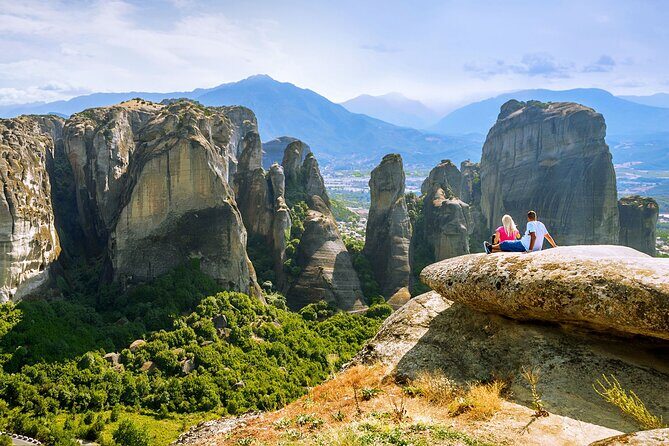
You depart Athens early, with boarding described near 07:45 AM and the tour starting around 8:00 AM at Stathmos Larisis. The pick-up point is very specific—right across from the Central Railway Station—so give yourself extra time to locate the correct bus. A couple of reviews pointed out confusion during boarding on busy days, so don’t cut it close.
On board, you get an air-conditioned coach with Wi‑Fi and USB chargers. That said, a few people reported that the Wi‑Fi was weak or that the USB ports weren’t easy to use. My practical advice: bring a power bank and plan on charging just in case.
Expect two short breaks during the drive. They’re helpful for stretching and snacks, but they also remind you this is a long road day. If you’re the type who gets cranky on buses, pack the basics: water, a snack for later, and something to cover your ears or eyes during the midday ride back and forth.
Kalambaka stop: town time, lunch options, and what to do with it
Kalambaka is the foothills base for Meteora. It’s where you’ll pause long enough to breathe and reset before the monastery climbs. If you choose the lunch option, you’ll eat at a local restaurant with a meal that includes fresh salad, a choice of main dish, baked bread, and water. Vegetarian and vegan options are available.
If you choose the no-lunch option, you get about an hour of free time in Kalambaka for cafés, shops, and quick wandering. This is the best part of the tour if you want a break from timed visits. One review suggested skipping or reconsidering the lunch if you care a lot about food quality, since lunch was described as average by at least one person. My take: it’s convenient and filling, but if you’re picky, you might prefer using that time to grab something you actually want.
Either way, use this time smart. Use the restroom before Meteora walking starts, and buy water if you think you’ll run low.
Entering Meteora: what the guided tour actually adds

At Meteora, your local guide meets you and keeps the day flowing. You’ll get panoramic photo stops and a guided walkthrough of what you’re seeing, including stories behind why hermits chose these remote cliff caves centuries ago. The tour description specifically calls out hermit caves and the St. George Mandilas cave, plus explanations and myths tied to the site.
In real terms, the guide’s value is this: Meteora can feel like “more rocks and more churches” if you’re only looking at the buildings. With a guide, you start noticing the patterns—how each monastery relates to the rock formations around it, and how the isolation shaped daily life. When guides like Maria were praised, it was for exactly this kind of context plus a friendly, upbeat style.
You’ll also get chances to take photos. Some monasteries are reachable with short walks; others require steps and careful paths. Photo stops are timed so you don’t feel like you’re rushing blindly between viewpoints.
Monasteries on the rock: how the stops feel in practice
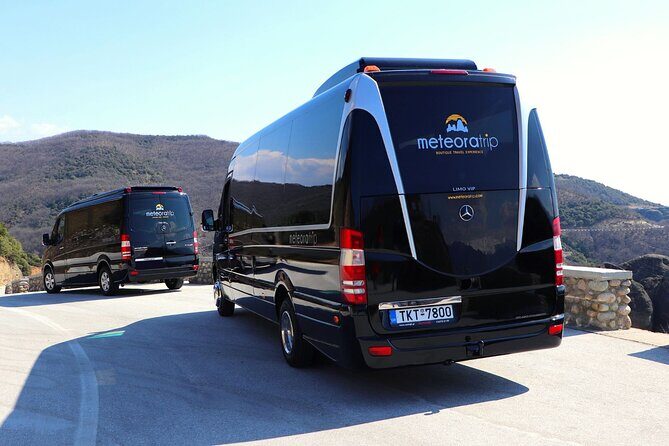
Your day is built around seeing multiple monasteries at different “intensity levels.” Some visits are short and focused on a viewpoint and quick orientation. Others get longer time where you can actually slow down and look at details.
A key point: the tour does not include guided explanations inside each monastery. Expect to hear the story outdoors and between stops, then explore the interiors yourself once you’re inside. One review specifically said the guide didn’t accompany them inside the monasteries, which matches how these sites often work.
Also, you’ll be stepping inside three monasteries. Entrance fees are not included and must be paid in cash. In plain terms: you’ll pay to go in, and the guide’s job is to help you choose the right time and direction so you don’t waste that limited interior access.
A few more Athens tours and experiences worth a look
- All Day Cruise -3 Islands to Agistri,Moni, Aegina with lunch and drinks included
★ 5.0 · 4,958 reviews




Great Meteoron and Varlaam: the big-name monasteries with the most time

Great Meteoron is described as the oldest and most important monastery. It’s also often the stop where the “wow” factor hits hardest. If you want the classic Meteora feeling—church details, walls, and a sense of scale—this is one of your best bets. Your time here is listed at about 1 hour.
Varlaam is the second-largest monastery and is located on an imposing rock facing Great Meteoron. You’ll get about 1 hour here too, which makes it a strong candidate if you want more than a quick look. One review said Meteora itself left people speechless, and that usually lines up with the big visual monasteries that take time to absorb.
If you’re walking up and down to these locations, keep your pace steady. You don’t want to arrive sweaty and out of breath at places where you’ll want to stop often, read inscriptions, and take photos.
Roussanou, Saint Nicholas of Anapafsas, and the “cliff access” difference
Not every monastery feels equal on the ground. That’s why this tour’s mix of stops matters.
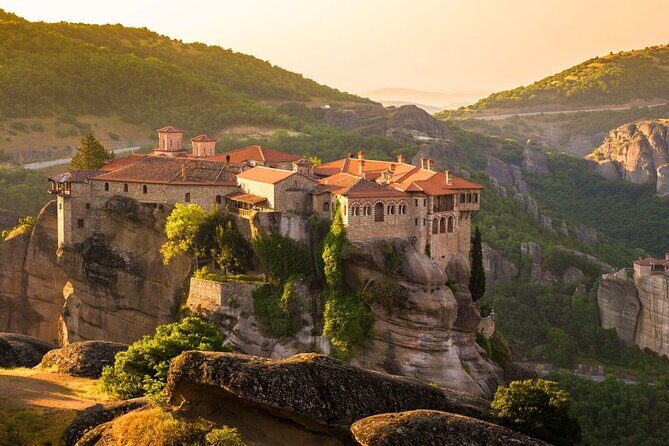
Roussanou (also known as Arsani) sits on a steep vertical cliff between Saint Nicholas Anapafsas and Varlaam, with a short stop time listed around 15 minutes. You’ll likely enjoy it most if you like exterior architecture and dramatic viewpoints rather than long interior wandering.
Saint Nicholas of Anapafsas is described as literally suspended on a small rock and is the first monastery met on the way from Kastraki. Your stop is about 30 minutes. This is a decent “in-between” stop: enough time to appreciate the setting and get a few photos without turning the day into a slow slog.
These shorter stops can be great if you’re not trying to cram every single interior detail into one day. The trade-off is that if you love one monastery style more than others, you might wish you had time to linger. I’d treat the longer stops as your “real visit” anchors and use the short ones for snapshots and context.
Holy Trinity’s 145 steps and Agios Stefanos for easier access
Holy Trinity is called out as the third oldest monastery and also the most difficult to reach. The route includes crossing a downhill path and then ascending 145 steps carved into the rock. The tour description even notes that early hermits used ropes and nets and took decades to move materials.
If your legs are not up for that, this is the part of the day where you’ll feel it. The stop time is about 30 minutes, so it’s not long, but it is demanding. Plan your energy accordingly. Take it one step at a time, and don’t be shy about pausing to catch your breath.
Agios Stefanos (Saint Stephen’s) is the opposite vibe. It’s located just above Kalambaka and is described as the most accessible monastery, with easy access through a small stone bridge and no steps to the entrance. It’s also listed at about 30 minutes.
That contrast is useful. On a day trip, you get both ends: a “this was built for endurance” monastery and a “you can enjoy it without conquering it” monastery.
The hermit caves and St. George Mandilas: the story layer that sticks
One of Meteora’s best tricks is how it mixes spirituality, survival, and isolation. Your guide’s commentary connects the monasteries to the hermit caves and why they were used. The tour description mentions ancient hermit caves and St. George Mandilas cave, plus explanations about why hermits chose to settle in these caves about a thousand years ago.
You’ll probably feel the difference between “seeing buildings” and “understanding the setting.” When someone like Maria is guiding, that’s often where the day becomes more than sightseeing—because you start imagining the practical difficulties and the spiritual pull that made people commit to living in places only reachable by ladders, ropes, and sheer will.
If you like history that feels human instead of textbook-flat, this is the portion worth paying attention to—even if your calves are already protesting.
Price and entrance fees: what $84.66 turns into on the ground
The advertised price is $84.66 per person, and the big value is that transportation from Athens is included, plus a local guide and the guided Meteora portion with panoramic photo stops. You also get audio guides in multiple languages if you want them (Spanish, French, German, Italian, Japanese, Chinese, and Korean).
But you should budget extra for monastery entrances. Entrance fees are €5 per person per monastery, and the monasteries accept cash only. The tour also says you visit all monasteries and step inside three of them. If you enter three monasteries, that’s about €15 cash for entrance fees (plus anything extra if you decide to go inside more).
So is it good value? For me, it’s best if you want a guided, no-driving day. If you’re confident navigating on your own and you’re comfortable with long distances and public transport, you could potentially DIY it cheaper. If not, the included bus and guide save you hassle—and that’s worth money when you have only one day.
Dress code and cash-only rules: the small stuff that prevents stress
Meteora’s dress code is real. Men are required to wear long trousers and shirts with sleeves. Women must wear skirts that fall below the knee (trousers are not permitted) and cover their shoulders. If needed, a long scarf wrapped around the waist can work as a workaround.
Bring a scarf if you might need it. It’s light, packs easy, and can save you from last-minute outfit problems.
Also plan for cash. Entrance fees are cash-only, so keep euros handy in small bills if possible. And if you’re visiting pay-to-use toilets at monasteries, keep extra coins or bills ready.
One more practical note: this tour runs for a maximum of 35 travelers. That keeps it from feeling like chaos, but it’s still a busy day trip. That means your best move is to show up prepared and keep your pace flexible.
Who this Meteora day trip is best for
This tour is a strong match if you want:
- Classic Meteora highlights with minimal planning
- A guide to explain the site’s stories, not just point at buildings
- A day trip that includes Kalambaka so you’re not locked only to the cliffs
- The chance to step inside three monasteries without arranging logistics
It’s less ideal if you:
- Hate long bus days and want lots of time back in Athens
- Struggle with steps and steep paths
- Want a slow, unhurried experience at each monastery
If you’re the kind of person who enjoys walking uphill for a view, you’ll be fine. If climbing stairs makes you miserable, consider whether you can pace yourself for Holy Trinity’s tougher route.
Should you book this Meteora tour from Athens?
Book it if you want a reliable, guided day trip to a place that’s hard to manage alone. I think the biggest “yes” signals are the included transport, the local guide commentary (especially if you get Maria or another energetic guide), and the fact that you’re not just driving to one monument—you’re seeing the wider Meteora monastery world in a single day.
Skip or reconsider if you only have a short time window in Athens and want more city time, or if you know steps and steep climbs will ruin your mood. For those cases, a slower overnight plan (not covered here) can make the whole experience feel less rushed.
If your priority is to experience Meteora’s cliff monasteries with a plan, this tour is a practical way to do it—just come prepared for a long day, dress for the monasteries, and keep euros in your pocket.
FAQ
How long is the Athens to Meteora tour?
The full day is about 14 hours, including roundtrip travel between Athens and Meteora.
Where do you depart from in Athens, and when do you return?
You meet at Stathmos Larisis (Central Railway Station of Athens area). You return to the meeting point in Athens around 10:15 PM.
How many monasteries are visited, and do you go inside?
You’ll see all the monasteries of Meteora and visit 3 of them. You can step inside three monasteries, but monastery entrances are not included.
Are monastery entrance fees included in the tour price?
No. Entrance fees are €5 per person per monastery, and the monasteries only accept cash.
Is Greek lunch included?
Lunch is included only if you choose the option with lunch. It includes fresh salad, a choice of main dish, baked bread, and water, with vegetarian and vegan options available.
Is there a dress code for the monasteries?
Yes. Men must wear long trousers and sleeved shirts. Women must wear skirts that fall below the knee and cover their shoulders; trousers are not permitted. A long scarf can be used to wrap around the waist as an alternative.
Do I need anything for the audio guides?
If you want to use the free audio guides, bring your smartphone and earphones with you.