REVIEW · ATHENS
Best of Athens and Ancient Corinth Full Day Private Tour
Book on Viator →Operated by My Athens Transfers · Bookable on Viator
The most striking feature of this tour is its reach: in one long day, you move from the Acropolis and Parthenon to the Corinth Canal and the hilltop fortress of Acrocorinth. It is a big helping of Greek history, served with private transport and plenty of photo stops.
I like the door-to-door pickup, which saves you from arranging taxis or wrestling with Athens traffic. I also like the flexibility of a private vehicle, since your pickup time and return point can be adjusted, and drivers such as George and Panos add lively English commentary.
The tradeoff is simple: eight or nine hours is a lot of ground to cover. You will see many places, but several stops are brief, and the driver does not enter the archaeological sites with you unless you arrange a licensed guide separately.
In This Review
- Key points at a glance
- Why this Athens and Corinth day works
- Starting above Athens at the Acropolis
- One hour inside the Acropolis Museum
- Athens from the road and the hill
- Crossing the Corinth Canal
- Ancient Corinth, the Temple of Apollo, and the museum
- Looking up to Acrocorinth
- What the private vehicle adds
- Price, timing, and who should book
- Should you book this tour?
- FAQ
- How long does the tour last?
- Is pickup included?
- Is this a private tour?
- Is an English-speaking guide included?
- Are Acropolis tickets included?
- Is the Acropolis Museum ticket included?
- How much does Ancient Corinth cost to enter?
- Is lunch included?
Key points at a glance
- Acropolis access requires planning: The Acropolis ticket costs €30 and must be purchased in advance because entry is limited.
- The Acropolis Museum is separate: Its €20 admission is also not included and should be booked ahead.
- Corinth adds a major second chapter: You see the canal, Ancient Corinth, the Temple of Apollo, and views toward Acrocorinth.
- Private pickup keeps the day easy: Hotel, apartment, airport, and port pickup and drop-off are available.
- George and Panos are named driver-hosts: Both have been praised for friendly, engaging commentary in English.
- Lunch is included: You can choose a Greek traditional food option.
Why this Athens and Corinth day works
This is not a slow, specialist archaeology tour. It is a private overview of central Greece’s headline sights, designed for someone with limited time who wants both Athens and Corinth without changing hotels or arranging separate transport.
The day begins in Athens, then continues west along the route toward the Peloponnese. You get the ancient city at its most famous, the modern capital from several viewpoints, and Corinth’s important position between mainland Greece and the peninsula.
That variety is the real value. The Acropolis gives you temples and theater. Syntagma gives you modern Greek political life. Corinth connects mythology, Roman history, early Christianity, and military geography. A shared minibus tour might cover similar ground, but this private format gives your own group the vehicle and the ability to adjust the pickup and return details.
The published price is $231.19 per person. That is not a budget sightseeing day, particularly because entrance fees are extra. For two people, the transport cost is substantial. For a family or small group, though, the private vehicle, airport or port pickup, bottled water, WiFi, lunch, and flexible timing can make the price more sensible than piecing together taxis, trains, tickets, and a separate excursion.
You can also read our reviews of more private tours in Athens



Starting above Athens at the Acropolis
The Acropolis is the heart of the morning. Its Greek name means the high point of the city, and the rocky summit still gives you the clearest sense of why this place mattered. The tour allows about an hour here, followed by focused visits to the main monuments.
You enter through the Propylaea, the monumental gateway commissioned during the rebuilding program associated with Pericles after the Persian Wars. Even a short pause here helps you understand that the Acropolis was planned as a grand approach, not simply a collection of ruins.
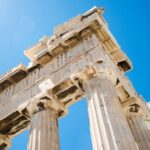
The Parthenon receives about 20 minutes in the stated schedule. That is enough to look closely at its massive form and take in its position above Athens, but it is not a leisurely architectural study. Expect crowds and uneven ancient surfaces, and wear shoes suitable for walking.
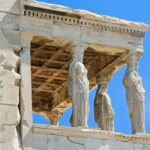
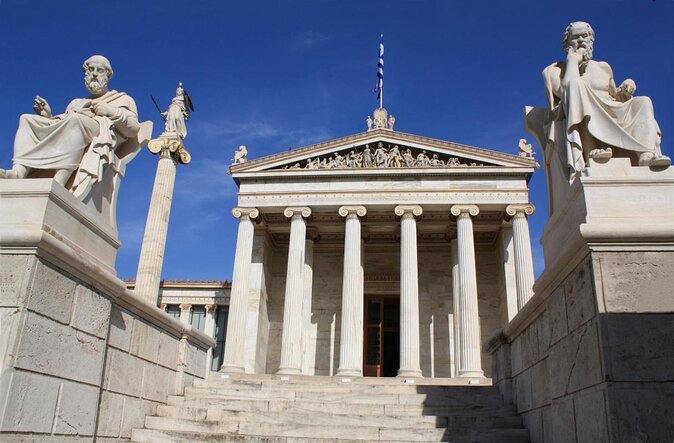
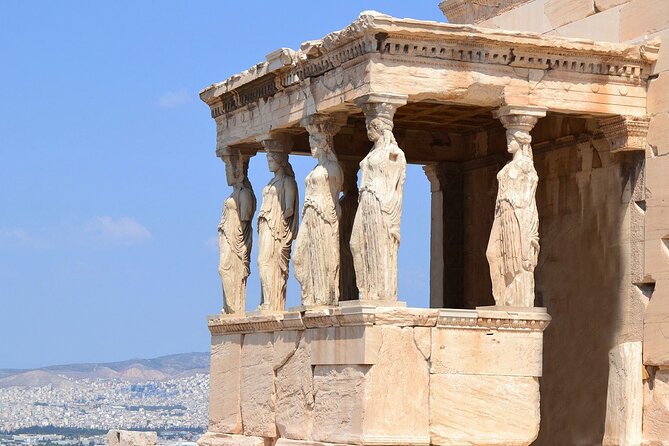
The Erechtheion gets about 15 minutes. This temple honored both Athena and Poseidon, and its unusual design makes it one of the most memorable structures on the hill. The Temple of Athena Nike receives another 15 minutes. Built around 420 BC, it is an early fully Ionic temple on the Acropolis and occupies a dramatic position beside the entrance.
The schedule also includes the Theatre of Dionysus and the Odeon of Herodes Atticus. The Theatre of Dionysus, on the south slope, is tied to the City Dionysia and the development of Greek theater. The Odeon is a Roman-era theater completed in AD 161 and later renovated in 1950. These stops are short, but they broaden the visit beyond the Parthenon.
The important practical point is ticket timing. The Acropolis admission fee is €30 per person, not included, and must be purchased in advance because availability is limited. The driver can help arrange skip-the-line tickets if requested, or you can purchase them through the booking material.
One hour inside the Acropolis Museum
At the foot of the hill, the Acropolis Museum provides a useful change of pace. The building is modern, while its displays hold sculptures and objects from the Acropolis and surrounding sites.
The planned visit lasts about an hour. That is enough to see major works and connect the museum pieces with the monuments you have just visited, but you will need to move with purpose. If ancient art is a main reason for your trip, ask about allowing more time here and trimming one of the shorter city photo stops.
Museum admission is separate and costs €20 per person. It also has limited availability and should be booked in advance. Since the driver is not a licensed guide and does not accompany you inside, a formal guide is worth considering if you want detailed explanations of the sculpture, temple decoration, and archaeological finds.
Athens from the road and the hill
After the Acropolis and museum, the tour shifts to short stops and drive-by views. The Arch of Hadrian and the remains of the Temple of Olympian Zeus receive about five minutes each. Hadrian’s Gate once marked the road between older Athens and the Roman complex near the Temple of Olympian Zeus. The remaining columns at the temple give you a quick sense of the scale of the project.
The Panathenaic Stadium, also known as the Kallimarmaro, gets about ten minutes. It is built of Pentelic marble and is linked with the first modern Olympic Games. Ten minutes is enough for a photograph and a look at its long marble sweep, though not enough for an extended visit.
At Mount Lycabettus, you have about 20 minutes for a broad view over Athens. This is one of the day’s best orientation points because you can see the old and new parts of the city together. The hill also provides a useful visual counterpoint to the Acropolis. One is the ancient religious center, the other a high lookout over the modern capital.
Syntagma Square and the Hellenic Parliament follow. The square is the center of modern political Athens, while the Parliament building occupies the former royal palace. The nearby Tomb of the Unknown Soldier is guarded by the Evzones, Greece’s ceremonial presidential guard. The stated schedule allows five minutes at Syntagma, five minutes for the Parliament view, and 15 minutes at the monument.
The itinerary also includes the Academy of Athens, the National Library, and the University of Athens, along with the Old Parliament House and Plaka. These may be viewed from the vehicle or as brief photo stops rather than full interior visits. The neoclassical buildings form Athens’ main academic trio, while Plaka gives you a look at the old neighborhood on the Acropolis slopes, with narrow streets and neoclassical buildings.
Crossing the Corinth Canal

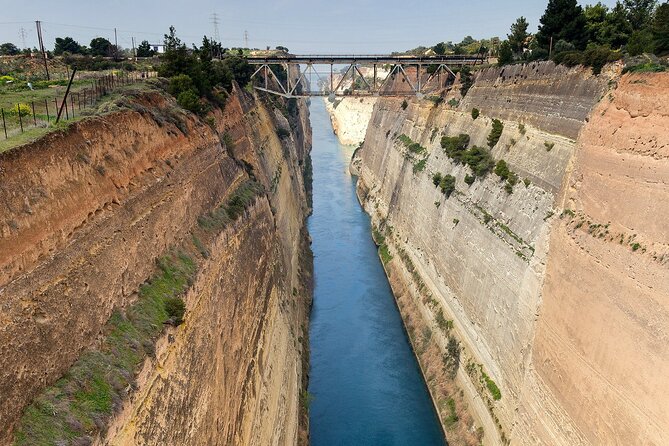
The drive to Corinth changes the rhythm of the day. The Corinth Canal cuts through the Isthmus of Corinth, linking the Gulf of Corinth with the Saronic Gulf and separating the Peloponnese from mainland Greece.
At the canal viewpoint, you have about ten minutes. From above, the steep limestone walls make the engineering easy to understand. The canal is 6.4 kilometers long and only 21.4 meters wide at its base, so many modern ships cannot use it.
This is a short stop, but it earns its place. The canal explains Corinth’s importance before you even reach the ruins. The isthmus was the narrow land bridge between two major parts of Greece, and control of it meant control of movement into the Peloponnese.
The canal is also a good place for a quick photograph. The tour information notes that you may see vessels below and, at times, bungee jumping in the area. The view is the main point, not a long activity stop.
A few more Athens tours and experiences worth a look
- All Day Cruise -3 Islands to Agistri,Moni, Aegina with lunch and drinks included
★ 5.0 · 4,958 reviews




Ancient Corinth, the Temple of Apollo, and the museum
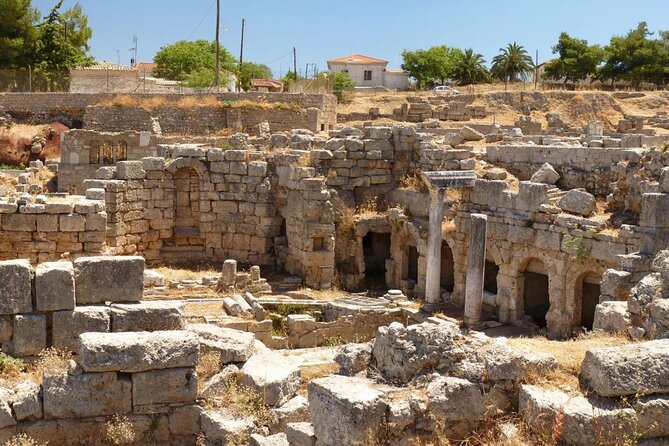
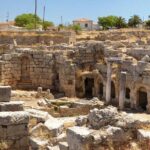
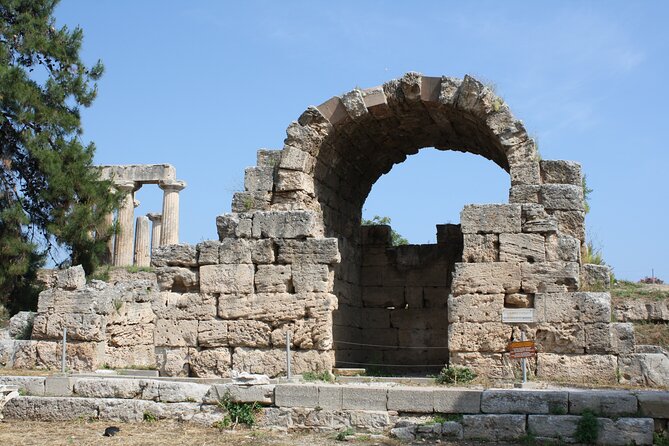
Ancient Corinth receives about an hour. In 400 BC, Corinth was one of Greece’s largest and most important city-states, with a population given as about 90,000. Its position between Athens and Sparta helped make it a major commercial and political center.
The site also has a strong connection to the New Testament. Saint Paul’s letters to the Corinthians and the account of his missionary travels give the ruins an added layer for Christian visitors.
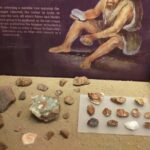
The Archaeological Museum of Ancient Corinth is inside the archaeological site. Its collections relate directly to the excavated city, including the agora, Lechaion Road, the Fountain of Peirene, the basilica, the theater, and other temples. The museum visit is scheduled for about 30 minutes.
Ancient Corinth and its museum cost €15 per person, payable on site. Unlike the Acropolis and Acropolis Museum, this ticket does not need to be purchased ahead of time according to the tour information.
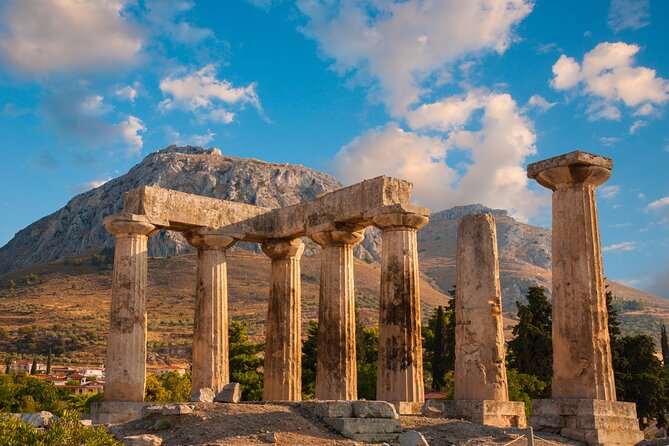
The Temple of Apollo gets another 20 minutes. Built in 550 BC, it is one of the site’s clearest reminders of Corinth’s early importance. The surviving columns are familiar from photographs, but their setting among the wider city ruins helps you read the temple as part of a functioning urban center.
Your driver can explain the site during the drive and answer questions, but drivers do not enter archaeological sites as official guides. You can request a licensed guide, depending on availability. I would consider that extra cost if you want the agora, museum objects, Roman rebuilding, and Christian connections explained in depth.
Looking up to Acrocorinth

The final major stop is Acrocorinth, the ancient city’s upper fortress. It rises on a large rock above Corinth and commanded the isthmus. Its secure water supply and defensive position made it a last line of defense for southern Greece.
The schedule gives Acrocorinth about 30 minutes. That allows time for the view and a sense of the fortress site, but it is not a full exploration of every wall or pathway. The climb and footing may require care, so anyone with mobility concerns should ask the provider about the exact stopping point and walking conditions before booking.
For me, this is one of the most rewarding parts of the day because it connects geography with history. From above, the reason Corinth mattered becomes plain. You are not just looking at stones; you are seeing the route that armies and merchants had to cross.
What the private vehicle adds
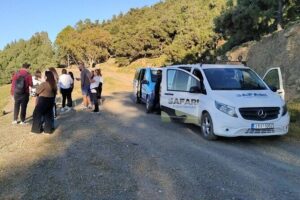
The vehicle is air-conditioned and includes onboard WiFi and bottled water. Lunch is included, with a Greek traditional food option, though the provided information does not specify the restaurant, menu, or exact lunch timing.
Pickup is available from a hotel, apartment, airport, or port. At a hotel, the driver waits in the lobby. At an apartment, the meeting point is the building entrance. Airport pickup takes place in the arrivals hall with a name sign, and flight tracking is included. Port pickup takes place at the gate after you disembark.
The tour is private, so only your group rides together. That matters on a long day. You can request an adjustable pickup time and ask to finish at a different point from the pickup location.
Drivers are fluent in English and have strong historical knowledge, but they are not licensed site guides. This distinction affects the experience. You get useful commentary between stops, then explore the Acropolis, museum, and Corinth site on your own unless you add a licensed guide.
The experience is offered in English. Service animals are allowed, and the tour states that most people can participate. Extreme sports and third-party activities are not permitted during the tour, so this is a sightseeing day, not a mixed excursion.
Price, timing, and who should book
At $231.19 per person, this tour makes the most sense when convenience has real value. It combines a full day of private transport, pickup and drop-off, WiFi, water, lunch, Athens sightseeing, and Corinth. It is especially practical for a family, a small group, or someone arriving by cruise ship who wants a direct port pickup.
The extra entrance fees add up. For one person, the Acropolis, Acropolis Museum, and Ancient Corinth total €65. A licensed guide, if requested and available, costs extra as well. Include those amounts before comparing the tour with public transport or a standard group excursion.
I would book this if you want a broad first look at Athens and Corinth, dislike managing transport, or have only one open day. I would choose a slower, site-focused plan if the Acropolis Museum or Ancient Corinth is a central interest and you want long, detailed visits.
The 4.9 rating from 13 reviews and a 100 percent recommendation mark are encouraging, and the named drivers George and Panos receive specific praise for being friendly, engaging, and ready to answer questions. Still, the small review sample means I would judge the tour mainly on its format: private transport, wide coverage, and flexible pickup, balanced against short stops and extra admission costs.
Should you book this tour?
Book it if you want maximum coverage in one private day and value a driver who handles Athens traffic, the Corinth route, airport or port pickup, and the return journey. George and Panos are two named driver-hosts associated with especially warm feedback, but the assigned driver may vary.
Before paying, confirm your preferred pickup time, ask about adding a licensed guide, and arrange the Acropolis and museum tickets early. If you accept that this is a fast overview rather than a slow archaeological study, the tour offers a practical way to connect Athens with Ancient Corinth.
FAQ
How long does the tour last?
The tour lasts approximately 8 to 9 hours.
Is pickup included?
Yes. Pickup and drop-off are available from hotels, apartments, airports, and ports. You may request an adjusted pickup time and a different return point.
Is this a private tour?
Yes. Only your group participates, and private transportation is provided.
Is an English-speaking guide included?
The driver provides English commentary and can answer questions, but drivers are not official licensed guides and do not enter archaeological sites with you. A licensed guide may be requested, subject to availability.
Are Acropolis tickets included?
No. Acropolis admission costs €30 per person and must be purchased in advance because availability is limited.
Is the Acropolis Museum ticket included?
No. Admission costs €20 per person and should be purchased in advance because availability is limited.
How much does Ancient Corinth cost to enter?
Ancient Corinth and the Archaeological Museum of Corinth cost €15 per person. This ticket can be purchased on site.
Is lunch included?
Yes. Lunch is included, with a Greek traditional food option available.