REVIEW · ATHENS
Biblical Tour Letters to The Corinthians – St Paul’s Footsteps
Book on Viator →Operated by Athens Taxi Travel · Bookable on Viator
St. Paul’s footsteps feel surprisingly close. This private Athens-to-Corinth route lines up major Bible moments with the real roads, ports, and ruins that shaped Paul’s world. I love the flexibility to shape your timing (including adjusting if you already saw some sites). I also love the private transportation setup: you can ask the driver questions on the way, then focus your time on the places that matter most to you.
One thing to consider: the day is packed with stops, so if you like long wandering and slow photo breaks, you’ll want to ask for a calmer pace. Also, entrance fees apply at Ancient Corinth and the archaeological museum portion (while many other stops are free to enter).
In This Review
- Key things to know before you go
- Private Athens-to-Corinth Logistics: What You’re Really Buying
- Mars Hill (Areopagus): Turning Unknown God Into Real Place
- Corinth Canal and the Diolkos: The Shortcut That Changed Everything
- Isthmia and the Isthmian Games: Athletics, Poseidon, and Paul’s Daily Work
- Archaeological Museum of Isthmia: Kenchreai Artifacts You Can Actually See
- Ancient Corinth and the Bema: Paul Facing Gallio
- Temple of Apollo, Kechreai (Kenchreae), and Apostolou Pavlou Church
- Akrokorinthos Fortress Views: Where the Day Finishes Strong
- Price and Value: Is $386.18 Per Group Worth It
- Tour Pace, Drivers, and the Flexibility That Makes It Work
- Lunch and Timing: How to Avoid Losing Your Best Hour
- Should You Book This St. Paul Footsteps Tour?
- FAQ
- Is this tour private?
- How many people can I book for?
- Do you offer pickup?
- What language is the tour in?
- Is admission included for Ancient Corinth and museums?
- How long is the tour?
- Do I get a licensed tour guide?
- Can I cancel and get a refund?
Key things to know before you go
- Private, customizable itinerary that can adapt if you’ve already seen certain Athens highlights
- Driver-led commentary in fluent English while you stay free to explore each site on your own
- St. Paul-specific stops tied to places mentioned in Acts and his letters
- Engineering stops that make Paul’s route make sense (Corinth Canal and the Diolkos)
- Isthmia grounds for games, worship, and sea-sailor faith—not just one quick photo stop
Private Athens-to-Corinth Logistics: What You’re Really Buying
This is a private tour for up to 4 people, priced per group (not per person). That matters because you’re paying for a car day: pickup from your place, a comfortable vehicle, bottled water, and WiFi on board. The schedule runs about 8 hours, and it’s offered in English.
You’ll be able to move at a pace that fits your group, but it’s still a full-day itinerary. The stops are mostly short—think 20 to 40 minutes in many places—so your time is spent efficiently, not lazily. If you’re traveling with people who want to linger, build that in by asking the driver to plan extra minutes at the two or three locations you care about most.
Also, plan on this not being a “walk-and-talk” licensed guide experience everywhere. The drivers are not official site guides, meaning they won’t enter the archaeological areas with you. Still, they can answer questions and provide strong context during the drive, and many past groups specifically praised how much information they got en route.
You can also read our reviews of more tours and experiences in Athens.
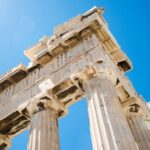
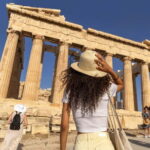
Mars Hill (Areopagus): Turning Unknown God Into Real Place
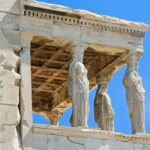
The emotional start of the day is Areopagus Hill, the legendary Mars Hill where Paul delivered a famous sermon. You’re standing where the setting matters: the idea of addressing the Athenians in a place tied to civic and philosophical debate. It’s not just a Bible stop—it’s a reminder that Paul’s message landed in a world of arguments, ideas, and competing beliefs.
This stop is about 20 minutes and admission is listed as free, so you can get in, orient quickly, and move on without paying extra. The biggest payoff here is clarity: you get a tangible location for a sermon that often gets discussed only in text.
Practical tip: wear shoes with good grip. This kind of viewpoint area is worth slowing down for, but you don’t want to rush because you’re uncomfortable walking on uneven ground.
Corinth Canal and the Diolkos: The Shortcut That Changed Everything
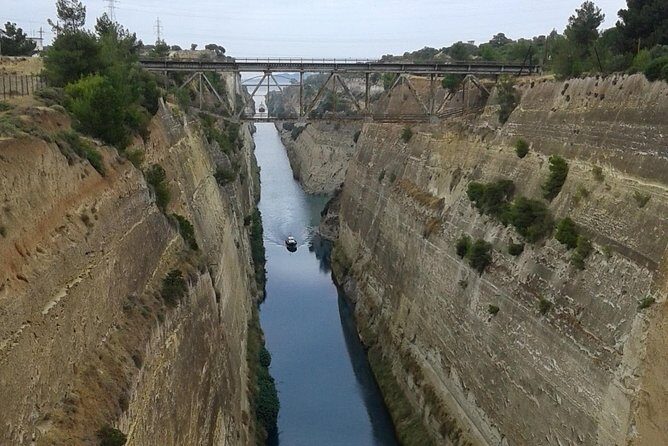
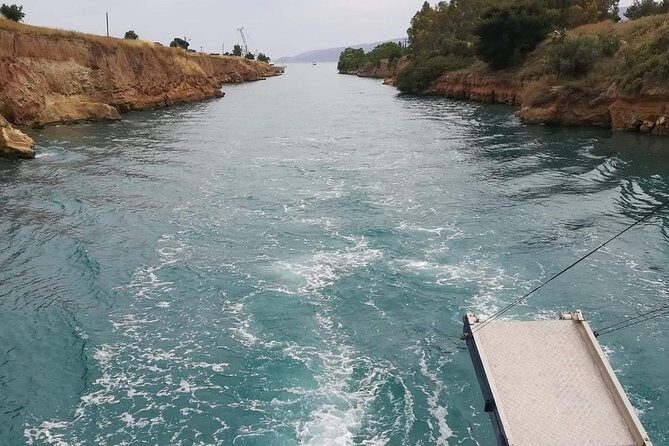
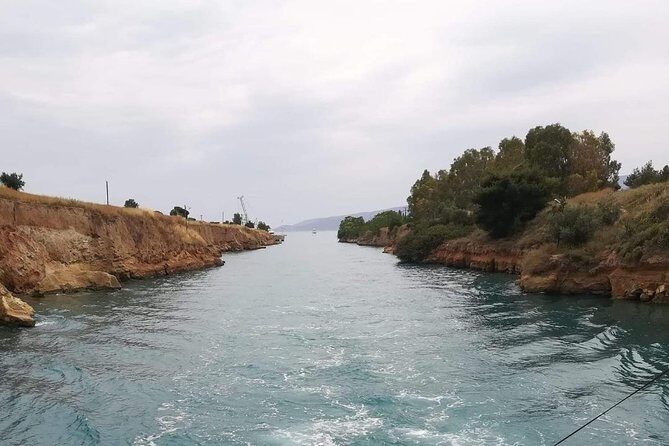
Next comes Corinth Canal, where you can literally see how water routes shape trade and travel. Even though the canal is modern (completed in modern times), the concept goes back more than 2,000 years, tied to ancient rulers who imagined a faster path. The tour notes the old problem clearly: without the shortcut, ships had to sail a long extra distance around the Peloponnese.
You’ll spend about 30 minutes here, with admission listed as free. That’s enough time to take in the scale and get a feel for why a maritime movement mattered for Paul’s travels.
Then you’ll visit the Diolkos, the ancient engineering route used to transport ships across the isthmus. This is where the story clicks: rather than thinking of Paul’s world as only roads and foot travel, you start picturing merchants, sailors, and moving goods sliding through an actual “ship transport” system.
If you care about how faith traveled alongside commerce, these engineering stops give you that missing middle.
Isthmia and the Isthmian Games: Athletics, Poseidon, and Paul’s Daily Work
Isthmia is one of the best-value parts of the day because it connects multiple themes at once: worship, major public events, and the kind of crowd flow where a preacher could meet people. Here, the focus is the Isthmian Games, second only to the Olympics in importance in the ancient Greek world. They were held in honor of Poseidon, and that gives you a clear religious frame for the athletic festival.
The tour calls out a strong biblical connection through Paul’s presence in the region: he’s believed to have worked as a tentmaker for athletes and visitors. That detail matters. It means Paul wasn’t only “showing up to preach”—he was embedded in daily life around a major public event.
You’ll typically spend about 1 hour at Isthmia on this route, with admission listed as free for the stop described here. From a practical standpoint, this is long enough to take in the key areas and not feel like you’re just collecting one quick exterior view.
Archaeological Museum of Isthmia: Kenchreai Artifacts You Can Actually See
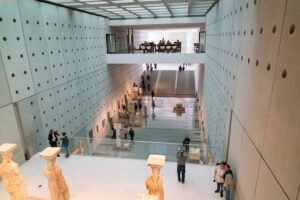
After the outdoor sites, the Archaeological Museum of Isthmia gives you the “stuff from Paul’s neighborhood” feeling that ruins alone can’t always do. Admission is listed as not included for this museum time, so you’ll want to carry cash or a card for whatever ticket price applies on the day.
This museum highlights finds from the Poseidon sanctuary, which is the same religious world tied to the games Paul would have encountered. It also features glass panels from Kenchreai, the port linked to Paul’s travel. The tour description connects this port to departures for Syria, which is a useful reminder that Paul’s movement wasn’t random—it followed real routes.
If you like your faith history with visual proof—artifacts, statues, votive objects—this museum stop is often the difference between a “Bible day” and a “Bible day with proof.”
- All Day Cruise -3 Islands to Agistri,Moni, Aegina with lunch and drinks included
★ 5.0 · 4,958 reviews


Ancient Corinth and the Bema: Paul Facing Gallio
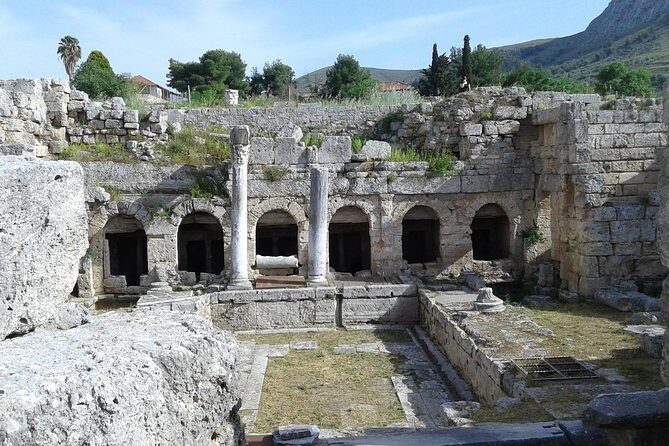
Ancient Corinth is the heart of the St. Paul story on this itinerary. Admission for Ancient Corinth is listed as not included, with the combined entrance fee noted for Ancient Corinth and the archaeological museum portion of Corinth at €15 per person (paid on site).
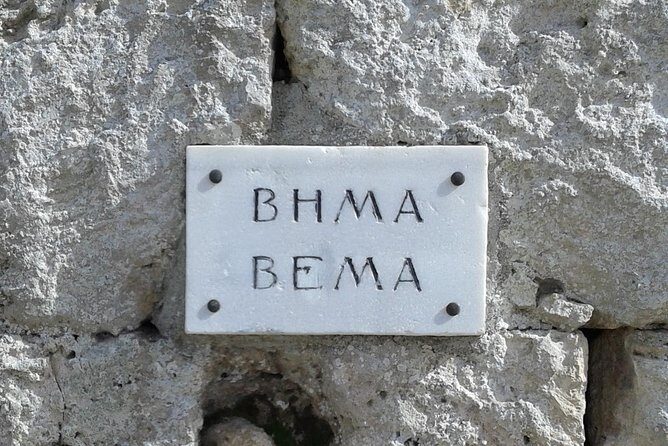
Here’s what makes this stop so powerful: Paul’s time in Corinth was long enough to shape a community, and his letters to the Corinthians address real issues from real people. The tour also points you to the Bema, the judgment seat linked to Paul’s appearance before the Roman proconsul Gallio. In the biblical account, Gallio dismissed the case, and that detail connects directly to why Paul could keep preaching in Corinth without Roman interference.
Plan for about 1 hour at Ancient Corinth. It’s enough to cover the big points without burning your entire day at one site.
Practical note: since the driver won’t go inside the site, use the car-time commentary to ask what to look for, where the Bema area is, and how to pace your walking. Then you’ll enjoy the site instead of trying to figure it out while you’re already tired.
Temple of Apollo, Kechreai (Kenchreae), and Apostolou Pavlou Church
Once you’ve anchored yourself in Ancient Corinth, the tour keeps building the “world around Paul” picture with three very different stops.
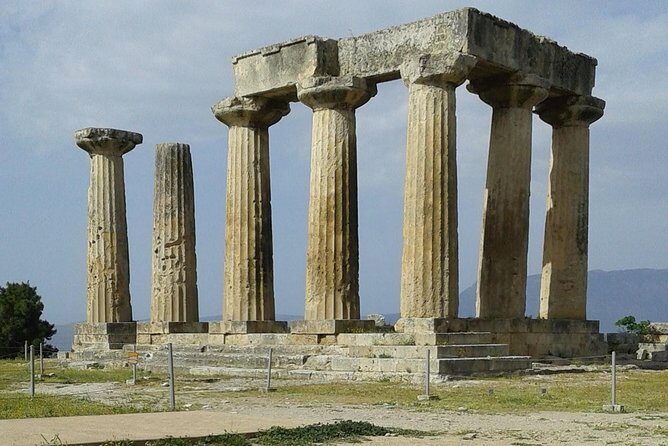
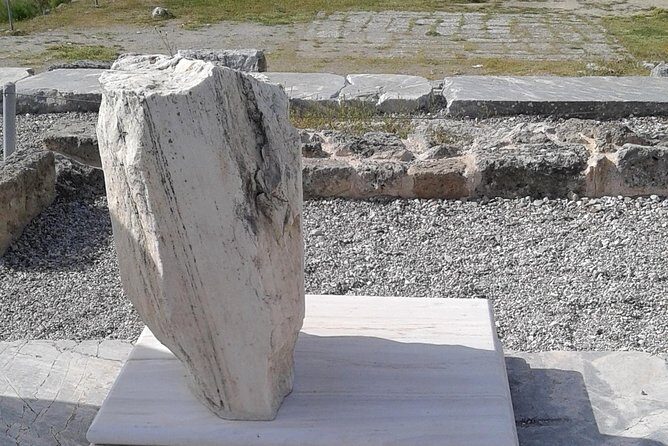
First is the Temple of Apollo, one of Corinth’s most striking ancient monuments. The description gives you the key details: it dates to around 560 BC, it’s an early Doric example, and its monolithic limestone columns are still standing. This is a clear visual reminder that Paul’s message arrived in a city full of temples and religious expectations.
Next comes Kechries (Kenchreae), the eastern port of Corinth. The tour ties this stop to Acts 18:18, including Paul cutting his hair before leaving for Syria with Priscilla and Aquila. It also connects the port to early Christian life—especially the mention of Phoebe in the letter to the Romans, described as a respected servant of the church in Cenchreae.
Finally, there’s Apostolou Pavlou, a church honoring Paul’s work in Corinth. This isn’t an artifact stop. It’s a reflection stop. You’re in a place built to remember the man and his mission, which can be a helpful rhythm after all the ruins.
All three of these stops are listed as free in the tour description, and they’re short (about 20 to 30 minutes each), so they fit well even in a full schedule.
Akrokorinthos Fortress Views: Where the Day Finishes Strong
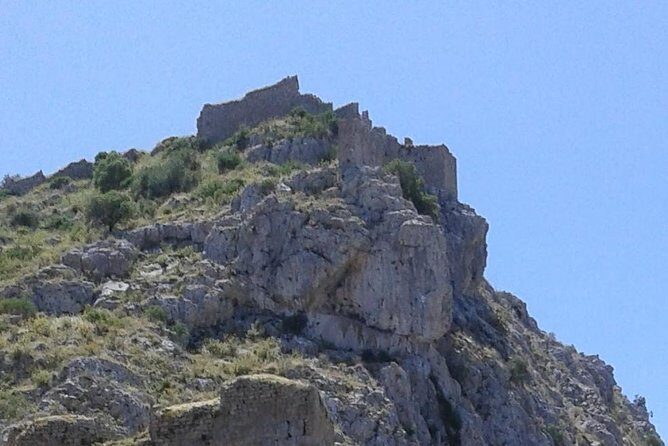
If the day ever feels like it’s only “ruins, ruins, ruins,” Akrokorinthos adds the missing wow factor: a fortress above Ancient Corinth with big views. The tour notes that the path may follow what St. Paul walked as he moved through the area, and the vantage point helps you understand how people would have seen the city from above.
You’ll typically spend about 40 minutes here, with admission listed as free. It’s a good time to pause, look out, and connect the geography back to the story. Seeing the layout helps you remember why the Corinth region mattered.
Practical tip: save energy for this last segment. If you’re planning to do lots of photos, brace for the walk and the stairs or uneven paths.
Price and Value: Is $386.18 Per Group Worth It
At $386.18 per group (up to 4), you’re paying for a private car day that hits multiple key locations tied to Paul’s ministry. That can be excellent value if you’re splitting the cost among a small group or traveling with someone who will enjoy the car-time explanations.
Here’s what supports that value:
- Private transportation for the day (pickup included), plus WiFi and bottled water
- Multiple stops across the Corinth region, including both outdoor sites and museum time
- Many stops have free admission noted in the description, so your cash outlay is mainly for the paid archaeological admissions
What could reduce the value slightly:
- Museum and some archaeological admissions are not included (Ancient Corinth and the archaeological museum portion noted at €15 per person; the Museum of Isthmia ticket is also not included)
- If you expected a licensed guide to escort you inside every site, you’ll want to confirm whether you’re arranging a licensed tour guide upgrade, since the standard driver isn’t an official site guide
My advice: treat this as a geography-and-story day with optional deepening where you choose. If you pick your top two places (often Ancient Corinth plus one other), you’ll get your money’s worth quickly.
Tour Pace, Drivers, and the Flexibility That Makes It Work
The best part of this tour—based on real-world feedback—often comes down to how well the team manages the day. The driver is your constant: they keep you on track, explain what’s around you, and adjust timing when possible.
In past experiences shared by groups, drivers and guides like Michael, Kostas, Spyros, Constantine, Pericles, and Alex/Vicky (when a licensed guide was included or when the team combined roles) were praised for making Corinth feel alive. The practical point for you is this: ask early what kind of day you want. If you want an easier pace, say so at pickup. If you want more time at Ancient Corinth, put it on the top of your list.
You may also be able to adjust if you already saw some major Athens sights. One group reported the driver skipped time on already-seen stops and redirected attention to Corinth sites they hadn’t done. That’s the benefit of a private format: you aren’t stuck in an identical, cookie-cutter schedule.
One small caution: any private-car day means you’re together for hours. If you’re sensitive about conversation topics, set boundaries early. The tour description emphasizes respectful, professional service, but good trip energy still starts with you telling your driver what you do and don’t want to discuss.
Lunch and Timing: How to Avoid Losing Your Best Hour
Lunch is built into the day with a stop described as a traditional seaside Greek taverna, about 1 hour. Lunch is listed as not included, so you’ll be budgeting separately.
This is usually your best time to slow down the day. If you want to shop for souvenirs or grab water/snacks, do it before or after lunch rather than during the tight travel blocks. Since most sites are short, losing 15 minutes in traffic can make the day feel rushed.
If your group includes anyone who needs frequent breaks, ask the driver for a quick reset stop around the museum or after Ancient Corinth, where walking time is most demanding.
Should You Book This St. Paul Footsteps Tour?
Book it if you want a Bible-focused day with real geography: Mars Hill, Corinth Canal, Isthmia, Ancient Corinth, Apollo’s Temple, and the port areas tied to Acts and Paul’s letters. The private format is a real advantage here, especially if you’ll benefit from on-the-road explanations and a flexible pace.
Skip it (or consider a different style) if you hate tight scheduling and prefer long guided walks inside every site with a licensed expert. Since driver time is explanatory but they don’t enter sites, you’ll want to plan your expectations.
If you book, pick your must-sees before you go. Ancient Corinth is the anchor, and then choose one other “theme” stop—engineering (Canal/Diolkos) or sports-and-faith (Isthmia). You’ll leave with a clear mental map of Paul’s world, not just a list of stops.
FAQ
Is this tour private?
Yes. It’s a private tour/activity, and only your group participates.
How many people can I book for?
The price is for up to 4 people per group.
Do you offer pickup?
Yes. Pickup is offered from your place.
What language is the tour in?
The tour is offered in English.
Is admission included for Ancient Corinth and museums?
No. Entrance fees are not included for Ancient Corinth and the Archaeological Museum of Corinth (listed as €15.00 per person). The Archaeological Museum of Isthmia also has admission listed as not included.
How long is the tour?
The duration is approximately 8 hours.
Do I get a licensed tour guide?
A licensed tour guide is not automatically included. It can be arranged upon request depending on availability. The provided drivers are knowledgeable and can give commentary in fluent English, but they are not official tour guides and they won’t enter the sites with you.
Can I cancel and get a refund?
Yes. There is free cancellation. You can cancel up to 24 hours in advance for a full refund.