REVIEW · CHANIA
Chania Battle of Crete Private Tour: WW2 Military History
Book on GetYourGuide →Operated by Proper Cretan Guide · Bookable on GetYourGuide
The most unusual part of this Chania tour is its access to abandoned German bunkers and military hideouts that many visitors never see. Historian and licensed guide Apostolis uses archive photographs and rare documents to connect these quiet sites with the fierce fighting that took place here in May 1941.
I like the visit to both the German and Commonwealth cemeteries, where the human cost of the campaign comes into clear view. I also like the private format, since Apostolis can adjust the pace and spend more time on your particular interest, as he did for one guest focused on the 1st Battalion, Welch Regiment. The main drawback is that this is a long, serious day with outdoor stops, uneven ground, and no food or drinks included.
In This Review
- Key points to know before booking
- Why this Battle of Crete tour feels different
- Maleme Airport and the opening moves
- Hill 107 and the German War Cemetery
- Galatas, Platanias, and Prison Valley
- The private WWII museum and war shelter
- A riverside break after the battlefield stops
- The abandoned German bunkers and battlefield archaeology
- Commonwealth Allied Cemetery at Souda Bay
- What $182 per person gets you
- Who should book this private history tour
- My verdict on the Chania Battle of Crete tour
- FAQ
- How long is the Chania Battle of Crete private tour?
- Where does the tour begin and end?
- Who leads the tour?
- What sites are visited?
- Are food and drinks included?
- What should I bring?
Key points to know before booking
- Maleme and Hill 107 explain why the battle turned so quickly and give you a clear starting point for the campaign.
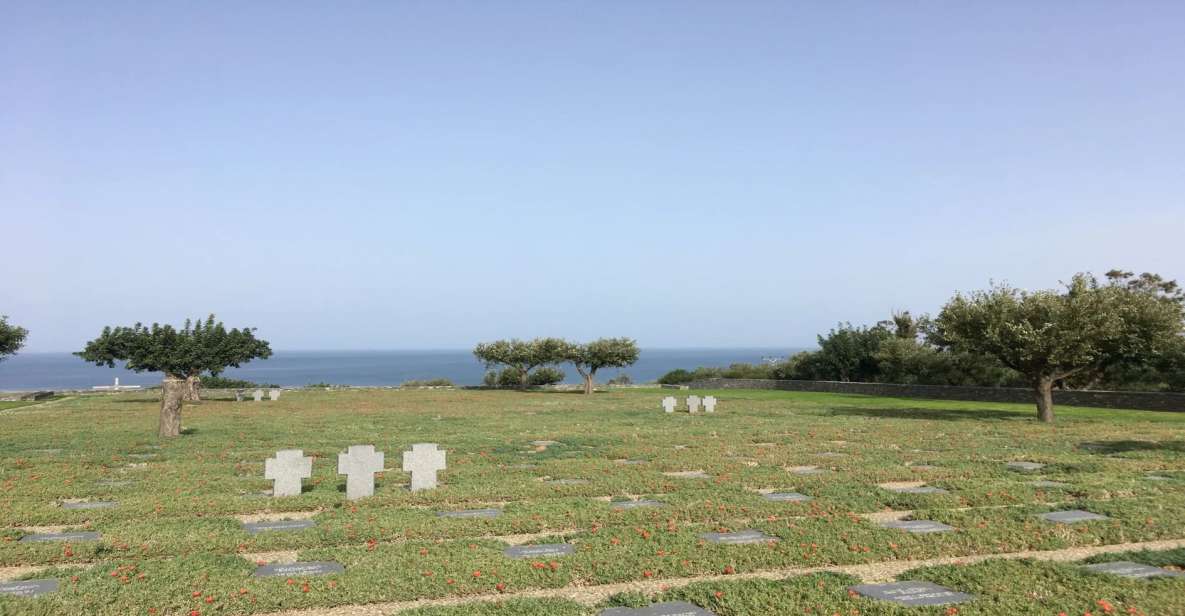
- Two war cemeteries provide a quiet counterpoint to the military sites, honoring German and Commonwealth dead.
- The abandoned bunkers are the tour’s most unusual stops, but comfortable shoes are essential.
- A private WWII museum and shelter contain rare memorabilia and help make the battle easier to understand.
- Apostolis can adapt the route and discussion for serious military-history interests.
- The seven-hour private tour costs $182 per person, a strong value for a specialist guide, private transport, and several hard-to-find locations.
Why this Battle of Crete tour feels different
Many Chania excursions focus on food, villages, beaches, or Venetian architecture. This one takes a much narrower path: the military story of Crete during World War Two.
That focus suits you if you want to understand how the fighting unfolded on the ground. You will not simply hear a list of dates while looking at a monument. You will move between airfields, bridges, hills, cemeteries, shelters, and battle positions. Each stop adds a piece to the story.
Apostolis is a certified historian and archaeologist specializing in contemporary history, and he also drives the tour vehicle. His role matters here. The Battle of Crete involved German airborne forces, Allied troops from Britain, Australia, and New Zealand, naval action, local resistance, and difficult decisions made during a wider war. A specialist guide can tie those strands together instead of treating each site as an isolated stop.
The tour has a private-group format, so you can ask questions without worrying about holding up a busload of people. The guide has also adapted the route for individual interests and changed the order when an early start was delayed. That flexibility is especially useful if you are coming from outside Chania or from a cruise ship at Souda.
You can also read our reviews of more private tours in Chania
Maleme Airport and the opening moves
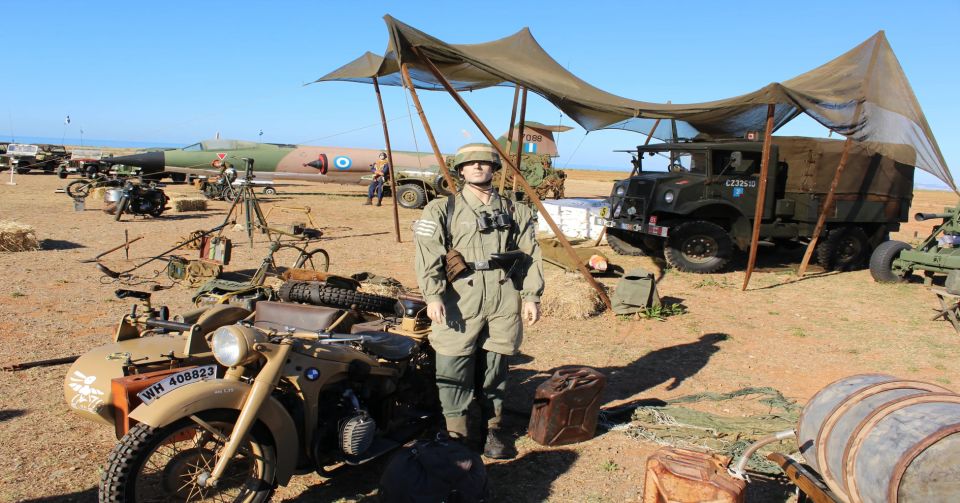
The day begins with pickup in Chania and a drive toward the Chania Regional Unit’s main Battle of Crete sites. The first major area is Maleme Airport, which was vital to the German operation.
The airport’s importance becomes easier to grasp when you see its position in relation to the surrounding sites. The German airborne attack depended on taking and holding key landing areas. Hill 107, nearby villages, roads, and the airport all formed part of the struggle for control.
This is not a polished museum setting. You are looking at an active area with modern life around it, so the guide’s photographs and explanations are useful. Apostolis uses period images to show how places looked during the battle and where units were positioned. That before-and-after comparison helps you read the ground.
The tour also includes the Tavronitis Bridge, a location that still shows signs of the fighting. It is one of those modest-looking places that can be easy to pass without context. Once you know its role, the bridge becomes a useful reference point for understanding movement, supply routes, and the pressure on the Allied defense.
One practical point: expect several stops that are primarily about interpretation rather than grand ruins. If you need dramatic preserved fortifications at every turn, this may feel understated. If you like reconstructing events from terrain, photographs, and surviving traces, the format works well.
Hill 107 and the German War Cemetery
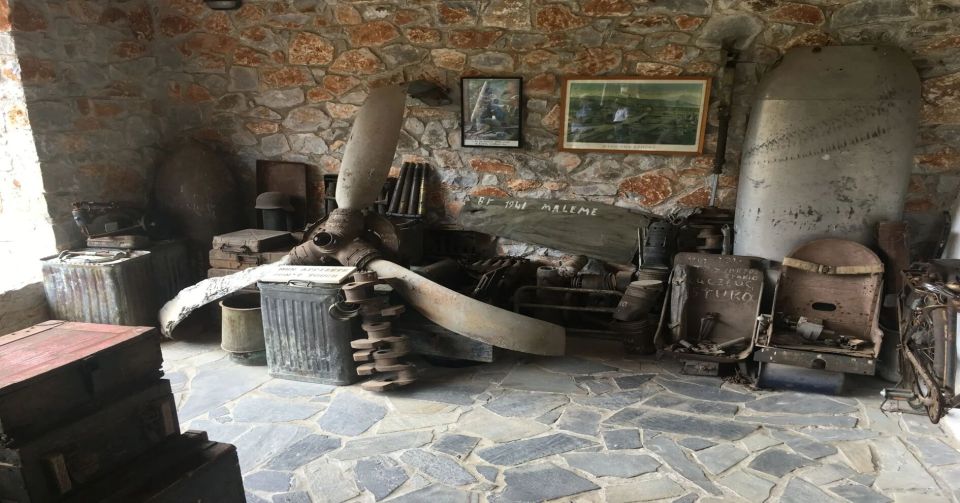
Hill 107 is one of the most important stops of the day. The tour includes a guided visit and a stop at the German War Cemetery, allowing you to consider both the tactical ground and the terrible result of the fighting.
From Hill 107, Apostolis explains the significance of the position and the events surrounding the first days of the campaign. This is where the tour moves beyond general WWII facts and focuses on the way the battle played out in western Crete.
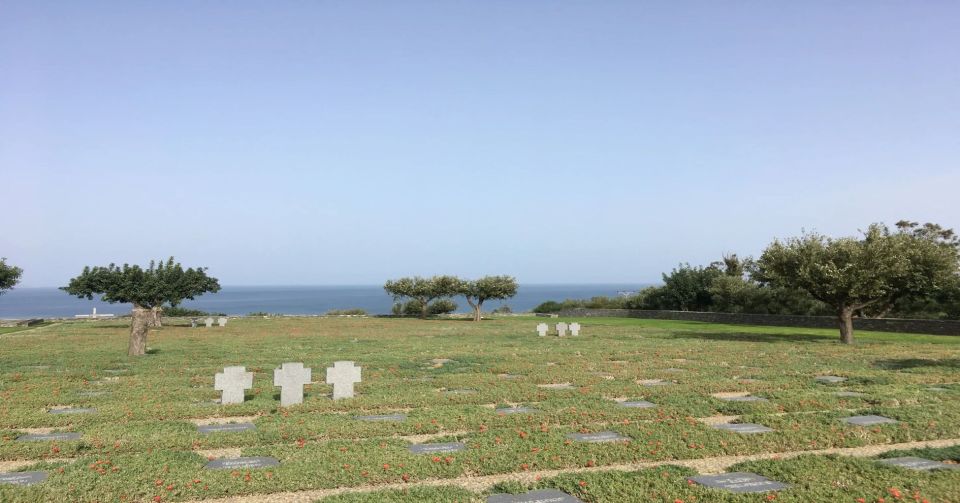
The cemetery visit changes the tone. The sheer number of graves makes the losses impossible to treat as an abstract figure. You are asked to pause and pay respect, not rush from one photo opportunity to the next.
I value this pairing of battlefield and cemetery. One explains military decisions. The other reminds you that every decision involved people. The tour does not present the German side without also addressing the Allied and local experience, and that balance is important for a responsible visit to wartime sites.
The ground can be uneven, and the tour takes place rain or shine. Wear shoes with a firm sole and clothing that lets you walk comfortably. You should also bring water, since food and drinks are not included.
Galatas, Platanias, and Prison Valley
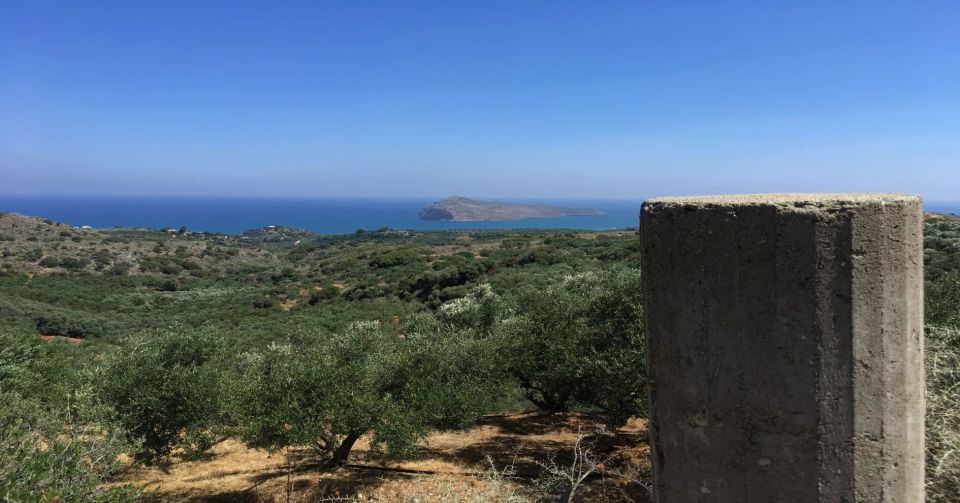
The route continues through places connected with the fighting around Chania, including Galatas, Platanias, the prison, and Prison Valley. These stops help widen the story beyond the airport and Hill 107.
Galatas is particularly useful for seeing how the battle extended into villages and built-up areas. The tour also includes the site of the Battle of 42nd Street. Rather than viewing the campaign as one isolated clash, you begin to see a chain of actions spread across western Crete.
The prison and Prison Valley add another layer. Their value depends heavily on the explanation provided, since these are not necessarily sites with large displays or extensive visitor facilities. Apostolis places them within the campaign and occupation, using documents and photographs to clarify what you are seeing.
One particularly helpful feature is the use of archival material during the drive and at the stops. Military history can become confusing when several units and places are discussed in quick succession. Old images give you something concrete to compare with the modern scene.
Apostolis has also made room for specific interests that were not part of the standard route. In one case, he located and visited a roadside memorial connected with the 1st Battalion, Welch Regiment. That tells you what the private format can offer: the route has a framework, but the conversation does not have to stay rigid.
The private WWII museum and war shelter
The private museum and WWII war shelter are among the most rewarding parts of the day for anyone interested in equipment, daily routines, and personal objects.
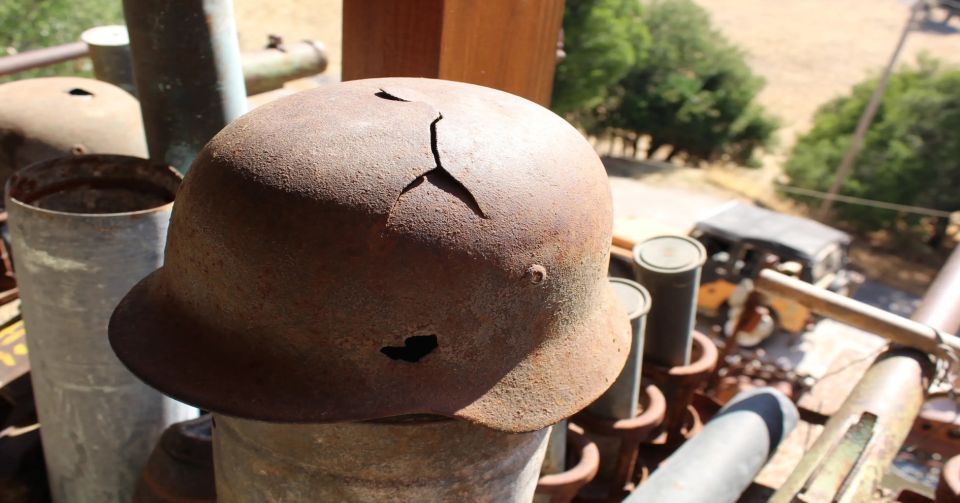
The collection contains war finds and memorabilia that help explain how the campaign was carried out. You learn about ammunition, military equipment, the regimes of the Axis forces and Allies, and the practical conditions faced by troops.
This is not presented as a large national museum with a polished sequence of galleries. Its appeal is personal and specific. A private collection can preserve objects and stories that are not part of the main tourist circuit.
The tour may also include access to another private museum or collection. Opening hours can be limited, but Apostolis has been able to arrange entry when necessary. That is one reason a private guide is useful here. A self-guided visitor might find the door closed or miss the site entirely.
The museum stop also gives the guide a good place to explain the battle at a human scale. Maps and strategy tell you what commanders wanted to achieve. Objects from the period show what soldiers actually carried, used, and endured.
You can also read our reviews of more historical tours in Chania
A riverside break after the battlefield stops
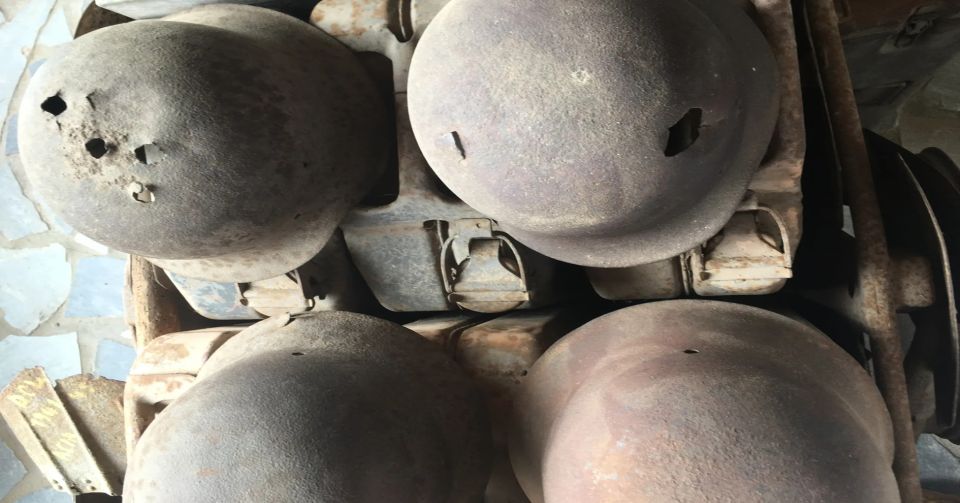
After the more demanding historical stops, the tour includes about an hour for coffee or lunch at a riverside location with overgrown vegetation.
Food and drinks are not included, so budget separately for this break. The value is less about a formal meal and more about having time to rest, ask questions, and sort through the many names and events covered during the morning.
I like this pause because a seven-hour military tour can become tiring if every minute is spent at another site. The riverside setting gives the day a change of rhythm. You can use the time to ask about a particular unit, revisit a point from the morning, or request more detail about a photograph or battlefield.
The precise food arrangement is not specified, so do not book this expecting an included lunch or a set menu. Think of it as a flexible break during a full day.
The abandoned German bunkers and battlefield archaeology
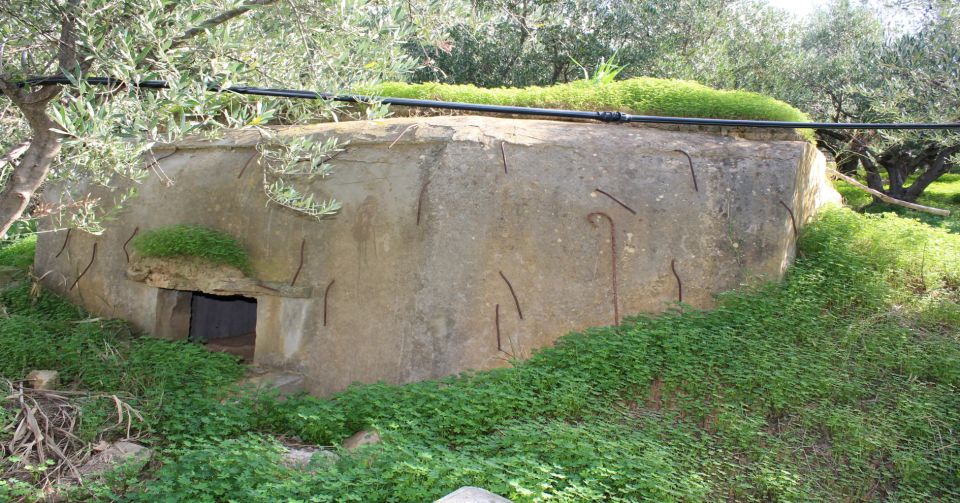
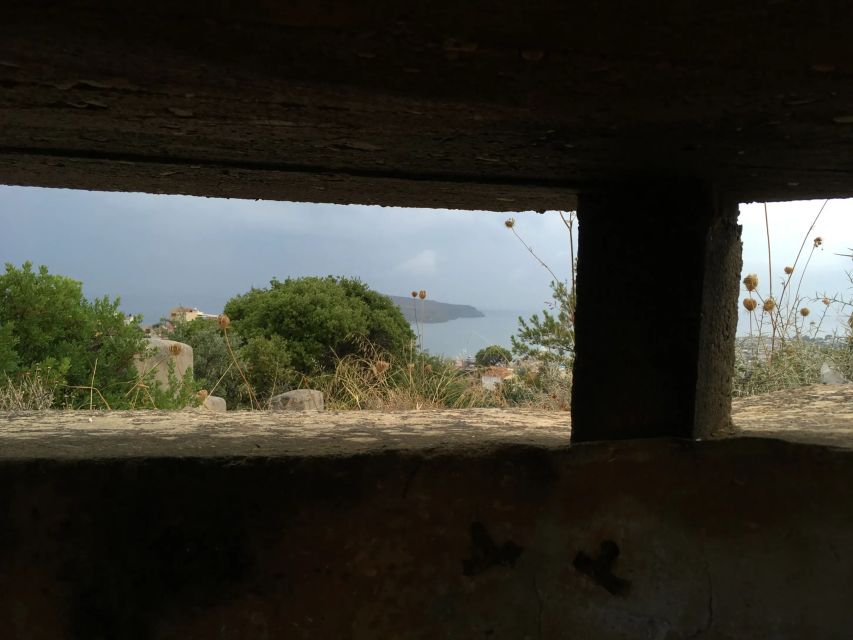
The tour’s most distinctive experience comes later, with visits to abandoned German lockouts and an abandoned German bunker at undisclosed locations.
Keeping the exact locations private is part of the nature of the experience. These are not presented as standard attractions with signs and visitor centers. You inspect surviving military remains while the guide explains how the positions functioned and what daily wartime life may have involved.
The bunker visit covers equipment, ammunition, military routines, and the way both Axis and Allied forces operated during the campaign. The word archaeology is important here. You are not simply looking at a restored structure. You are examining physical traces and trying to understand them in context.
This will appeal to you if you enjoy places that feel raw and unpolished. It may be less suitable if you want easy paths, formal interpretation panels, or a predictable museum-style visit. The tour runs in all weather, and comfortable clothing and shoes are specifically advised.
Take care with your footing and follow the guide’s instructions around abandoned structures. The information provided does not promise accessibility features, so anyone with mobility concerns should ask the operator before booking.
Commonwealth Allied Cemetery at Souda Bay
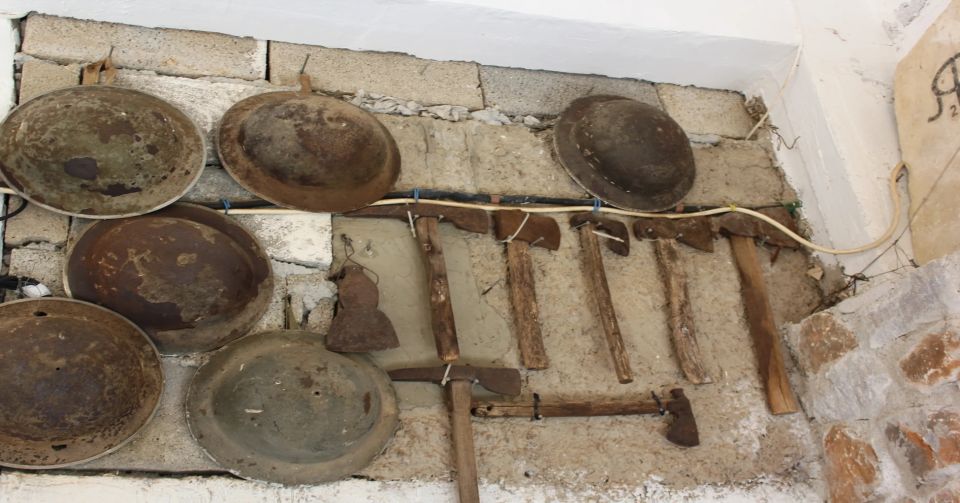
The final major stop is the British Commonwealth Allied Cemetery at Souda Bay. The cemetery honors troops from Commonwealth nations, including Australia, New Zealand, and Great Britain.
The setting above Souda Bay gives the visit a strong visual frame, but the purpose remains remembrance. The phrase Lest We Forget is central to the cemetery, and the tour treats it as a place of respect rather than a quick photo stop.
This visit balances the German War Cemetery earlier in the day. You see how the campaign affected both sides, while also recognizing the Allied contribution and the many nationalities involved. For visitors from Britain, Australia, or New Zealand, this stop may carry particular personal meaning.
The tour ends by returning you to Chania. Depending on timing and traffic, the day can feel full, but the route gives you a useful progression: the opening attack, the struggle for key ground, the wider battle around villages and valleys, military objects and shelters, then the cemeteries that mark the cost.
What $182 per person gets you
At $182 per person, this is not a low-cost sightseeing outing. The price makes more sense when you consider what is included: seven hours, private transportation, hotel pickup and drop-off from central Chania, a licensed historian guide and driver, access to battlefields, bunkers, a private collection, and two war cemeteries.
The specialist guide is the main value. You are paying for interpretation, route planning, and access to places that are not obvious to locate independently. The private format also means the day can be adjusted around your interests.
For a couple or small private group with a serious interest in WWII, I consider the price fair. For someone only mildly curious about the subject, it may be too much time and money compared with a general Chania sightseeing tour.
The excursion is also available as a shore trip covering Chania and Souda cruise port. That can be useful if your port call is long enough for a seven-hour activity, but you should confirm the timing before booking.
The cancellation terms are practical: you can cancel up to 24 hours in advance for a full refund, and reserve now while paying later. Pickup instructions ask you to wait in your hotel lobby 15 minutes before departure.
Who should book this private history tour
I would choose this tour if you want more than a quick stop at a memorial or a general explanation of WWII in Crete. It is especially well suited to:
- People with a strong interest in military history
- Visitors researching a family member or particular regiment
- Travelers who prefer private guiding to a fixed group schedule
- Cruise passengers looking for a serious shore excursion from Souda
- Visitors who want battlefields and bunkers rather than only museums
- Anyone comfortable with outdoor walking in changing weather
You do not need to be an expert. The guide explains the wider strategic setting as well as the local events, including the effect of the impending Operation Barbarossa on the campaign. Still, you should enjoy listening, asking questions, and spending time at sites that may have little visible interpretation.
The day may not suit young children who need frequent entertainment, or anyone seeking a relaxed beach-and-village outing. It is also not the best choice if you have difficulty walking on uneven ground and cannot confirm arrangements in advance.
My verdict on the Chania Battle of Crete tour
I would book this tour if the Battle of Crete is a major reason you are visiting western Crete. The combination of Maleme, Hill 107, Tavronitis Bridge, Galatas, abandoned German positions, a private collection, and both cemeteries gives you a fuller picture than a single museum visit can provide.
The strongest feature is Apostolis’s subject knowledge and flexibility. He can explain the military context, use archive images to clarify the modern sites, and give extra attention to a unit or memorial that matters to you. The perfect 5 out of 5 score from 16 bookings fits the experience described by the tour: serious, personal, and carefully guided.
I would hesitate only if you want a light excursion, included meals, or fully developed visitor facilities at each stop. For a private seven-hour examination of Crete’s WWII battlefields at $182 per person, this is a strong choice for history-minded visitors who want to see the less obvious remains of the campaign.
FAQ
How long is the Chania Battle of Crete private tour?
The tour lasts seven hours, including pickup in Chania, the battlefield visits, cemetery stops, museum and bunker visits, a coffee or lunch break, and the return to Chania.
Where does the tour begin and end?
Pickup and drop-off are provided from central Chania areas. The tour can also be arranged as a shore excursion covering Chania and Souda cruise port.
Who leads the tour?
The tour is led by a professional historian and licensed guide named Apostolis. He specializes in the Battle of Crete and contemporary history, and he also drives the vehicle.
What sites are visited?
The route includes Maleme Airport, Hill 107, the German War Cemetery, the Commonwealth Allied Cemetery at Souda Bay, Tavronitis Bridge, Galatas, Platanias, Prison Valley, a private WWII museum or collection, abandoned German lockouts, and an abandoned German bunker.
Are food and drinks included?
No. The tour includes a coffee or lunch break at a riverside location, but food and drinks are not included in the price.
What should I bring?
Bring comfortable shoes and comfortable clothing. The tour operates rain or shine, so you should be prepared for outdoor conditions.