REVIEW · CHANIA
Chania Old City Walking Tour
Book on GetYourGuide →Operated by Vamos Palace Ap/nts · Bookable on GetYourGuide
Chania’s Old City is a history lesson you can walk through, from Minoan remains and Byzantine walls to Venetian mansions, Ottoman mosques, and early modern buildings. I like the way this tour connects those monuments to ordinary Cretan life, not just dates and rulers. I also like the chance to pause for Greek coffee or a local soft drink, since a short café stop can make the city feel less like a museum.
The main consideration is the price: $495 for a private group of up to eight is a serious spend for four hours. It can make sense for a family or small group that wants personal attention, but solo visitors or couples may find the cost harder to justify. Summer heat and uneven Old City walking also deserve some thought.
In This Review
- Key points to know
- Chania Old City as a walk through five thousand years
- Starting at the Agora in central Chania
- Venetian walls, mansions, and churches
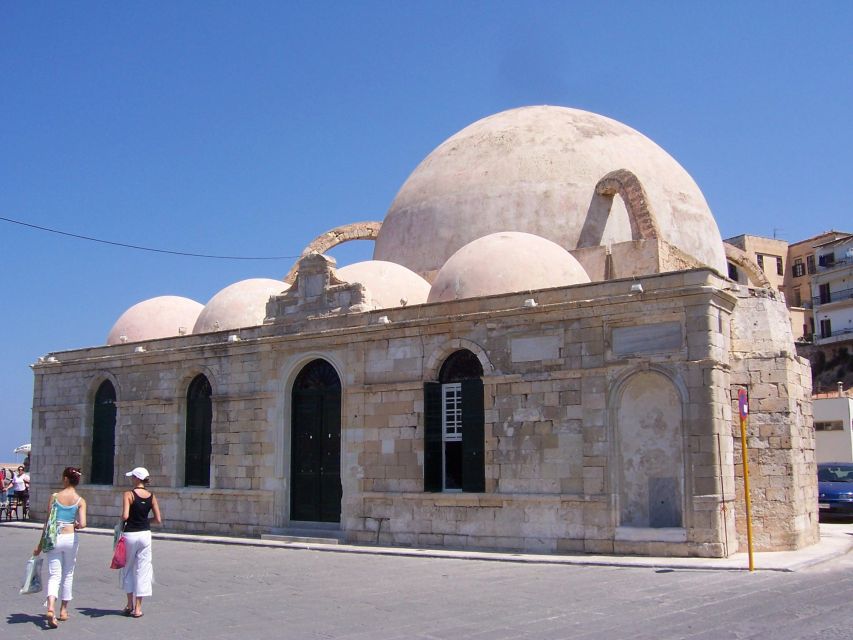
- Ottoman mosques and hamams
- Christian, Muslim, and Jewish quarters
- Minoan beginnings and Byzantine defenses
- Greek coffee, local delicacies, and a sensible break
- George, private groups, and the value of personal attention
- Heat, walking, and accessibility
- Who should book this Chania walk
- Should you book the Chania Old City Walking Tour?
- FAQ
- Where does the Chania Old City Walking Tour meet?
- How long does the tour last?
- How much does the private tour cost?
- Which languages are available?
- Is the tour private?
- What does the tour include?
- Is food included?
- What should I bring in summer?
- Is the tour suitable for people with mobility impairments?
Key points to know
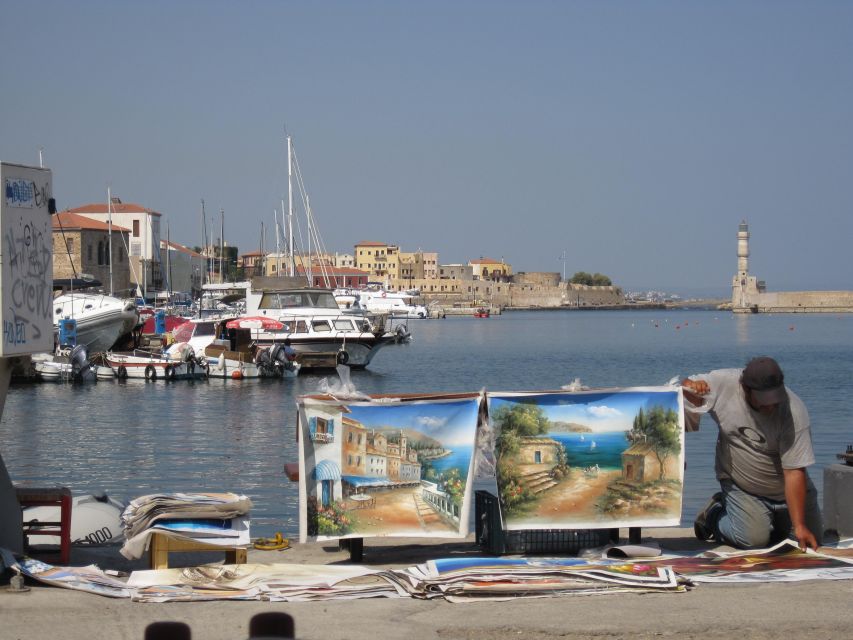
- Five thousand years in four hours: The route places Minoan, Byzantine, Venetian, Ottoman, and early modern Chania in one clear story.
- Private attention: Your group can ask questions and shape the conversation around history, religion, customs, food, or daily life.
- George may be your guide: He is especially strong on history and religion, and has been praised for quick communication and helpful local advice.
- A local-style pause: Greek coffee, a soft drink, or local delicacies add a useful break from monument watching.
- A central meeting point: Meet in front of the Agora, the Municipal Market, which is currently under renovation.
- Plan for the heat: A hat and sunscreen are sensible in summer, and the activity is not described as suitable for people with mobility impairments.
Chania Old City as a walk through five thousand years
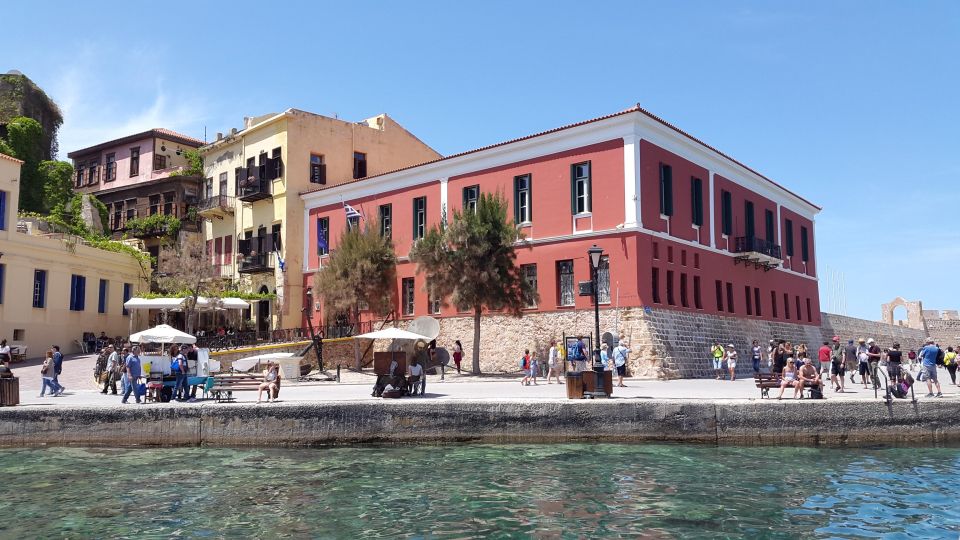
I like this tour because Chania gives you a compact lesson in Crete’s past. The city’s buildings do not belong to one neat period. Instead, different eras overlap, sometimes in the same neighborhood, and a good guide helps you understand why.
Your guide can place the oldest layers, including Minoan houses and palaces, beside the later Byzantine and Arab defenses. You then move into the Venetian period, when Chania gained grand residences, churches, harbor buildings, and fortified walls. Ottoman mosques and hamams add another chapter, followed by neoclassical buildings from the early modern period.
That range matters. You are not simply looking at attractive stonework. You are learning how control of the city changed, how faith shaped public buildings, and how residents adapted to new rulers and customs. The tour also addresses the people of Crete and their identity, which gives the architecture a human context.
The four-hour length is useful here. A shorter walk might point out the harbor and a few famous façades, then stop just as the story becomes interesting. This experience leaves room for questions and for the smaller corners of the Old City that are easy to miss on your own.
You can also read our reviews of more walking tours in Chania
Starting at the Agora in central Chania
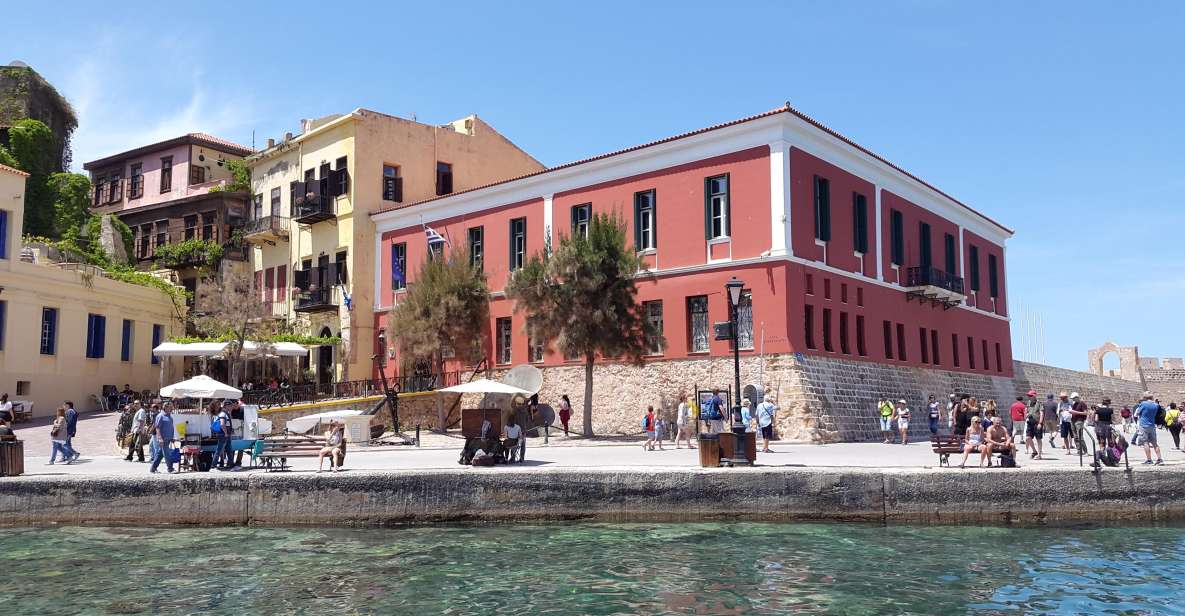
The suggested meeting point is directly in front of the Agora, Chania’s Municipal Market. The market is currently under renovation, so do not rely on a lively market interior as your visual landmark. Confirm the exact meeting instructions before you go, especially if you are arriving at a busy time.
Starting here puts you in the center of town and makes the first meeting simple. It also gives the guide a natural place to explain how Chania is organized before you enter the older quarters. Since pick-up and drop-off are available upon request, ask about that option when arranging the tour rather than assuming it is automatic.
The central meeting point works well for people already staying in Chania. If you are coming from elsewhere on Crete, you should pay attention to the return plan, since the activity details do not provide a standard transfer schedule or transport arrangement.
Venetian walls, mansions, and churches
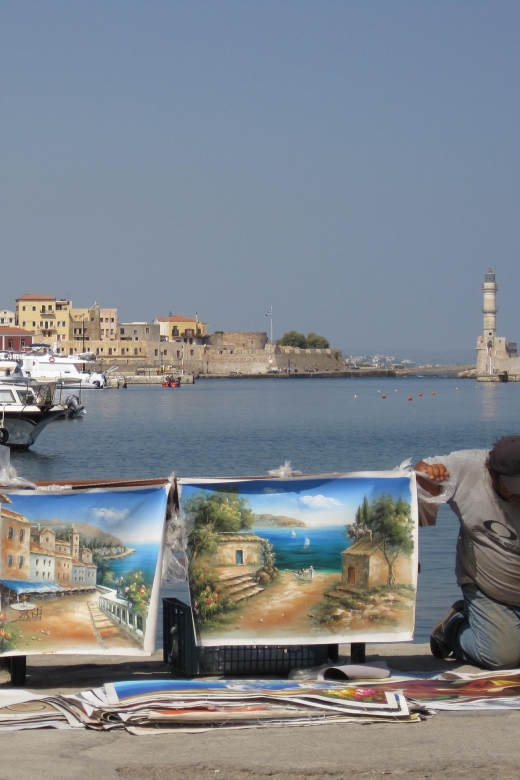
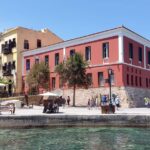
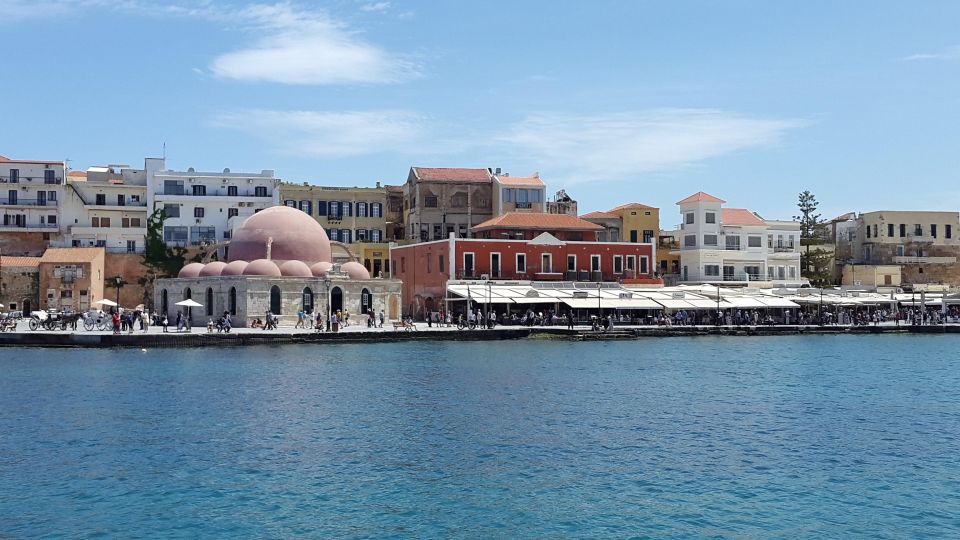
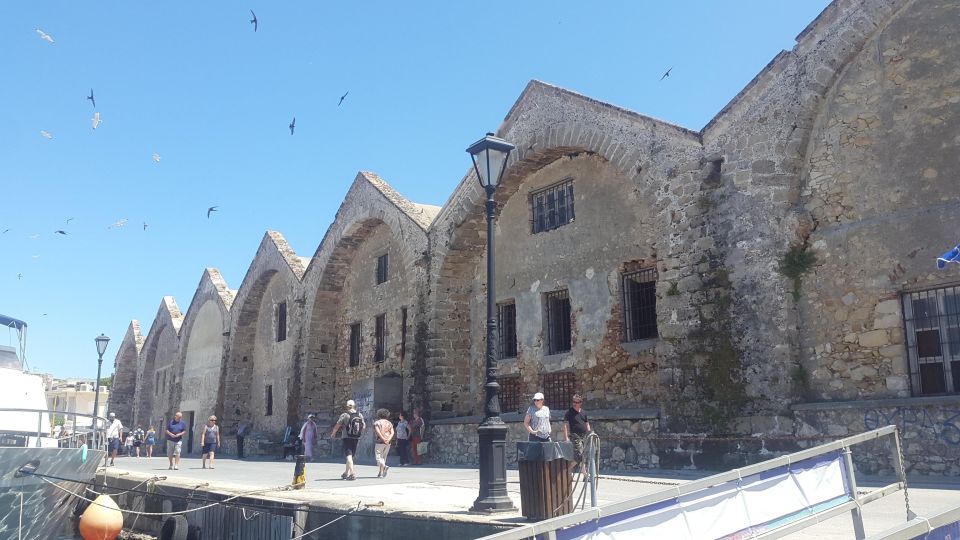
The Venetian period is one of the tour’s main visual chapters. You can expect to see Venetian monuments and buildings that reveal how the city was shaped as a major fortified settlement. The walls are especially useful for understanding defense, while mansions show how prosperous residents lived.
A guide adds value by explaining what you are seeing rather than simply naming it. Look for changes in stone, doorways, arches, and building scale. These details can show the difference between a defensive structure, a religious building, and a private home, even when several periods have been built into one street.
The churches also help explain the place of Christianity in Chania. The tour is not limited to architecture, since it links religious buildings with customs and social life. If religion interests you, tell the guide early. George, one of the named guides associated with the experience, is particularly strong in this area.
The drawback is that this is a walking tour, not a formal museum visit. The information provided does not promise interior access to every monument, and the emphasis is on seeing the Old City and understanding its setting. If you want detailed art analysis inside specific churches, ask what the route includes before booking.
Ottoman mosques and hamams
Ottoman Chania adds a different visual and cultural layer. Mosques and hamams show how the city changed under Ottoman rule, while also pointing to daily routines, public life, and religious practice.
This part of the walk is valuable because it prevents a one-sided view of Crete. You will hear about Christian, Muslim, and Jewish parts of the Old City, and the guide can explain how those communities fit into the city’s past. That broader view is one of the strongest reasons to choose a private guide instead of following only a standard postcard route.
The hamams are also a reminder that historic buildings often served practical purposes. They were part of everyday life, not merely grand monuments. Your guide can connect these places to customs and social habits, which makes the architecture easier to remember.
Do not expect every structure to look untouched. Old cities change, and the activity details do not promise a perfectly preserved Ottoman quarter. The value lies in reading the surviving buildings and street pattern as evidence of the city’s past.
Christian, Muslim, and Jewish quarters
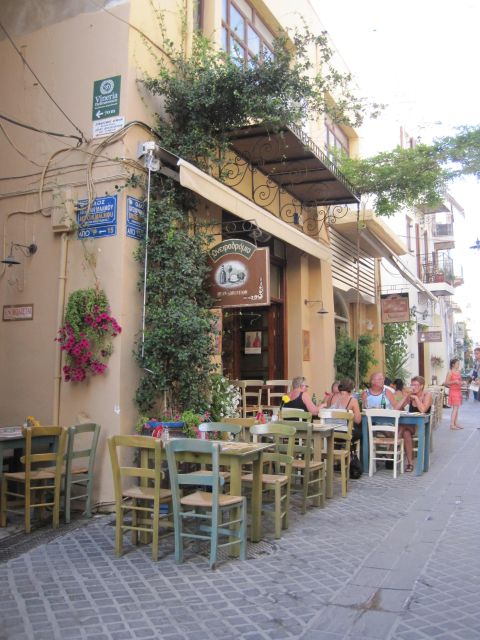
The tour promises attention to old neighborhoods associated with Christian, Muslim, and Jewish life. That is important because Chania’s story is not only a sequence of ruling powers. It is also a story of communities, belief, movement, and shared urban space.
I would use this part of the walk to ask direct questions. How did different communities worship? Which customs lasted? What happened to older buildings as the city changed? The guide is there to provide context about religion, traditions, and local identity, so this is a good chance to move beyond a surface tour.
George received special praise for his handling of history and religions, along with his helpful communication before the tour. That combination matters. A guide who explains sensitive subjects clearly can give you a more useful understanding of Chania without turning the walk into a dry lecture.
The information provided does not identify every neighborhood or building in advance. That is not necessarily a weakness, since the route may respond to your interests and the guide’s judgment. Still, if one community or period is your main reason for booking, mention it before the start.
You can also read our reviews of more city tours in Chania


Minoan beginnings and Byzantine defenses
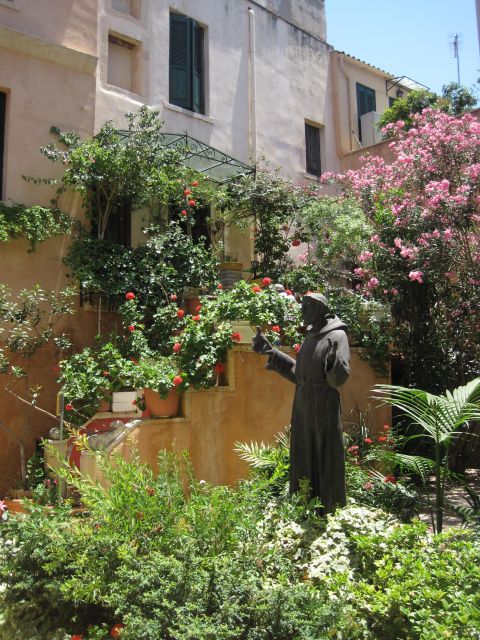
Chania’s oldest story reaches back to Minoan houses and palaces. These remains connect the modern city to Crete’s earliest major civilization and help explain why the area has mattered for so long.
The Byzantine and Arab walls add another layer. Their presence shows that Chania’s defenses were not created in one single campaign. Fortifications changed as threats, rulers, and military needs changed. When you see these structures alongside Venetian works, you get a clear sense of a city repeatedly rebuilt and reinforced.
This is where a guide earns the fee. Without context, older walls can look like attractive fragments. With a clear explanation, you begin to see what they protected, how they related to the settlement, and why later rulers kept altering the city.
The tour does not promise archaeological site entry or a full visit to every Minoan location. Think of this as a city walk that introduces the ancient background rather than a dedicated archaeology excursion.
Greek coffee, local delicacies, and a sensible break
A coffee or soft drink is included, and the tour may also include a taste of local delicacies. Food beyond that is not included, so you should budget separately if you want a larger snack or meal.
I like this small pause because it fits the subject. Greek coffee is not just a drink to consume quickly. It gives you a chance to sit, ask questions, and watch a little everyday life while the guide explains local habits. The activity is designed to show you how locals experience the city, not only how to photograph it.
The included drink also helps with a four-hour walk, particularly in July. One person who toured with George needed a break from the heat, and the guide continued the experience until the group had seen the city and covered its main interests. That suggests some flexibility in pacing, though you should not treat an extended tour as guaranteed.
Bring water even though a drink is included. In summer, wear a hat and sunscreen. Comfortable walking shoes are sensible, since the route passes through old neighborhoods rather than a modern, even-surfaced shopping area.
George, private groups, and the value of personal attention
The experience is for a private group of up to eight people. That changes the feel of the walk. You can ask questions without worrying about holding up a large crowd, and the guide can spend more time on subjects that matter to your group.
George is specifically associated with two strong qualities: fast replies before the tour and a strong grasp of history and religion. He has also been described as generous with local advice about shopping and restaurants. That is useful at the end of a Chania walk, when you may want to turn a landmark visit into a practical evening plan.
The private format is most valuable for families, friends, or couples who want a flexible conversation. It is less attractive if you prefer meeting other people or joining a lower-cost group walk.
At $495 per group, the price works out to about $62 per person for eight people. For a full private group, that is easier to justify than the headline figure suggests. For two people, it is about $247.50 each, before any extra food or shopping, so the value depends heavily on group size and how much you care about personal guidance.
You are paying for time, a private guide, cultural explanation, and the ability to ask questions. You are not paying for a full meal, souvenirs, or a long list of included admissions. Compare it with what you want from Chania: if your goal is a quick orientation, a cheaper group walk may be enough. If you want history, religion, and local context explained at your pace, the private setup is more convincing.
Heat, walking, and accessibility
The tour lasts four hours, and summer conditions can make that feel longer. The experience can include a break, but you should still plan the day carefully. An early or later starting time may be more comfortable if availability allows.
The information gives mixed accessibility signals. It identifies the tour as wheelchair accessible, but it also says it is not suitable for people with mobility impairments. That may reflect differences between the route, the Old City surfaces, and the activity’s general walking demands. If accessibility is important for you, contact the provider before booking and ask about the exact route, surfaces, seating, and pace.
For most visitors, the practical checklist is simple:
- Bring a hat and sunscreen in summer.
- Wear shoes suitable for several hours of city walking.
- Ask about pick-up and drop-off if you need transport assistance.
- Tell the guide if you want extra attention to religion, food, architecture, or local customs.
- Confirm the meeting point because the Municipal Market is under renovation.
The tour is offered in Greek, English, and Turkish. Make sure your preferred language is selected when arranging the experience.
Who should book this Chania walk
I would choose this tour if you are visiting Chania for the first time and want the city explained in a connected way. It is especially suitable if you enjoy history but do not want a classroom lecture detached from daily life.
Families can benefit from the private format because the guide can adjust the pace and answer different questions. Small groups also get better value from the $495 rate. People interested in religion, local identity, and the relationship between different communities should find more here than on a simple harbor stroll.
I would think twice if you dislike walking, want extensive indoor visits, or mainly want food tastings. Food is not included beyond the coffee or soft drink, and the central focus is history and culture.
Should you book the Chania Old City Walking Tour?
Book it if you have a group of several people and want four hours of focused explanation rather than a quick look at the harbor. The strongest points are the broad historical range, the private format, and the attention to Christian, Muslim, and Jewish life. George is a particularly appealing choice if history, religion, and practical local advice are high on your list.
Skip it, or compare alternatives, if you are traveling alone, watching your budget, or need a route designed specifically for limited mobility. For everyone else, this is a useful first look at Chania, especially when you want to understand how Minoan, Byzantine, Venetian, Ottoman, and modern Crete still meet in the same streets.
Free cancellation is available up to 24 hours before the tour, and you can reserve while paying later. Those terms help if your schedule is still changing, but the bigger decision is simple: the price makes the most sense when shared across a full private group.
FAQ
Where does the Chania Old City Walking Tour meet?
The suggested meeting point is in front of the Agora, the Municipal Market, in central Chania. The market is currently under renovation, so confirm the precise meeting instructions before the tour.
How long does the tour last?
The tour lasts four hours. Starting times depend on availability.
How much does the private tour cost?
The price is $495 for a private group of up to eight people. The total is charged by group rather than per person.
Which languages are available?
The tour is offered in Greek, English, and Turkish.
Is the tour private?
Yes. It is organized as a private group experience with up to eight people.
What does the tour include?
A local guide and a coffee or soft drink are included. Pick-up and drop-off can be arranged upon request.
Is food included?
Food is not included. The experience may include local delicacies, but additional food and souvenirs are not part of the stated inclusions.
What should I bring in summer?
Bring a hat and sunscreen. A four-hour walking tour can also make comfortable shoes and water useful choices.
Is the tour suitable for people with mobility impairments?
The activity information says it is not suitable for people with mobility impairments, while also identifying it as wheelchair accessible. Contact the provider before booking to clarify the route and accessibility arrangements for your needs.