REVIEW · THESSALONIKI
Cook & Dine With a Local Greek Family in Thessaloniki
Book on Viator →Bookable on Viator
Greek cooking in a real home. I love the hands-on cooking where you assemble moussaka and tzatziki from scratch, and I love the family-style dinner with local wine, ouzo, and tsipouro. The catch: it starts at 6:30pm and runs about 3 hours, so it’s an early evening plan, not a late-night one.
This is built for connection, not crowds. The group is capped at 9 travelers, and you’ll cook with hosts who really explain what matters. Past guests also mention meeting the family around Dora and Michael, with their daughter Daphne helping out during the night’s flow.
Dietary needs are taken seriously if you tell them in advance. They can do lactose-free, gluten-free, vegetarian, and vegan, and the whole thing runs in English. If you want a Greek night that feels lived-in, this is a strong pick.
In This Review
- Key Things I’d Actually Notice
- From Porto Palace to a Real Thessaloniki Home Kitchen
- A Greek Dance Lesson That Sets the Tone
- Cooking Hands-On: Moussaka, Tzatziki, Bougiourdi, Greek Salad
- Moussaka: The Main You Learn to Build
- Tzatziki: Cool, Yogurt-Based, and Very Specific
- Bougiourdi: Oven-Baked Feta With Peppers and Tomatoes
- Greek Pies and the Bonus Texture Lesson
- Greek Salad: The Fresh Counterweight
- Dinner With Real-Deal Drinks: Wine, Ouzo, Tsipouro
- The Family Factor: Dora, Michael, and Daphne in the Mix
- Dietary Needs: Gluten-Free, Lactose-Free, Vegetarian, Vegan
- Value: Why This 3-Hour Dinner Feels Like a Fair Price
- Logistics That Matter: Timing, Group Size, and Meeting Point
- Who This Tour Suits Best (And Who Might Skip It)
- Should You Book Cook & Dine With a Local Greek Family in Thessaloniki?
- FAQ
- What is the start time for the experience?
- Where do we meet?
- How long does the experience last?
- What language is the experience offered in?
- What’s included in the dinner?
- What dishes will we learn to make?
- Is there a Greek dance lesson?
- Can you accommodate dietary restrictions?
- How many people are in the group?
- Is free cancellation available?
- What happens if weather is bad?
Key Things I’d Actually Notice
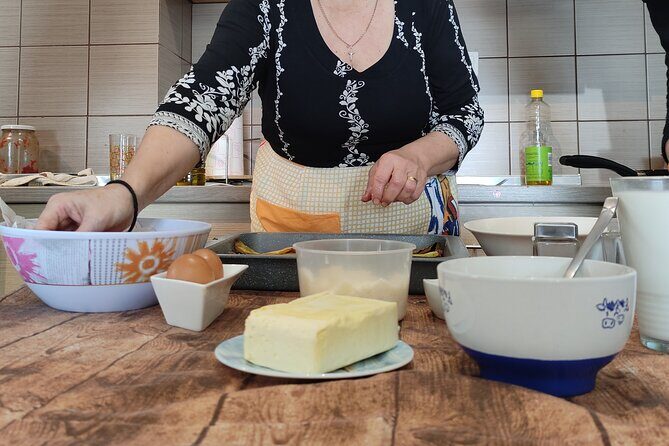
- Up to 9 people means you get real time at the counter, not just watching.
- A dance lesson first gives you an easy way in before the knives come out.
- Build-your-own moussaka and tzatziki teaches you techniques, not just recipes.
- Greek pies plus starters gives you variety beyond the big main dish.
- Local drinks are part of the dinner: ouzo, tsipouro, Greek wine, plus soft drinks.
- Dietary adjustments are available if you request lactose-free, gluten-free, vegetarian, or vegan ahead of time.
From Porto Palace to a Real Thessaloniki Home Kitchen
The meeting point is Porto Palace Hotel Thessaloniki, 26is Oktovriou 65. That matters because it anchors the experience in the city’s everyday rhythm. You’re not starting in a generic studio. You’re starting near the waterfront and then moving into a normal Greek home setup where the cooking is the point.
The evening runs roughly 3 hours, beginning at 6:30pm. That timing feels right for a full dinner night: you’re not just nibbling while standing around. You’ll cook, then sit down and eat what you made, which is the whole reason this works.
One small practical detail: there’s no private transportation included. So if you’re not staying near the port area, plan how you’ll get there. Public transportation is nearby, and since service animals are allowed, it’s set up with real-world visitors in mind.
You can also read our reviews of more tours and experiences in Thessaloniki.



A Greek Dance Lesson That Sets the Tone
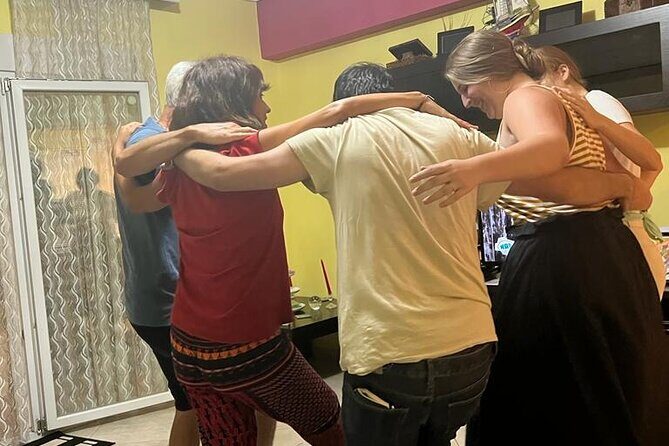
Before you cook, you get a traditional Greek dance lesson. It’s a smart move. After you learn a few steps, you’re already part of the evening. You’re not mentally stuck in tourist mode.
This section also helps the group gel fast. When people are practicing steps together, the pressure drops. You’ll probably find it easier to laugh, ask questions, and talk with the family once you’ve moved your body a bit.
And yes, you should wear shoes you can actually move in. You’re in a home setting and the dance part comes early, so don’t plan on slick sandals or anything you’d hate to break in.
Cooking Hands-On: Moussaka, Tzatziki, Bougiourdi, Greek Salad
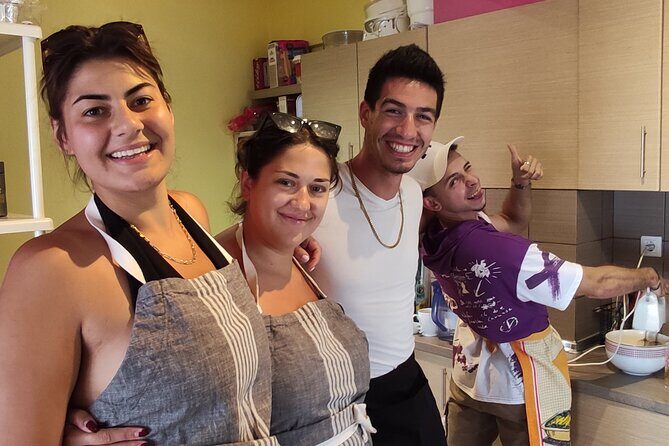
Now for the real heart of the night. You’ll work through multiple dishes that show how Greek home cooking feels practical, flavorful, and seasonal—even when the ingredients are simple.
Moussaka: The Main You Learn to Build
Moussaka is the centerpiece: potatoes, eggplants, and beef. The value here isn’t just tasting it later. It’s seeing how the layers come together and how the balance of ingredients creates that classic texture.
Moussaka can intimidate people because it feels like a restaurant dish. Here, it’s treated like something a family makes, then shares. That shift is what you’re paying for. You don’t just learn a recipe card. You learn the logic behind it.
Tzatziki: Cool, Yogurt-Based, and Very Specific
Tzatziki is traditional, made with yogurt and cucumber. This dish is the one where you’ll probably notice the difference between bland and correct. Small choices—like prep and mixing—change the final flavor quickly.
If you’ve had tzatziki that tasted flat, this is a good fix. You’ll see how it comes together and why it’s part of so many Greek meals.



Bougiourdi: Oven-Baked Feta With Peppers and Tomatoes
Bougiourdi is oven-baked feta with peppers and tomatoes. This is one of those dishes that feels like comfort and also works as a starter that makes the table look more interesting.
It’s also a great way to learn that Greek cooking often leans on heat to do the work. You’re not overcomplicating. You’re letting the oven turn ingredients into something cohesive.
Greek Pies and the Bonus Texture Lesson
You’ll also make or prepare Greek pies as part of the dinner: feta cheese pie or mpougatsa with cream. Pies are a different skill set than sauces and salads. They show a second side of home cooking: technique, dough handling, and layering flavors so the whole table tastes different but still belongs together.
One reason this is worth it: a lot of Greek food tours focus too narrowly on the big main. Here you’re sampling multiple formats—sauce, baked dish, fresh salad, and pie.
Greek Salad: The Fresh Counterweight
Greek salad isn’t just a side. It’s the fresh break that makes the heavier dishes feel balanced. In a cooking setting like this, you’ll also learn what people actually consider essential: tomatoes, and the rest of the classic components that make it taste like Greece instead of just a salad.
Dinner With Real-Deal Drinks: Wine, Ouzo, Tsipouro
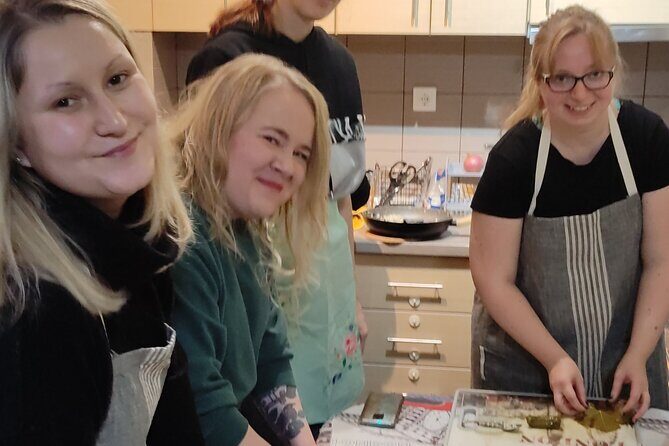
After cooking, you sit down for the full meal: moussaka, Greek salad, dessert, and the Greek pie (mpougatsa or cheese pie). Drinks are included with the dinner: Greek ouzo, tsipouro, Greek wine, and soft drinks.
This is where the experience becomes more than a class. You’re not rushing through a tasting. You’re eating like the night is about food and company. That’s also why the small group matters. With fewer people, the family can actually talk, explain, and keep the flow relaxed.
Dessert is homemade Greek sweet, and it varies. That flexibility is normal for home cooking. You’ll get something made from scratch that fits the household rhythm, not a mass-produced plate.
A nice extra detail from past guests: some say they received the recipes, so you can recreate the flavors later without guessing.
The Family Factor: Dora, Michael, and Daphne in the Mix
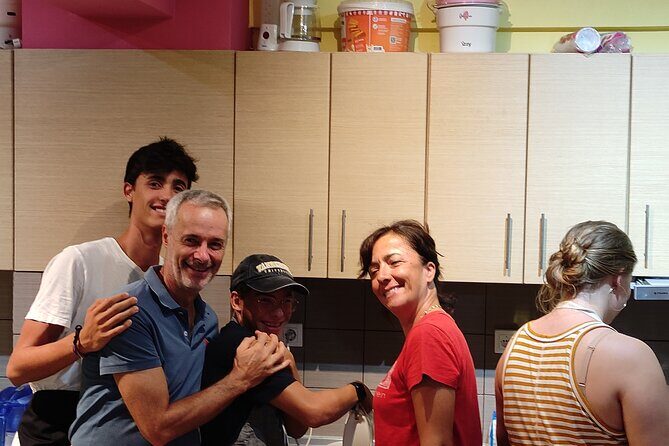
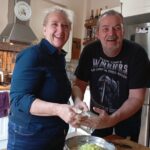
The hosts are the main event here. Past guests specifically named Dora and Michael as the welcoming core of the evening, and mentioned Daphne helping during the night.
That matters because good cooking classes teach technique, but great ones teach context. When someone cooks with you in their home, you learn what they consider normal: how they season, how they serve, and what gets repeated for family meals.
Even the dance lesson feels like part of the same idea. It’s not entertainment tacked on. It’s cultural practice handed over in a friendly way.
The hosts also mention that they can accommodate different tastes and special diets, and they’ve shared the experience with international visitors over the years. They even note that the program has been featured on outlets like BBC and CNN. You don’t have to care about media mentions for the experience to land, but it does signal they’ve welcomed a wide range of guests.
Dietary Needs: Gluten-Free, Lactose-Free, Vegetarian, Vegan
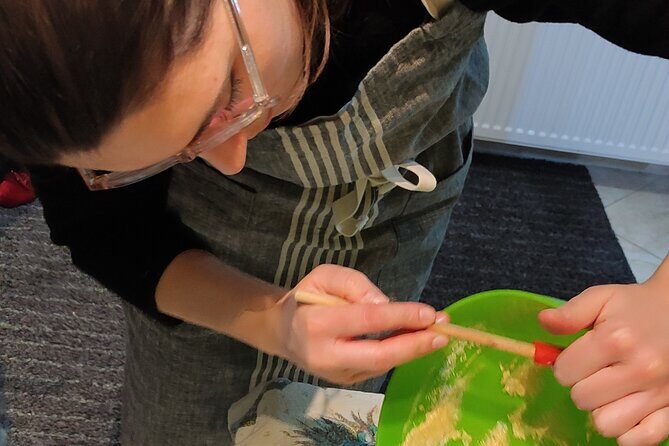
If you need gluten-free or lactose-free, this can be a relief. The experience can accommodate lactose-free, gluten-free, vegetarian, and vegan—if you let them know in advance.
Here’s the practical advice I’d give you: don’t wait until the last minute to message your needs. In a home cooking setup, substitutions have to be planned. If you’re gluten-free, be clear about what gluten-free means for you. If you’re vegan, ask what gets swapped so expectations match reality.
Also remember one dish you’re likely to run into: moussaka is traditionally made with beef in this menu plan. If you’re vegetarian or vegan, you should expect changes. The exact version isn’t listed, but the promise is that they’ll accommodate your dietary style.
Value: Why This 3-Hour Dinner Feels Like a Fair Price
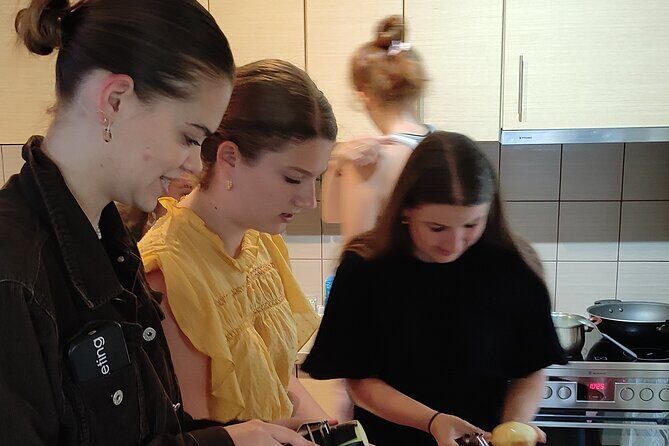
At $95.18 per person for about 3 hours, you’re not just paying for a class. You’re paying for a cooked dinner menu plus drinks plus a dance lesson, all hosted in someone’s home.
So the value calculation is simple:
- You get multiple dishes, not one recipe.
- You get full dinner portions: moussaka, Greek salad, dessert, and a pie.
- You get drinks included (ouzo, tsipouro, Greek wine, plus soft drinks).
- You get instruction and hands-on time, capped at a small group.
If you tried to recreate this yourself in a home kitchen, you’d still spend on ingredients. And if you ate it out, you’d likely pay more once you add alcohol and the variety. For many visitors, this is one of those prices that feels reasonable because the experience actually includes the parts you’d normally spend extra money on.
Logistics That Matter: Timing, Group Size, and Meeting Point
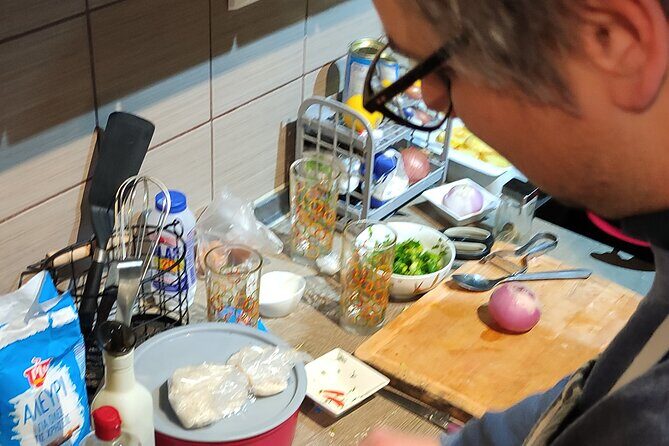
This isn’t a pick-up-and-drop-off tour. It’s hands-on and you meet at Porto Palace Hotel at 6:30pm. Plan your arrival so you’re not sprinting. In a home setting, showing up late changes the pacing for everyone.
Group size is small, maximum 9, which is great for attention and questions. It also means the vibe stays personal. You won’t disappear into the crowd.
The evening is offered in English. If English isn’t your strongest language, you’ll still likely be fine because cooking instructions tend to be visual, and the pace is usually built around people joining the process.
Weather matters for the overall activity. If poor weather forces a change, you’ll be offered another date or a full refund. The key takeaway: check closer to departure.
Who This Tour Suits Best (And Who Might Skip It)
You’ll love this if you want a Greek night that feels real and not like a performance. It’s ideal for couples, families, solo travelers, and anyone who wants to learn Greek food in a home kitchen setting.
It’s also a good fit if you enjoy:
- cooking with guidance
- cultural extras like dance
- eating what you made
- dietary accommodations handled ahead of time
You might choose a different style of tour if you strongly prefer flexible start times, or if you dislike the idea of an early evening (6:30pm start). The schedule is part of the design.
Should You Book Cook & Dine With a Local Greek Family in Thessaloniki?
Yes, if your top priority is hands-on Greek cooking plus a sit-down dinner with included local drinks, book it. The small group size, the variety of dishes, and the dance lesson turn it into a true evening experience, not a quick tasting.
I’d especially book it if you want a reliable way to handle gluten-free, lactose-free, vegetarian, or vegan needs. Just make sure you tell them your diet clearly when you reserve.
If you’re okay with a fixed 6:30pm start and you can get yourself to Porto Palace Hotel, this is one of the better-value dinners in Thessaloniki for learning and enjoying at the same time.
FAQ
What is the start time for the experience?
It starts at 6:30pm.
Where do we meet?
The meeting point is Porto Palace Hotel Thessaloniki, 26is Oktovriou 65, Thessaloniki 546 28, Greece.
How long does the experience last?
It lasts about 3 hours.
What language is the experience offered in?
It’s offered in English.
What’s included in the dinner?
The dinner includes moussaka, Greek salad, dessert, and Greek pie (mpougatsa or cheese pie), plus Greek ouzo, tsipouro, Greek wine, and soft drinks.
What dishes will we learn to make?
You’ll prepare moussaka, tzatziki, bougiourdi, Greek salad, and a homemade dessert, along with Greek pies (feta cheese pie or mpougatsa with cream).
Is there a Greek dance lesson?
Yes, the evening includes a traditional Greek dance lesson.
Can you accommodate dietary restrictions?
Yes. They can accommodate lactose-free, gluten-free, vegetarian, and vegan diets if you let them know in advance.
How many people are in the group?
The maximum group size is 9 travelers.
Is free cancellation available?
Yes, you can cancel up to 24 hours in advance for a full refund.
What happens if weather is bad?
The experience requires good weather. If it’s canceled due to poor weather, you’ll be offered a different date or a full refund.