REVIEW · ATHENS
BEST 4-Day CLASSICAL GREECE: Corinth Epidaurus Delphi Meteora
Book on Viator →Operated by WARMPENGUIN · Bookable on Viator
The great appeal here is the sheer sweep of the route. In four days, you move from the Corinth Canal and Mycenae to Olympia, Delphi, and the monasteries of Meteora, with seaside towns and mountain villages filling the gaps. I especially like the private format, since your group can adjust pickup times and make sensible stops. I also like the mix of major ruins and smaller places such as Nafpaktos and Galaxidi.
The main caution is the price, $2,375.79 per person, before entrance fees, unless your chosen package covers some extras. You also need to know that the driver can explain sites on the road but cannot enter archaeological areas as your guide. Add licensed site guides if detailed history matters to you.
In This Review
- Key points to know before booking
- A four-day route through the heart of ancient Greece
- Day one: Corinth Canal, Mycenae, Epidaurus, and Nafplio
- Day two: Olympia, the Rion-Antirion Bridge, and Nafpaktos
- Day three: Delphi and Hosios Loukas
- Day four: Meteora monasteries and Thermopylae
- What the private vehicle adds to the experience
- Hotels, meals, and extra costs
- Who will enjoy this route most
- Booking advice and final verdict
- FAQ
- Is this a private tour?
- What is included in the tour price?
- Are entrance fees included?
- Can I add licensed guides?
- Which sites are included?
- Are lunches included?
- Where does pickup take place?
- How much walking is involved?
- Can I cancel for a full refund?
Key points to know before booking

- Six major ancient sites in four days: Corinth, Mycenae, Epidaurus, Olympia, Delphi, and Meteora form the backbone of the route.
- Private travel only: Your group rides alone in a sedan, Mercedes minivan, or Sprinter, depending on size and package.
- Comfortable overnight stops: Four-star or boutique-style hotels, with breakfast included each morning.
- Guides cost extra: Licensed archaeological guides and entrance tickets are not included in the base arrangement.
- Expect plenty of walking: Olympia and Delphi take about three hours each, while Meteora involves monastery visits and uphill movement.
- Driver quality matters: Past guests praised Petros Jajas, Yannis, Vas, and Notis for warmth, flexibility, and local advice.
A four-day route through the heart of ancient Greece

This is not a relaxed stay in one region. It is a fast-moving road journey across the mainland, designed for someone who wants to see the major ancient sites in one well-organized sweep.
You travel in a private vehicle with an English-speaking driver throughout the daytime touring. That arrangement gives you more control than a large coach tour. You can request a flexible pickup time, ask for a break, or sometimes add a small stop that makes sense along the route. The tradeoff is that several days include long drives, and the schedule works best if you are comfortable changing hotels each night.
The route begins and ends in Athens, with overnight stays around Olympia, Galaxidi, and Kalambaka or Meteora. Airport pickup and return are free when your flight dates match the tour dates. Pickup outside Athens may require an added charge.
A few more Athens tours and experiences worth a look
Day one: Corinth Canal, Mycenae, Epidaurus, and Nafplio
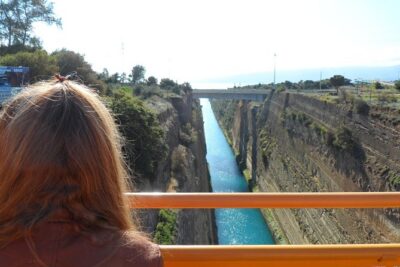
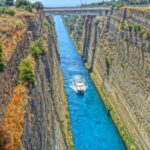
The first stop is the Corinth Canal, a brief but memorable introduction to the engineering and geography of the journey. You have about 20 minutes to look down into the narrow cut and hear about its troubled history, from ancient plans to the modern canal.
The stop at Ancient Corinth lasts about an hour. This was a major city of the ancient world, and the remains let you walk among streets, temples, markets, and fountains used by Classical Greeks and Romans. The site also carries an important connection with St. Paul. Entrance is not included, so keep ticket costs in mind.
After Corinth, the road continues to Mycenae. This is one of the most atmospheric ruins on the route, with massive stone walls, the Lion Gate, the citadel, and the Treasury of Atreus. The site connects archaeology with the legends of Agamemnon and the Trojan War, though it is worth separating the later stories from the much older Bronze Age remains.
You have about an hour and a half at Mycenae, enough time for the main ruins and the on-site museum. Wear shoes with a good grip. The ground is uneven, and the citadel setting involves walking on exposed paths.
Epidaurus brings a different kind of ancient experience. The Sanctuary of Asklepios was a healing center, and the theater is famous for its sound. You can test the acoustics yourself with a poem or song, as long as you do not mind becoming briefly part of the performance.
The sanctuary and theater date largely from the fourth century BC. The one-and-a-half-hour stop gives you time to see the theater and the religious complex without rushing too badly. Again, admission is extra.
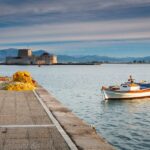
The day finishes in Nafplio, one of the best pauses on the route. This former port city has a handsome old quarter, Venetian character, craft shops, and views toward Bourtzi Castle in the bay. Lunch is not included in the basic package, but the town gives you a good setting for a meal and a short walk before the evening drive toward Olympia.
The schedule is ambitious. Corinth, Mycenae, Epidaurus, and Nafplio make a strong day, but you will not have unlimited time at any one place. If Nafplio appeals to you more than shopping or a long lunch, tell your driver early so you can use the free time well.
Day two: Olympia, the Rion-Antirion Bridge, and Nafpaktos

Olympia receives the largest block of time on day two, about three hours. That is appropriate. The site is spread out, and seeing it properly takes more than a quick photo stop.
You walk through the places where athletes trained and enter the ancient stadium through the same tunnel used by competitors. The Sanctuary of Zeus and Hera remains the center of the visit, while the workshop associated with Phidias helps explain how large religious sculptures were made. The museum contains important finds from the site.
Olympia is also where the Olympic Flame is lit today, at the Temple of Hera. That connection gives the ruins extra meaning, since you can see how a modern global event still draws on this ancient setting.
Entrance fees are not included, and a licensed guide is optional. I would strongly consider adding one here, particularly if you want the ruins explained in a clear sequence rather than simply identified. The driver may give background during the drive and before you enter, but cannot conduct a formal tour inside.
After Olympia, the route crosses the Rion-Antirion Bridge, a major suspension bridge connecting the Peloponnese with mainland Greece. The bridge stop lasts about 20 minutes. It is a useful change of pace after the ruins, and the crossing gives you a sense of how the old road routes have been reshaped by modern engineering.
Lunch comes in Nafpaktos, a small port with a Venetian past and a compact old quarter. The harbor is a fine place for a meal, and the hillside castle recalls the town’s military importance. You have around an hour and a half, so you can eat and walk around the port without turning the stop into a hurried stretch.
The day ends in Galaxidi, a seaside village near Delphi. The overnight location is deliberately quieter than staying in Delphi itself, with cafes and restaurants near the water. That can be pleasant after a demanding day, though it may mean you are not in the center of a larger town with a wider choice of evening activity.
Day three: Delphi and Hosios Loukas

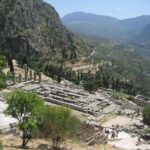
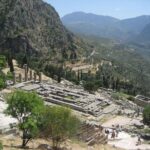
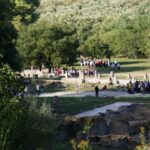
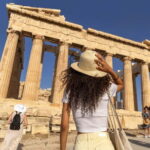
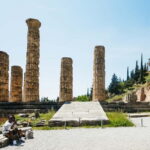
Delphi is one of the great moments of the journey. The ancient sanctuary sits on broad terraces above the valley, and the remains include the Temple of Apollo, the theater, treasuries, the Castalian spring, and the sanctuary of Athena.
The site is tied to the Oracle of Delphi, whose prophecies influenced rulers and city-states across the Greek world. A good guide can help you understand how religion, politics, athletics, and mythology all met here. Without a licensed guide, you can still follow the signs and see the major structures, but the relationships between the buildings are easier to grasp with help.
Allow three hours for Delphi and its museum. The museum includes the Sphinx of Naxos, the twin kouroi, and the famous Charioteer of Delphi. These works give you a closer look at the art and beliefs behind the weathered stones outside.
The route then turns to Hosios Loukas, an 11th-century Byzantine monastery on the slopes of Mount Parnassus. This is an optional visit, and you may omit it if you want more time elsewhere. If you enjoy Byzantine art and religious buildings, the monastery adds a welcome contrast to the earlier Greek and Roman sites. Its architecture and frescoes are the reason to make the stop.
Lunch is in Arachova, a mountain town with local craft shops and broad views over the Pleistos River valley. The town is a practical place to eat and stretch your legs before the drive toward Kalambaka. The stop lasts roughly an hour and a half.
Day three is another long touring day. Delphi deserves your attention, and Hosios Loukas can make the schedule feel tighter. I would treat the monastery as optional rather than trying to force every stop into the day.
Day four: Meteora monasteries and Thermopylae

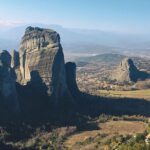
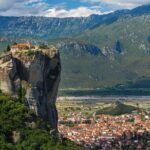
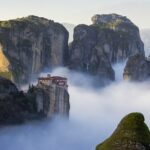
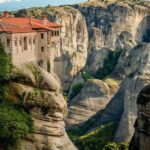
Meteora is the visual climax of the trip. Monasteries perch on tall sandstone pillars, some rising about 1,312 feet above the surrounding ground. Six monasteries remain, dating from the 14th century, and the setting combines severe natural rock with centuries of monastic life.
You normally visit at least two monasteries, such as Grand Meteora, Varlaam, or Agios Stefanos. Each visit offers a different view of the cliffs and surrounding countryside. The monasteries are active religious places, not just scenic monuments, so modest clothing and respectful behavior are important.
The three-hour visit includes uphill movement, steps, and uneven ground. Bring sturdy walking shoes. One past accommodation near Meteora, the Meteoritis Hotel, had no elevator, so ask about luggage and stairs when your hotel is confirmed. Hotel assignments can vary.
Kalambaka provides a one-and-a-half-hour lunch stop in one of the main squares. The base price does not include meals beyond breakfast, but the lunch option can be added and includes a traditional menu at a local restaurant. Vegetarian dishes are available, and you should report allergies in advance.
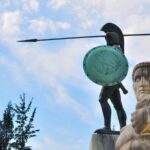
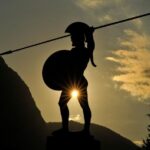
The final historical stop is Thermopylae. The site recalls the 480 BC battle in which King Leonidas led the 300 Spartans. You have about 90 minutes to see the monument and visit the modern visitor center, which recreates the battle and explains the setting.
From Meteora, the road returns south toward Athens. The route includes roughly 90 minutes before Thermopylae, followed by the onward journey. The exact final arrival time depends on your destination and the day’s stops, so do not schedule a tight evening flight or important appointment without confirming timing.


What the private vehicle adds to the experience

The private setup is the strongest practical reason to choose this trip over a standard group departure. You are not waiting for strangers at every stop, and your driver can adjust the pace to your group.
Vehicle class depends on the package and group size:
- The Discount Package uses a superior sedan, Mercedes minivan, or Sprinter.
- The Gold Package upgrades the vehicle to a luxury E-Class Mercedes option.
- The Platinum Package includes the E-Class vehicle and a three-course lunch.
For larger groups, provide luggage details before departure. A bigger vehicle may require a supplement. This is a small point, but it matters on a four-day road trip when everyone has bags.
Driver quality is central. Petros Jajas was praised for his deep command of Greek history and his care with older passengers. Yannis was remembered for humor, flexibility, restaurant suggestions, and small extra stops. Vas was praised for his friendly manner and local perspective, while Notis was singled out for being attentive to a family and adding touches such as a Meteora sunset stop and a local dessert.
Those names are useful when you speak with the operator, but a particular driver cannot be guaranteed. One poor experience showed why you should ask clearly about the driver’s historical training and whether licensed guides will be added for the sites.
Hotels, meals, and extra costs

The package includes four breakfasts and accommodation in at least four-star or boutique-style hotels. Past stays included attractive small hotels and larger properties with pools, though facilities can vary. One hotel in Olympia had an indoor pool that was closed, so do not book this trip mainly for hotel amenities.
Hotel location also deserves attention. Some properties may be outside the town center, which can make evening walks to restaurants and shops less convenient. If you want to dine on foot, request a central location when possible.
The base arrangement does not include entrance fees, lunches, or licensed archaeological guides. These costs can change the real total considerably. The Platinum option includes a three-course lunch, while a separate lunch option offers traditional menus each day, with vegetarian choices.
At four major sites, as one past group did, adding guides can be worthwhile. Mycenae, Olympia, Delphi, and Meteora all have enough layers to reward explanation. If your budget allows only one or two, I would prioritize Delphi and Olympia, then choose Mycenae or Meteora according to your interests.
At $2,375.79 per person, this is not a budget tour. The price makes more sense for a small private group that values door-to-door transport, flexible timing, quality vehicles, hotel arrangements, and less planning work. It is harder to justify if you are comfortable arranging buses, booking hotels yourself, and visiting sites without a guide.
Who will enjoy this route most

I would choose this tour if you want to see the mainland’s major ancient sites without renting a car or managing several hotel bookings. Families, multigenerational groups, and older adults may appreciate the private vehicle and the ability to request breaks.
It also suits first-time visitors who want a broad introduction to Greece beyond Athens. You see archaeological sites, Byzantine art, mountain towns, ports, modern engineering, and traditional food stops in one compact trip.
You should think twice if you prefer slow travel. The route changes base often, and several days involve three-hour site visits followed by long drives. You also need to be comfortable walking uphill, across uneven ruins, and around monastery steps. Past passengers averaged about 10,000 to 11,000 steps a day.
The tour is offered in English, and service animals are allowed. Most people can take part, but the amount of walking and the physical nature of Meteora and Delphi make it wise to discuss mobility needs before booking.
Booking advice and final verdict
I would book this tour for a group that wants convenience and coverage more than low cost. Its greatest strengths are the private vehicle, a route packed with important sites, comfortable overnight arrangements, and the chance to add expert guides where they matter most.
Before paying, ask for the likely hotels, the exact vehicle, the entrance-fee budget, the guide cost for each site, and the driver’s role inside archaeological areas. Request a central hotel when possible, and provide luggage details and any food allergies in advance.
The tour earns its price best when you use the flexibility well. Add licensed guides at selected ruins, leave room for proper meals, and do not treat every small stop as compulsory. If that sounds like your style, this is a strong way to see Classical Greece in four demanding but rewarding days. If you want a slower holiday or need to keep costs down, build your own route and stay longer in fewer places.
FAQ
Is this a private tour?
Yes. Only your group participates, with transport arranged in a sedan, Mercedes minivan, or Sprinter according to group size and package.
What is included in the tour price?
The package includes private transportation, an English-speaking professional driver, at least four-star or boutique-style hotels, and four breakfasts. The Platinum Package also includes a three-course lunch.
Are entrance fees included?
No. Entrance fees are not included in the basic package.
Can I add licensed guides?
Yes. Expert licensed archaeological guides can be added for one or more sites on request. The driver can provide information during the journey but cannot enter archaeological sites as the formal guide.
Which sites are included?
The route includes the Corinth Canal, Ancient Corinth, Mycenae, Epidaurus, Nafplio, Olympia, the Rion-Antirion Bridge, Nafpaktos, Galaxidi, Delphi, Hosios Loukas, Arachova, Meteora, Kalambaka, and Thermopylae.
Are lunches included?
Lunch is not included in the basic arrangement. You can add a lunch option or choose the Platinum Package, which includes a three-course lunch. Vegetarian meals are available.
Where does pickup take place?
Pickup is available in Athens, with a flexible time on request. Airport pickup and return are free when your arrival and departure dates match the tour dates. Pickup outside Athens may require a supplement.
How much walking is involved?
Expect substantial walking at the archaeological sites, including uphill and uneven sections. Meteora also involves access to monasteries on high rock pillars. Past passengers reported about 10,000 to 11,000 steps per day.
Can I cancel for a full refund?
Yes, if you cancel at least 24 hours before the experience start time. Cancellations or changes made less than 24 hours in advance are not refunded or accepted.