REVIEW · ATHENS
4day Spanish tour in Epidaurus Mycenae Olympia Delphi and Meteora
Book on Viator →Operated by ArtyTours · Bookable on Viator
The great appeal here is simple: in four busy days, you see five of mainland Greece’s essential ancient and Byzantine sites, from the theater at Epidaurus to the monasteries of Meteora. The route also gives you a broad look at Greece beyond Athens, with mountain roads, farm country, the Corinth Canal and the Rio-Antirrio Bridge along the way.
I like the fact that the tour is conducted entirely in Spanish, and I like the practical package: three hotel nights, breakfast, dinner, admission fees, a guide, headsets, WiFi and air-conditioned coach transport are included. The trade-off is serious driving. Some days can involve roughly six to seven hours on the bus, so this suits you best if seeing many major sites matters more than taking things slowly.
In This Review
- Key points to know before booking
- A fast route through the Greece you came to see
- Corinth Canal: a useful first stop
- Mycenae: tombs, walls and the Lion Gate
- Epidaurus: the theater that rewards your ears
- Olympia: the birthplace of the Olympic ideal
- Crossing to Delphi over the Rio-Antirrio Bridge
- Delphi: follow the Sacred Way to Apollo
- Delphi Archaeological Museum and the Charioteer
- Meteora: monasteries above the Thessaly plain
- Thermopylae and the Leonidas Monument
- Hotels, meals and the real value of $728.56
- The Spanish guide can shape the whole trip
- Who should book this four-day circuit?
- Practical details before you go
- Should you book it?
- FAQ
- Is the tour conducted in Spanish?
- How long is the tour?
- Where does the tour start?
- Where does the tour finish?
- Which major sites are included?
- Are accommodation and meals included?
- Are entrance fees included?
- Can I cancel for a full refund?
Key points to know before booking
- Five major sites in four days: Mycenae, Epidaurus, Olympia, Delphi and Meteora form a powerful introduction to mainland Greece.
- Spanish-speaking guidance throughout: Guides such as Gogo, Magdalena Kotsakinou, Fanery Aguirre, Estela, Elena and Zoe have led Spanish departures.
- Three hotel nights with half board: Breakfast and dinner are included, while lunch, drinks and tips are extra.
- Long coach journeys: The route covers the Peloponnese, Central Greece and Thessaly, with limited time at some stops.
- Meteora adds a Byzantine chapter: Two monasteries bring religious art, cliffs and medieval Greece into an otherwise classical itinerary.
- Good package value at $728.56: Transport, entrance fees, guide services and six included meals make the price easier to justify.
A fast route through the Greece you came to see
This is not a relaxed village-to-village holiday. It is a concentrated history tour that links ancient sanctuaries, royal tombs, athletic grounds, oracle temples and cliff-top monasteries.
You leave Athens at 8:00 a.m. from the Melina Mercouri Monument on Leoforos Vasilisis Amalias. The group can reach up to 55 people, so expect a proper coach tour rather than a small private outing. That larger size helps keep the price down, but it can make boarding, head counts and movement through busy sites less nimble.
The route is ambitious because the places are spread across mainland Greece. Mycenae and Epidaurus lie in the northeastern Peloponnese, Olympia is farther west, Delphi sits across the Gulf of Corinth in Central Greece, and Meteora is well north in Thessaly. You see a lot, but you pay for it with road time.
The package is strongest for someone visiting Greece for the first time, especially if you want a Spanish-speaking guide and do not want to arrange separate hotels, tickets and intercity transport. It is less suitable if you prefer long museum visits, unplanned meals or several nights in each town.
A few more Athens tours and experiences worth a look
Corinth Canal: a useful first stop
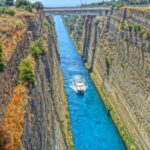
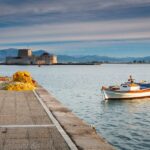
The first stop is the Corinth Canal, where you get about 20 minutes for photographs. The canal cuts through the narrow Isthmus of Corinth and connects the Saronic Gulf with the Gulf of Corinth.
Twenty minutes is enough for a look and a few pictures, not a full visit. Think of this as a scenic orientation stop that breaks up the first drive. It also helps you understand the geography of the route, since the coach is moving from the Athens area into the Peloponnese.
There is no admission charge listed for this stop. Wear comfortable shoes for the brief walk and keep your camera ready, since the schedule is tight.
Mycenae: tombs, walls and the Lion Gate
Mycenae is one of the most memorable archaeological stops on the first day. The site is tied to the legendary world of Agamemnon, but the ruins are valuable even if you set the mythology aside.
You see the Lion Gate, the Cyclopean walls and the royal tombs. The huge stonework gives the place a force that photographs do not quite capture. The Treasure of Atreus, identified in the itinerary as the royal tomb of Agamemnon, adds a second powerful moment outside the main citadel area.
The visit lasts about an hour and includes the local museum. That is enough for the main structures and a focused explanation, though not enough for a slow archaeological study. Your Spanish-speaking guide is important here because the ruins can otherwise look like scattered blocks and foundations.
The site is exposed, and the route involves walking over uneven archaeological ground. Bring water, sun protection and shoes with a steady sole, particularly in warmer months.
Epidaurus: the theater that rewards your ears
The Ancient Theatre of Epidaurus is the day’s most elegant stop. Built in the fourth century BC, it is famous for its symmetry and acoustics.
You have about an hour here. The best part is not simply looking at the curved rows of seats. It is testing the theater’s sound. From the stage area, a small voice or movement can carry remarkably well toward the upper seating. The guide can give the site context, but you should also leave yourself a quiet moment to notice the design.
Epidaurus is a welcome contrast to Mycenae. Mycenae feels fortified and linked to royal power. Epidaurus feels ordered, open and tied to performance and healing. Together, the two stops make the first day varied rather than repetitive.
After Epidaurus, you continue toward Olympia for the overnight stay. This is where the schedule begins to feel demanding. You have visited two important sites, but the day is not finished when the archaeology ends.
Olympia: the birthplace of the Olympic ideal
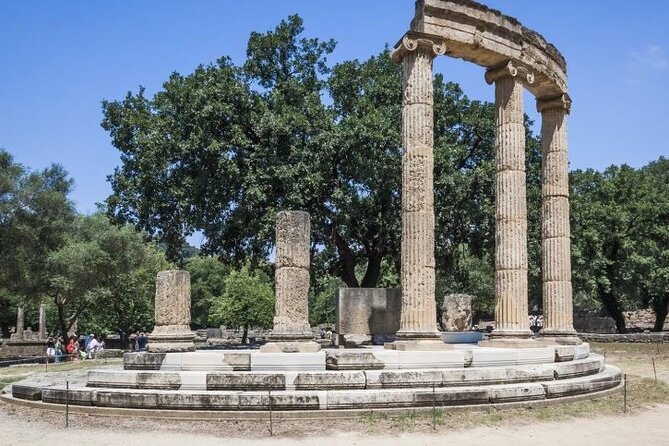
Day two begins at Olympia, with about two hours at the archaeological site followed by an hour in the museum. This is one of the tour’s best-planned stops because the ruins and museum explain each other.
At the site, you encounter the remains of the ancient athletic center, including the setting where the Olympic Games were held. The value of Olympia is not just the stadium or individual columns. The ruins help you picture a wider religious and sporting complex, where competition took place as part of worship of Zeus.
The museum adds the detail that open-air ruins cannot provide. Its major treasure is the statue of Hermes by Praxiteles, a celebrated work of classical sculpture. You also get a clearer view of the sculpture and smaller objects found during excavations.
Three hours gives you a useful introduction, but the visit remains guided and timed. If you are fascinated by ancient athletics, sculpture or excavation history, you may want more freedom than the schedule allows. Still, this is a sensible amount of time for a first visit.
- All Day Cruise -3 Islands to Agistri,Moni, Aegina with lunch and drinks included
★ 5.0 · 4,958 reviews

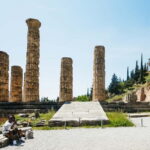

Crossing to Delphi over the Rio-Antirrio Bridge
After Olympia, the coach heads toward Delphi and crosses the Rio-Antirrio Bridge. At 2,883 meters, it links the Peloponnese with mainland Greece across the Corinth Strait.
The bridge is more than a point between two stops. It gives the journey a modern engineering chapter after a morning among ancient stones. The route also shows how separated Greece’s major heritage sites are, and why this itinerary requires so much coach travel.
This is a transfer day, so much of your experience comes from the guide’s commentary and the changing scenery outside the windows. You arrive in Delphi for the night, ready for the archaeological visit on day three.
Delphi: follow the Sacred Way to Apollo
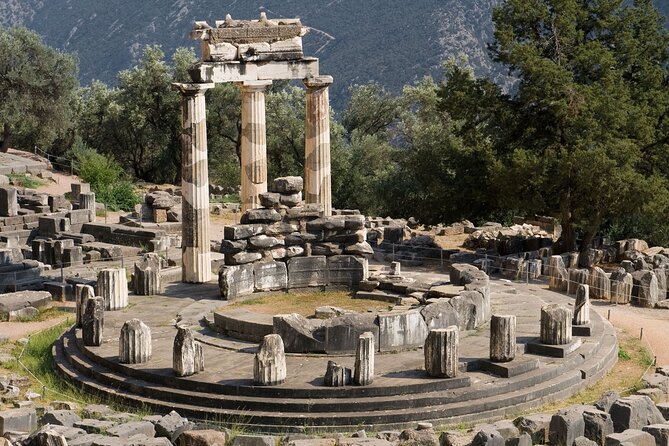
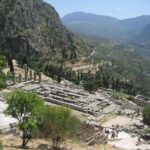
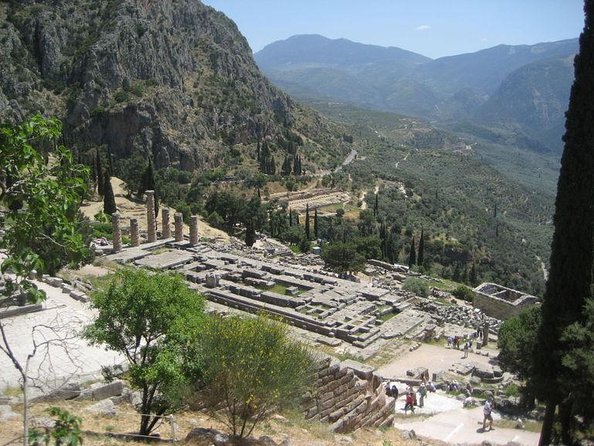
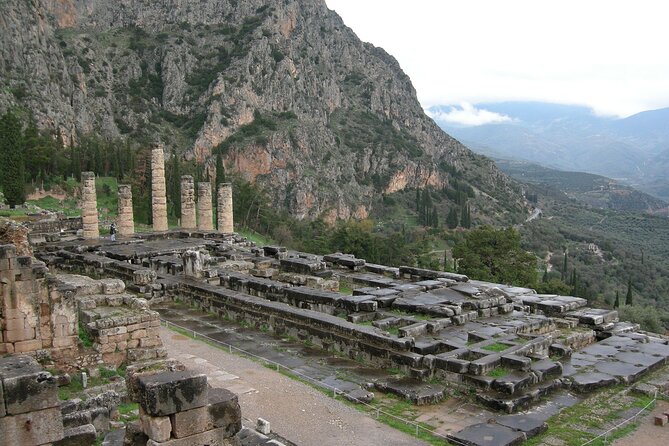
Day three focuses on Delphi, the ancient sanctuary associated with Apollo and the famous oracle. The archaeological visit lasts about an hour and 30 minutes.
You follow the Sacred Way past monuments such as the Treasury of the Athenians before reaching the Temple of Apollo. The route climbs through the site, and from the theater area you get a broad view over the surrounding country. The mountain setting is a major part of Delphi’s power. The sanctuary does not feel like an isolated ruin placed on flat ground. It is arranged along a slope with dramatic views.
The site requires walking uphill and over uneven surfaces. The time allowed is enough for the principal monuments, but you will need to stay with the group and listen while walking. A guide who can connect mythology, politics and art makes a real difference here. Spanish departures have included guides praised for clear explanations and strong knowledge of Greek art, mythology and history, particularly Gogo and Magdalena Kotsakinou.
Delphi Archaeological Museum and the Charioteer
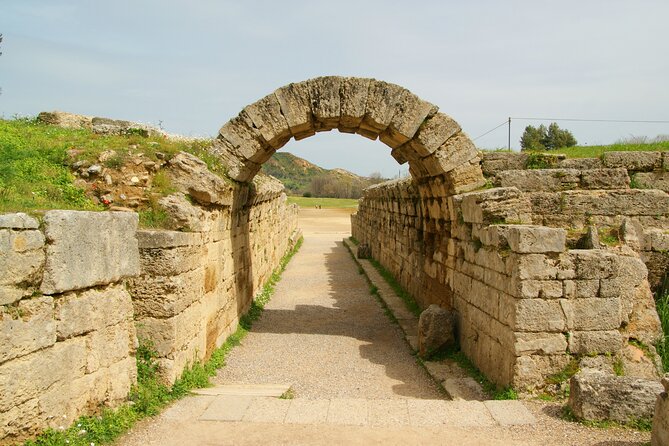
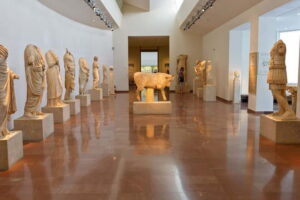
The Delphi Archaeological Museum gets about 45 minutes. Its best-known object is the Charioteer of Delphi, a bronze figure of an athlete.
The museum visit is short, but it gives you a chance to see fine objects in a more controlled setting after walking through the exposed ruins. The Charioteer is the main attraction, and your guide’s explanation can help you understand why the sculpture is so important.
If museums are your priority, this may feel rushed. If you prefer a balanced day with both ruins and objects, the pairing works well. You then pass through Arachova, a mountain town known for local crafts, with about 20 minutes allocated to the stop or pass-through.
Arachova is not a full cultural visit on this schedule. It is a brief change of pace and a chance to see a different side of mainland Greece. Do not expect a long shopping period or a detailed town walk.
Meteora: monasteries above the Thessaly plain
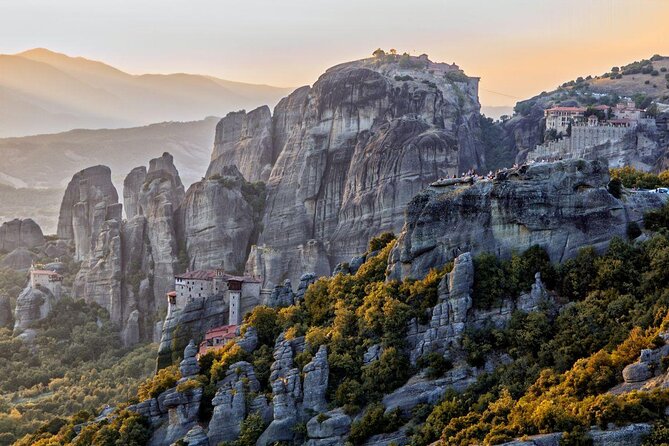
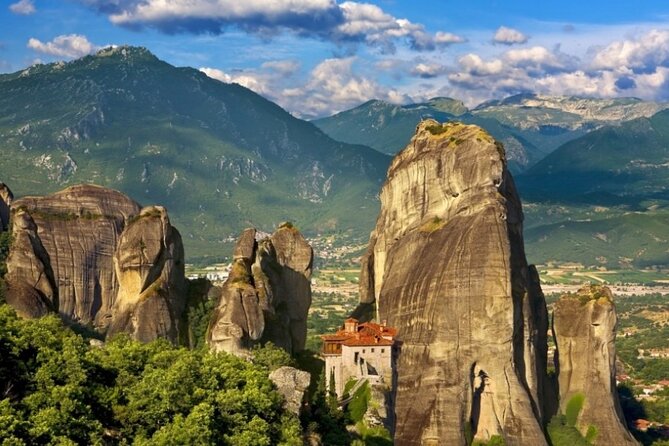
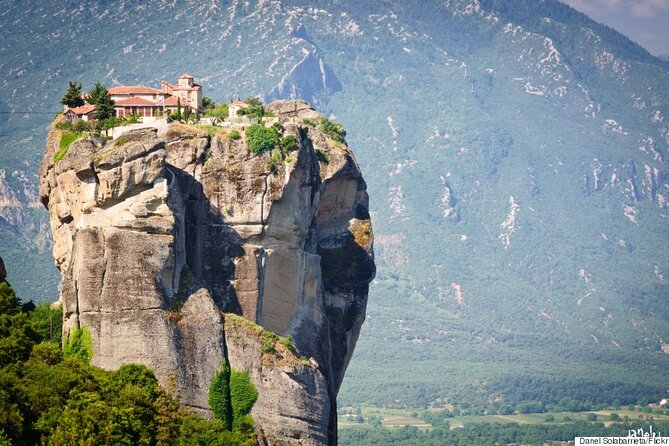
The fourth day brings the most visually unusual stop: Meteora. The monasteries sit high on dramatic rock formations above the Thessaly plain and have been listed as a UNESCO World Heritage Site since 1988.
You visit two monasteries during a two-hour morning stop. This part of the tour shifts the focus from classical Greece to Byzantine art and Orthodox religious culture. The paintings, architecture and setting create a very different experience from Olympia or Delphi.
Two monasteries offer a useful introduction, but not a complete survey of Meteora. You should expect steps, walking and a schedule shaped by monastery opening arrangements. Modest clothing may be appropriate for religious sites, although the supplied information does not specify a dress code.
Meteora is also the stop most likely to justify the long northern detour. If your main interest is only classical Athens and the Peloponnese, the extra hours on the coach may feel excessive. If you want a wider picture of Greek art and religion, Meteora makes the itinerary much more satisfying.
Thermopylae and the Leonidas Monument
On the return to Athens, the coach makes a 20-minute stop at the Leonidas Monument in Thermopylae. This is the site associated with the famous battle of 480 BC.
It is a short historical pause rather than a full archaeological visit. The monument gives the guide a chance to explain the battle and its place in Greek memory, but you should not expect a large museum or extended exploration.
After the stop, you continue to Athens and finish at the original meeting point. The exact arrival time is not provided, so avoid scheduling a tight evening flight or fixed appointment on the return day.
Hotels, meals and the real value of $728.56
At $728.56 per person, this tour is not a budget bus ride, but the price covers a substantial package. You receive three nights in three or four-star hotels, three breakfasts, three dinners, entrance fees, a professional Spanish-speaking guide, luxury air-conditioned coach transport, onboard WiFi and headsets.
That matters because admission fees to several major archaeological sites and museums can add up. You also avoid finding separate accommodation in Olympia, Delphi and the Meteora area, where arranging a short, efficient route on your own can be awkward.
Dinner is included each night, while lunch and drinks are not. The supplied information says the hotels and meals have generally met expected standards, with properties including Neda in Olympia, Olympique in Delphi and Orfeas among the named examples from past departures. Hotel assignments can vary, so treat those names as examples rather than guarantees.
You must also pay the hotel fee per room per night. The listed rates are:
- Three-star hotels: €1.50 in winter and €3 in summer
- Four-star hotels: €3 in winter and €7 in summer
Tips and personal expenses are extra. Group discounts may improve the price for families or larger parties.
The Spanish guide can shape the whole trip
The guide is more than a person who points out ruins. With this much history packed into four days, clear storytelling keeps the places from blending together.
Past Spanish departures have included Gogo, Magdalena Kotsakinou, Fanery Aguirre, Estela, Elena and Zoe. The strongest praise has focused on guides who explain art, mythology and political history clearly, while also helping with timing and practical questions.
You should confirm the operating guide for your date if a particular person matters to you. The listing promises a professional guide exclusively in Spanish, but it does not guarantee one named individual.
Headsets are included, which is useful in a group of up to 55 people. You can hear explanations without standing shoulder to shoulder with the guide, though the group size still means you need to keep an eye on meeting times.
Who should book this four-day circuit?
I would choose this tour if you want a single organized route through mainland Greece and Spanish-language commentary is important. It is especially useful for a first visit, a short stay or anyone who would rather not manage several long-distance transfers.
It also suits history, archaeology, art and mythology fans who want to connect the major sites. The mix is unusually broad: Mycenaean fortifications, classical theater, Olympic worship, the oracle of Apollo and Byzantine monasteries.
I would hesitate if you dislike long bus rides, early starts or changing hotels each night. One unhappy assessment described six to seven hours on the bus per day, and that criticism fits the geography of the itinerary. The program does not hide the distance, but knowing the route is demanding does not make the seats any shorter.
A smaller private tour would give you more control, but likely at a higher price. This group circuit trades flexibility for a ready-made plan, included meals and a guide who can handle the historical material in Spanish.
Practical details before you go
The meeting point is the Melina Mercouri Monument, Leoforos Vasilisis Amalias 54, Athens, and departure is at 8:00 a.m. The tour returns to the same meeting point on day four.
Most people can participate, and the meeting point is near public transportation. Still, archaeological sites include uneven ground, stairs and exposed areas, so comfortable walking shoes are sensible.
The coach has air conditioning and WiFi, and headsets are provided. Pack water, sun protection and a small bag for the day. Since lunch is not included, you should budget for midday food and drinks.
Cancellation is allowed for a full refund up to three full days before the start time. Late cancellations and changes are not accepted, and poor weather or failure to meet the minimum group size can lead to a date change, an alternative experience or a full refund.
Should you book it?
Book this tour if your goal is to see the essential mainland sights in one well-organized sweep, with Spanish explanations and most major costs handled upfront. The strongest reasons are the range of sites, the included hotels and dinners, and the chance to visit Meteora without arranging a separate northern trip.
Skip it if you want a slow Greek holiday. You will spend long stretches on the coach, have limited free time at several stops and change hotels during the four-day circuit.
For the right person, $728.56 is a fair price for the coverage. Think of it as a history-packed sampler of mainland Greece, not a restful escape.
FAQ
Is the tour conducted in Spanish?
Yes. A professional guide accompanies the group, and the guide service is exclusively in Spanish.
How long is the tour?
The experience lasts approximately four days and includes three hotel nights.
Where does the tour start?
It starts at the Melina Mercouri Monument, Leoforos Vasilisis Amalias 54, Athens, at 8:00 a.m.
Where does the tour finish?
The activity ends back at the original meeting point in Athens.
Which major sites are included?
The route includes the Corinth Canal, Mycenae, Epidaurus, Olympia, Delphi, Meteora and the Leonidas Monument at Thermopylae.
Are accommodation and meals included?
Three nights in three or four-star hotels are included, along with three breakfasts and three dinners. Lunch and drinks are not included.
Are entrance fees included?
Yes. Entrance fees to the listed places of interest are included, along with skip-the-line access.
Can I cancel for a full refund?
You can cancel for a full refund if you do so at least three full days before the experience start time. Late cancellations and changes are not accepted.