REVIEW · CRETE
Cretan Traditional Cooking Lessons
Book on Viator →Operated by Balos Travel · Bookable on Viator
At Metochi farmhouse near Chania, Eleni and her mother, Mrs. Chrisoula, turn a cooking class into a relaxed family evening. You will help prepare a full Cretan meal, learn how olive oil and farm produce fit into local food traditions, then sit down together to eat what you made.
I like the small-group setting, capped at 14 people, because it gives the class a personal feel without making the price feel like a private lesson. I also like the farm-to-table focus: ingredients come from the family property when available, and the visit includes practical discussion of olive oil, wine, and the Cretan diet.
The main consideration is timing. Pickup and the class begin at 4:30 pm, and the activity lasts about five hours, so this takes up your entire evening. That suits anyone who wants dinner and a cultural activity in one outing, but it will not fit neatly around another evening plan.
In This Review
- Key points at a glance
- From hotel pickup to the farmhouse
- Meeting Eleni and Mrs. Chrisoula
- A farm visit with olive oil and wine lessons
- Preparing boureki, gemista, and stifado
- Rolling vine leaves and mixing tzatziki
- Finishing with sweet kalitsounia and honey
- Why the farm-to-table angle matters
- Is $132.17 a fair price?
- Who will enjoy this evening most?
- Timing, cancellations, and practical planning
- Should you book Cretan Traditional Cooking Lessons?
- FAQ
- Where does the cooking class take place?
- What time does the activity start?
- How long does the cooking experience last?
- Is hotel pickup available?
- Who leads the cooking class?
- What dishes are included on the menu?
- How large is the group?
- Can I cancel for a refund?
Key points at a glance
- Cook a full Cretan spread: Prepare boureki, gemista, stifado, dolmadakia, tzatziki, dakos, kalitsounia, and more.
- Meet the family behind the class: Eleni and her mother, Mrs. Chrisoula, host the evening at their farmhouse.
- See how local food is made: Learn about olive oil, wine, farm ingredients, and the Cretan diet.
- End with a shared dinner: Eat the dishes you prepared together at the farmhouse.
- Easy transport from Chania-area lodging: Hotel or house pickup is offered in an air-conditioned vehicle.
- Plan on a full evening: The class starts at 4:30 pm and runs for about five hours.
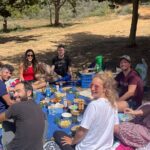
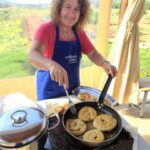
This is not a quick demonstration where you sit at a table and watch someone chop vegetables. You go to a small farmhouse near Chania, meet the family, cook alongside them, and eat the results at the end.
The setting matters. Eleni and her mother, Mrs. Chrisoula, are part of the evening rather than just instructors passing through. You get a look at family food traditions, hear about the way ingredients are produced, and take part in dishes that belong to everyday Cretan cooking.
The class is offered in English, and the maximum group size is 14. That is large enough to bring some social energy, but still small enough for the evening to feel more like a shared meal than a formal cooking school.
From hotel pickup to the farmhouse
Pickup is offered from your hotel or house. When you book, you should send the name of your lodging or the full address so the provider can find the best pickup point.
Transport is provided in an air-conditioned vehicle. That is a useful touch in Crete, especially if you are staying outside central Chania or do not want to arrange an evening taxi. The pickup service also removes some of the uncertainty of finding Metochi farmhouse at Trachilos, Chania 734 00.
The activity begins at 4:30 pm. Since the return is to the meeting point, you should expect to finish back where the outing began, rather than at a separate restaurant or city-center location.
The pickup is convenient, but do not assume the exact collection time will be identical for every lodging address. Give the provider accurate details and wait for confirmation. Confirmation is sent within 48 hours of booking, subject to availability.
You can also read our reviews of more cooking classes in Crete

Meeting Eleni and Mrs. Chrisoula
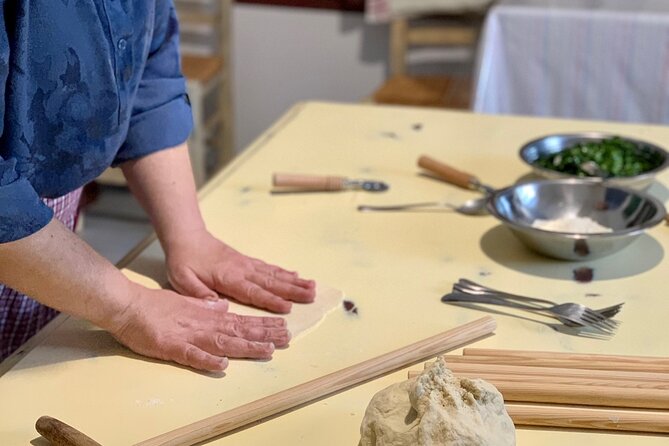
The welcome is one of the strongest parts of this outing. Eleni hosts with her mother, Mrs. Chrisoula, also known affectionately as Mom. That family presence gives the class a warm, informal tone.
You will get to know the family before being guided to the small farmhouse. The point is not only to learn a recipe. You also get a sense of how food connects to household routines, family memory, and the farm itself.
The setting is especially useful for anyone who wants more context around Cretan food. Instead of treating dishes as isolated menu items, the class connects them with olive oil, produce, wine, and the wider Cretan diet.
Do not expect a polished restaurant kitchen or a cooking school with a large professional staff. The appeal is the family setting and the direct contact with the hosts. If you prefer a sleek, highly structured class with individual workstations, this may feel more homespun than you want.
A farm visit with olive oil and wine lessons
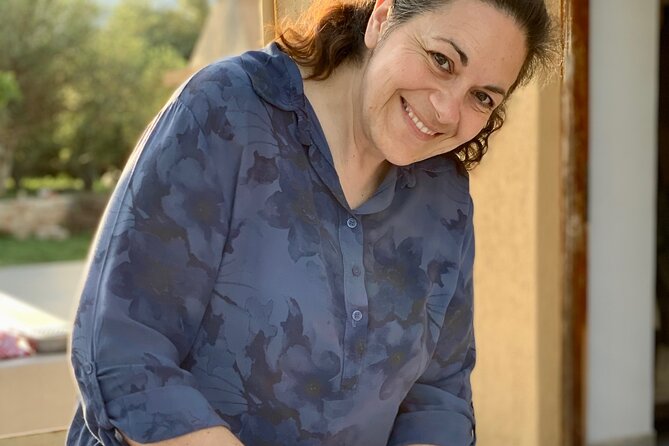
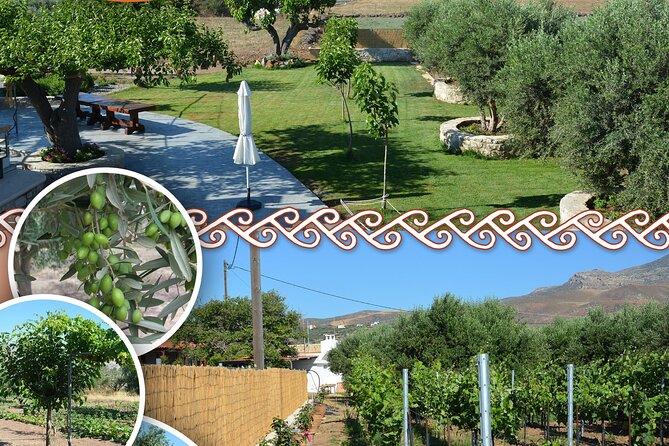
The farm visit adds substance to the cooking. You get an introduction to the property and learn how some of the ingredients used in the meal are produced.
Olive oil receives special attention. The activity includes an olive oil tasting and an explanation of the family’s process for making it. That is valuable in Crete, where olive oil is not just a finishing ingredient. It is central to cooking, farming, and the local diet.
You also learn about the family’s wine-making process. The available information does not promise a formal winery tour or a large tasting session, so you should think of this as a personal explanation tied to the household and farm.
I like this part because it gives you something to notice during the rest of your trip. After learning how local olive oil is made and tasting it with more attention, you may start to compare oils at markets and restaurants instead of treating them all as the same.
Preparing boureki, gemista, and stifado
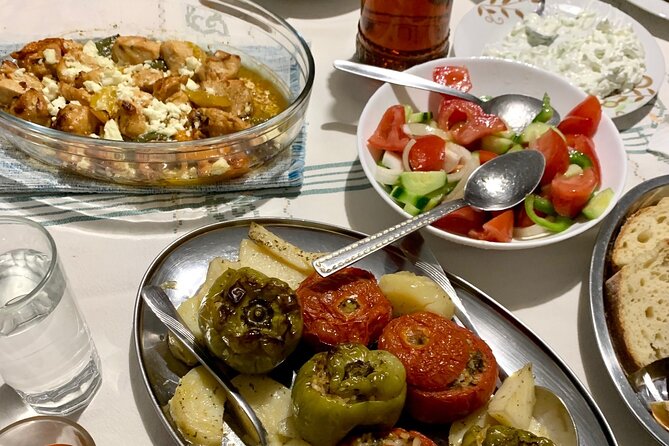
The menu is broad for a five-hour class. You will work with several classic dishes rather than focusing on one recipe.
Boureki is a baked dish of zucchini, potatoes, and cheese. It shows how simple vegetables become a substantial main course with the right combination of dairy, seasoning, and oven cooking.
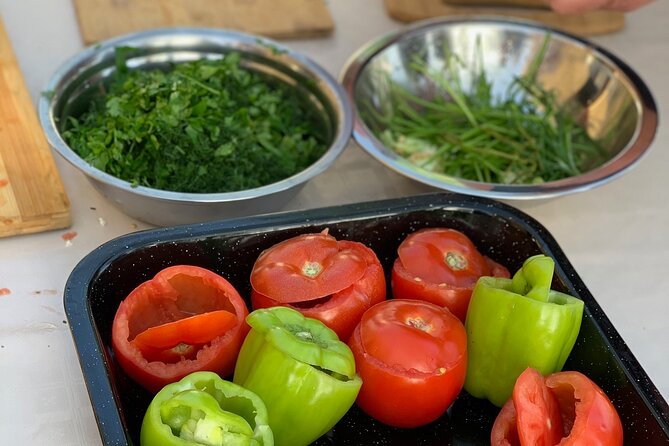
Gemista brings stuffed vegetables to the table. You prepare tomatoes and peppers filled with a seasoned mixture. The dish is familiar across Greece, but making it yourself helps you understand the work behind its tidy presentation and long, slow cooking.
Stifado is another main course, made here with pork, onions, and tomato sauce. It offers a heartier contrast to the vegetable dishes. The large amount of onion is part of the character of the dish, producing a sweet, savory sauce as it cooks.
The menu includes enough variety for different tastes. You get vegetables, cheese, rice, pork, herbs, bread-like rusks, and sweets. At the same time, this is not a menu built around a single cooking theme, so the evening may feel more like a tour of Cretan home cooking than a tightly focused lesson in one technique.
Rolling vine leaves and mixing tzatziki
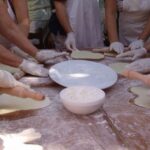
The starters give you some of the most hands-on tasks. Dolmadakia are vine leaves rolled around rice. The work is careful rather than difficult, and the finished rolls show how much patience goes into a dish that can appear simple on the plate.
Tzatziki provides a more direct preparation. It is a cool yogurt-based dip commonly served with Greek meals, and it gives you a break from the more involved stuffed and baked dishes.
Dakos brings another Cretan staple into the meal. It combines a rusk with local cheese and tomato. This is a good example of the island’s practical food tradition, where durable bread is softened and turned into a satisfying dish with fresh produce and dairy.
A second starter, kalitsounia with greens, adds a savory pastry filled with local greens. The menu uses kalitsounia in both savory and sweet forms, which lets you see how one style of small pastry can work at different points in the meal.
A few more Crete tours and experiences worth a look
Finishing with sweet kalitsounia and honey
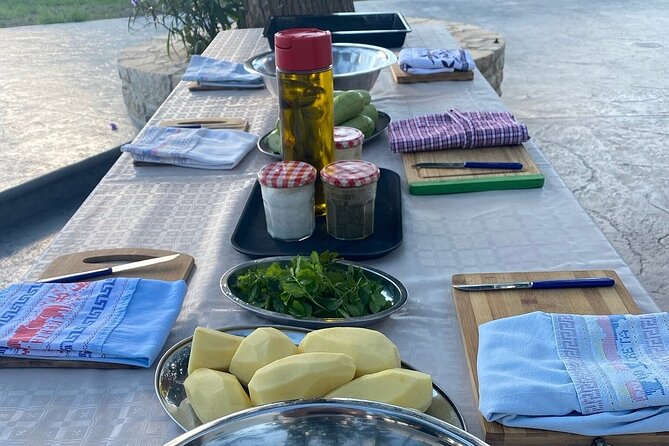
Dessert is kalitsounia, small cheese pastries served with honey. The combination is simple, but it gives the meal a clear Cretan finish: dairy, pastry, and local sweetness rather than a heavy dessert.
Because you prepare both savory and sweet items, you get a useful range of recipes to remember at home. The menu is also generous enough to function as a full dinner, not just a few sample bites.
The meal includes the dishes prepared earlier, so you do not have to leave the farmhouse hungry while waiting for a later restaurant reservation. The shared dinner is part of the class, not an optional add-on.
Why the farm-to-table angle matters
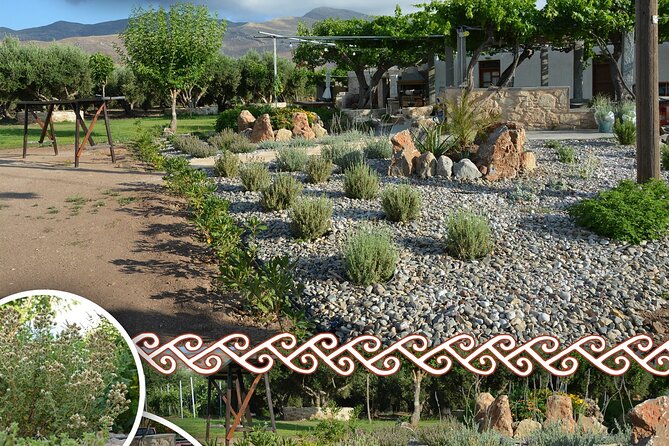
Several ingredients come from the family farm, with an emphasis on sustainable practices. That does not mean every item on the menu is guaranteed to come from the property, but it does shape the way the evening is presented.
You can connect the food on your plate with the place where it is grown or produced. The tomatoes, greens, olive oil, cheese, and other ingredients become more than anonymous supplies. You learn how the family uses them and why they matter in local cooking.
That connection is the reason I would choose this over a generic cooking class in a city kitchen. You are not only practicing recipes. You are seeing a household food culture in its own setting.
The tradeoff is that the outing depends on a family atmosphere. Some people will find that personal and memorable. Others may prefer a more formal class with printed recipes, fixed stations, and a professional instructor whose whole job is teaching. The available details do not confirm whether printed recipes are supplied, so ask if that matters to you.
Is $132.17 a fair price?
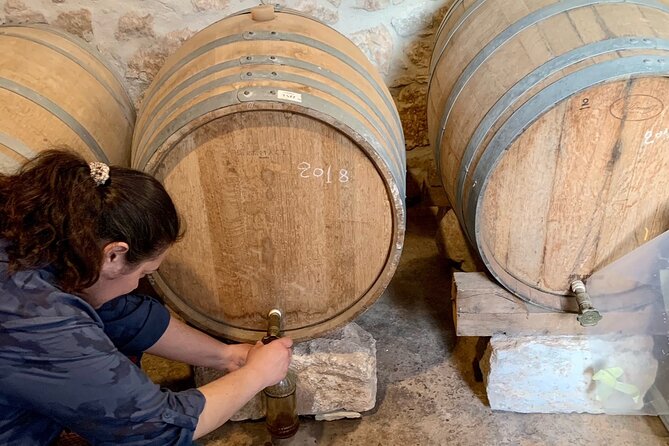
At $132.17 per person, this is not a cheap dinner. But the price covers much more than food. You are paying for approximately five hours, transport in an air-conditioned vehicle, a cooking class, a farm visit, olive oil tasting, instruction about wine and the Cretan diet, and a complete meal.
The value improves if you would otherwise pay separately for dinner and a cultural activity. You also avoid arranging your own transport to the farmhouse, which can matter if you are not renting a car.
The maximum group size is 14, so this is not priced like a private family lesson. Still, the limited size supports more contact with Eleni and Mrs. Chrisoula than you would get at a large demonstration.
Group discounts are available, though the exact reduction is not provided. If you are booking for several people, check the total before assuming the discount applies automatically.
Who will enjoy this evening most?
I would recommend it to you if food is one of the main reasons you visit Crete. It suits anyone who wants to meet local hosts, learn several recipes, and understand how olive oil and farm produce shape the island’s cooking.
It also works well for couples, families, and small groups who want a social evening rather than a restaurant meal at a separate table. The shared dinner gives the class a natural ending.
You should think twice if you dislike long meals, group activities, or unfamiliar food preparation. The class includes pork, dairy, rice, vegetables, pastries, and cheese, and the menu is set around traditional dishes. The supplied information does not describe vegetarian, vegan, or allergy-specific alternatives, so contact the provider before booking if you need changes.
The activity is offered in English. Service animals are allowed, but other accessibility details are not provided. If mobility or transport requirements affect your choice, ask for specifics before confirming.
Timing, cancellations, and practical planning
The 4:30 pm start makes this an evening activity. Plan your day so you arrive ready to eat and participate, rather than trying to squeeze in a major attraction afterward.
The activity ends back at the meeting point. With pickup arranged, that generally means you should be ready for a return transfer after dinner, but the exact drop-off arrangements depend on the address you provide.
You can cancel for a full refund if you do so at least 24 hours before the start time. Cancellations or changes made less than 24 hours before the start are not refunded or accepted. The provider also requires a minimum number of participants, so if that minimum is not reached, you will be offered another date or activity, or a full refund.
This experience is often booked about 27 days ahead. That is a useful planning clue, especially if your dates in Crete are fixed. Confirmation is subject to availability, so do not leave it until the last minute if the evening is important to you.
Should you book Cretan Traditional Cooking Lessons?
Book this if you want a personal food experience near Chania, not simply a meal with a recipe card. Eleni and Mrs. Chrisoula give the evening its character, while the farm setting, olive oil tasting, and shared dinner make it feel connected to Cretan life.
The price is reasonable for a five-hour outing that includes transport, instruction, a farm visit, and dinner. The main drawbacks are the fixed evening schedule, the group format, and the lack of stated information about dietary substitutions and printed recipes.
For most food-focused visitors, I would book it in advance and keep the rest of that evening free. Send a precise pickup address, ask about any dietary needs before paying, and arrive ready to cook, eat, and spend time with the family.
FAQ
Where does the cooking class take place?
The class takes place at Metochi farmhouse in Trachilos, Chania 734 00, Greece.
What time does the activity start?
The scheduled start time is 4:30 pm.
How long does the cooking experience last?
The activity lasts approximately five hours.
Is hotel pickup available?
Yes. Pickup is offered from your hotel or house in an air-conditioned vehicle. You should send the provider the name of your hotel or the address of your house so the best pickup arrangement can be found.
Who leads the cooking class?
Eleni and her mother, Mrs. Chrisoula, host the farmhouse cooking experience.
What dishes are included on the menu?
The menu includes boureki, gemista, stifado, dolmadakia, tzatziki, kalitsounia with greens, dakos, and sweet kalitsounia served with honey.
How large is the group?
The activity has a maximum of 14 participants.
Can I cancel for a refund?
Yes. You can cancel at least 24 hours before the local start time for a full refund. Cancellations or changes made less than 24 hours before the start are not accepted or refunded.