REVIEW · THESSALONIKI
Discover the Secrets of Roman Byzantine and Ottoman Selanik
Book on Viator →Operated by Selanik Adventures · Bookable on Viator
Thessaloniki’s story is written in layers, and this three-hour walk moves through nearly all of them. You begin at Trigonion Tower, where the Ottoman period enters the picture, then pass through old alleys, refugee neighborhoods, Roman ruins, Byzantine churches, and working local districts before finishing near the city center.
I like the small maximum group of six, which gives Dimitris room to explain the city’s political and social changes rather than rush through a standard list of monuments. I also like the album of old Thessaloniki photographs, plus the chance to see the sea and skyline from above. The main consideration is the route’s broad subject matter: you need an open mind and an interest in discussion, not just quick photo stops.
In This Review
- Key points to know before you book
- Why this Thessaloniki walk feels different
- Trigonion Tower and the first Ottoman-era view
- Ano Poli, where the old lanes do the talking
- Sykies and the city’s refugee story
- The Greek Agora and Roman Forum
- Portara and the old approach to the Acropolis
- Terpsitheas Square and Tsinari
- A poet’s home and a working-class square
- Saint Demetrius, Thessaloniki’s key Christian monument
- The Byzantine monastery and the city views
- What the $40.49 price buys you
- Who should book this experience
- Booking details and cancellation
- Should you book this Thessaloniki history walk?
- FAQ
- How long is the Discover the Secrets of Roman Byzantine and Ottoman Selanik tour?
- What time and where does the tour start?
- Where does the tour finish?
- How many people can join the tour?
- Is transportation to the meeting point included?
- Can I cancel for a full refund?
Key points to know before you book
- A history walk with a social edge: Roman, Byzantine, and Ottoman sites are linked to politics, migration, workers, and neighborhood life.
- Small-group format: The tour accepts a maximum of six people, a useful size for questions and conversation.
- Dimitris leads the experience: His storytelling focuses on historical details and the lesser-known side of Thessaloniki.
- Ten stops in about three hours: You cover Ano Poli, Sykies, the Roman Forum, Portara, Tsinari, and Saint Demetrius.
- Views and local suggestions: Expect a sea and city view, possible sunset scenery, and advice about food and nightlife.
- Free cancellation: You can cancel at least 24 hours before the start for a full refund.
Why this Thessaloniki walk feels different
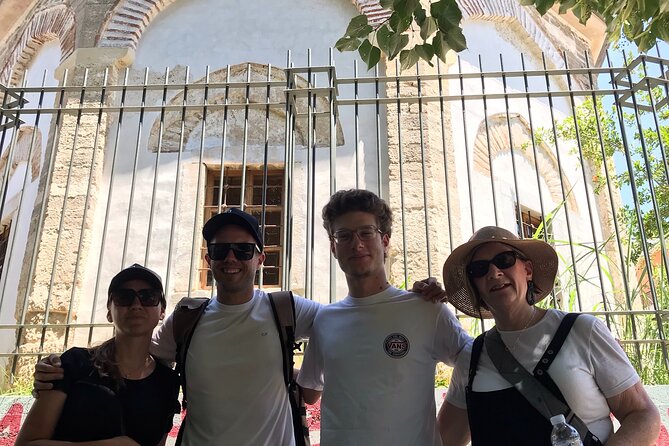
Many city walks concentrate on famous buildings. This one tries to explain why Thessaloniki looks and feels the way it does today. You move from fortifications to neighborhood lanes, then down toward the Roman and Byzantine center. Along the way, the guide connects architecture with power, religion, migration, and daily life.
That approach suits you if you want more than dates and names. Dimitris is the guide, and the experience gives him room to tell historical details in a conversational way. The small group matters here. With no more than six people, you can ask why a neighborhood changed, how different communities shaped the city, or what a ruin meant beyond its surviving stones.
The tour begins at 9:30 am at Propyleon Café, Bistrot, Live Stage, on Eptapirgiou 130. It ends at the Statue of Eleftherios Venizelos on Egnatia 78. You must arrange your own way to the starting point, but the meeting point is near public transportation.
You can also read our reviews of more tours and experiences in Thessaloniki.


Trigonion Tower and the first Ottoman-era view
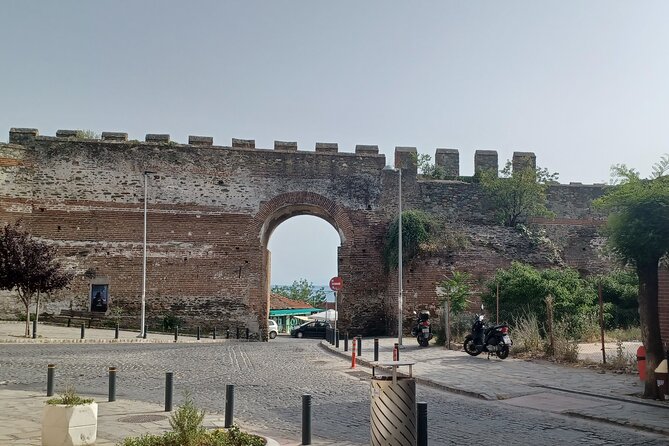
Trigonion Tower is a strong place to begin because it puts you above much of Thessaloniki. The tower marks the beginning of the Ottoman era in the city, and the elevated position gives the opening discussion some visual weight. You are not simply hearing about a change of rulers. You can look across the city and consider how its old defensive edge relates to the modern streets below.
The stop lasts about 10 minutes, so expect a quick introduction rather than a long visit inside a monument. Admission is listed as free. The best reason to pay attention here is orientation. You begin to see Thessaloniki as a city shaped by its position, walls, neighborhoods, and access to the sea.
Ano Poli, where the old lanes do the talking
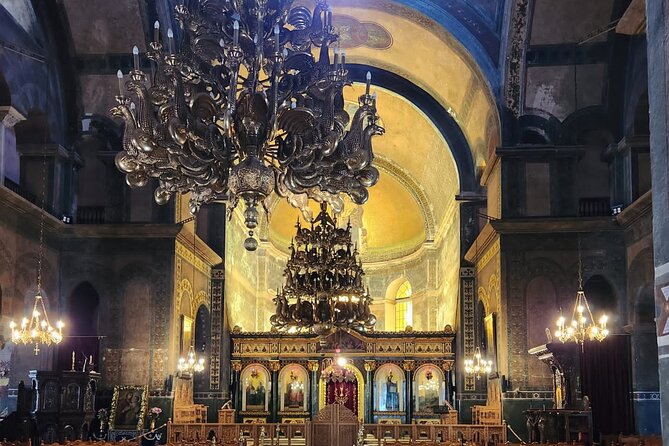
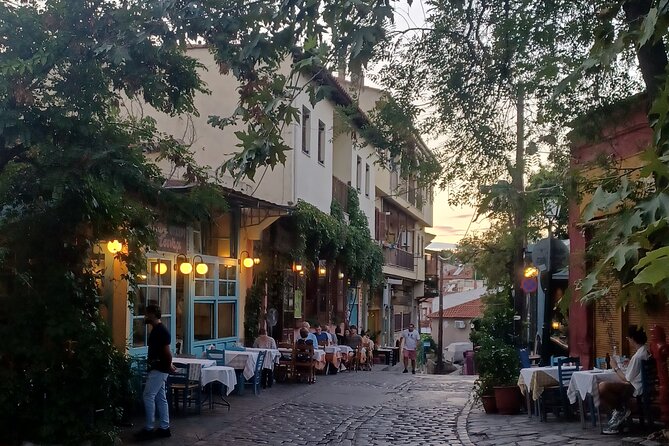
The walk continues through Anopolis, also known as Ano Poli, one of Thessaloniki’s oldest neighborhoods. The route spends about 40 minutes here, making it the longest single neighborhood stop. That tells you something about the tour’s priorities: this is not just a climb past a few pretty houses.
You explore small alleys and hear why this area matters to the guide. The lanes offer a more intimate view of the city than a wide boulevard does. Look for the contrast between the close, winding streets and the larger urban center below. The value here comes from slowing down and letting the neighborhood provide the setting for stories about Thessaloniki’s past.
Because the route uses small alleys, wear sensible walking shoes. The supplied details do not specify the amount of uphill walking or the condition of every surface, so ask Selanik Adventures if you have mobility concerns. Most people can participate, but a walking tour through old districts may not suit every pace.
Sykies and the city’s refugee story
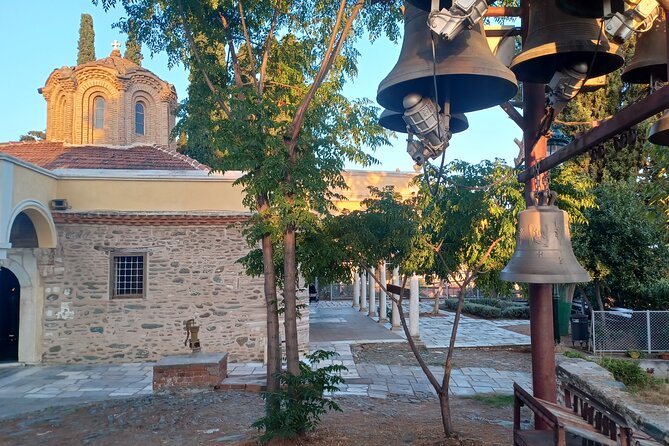
The 20-minute stop in Sykies adds a different social chapter. It is described as one of the last cultural and refugee neighborhoods in Thessaloniki. That wording makes this more than an architectural pause. You are looking at a district through the experiences of people who arrived, settled, and helped shape the city’s identity.
This is one of the tour’s strongest features. A church or fortress can tell you about rulers. A refugee neighborhood can tell you about displacement, adaptation, and ordinary households. The experience aims to connect those large forces with the places where people actually lived.
Do not expect Sykies to function like a polished historic center. Its value is the human story and the chance to see a part of Thessaloniki that many short sightseeing routes leave out.
The Greek Agora and Roman Forum
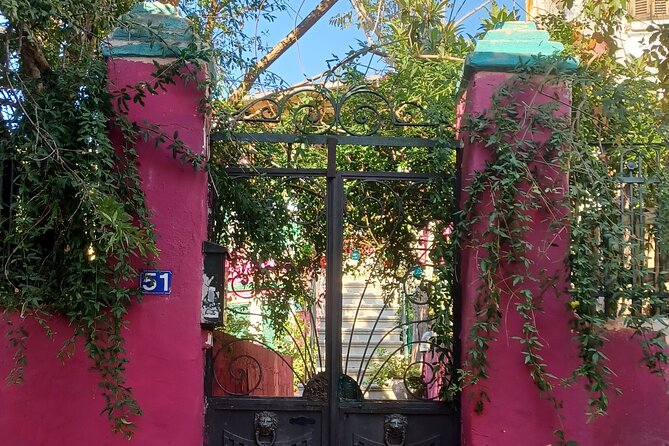
The route then reaches the Greek Agora and Roman Forum, an ancient Roman market area with a theater and catacombs. The stop lasts about 15 minutes. That is enough for a focused explanation, but not enough for an extensive archaeological visit.
This is where the city’s Roman layer becomes clear. Markets show the practical side of an ancient city, while a theater points to public life and entertainment. The catacombs add a religious and underground dimension. You get a compact look at how commerce, civic activity, and faith occupied the same urban area over time.
The admission is listed as free. The tour’s strength here is interpretation. Rather than treating the forum as a pile of old stones, Dimitris can place it within the larger sequence of Roman, Byzantine, and Ottoman Thessaloniki.



Portara and the old approach to the Acropolis
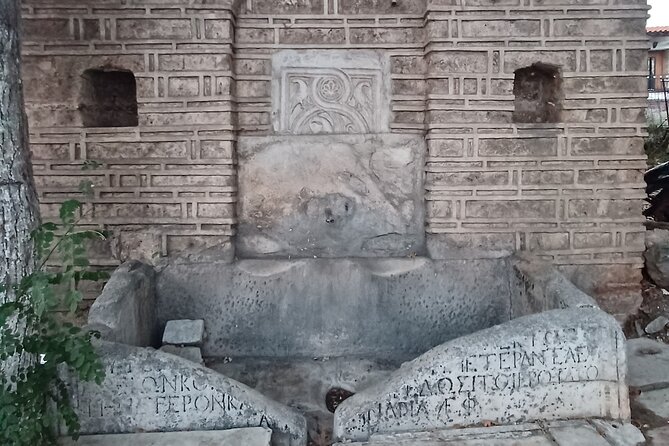
At Portara, or the Great Gate, you see the main gate to Thessaloniki’s Acropolis. The stop takes about 15 minutes. This is a useful point for understanding how people entered and moved through the fortified upper city.
Gates are practical monuments. They tell you about control, defense, and the connection between a settlement and the authority that ruled it. Portara also helps tie together the earlier visit to Trigonion Tower and the time spent in Ano Poli. The route is not jumping randomly between attractions. It is tracing how the upper city worked.
As with several stops, the information provided does not say that an interior visit is included. Think of this as an outdoor explanation and viewing point unless the guide tells you otherwise.
Terpsitheas Square and Tsinari
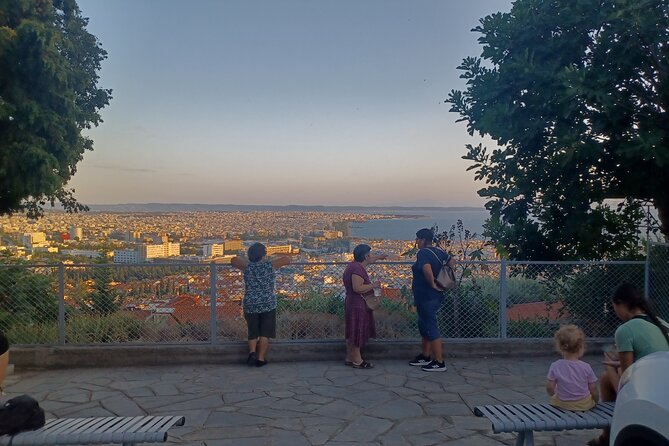
Platia Terpsitheas is a short 10-minute stop with a deliberately local tone. The tour description calls it a place for local gossip. That phrase signals a change from formal history to neighborhood character. You may hear the sort of stories that do not appear on a museum label, though the exact discussion depends on the guide and the group.
Next comes Tsinari, another traditional area, for about 10 minutes. Together, these stops help keep the walk grounded in present-day Thessaloniki. You are not only looking backward at emperors and ancient markets. You are also seeing how local districts retain a sense of identity.
These pauses are brief, so do not expect a long café break or a full neighborhood exploration. Their purpose is to add texture and give Dimitris room to discuss how people understand their own city.
A poet’s home and a working-class square
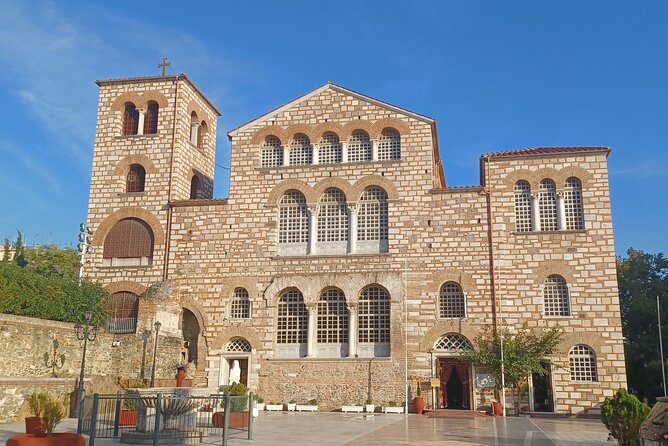
The stop at Dim. Poliorkitou 20 lasts only five minutes and focuses on a famous poet’s house. It is a small detail, but that is part of the appeal. Literary history often survives in ordinary residential settings rather than grand halls.
The route then reaches the Park of the Roman Agora for about 30 minutes. This is another major discussion point. The area is linked to an important early Christian church and a workers’ square, bringing religion and labor into the same part of the city.
The longer time here allows the guide to draw connections between the ancient forum, early Christianity, and working life. For me, this kind of combination is more useful than seeing each period in isolation. Thessaloniki’s past was not divided into neat museum rooms. Different communities and institutions occupied the same urban ground across centuries.
Saint Demetrius, Thessaloniki’s key Christian monument
The final listed stop is the Holy Church of Saint Demetrius, patron saint of Thessalonica. The visit lasts about 15 minutes. It is described as an early Christian monument and the most important church in Thessaloniki, so it gives the walking tour a fitting religious climax.
Saint Demetrius helps explain the city’s Byzantine identity. You can consider how a patron saint, a major church, and local devotion shaped Thessaloniki’s public life. The stop also reinforces the tour’s central theme: the city’s political story cannot be separated from its religious institutions.
The details provided do not specify whether admission to the church interior is included or whether the visit depends on opening conditions. Confirm that point if entering the church is essential to your plans.
The Byzantine monastery and the city views
The experience includes a visit to the only Byzantine monastery that still works to this day. Its name and exact position are not provided, so ask for those details before booking if the monastery is a deciding factor for you. Still, its inclusion adds an important living element to the tour.
Ancient ruins and old photographs show what Thessaloniki was. A working monastery shows how Byzantine religious traditions remain part of the city’s present. That distinction matters. You are not only studying a vanished period, but also seeing a continuing institution.
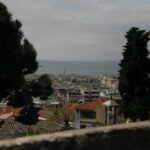
The tour also includes a view of the sea and urban skyline, with an opportunity for a memorable sunset. The starting time is 9:30 am, so the sunset opportunity may depend on the day’s arrangements or on a later part of the experience. Ask the provider how this fits with the published morning start if evening light is important to you.
An entrance to a traditional house with a remarkable city view is not included by default, but it can be arranged upon request. That is a useful option for people who want a more private viewing stop, though you should confirm any extra cost or conditions directly with Selanik Adventures.
What the $40.49 price buys you
At $40.49 per person, this is priced as an affordable small-group walking tour rather than a basic orientation stroll. You receive roughly three hours with a maximum of six people, an album of old Thessaloniki photographs, the monastery visit, city views, and suggestions for food and nightlife.
The value depends on what you want from a guide. If you only need directions to the Roman Forum and Saint Demetrius, you can see several major places independently. If you want someone to connect Roman ruins with refugee districts, Ottoman rule, early Christianity, and local neighborhoods, the fee is easier to justify.
The small group is especially important. A maximum of six can make a discussion about politics and society feel more like a conversation than a speech. It also gives you a better chance to ask Dimitris about places to eat or spend the evening.
GST is included. Transport to the meeting point is not, and the traditional house visit is arranged separately upon request. There are no listed admission charges for the main stops, but you should confirm the church and monastery arrangements before you go.
Who should book this experience
I would choose this tour if you enjoy history told through neighborhoods, not just monuments. It is a good fit for someone visiting Thessaloniki who wants a first look at Ano Poli, Sykies, the Roman Forum, and Saint Demetrius while also learning about political and social change.
It should suit people who like discussion and do not mind a guide moving beyond standard sightseeing. The description makes clear that the experience avoids lame talks, so arrive ready to think, ask questions, and hear subjects that may be more complicated than a simple list of dates.
You may prefer another tour if you want a museum-heavy visit, a private vehicle, a slow meal, or detailed interior tours at every church and archaeological site. Three hours is enough for a broad introduction, but the ten-stop route means several places receive only 5 to 15 minutes.
Dimitris is the guide to look for when you book. His approach centers on historical details and the lesser-known secrets of the city. The two available ratings are both 5 out of 5, with particular praise for his storytelling and the amount of information covered. That is a small sample, so I would treat it as a useful signal, not a guarantee of your personal experience.
Booking details and cancellation
Confirmation is sent when you book. The tour starts at Propyleon Café, Bistrot, Live Stage, Eptapirgiou 130, and ends at the Statue of Eleftherios Venizelos, Egnatia 78. The activity is near public transportation, and most people can participate.
The maximum group size is six. Free cancellation is available if you cancel at least 24 hours before the local start time. Cancellations or changes made within 24 hours are not accepted for a refund.
Should you book this Thessaloniki history walk?
Book it if you want context, local districts, and a guide-led conversation rather than a simple march between famous sights. The combination of Trigonion Tower, Ano Poli, Sykies, the Roman Forum, Portara, Tsinari, and Saint Demetrius gives you a useful cross-section of Thessaloniki.
I would especially recommend it early in a stay. The food and nightlife suggestions can help shape the rest of your visit, while the old photographs and skyline views give you a quicker sense of how the city has changed.
Skip it if you need a fully accessible route, a relaxed pace, or guaranteed interior access at every stop. For everyone else, $40.49 is a fair price for a three-hour, six-person walk that treats Thessaloniki as a living city rather than an outdoor museum.
FAQ
How long is the Discover the Secrets of Roman Byzantine and Ottoman Selanik tour?
The experience lasts approximately three hours.
What time and where does the tour start?
It starts at 9:30 am at Propyleon Café, Bistrot, Live Stage, Eptapirgiou 130, Thessaloniki 546 34, Greece.
Where does the tour finish?
The tour ends at the Statue of Eleftherios Venizelos, Egnatia 78, Thessaloniki 546 24, Greece.
How many people can join the tour?
The activity has a maximum group size of six people.
Is transportation to the meeting point included?
No. You are responsible for arranging transportation to the starting point.
Can I cancel for a full refund?
Yes. You can receive a full refund if you cancel at least 24 hours before the experience start time. Changes or cancellations made less than 24 hours in advance are not accepted for a refund.