REVIEW · THESSALONIKI
Ano Poli: A walking tour in Thessaloniki’s colorful Old Town
Book on Viator →Operated by Dot2dot · Bookable on Viator
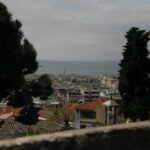
The best part of this walk is that Ano Poli feels unlike the broad, busy streets below. You move through tight cobbled lanes, old homes, little squares, churches, and remnants of several faiths and empires, while the Byzantine walls keep appearing above the rooftops. The tour begins at Trigonion Tower, where Thessaloniki opens out below you.
I like the strong start, with a free city view before the walking begins, and I like the route’s mix of Byzantine and Ottoman landmarks rather than a single period of history. The main consideration is the terrain: narrow streets, steps, and roads that can end suddenly make this a genuine walking tour, not a flat stroll. Transportation to the meeting point is also your responsibility.
In This Review
- Key points to know
- Why Ano Poli gives you a different Thessaloniki
- Starting above the city at Trigonion Tower
- Two hours through Ano Poli’s old lanes
- Byzantine walls and the city’s upper edge
- A 14th-century monastery and old religious sites
- Ottoman traces, dervish legends, and everyday details
- Finishing at Platia Romfei
- Is $78.14 a fair price?
- Who should choose this walk?
- My recommendation for Ano Poli
- FAQ
- Where does the Ano Poli walking tour begin?
- What time does the tour start?
- How long does the experience last?
- Where does the tour end?
- Is transportation to the meeting point included?
- What is included in the price?
- Are admission tickets included?
- How large is the group?
- Can I cancel for a full refund?
Key points to know
- Trigonion Tower starts the tour with Thessaloniki spread below you, a useful way to understand the city’s position and scale.
- Ano Poli preserves old street patterns and traditional homes, giving the walk a more local feel than a standard downtown sightseeing route.
- The two-hour neighborhood walk includes Byzantine walls, a 14th-century monastery, an Ottoman fountain, churches, and small squares.
- The group is limited to 12 people, which should make it easier to hear the guide and ask questions.
- The route finishes at Platia Romfei, also called Rofmei Square, rather than returning to the starting point.
- The $78.14 price pays for a certified guide and local interpretation, but not transportation, food, drinks, or purchases.
Why Ano Poli gives you a different Thessaloniki
Ano Poli means Upper Town, and its position above the city is the first clue to why it feels different. The streets are narrower, the homes have a more traditional look, and the Byzantine fortifications remain a constant part of the setting. You are not simply checking off monuments. You are walking through an old district where streets, walls, religious buildings, and homes sit close together.
The neighborhood carries marks from several communities and periods. Byzantine Christians, Ottoman Turks, refugees, and people of different faiths all shaped this part of Thessaloniki. That mixture gives the route its appeal. One stop may concern a monastery or church, while the next points to an Ottoman fountain or a dervish lodge tied to local legends.
I find that this kind of walk helps you read the city in layers. The walls are not just a photo stop. The old homes are not just pretty facades. Together, they show how Thessaloniki grew uphill and how different communities used the same confined district over time.
The published rating is 4.5 from only two ratings, so the score is too small to treat as a firm verdict. One submitted account described Upper Town in broad terms but was disputed by the operator, who said there was no booking record for that person. Another account described following the route independently, including streets and steps leading up to the walls. I would treat those details as useful clues about the area, but not as a large body of evidence about the guide service.
You can also read our reviews of more walking tours in Thessaloniki



Starting above the city at Trigonion Tower
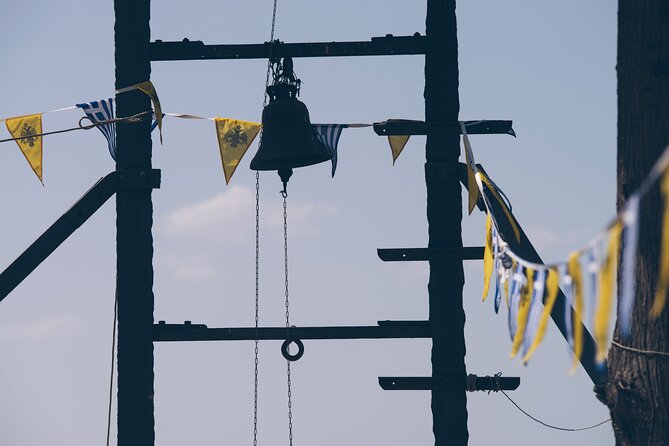
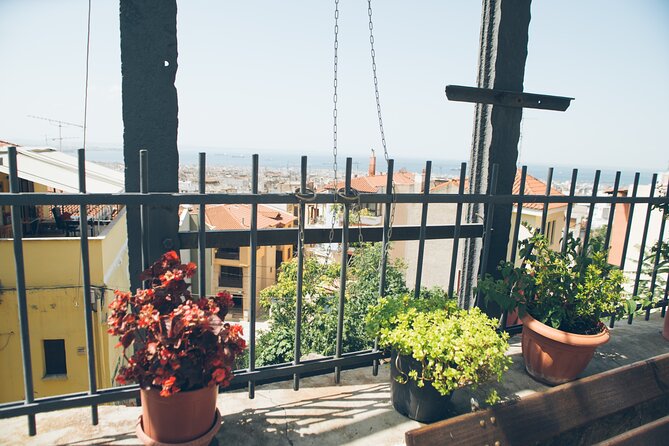
The meeting point is Trigonion Tower in Agios Pavlos, at 10 a.m. The tower is presented as one of Thessaloniki’s finest viewpoints, and it gives the tour an immediate sense of place. Before you enter the lanes of Ano Poli, you can look across the city and understand how high the Upper Town sits.
The opening stop lasts about 20 minutes and has no separate admission charge. That is a sensible length. You have time to take in the view and hear the opening explanation without using up too much of the walking time.
You should plan your route to the tower before the morning of the tour. Transportation is not included, even though the area is near public transportation. Your mobile ticket is convenient, but it does not carry you uphill. Give yourself enough time to arrive at the exact meeting point rather than assuming the walk from central Thessaloniki will be quick or simple.
This first viewpoint also helps you judge the physical nature of the tour. The route ahead includes narrow lanes and changes in elevation. If you are comfortable walking through an old hillside district, the setting should suit you. If you prefer level streets and easy vehicle access, you may find Ano Poli demanding.
Two hours through Ano Poli’s old lanes
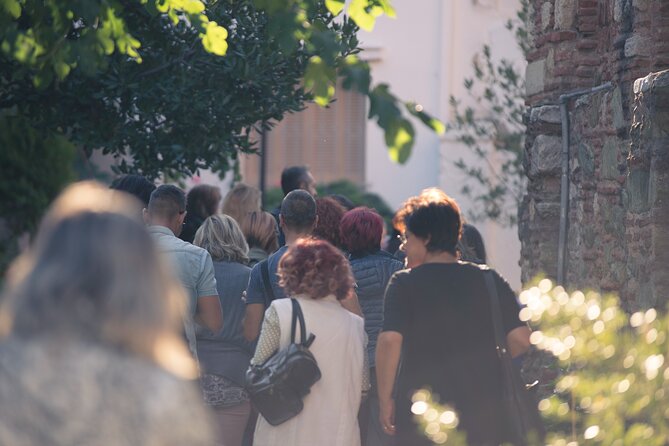
Most of the experience takes place during the two-hour walk through the traditional settlement. This is where the tour earns its price, if the guide brings the neighborhood to life rather than simply pointing out buildings.
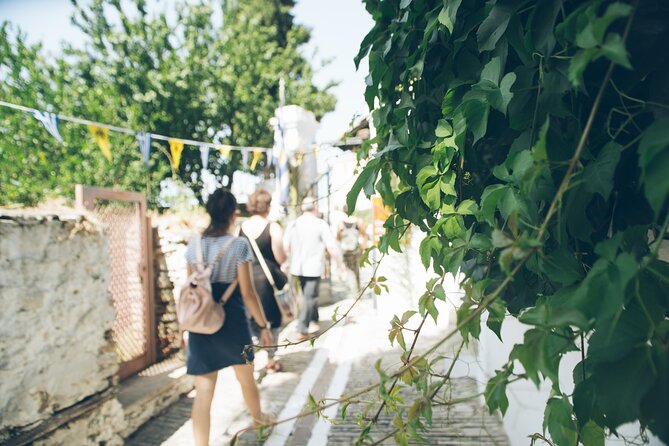
Expect roads paved with stone or cobbles, narrow passages, and streets that may lead to a dead end. That irregular layout is part of the character of Ano Poli, but it also means you should wear reliable shoes and avoid treating the route like a casual city-center walk. The exact number of steps is not given, so I would prepare for uneven ground and some uphill movement.
The houses are another reason to come here. Their architecture differs from the larger, more formal buildings in the lower city. Gardens, tiny shops, small yards, and brightly painted details give the walk a human scale. The route does not rely on one grand monument. Instead, it builds interest from many modest pieces placed close together.
That is valuable for you because a guide can explain why an ordinary-looking street or house matters. Without context, you might see only a pleasant old quarter. With context, you can connect the homes, walls, religious sites, and public spaces to Thessaloniki’s long development.
The group limit of 12 is helpful here. In streets this narrow, a large group would be awkward. A smaller party should make it easier to stay together, hear the certified guide, and pause without blocking the entire lane. The tour does not name the individual guide, so you cannot choose a particular person or judge the experience by a guide’s stated specialty.
Byzantine walls and the city’s upper edge
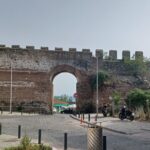
The Byzantine Walls are among the strongest historical features on the route. Their towers and stonework define the upper edge of Thessaloniki and help explain why Ano Poli has a different mood from the city below.
A good explanation here should connect the fortifications to the city’s position and defenses, then show how later residents lived beside them. You are not visiting an isolated ruin. The walls form part of the neighborhood, appearing beside homes and streets that still function as part of daily life.
The route’s viewpoint and wall stops also work well together. At Trigonion Tower, you first see the city from above. Later, the walls give you a more physical sense of the old boundary. One stop offers the broad view, while the other shows the material structure that shaped the district.
The wall section may also be the part most affected by weather. The experience requires good conditions, and that makes sense for an outdoor walk with exposed viewpoints and uneven streets. If poor weather cancels the tour, you are offered another date or a full refund. The same applies if the minimum number needed to run the tour is not reached.
A 14th-century monastery and old religious sites
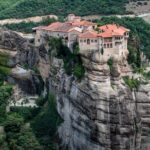
The route includes an impressive monastery built during the 14th century, along with old churches and other religious landmarks. These stops add depth because Ano Poli was never only a residential quarter. Its religious buildings reflect the city’s Byzantine Christian past and later changes in population and worship.
Small church yards are especially suited to a walking tour. They give you a pause from the tight lanes and a chance to notice details that are easy to miss when moving through the city alone. The supplied information does not identify each church, describe opening hours, or promise entry inside. You should therefore expect to see and discuss the sites from the route, not assume that every building is open for a visit.
The same practical point applies to the monastery. It is included as an important landmark, but no interior admission is listed. The price covers the certified guide, not a separate program of paid entries. That keeps the cost simple, though it also means the tour’s value depends heavily on explanation, storytelling, and the quality of the walk itself.
A guide can also help you make sense of the area’s many religious references. Byzantine churches, Ottoman buildings, dervish lodges, and later communities are not interchangeable. The benefit of a small guided group is having someone explain those distinctions while you are standing in the actual setting.





Ottoman traces, dervish legends, and everyday details
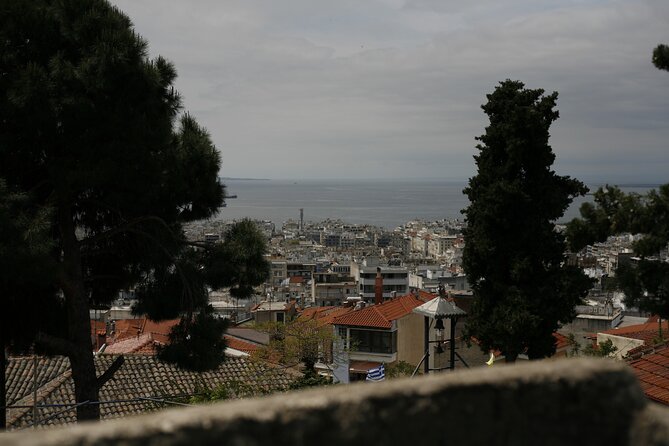
The Ottoman fountain is one of the route’s clearly named landmarks. It offers a useful contrast with the Byzantine walls and monastery, showing how the neighborhood changed under Ottoman rule without losing its older foundations.
Dervish lodges add another unusual thread. They are tied to legends and to religious traditions that many visitors would not encounter on a standard central-city walk. The supplied details do not promise access inside a lodge, so think of this as a place-based history stop rather than a performance or religious ceremony.
I like this range of subjects because it keeps the walk from becoming a single-era tour. You see how Christian, Ottoman, Turkish, refugee, and other cultural influences left marks in the same district. That mixture is more interesting than a string of unrelated dates.
The smaller details matter, too. Gardens, little shops, colorful corners, and tiny squares break up the historical stops. Some squares are described as lively meeting places, full of people. You may find these spaces more revealing than a formal monument because they show how the neighborhood functions as a community rather than a museum.
Do not expect shopping or refreshments to be part of the package. Purchases are not included, and the tour does not list food, drinks, or tastings. You can buy something if you wish, but that expense is separate.
Finishing at Platia Romfei
The walk ends at Platia Romfei, also known as the Kule Kafe neighborhood or Rofmei Square. The final stop lasts about 10 minutes and gives the route a clear endpoint in another part of Ano Poli.
This is important for planning. The tour does not return you to Trigonion Tower, so you should think about where you want to go afterward. The end point is Pl. Romfei in Thessaloniki, and you can arrange your next destination from there. The experience details do not specify a return transfer, so none should be expected.
Ending in a neighborhood square is a fitting choice. The tour begins with a wide city view and finishes among the smaller streets and social spaces of Upper Town. You get both the grand setting and the everyday district, rather than only an overlook followed by a ride back down.
The stated duration is about two hours and 30 minutes. That includes the 20-minute tower stop, roughly two hours in Ano Poli, and the 10-minute finish at the square. I would keep the rest of your morning flexible, since walking pace and pauses can affect the exact finish time.
Is $78.14 a fair price?
At $78.14 per person, this is not a cheap way to spend a morning in Thessaloniki. You are paying for a certified guide, a small maximum group of 12, and local interpretation over about two and a half hours. There are no admission tickets listed, and transportation, food, and purchases are extra.
The value depends on how much context you want. If you are happy to walk Ano Poli alone with a map, the price may feel high because the walls, streets, and viewpoints can be visited without an entry fee. If you want someone to connect the Byzantine, Ottoman, religious, and community history, a guide can make the district far easier to understand.
The smaller group helps justify the cost. Ano Poli’s lanes are not ideal for a large party, and 12 people is more manageable than a crowded coach group. Still, the available rating record is limited, and the guide’s name and credentials beyond the certified-guide description are not provided. I would book for the route and setting, not because the operator has a long, clearly documented record attached to this particular experience.
Free cancellation is available if you cancel at least 24 hours before the 10 a.m. start time. Changes or cancellations inside that period are not accepted for a refund. Weather and minimum-group requirements can also affect the departure, with a new date or refund offered if the operator cancels.
Who should choose this walk?

I would recommend it most strongly if you want to see a less polished, more traditional side of Thessaloniki and prefer history explained on foot. It is a good match for people who enjoy old streets, changing architectural details, religious history, and views that reward an uphill location.
You should also be comfortable with an active route. The streets can be narrow, cobbled, and irregular, and some roads may end abruptly. The information says most people can participate, and service animals are allowed, but it does not provide detailed mobility guidance. If you have concerns about steps, slopes, or uneven paving, ask the operator before booking.
The tour may be less suitable if you want interior visits, a food component, free time for shopping, or transportation from your hotel. It is also not the right pick if you have only a short window and need to finish at the starting point.
My recommendation for Ano Poli
Book this walk if you want Thessaloniki’s upper district explained through its walls, churches, Ottoman traces, homes, and small public spaces. The route has a clear sense of place, begins with an excellent viewpoint, and covers more than the usual central-city highlights.
I would first confirm the meeting point and plan transportation to Trigonion Tower. Wear shoes suited to cobbles and steps, remember that the finish is at Platia Romfei, and keep your schedule flexible after 12:30 p.m. At $78.14, it is best for you if a certified guide’s local context matters more than free admission or independent wandering.
FAQ
Where does the Ano Poli walking tour begin?
It begins at Trigonion Tower, Agios Pavlos, 546 34, Greece.
What time does the tour start?
The stated start time is 10:00 a.m.
How long does the experience last?
The walking tour lasts approximately two hours and 30 minutes.
Where does the tour end?
It ends at Platia Romfei, also known as Rofmei Square or the Kule Kafe neighborhood.
Is transportation to the meeting point included?
No. You must arrange your own transportation to Trigonion Tower.
What is included in the price?
A certified tour guide is included.
Are admission tickets included?
The listed stops have no separate admission charge. No paid attraction entry is included in the experience details.
How large is the group?
The tour has a maximum of 12 participants.
Can I cancel for a full refund?
Yes, if you cancel at least 24 hours before the local start time. Poor weather or failure to meet the minimum number of participants can also lead to a new date or full refund if the operator cancels.