REVIEW · THESSALONIKI
Thessaloniki: Family Treasure Hunt & Tour w Food Stop
Book on GetYourGuide →Operated by Narratologies · Bookable on GetYourGuide
Thessaloniki turns sightseeing into a game here. You follow the trail of Alexander the Great’s mermaid sister, solve riddles on your phone, collect reward tokens, and move from Kapani Market to the White Tower, with a local pastry stop along the way. I like the family-friendly story and the chance to see both famous sights and less polished corners of town.
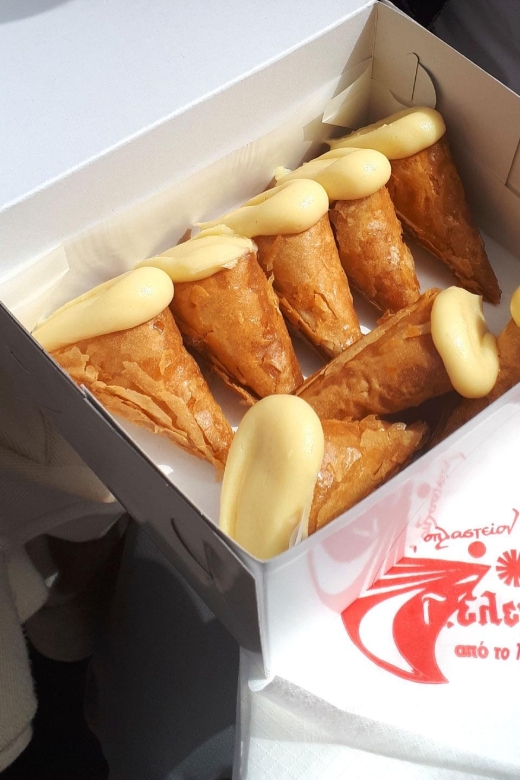
I also like the food stop for trigona panoramatos, a crisp, syrupy pastry that gives the two-hour walk a distinctly Thessaloniki flavor. The main caution is pace. One recent participant found the guide’s rhythm rushed, making it hard to stop, listen, and enjoy every view.
In This Review
- Key points at a glance
- A treasure hunt through Thessaloniki’s center
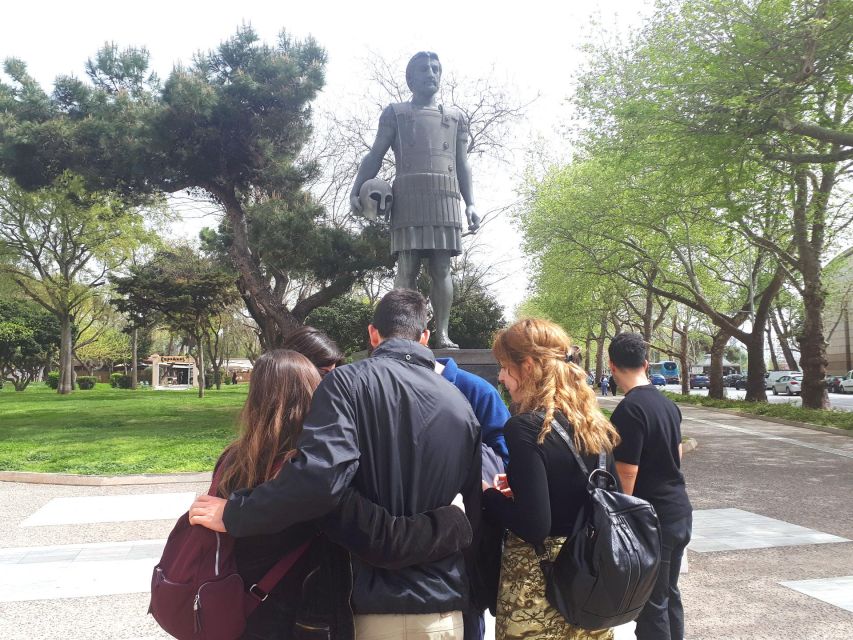
- Starting at the Statue of Eleftherios Venizelos
- Aristotelous Square and the city’s public face
- Bey Hamam and the older city
- Kapani Market and the food stop
- Small streets, graffiti, and unexpected corners
- The port and a broad view of Thessaloniki
- Mētropolē and the Byzantine chapter
- Galerius Palace and Roman Thessaloniki
- The White Tower and the waterfront finish
- How much value do you get for $74?
- The pace, group dynamics, and practical fit
- Who should book this Thessaloniki treasure hunt?
- Should you book it?
- FAQ
- Where does the treasure hunt start?
- Where does the experience finish?
- How long does the activity last?
- What food and drinks are included?
- What should I bring?
- Is the activity suitable for children?
Key points at a glance
- Alexander the Great mission: Help his mermaid sister track him down by solving smartphone riddles.
- A compact city-center route: See Aristotelous Square, Kapani Market, Hagia Sophia, Galerius Palace, the White Tower, and the port.
- A real local treat: The food stop includes trigona panoramatos and water.
- More than postcard sights: The route points out graffiti, picturesque alleys, abandoned mansions, cats, and sea views.
- Rewards for playing: Collected tokens can be redeemed for discounts, gifts, and complementary golden wreaths.
- Plan for a brisk walk: The short schedule covers many stops, so you may need to keep moving.
A treasure hunt through Thessaloniki’s center
This experience is part guided walk, part city game, and part snack break. You meet the facilitator at the Statue of Eleftherios Venizelos, where you receive the mission and the digital and physical materials needed for the hunt.
The story gives the walk a clear purpose. Thessaloniki’s mermaid, described as Alexander the Great’s sister, accidentally threw away his water of immortality and now needs help finding him. Your task is to follow clues, solve riddles on a charged smartphone, and earn tokens as you explore.
I like this format for families because it gives children something to do besides follow an adult from one monument to another. Adults also get a useful orientation to the city. The questions require observation and teamwork, so you will look more closely at signs, buildings, details, and public spaces than you might on an ordinary walk.
The English-language activity is suitable for all ages. That does not mean every question will be equally easy for every age group, but the basic idea is simple enough for children and adults to share. You do not need to bring special equipment beyond a charged smartphone. The facilitator supplies the rest.
You can also read our reviews of more food & drink experiences in Thessaloniki



Starting at the Statue of Eleftherios Venizelos
The meeting point at the Venizelos statue puts you in central Thessaloniki, close to the city’s shopping streets and historic core. Look for the facilitator wearing a Narratologies T-shirt.
This first meeting matters because the hunt depends on understanding the rules before you set off. You receive the mission, learn how to use the riddles, and get the physical materials for the game. Check your email, including the spam folder, after booking for the exact meeting point and further instructions.
The experience lasts two hours, so the introduction should be brief. Bring a phone with enough battery for the full route. A low battery could turn a playful challenge into a practical problem.
Aristotelous Square and the city’s public face
Your first major stop is Aristotelous Square, one of Thessaloniki’s best-known open spaces. It leads toward the waterfront and gives you a quick sense of the city’s public heart.
The stop is listed as a photo and sightseeing pause of about five minutes. That short time tells you how this activity works. You will get an introduction and a chance to solve a clue, but you will not have time for a long architectural discussion or a slow coffee.
The square is useful early in the walk because it helps you get your bearings. You can take photos, look toward the sea, and watch the city flow around you before the route turns into smaller streets and market lanes.
Bey Hamam and the older city
The route then passes Bey Hamam, also known as the Baths of Paradise. This historic bathhouse adds an Ottoman-era layer to the walk, following the ancient and Roman sites you will see later.
The stop is another short sightseeing visit, around five minutes. Treat it as a visual clue and a history marker rather than a full museum visit. The activity is designed to connect many parts of Thessaloniki, not to spend an hour inside each one.
I find this kind of stop valuable because Thessaloniki’s story is not confined to one period. Ottoman remains, Roman ruins, Byzantine churches, modern squares, markets, and port views all sit within the same central route. The treasure hunt gives you a quick framework for understanding how those layers fit together.
Kapani Market and the food stop
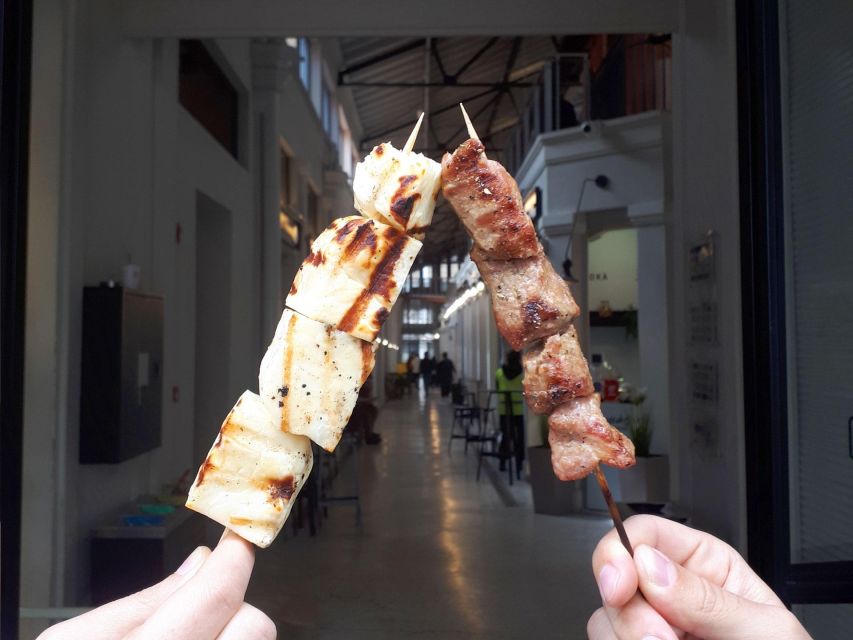
Kapani Market is one of the more useful stops for anyone who wants to see everyday Thessaloniki. Markets are usually more revealing than a list of monuments, and this one brings you into a working part of the center with shops, food, color, and street activity.
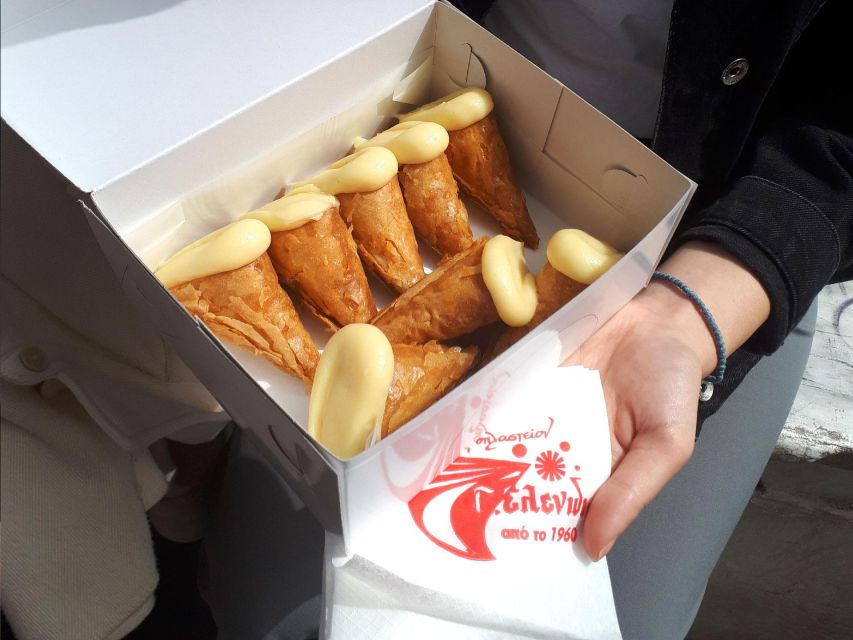
The exact timing of the food stop can affect the flow of your visit, but the included treat is a clear highlight. You receive trigona panoramatos, a traditional local pastry, along with water. The pastry is made from crisp layers and sweet filling, making it a small but memorable taste of northern Greek food culture.
Drinks besides water are not included. If you want coffee, juice, or another drink, plan to pay separately. You should also tell the facilitator about dietary restrictions. The provider specifically asks for that information so the food stop can be handled as comfortably as possible.
The pastry stop is not a full meal. If you are booking around lunchtime, eat beforehand or plan another meal afterward. The snack is best understood as a local tasting built into the walk, not as lunch.
A few more Thessaloniki tours and experiences worth a look





Small streets, graffiti, and unexpected corners
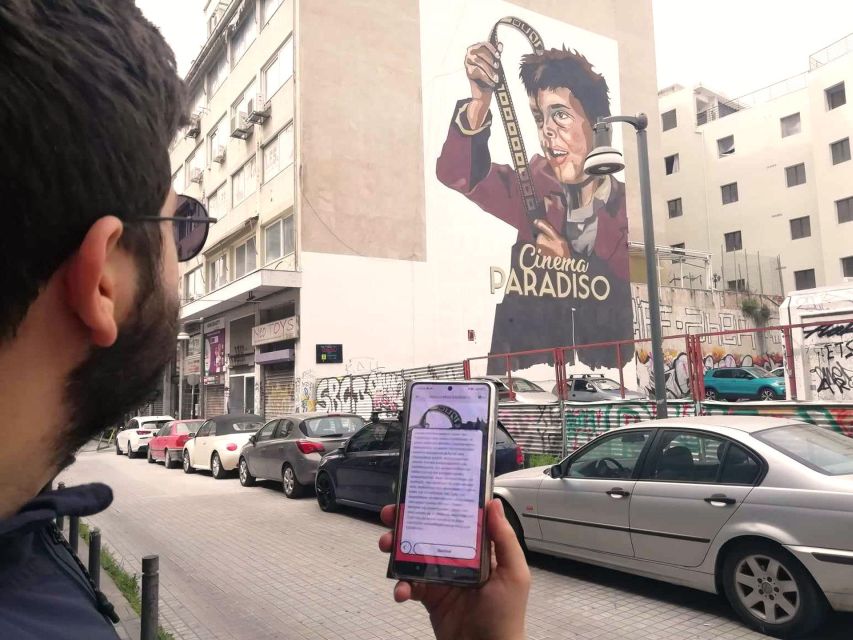
The route does not stay on the main monument circuit. The facilitator also leads you toward graffiti, picturesque alleys, abandoned mansions, and other less formal sights around the center.
This is one of the activity’s better ideas. A standard sightseeing route can leave you with a neat list of churches and ruins but little feel for present-day Thessaloniki. Here, the clues encourage you to notice street art, building details, neighborhood views, and small corners that may not appear in a guidebook summary.
The experience also encourages photos of cats, sea views, graffiti, and the port. That sounds lighthearted, but it fits the game well. The activity asks you to observe the city rather than simply walk through it.
You should keep your expectations realistic. These are brief discoveries along a moving route, not long visits with time for detailed photography. If you want to stop often, compose careful pictures, or read every sign, the group may move on before you are ready.
The port and a broad view of Thessaloniki
The Port of Thessaloniki brings a change of scale. After market streets and old buildings, you get open views toward the waterfront and port area.
The planned stop is about ten minutes and includes photos, sightseeing, and scenic views. If the timing works near sunset, this could be one of the most pleasant parts of the walk. The schedule specifically allows for sunset viewing, though the actual light will depend on your starting time and the season.
The port also helps explain Thessaloniki’s role as a sea-facing city. Even without a long lecture, the water gives you a useful sense of place. Bring your phone ready for photos, but remember that the primary purpose is still to solve the next clue and stay with the group.
Mētropolē and the Byzantine chapter
The itinerary includes a stop at Mētropolē, followed by Hagia Sophia Thessalonica. This section shifts attention toward the city’s Christian and Byzantine identity.
Mētropolē is a short visit and pass-by stop, while Hagia Sophia receives a similar amount of time. You should not expect an extended church tour. Instead, the facilitator uses these places as part of the riddle route and gives you enough context to connect the buildings to Thessaloniki’s past.
Hagia Sophia is especially useful in the sequence because it helps show how the city’s religious architecture differs from the Roman remains visited later. The walk’s historical coverage includes ancient, Roman, Byzantine, Ottoman, and modern Greek themes. That makes it a good first introduction if you are still learning how Thessaloniki’s center is organized.
If you are passionate about church art or architecture, you may want to return independently for a slower look. The treasure hunt gives you an overview, not a specialist visit.
Galerius Palace and Roman Thessaloniki
The Galerius Palace Complex brings you into the Roman period. This is one of the most important historic stops on the route, and it gives the riddles a strong setting.
The complex is connected with Emperor Galerius and reflects the scale and importance of Roman Thessaloniki. On this tour, you visit and pass through the area for about five minutes. That is enough to see the remains and work on a clue, but not enough to examine every section closely.
I like having the Roman complex included because it gives the walk historical range. You move from the market and Ottoman bathhouse to Byzantine churches and then to Roman remains, all within a compact part of the city.
The drawback is the same as at the other major monuments. Five minutes can feel tight, especially if you are traveling with children who need time to understand the clue or if you want to take photographs. Think of this as a lively introduction that helps you decide where to return later.
The White Tower and the waterfront finish
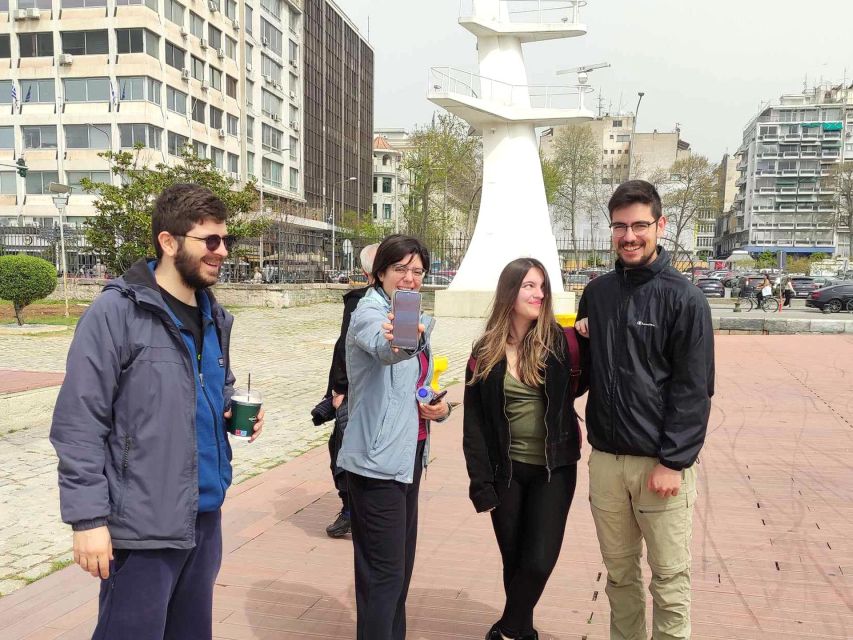
The White Tower is the final major sight before the finish at the Statue of Alexander the Great. It is one of Thessaloniki’s most recognizable landmarks, so including it gives the route a satisfying visual endpoint.
The visit lasts about ten minutes. You see the tower, continue the hunt, and take in the waterfront setting. This is not an interior museum visit, and the information provided does not include entry to the tower. You should treat it as an exterior sightseeing stop unless the facilitator tells you otherwise.
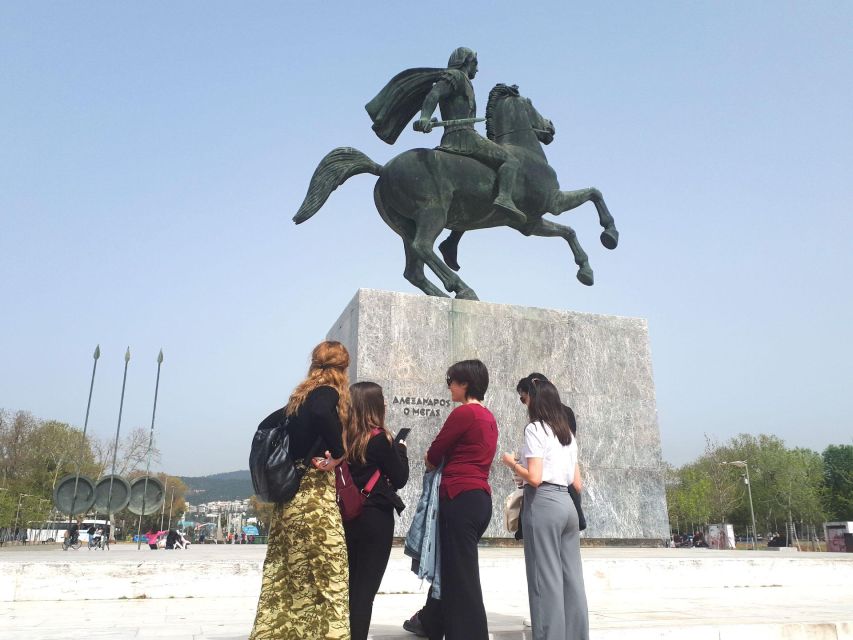
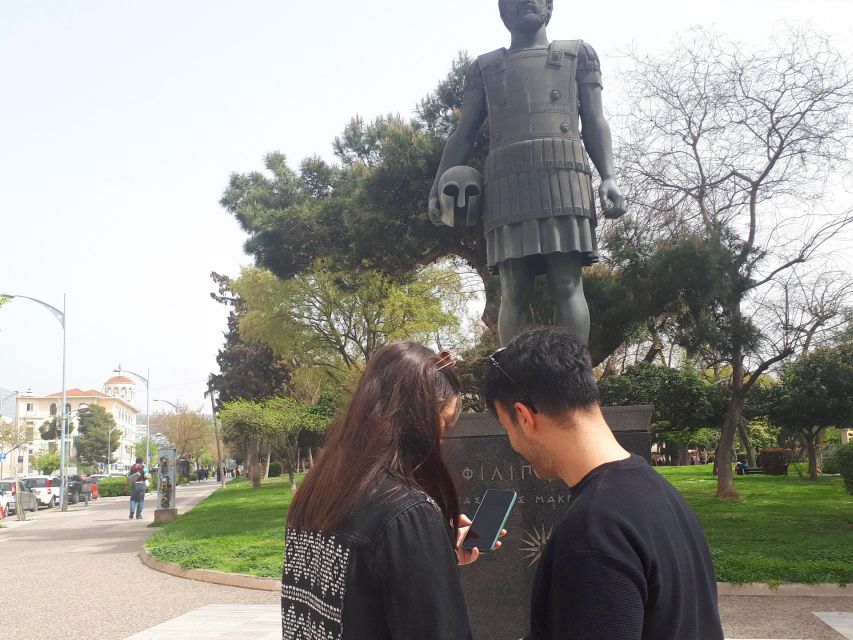
Finishing at the Alexander the Great statue brings the story full circle. You have been helping his sister find him, and the final location connects the playful mission with the city’s most famous historical figure.
Collected tokens can be redeemed online for gifts and discounts connected with local arts and crafts shops and museum gift shops. The rewards also support sustainability, women’s empowerment, and innovation. Complementary golden wreaths are another possible prize. These are small extras, but they give children a reason to keep solving clues even when the next monument alone is not enough motivation.
How much value do you get for $74?
At $74 per person, this is not the cheapest way to see Thessaloniki’s center. The value depends on what you want from a two-hour outing.
You are paying for a facilitator, a structured route, the smartphone riddles, physical game materials, the pastry and water, and access to the reward system. You also get an organized introduction to several major sights without having to plan the route yourself.
The price makes more sense for families and small groups who would enjoy the game itself. If you were only looking for a basic walking tour, the cost may feel high for two hours, especially because the monument visits are brief and there is no stated admission to attractions.
The food stop adds character but does not change the price into a meal deal. The pastry is a tasting, not a substantial lunch. You should budget for other food and any extra drinks.
I would compare the cost against the age and interests of your group. A family that enjoys puzzles, competition, and shared tasks may get strong value from the format. A couple focused on long historical explanations or quiet sightseeing may prefer a conventional guided tour or independent walk.
The pace, group dynamics, and practical fit
The biggest practical issue is speed. The schedule includes at least ten stops in two hours, with most monument visits limited to five minutes. That is ambitious.
One recent participant described feeling rushed and found it difficult to absorb information or enjoy the surroundings. Take that warning seriously. The activity works best when you accept that you are playing a moving city game, not taking a leisurely architectural tour.
Families should stay organized. Keep the phone charged, make sure everyone understands the meeting point, and decide in advance that the group will stay together. Children may want to pause for cats, graffiti, food stalls, or photos, but the route has a fixed finish and a limited window.
The English-speaking facilitator is there to guide the game and provide the materials. The experience does not list transport, so expect to walk between stops. Comfortable shoes will help, even though the route is only two hours.
Free cancellation is available up to 24 hours before the activity for a full refund, and you can reserve now and pay later. Those terms are useful if your Thessaloniki plans are still shifting.
Who should book this Thessaloniki treasure hunt?
I would recommend it most strongly to families with school-age children, mixed-age groups, and first-time visitors who want a quick introduction to central Thessaloniki.
It also suits people who like city games and do not mind using a phone while sightseeing. The riddles make observation part of the experience, and the reward tokens add a mild competitive edge without turning the outing into a serious contest.
You may want something else if your main goal is a slow church visit, a detailed Roman history lesson, or extended time at the market. The route gives you useful context, but it keeps moving.
Should you book it?
Book this experience if you want to cover many central Thessaloniki sights in two hours while keeping children involved. The mermaid story, pastry stop, market route, port views, and reward tokens give the walk more personality than a plain monument checklist.
Skip it if you dislike brisk group pacing or prefer to linger at each site. For the best fit, arrive with a charged phone, tell the facilitator about dietary needs, and set aside extra time afterward to revisit the places that catch your attention. At $74 per person, the game format needs to be the main attraction, not just an add-on to sightseeing.
FAQ
Where does the treasure hunt start?
The activity starts at the Statue of Eleftherios Venizelos. The facilitator wears a Narratologies T-shirt, and exact meeting details are sent after booking.
Where does the experience finish?
The treasure hunt finishes at the Statue of Alexander the Great.
How long does the activity last?
The activity lasts two hours. Starting times depend on availability.
What food and drinks are included?
The food stop includes the local pastry trigona panoramatos and water. Drinks besides water are not included.
What should I bring?
Bring a charged smartphone. The facilitator provides the other necessary digital and physical materials.
Is the activity suitable for children?
Yes. The game is described as suitable for all ages and uses smartphone riddles, observation, teamwork, and a story about helping Alexander the Great’s mermaid sister.