REVIEW · ATHENS
Exarcheia walking tour: The other side of Athens
Book on Viator →Operated by Eureka Athens · Bookable on Viator
Exarcheia is the Athens many first-time visitors miss. This 2.5-hour walk moves from Omonia Square into a neighborhood shaped by student politics, protest, art, cafés, and modern Greek history. You get more than pretty buildings: you get a look at how Athens argues with itself.
I like the small group of up to eight, which gives a guide room to explain complicated subjects without turning the walk into a lecture. I also like the stop for coffee or tea at a local favorite, a simple break that helps the neighborhood feel lived-in rather than staged. The main consideration is that Exarcheia’s story includes political conflict and urban change, so this is not a light sightseeing stroll.
In This Review
- Key points to know
- Why Exarcheia gives you a different Athens
- Starting at Omonia Square at 10:00
- Polytechnio and the story of student protest
- Exarcheia Square, street art, and a city view
- Coffee or tea with a local pause
- Athens’ neoclassical trilogy on Panepistimiou Street
- Finishing at the Old Parliament
- What the $48.06 price gets you
- Who should book this walk
- Should you book the Exarcheia walking tour?
- FAQ
- Where does the Exarcheia walking tour begin?
- Where does the tour end?
- How long does the tour last?
- How large is the group?
- Is coffee or tea included?
- Can I cancel for a full refund?
Key points to know
- Exarcheia is the focus: You spend real time in one of Athens’ most alternative and debated districts.
- Modern Greek history takes center stage: Polytechnio and the neighborhood’s political past give the walk a clear purpose.
- Agathi may be your guide: Her approach is serious, friendly, and tied to current affairs, city growth, and social change.
- You get a local café break: Coffee or tea is included during the Exarcheia portion.
- The route ends near major neoclassical buildings: The Academy, University, National Library, and Old Parliament connect neighborhood life with formal Athens.
- Plan for walking: The tour lasts about two and a half hours and calls for moderate physical fitness.
Why Exarcheia gives you a different Athens
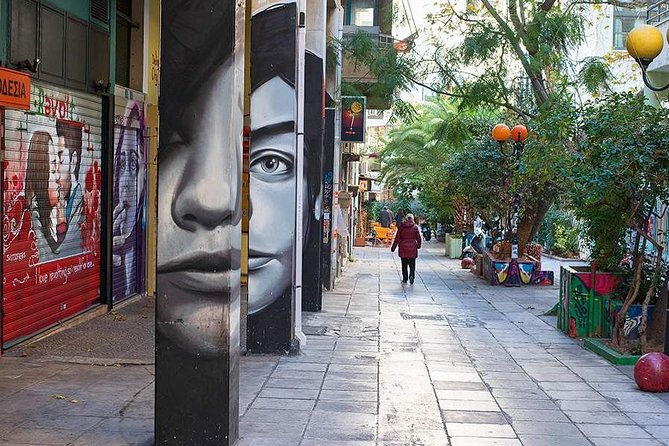
Most Athens sightseeing follows the ancient world. That makes sense, but it can leave you with only half the city. Exarcheia takes you into modern Athens, where political memory, student life, street art, cafés, and redevelopment all meet on the same streets.
The neighborhood is often described as alternative and controversial. That means you should come ready for a walk that asks questions. How did this district become associated with students and political action? What did it experience during the Second World War? How has it changed since the early 19th century? What does it represent in Athens now?
The guide connects those questions to the streets around you. The experience is especially useful if you care about Greek social and political history, urban development, or gentrification. One participant even found parallels with modern Korean history, a reminder that the themes here reach beyond Greece.
This is also a good choice if you want context for present-day Athens. You will hear about current affairs, not just old dates. Street art becomes part of the discussion rather than background decoration. The result is a walk that treats the city as a place where history is still being argued over.
You can also read our reviews of more walking tours in Athens


Starting at Omonia Square at 10:00
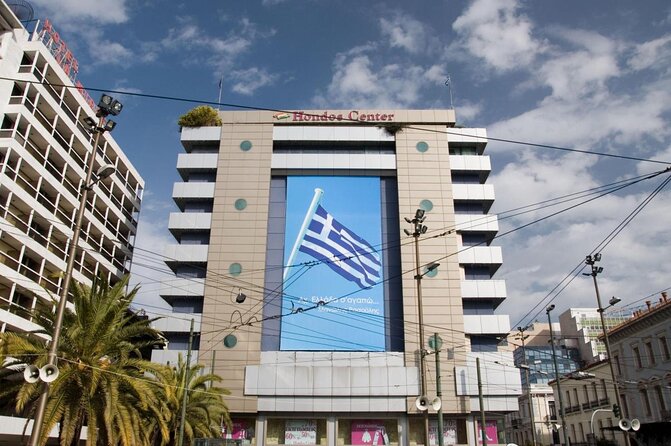
The meeting point is Omonoia Square, one of central Athens’ oldest and most important squares. The tour begins at 10:00 am, then heads toward Exarcheia on foot.
Omonia is a practical starting point because it places you in the middle of modern Athens rather than at an isolated monument. The first section takes about 10 minutes, so it is brief but useful. You begin by shifting your attention from the usual postcard sights to the streets, people, and institutions that shape daily city life.
You should arrive ready to walk and listen. The tour does not include hotel pickup or drop-off, and the route ends in a different part of central Athens. Omonia and the ending area are both near public transportation, which makes the walk easy to fit into a wider day in the city.
Polytechnio and the story of student protest
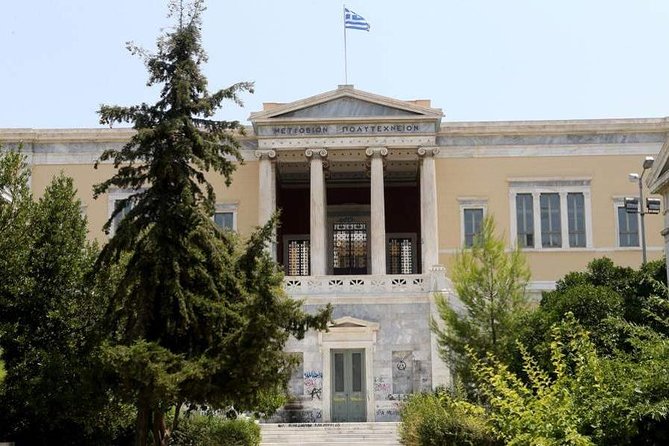
The first major stop is the School of Architecture at the National Technical University of Athens, commonly known as Polytechnio. You spend about 20 minutes outside the historic building.
This is not a quick photo stop. The building helped define modern Greek history, and the guide uses it to explain dramatic events connected with the university and the country’s political life. Expect stories, context, and discussion rather than an interior visit. Admission is free, but the experience is built around what the guide explains at the site.
This stop gives the walk its backbone. Without it, Exarcheia could seem like a collection of murals and cafés. With it, the neighborhood’s student presence and political character make more sense.
If you have little interest in politics or recent Greek history, this section may feel heavier than a standard city tour. If you do want to understand why Exarcheia carries such a strong identity, it is one of the most important parts of the route.
Exarcheia Square, street art, and a city view
The central part of the walk lasts about 1 hour and 10 minutes. You move farther into Exarcheia’s streets, learning how the district changed from the early 19th century through the Second World War and into the present day.
The guide also discusses today’s culture and neighborhood identity. That matters because Exarcheia is not presented as a frozen historic quarter. Its meaning continues to shift, and the walk addresses that change directly. Urban development and gentrification are part of the conversation, giving you a better way to read the cafés, buildings, and public spaces around you.
Street art is another major feature. You will see numerous works across the neighborhood, and the guide helps place them within the area’s social and political setting. The art is not treated as a simple backdrop for photographs. It becomes another way to see what residents care about, resist, or hope to change.
The route also includes a hill with panoramic views over Athens. The exact hill is not specified, so you should think of this as a viewpoint built into the walk, not a separate named attraction. It provides a change of pace after the close-up streets and gives you a broader sense of the city.
This section involves the most walking and the greatest variety of subjects. You might find the pace relaxed, but the total duration and urban route still call for moderate fitness. Wear comfortable shoes, especially if you prefer to stop often for photographs or conversation.
Coffee or tea with a local pause
A small coffee or tea break is included at a place favored by local residents. I like this detail because it gives the tour a human rhythm. Two and a half hours of history, politics, and street art can feel dense. Sitting down for a drink lets you ask questions and process what you have seen.
The break is not described as a meal, so you should not book this expecting lunch. Coffee or tea is included, while any other personal spending is your responsibility. The café stop also gives you a useful lead for later: the guide can offer tips about places to eat and visit in Athens.
The local setting matters more than the drink itself. You get a brief look at how the neighborhood works as a social space, not only as a subject for study. That makes the experience feel more personal than a route that simply moves from monument to monument.


Athens’ neoclassical trilogy on Panepistimiou Street
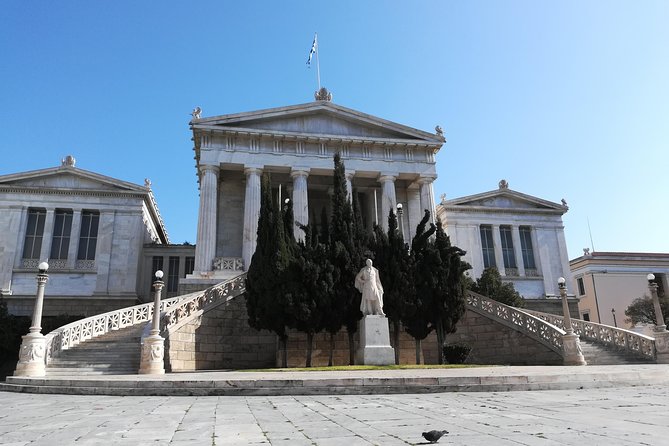
After Exarcheia, the walk continues along the well-known Panepistimiou and Stadiou streets. You stop outside three major buildings: the Academy of Athens, the University of Athens, and the National Library of Greece.
Together, these buildings are known as the Trilogy of Athens. Their grand neoclassical design offers a sharp contrast with Exarcheia’s street art and informal café culture. The guide explains their history, what they symbolize, and how the surrounding area fits into Athens today.
The visit is exterior only, with no admission fee. That keeps the tour moving and avoids turning the final section into an indoor museum visit. You get architectural context without paying another entrance charge, though you should not expect access to the interiors.
This is a smart part of the route because it links two versions of the city. Exarcheia represents student life, protest, local culture, and political debate. The Trilogy represents education, national identity, and formal civic ideals. Seeing them in one walk helps you understand Athens as a city of competing voices.
Finishing at the Old Parliament

The tour ends near the National History Museum, housed in the Old Parliament building, on Stadiou Street. The final stop lasts about 10 minutes, and admission to the museum is not included.
The building and the surrounding area provide a fitting end. The route finishes not at an ancient ruin but in a central part of modern Athens known for cafés and cozy bars. This is useful if you want to continue exploring on your own after the guide leaves.
The guide can also provide more tips for seeing Athens like a local. That is a practical advantage of a private or very small-group walk. You can ask about places connected to your interests instead of receiving a fixed speech designed for a large crowd.
Since the ending point differs from Omonia Square, check your plans for afterward. The tour does not return you to your starting point. On the other hand, ending near Stadiou Street keeps you in central Athens, with public transportation nearby.
What the $48.06 price gets you
At $48.06 per person, this is priced above a basic large-group city walk. The value depends on what you want from a guide.
You are paying for an English-speaking private guide, a maximum group size of eight, all tour fees and taxes, and coffee or tea. More important, you get a route built around modern Athens rather than a standard list of famous monuments. If you want the Acropolis, ancient temples, or museum admission, this is not the right use of your sightseeing budget. If you want social history and local context, the price is easier to justify.
The small group is the strongest value point. A guide can adjust explanations, answer questions, and keep the walk focused. That matters here because Exarcheia’s history includes sensitive and complicated subjects. A crowded group would make those conversations harder.
The tour is also relatively short at about two and a half hours. You can fit it into a morning and still have most of the day free. The 10:00 start works well if you want breakfast first, though no breakfast is included.
The experience has received seven five-star ratings, with particular praise for its insight, current affairs, street art, and guide Agathi. That praise matches the tour’s design: the strongest part is not a single monument, but the way the guide ties places together.
Who should book this walk
I would choose this experience if you have already seen some of Athens’ ancient sights or if you want a second look at the city beyond the usual route. It is a strong match for people interested in:
- Modern Greek and Athenian history
- Student movements and political life
- Street art and neighborhood culture
- Urban development and gentrification
- Small-group walking tours
- Local cafés and practical Athens tips
It also suits solo participants. The format allows the guide to give individual attention, even when only one person joins. Agathi was specifically praised for maintaining a serious, attentive approach throughout a solo booking.
I would think twice if you want a relaxed architectural walk with little discussion of politics. I would also avoid booking it if you have difficulty walking for two and a half hours or if bad weather is likely. The experience requires good weather and may be rescheduled or refunded if conditions force cancellation.
The tour is offered in English. Service animals are allowed, and hygiene products such as hand sanitizer and face masks are provided.
Should you book the Exarcheia walking tour?
Book it if you want Athens to make more sense as a modern city, not just an ancient one. The route gives you Polytechnio, Exarcheia Square, street art, a city view, coffee or tea, the neoclassical Trilogy, and the Old Parliament in one focused morning.
Skip it if your priority is ancient ruins or museum interiors. For everyone else, the small group, thoughtful route, and strong guide-led discussion make this a useful counterpoint to the standard Athens sightseeing plan.
Free cancellation is available up to 24 hours before the 10:00 am start for a full refund. Changes or cancellations inside that window are not accepted or refunded.
FAQ
Where does the Exarcheia walking tour begin?
It begins at Omonoia Square in Athens at 10:00 am.
Where does the tour end?
It ends on Stadiou Street near the Old Parliament building and the National History Museum.
How long does the tour last?
The experience lasts approximately 2 hours and 30 minutes.
How large is the group?
The tour accepts a maximum of eight participants and is designed as a private small-group experience.
Is coffee or tea included?
Yes. Coffee or tea at a local favorite place is included. Private expenses beyond the included drink are not covered.
Can I cancel for a full refund?
Yes. You can cancel at least 24 hours before the start time for a full refund. If poor weather causes the operator to cancel, you will be offered another date or a full refund.