REVIEW · THESSALONIKI
Experience Ancient Greece: A Musical Journey
Book on Viator →Operated by Seikilo · Bookable on Viator
Ancient instruments, and you get to play. In Thessaloniki, this private, English tour gives you private access to the SEIKILO Museum and hands-on time with ancient Greek instruments like the lyre of Hermes and the barbiton of Sappho. You’ll also hear myths and ideas tied directly to what you’re seeing and trying, guided by Theodore and supported by live performance from a professional lyricist.
The only real catch is time: it runs about 1 hour, so you’ll get a focused, hands-on session rather than a long museum wander. Also, the provider notes the experience needs good weather, so it’s smart to book with enough buffer in your schedule.
In This Review
- Key Things I’d Bet You’ll Remember
- Thessaloniki’s SEIKILO Museum: what you’re really paying for
- Arriving at Filippou 5 and settling into a private group
- Theodore’s role: guiding your hands, not just your eyes
- The instrument lineup: more than a dozen ancient sound makers
- What playing ancient instruments teaches you (fast)
- Live performance with a professional lyricist: the storytelling layer
- How the itinerary runs in real life (and why it works)
- Price and value check: $18 for a hands-on hour
- Language, tickets, and timing: small details that matter
- Who this tour suits best (and who might not)
- Should you book Experience Ancient Greece?
- FAQ
- Where does the tour start?
- What time does it start?
- How long is the experience?
- Is it a private tour?
- What instruments can I interact with?
- Is there free cancellation?
Key Things I’d Bet You’ll Remember
- Private access to the SEIKILO Museum just for your group
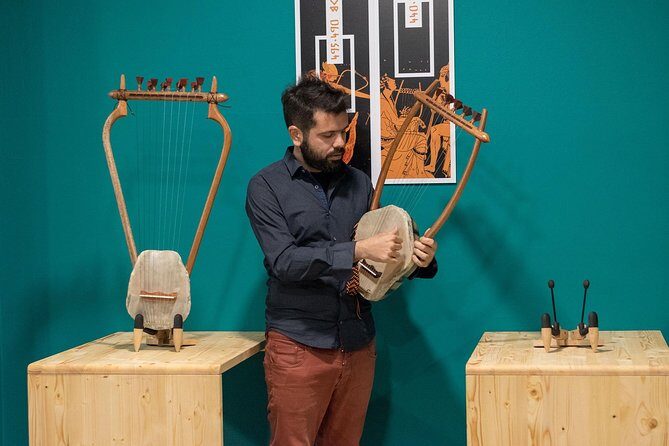
- Hands-on instruments: you can see, hear, hold, and even play more than a dozen types
- Myth + music from a live lyricist with stories tied to Hermes, Apollo, Zeus, and Plato
- Lesson-style tailoring based on your musical knowledge, from amateur to professional
- Handmade instrument attention highlighted in past feedback about Theodore’s careful, beautiful playing
- Mobile ticket in English, easy to manage and convenient to use
Thessaloniki’s SEIKILO Museum: what you’re really paying for
If you like ancient Greece more as living culture than as dusty artifacts, this stop hits. The value here isn’t just that the SEIKILO Museum exists. It’s that you’re given private access and guided attention, with a program built around sound and hands-on interaction.
At $18 per person for about an hour, this is priced like a short specialty experience. That’s part of why it works: you don’t need to block half a day. You do need to be ready for a “learn and try” format, not a passive viewing tour.
Also, this is in Thessaloniki at 10:30 am, and it’s commonly booked around 22 days in advance. That’s a sign that people who plan slightly ahead want this specific musical angle, not just another museum ticket.
You can also read our reviews of more tours and experiences in Thessaloniki.



Arriving at Filippou 5 and settling into a private group
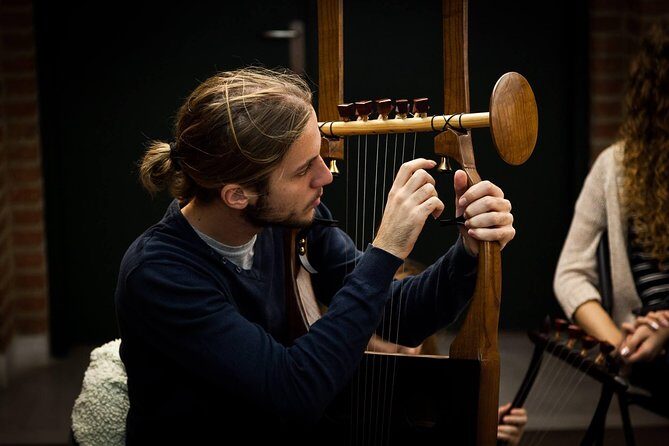
Your meeting point is Filippou 5, Thessaloniki 546 30. The tour ends back at the meeting point, so you’re not dealing with a complicated transport shuffle after.
The big practical perk is that this is a private tour/activity. Only your group participates. That matters because the whole session is built around participation—asking questions, adjusting pace, and having the guide respond to your comfort level with instruments. A private setup makes it easier to slow down when something feels too technical, or to speed up if you catch on quickly.
Most travelers can participate, and the listing notes service animals are allowed and it’s near public transportation. In other words, you can usually fit it into a normal sightseeing day without building your plan around taxis or special access.
Theodore’s role: guiding your hands, not just your eyes
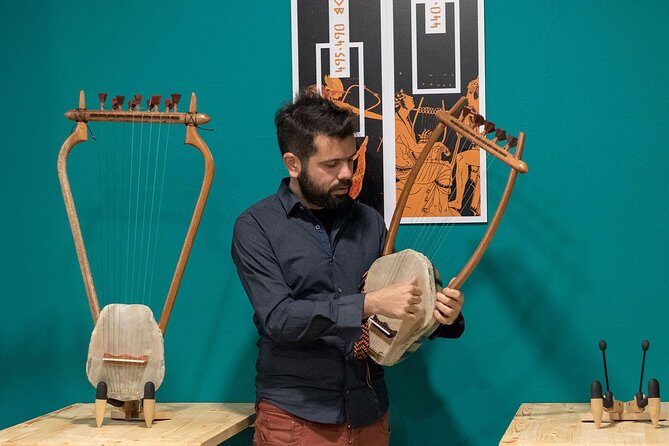
Theodore is the name you’ll want to remember. In past feedback, he’s described as delightful and very knowledgeable in a way that doesn’t feel like a lecture. The key detail I’d focus on is that the session is interactive, and Theodore is the person shaping that interaction.
From the way the tour is described, Theodore’s job isn’t only interpretation. You’re also there to see, hear, hold, and play instruments, and that takes guidance. Ancient instruments aren’t like modern instruments where your muscle memory instantly kicks in. Someone needs to show you what to do, and someone needs to pace it so you actually get a turn.
If you’re an amateur, you won’t get talked down to. If you’re more musically trained, you should find the adjustments welcome—because the tour can be tailored to your musical knowledge.
The instrument lineup: more than a dozen ancient sound makers
This is where the experience becomes different from most ancient-themed tours. You’re not only looking at instruments behind glass. You’re getting access to more than a dozen instruments from ancient Greece and other civilizations, with opportunities to handle them and play them.
Some of the specific instruments mentioned include:
- Lyre of Hermes
- Barbiton of Sappho
- Pandura
- Cithara of the Golden Age
- Phorminx of Homer
- Tympanon of Dionysus
That list is fun, but the real value is how it changes your understanding. When you hold an instrument and try to make sound, you start to notice things that text can’t show you: how the instrument feels in the hand, what takes pressure, what takes rhythm, and how different families of instruments produce different kinds of tones.
Practical tip: go in with a mindset of trying, not perfecting. The goal is connection—learning how ancient instruments might have worked in real life, not turning yourself into a one-person orchestra in 60 minutes.
What playing ancient instruments teaches you (fast)
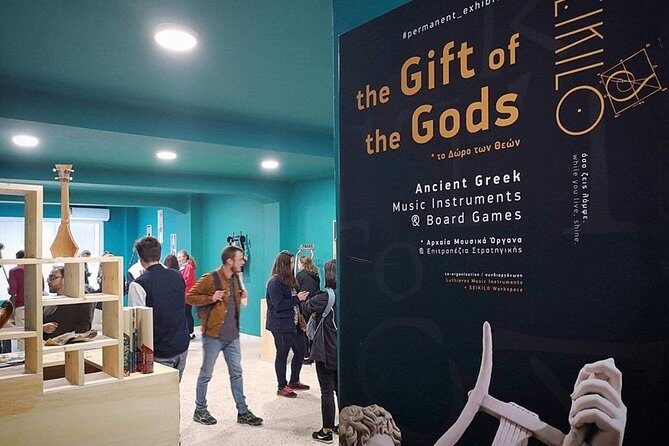
In an hour, you won’t become a classical performer. But you will learn some useful basics that make ancient music feel real.
Here’s what you’re likely to pick up:
- How technique affects sound. Even small differences in hand placement or movement change the result.
- How rhythm and myth fit together. The tour uses mythology as context, so you’re not just memorizing names.
- How instruments differ by role. A lyre isn’t a drum; a handheld string instrument won’t behave like a percussion instrument. Trying both types helps your brain sort the categories.
The most underrated part? You stop thinking of ancient Greece as a single scene. You start noticing the variety—different instruments, different sounds, different stories.



Live performance with a professional lyricist: the storytelling layer
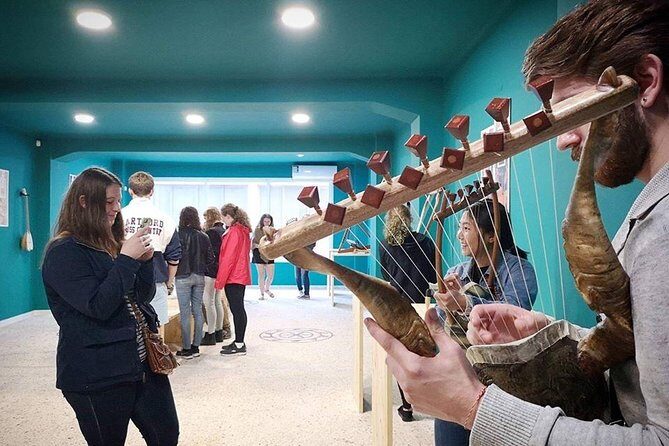
A professional lyricist performs live during the tour. That matters because ancient music isn’t only about notes. It’s about lyric, voice, rhythm, and meaning. The lyricist is also said to share interesting details about figures connected to Greek culture and thought—Hermes, Apollo, Zeus, and Plato.
That mix is smart. Apollo and Zeus anchor the myth world. Hermes connects to music and messages. Plato brings you into the idea side—how Greeks thought about art and learning. Even if you only catch a few threads, you’ll leave with a stronger sense of why these myths show up in discussions of music.
If you’re the type who likes your culture with a soundtrack, you’ll enjoy this part. If you’re more skeptical, you’ll still benefit because the performance gives you an auditory reference point while you’re handling instruments afterward.
How the itinerary runs in real life (and why it works)
There’s one main stop: Seikilo Museum of Ancient Music. In practice, that usually means your hour is paced like this:
1) Arrive and get oriented on what you’ll do and how the session will move.
2) Museum time with access to instruments—more than viewing, you’re expected to interact.
3) Guided instrument moments, where you can learn, take closer look, and try playing.
4) Live lyricist performance, giving your ears a reference while the guide explains connections to myth and cultural figures.
5) Wrap-up, then you head back to the meeting point.
Because everything happens in one location, it stays efficient. You’re not losing time crossing town. That efficiency is part of the value for a $18 price tag.
The drawback, again, is that it’s tight. If you want to linger at every display or you want a long Q&A, you might feel the time pressure. Still, for many people, that quick pace is the point.
Price and value check: $18 for a hands-on hour
Let’s talk money honestly. $18 per person for about 1 hour is very reasonable for a private, instrument-based experience—especially since you’re not just paying for a guide. You’re paying for specialized access, live performance, and a program built around participation.
What makes it good value:
- You’re getting multiple activities in one stop: museum access, instrument handling, and live lyricist performance.
- The session is tailored to your comfort level, which makes the experience feel more “made for you” than a standard group tour.
- Private access typically means less waiting and more time with the real subject.
What might reduce value for you:
- If you only want scenery and photos, this tour is more action than viewing.
- If you’re sensitive to noise or performance intensity, the live lyricist part may take some getting used to.
But if you’re curious, you’ll probably feel like you got more than you paid for—because you’re actively doing something, not just watching.
Language, tickets, and timing: small details that matter
This is offered in English, so you shouldn’t have to work to follow the explanations. You’ll also get a mobile ticket, which makes day-of life easier. No printed ticket chase. No confusion about where to be—assuming you’ve noted the Filippou 5 address.
Start time is 10:30 am, and the experience is near public transportation. That helps if you’re sightseeing around the center of Thessaloniki and you don’t want to spend the whole morning planning routes.
One more thing: the provider notes the experience requires good weather. Even if the stop is indoors, plan for the possibility of rescheduling if conditions are rough.
Who this tour suits best (and who might not)
This tour is ideal if you:
- want hands-on ancient Greek culture, not just reading labels
- enjoy mythology and want it tied to real-world music
- like the idea of trying multiple instrument types in one session
- want a private format where your questions matter
- can appreciate learning in an interactive, tune-and-try style
You might think twice if you:
- hate participating in anything hands-on
- want a long, self-paced museum visit
- expect a deep academic lecture with lots of theory
It’s a musical experience first. It teaches through sound, touch, and story.
Should you book Experience Ancient Greece?
Yes—if you want an actual experience with ancient Greek music, this is the kind of tour that changes your perspective quickly. The mix of private access to SEIKILO Museum, live performance by a professional lyricist, and the chance to see, hear, hold, and play instruments like the lyre of Hermes makes it feel more alive than typical museum add-ons.
If you’re on the fence, choose based on your style. If you like learning by doing, book it. If you prefer to move at your own pace and only observe, you may be happier with a standard museum visit where you can linger.
FAQ
Where does the tour start?
The tour starts at Filippou 5, Thessaloniki 546 30, Greece.
What time does it start?
The start time is 10:30 am.
How long is the experience?
It lasts about 1 hour.
Is it a private tour?
Yes. This is a private tour/activity, and only your group participates.
What instruments can I interact with?
You’ll have access to more than a dozen ancient musical instruments and you can see, hear, hold, or even play many of them, including instruments such as the lyre of Hermes and the barbiton of Sappho.
Is there free cancellation?
Yes. You can cancel for a full refund up to 24 hours in advance of the experience start time.