REVIEW · ATHENS
First Access Acropolis Tour, Beat the Crowds, Enjoy the Parthenon
Book on Viator →Operated by Athens Walking Tours · Bookable on Viator
Morning at the Acropolis feels like cheating. This First Access tour puts you on the hill early, when the Parthenon is easier to photograph and the site is calmer before the day really hits.
I like the practical details: you get earsets so you can hear your licensed guide without yelling. I also love that you leave with an Athens guide magazine plus a map, which makes it simple to plan what to do next instead of guessing.
One catch: timed entry is strict. Acropolis entry rules mean the group can’t wait for latecomers (no refunds), and the official entrance fee is not included unless you choose the with-ticket option.
In This Review
- Key things that make this tour worth it
- Early access: the real reason the Acropolis feels different
- Meeting point, entry timing, and why you should arrive early
- Price and ticket math: what you’re paying for
- Earsets and a licensed guide: how the tour stays understandable
- Propylaea to Parthenon: your guided walkthrough in order
- The theaters and side monuments: why the route is more than the big photo
- Footing, slippery marble, and what to bring for comfort
- Using the map and magazine: make the next hours count
- Should you book this First Access Acropolis tour?
- FAQ
- How long is the First Access Acropolis Tour?
- Is the Acropolis entrance ticket included in the price?
- What languages is the tour offered in?
- Are earsets provided for hearing the guide?
- Does the tour run in bad weather?
- Is hotel pickup and drop-off included?
- What’s the group size limit?
- What happens if I’m late for the timed Acropolis entry?
Key things that make this tour worth it
- First-in entry for calmer Parthenon moments
- Earsets that keep the guide’s stories clear
- Skip-the-ticket line service and an option for timed entry upgrade
- A tight 2-hour route that hits the big set pieces fast
- Small groups (max 24) that move as a unit
- Useful take-home planning tools: magazine + map
Early access: the real reason the Acropolis feels different
The biggest win here is simple: you start early enough that the Acropolis doesn’t feel like a theme park. On cool mornings, the light on the stone looks better and your walk feels less punishing than the midday crush and heat. Even if you’re just there for the wow factor, starting first usually means you get more room to breathe.
This format is built around a short, focused visit (about 2 hours). That matters because the Acropolis is one of those places where the experience can shrink once the crowds stack up. An early route gives you the first look at Propylaea, the Parthenon, and the surrounding temples before the uphill traffic turns into slow-moving lines.
If you’re traveling in peak season, you’ll still face airport-style security and ticket checks, but going early often reduces the overall “standing around” time. And as a few early-morning visitors have pointed out, the morning can even offer a sunrise feel over the landscape if the timing lines up.
You can also read our reviews of more tours and experiences in Athens.


Meeting point, entry timing, and why you should arrive early
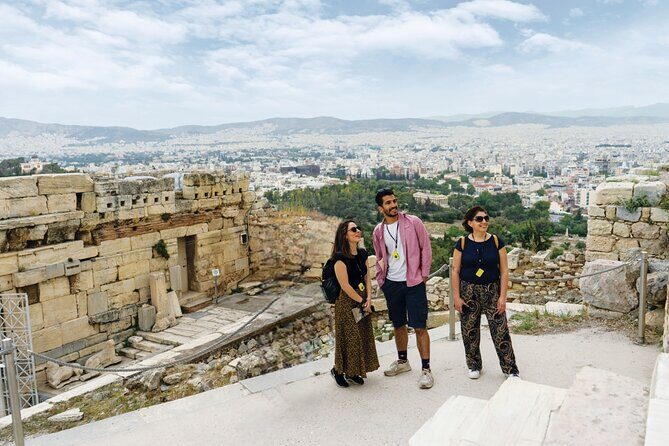
This tour meets at XPCF+G9, Athens, Greece and ends on the South Slope of the Acropolis near Dionysiou Areopagitou. The exact location is easy to find on a map pin, but the Acropolis area can still feel confusing at first glance—especially before you’re inside security gates.
Plan for security. The tour notes that all visitors go through airport-style screening, and waits can hit 30+ minutes in peak season. So even though this is a first-access experience, you still want to build in buffer time at the start.
Most important: strict entry times mean the group can’t wait for late arrivals. The tour also states no refunds for missing the scheduled entry window, and timing is synced to Athens local time. If you’re prone to running late, this is one of those tours where punctuality is part of the deal.
Good news: the experience runs rain or shine, so you’re not stuck hoping the weather behaves. Just remember the ground can be uneven and surfaces can be slippery—more on that soon.
Price and ticket math: what you’re paying for
At $41.12 per person, the tour price is clearly aimed at beating the typical pain points: waiting, confusion, and struggling to understand what you’re seeing while the crowd presses forward.
The key detail is the Acropolis entrance fee. The standard ticket is not included in the base price unless you select the option that includes it, and the entrance fee is listed as €30.00 per person. The tour also mentions that when entry to the Acropolis is free, the entrance cost is already deducted from the tour price—so what you see on the final checkout can differ depending on what your option includes.
So does this tour still make sense if you have to buy tickets separately? Usually yes, because you’re buying three things: a professional guide, earsets that keep the information usable, and skip-the-ticket line service. That combination often turns a chaotic visit into a guided route you can actually follow and enjoy.
Value also comes from the structure. In just ~2 hours, you cover major stops that many people try to cram in on their own—then lose time figuring out where to go next.
Earsets and a licensed guide: how the tour stays understandable
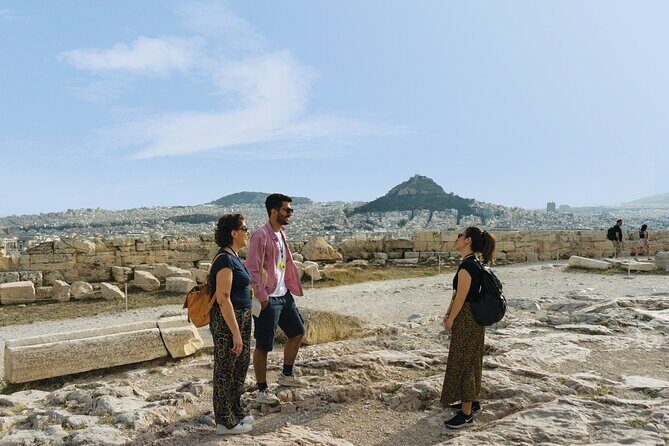
One reason this tour earns high marks is audio. You get earsets designed to help you hear clearly as the guide moves and the crowd density changes. That’s a big deal at the Acropolis, where you’re constantly shifting between open viewpoints and tighter passageways.
You also get a professional local licensed guide. The itinerary is paced around short storytelling moments at each landmark—enough to connect architecture with myth and context without dragging you into lectures.
From the guide names mentioned in feedback, you might run into different personalities and teaching styles, such as Maria, Kali, Niobe, Pan, Natasha, or Olesya. Even with different styles, the common thread is that the guide’s job is to keep you oriented: where you are, what you’re looking at, and why it mattered in ancient Athens.
And the small group size (max 24 travelers) helps. You aren’t packed into a huge moving crowd, which makes it easier to hear instructions, move through checkpoints, and regroup as the route shifts.
Propylaea to Parthenon: your guided walkthrough in order

This tour’s pacing is designed to hit the highlights without wasting time. Here’s what you can expect, in the sequence you’ll walk.
Stop 1: Acropolis of Athens (the main citadel)
You start with the big picture: the Acropolis as a high, rocky citadel and religious center. It’s the backdrop for everything else—so this opening stop matters. You’ll get a sense of how the site is laid out before you start reading stone details with fresh context.
Stop 2: Propylaea (entrance gate)
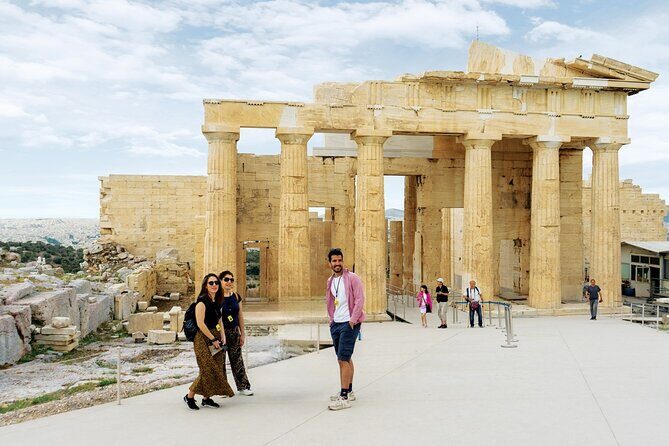
You’ll spend about 10 minutes at Propylaea, the grand gateway. This is where your guide helps you visualize the entrance as it might have looked in ancient times—so the “gate” stops being a random starting point and becomes a meaningful threshold.
Stop 3: Temple of Athena Nike
A shorter stop, around 5 minutes, focusing on the temple to Athena Nike. You’ll learn the myths and significance tied to the story of this sacred space, and you’ll get a viewpoint that works well for understanding placement.
Stop 4: Erechtheion
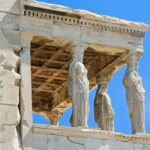
About 10 minutes here. Erechtheion is named for the mythical king of Athens and is dedicated to Athena. This stop is a good place to slow down and notice how myth and architecture connect on this hill, with details that can be easy to miss if you’re rushing.
Stop 5: Parthenon
This is the headline stop, roughly 10 minutes. Your guide shares myths, historical facts, and architectural context so the Parthenon isn’t just a photo stop. It’s also the moment when you’ll likely appreciate starting early, since you’re better positioned for clear views before the site thickens.
One practical note: the tour ends at a different point than where many people imagine. So if you’re trying to linger on your own, you’ll want to plan your next step right after the tour.
- All Day Cruise -3 Islands to Agistri,Moni, Aegina with lunch and drinks included
★ 5.0 · 4,958 reviews

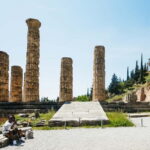

The theaters and side monuments: why the route is more than the big photo
After the Parthenon, the itinerary keeps going to parts of the Acropolis people often skip when they’re only chasing the tallest icons.
Stop 6: Herod Atticus Odeon
About 5 minutes. This Roman theater was built by Herodes Atticus as a tribute to his wife. The guide will point out what you’re looking at and suggest how to think about what changed when the Greeks’ world moved into Roman rule.
Stop 7: Theatre of Dionysus
Also about 5 minutes, and this one is special because it connects the Acropolis to the birth of theater. Your guide links it to Dionysus and explains how this open-air amphitheater became a stage for plays by famed playwrights like Aeschylus, Sophocles, and Euripides.
Why this matters for you: if you only see the Parthenon, you may leave with a great picture but less of a feeling for what the Acropolis did for ancient Athenians day-to-day. Adding these theater stops helps you connect the site to performance, storytelling, and civic identity.
You’ll also likely notice how the viewpoints change as you move. That movement is part of the value: the guide helps you interpret what you’re seeing from different angles instead of treating the site like one static postcard.
Footing, slippery marble, and what to bring for comfort
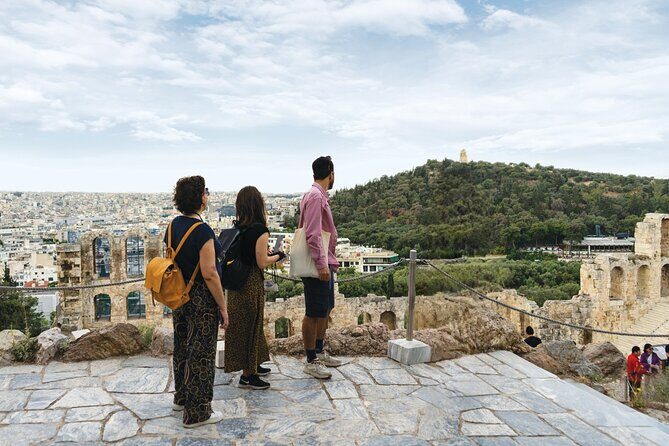
The Acropolis rewards early timing, but it doesn’t soften the terrain. The tour information points to moderate physical fitness, and feedback highlights uneven ground and careful steps. That’s not scary-so much as it is real: you’re walking uphill on paths that don’t feel designed for fast strolling.
Two comfort tips that keep coming up:
- Watch your footing on uneven sections.
- Pay attention on slippery stone areas—one guide specifically reminded visitors that marble can be slick.
Bring water. It’s practical advice and it helps whether the morning starts cool or turns warmer as the tour ends.
If you go in windy or rainy conditions, you’re still in the open air. The tour runs rain or shine, so dress for weather and consider shoes with good grip. Even if you’re mostly inside guided walking clusters, you’ll still spend time standing still for viewpoints.
Using the map and magazine: make the next hours count
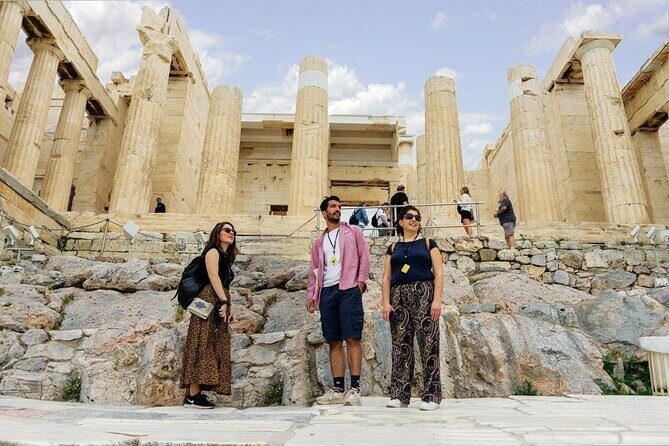
A nice bonus that doesn’t get talked about enough: you leave with an Athens Guide magazine and an Athens Map. That turns this from a standalone “see the ruins” outing into a plan you can keep using right away.
Here’s how I’d use it:
- After your tour ends on the south slope side, check your map immediately and pick your next stop while the route is still fresh in your head.
- Use the magazine to choose a follow-up activity that matches what you just learned. If you want more context on what you saw, pairing with museum time can make the architecture feel more alive.
Also, because the tour is only about 2 hours, you don’t lose your whole day. Athens is one of those cities where you want room for wandering—so this gives you a structured start, then freedom afterward.
Should you book this First Access Acropolis tour?
Book it if you want the Acropolis without the stress. This is especially smart if you care about photos with fewer people in frame, hate long lines, and appreciate getting guided story context at each stop. The combination of first-in entry, earsets, and a licensed guide is built for people who want to enjoy the site instead of juggling logistics.
Skip it or think twice if you know you’re not likely to be punctual. Strict entry times mean no waiting for latecomers, and you won’t get a refund if you miss the window. Also, if you’re planning to spend a long time just wandering slowly with no structure, a 2-hour guided route may feel short.
If you’re traveling with kids or you want a focused route that covers the major hits efficiently, the tight timing can be a plus—just remember the ground is uneven and you’ll still need to move as a group.
If you’re deciding between doing it alone versus with a guide, this tour leans toward the “make it easy” side. You’ll pay for the convenience, but you’re also paying to turn the Acropolis into a clear, story-driven experience—right when it’s at its best.
FAQ
How long is the First Access Acropolis Tour?
The tour lasts about 2 hours.
Is the Acropolis entrance ticket included in the price?
The entrance fee is not included unless you select the with-ticket option. The listed Acropolis entry fee is €30.00 per person.
What languages is the tour offered in?
The tour is offered in English.
Are earsets provided for hearing the guide?
Yes. Earsets are included to help you hear the guide clearly.
Does the tour run in bad weather?
Yes. The tour runs rain or shine.
Is hotel pickup and drop-off included?
No. Hotel pickup and drop-off service is not included.
What’s the group size limit?
The tour has a maximum of 24 travelers.
What happens if I’m late for the timed Acropolis entry?
Acropolis entry times are strict, and the group can’t wait for latecomers. The tour also notes there are no refunds for late arrivals.