REVIEW · CRETE
Food Odyssey, A Historical Culinary Tour of Chania
Book on Viator →Operated by Greek Culinary History Cooking Adventures · Bookable on Viator
Chania’s food story is best understood one bite at a time. This four-hour walk follows Cretan cooking from ancient cheese and Byzantine bread to Ottoman bougatsa, Greek coffee, wild greens and a full meal in Splantzia. Mariana, an archaeological culinary historian, leads the way.
I like the small maximum of eight people, which gives you room to ask questions and keeps the food stops personal. I also like the mix of tastings and places that make the food, including a bougatsa factory, phyllo workshop, Central Market and a local taverna.
The main drawback is the price, $125.77 per person, which is a serious outlay for a morning walk. You also need to arrive hungry, wear good walking shoes, and accept that tastings can change without notice.
In This Review
- Key points at a glance
- Why this Chania food walk is different
- First tastes at the Chania coffee shop
- Bougatsa and the Ottoman chapter
- Shopping for flavor at the Central Market
- A quick look at phyllo making
- Venetian Chania, trade and the food supply
- Splantzia Square and an almond drink
- Lunch at a Splantzia taverna
- What the $125.77 price includes
- Who should book this experience
- Practical advice before you go
- Should you book the Chania Food Odyssey?
- FAQ
- Where does the tour start?
- Where does the tour finish?
- How long does the experience last?
- What food is included?
- Are drinks included?
- Is lunch included?
- Is breakfast included?
- How many people can join?
- Is a vegetarian option available?
- Can children join the tour?
- What should I wear?
- What happens if the weather is bad?
Key points at a glance
- Start with ancient and Byzantine flavors: Taste olives, handmade cheese, homemade bread, herbal tea and kalitsounia while learning how older cooking traditions still shape Crete.
- Visit working food shops: See how bougatsa and phyllo are made instead of stopping only at prepared-food counters.
- Eat through Chania’s layered past: Venetian and Ottoman neighborhoods provide the setting for lessons about trade, food supply and local cooking.
- Plan to skip breakfast: The tour includes pastries, coffee accompaniments, historic foods and a final taverna meal.
- Keep the group intimate: A maximum of eight people makes this more like a guided food lesson than a large city walk.
- Expect a generous guide: Mariana brings her own homemade cheese and, according to the supplied tour details, may send you home with a small sachet of fresh herbs.
Why this Chania food walk is different
Many food tours are really restaurant crawls with a few facts added between courses. This one takes a more thoughtful route. Food is used to explain who controlled Chania, what people could afford, how ingredients moved through the city and why certain dishes survived.
That gives you a better way to read Crete after the tour. Olive oil is not just something poured over bread. Wild greens are not merely a side dish. A pastry such as bougatsa carries traces of changing rulers, local skill and older habits of eating.
The morning begins at 10:00 am in front of Chania Town Hall, with the meeting point listed at Kidonias 29. You finish at the Platanos of Splantzias in Splantzia Square. Hotel pickup is not provided, so you should make your own way to the start.
The walk lasts about four hours. With a maximum of eight people, you can expect a quieter pace and more direct contact with Mariana. This matters on a food tour because questions are part of the meal. If you want to know how a cheese is made or why a pastry is shaped a certain way, a small group gives you a better chance to ask.
You can also read our reviews of more food & drink experiences in Crete

First tastes at the Chania coffee shop
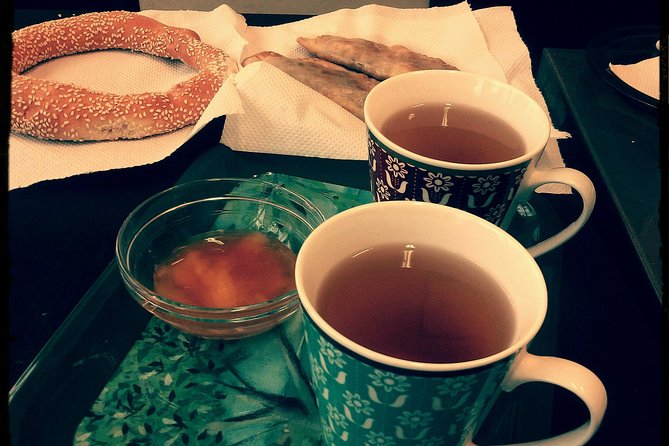
The opening stop sets the tone. You walk from Town Hall to a local coffee shop while Mariana explains the food traditions of the area. This is not simply a quick cup of coffee before the real tour begins. You start with a spread of Cretan basics.
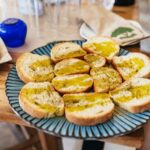
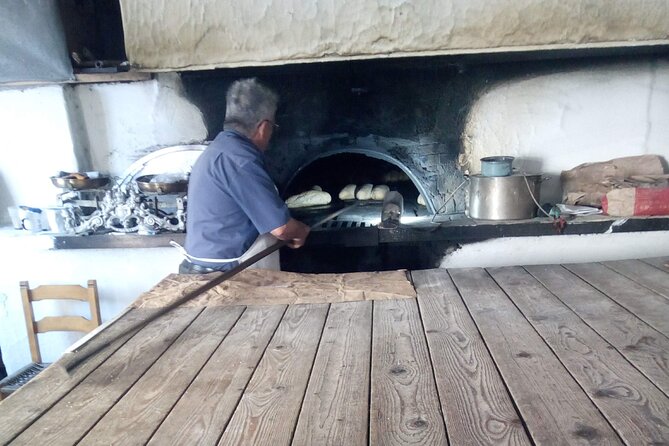
Expect olives, handcrafted cheese, homemade bread made in a Byzantine style and herbal tea prepared in the way Cretans enjoy it. You also learn about the herbs and wild greens used in local cooking.
This is one of the strongest parts of the tour because it introduces the ingredients before the more elaborate dishes appear. You can pay attention to texture, scent and flavor rather than treating every sample as a mystery snack.
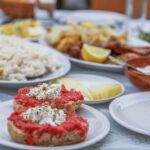
The kalitsounia come next. These small Cretan pies may contain cheese, wild greens or both. They are a useful introduction to the island’s habit of combining simple local ingredients with careful pastry work.
The stop lasts about 40 minutes. Since breakfast is included, you should arrive with an empty stomach. A full meal follows later, and the number of tastings adds up quickly.
Bougatsa and the Ottoman chapter
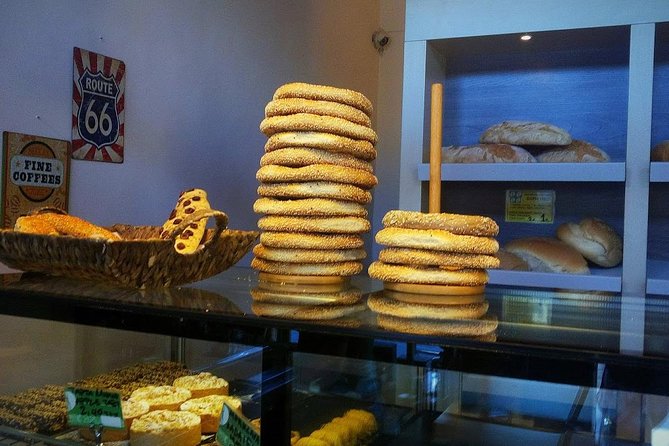
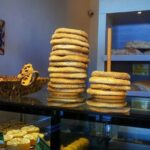
The next stop visits a bougatsa factory. You then taste bougatsa, a soft cheese and milk pastry pie that is one of Chania’s best-known morning foods.
The factory visit gives the pastry some context. You see that the dish depends not only on its filling but also on the cooks’ technique. Mariana connects the food to consumption patterns during the Ottoman occupation of Crete, showing how political changes affected what people cooked and ate.
This is where the tour’s historical approach pays off. You are not asked to memorize dates or rulers. Instead, you learn through a dish that still appears in the city’s food life.
Allow about 30 minutes here. The stop is short, but it adds a useful contrast to the first coffee-shop tasting. The opening course centers on old Cretan ingredients and home-style methods. Bougatsa brings in a pastry tradition shaped by later cultural contact.
If you do not care for sweet or milky pastries, this may be less exciting for you. The tour information describes bougatsa as a cheesy or milky pie, so the experience is not limited to savory food.
Shopping for flavor at the Central Market
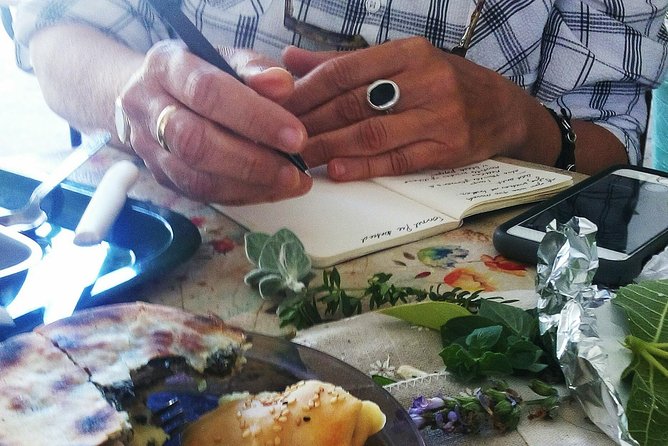
The Central Market of Chania gives you the broadest look at everyday ingredients. Here you encounter cheese, cured meat, fish, vegetables, bread, rusks, pies, olive oil and honey.
You are not simply walking past stalls. Tastings are included, so this is a chance to compare the products with the dishes you have already sampled. The market also helps explain why Cretan food can taste direct and uncomplicated. Good ingredients do much of the work.
The market section lasts about 30 minutes. That is enough time for an introduction, but not enough for a long, unhurried shopping trip. If you hope to buy gifts or spend time choosing olive oil, you may want to return on your own later.
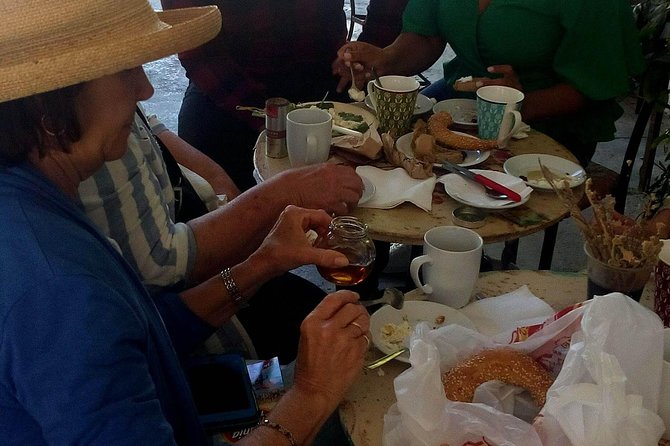
A coffee shop inside the market adds another lesson. You taste Greek coffee and savory accompaniments that were popular in the 19th and early 20th centuries. This is a small detail with real value. Coffee culture can tell you as much about daily life as a museum display, especially when you learn what people ate alongside the drink.
The Central Market can also be a sensory overload of smells, sounds and displays. That is part of its appeal, but you should not expect a quiet sit-down tasting room.
A quick look at phyllo making
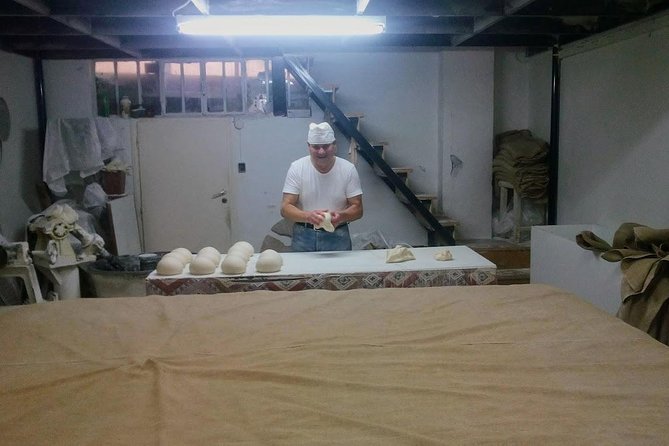
The itinerary includes a visit to a phyllo factory, lasting about 10 minutes. This is the shortest stop, but it fills in an important part of the pastry story.
You have already tasted kalitsounia and bougatsa. Seeing a phyllo workshop helps connect those finished foods with the thin pastry sheets behind them. It also gives you another look at the hand skills involved in local baking.
Do not expect a long demonstration or a full cooking class. Ten minutes is enough for a glimpse, not a lesson in making phyllo yourself. Still, the stop works well as a bridge between the market and the city walk.
A few more Crete tours and experiences worth a look

Venetian Chania, trade and the food supply
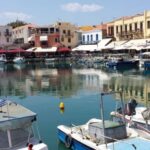
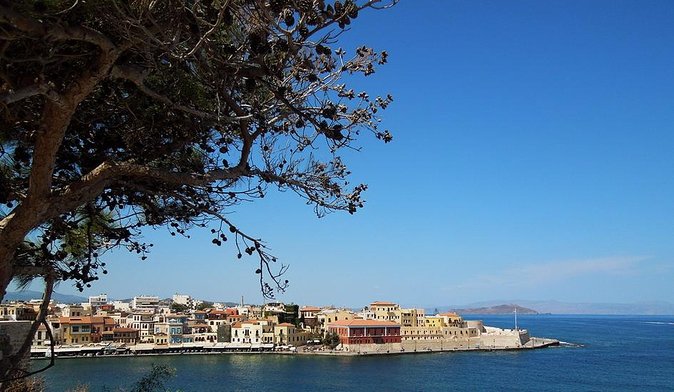
From the market, the route moves through the Venetian part of Chania and toward the Old Venetian Harbor. The setting changes, and so does the subject.
Mariana explains Venetian trade and food policies, along with their effect on Cretan cooking and food security. This is more useful than simply hearing that Chania has Venetian buildings. You learn to consider the harbor as a working link between food, power and commerce.
The tour also includes a short multi-sensory experience. The supplied details do not specify every element, so you should expect a brief activity involving the senses rather than a full workshop.
A visit to a Cretan knife maker is part of this section. Cretan knives are tied to local craft and identity, and the stop gives the walk a break from eating. That change of pace is welcome after several tastings.
This section lasts about 40 minutes. You will be walking outdoors, so comfortable shoes and casual clothing are sensible. The tour is subject to favorable weather, and a poor-weather cancellation offers an alternative date or a full refund.
Splantzia Square and an almond drink
The route then enters the Ottoman part of Chania and reaches Splantzia Square. Under the shade of a plane tree, you taste an almond beverage with Byzantine roots.
This is a quieter, more reflective stop. The drink opens a discussion about beverages made with flowers and nuts, subjects that can easily get missed when a food tour focuses only on meat, cheese and pastries.
The location matters too. By tasting an older-style drink in the Ottoman quarter, you get a clearer sense of how Chania’s food traditions overlap. Venetian, Ottoman, Byzantine and local Cretan influences do not sit in separate boxes. They meet in recipes, ingredients and eating habits.
The stop lasts about 30 minutes. Shade is welcome in warm weather, but you should still plan for a morning of walking and outdoor stops. Public transportation is nearby, though no hotel transfer is included.
Lunch at a Splantzia taverna
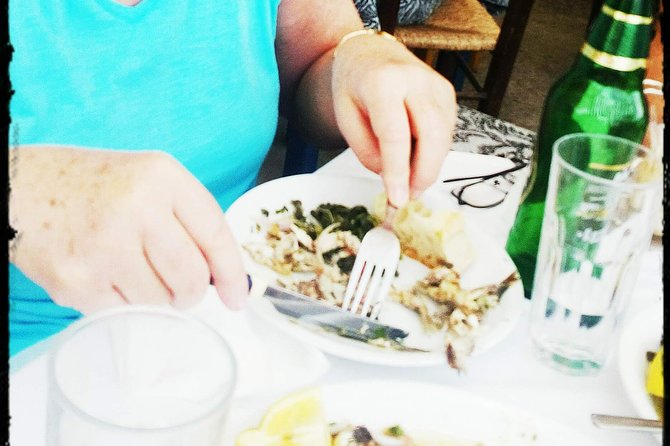
The final stop is a local taverna in Splantzia. Here you receive a short lesson on ancient cooking and eat traditional and historic Cretan dishes.
This is not an add-on snack. Lunch is included, and the tour information also lists breakfast and a meal among the inclusions. You should treat the whole morning as one extended eating experience rather than a light tasting tour.
The final 40 minutes give you time to sit down and make sense of the earlier stops. After learning about wild greens, cheese, pastry, market goods, coffee and historic beverages, you can see how those ideas fit into a larger Cretan meal.
Alcoholic drinks are not included, though they are available to purchase. That is useful to know before you arrive, especially if you expect wine or another drink to be part of the fixed price.
The amount of food is one of the tour’s biggest strengths, but it is also the reason to skip breakfast. If you have a small appetite, tell the guide in advance and pace yourself. Food restrictions and allergies should be provided when booking. A vegetarian option is available if requested ahead of time.
What the $125.77 price includes
At $125.77 per person, this is not a cheap way to grab breakfast in Chania. You can buy pastries, coffee and market snacks for far less.
The value comes from the combination. The price includes a field expert, a wide range of local delicacies, historic foods, a multi-sensory experience, breakfast and lunch. You are also paying for access to several kinds of food businesses and for the guide’s interpretation of what you are tasting.
I would consider the price fair if you care about food culture and want more than a list of recommended restaurants. Four hours with a specialist can also save you from spending several days trying to piece together the same story on your own.
The value is weaker if your priority is quantity alone, or if you already have a full food plan in Chania. You may prefer to explore the market independently, choose your own restaurants and spend the difference on meals you select yourself.
Group discounts may be available. Since the group is capped at eight, ask about the current discount terms if you are booking with family or friends.
Who should book this experience
I would recommend this walk to anyone who plans meals around local specialties and wants to understand why the food tastes the way it does. It is especially suited to curious eaters, history fans, couples and small groups who enjoy asking questions.
It also works well early in a Chania stay. The route introduces places and dishes you can return to later, including the Central Market, the Old Venetian Harbor and Splantzia.
Families can join, but children must be accompanied by an adult. The four-hour duration and amount of food may be tiring for very young children. Service animals are allowed, and most people can participate.
You should think twice if you dislike walking, have serious food allergies, or want a hands-on cooking class. This is a guided tasting and history walk with a short cooking lesson at the final taverna, not a full-day kitchen course.
The tour is offered in English. Food tastings may change without notice, so you should see the menu as a guide rather than a fixed promise.
Practical advice before you go
Wear comfortable shoes. The route moves through several parts of central Chania, and the experience includes outdoor walking between food stops.
Eat very little beforehand. The first stop includes bread, cheese, olives, tea and kalitsounia. Bougatsa, Greek coffee accompaniments and lunch follow.
Tell the provider about allergies, food restrictions or vegetarian needs when you book. The guide will try to accommodate specific needs, but advance notice is important when a tour depends on several independent food stops.
Confirmation arrives within 48 hours, subject to availability. The experience is normally booked about 18 days ahead, so last-minute space may be limited.
Free cancellation is available if you cancel at least 24 hours before the local start time. Changes or cancellations made inside that window are not refunded.
Should you book the Chania Food Odyssey?
Book it if you want a food education as well as a meal. Mariana’s archaeological culinary background, the small group and the range of stops give this experience more substance than a basic pastry-and-coffee outing.
I would especially choose it near the start of a Chania visit, when the market, neighborhoods and local foods can guide your later choices. The strongest moments are the personal tastings, the bougatsa and phyllo workshops, the Greek coffee lesson and the final taverna meal.
Skip it if $125.77 feels too high for breakfast and lunch, or if you prefer to explore at your own pace. For everyone else, arrive hungry, wear sensible shoes and let the city explain itself through its food.
FAQ
Where does the tour start?
The tour starts at 10:00 am at Kidonias 29 in Chania, in front of Chania Town Hall.
Where does the tour finish?
The tour finishes at the Platanos of Splantzias in Splantzia Square, Chania.
How long does the experience last?
It lasts approximately four hours.
What food is included?
Included tastings and meals include olives, handmade cheese, homemade bread, herbal tea, kalitsounia, bougatsa, Greek coffee with savory accompaniments, historic foods and a final traditional Cretan meal.
Are drinks included?
Nonalcoholic tastings such as herbal tea, Greek coffee and an almond beverage are included as described. Alcoholic drinks are not included, but they can be purchased.
Is lunch included?
Yes. The experience includes a meal at a local taverna, and lunch is listed among the inclusions.
Is breakfast included?
Yes. Breakfast is included through the morning tastings and food stops.
How many people can join?
The maximum is eight people per booking and eight travelers on the activity.
Is a vegetarian option available?
Yes. A vegetarian option is available, but you must request it when booking.
Can children join the tour?
Yes. Children can participate, but they must be accompanied by an adult.
What should I wear?
Casual clothing and comfortable shoes are recommended because the experience includes walking through Chania and outdoor stops.
What happens if the weather is bad?
The tour is subject to suitable weather. If it is canceled because of bad weather, you can choose another date or receive a full refund.