REVIEW · CRETE
Heraklion: Food Tastings Walking Tour
Book on GetYourGuide →Operated by Crete Local Adventures · Bookable on GetYourGuide
Cheese, coffee, wine, and city stories. This 4-hour Heraklion walking food tour mixes sand-brewed ellinikós kafés with a fun start called cup reading, plus real Cretan tastings at local spots away from the usual crowds. I liked how it turns food into a lesson you can actually use, not just a string of bites. One heads-up: it’s a true tasting tour, so plan for plenty of walking and multiple alcoholic tastings for adults.
You’ll get a full spread across the old city—starting at Eleftherias Square, then moving through bakeries, a market scene, and even a stop at Agios Minas Cathedral before the tour ends near the waterfront at Rocca a Mare Fortress. For me, the best part is that you leave with practical instincts: how to choose great cheeses, what makes Cretan olive oil special, and how local wine culture traces back thousands of years. The main consideration is that if you’re not into wine/raki—or you have a very restricted diet—you’ll want to check the options at booking and pace yourself.
In This Review
- Key highlights worth your appetite
- Eleftherias Square meet-up and how the pace feels
- Sand-brewed ellinikós kafés and cup reading to start strong
- Bougatsa in a family shop: the flaky comfort you’ll remember
- Agios Minas Cathedral and tea: a short cultural breather
- The Cretan cheese lesson: how to choose better bites
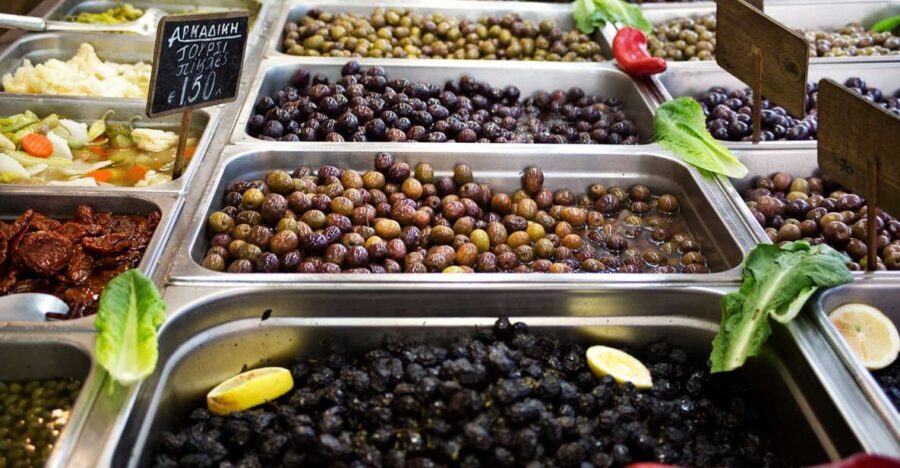
- Market time: olives, rusks, and the basics that make Cretan food work
- Cretan olive oil tasting: why it’s famous and how to notice it
- Wine, raki, and Bronze Age roots: the last hour’s payoff
- Ending at Rocca a Mare Fortress: a satisfying close
- Price and value: what you’re really paying for
- Who should book this Heraklion food tasting walk?
- Should you book the Heraklion Food Tastings Walking Tour?
- FAQ
- How long is the Heraklion Food Tastings Walking Tour?
- Where do I meet the guide?
- Where does the tour end?
- What food and drinks are included?
- Are vegetarian options available?
- Is alcohol included, and are kids allowed?
- What should I bring?
Key highlights worth your appetite
- Ellinikós kafés plus cup reading: traditional sand-brew coffee with a centuries-old fortune-reading twist
- Bougatsa from a long-running family bakery: semolina custard with cheese or meat in layered phyllo (often since the early 1920s)
- Cheese-tasting tips that make you sound like an insider: learn how to pick standout Cretan cheeses
- Cretan olive oil tastings with real reasoning: why organic Cretan olive oil is held in such high regard
- Wine and raki with Bronze Age backstory: local drinking culture explained through time
- Finish at Rocca a Mare Fortress: end your food crawl with an easy “stand back and look around” moment
Eleftherias Square meet-up and how the pace feels
The tour starts at 11:00 AM in Eleftherias Square, right by the statue of a soldier in the middle of the square. You’ll be on the lookout for a guide holding a Crete Local Adventures sign, which matters because the square is the kind of place where everyone has somewhere else to be.
This isn’t a “rush from stop to stop” kind of walk. Expect about four hours total with built-in tasting time, then a slow stroll finish toward Rocca a Mare Fortress. Bring comfortable shoes—Heraklion’s streets are manageable, but you will be on your feet the whole time.
You can also read our reviews of more walking tours in Crete

Sand-brewed ellinikós kafés and cup reading to start strong
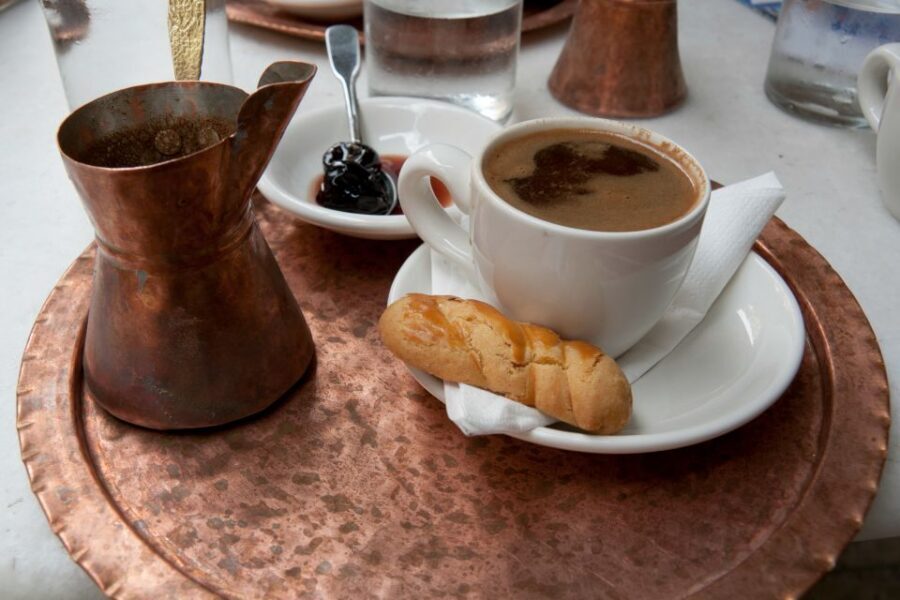
The tour kicks off with Greek coffee—ellinikós kafés—brewed the traditional way in sand. It’s more than a caffeine hit. Your guide explains why Greeks treat coffee as part of daily rhythm, not just a quick drink.
Then comes the fun part: cup reading. You’re taught how to interpret what’s in your cup, using a tradition that’s been around for centuries. It’s playful, but it also gives you a mental anchor for the rest of the day: you’re not just eating; you’re learning the local way of doing things.
Practical tip: coffee can make you extra hungry later, so don’t rely on coffee alone. You’ll get plenty of savory and sweet stops after this, but it helps to keep your energy steady.
Bougatsa in a family shop: the flaky comfort you’ll remember
One of the early highlights is bougatsa at a family-owned bakery that’s been mastering its technique since the 1920s (the tour emphasizes 1922). Bougatsa is built from semolina custard with fillings like cheese or minced meat, tucked between layers of phyllo.
What I like about this stop is that it’s a classic you can identify instantly. You’ll taste the structure: crisp pastry outside, creamy center inside, and a filling that changes the flavor profile from bite to bite. If you’ve ever had bougatsa that felt bland, this is where you’ll understand why the best versions taste like they were made for people who actually eat them, daily.
If you’re vegetarian, this is a good place to be specific. The tour notes vegetarian options, and bougatsa with cheese is the natural fit.
Agios Minas Cathedral and tea: a short cultural breather
After the food-heavy first stretch, you get a cultural pause at Agios Minas Cathedral. This stop includes time to see the cathedral interior, plus tea during the break.
I like this interruption because it resets your senses. After multiple rich tastings—pastry, cheese, and oils—your body appreciates a breather. It also grounds the food in place, so the day feels like Heraklion, not a mobile tasting booth.
If you visit in a hotter season, this break can be extra helpful. Churches are often cooler than the street, and the pace stays comfortable.
The Cretan cheese lesson: how to choose better bites
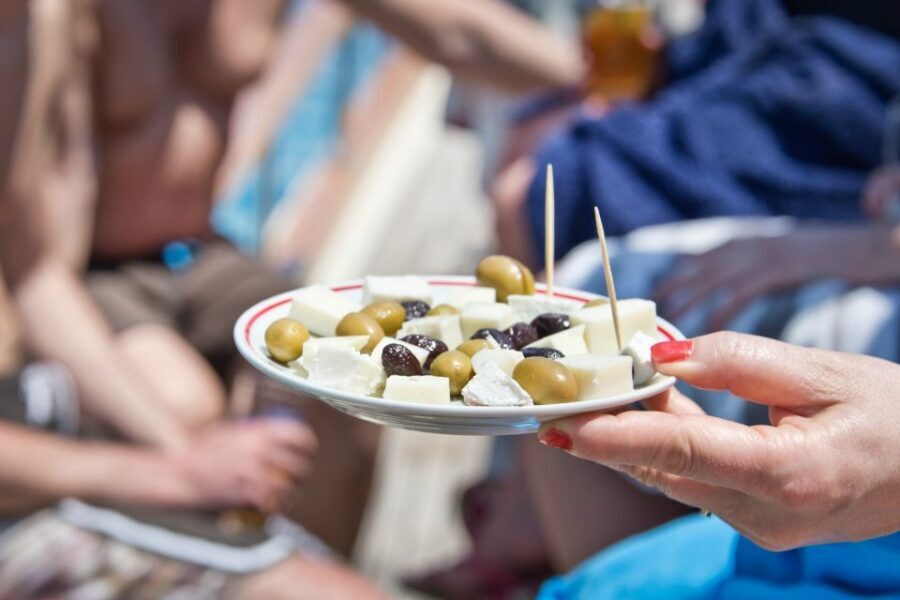
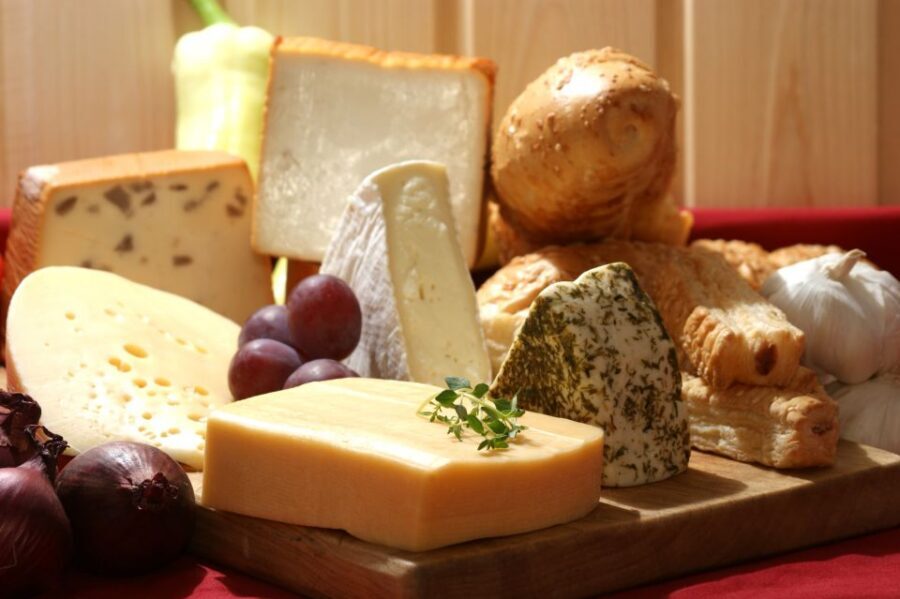
A dedicated cheese tasting is one of the most practical parts of the whole experience. You’ll try different local cheeses and get hints on how to recognize quality—so you’re not just eating cheese, you’re learning how to select it.
The goal is simple: help you become the kind of traveler who can say more than it’s good. You’ll learn what to look for when you choose, how cheese fits into Cretan meals, and how to think about taste in a more deliberate way.
A nice bonus here is that cheese pairs naturally with the rest of the day—olive oil, olives, bread, and those savory market bites. When everything connects like that, the tasting tour stops feeling random.
You can also read our reviews of more food & drink experiences in Crete

Market time: olives, rusks, and the basics that make Cretan food work
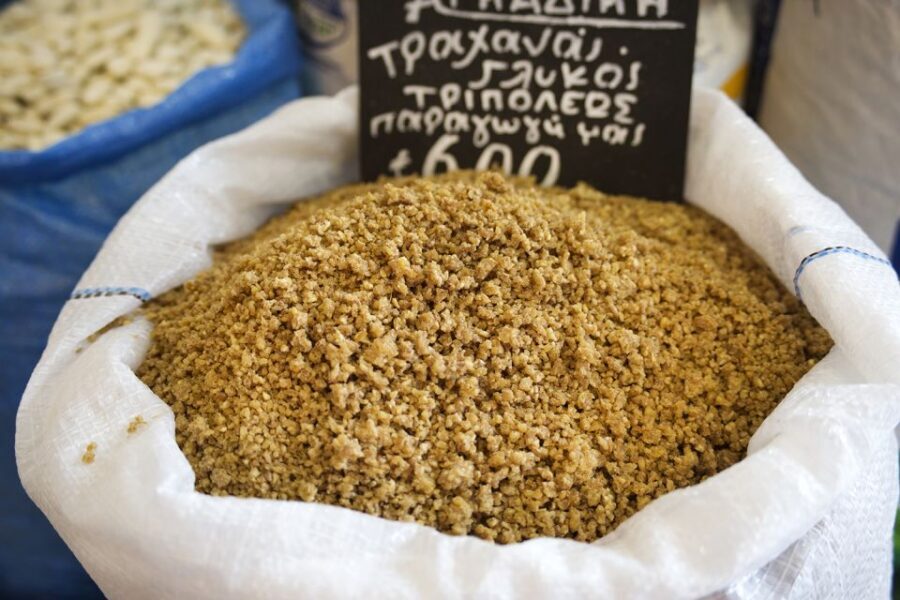
You’ll spend time at a local market where you meet vendors and hear what makes their products worth seeking out. This is where you start to see the building blocks of the cuisine: olives, rusks, and cheese show up again and again for a reason.
You’ll sample core elements of Cretan eating, then connect them to what you’ve already tasted. The olive story becomes easier to understand once you’ve had the flavor on your tongue alongside bread and simple crunch.
If you’re the type who likes to recreate meals later, this is the stop that gives you shopping instincts. Even if you don’t buy anything, you’ll know what to look for when you’re scanning menus and specialty shops.
Cretan olive oil tasting: why it’s famous and how to notice it
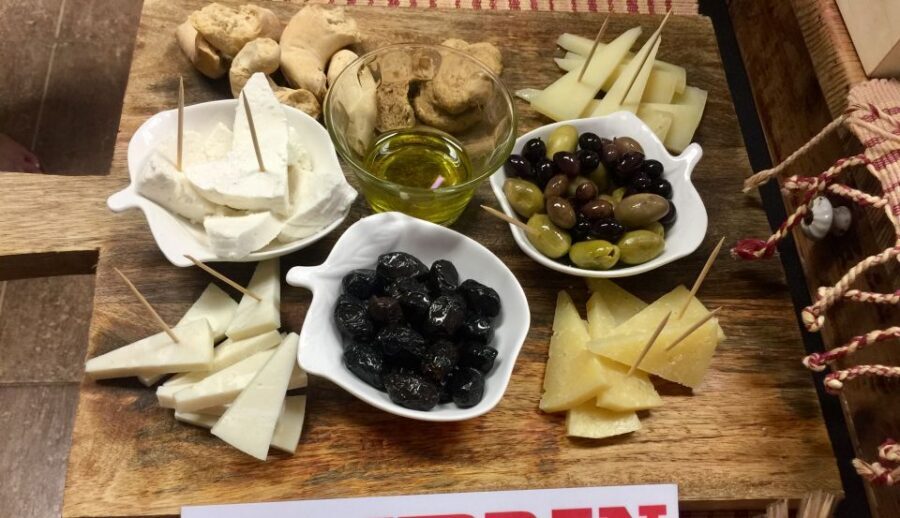
The tour gives olive oil its due, with tastings framed around why Cretan olive oil is considered among the best in the world. It’s not just name-dropping. Your guide helps you understand what makes the oil stand out—especially when it’s organic.
I like that this tasting turns into a skill. Once you’ve had real Cretan olive oil, it’s easier to notice whether an oil tastes fresh, well-made, and balanced. You also learn how locals think about using it—oil isn’t a background flavor here. It’s part of the food’s identity.
Want to get extra value from this stop? Taste slowly and compare. Even if you only have a small amount in each sample, your brain learns faster with calm attention than with fast “chug-and-move.”
Wine, raki, and Bronze Age roots: the last hour’s payoff
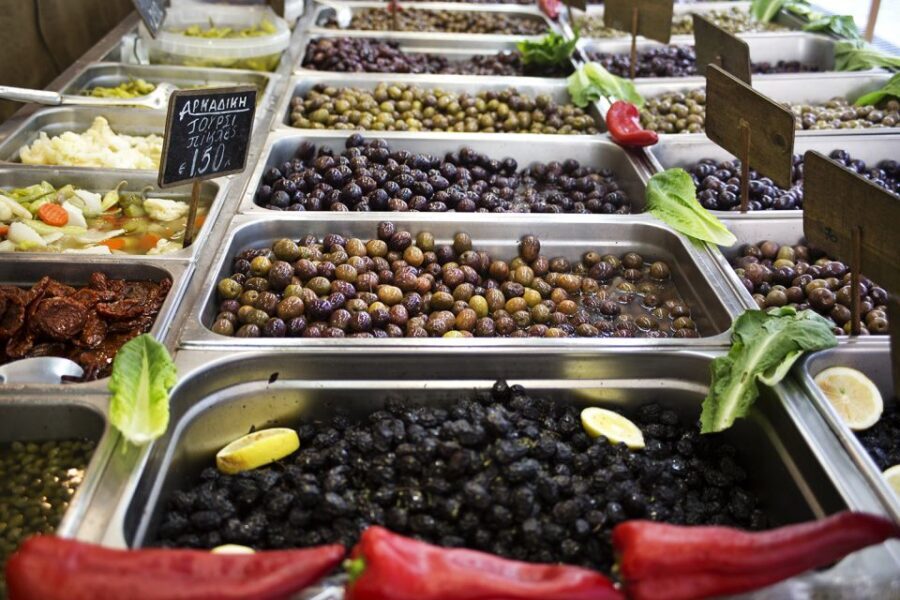
The final tasting section leans into drinks and small plates. You’ll sample local wines, plus a local spirit tasting, in a family-run wine shop setup with tapas-style bites.
The tour connects modern wine culture to deep time, noting that winemaking in Crete dates back to the Bronze Age. That context changes how you experience it. Instead of seeing wine as just a drink, you hear it as a long-running craft with regional identity.
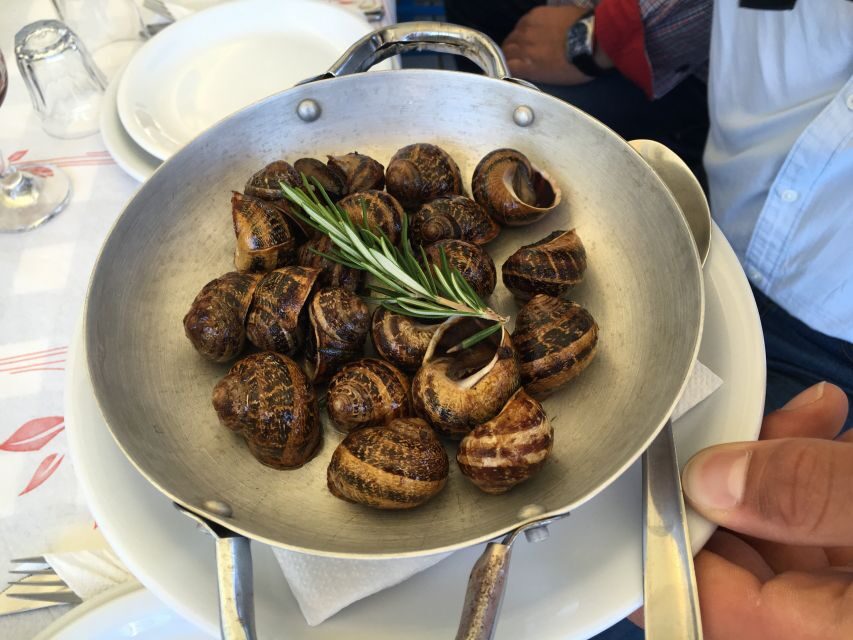
If you want a hands-on moment, the tour includes a meat dish option. It also mentions a bolder choice—fried snails—for those who want to be brave. If you’re not into that, you’ll have alternatives, and vegetarian options can be arranged at booking.
Adult note (important): alcohol tastings are part of this tour, and the tour states that alcoholic beverages are allowed only for participants age 18 or older. Under 18, you’ll be served non-alcoholic beverages.
Ending at Rocca a Mare Fortress: a satisfying close
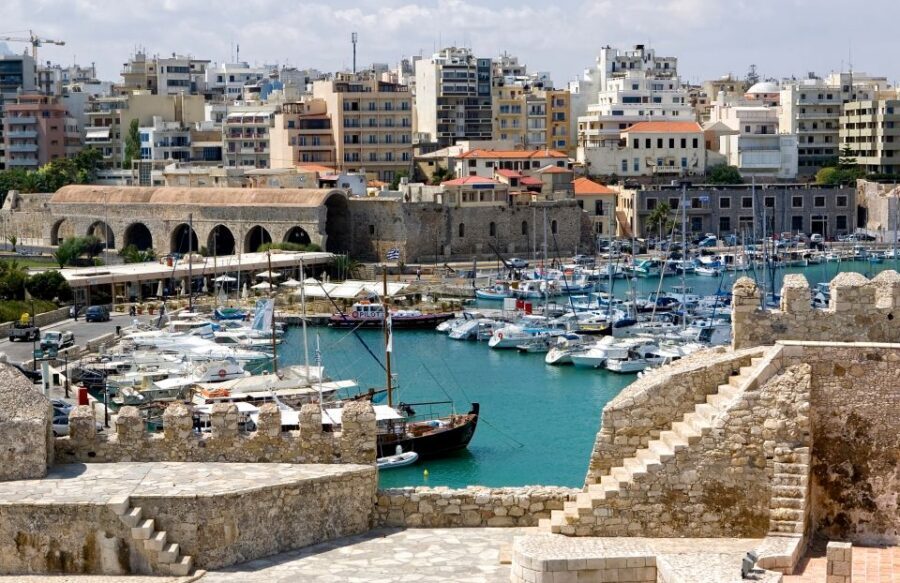
You finish at Rocca a Mare Fortress, a natural “wrap it up here” point. It’s a good place to stop walking, take a breath, and let your stomach settle after the last tastings.
For practical reasons, ending here also helps you transition into the rest of your evening. You’ll have a clear finish point and a sense of where you are in Heraklion, which makes it easier to choose dinner afterward.
Price and value: what you’re really paying for
At $114 per person for four hours, you’re paying for more than food samples. The value comes from the combination: multiple tastings across different food categories, plus guided cultural stops, plus wine/raki for adults, plus the practical guidance behind how to choose cheeses and taste olive oil.
Think of it like this: you’re getting a structured “food education” you can’t easily assemble on your own in one morning. You also avoid the guessing game of finding the best version of everything—bougatsa, cheeses, olive oil—while staying mostly out of tourist traps.
If your plan is to spend your first day in Heraklion getting your bearings, this tour is a strong use of time. If you’d rather do food at your own pace with longer restaurant dinners, you might find this format a bit intense. It’s meant to fill you up, not to leave you hungry.
Who should book this Heraklion food tasting walk?
Book it if:
- You want an easy, guided way to eat through Cretan classics like bougatsa, cheeses, olives, and olive oil.
- You enjoy learning how locals think about food, not just tasting it.
- You want a first-day orientation that also includes real landmarks, like Agios Minas Cathedral.
Skip it or reconsider if:
- You don’t drink and alcohol-based tastings aren’t for you (even though non-alcoholic options exist for younger participants).
- Walking for four hours sounds tough right now.
- You have strict dietary needs beyond the vegetarian option mentioned at booking.
This tour also tends to fit well with couples and solo diners. The tastings keep things social, but the structure keeps it from feeling chaotic.
Should you book the Heraklion Food Tastings Walking Tour?
Yes, if you want a practical, food-first introduction to Heraklion that actually teaches you how to taste. I especially like that it spends real time on cheese and olive oil, not just sweets, so you’ll leave with skills that carry into your next meal and your next shop stop.
If you’re in Heraklion for a short time and want to maximize local flavor without spending your day hunting down “the best places,” this tour is a solid bet. Just go in with an appetite, wear good shoes, and pace your drinks.
FAQ
How long is the Heraklion Food Tastings Walking Tour?
The tour lasts 4 hours.
Where do I meet the guide?
Meet next to the statue of a soldier in the middle of Eleftherias Square at 11:00 AM. Look for someone holding a Crete Local Adventures sign.
Where does the tour end?
The tour finishes at Rocca a Mare Fortress.
What food and drinks are included?
Included samples cover coffee, rusks, olives, cheese, pastries, traditional sweets, local wine/spirit tasting, and meats.
Are vegetarian options available?
Yes. Vegetarian options are available, but you need to specify this at the time of booking.
Is alcohol included, and are kids allowed?
Local wine and spirit tastings are included. Alcoholic beverages are allowed for participants age 18 or older, and participants under 18 are provided non-alcoholic beverages.
What should I bring?
Wear comfortable shoes, since it is a walking tour.