REVIEW · CRETE
Guided Walking Tour in Chania
Book on Viator →Operated by Free Tour Expert · Bookable on Viator
Chania reads fast on a 2-hour stroll. This guided walk stitches together maker shops, religious landmarks, and harbor views, so you get a good sense of how Chania grew from different cultural eras into one neighborhood.
I love the value here: $32 for a professional guide and a compact route that mostly avoids long museum detours. I also like the mix of shopping streets and sacred spots, from the Skalidakis knives area to the Ottoman-era Kucuk Hasan Mosque and the Church of Agios Nikolaos.
The main drawback to consider is the pace: you’re on a schedule, with about 20 minutes per stop. If you’re hoping for a long, story-heavy walk, this can feel more like an efficient overview than a slow wander.
In This Review
- Key Highlights You’ll Actually Feel on the Ground
- Two Hours to Get Oriented in Old Town Chania
- What the Route Really Gives You (Knives, Leather, Churches, Harbor)
- Skalidakis Cretan Knives: Craft as a Souvenir
- Skridlof (Street of Leather): What People Make and Carry
- Church of the Assumption of the Blessed Virgin Mary: A Pause in the Middle of the City
- Old Venetian Harbor: Views You’ll Want to Re-Visit
- Kucuk Hasan Mosque: Ottoman-Era Footprints
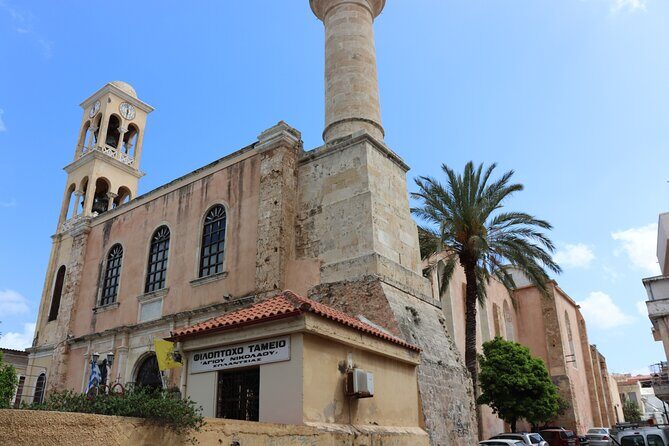
- Church of Agios Nikolaos (Plus a Few Surprise Minutes)
- Price and Value: Is $32 Worth Two Hours?
- Pace, Group Size, and What Makes It Feel Good or Flat
- When This Walking Tour Fits Best
- Tips to Make the Most of a 5:00 pm Start
- Should You Book This Guided Walking Tour in Chania?
- FAQ
- What’s the duration of the Guided Walking Tour in Chania?
- How much does the tour cost?
- What language is the tour offered in?
- Where does the tour start and end?
- What time does the tour begin?
- What’s included in the price?
- Is admission included for the stops?
- How large is the group?
- Are there any restrictions for travelers or service animals?
- FAQ
- How far in advance should I book?
- Is cancellation free?
Key Highlights You’ll Actually Feel on the Ground
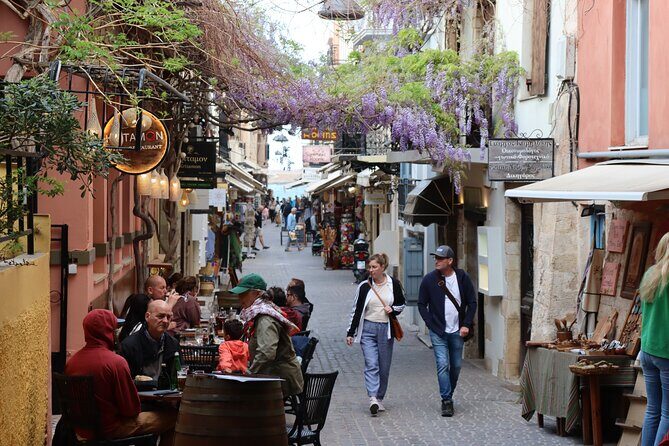
- Shop-focused Chania route: knives, leather goods, and working trades in everyday streets
- Historic religious landmarks: the Assumption church, Kucuk Hasan Mosque, and Agios Nikolaos
- Old Venetian Harbor time built in: you get waterfront views without turning it into a full day
- Short stop format: about 20 minutes at each listed spot for quick context
- Small groups: maximum 15 travelers, so questions are easier to fit in
- Mobile ticket: convenient when you’re moving and don’t want paperwork
Two Hours to Get Oriented in Old Town Chania
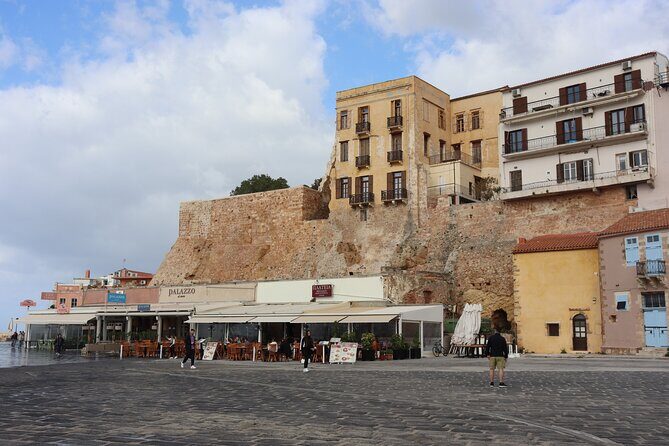
This tour is built for people who want orientation without committing a whole day. You start in the heart of Chania at Venizelos GravesAgorastaki 4, and you finish back at the same meeting point—easy, calm, and predictable. With a duration of about 2 hours and a start time of 5:00 pm, it’s a smart option for late-afternoon sightseeing when the streets feel less harsh than midday.
The itinerary has a clear rhythm: quick introductions, a brief walk between areas, and timed stops that let you absorb what you’re seeing before moving on. That “grab the essentials, then go” style is exactly why people who like guided structure tend to enjoy this kind of route.
But if you’re the type who loves lingering—taking photos for 30 minutes at one wall, or listening to long explanations in one place—watch the clock. The design is efficient. It’s not trying to replace a deep self-guided day with multiple neighborhoods and cafés.
You can also read our reviews of more walking tours in Crete

What the Route Really Gives You (Knives, Leather, Churches, Harbor)
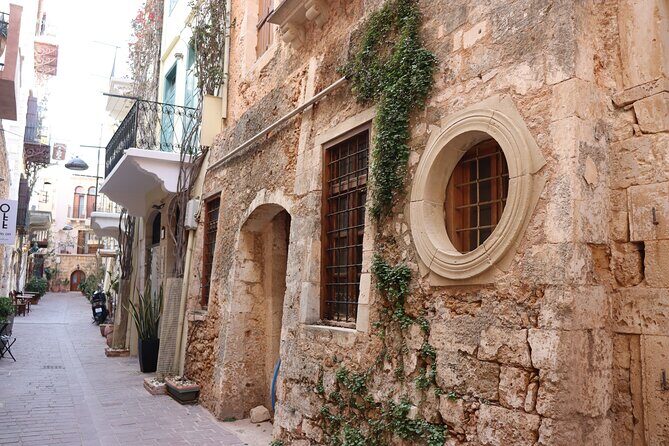
One thing I appreciate about the stop choices is the balance. You’re not only looking at scenery. You’re looking at what people buy, where people pray, and how the city connects to the sea.
Skalidakis Cretan Knives: Craft as a Souvenir
Your first stop is in the knives district around Skalidakis Cretan Knives. This is where Chania shows you a very practical form of local identity: tools and craft. You’ll see a mix of traditional designs and modern styles, and the point of the stop is less about shopping and more about understanding why these objects matter to the region.
Why it’s worth your time: knives are one of those categories that tell you something about a place fast. It’s about materials, design, and the idea that craftsmanship is part of daily culture, not just a museum topic. If you like functional souvenirs, this stop gives you a reason to look closely.
Watch-outs: the stop is about 20 minutes. If you plan to buy, have your questions ready. If you’re only browsing, it still works, but don’t expect a long artisan story.
Skridlof (Street of Leather): What People Make and Carry
Next comes Skridlof Street, often called the Street of Leather. Here you’ll pass storefronts selling leather goods—bags, shoes, belts, and jackets—so you can get a sense of what Chania does well and what visitors bring home.
Why it works: leather goods are easy to evaluate in person. You can check stitching, thickness, and finish right away. And even if you don’t buy, you’ll get a feel for local retail culture—how trades are concentrated, how shops cluster, and how the city supports these crafts.
Potential drawback: if you’re not interested in shopping streets, you might mentally file this as a “quick look.” It’s still part of the tour’s theme—how Chania lives, not just how it looks.
Church of the Assumption of the Blessed Virgin Mary: A Pause in the Middle of the City
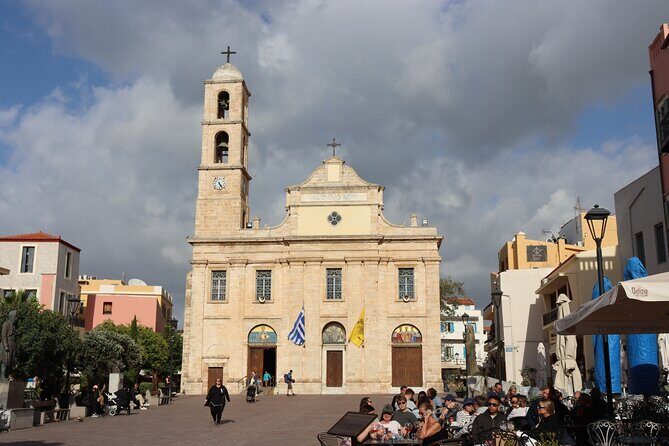
Then you’ll visit the Holy Catholic Church of the Assumption of the Blessed Virgin Mary (the Cathedral of Saint Mary of the Assumption). This is a shift in pace—more quiet, more reflective, less about goods and more about faith and architecture.
Why you’ll like it: for a walking tour that includes commerce streets, this stop gives contrast. It’s a good reset moment, a chance to slow down and take in how the city makes space for spiritual life in the middle of everyday activity.
Consideration: the stop is timed. If you’re hoping for a full service or a long architectural lecture, you may feel it moves on quickly.
You can also read our reviews of more guided tours in Crete

Old Venetian Harbor: Views You’ll Want to Re-Visit
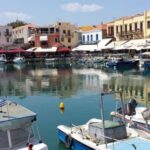
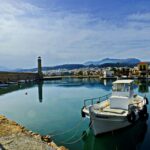
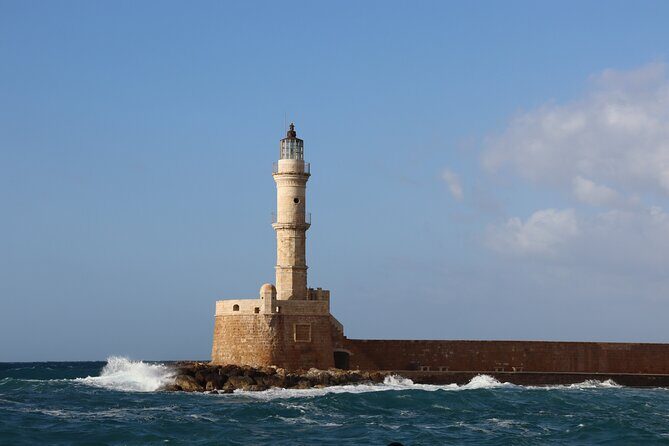
The Old Venetian Harbor is a classic reason people come to Chania in the first place. During your stop you’ll walk the area with its cobblestone feel, waterfront views, and the sense of maritime history. You’ll get pointed context about features like the ancient lighthouse and the Venetian fortress presence in the wider harbor area.
Why this stop is valuable: even a short harbor visit helps you understand Chania’s layout. Once you’ve seen where the city turns toward the sea, it’s easier to navigate and plan your own time afterward—whether you head for a sunset walk or choose a café near the water.
Reality check: 20 minutes is enough for orientation and a few photos, but it’s not enough to replace a longer harbor evening if that’s your main goal.
Kucuk Hasan Mosque: Ottoman-Era Footprints
Next is Küçük Hasan Mosque, tied to Chania’s Ottoman past. The tour frames it as a visible reminder of the city’s layered cultural heritage. Expect a tranquil atmosphere and a chance to notice architectural details at a calmer pace than you’d have while rushing through shops.
Why it matters: this is one of the stops that turns a “pretty streets” walk into something more meaningful. You begin to see how different communities shaped the same city blocks, not just how tourism markets them today.
Tip for your visit: take your time looking at structure and proportions for a moment. Even in a short stop, a few minutes of observation can make the building feel more specific than just another landmark.
Church of Agios Nikolaos (Plus a Few Surprise Minutes)
Finally, you’ll reach the Church of Agios Nikolaos. And here’s a twist: the tour notes that there are a few more stops along the way, kept as a surprise to make it feel special. That means you should expect some flexibility in what you see between the major listed anchors.
How to use that: if you’re the kind of traveler who likes “what am I seeing right now,” the surprise stops can be fun. If you’re the kind who likes a strict plan and hates ambiguity, you may want to approach this tour with the mindset of guided highlights rather than a checklist.
Price and Value: Is $32 Worth Two Hours?
$32 might sound like a lot or like a bargain depending on your travel style. Here’s how I’d judge the value based on what you actually get.
You’re paying for:
- a professional guide
- a structured 2-hour walking circuit
- English-language context
- small-group format (up to 15)
- time at multiple sights with admission noted as free for the listed stops
If you enjoy asking questions and getting quick explanations while walking, the price makes sense. You avoid piecing together details on your own while you’re moving through tight streets.
If you prefer independence and you already have a strong background in Chania’s history, you might feel like you could replicate the route with a map and some reading. That’s where the timing becomes important again: this tour is designed to be efficient, not exhaustive.
Also, the average booking window is about 18 days in advance. That’s a clue the best slots can fill. Book early if your schedule is firm, and don’t wait until the last week if you’re traveling in a busy season.
Pace, Group Size, and What Makes It Feel Good or Flat
The group cap of 15 travelers is genuinely helpful. In a smaller crowd, you’re more likely to hear the guide’s comments clearly and to ask follow-up questions without waiting your turn forever.
The format is also key: about 20 minutes at each major stop, then on to the next. That has two consequences.
1) You’ll get a broad tour of themes—craft, religion, harbor—without getting stuck in one place too long.
2) You may not get the deep, slow storytelling some people want.
One criticism you’ll want to take seriously is the idea that the tour felt like it could have been read from a short tourist book. If you’re already planning to do a lot of independent reading or you want very detailed local anecdotes, you might end up comparing this to what you can get from guidebooks. This isn’t a fault so much as a mismatch in expectations.
Another caution from a booking experience is that the tour time can be adjusted last minute, and that can disrupt the flow of your evening plans. Since your start time is fixed at 5:00 pm, I’d recommend building a bit of buffer into the rest of your day just in case.
When This Walking Tour Fits Best
This is a great fit if you:
- want to see a lot of central Chania in a short window
- like guidance and context while walking
- are comfortable moving between stops on foot
- appreciate a mix of local trades and landmark buildings
It’s a weaker fit if you:
- hate timed itineraries
- expect long, narrative explanations at every stop
- only want one type of sight (for example, strictly museums or strictly views)
Because it ends back where it starts, it also suits people who want an easy return without transferring trains or coordinating extra rides.
Tips to Make the Most of a 5:00 pm Start
A late afternoon start is smart in Chania. You get daylight for photos and a calmer feel as evening approaches. To make it even better:
- Arrive a little early at Venizelos GravesAgorastaki 4 so you’re not rushing at the start.
- Wear comfortable shoes. You’re doing multiple stops on foot in old-city streets.
- If you’re thinking about shopping at the knife or leather stops, decide ahead of time whether you’re browsing or buying. It keeps the visit relaxing instead of stressful.
- Bring small cash or a card if you’re interested in souvenirs. The tour notes items at those stops, but it doesn’t say anything about refunds or special pricing—so treat shopping like normal retail.
Should You Book This Guided Walking Tour in Chania?
Book it if you want an efficient, English-guided overview of central Chania that mixes real street life (knives and leather) with landmark architecture (churches, an Ottoman-era mosque, and the Venetian harbor). At $32 for a professional guide and a tight route with short, well-timed stops, it’s solid value for the “see the highlights and move on” traveler.
Skip or consider another option if you’re looking for a long, story-heavy experience, or if you strongly prefer to control your own pace. This walk is designed to be compact. And if you need a slow soak, you’ll feel that.
If you do book, aim to keep your evening flexible—short tours can still be subject to timing changes. Otherwise, you’ll likely come away with better bearings, a few specific landmarks you can revisit on your own, and a clearer picture of how Chania’s craft and architecture connect.
FAQ
What’s the duration of the Guided Walking Tour in Chania?
It’s listed as approximately 2 hours.
How much does the tour cost?
The price is $32.00 per person.
What language is the tour offered in?
The tour is offered in English.
Where does the tour start and end?
It starts at Venizelos GravesAgorastaki 4, Chania 731 33, Greece, and ends back at the same meeting point.
What time does the tour begin?
The start time is 5:00 pm.
What’s included in the price?
You get a professional tour guide and the 2-hour guided walking tour.
Is admission included for the stops?
The listed stops show admission ticket free.
How large is the group?
The tour has a maximum of 15 travelers.
Are there any restrictions for travelers or service animals?
Service animals are allowed, and most travelers can participate. It’s also near public transportation.
FAQ
How far in advance should I book?
On average, this tour is booked 18 days in advance.
Is cancellation free?
Yes, free cancellation is available. You must cancel at least 24 hours before the experience start time for a full refund.
If you’d like, tell me your travel dates and whether you’re more into history, architecture, or shopping, and I’ll suggest how to pair this 5:00 pm walk with the rest of your Chania day.