REVIEW · ATHENS
Hilarious walking adventure in the heart of Athens
Book on GetYourGuide →Operated by ATHLETIC AND CULTURAL ASSOCIATION OF AMALIADAS THE ACADEMY OF JAE · Bookable on GetYourGuide
Athens makes a fine stage for a walking tour that mixes ancient stones with modern street life. You begin at Monastiraki Square, then move through Hadrian’s Library, the Roman Agora, the Ancient Agora, old churches, Plaka, and Acropolis viewpoints. The guide, often Vicky, keeps the history lively with stories, local language notes, and humor rather than drowning you in dates.
I like the broad route, which gives you a useful first look at central Athens in one morning or afternoon. I also like the small-group format, listed as limited to 10 people, along with the chance to stop for coffee, ice cream, or loukoumathes. The main caution is the walking itself: uneven ground and varied surfaces make this a poor fit if you have mobility limits.
In This Review
- Key points to know before booking
- Why this Athens walk works well as a first introduction
- Monastiraki Square: Athens in one glance
- Hadrian’s Library and the Roman Agora
- The Ancient Agora and the city’s public life
- A monastery stop and a quieter change of pace
- Acropolis views without a full summit visit
- Plaka, Psirri, and the food break
- What the guides add to the experience
- Is $47 a fair price?
- Timing, fitness, and practical planning
- Who should book this Athens walking adventure?
- Should you book it?
- FAQ
- Where does the tour start?
- Where do I meet the guide at Piraeus Harbour?
- How long does the walking tour last?
- Which places does the tour visit?
- Is Acropolis admission included?
- Are food and drinks included?
- Is the tour suitable for wheelchair users?
Key points to know before booking
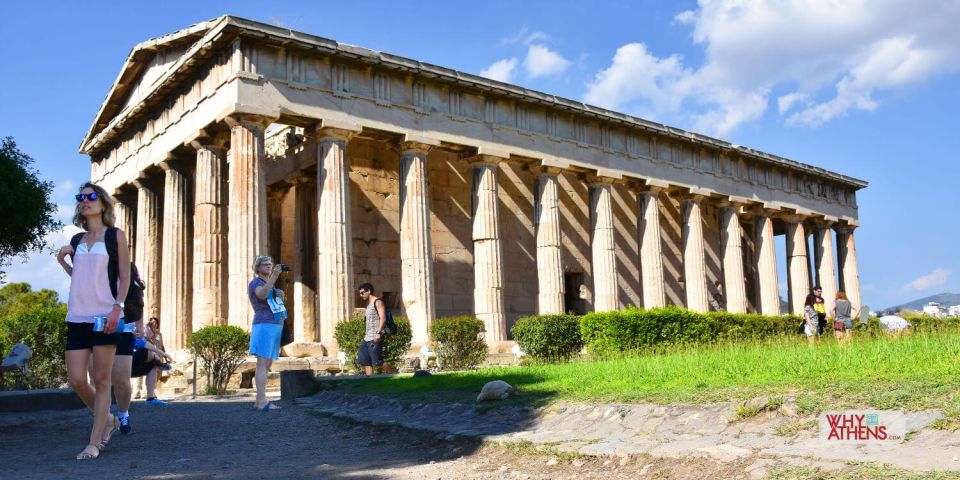
- Monastiraki is the starting point, with a clear look at old Athens beside its modern city life.
- Vicky is the guide most often named, praised for her energy, teaching style, humor, photos, and restaurant advice.
- The route covers several major ancient sites, including Hadrian’s Library, the Roman Agora, and the Ancient Agora.
- A local food break is built in, with coffee, ice cream, tea, dessert, snacks, or possibly loukoumathes available to buy.
- The tour can run about 3 to 4 hours, so allow enough time before a cruise departure or other booking.
- Uneven surfaces are a real concern, and the tour is not wheelchair accessible.
Why this Athens walk works well as a first introduction
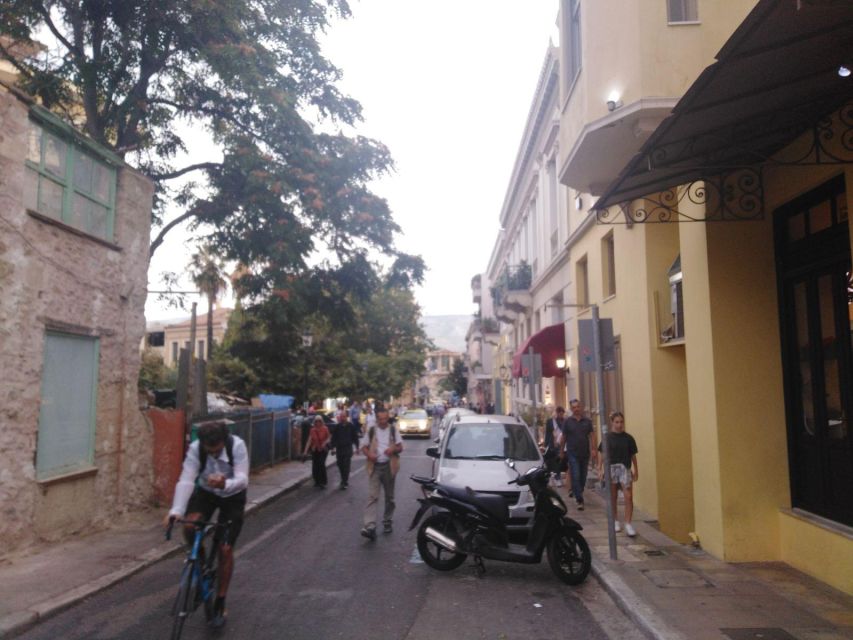
This experience is less about one grand monument and more about learning how central Athens fits together. You start in Monastiraki Square, one of the city’s best orientation points, then walk through layers of Greek, Roman, Byzantine, and modern life.
That mix matters. You are not simply looking at isolated ruins. You are seeing archaeological sites beside shops, churches, cafés, busy squares, and streets where daily Athens carries on around the ancient remains.
The guide’s style is central to the experience. Vicky receives especially strong praise for being energetic, friendly, funny, and able to explain what you are looking at and why it matters. One particularly useful quality is her teaching approach: instead of tossing out dates, she gives the background needed to understand the buildings, objects, and customs in front of you.
The title promises a hilarious adventure, but you should set your expectations carefully. The humor may be a light touch rather than a nonstop comedy show. One participant found the tour informative but felt it offered facts without much humor, while several others specifically enjoyed Vicky’s sense of fun. In practical terms, you are booking a serious history walk with a playful tone, not a stand-up routine among the ruins.
You can also read our reviews of more walking tours in Athens



Monastiraki Square: Athens in one glance

Monastiraki Square is a smart place to begin. It gives you an immediate sense of the contrast that defines central Athens: ancient monuments, modern shops, religious buildings, street activity, and the Acropolis rising above it all.
The walk begins with about 30 minutes in the square. Your guide can help you understand the area before you move into the archaeological sites. That opening is valuable because Athens can feel confusing at first. Streets do not always follow a simple plan, and the old and new parts of the city overlap in unusual ways.
If you are arriving from Piraeus Harbour, the meeting arrangements deserve attention. The tour offers Piraeus Harbour and Monastiraki Square as starting options. Cruise passengers are told to leave the security area after disembarking and meet the representative outside Gate 11, where you should look for a sign reading Jae Academy.
That instruction is specific, but cruise timing still deserves care. A four-hour walking tour, plus the time needed to return to the port, leaves little room for a late start. If you have a ship departure, confirm the meeting time and return plan before booking.
Hadrian’s Library and the Roman Agora
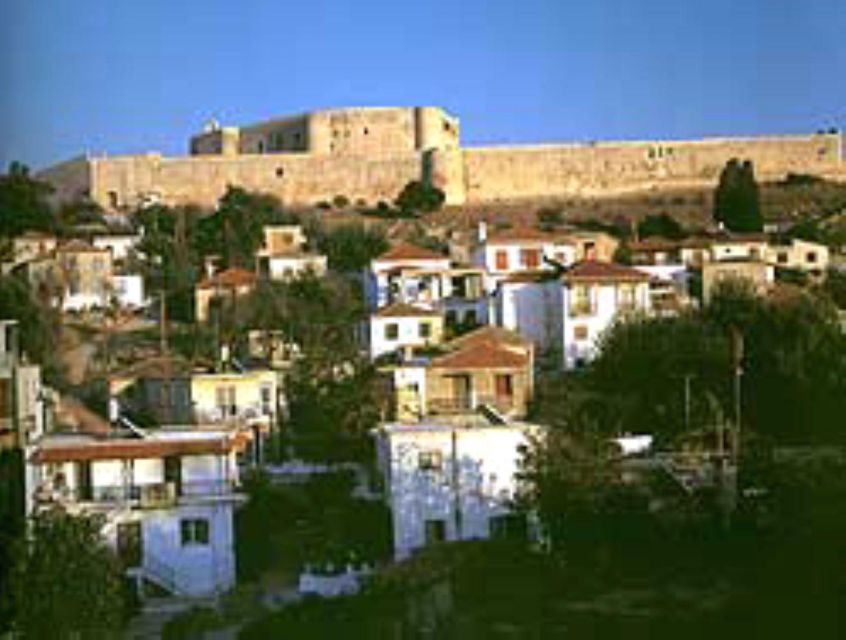
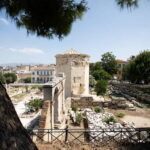
From Monastiraki, the route continues to Hadrian’s Library for roughly 30 minutes. The site reflects the Roman period of Athens and gives the tour a useful change of focus. Your guide can help connect the building to the city’s intellectual and civic life, rather than treating it as just another pile of old columns.
The Roman Agora follows as another major stop. Here, you get a clearer sense of how Athens functioned under Roman rule. The site is compact enough to take in during a short guided visit, but it is still worth having someone explain what you are seeing. Without context, ancient courtyards and broken walls can blur together.
This is where the tour’s light approach can help. You are given facts and anecdotes, but the guide aims to keep the pace moving. That suits you if you want history in manageable portions, with time to ask questions and take photographs.
Keep in mind that archaeological visits involve exposed ground and walking between separate areas. The activity specifically warns about uneven surfaces and varied ground conditions. Comfortable shoes are essential, and anyone with mobility concerns should consider a less demanding alternative.
The Ancient Agora and the city’s public life
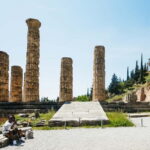
The Ancient Agora is one of the strongest parts of the route. This was not just a quiet archaeological field. It was a central setting for public life, politics, trade, philosophy, and civic activity in ancient Athens.
A guide adds real value here because the site can be hard to read on your own. Walls, foundations, and scattered columns do not automatically show you how the space once worked. Vicky’s explanations, according to the supplied feedback, focus on what things meant and why they were important, which is exactly the help you want in a place like this.
The scheduled visit lasts about 30 minutes, so do not expect an exhaustive examination of every corner. Instead, think of it as a strong introduction. You get the main story, the key sights, and a framework that can make a later independent visit more rewarding.
If you enjoy ancient history, you may want more time than the schedule allows. If you are visiting Athens for the first time and want a clear overview, the shorter stop keeps the day from becoming a museum marathon.
A monastery stop and a quieter change of pace
The itinerary includes a monastery visit and a 30-minute break. The specific monastery is not identified, so you should not book this expecting a named monument or a guaranteed interior visit.
Still, this pause adds a useful change of rhythm. Athens is not only classical temples and Roman ruins. Byzantine churches and religious buildings help show how the city continued to develop long after the ancient period.
A break also matters on a walking tour. You have time to slow down, look around, and recover before continuing toward the Acropolis and Plaka. The tour is described as a visit, sightseeing stop, and break, so the exact balance may depend on the day and the guide.


Acropolis views without a full summit visit
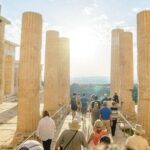
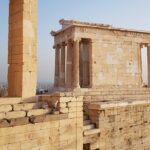
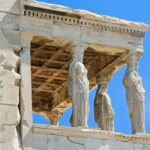
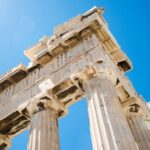
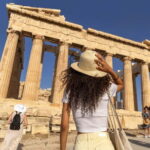
The Acropolis appears later in the walk as a photo stop and pass-by rather than a dedicated entry visit. You can expect viewpoints and opportunities to photograph the landmark, but admission to the Acropolis is not listed as part of the experience.
That distinction is important. If you want to walk through the Parthenon and the main Acropolis complex, you will need a separate ticket and more time. This tour gives you the setting and the view, while keeping its attention on the wider center of Athens.
For a first-day orientation, that can be a good choice. You see how the Acropolis relates to Monastiraki, the Ancient Agora, Plaka, and the surrounding streets. You also avoid using the entire tour on one major site.
The exact photo stop may vary, but the route includes walking and passing by the Acropolis area. Bring a phone or camera, and expect other stops to offer views as well.
Plaka, Psirri, and the food break

The final part of the route brings you toward Plaka, with the wider description also naming Thisio or Psirri as possible areas for a coffee and ice cream stop. These neighborhoods are useful places to experience Athens beyond the formal monuments.
The stop includes coffee, tea, dessert, and local snacks. Food and drinks are not included in the $47 price, so bring money for anything you want to order. One especially memorable treat mentioned in the feedback is loukoumathes, warm fried dough puffs covered with honey and cinnamon.
That kind of stop gives the walk a more personal feel. You can sit, talk with the guide, and ask about Greek food, language, restaurants, or everyday customs. Vicky has also offered restaurant suggestions, which can be helpful if this is your first night in Athens and you do not know where to eat.
The Acropolis view from this part of the city is another reason the break works well. You are no longer studying a ruin up close. You are seeing Athens as a living city with its most famous monument above the rooftops.
What the guides add to the experience
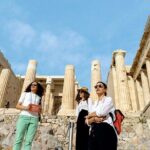
Vicky is the guide most frequently identified in the supplied feedback. She is praised for her energy, warmth, teaching ability, historical explanations, humor, and willingness to take photographs. Several people describe her as passionate about Greece and friendly enough to make the walk feel personal.
Those qualities matter more than a long list of facts. A strong city guide helps you notice details, understand local habits, and connect one stop to the next. Vicky also appears comfortable adjusting the tone of the experience, from history lessons to casual conversation over a snack.
Cristos is also named as a guide. He is described as helpful during one booking problem, but there is not enough detail to assess his standard guiding style in the same way. The activity lists live guiding in English and Spanish, while another section names English, Spanish, Italian, and French for the representative or leader. If language is important to you, confirm the language available for your specific departure.
The group is listed as small, limited to 10 participants, although another part of the information gives a maximum of 20. Because those details do not match, check the number shown for your chosen date. A smaller group usually makes it easier to hear the guide and ask questions.
Is $47 a fair price?
At $47 per person, this is not the cheapest way to walk around Athens, but the value depends on what you want included. You are paying for a multi-hour guided route through several important areas, with a live guide, archaeological context, local neighborhoods, a food break, and assistance with orientation.
The price looks more reasonable if you are visiting Athens for the first time. You cover a lot of ground without having to plan the route yourself, and a good guide can save you from seeing the Ancient Agora or Hadrian’s Library without understanding their purpose.
The value is less clear if you mainly want entry to the Acropolis. That is not included, and the food and drinks at the stops cost extra. You should view this as a central Athens walking introduction, not as an Acropolis admission package.
The small-group claim also affects the price. If your departure is limited to 10 people, the personal attention can make the fee worthwhile. Confirm the group size if you are comparing this with a private tour or another small-group walk.
Timing, fitness, and practical planning
The experience is advertised as lasting four hours, while the description says the standard tour lasts about three hours and can be extended to four. Plan for the longer figure. That gives you room for the archaeological stops, breaks, photographs, and the walk between districts.
Wear shoes suited to uneven stone and varied ground. This is not a flat stroll through paved streets. The tour is specifically not recommended for people with mobility impairments and is not wheelchair accessible.
You can start and finish at Monastiraki Square or Piraeus Harbour, depending on the option selected. The port meeting point is outside Gate 11 after you leave the security area, and the representative should hold a Jae Academy sign.
Food is purchased separately. You might want coffee, ice cream, local snacks, or loukoumathes, but you are not required to buy anything according to the provided details.
The activity offers free cancellation up to 24 hours before the start for a full refund, and you can reserve now and pay later. Those terms help if your Athens schedule depends on a cruise arrival or changing plans.
Who should book this Athens walking adventure?
I would choose this tour if you want a first look at central Athens with enough history to make the ruins meaningful, but without a formal lecture. It suits curious adults, couples, families with older children, and solo visitors who want a guide to help them find their bearings.
It is especially useful early in an Athens stay. After the walk, you will have a better sense of where Monastiraki, Plaka, the Ancient Agora, and the Acropolis fit together. You can then return to the places that caught your interest.
I would hesitate if you need a fully accessible route, dislike walking on uneven ground, or want a dedicated Acropolis visit. I would also ask for clarification if you expect constant comedy, a particular language, or a group of exactly 10 people.
Should you book it?
Book this tour if you want history with personality and a route that covers more than one famous sight. Vicky’s warm, energetic style appears to be the main reason the experience works so well, and the coffee or loukoumathes stop gives the walk a pleasant local touch.
Choose something else if your main goal is the Acropolis interior, a wheelchair-friendly route, or a strictly guaranteed comedy performance. For most first-time visitors who can walk comfortably, this is a useful and good-value introduction to Athens, with enough humor to keep the ancient stones from turning into homework.
FAQ
Where does the tour start?
You can choose Monastiraki Square or Piraeus Harbour as the starting location.
Where do I meet the guide at Piraeus Harbour?
After disembarking, leave the security area and look outside Gate 11 for a representative holding a sign that says Jae Academy.
How long does the walking tour last?
The activity is advertised as four hours. The description also says the tour may last about three hours, with an extension to four hours.
Which places does the tour visit?
The route includes Monastiraki Square, Hadrian’s Library, the Ancient Agora, the Roman Agora, a monastery, the Acropolis area for sightseeing and photographs, and Plaka. Thisio or Psirri may be used for a coffee and dessert stop.
Is Acropolis admission included?
No. The Acropolis is included as a photo stop, sightseeing area, and pass-by, but entry admission is not listed as included.
Are food and drinks included?
No. You can purchase coffee, tea, ice cream, dessert, local snacks, or other food at the stops.
Is the tour suitable for wheelchair users?
No. The tour is not wheelchair accessible and is not recommended for people with mobility impairments because of uneven surfaces and varied ground conditions.